
Kitchen storage works best when it is planned before cabinetry goes into production.
Once cabinet widths, drawer configurations, appliance locations, and interiors are finalized, many storage opportunities become difficult or expensive to change. This is why storage planning should go beyond simply deciding how many cabinets the kitchen needs.
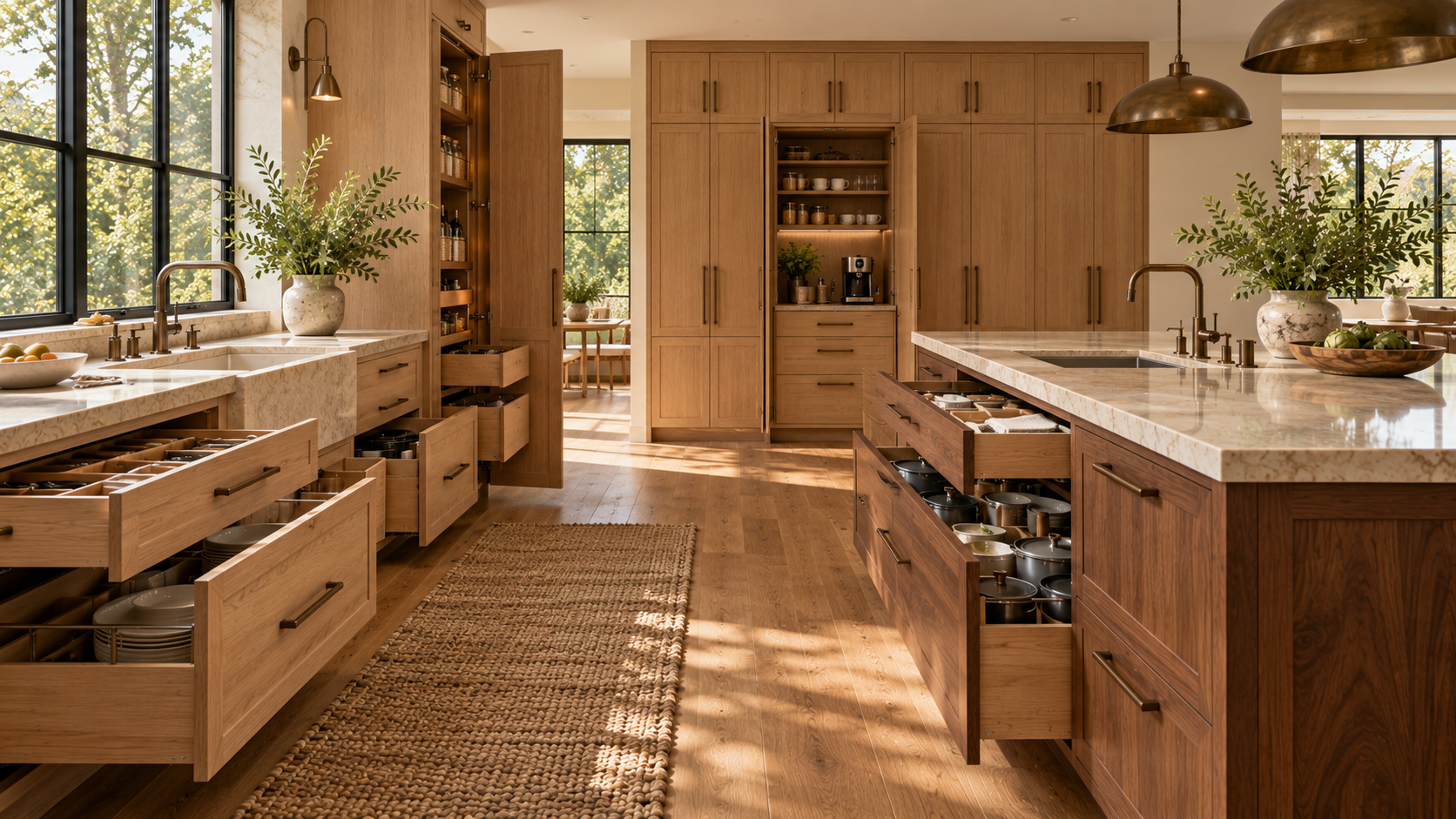
Think about what you own, where you use it, and how easily you want to access it. These 15 kitchen cabinet storage ideas are worth considering before you order your cabinetry.
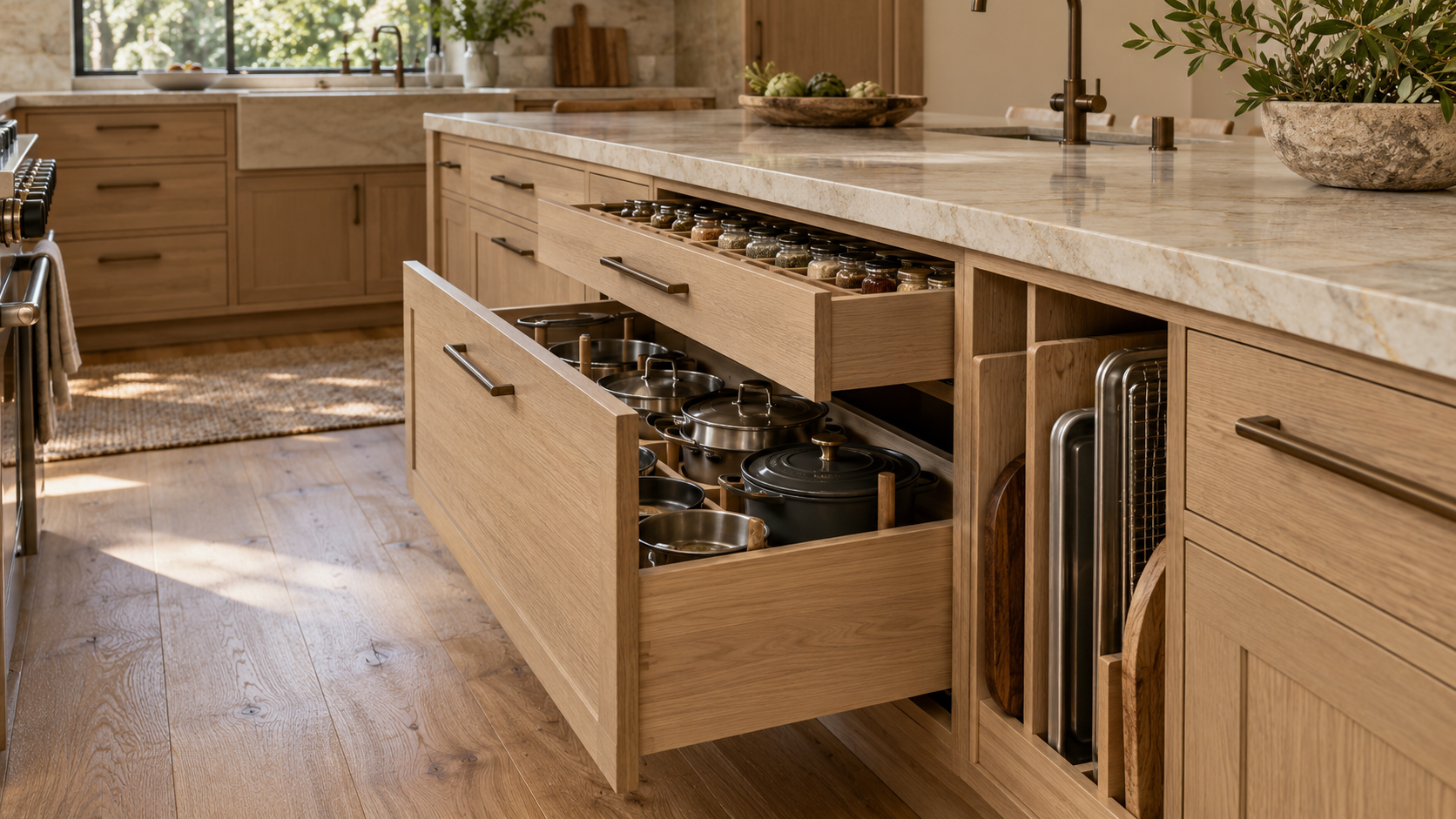
1. Deep Drawers for Pots and Pans
Deep drawers can make cookware significantly easier to access than traditional lower cabinets with doors.
Instead of reaching into the back of a cabinet, the entire drawer comes toward you. Pots, pans, mixing bowls, and larger containers can remain visible and accessible from above.
Plan drawer depth and width around the cookware you actually own rather than assuming every deep drawer should be identical.
2. Vertical Storage for Trays and Cutting Boards
Baking sheets, cutting boards, serving trays, and platters are often easier to store vertically.
Narrow dividers keep them separated and eliminate the need to lift several pieces to reach the one underneath.
This type of storage can work particularly well near an oven or food-preparation area.
3. A Dedicated Spice Drawer
Spices do not necessarily need to occupy an upper cabinet.
A shallow drawer near the primary preparation or cooking zone can keep containers visible and organized. Inserts can prevent jars from moving while allowing labels to remain easy to identify.
The location matters more than the feature itself. Spice storage should be close to where spices are actually used.
4. Hidden Small-Appliance Storage
Toasters, blenders, coffee makers, and other small appliances can quickly occupy valuable countertop space.
An appliance garage or dedicated cabinet can keep frequently used equipment nearby without leaving everything visible.
Before designing one, confirm the dimensions of the actual appliances and consider electrical outlets, door operation, heat, ventilation, and manufacturer requirements. The goal is convenient storage, not simply concealment.
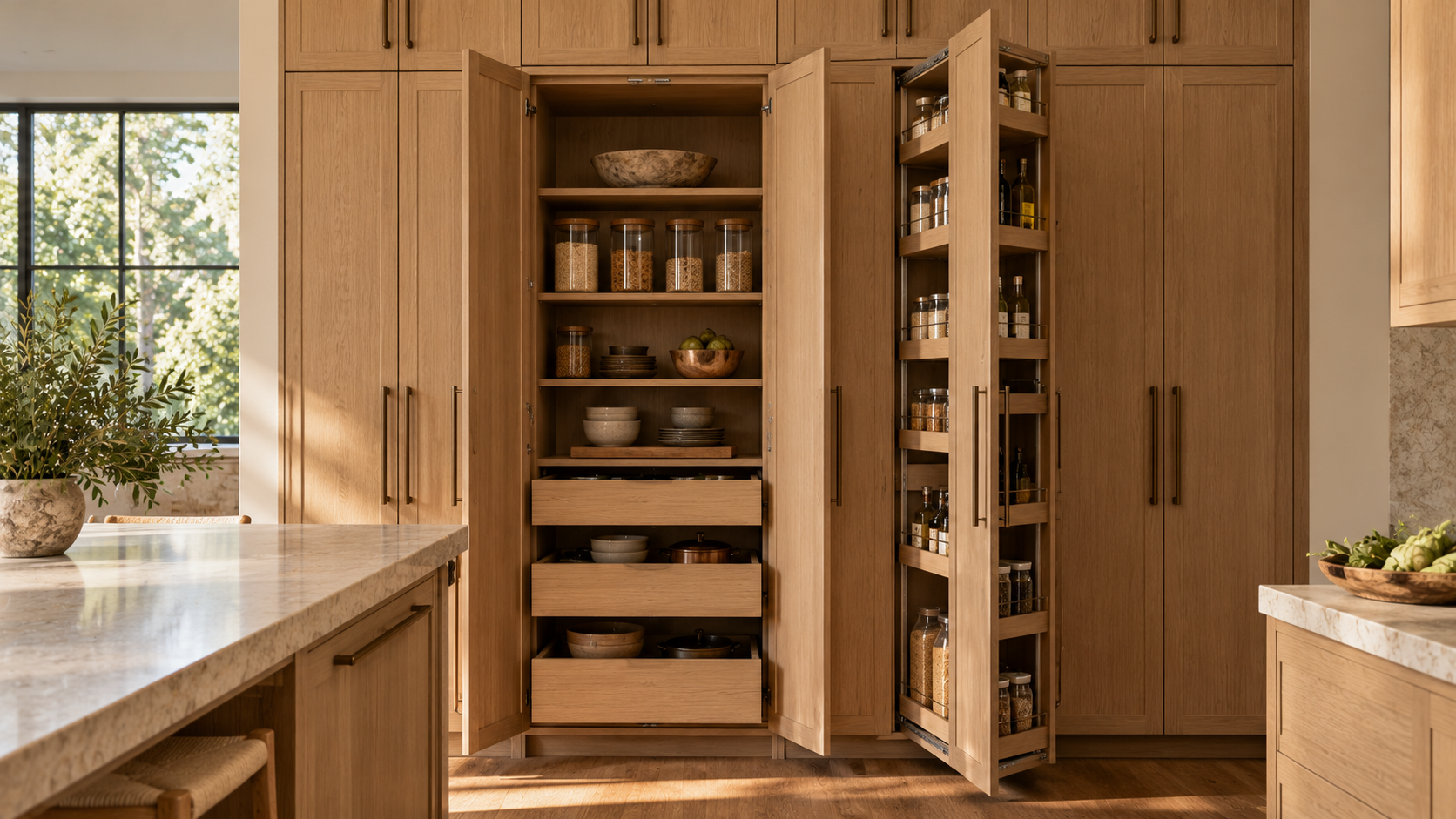
5. Pull-Out Pantry Storage
A narrow cabinet can become highly functional with pull-out pantry storage.
Rather than reaching behind several rows of food, the contents can move outward and remain easier to see. This can work well for packaged goods, bottles, condiments, or smaller pantry items.
Pull-outs are particularly useful when the kitchen has limited space for a conventional walk-in pantry.
6. Interior Drawers Behind Cabinet Doors
Not every functional feature needs to remain visible on the exterior.
Interior drawers can provide organized storage behind a larger cabinet door, allowing the exterior elevation to remain visually simple while creating smaller storage zones inside.
This approach can be particularly useful in tall pantry cabinetry where different categories require different storage heights.
7. Drawer Dividers for Everyday Tools
Large drawers become less useful when everything inside moves together.
Integrated dividers can organize cooking utensils, knives, measuring tools, serving pieces, and other everyday items. Customizable inserts are especially useful because the interior can respond to the household's actual collection.
Frequently used tools should be placed close to the work area where they are needed.
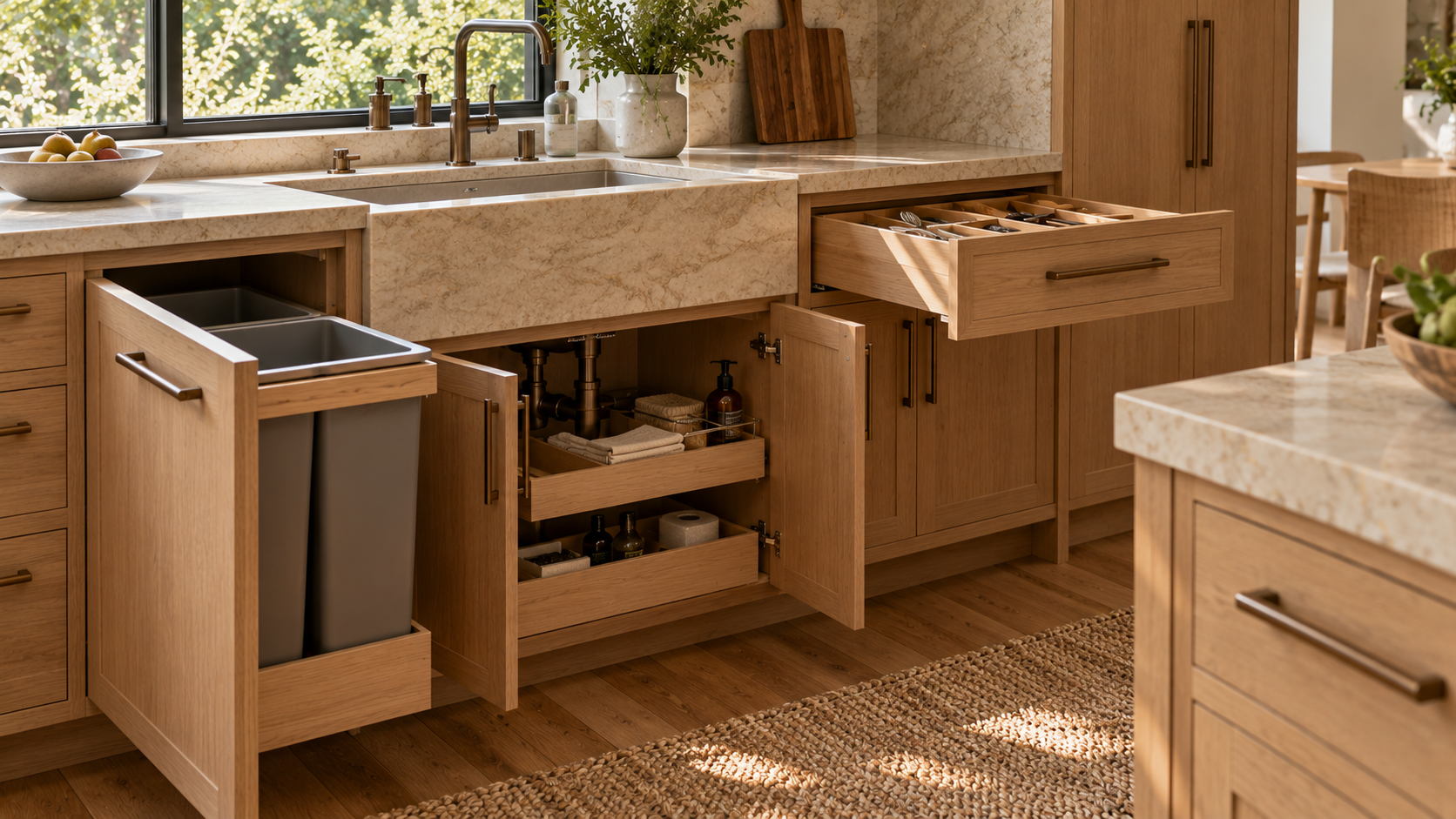
8. Under-Sink Organization
The sink cabinet often has to accommodate plumbing, a disposal, cleaning supplies, and other necessities within one relatively awkward space.
Planning around the plumbing before cabinetry production can make this area more functional.
Pull-outs, shallow organizers, or dedicated compartments can help separate cleaning supplies and everyday essentials while preserving access to plumbing components when needed.
9. Waste and Recycling Pull-Outs
Waste and recycling containers can be integrated directly into lower cabinetry rather than remaining visible.
Placement is important.
A pull-out near the primary preparation and cleanup areas can make it easier to dispose of packaging and food waste while cooking. The cabinet should also be sized around the containers and waste-sorting needs of the household.
10. Corner Storage That Matches How You Use the Kitchen
Corners can create difficult-to-access storage when they are treated as leftover space.
Depending on the layout, specialized pull-outs or rotating interior systems can make contents easier to reach. In other kitchens, simplifying the corner and prioritizing more useful drawers nearby may be the better solution.
Not every available inch needs to become storage. Accessibility matters more than theoretical capacity.
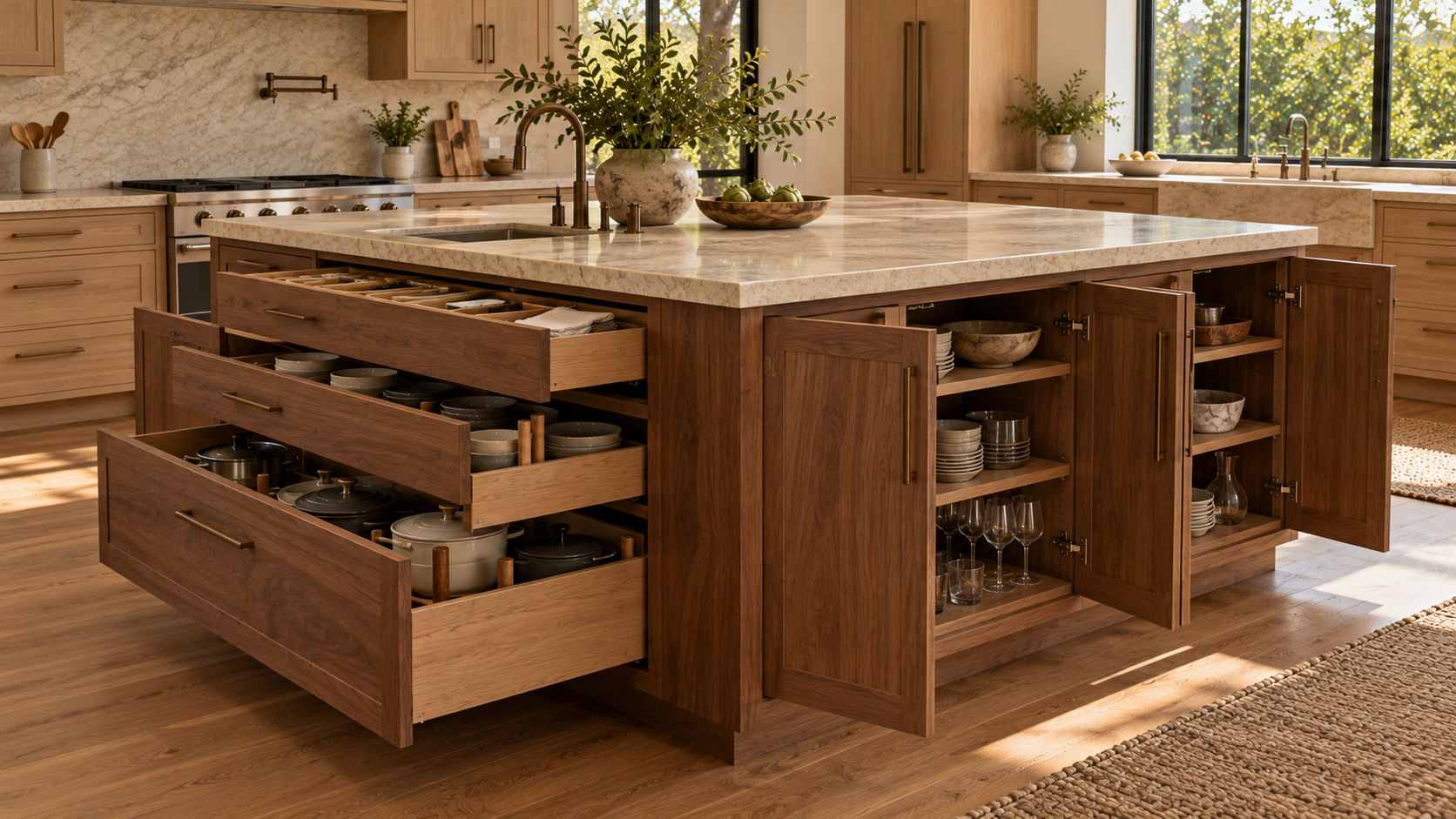
11. Dish Storage in Drawers
Plates and bowls do not always need to live in upper cabinets.
Wide lower drawers can keep dishes accessible from above and may work particularly well near the dishwasher or dining area.
Peg systems or other interior organizers can help keep stacks separated and stable. This approach can also reduce dependence on upper cabinetry in kitchens with large windows or a more open wall design.
12. Seating-Side Island Storage
The side of an island beneath or near seating can provide useful secondary storage.
Because these cabinets are generally less convenient to access during cooking, they are well suited to items that are not needed constantly, such as serving pieces, seasonal tableware, extra glassware, or entertaining supplies.
Using this area strategically can increase storage without making the working side of the island overly complicated.
13. Charging and Everyday-Item Drawers
For many households, the kitchen is also where phones, tablets, keys, and other everyday objects accumulate.
A dedicated drawer can keep these items off the countertop.
If charging will be incorporated, electrical requirements should be coordinated early and installed appropriately rather than added as an afterthought.
This is especially useful when the island functions as a homework, planning, or everyday household hub.
14. Dedicated Coffee or Beverage Storage
Coffee, tea, mugs, glassware, and beverage equipment can be grouped into one cabinetry zone.
This might be a concealed coffee bar, an open beverage niche, or a section of cabinetry near the dining area.
Keeping these items together can reduce traffic through the primary cooking zone while giving appliances and supplies a permanent home.
15. Customized Pantry Shelving
Pantry shelving does not need to use the same depth from top to bottom.
Shallower shelves can keep smaller food items visible, while deeper lower storage can accommodate larger containers and appliances. Drawers can organize smaller packages, and adjustable shelves provide flexibility as storage needs change.
The best pantry is not necessarily the one with the most shelving. It is the one where the contents remain easy to see and retrieve.
Which Kitchen Storage Features Are Worth Including?
The answer depends on how you use the kitchen.
Before ordering cabinetry, inventory cookware, dishes, food storage, small appliances, serving pieces, cleaning supplies, and everyday household items. Then assign those objects to the areas where they will actually be used.
Avoid adding specialized organizers simply because they are available. A custom feature is valuable when it solves a specific storage problem or makes a frequent task easier.
Planning these details before cabinetry production allows drawer sizes, cabinet widths, electrical requirements, interior accessories, and appliance locations to work together from the beginning.
Explore Kitchen Storage With Atelier Design Society
Atelier Design Society works with homeowners, architects, interior designers, builders, and other design professionals planning premium cabinetry and storage throughout Bay Area kitchens. At the Atelier Design Society showroom in Menlo Park, project teams can compare drawer configurations, pantry interiors, cabinet accessories, appliance storage, natural woods, hardware, and full-scale installations while developing storage around the way the kitchen will actually be used.
