Can You Bring Your Interior Designer to a Cabinet Showroom?
Yes. Bringing your interior designer to a cabinet showroom can make the selection process more productive, especially when cabinetry is part of a larger remodel, new construction project, or whole-home design.
Cabinetry affects more than storage. Its proportions, wood tones, painted finishes, hardware, and relationship with stone and flooring can influence the entire interior. When your designer participates in the showroom appointment, those decisions can be considered within the broader design direction of the home.
Why Bring Your Interior Designer?
Your interior designer already understands decisions that may influence the cabinetry, including the overall material palette, architectural character, flooring, lighting, furnishings, and how different rooms should relate to one another.
That context can be useful when comparing cabinetry in person.
Instead of selecting a cabinet finish simply because it looks attractive in the showroom, you and your designer can consider whether its undertones work with the flooring, whether the grain is appropriate for the architecture, and how the cabinetry will relate to stone and other finishes.
The conversation becomes about the complete interior rather than one isolated product.
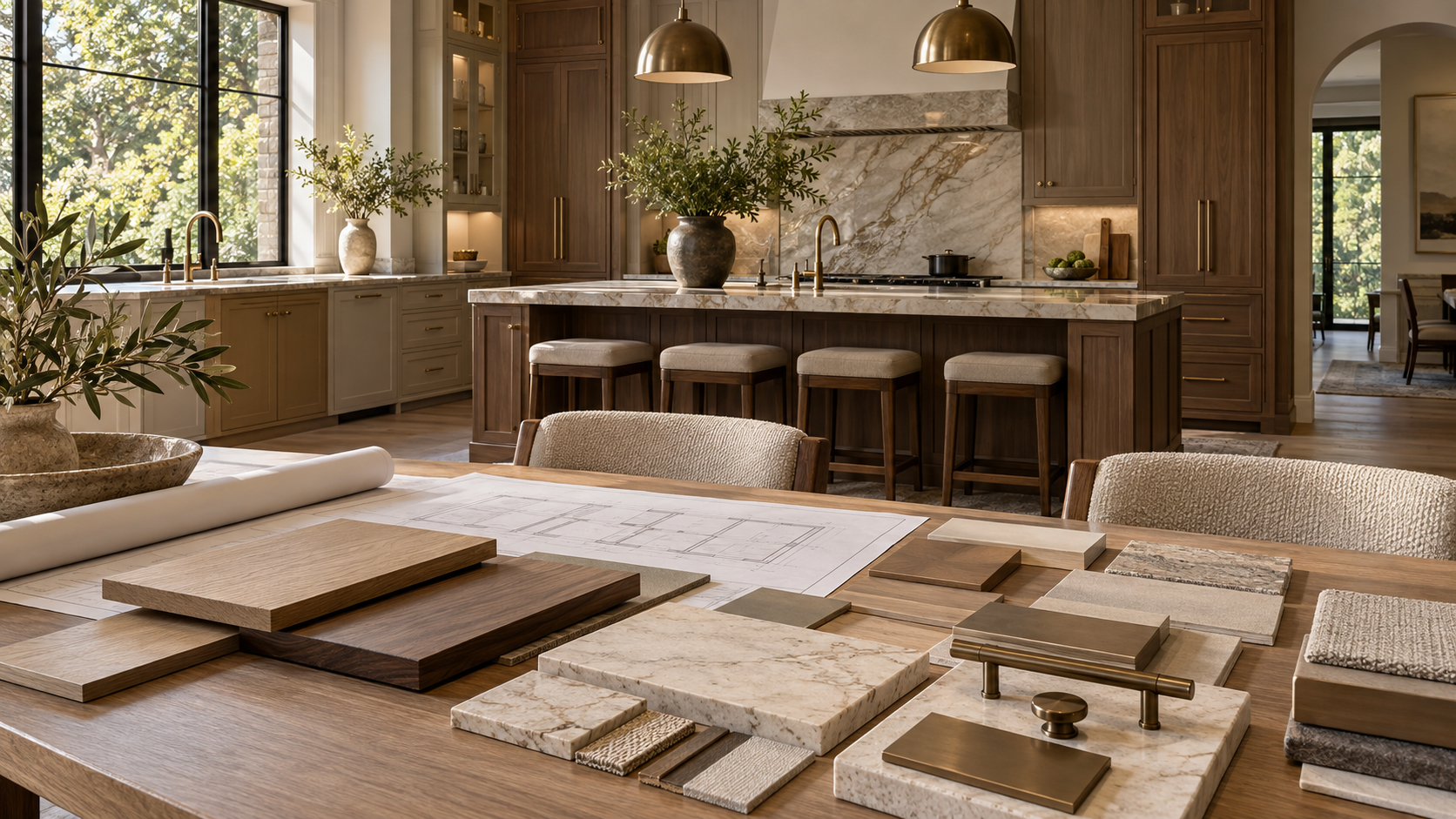
Your Designer Can Help Evaluate Materials in Context
One of the biggest advantages of visiting a showroom is being able to compare physical materials.
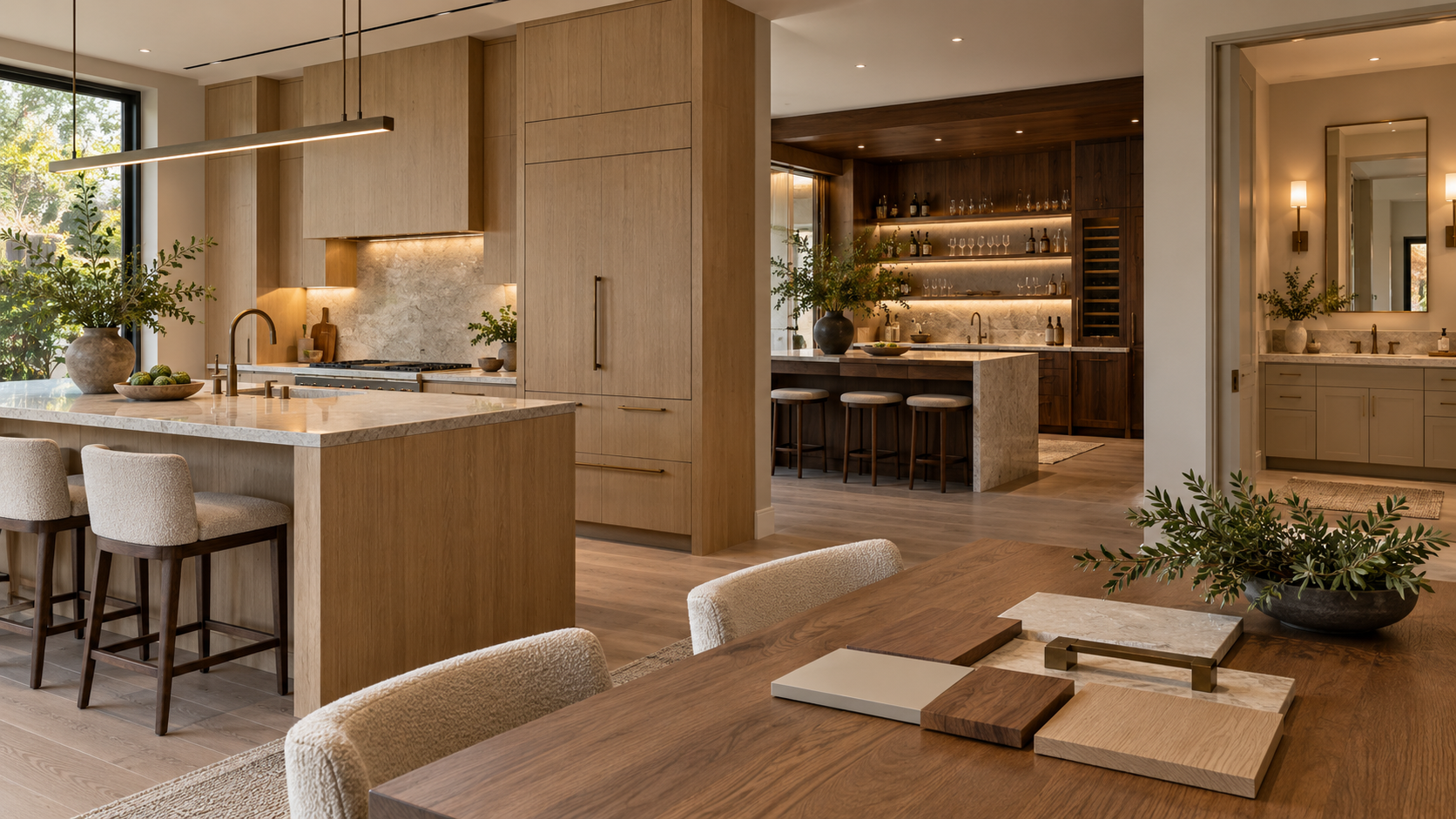
A rift-cut white oak cabinet finish can be placed beside flooring to evaluate warmth and grain. Walnut can be compared with stone to determine whether the combination has enough balance. Painted cabinetry can be evaluated beside wall finishes, hardware, and other materials.
Your designer can help identify these relationships because they understand what is already specified elsewhere in the project.
This is particularly useful when the home includes several wood tones or when existing materials need to remain. The cabinetry does not necessarily need to match them, but it should feel intentional beside them.
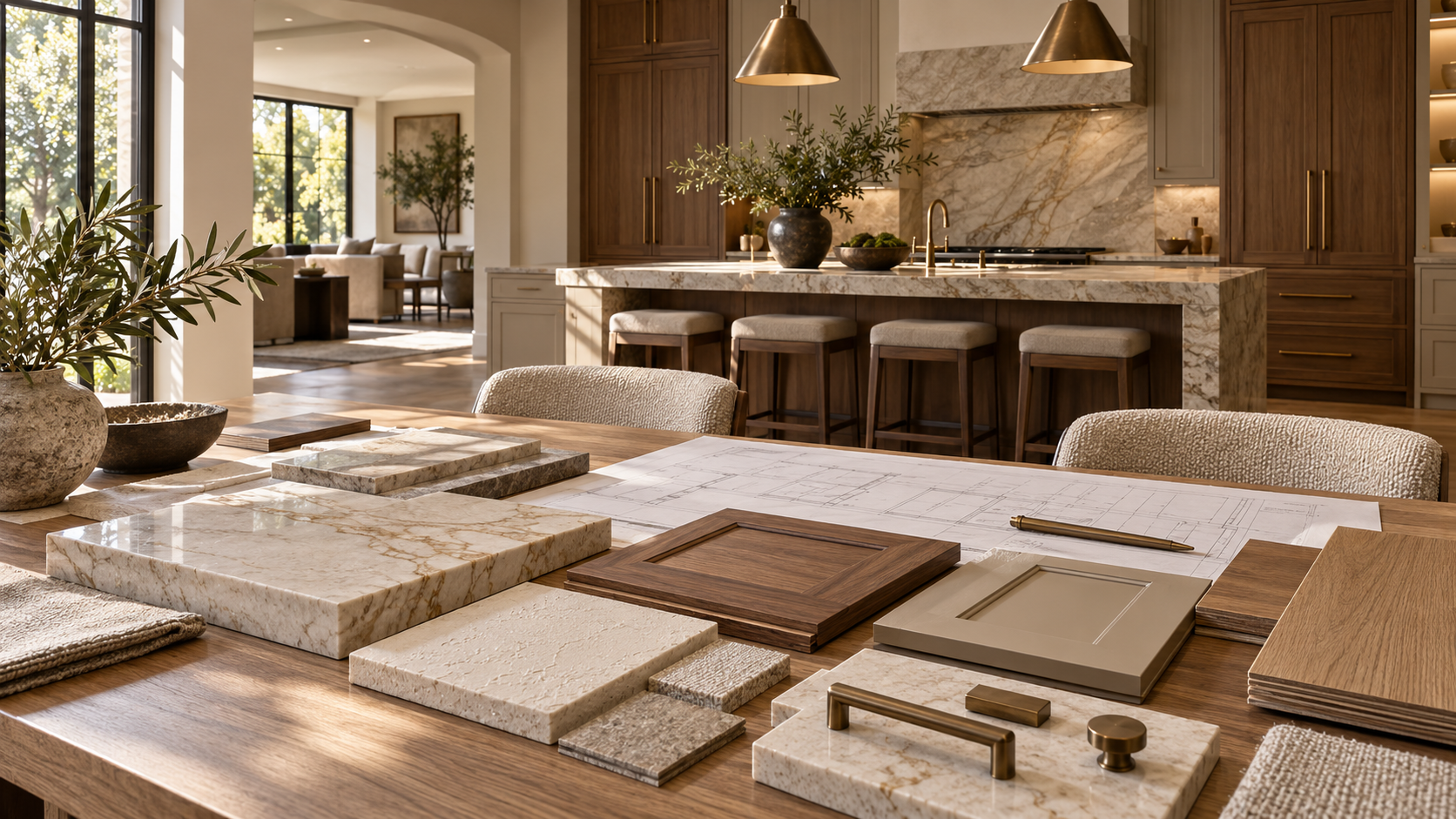
A Showroom Visit Can Help Resolve Cabinetry Details
Some cabinetry decisions are easier to make when you can see and operate the product at full scale.
You and your designer can examine door proportions, drawer alignment, hardware, interior construction, storage options, and differences between cabinetry systems. You can also compare how finishes appear across a full wall of cabinetry instead of relying on a small sample.
If the project requires customization, the showroom visit can help identify where it will provide meaningful value. That might include a furniture-like island, specialized storage, unusual dimensions, integrated appliances, or a distinctive finish.
Your Designer Does Not Need to Have Everything Finalized
The showroom appointment can happen while the project is still being developed.
Preliminary architectural plans, inspiration, existing material samples, and an early design direction can provide enough information to begin exploring cabinetry. In many cases, seeing cabinetry and finishes in person can help your designer refine decisions that are still open.
This is one reason it can be helpful to visit before the material palette is completely finalized.
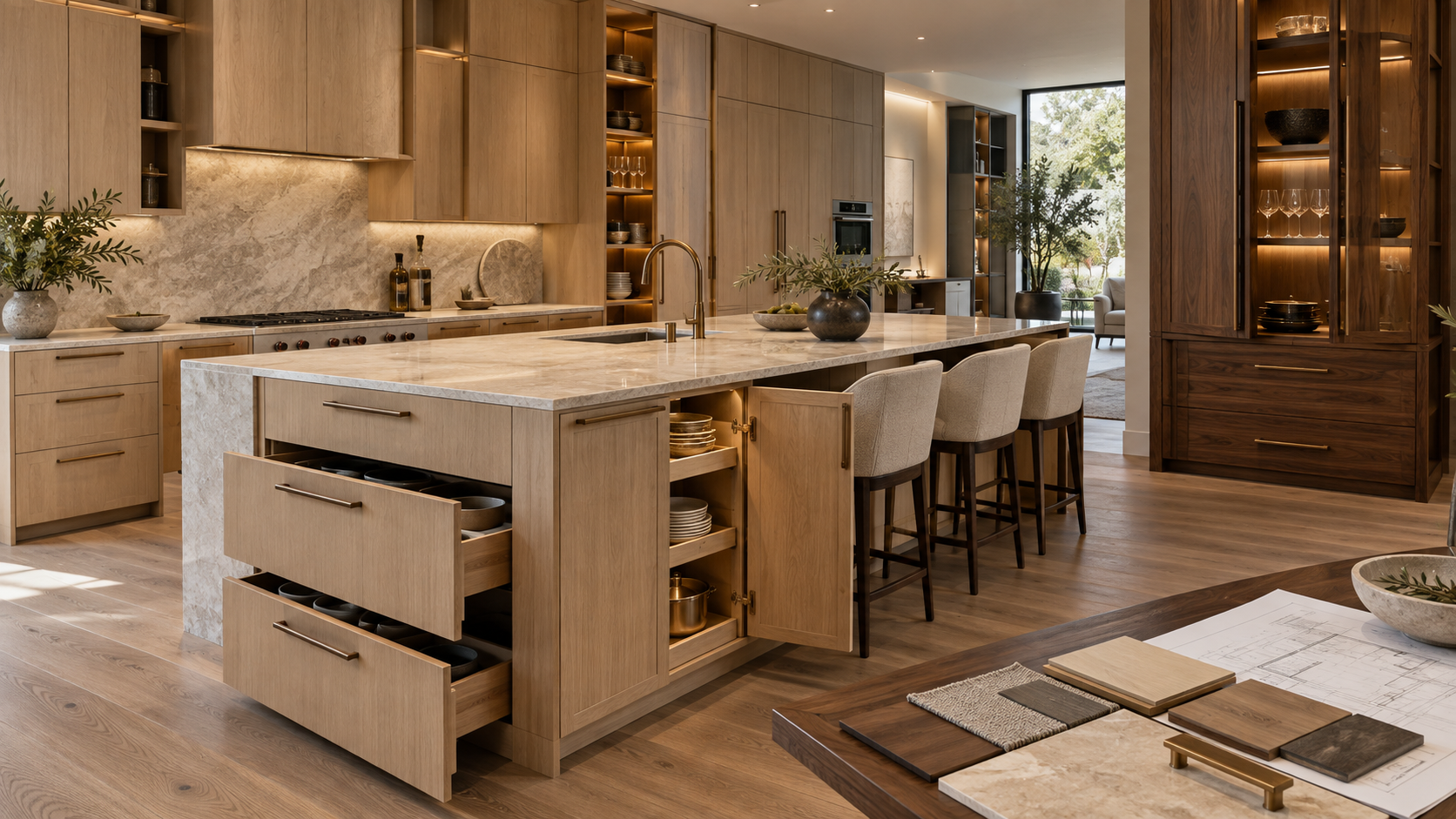
What Should Your Interior Designer Bring?
If available, your designer can bring current floor plans or elevations, relevant material samples, and information about finishes already selected for the home.
Flooring samples can be particularly useful because cabinetry and flooring occupy large visual areas. Stone selections, paint references, hardware direction, and appliance information may also help depending on the stage of the project.
There is no need to arrive with every specification complete. The objective is to bring enough context to make the showroom conversation relevant to the actual project.
Can Your Architect or Builder Join Too?
For some projects, yes.
Cabinetry often intersects with architectural dimensions, appliances, electrical locations, lighting, plumbing, stone, and construction sequencing. On a larger remodel or custom residence, coordination between the cabinetry resource and the broader project team can become important.
Not every professional needs to attend every selection appointment. However, plans and technical information should eventually be coordinated so that the cabinetry design reflects actual site and construction conditions.
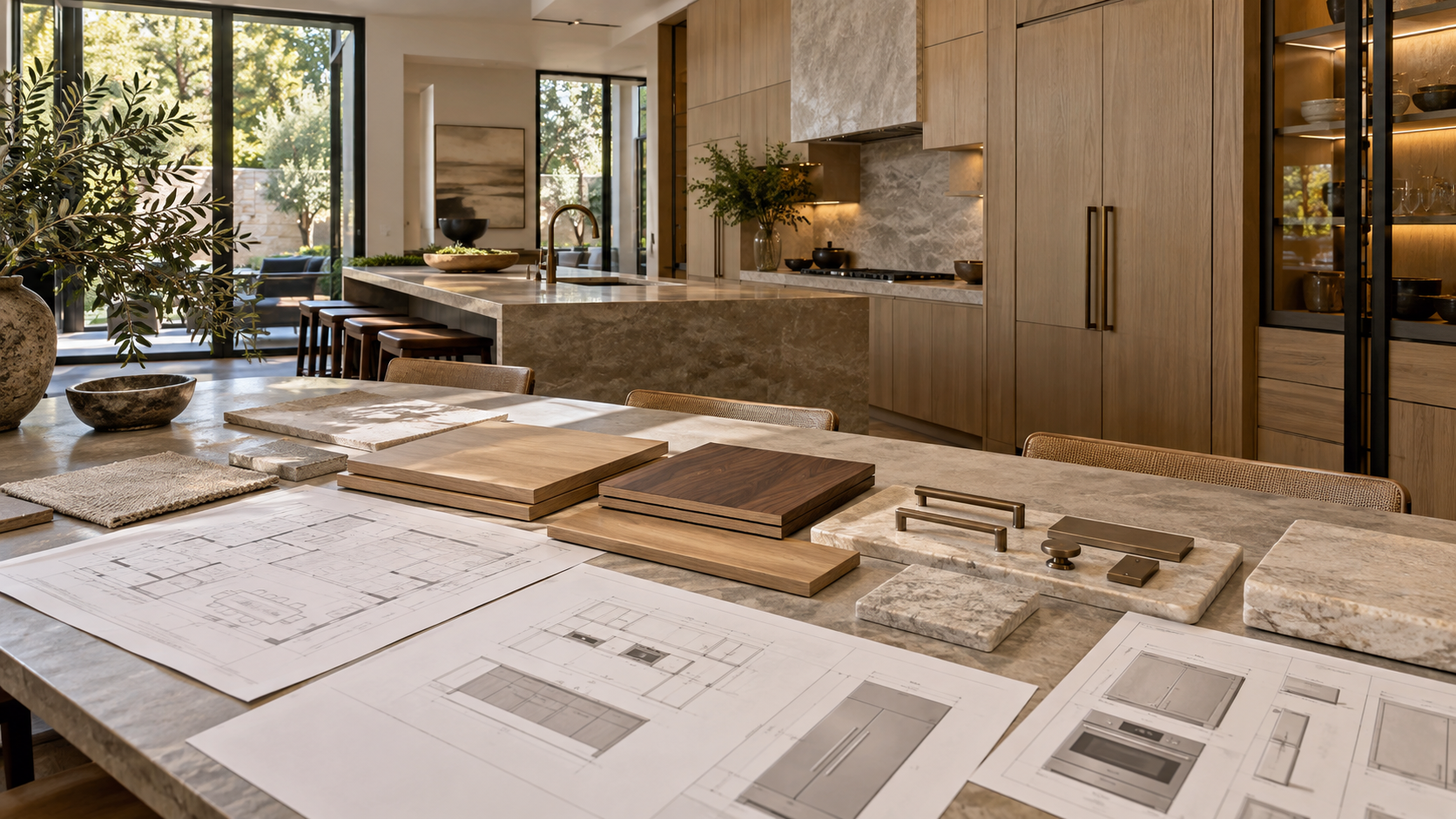
What About Whole-Home Cabinetry?
Bringing your designer can be especially valuable when cabinetry extends beyond the kitchen.
The project may include bathroom vanities, wardrobes, a bar, home office, laundry room, media cabinetry, or other built-ins. Planning these areas together gives the design team an opportunity to establish relationships between materials without making every room identical.
For example, white oak might establish the primary wood language in the kitchen while walnut appears in a bar or office. Painted cabinetry could provide a quieter transition in bathrooms.
Your interior designer can help determine where continuity is useful and where a room should develop its own identity.
Should Your Designer Attend the Cabinet Showroom Appointment?
If you are already working with an interior designer, having them participate can help connect cabinetry decisions with the rest of the project.
They can provide context for the material palette, help evaluate finishes, consider how cabinetry relates to adjacent rooms, and identify details that need to be coordinated later.
The showroom then becomes more than a place to choose cabinets. It becomes a setting where cabinetry can be evaluated as part of the complete interior.
Visit Atelier Design Society With Your Design Team
Atelier Design Society works with homeowners, interior designers, architects, builders, and other design professionals planning premium cabinetry throughout the Bay Area. At the Atelier Design Society showroom in Menlo Park, project teams can compare cabinetry collections, natural woods, painted finishes, construction, hardware, interiors, storage solutions, surfaces, and full-scale installations while developing a coordinated direction for the home.
Your interior designer can join the conversation so cabinetry and the broader interior design can develop together.