Why Full-Size Cabinet Displays Matter More Than Small Samples
Small cabinet samples are useful for narrowing down a finish or door style, but they only tell part of the story.
Cabinetry is architectural. Once installed, it covers large surfaces, interacts with appliances and countertops, and influences the proportions of an entire room. A finish that looks subtle on a small sample can feel completely different across a wall of cabinetry.
That is why seeing full-size cabinet displays can be one of the most useful parts of visiting a showroom.
Small Samples Cannot Show You the Full Effect
A cabinet door sample can help you evaluate color, wood species, and basic construction. What it cannot fully communicate is scale.
When the same finish appears across tall cabinets, drawers, panels, and an island, grain and color become much more prominent. Door proportions also change how the cabinetry feels when repeated across an elevation.
Full-size displays provide the context needed to understand whether a cabinetry choice feels balanced at the scale of a real room.
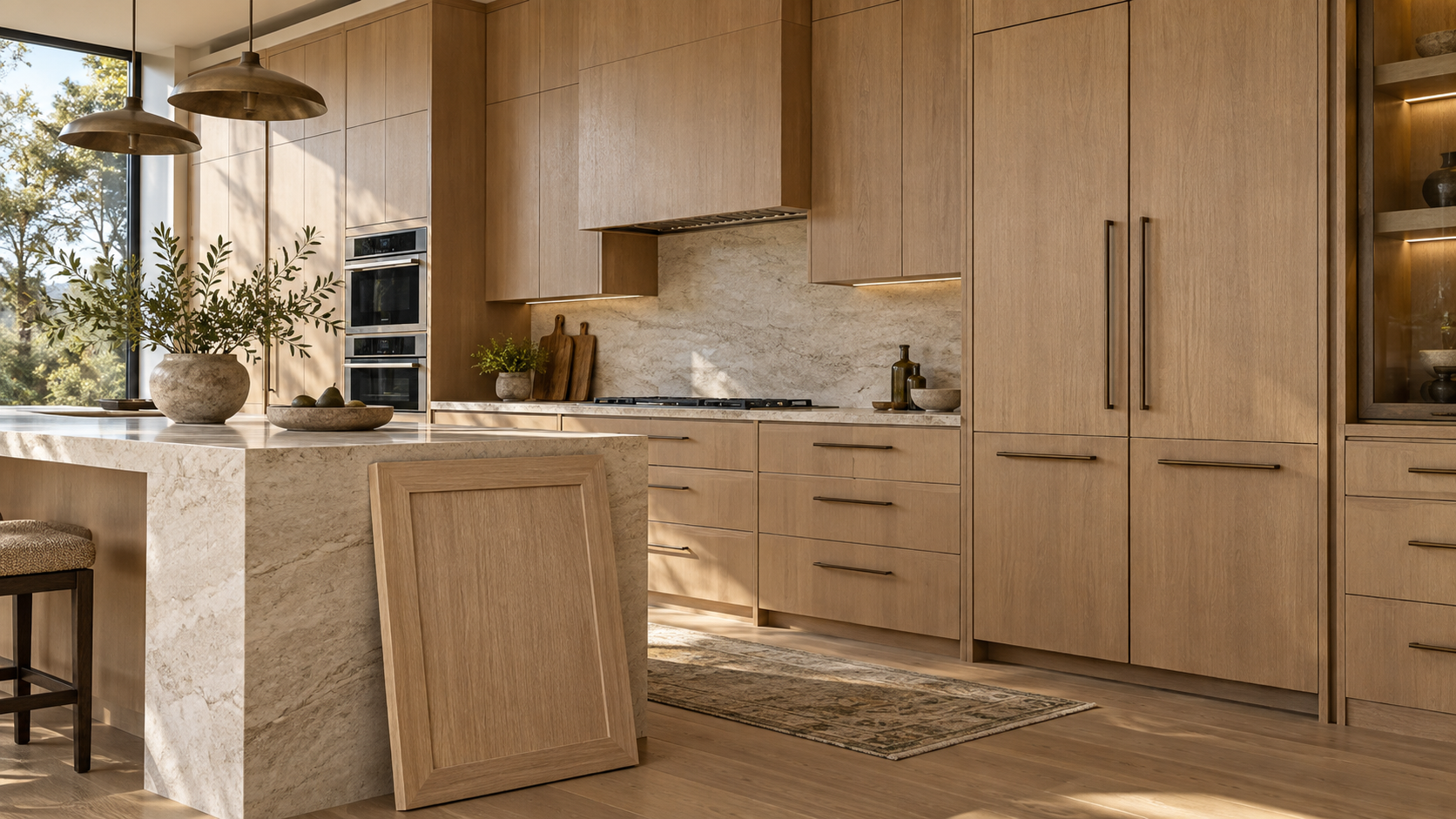
You Can Evaluate Real Cabinet Proportions
Cabinetry design depends heavily on proportion.
The height of a door, width of a drawer, spacing between sections, size of an island, and relationship between tall and lower cabinetry all affect how a kitchen feels.
These relationships are difficult to understand from an individual door sample.
With a full-size display, you can stand back and evaluate the complete elevation. You can see whether the cabinetry feels visually heavy or restrained, how repeated door divisions affect the design, and how much negative space is needed around it.
This is particularly useful when deciding between more traditional detailing and cleaner, more minimal cabinetry.
Natural Wood Needs More Surface Area
Wood cabinetry deserves to be seen at a larger scale because natural variation is part of the material.
A small piece of white oak may show only one section of grain. Across an entire cabinetry installation, you can better understand grain direction, tonal differences, and how the finish responds to light.
Walnut can show even stronger variation from one section to another. That movement may be exactly what you want, but it is easier to evaluate when you can see several doors and panels together.
A small sample establishes direction. A larger display provides context.
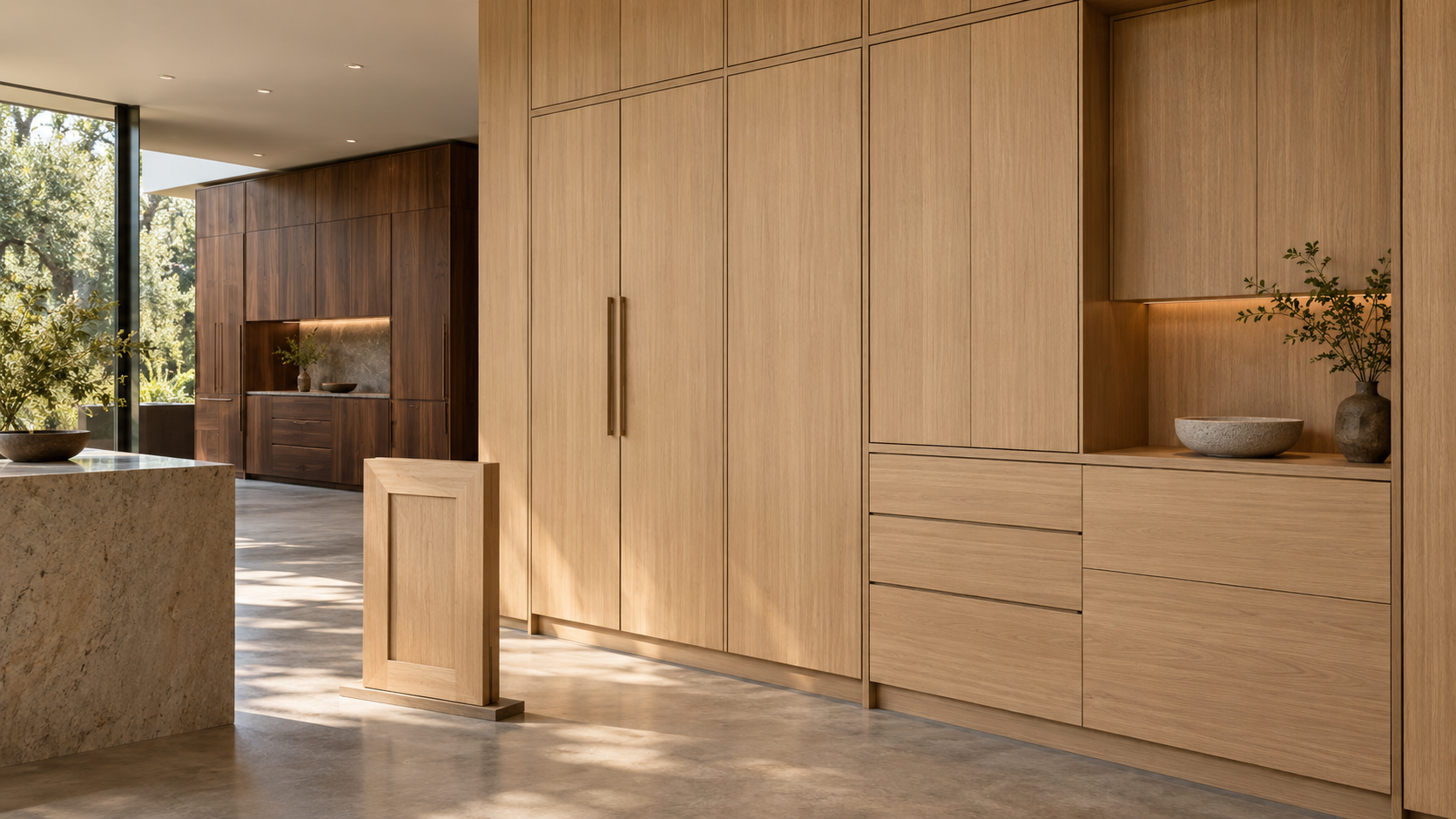
Full Displays Reveal Construction Details
A small sample may show the front of a door, but cabinetry involves much more.
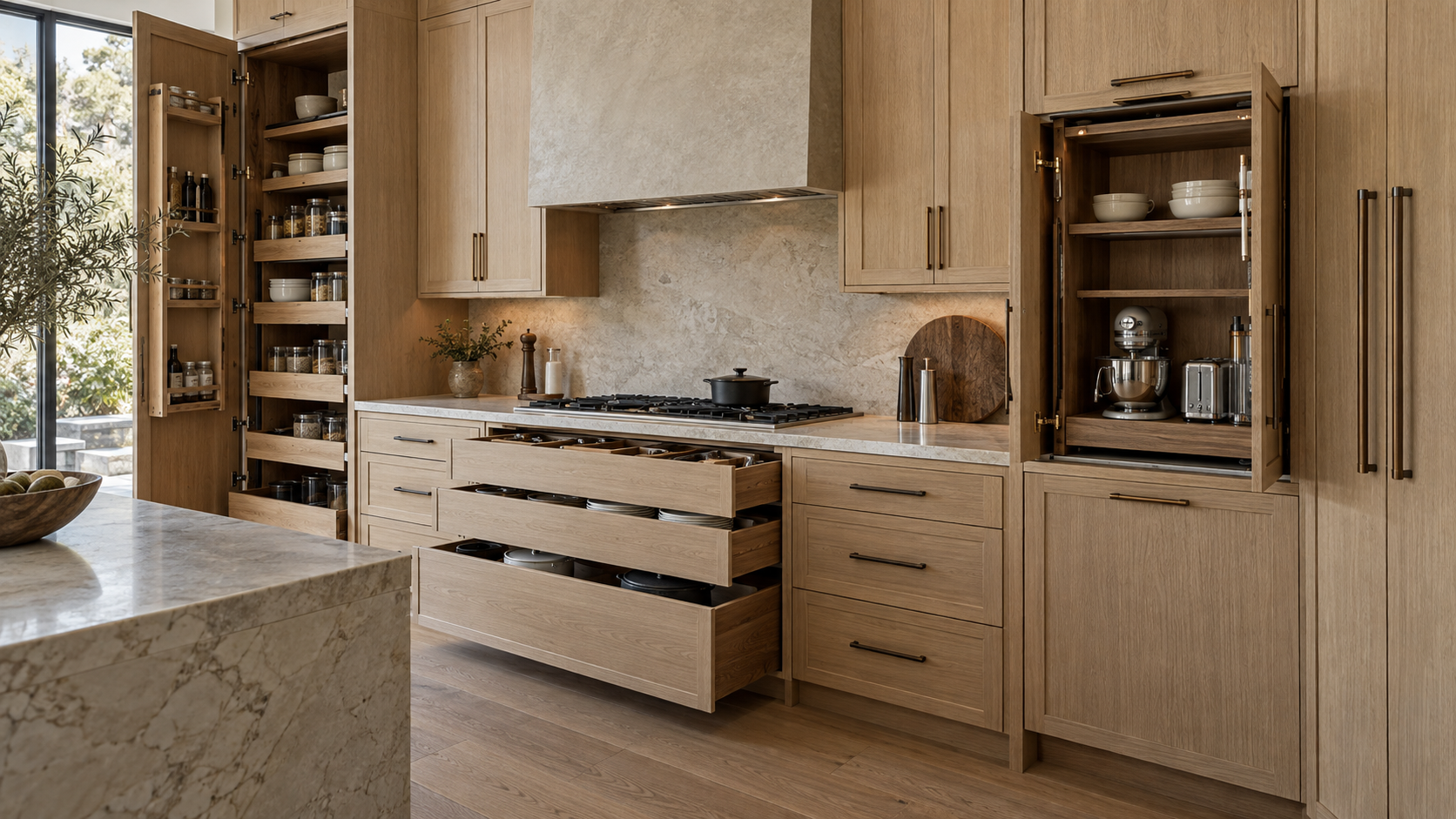
Full displays allow you to open drawers, inspect cabinet interiors, examine hinges, feel hardware operation, and see how doors align when closed. You can look at end panels, corners, fillers, reveals, and transitions between different cabinet sections.
These details help you understand the difference between how cabinetry photographs and how it actually feels in use.
Open the cabinets. Pull out the drawers. Look inside tall storage. Examine the details from several angles. A showroom visit should be tactile.
You Can Understand Storage More Realistically
Storage accessories can sound useful when described individually, but a full-size display shows how they actually occupy cabinet space.
You can see the depth of a cookware drawer, the proportions of pantry storage, or how concealed small-appliance cabinetry operates. You can also evaluate whether a particular solution would be useful for your household rather than selecting accessories simply because they are available.
Seeing the interior and exterior together makes it easier to understand how functional requirements affect the overall cabinetry design.
Full-Size Displays Show How Materials Interact
Cabinetry is rarely viewed by itself once installed.
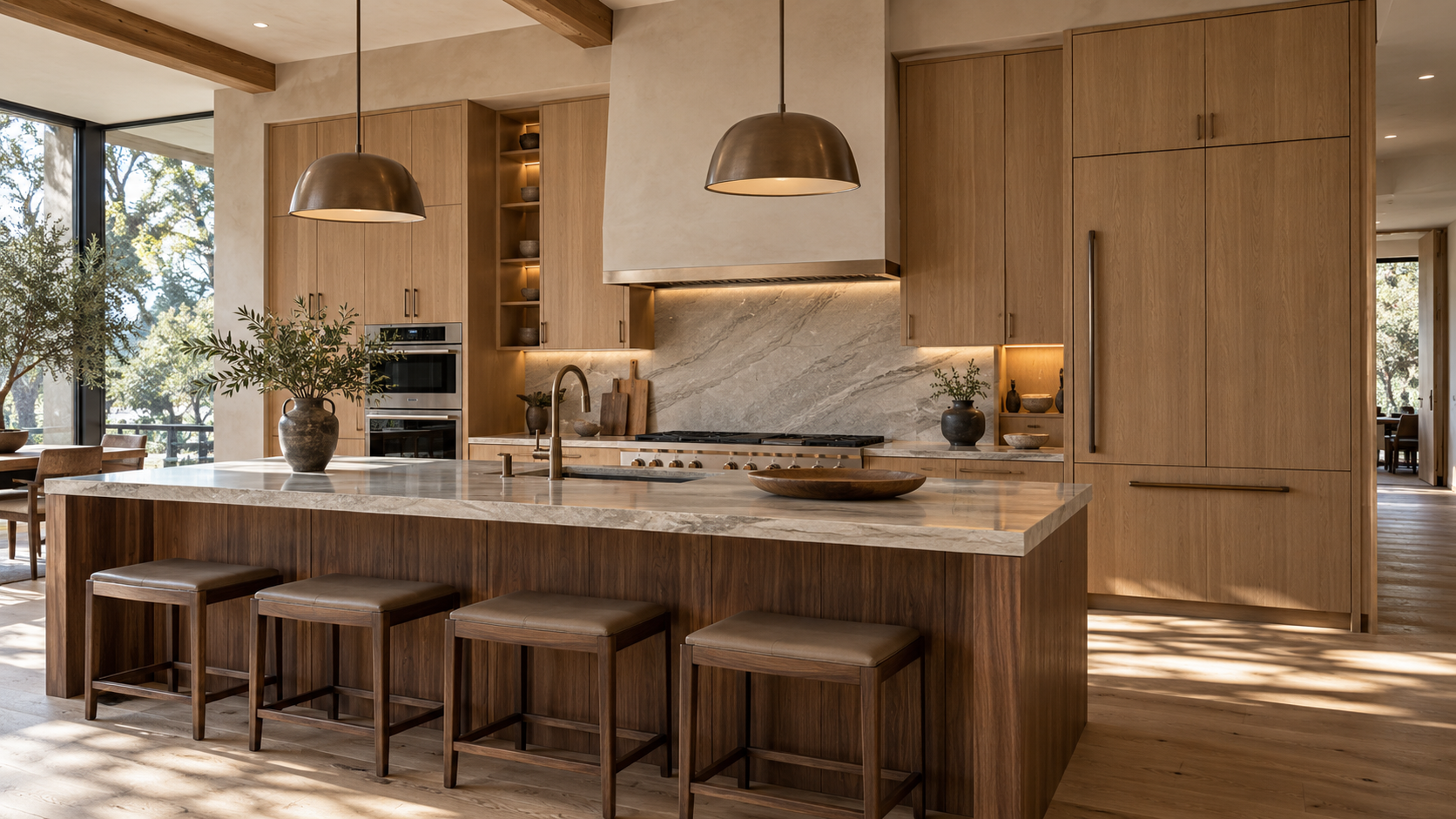
It sits beside countertops, backsplash materials, flooring, hardware, appliances, wall finishes, and architectural lighting. A complete display helps you understand those relationships at a realistic scale.
A creamy stone may make white oak appear warmer. Darker walnut can create more contrast than expected when used across an island. Hardware that feels prominent on a small door sample may become much quieter across a complete cabinetry elevation.
Seeing these materials together helps you evaluate the entire composition instead of making decisions one sample at a time.
Full Displays Make Appliance Integration Easier to Understand
Integrated appliances are another detail that can be difficult to visualize from drawings or small samples.
A full-size display can show how panel-ready refrigeration disappears into a cabinetry elevation, how an appliance opening affects surrounding proportions, and how panels align with adjacent doors and drawers.
You can also see where cabinetry stops and appliances begin, which can be particularly useful if you are deciding between visible appliances and a more integrated kitchen.
Small Samples Still Have an Important Role
Full-size displays do not replace samples. The two serve different purposes.
Small samples are useful when comparing several finishes, taking a material to a project site, or placing cabinetry beside flooring, stone, paint, and other selections. They allow you to narrow down options and evaluate specific material relationships.
Full-size displays provide the context those samples cannot.
The most useful approach is to use both. Start with the complete installation to understand scale, construction, and proportions, then use physical samples to refine the exact material direction for your project.
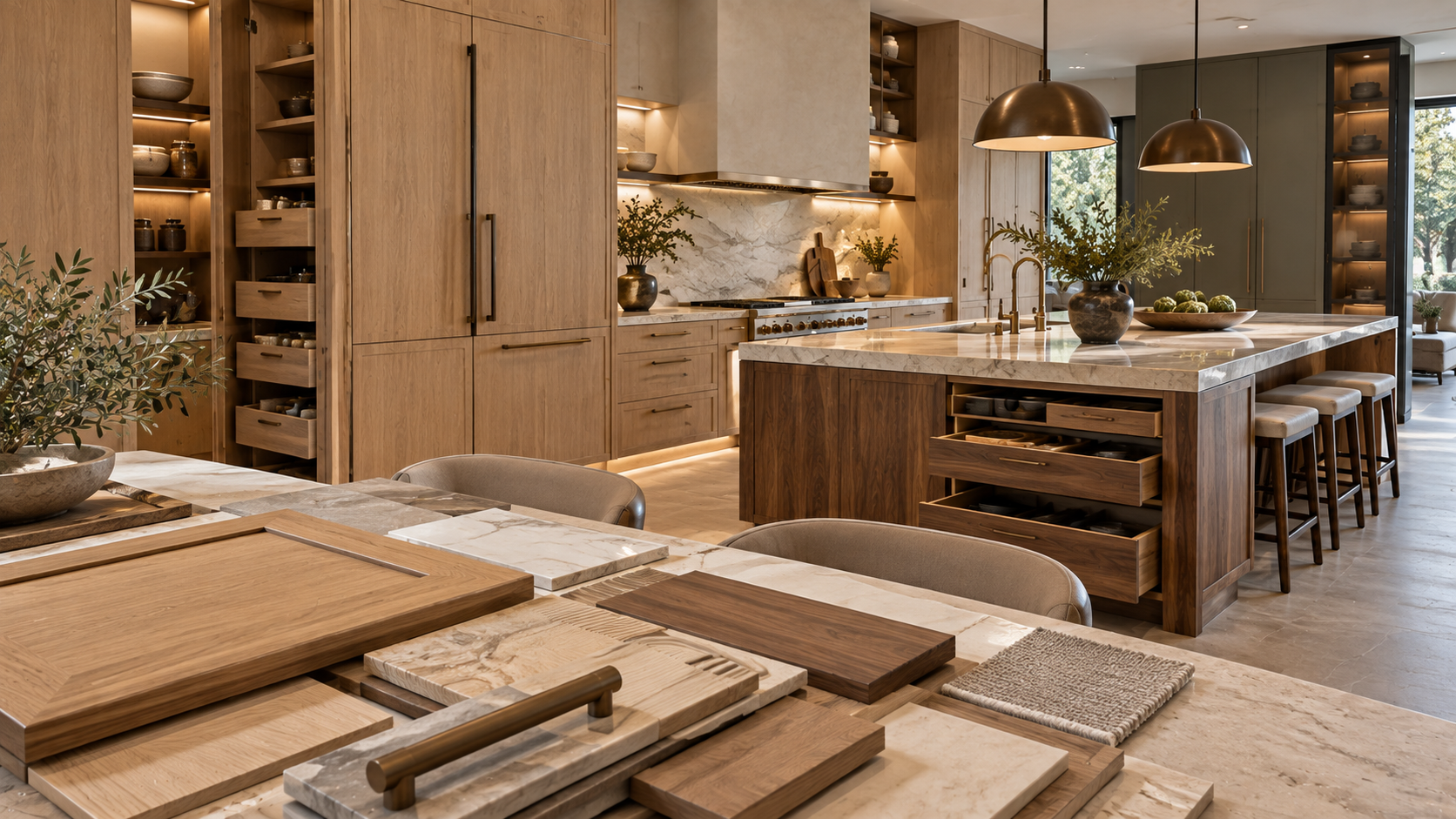
What Should You Look at on a Full-Size Cabinet Display?
Start by viewing the cabinetry from across the room. Look at overall proportions, repeated door and drawer divisions, material balance, and how the cabinetry relates to surrounding surfaces.
Then move closer. Examine grain, finish, alignment, reveals, interiors, hardware, storage, and appliance integration. Open doors and drawers rather than evaluating everything visually.
A small sample can help you decide whether you like a finish. A full-size display helps you understand whether you like the cabinetry as a complete architectural element.
Experience Full-Size Cabinetry at Atelier Design Society
Atelier Design Society works with homeowners, architects, interior designers, builders, and other design professionals exploring premium cabinetry for Bay Area homes. At the Atelier Design Society showroom in Menlo Park, project teams can compare cabinetry materials, construction, natural woods, painted finishes, hardware, interiors, storage solutions, surfaces, and full-scale installations before developing a final direction.