How to Use a Cabinet Showroom to Build Your Kitchen Material Palette Cabinet Construction & Quality
A successful kitchen material palette is easier to build when the finishes can be evaluated together, at full scale, and under real light.
A cabinet showroom gives you that opportunity. Instead of choosing cabinetry, countertops, flooring, and hardware separately, you can compare how they interact before committing to a direction.
The goal is not to make every material match. It is to create a palette where color, grain, texture, and finish feel intentional together.
Start With the Cabinetry
Cabinetry usually occupies more visual space than almost any other kitchen material, which makes it a practical starting point.
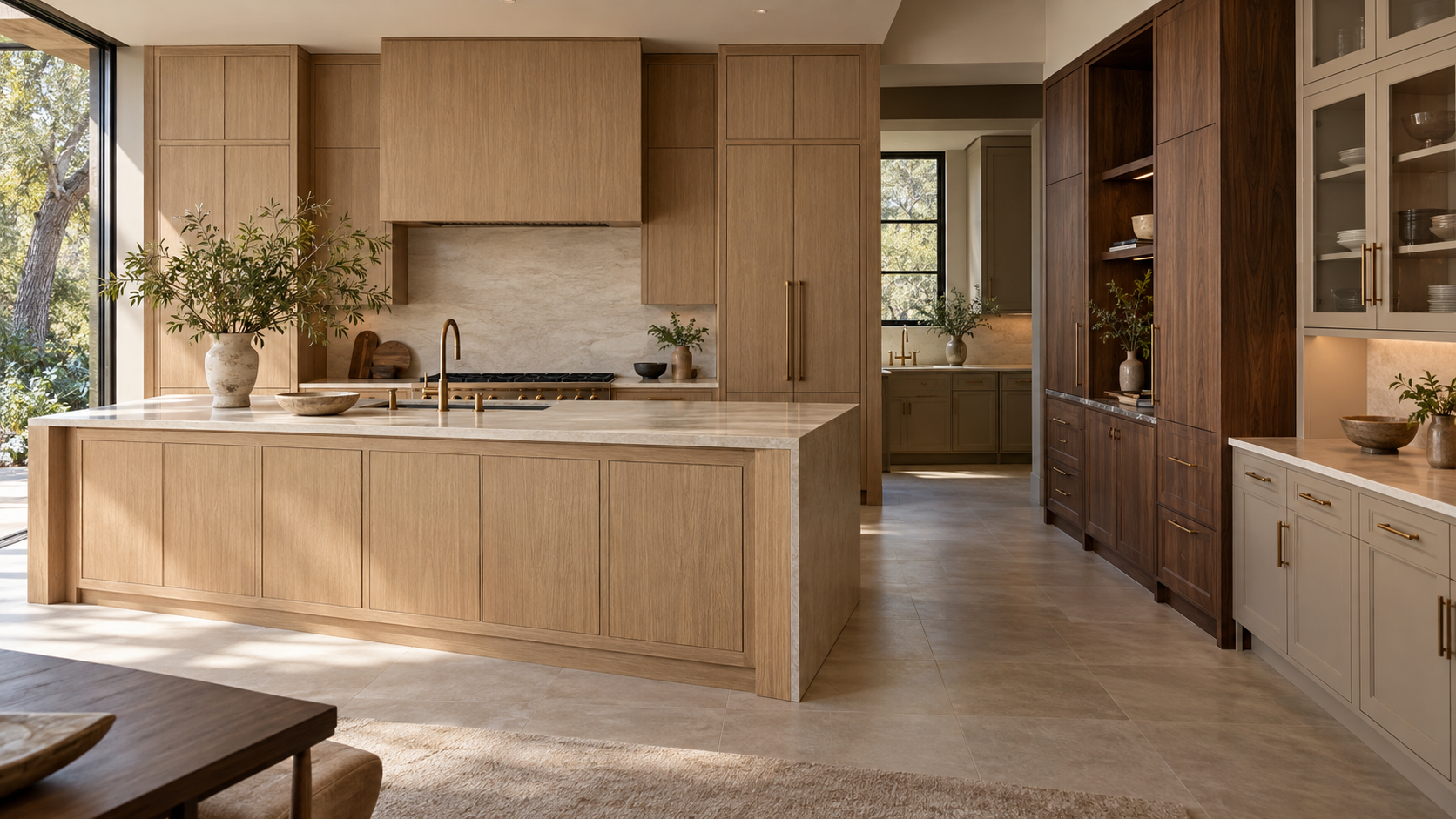
Begin by comparing the finishes that could establish the primary character of the room. Rift-cut white oak can create a quieter, linear wood expression. Walnut introduces deeper color and natural variation. Painted cabinetry can provide contrast or allow stone and wood to become more prominent.
Do not evaluate only a small door sample. Look at the finish across a full-size installation to understand how it behaves when repeated across drawers, tall cabinets, panels, and an island.
Add Stone to Understand the Contrast
Once you have a cabinetry direction, compare it directly with countertop and backsplash materials.
Pay attention to more than color. Look at the movement of the stone, its undertones, surface finish, and how visually active it feels beside the cabinetry.
A heavily figured stone may become the focal point of the kitchen, which can make quieter cabinetry useful. A restrained stone may allow natural wood grain to carry more of the visual interest.
When possible, evaluate more than a small stone chip. Natural stone can vary considerably across a slab, so understanding the larger pattern is important before making a final selection.
Bring Flooring Into the Conversation
Flooring and cabinetry occupy large surfaces and are often seen together, so their relationship deserves attention.
If the flooring already exists, bring a sample or accurate project information to the showroom. The cabinetry does not need to match the floor exactly. In many cases, a slight difference in tone creates a more layered interior than attempting an imperfect match.
With wood flooring and wood cabinetry, compare warmth, undertones, grain direction, and visual intensity. The materials should feel related without becoming indistinguishable.
Use Hardware to Refine the Palette
Hardware may occupy less visual space, but it can influence how the larger materials relate.
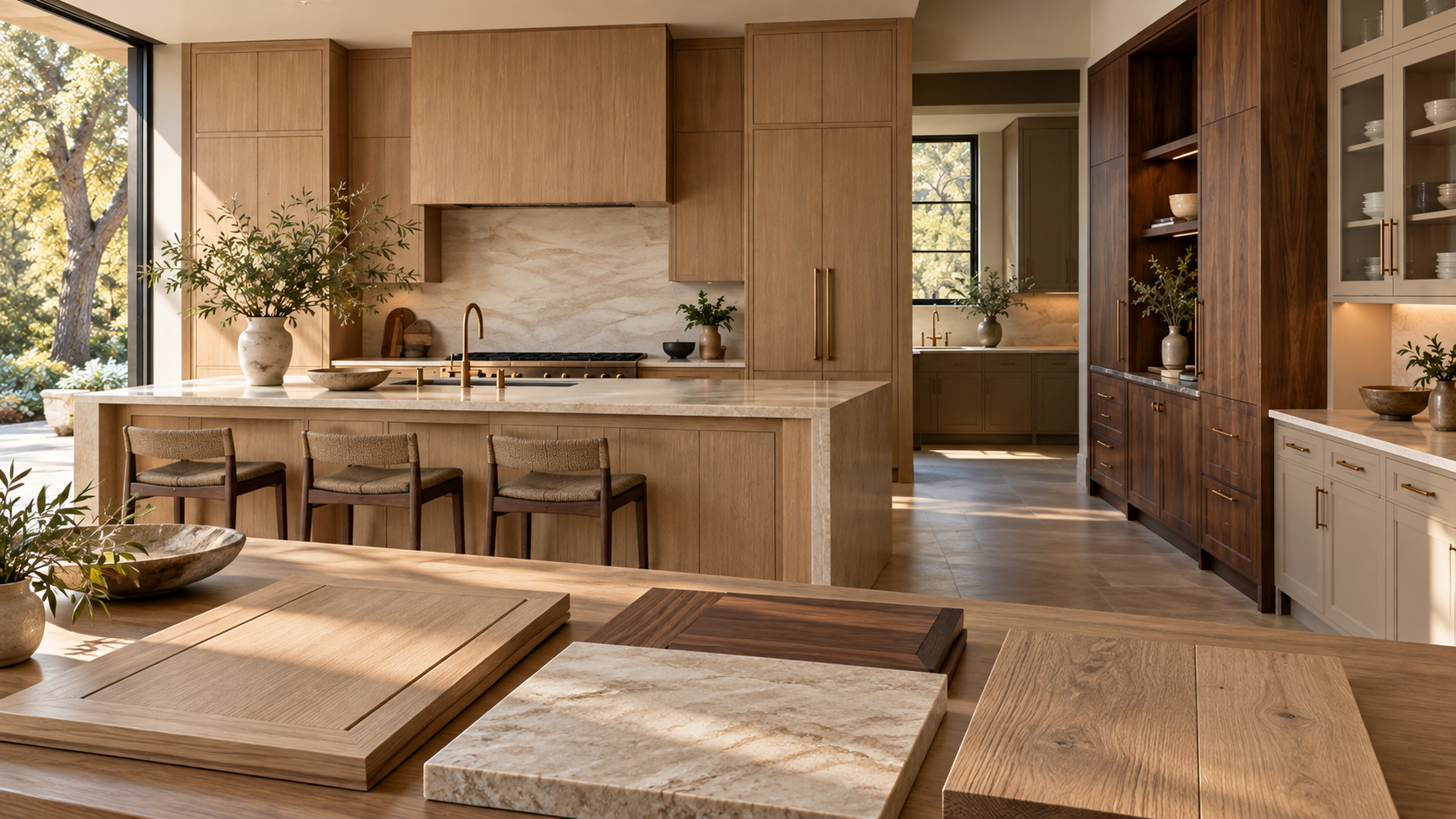
Instead of choosing hardware independently, place it directly against the cabinet finish and near the stone. Consider its scale, shape, finish, and contrast.
Warm metals can reinforce the warmth of walnut or certain oak finishes. Darker hardware can create definition against painted cabinetry. A quieter finish may be more appropriate when the wood or stone already has significant movement.
The objective is not to make every metal finish identical. It is to avoid introducing visual competition without a reason.
Pay Attention to Texture and Sheen
Color receives a lot of attention during material selection, but texture and sheen can be equally important.
Compare smooth painted cabinetry with visible wood grain. Look at honed stone beside a more refined cabinet finish. Notice how metal hardware reflects light differently from surrounding surfaces.
A kitchen built entirely from materials with similar visual weight can feel flat. Variation in texture can create depth without requiring additional colors or decorative elements.
Physical samples make these differences much easier to understand than digital images.
Test the Palette Under Different Light
Materials do not look the same throughout the day.
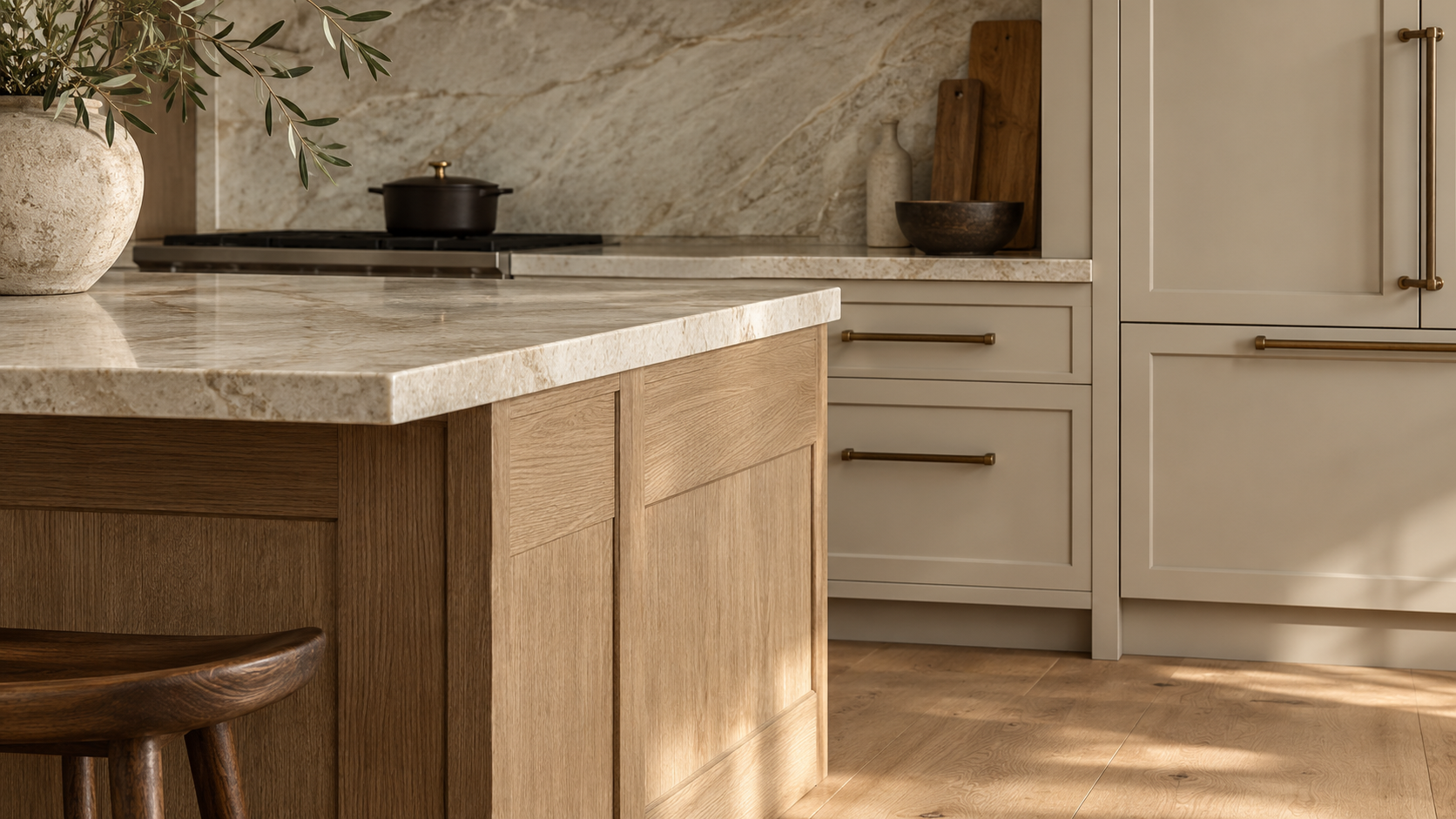
Natural wood can appear warmer in direct sunlight and quieter under softer light. Painted finishes may reveal undertones that were not obvious in photographs. Stone can also change depending on whether it receives natural or artificial light.
Move samples around the showroom when possible. Compare them near windows and against the full-size cabinetry display.
For final decisions, it can also be useful to view approved samples at the project site, particularly when existing flooring, natural light, or surrounding materials will remain.
Edit the Palette Before Adding More
A material palette does not become stronger simply because it contains more finishes.
Once cabinetry, stone, flooring, and hardware begin working together, look at the composition as a whole. Determine which material should carry the most visual interest and which elements should remain quieter.
If the stone has significant movement, the cabinetry may benefit from restraint. If natural wood is the dominant feature, quieter surrounding finishes can give its grain more presence.
Editing is an important part of material selection. A few carefully coordinated materials can create more clarity than a large collection of individually attractive finishes.
Use the Full-Size Display as the Final Reality Check
Before finalizing the palette, return to the full cabinetry display.
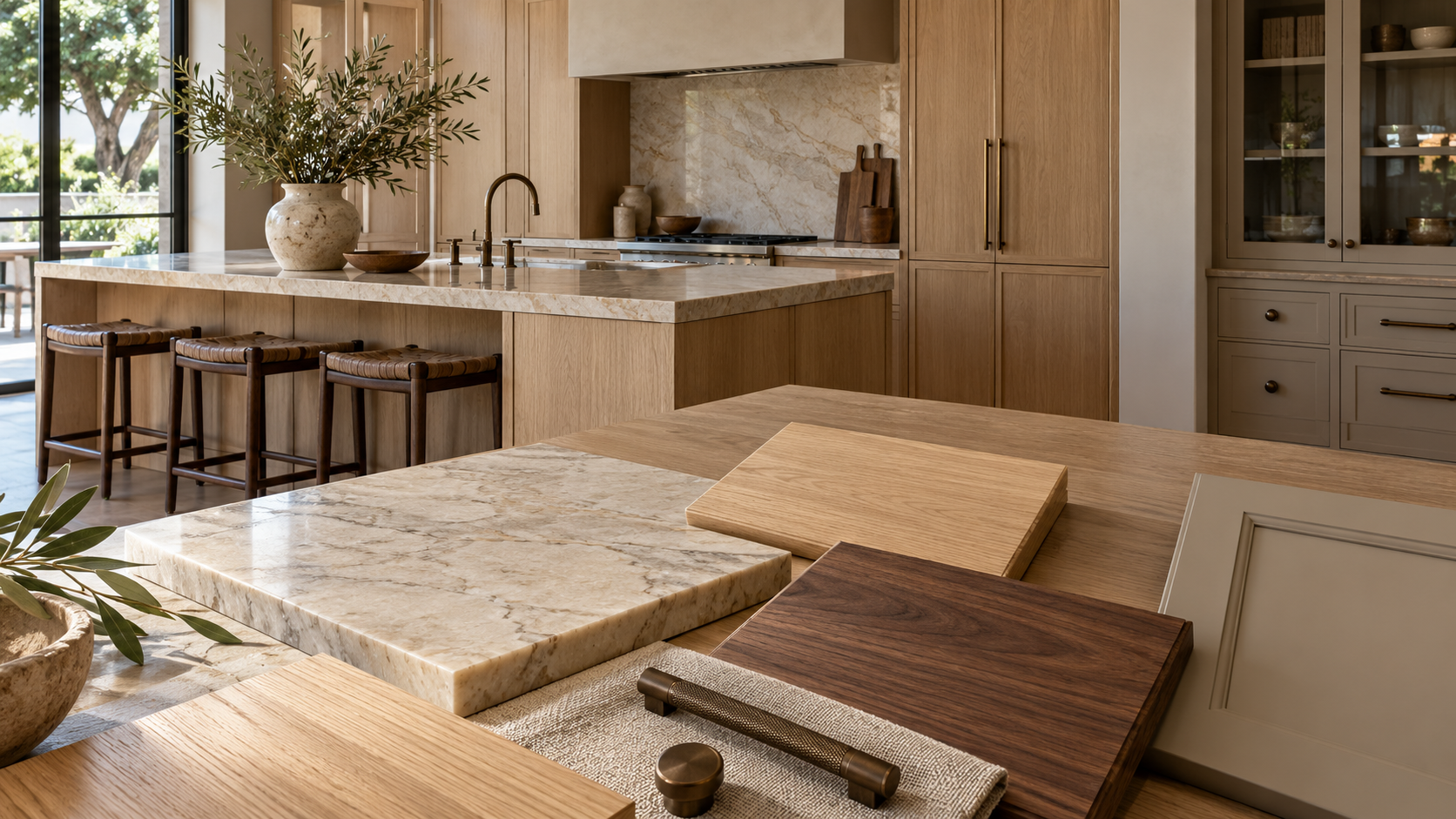
Look at the cabinet finish across a larger surface. Place your stone and flooring samples nearby. Step back and consider how the materials feel together rather than evaluating each one independently.
This is where a showroom becomes particularly useful. Small samples help refine selections, but full-size cabinetry provides the scale needed to understand the final effect.
The material palette should work from several feet away and still feel considered when viewed closely.
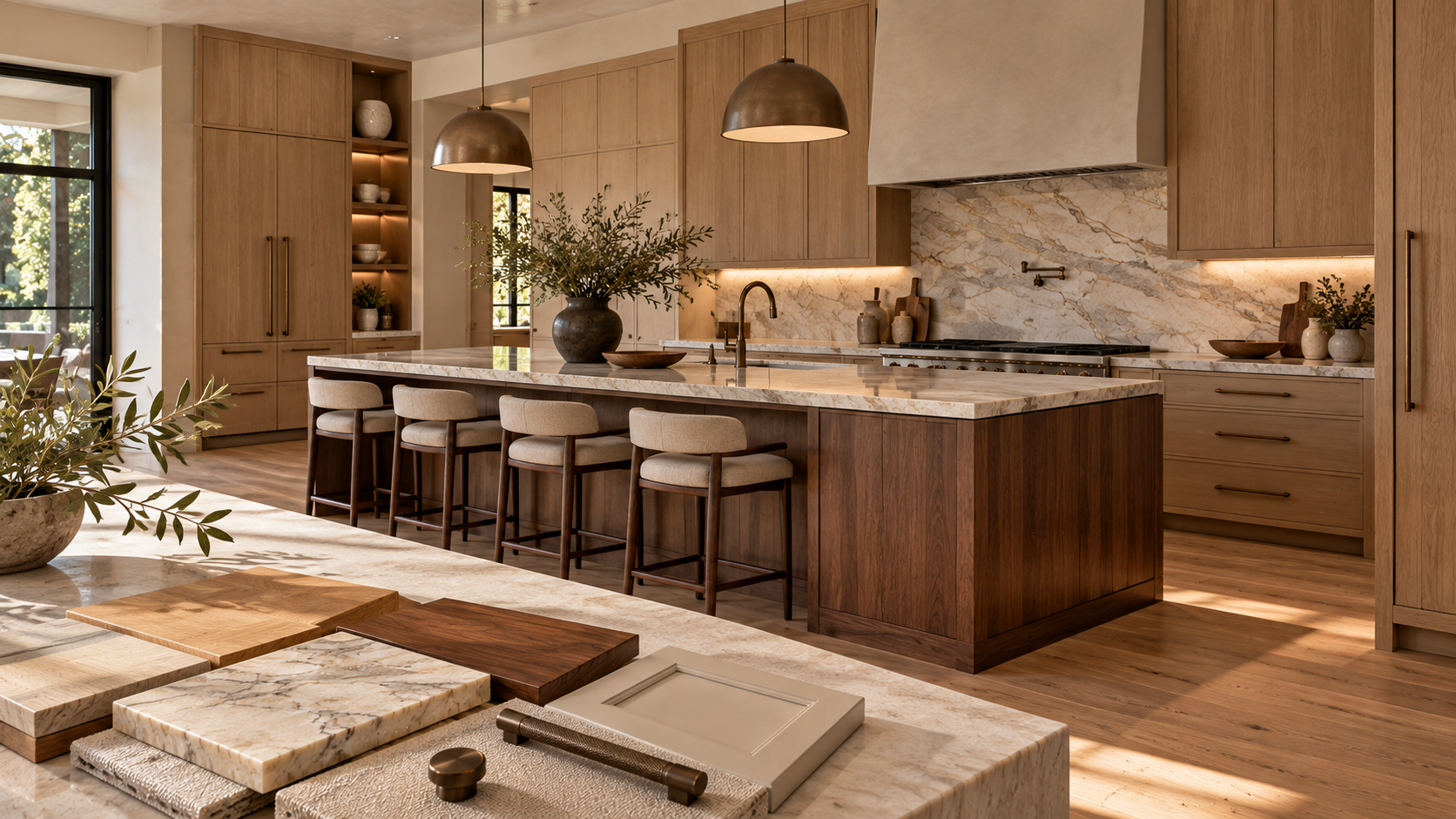
What Should Be in Your Kitchen Material Palette?
Most kitchen palettes begin with a few major elements: cabinetry, countertops, flooring, hardware, and surrounding wall or backsplash finishes. Appliances and lighting also affect how those materials are perceived.
The materials do not need to match. They need to relate through undertone, texture, proportion, and visual hierarchy.
Using a showroom allows you to make those decisions with physical materials and full-scale cabinetry in front of you, rather than trying to assemble the entire kitchen from individual online selections.
Build Your Kitchen Material Palette at Atelier Design Society
Atelier Design Society works with homeowners, architects, interior designers, builders, and other design professionals developing premium cabinetry and material palettes for Bay Area kitchens. At the Atelier Design Society showroom in Menlo Park, project teams can compare natural woods, painted finishes, cabinetry construction, hardware, interiors, surfaces, and full-scale installations while refining the material direction for a project.