
Kitchen corners create an obvious storage challenge. Two cabinet runs meet, but much of the resulting interior space can be difficult to see and reach.
The instinct is often to find a specialized mechanism that uses every available inch. But the solution with the greatest capacity is not always the one that creates the best kitchen.
A successful corner should prioritize accessibility, the items being stored, nearby drawers and appliances, and the overall cabinetry layout. In some kitchens, that means a specialized pull-out. In others, the better decision may be to simplify the corner entirely.
Why Are Corner Cabinets So Difficult to Use?
A conventional corner cabinet can create a deep interior with limited access through a relatively small door. Items placed toward the back may require reaching around other objects, making the cabinet increasingly inconvenient over time.
Before selecting an accessory, consider what you actually need the corner to store.
Large, occasionally used pieces may work perfectly well in a deeper cabinet. Everyday cookware, on the other hand, usually benefits from storage that provides direct access.
The surrounding cabinetry matters too. Sometimes improving the drawers on either side of the corner creates a better result than trying to maximize the corner itself.
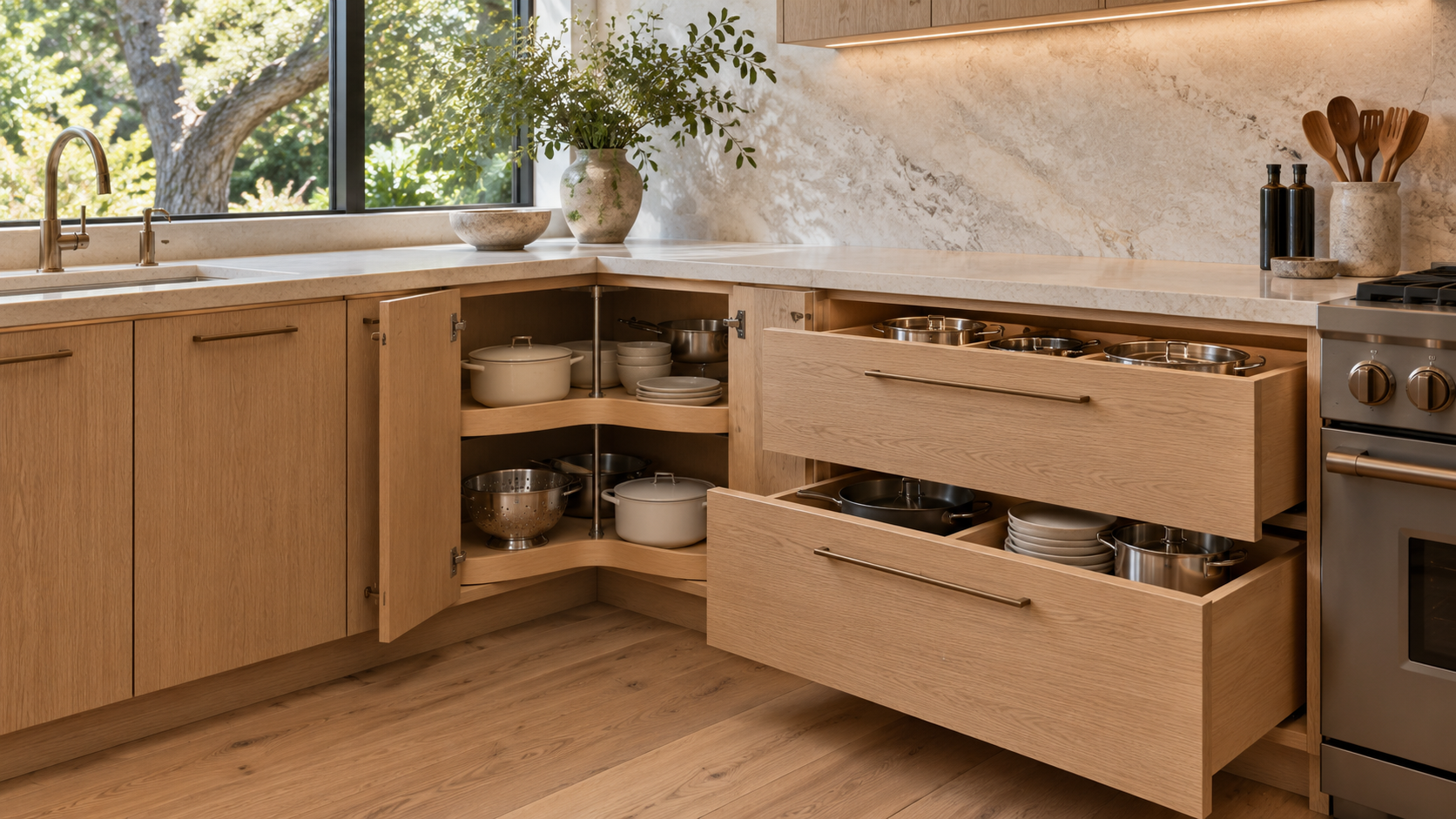
Corner Drawers
Corner drawers can turn an awkward area into storage that pulls completely into view.
Instead of opening a door and reaching into a deep cabinet, the drawer brings its contents outward. Depending on the cabinetry system, these drawers may have an angled or specialized interior configuration that follows the corner.
They can be useful for cookware, bowls, containers, or other frequently accessed items.
However, the mechanism and drawer shape can reduce some usable interior volume. They also create a distinctive exterior configuration, so the drawer fronts need to work with the proportions of the surrounding cabinetry.
For the right kitchen, improved access can be more valuable than maximizing raw capacity.
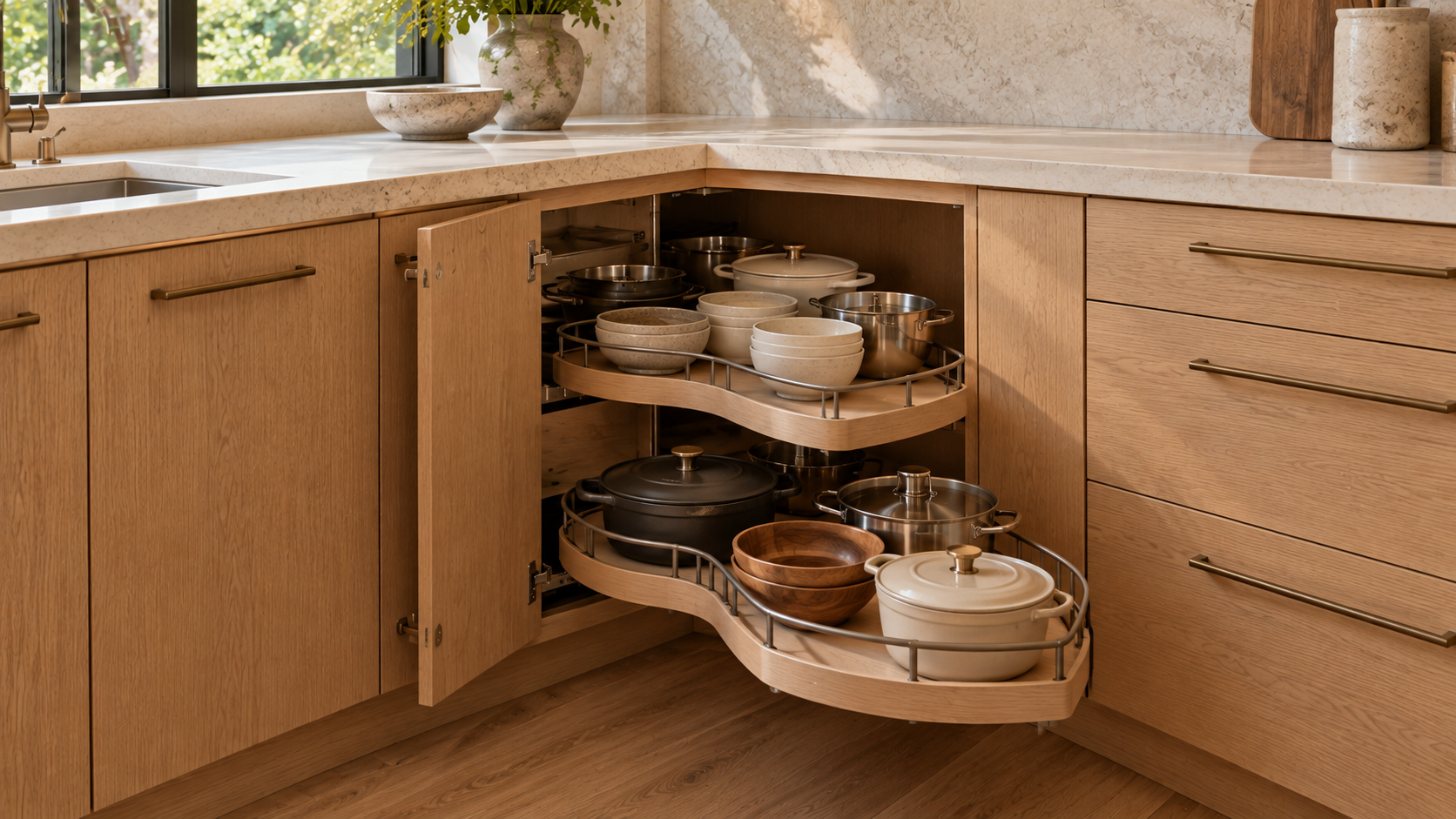
Corner Pull-Out Systems
Specialized pull-outs are another way to bring storage out of a blind corner.
Rather than requiring someone to reach deep into the cabinet, shelves or trays move toward the opening. These systems can make stored items considerably easier to see and retrieve.
They are particularly useful when the kitchen layout creates a blind corner that cannot easily be eliminated.
But not every pull-out is equally useful. Consider how far the mechanism extends, how much weight it can accommodate, how easily the shelves move, and whether the opening provides enough room for the system to operate comfortably.
The mechanism should make everyday access simpler, not turn opening a cabinet into a multi-step process.
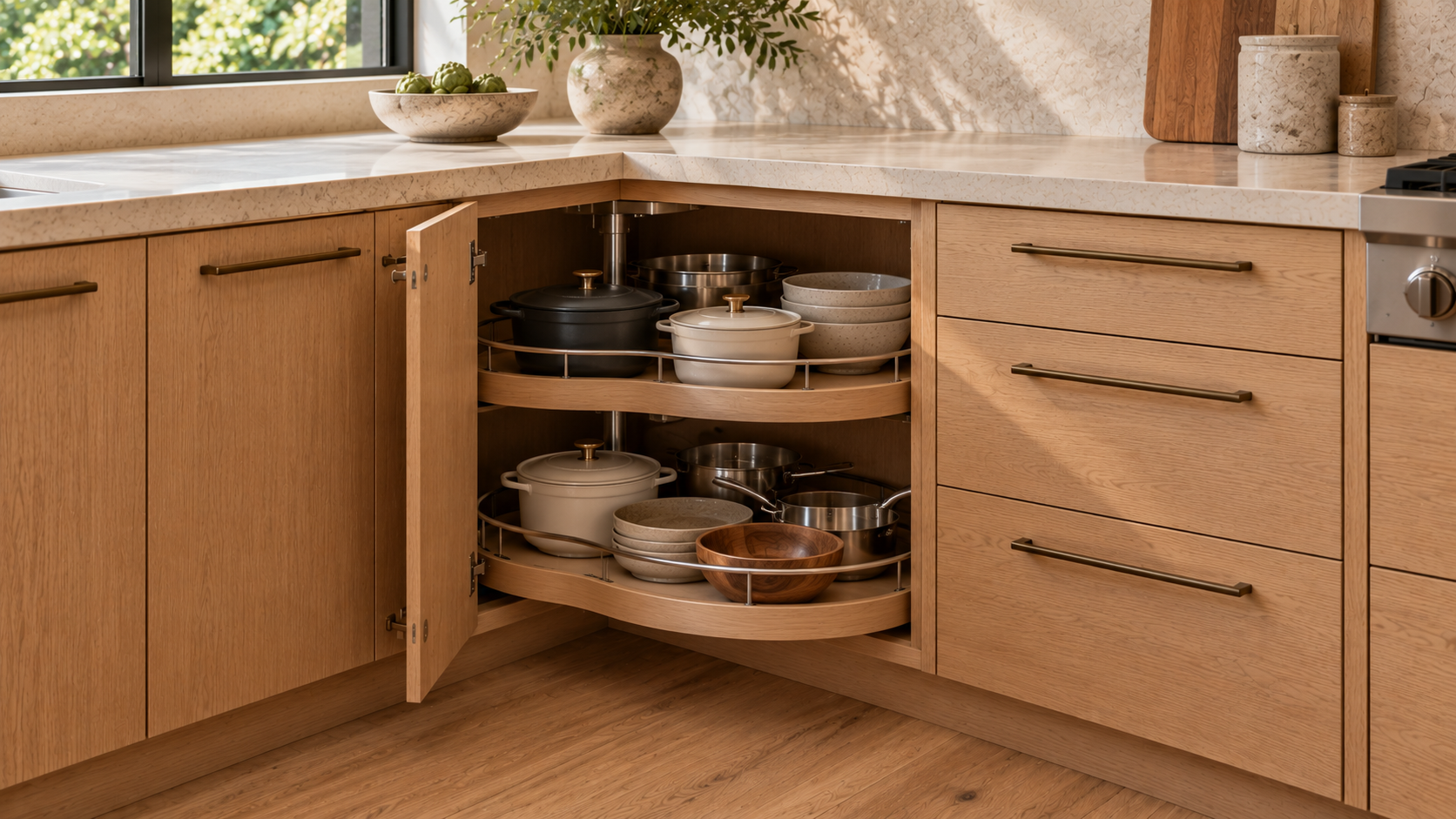
Rotating Corner Storage
Rotating shelves can work well when the cabinet configuration supports them.
Their primary advantage is simple access. Instead of reaching toward the back, the interior rotates to bring stored items toward the front.
They can be useful for cookware, pantry items, mixing bowls, or other medium-size objects.
The shape of the storage is important, however. Round or curved shelves do not use every portion of a square cabinet interior, and poorly organized items can shift or become difficult to retrieve.
For households that value straightforward access, that tradeoff may be worthwhile.
Diagonal Corner Cabinets
A diagonal cabinet creates a larger angled opening across the corner rather than hiding storage behind a narrower opening.
This can improve access, particularly when storing larger objects.
Visually, however, diagonal cabinetry changes the geometry of the kitchen. In a highly minimal or contemporary design, the angled front may interrupt otherwise clean horizontal and vertical lines.
It tends to work best when the architecture and cabinet style support the additional angle rather than when it is introduced solely to gain storage.
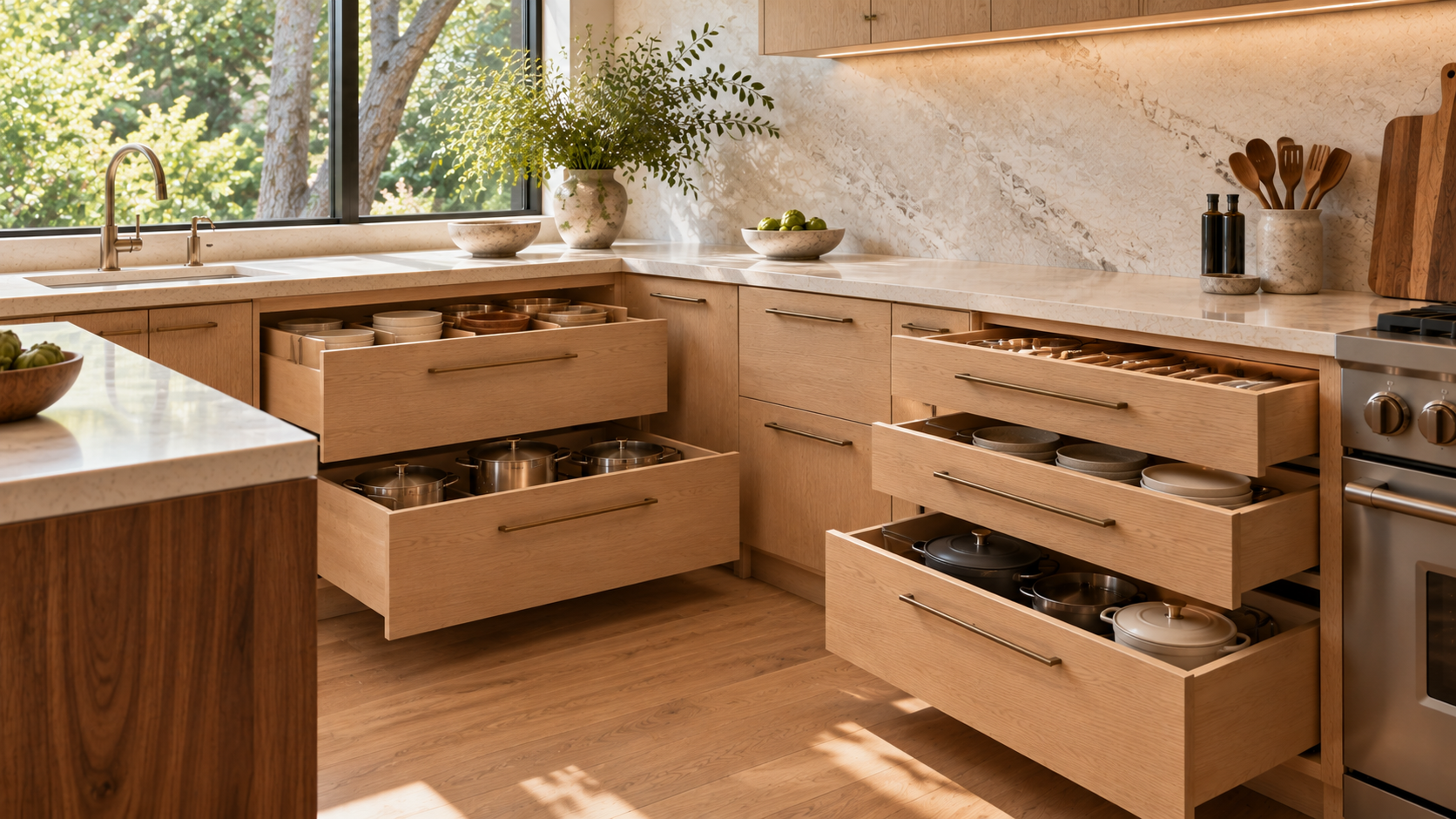
Sometimes the Best Corner Cabinet Is No Corner Cabinet
One of the most useful decisions can be to stop treating every inch of the corner as valuable storage.
If forcing a large corner cabinet compromises nearby drawer widths, appliance placement, or circulation, allowing some inaccessible space may produce a better overall kitchen.
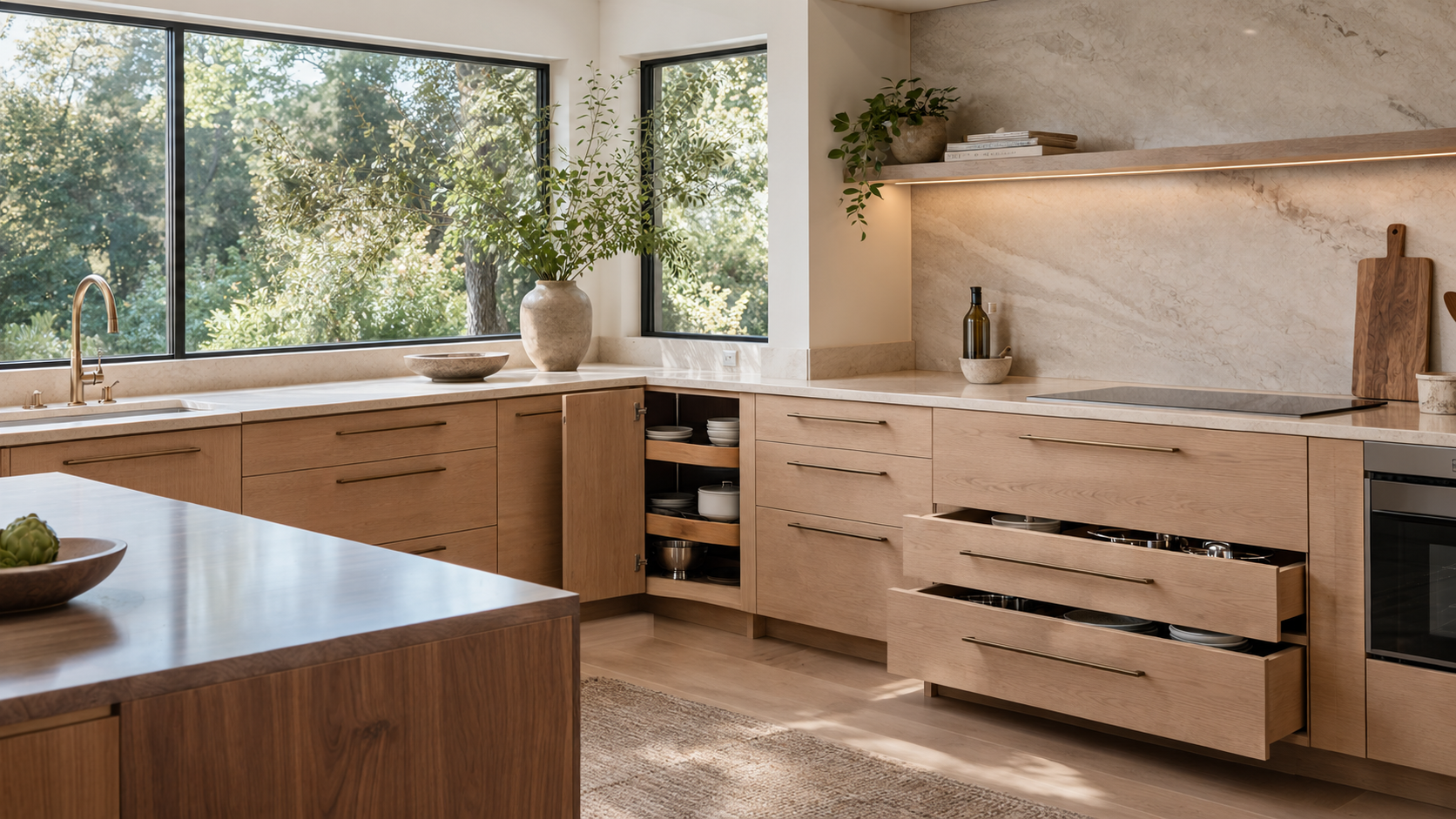
For example, wide drawer stacks on each run can sometimes provide more practical everyday storage than a complicated corner mechanism.
This is particularly relevant in luxury kitchens, where functionality and clean cabinetry proportions may be more important than achieving the maximum possible cabinet volume.
Unused space is not automatically wasted space if eliminating it improves everything around it.
Keep Frequently Used Items Out of Difficult Corners
Even with a good corner solution, storage hierarchy matters.
Frequently used pots, pans, knives, dishes, and preparation tools should generally occupy the most accessible areas of the kitchen. Corner cabinets can then handle larger serving pieces, occasional cookware, small appliances, or other items that are not needed constantly.
This prevents the corner from becoming a bottleneck during everyday cooking.
It also allows the specialized mechanism, if one is used, to solve a genuine storage need rather than becoming an expensive feature that rarely improves the routine.
Evaluate the Entire Kitchen Before Choosing a Solution
A corner should never be designed in isolation.
Consider the drawers on both adjoining cabinet runs, appliance locations, sink placement, door swings, aisle widths, and the items that need to be stored nearby.
Also think about what happens when the corner cabinet is open. A large door or extended pull-out should not interfere with an island, appliance, or adjacent drawer.
This is why corner storage is best resolved during cabinetry planning rather than after the basic layout has already been finalized.
Which Corner Cabinet Solution Actually Works Best?
There is no single best corner cabinet.
Corner drawers can provide direct access. Pull-out systems can make blind corners more usable. Rotating shelves offer straightforward retrieval, while traditional cabinets can still work for larger or infrequently used pieces.
And sometimes, sacrificing a small amount of theoretical storage allows better drawers and cabinetry proportions elsewhere.
Before ordering cabinetry, compare each option based on accessibility, usable storage, the items you need to store, hardware operation, and its effect on the surrounding layout.
The best solution is the one that makes the entire kitchen work better, not simply the one that fills the corner.
Explore Kitchen Storage With Atelier Design Society
Atelier Design Society works with homeowners, architects, interior designers, builders, and other design professionals planning premium cabinetry and storage throughout Bay Area kitchens. At the Atelier Design Society showroom in Menlo Park, project teams can compare cabinet configurations, drawers, pull-outs, interior storage, materials, hardware, and full-scale installations while determining which solutions make sense for the overall kitchen layout.
