
Small appliances are essential to everyday cooking, but they can quickly make even a beautifully designed kitchen feel cluttered. Coffee makers, toasters, blenders, mixers, air fryers, and other equipment all need accessible homes without permanently occupying valuable countertop space.
In a luxury kitchen, the solution is not simply to hide every appliance. Storage should reflect how often each appliance is used, how heavy it is, and where it is most convenient to use.
Start by Separating Everyday and Occasional Appliances
Before designing cabinetry, identify which appliances are used daily, weekly, and only occasionally.
A coffee maker or toaster used every morning should require very little effort to access. A stand mixer used weekly can live in a lower cabinet or dedicated baking zone. Specialty appliances used occasionally can occupy deeper or less prominent storage.
This hierarchy prevents valuable cabinetry from being designed around equipment that rarely leaves the shelf.
It also helps determine which appliances should remain ready to use and which can be completely concealed.
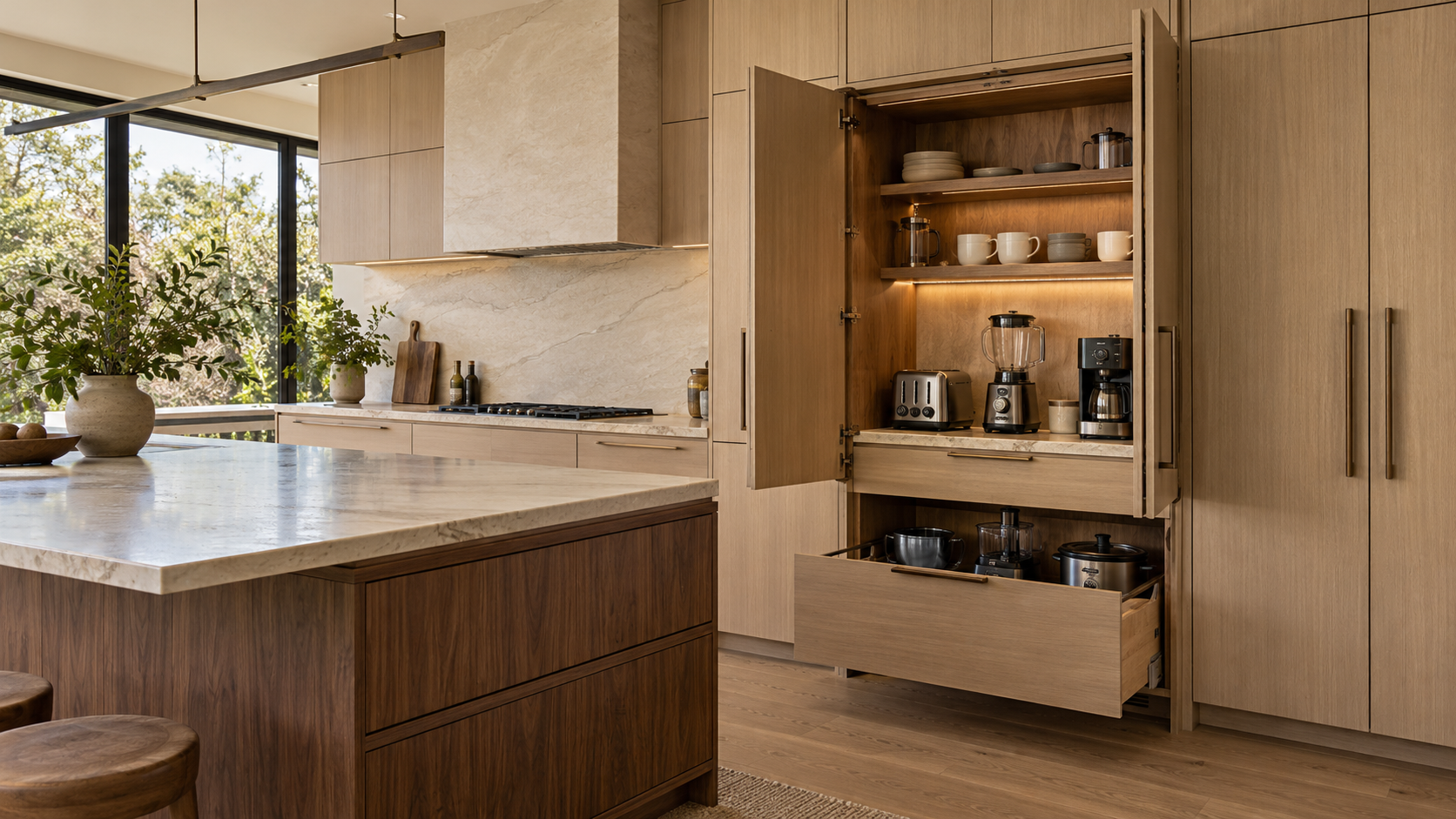
Use an Appliance Garage for Everyday Equipment
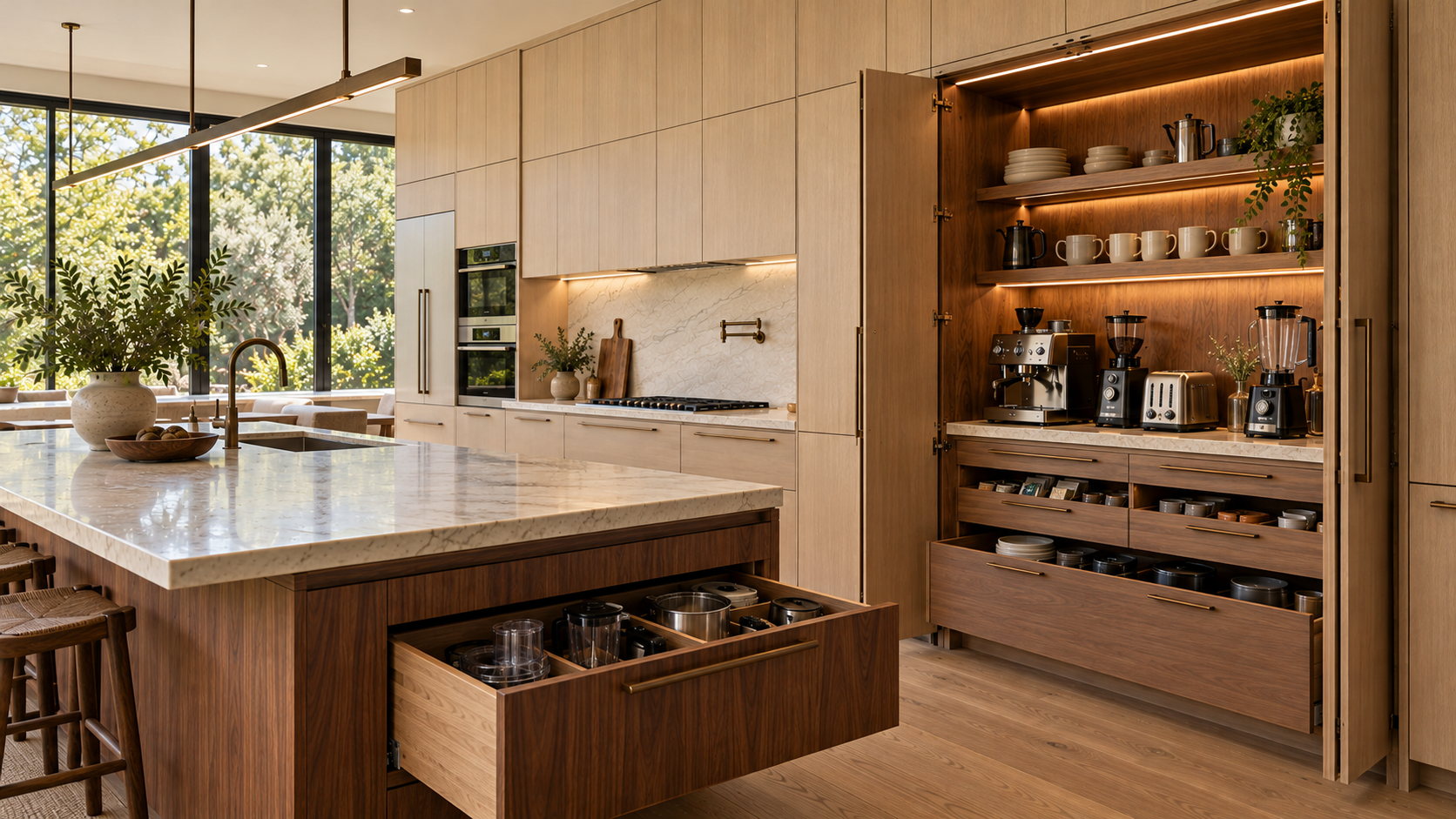
An appliance garage can keep frequently used equipment close to the countertop while allowing it to disappear when it is not needed.
The cabinet might use pocket, retractable, or lift-up doors depending on the cabinetry system and available space. The important consideration is what happens when those doors are open.
They should not obstruct adjacent drawers, preparation space, or circulation.
The interior also needs to be sized around the actual appliances rather than generic dimensions. Measure height, width, and depth, including any clearance needed to open lids, add water, or remove components.
A well-designed appliance garage should make using an appliance almost as convenient as leaving it on the counter.
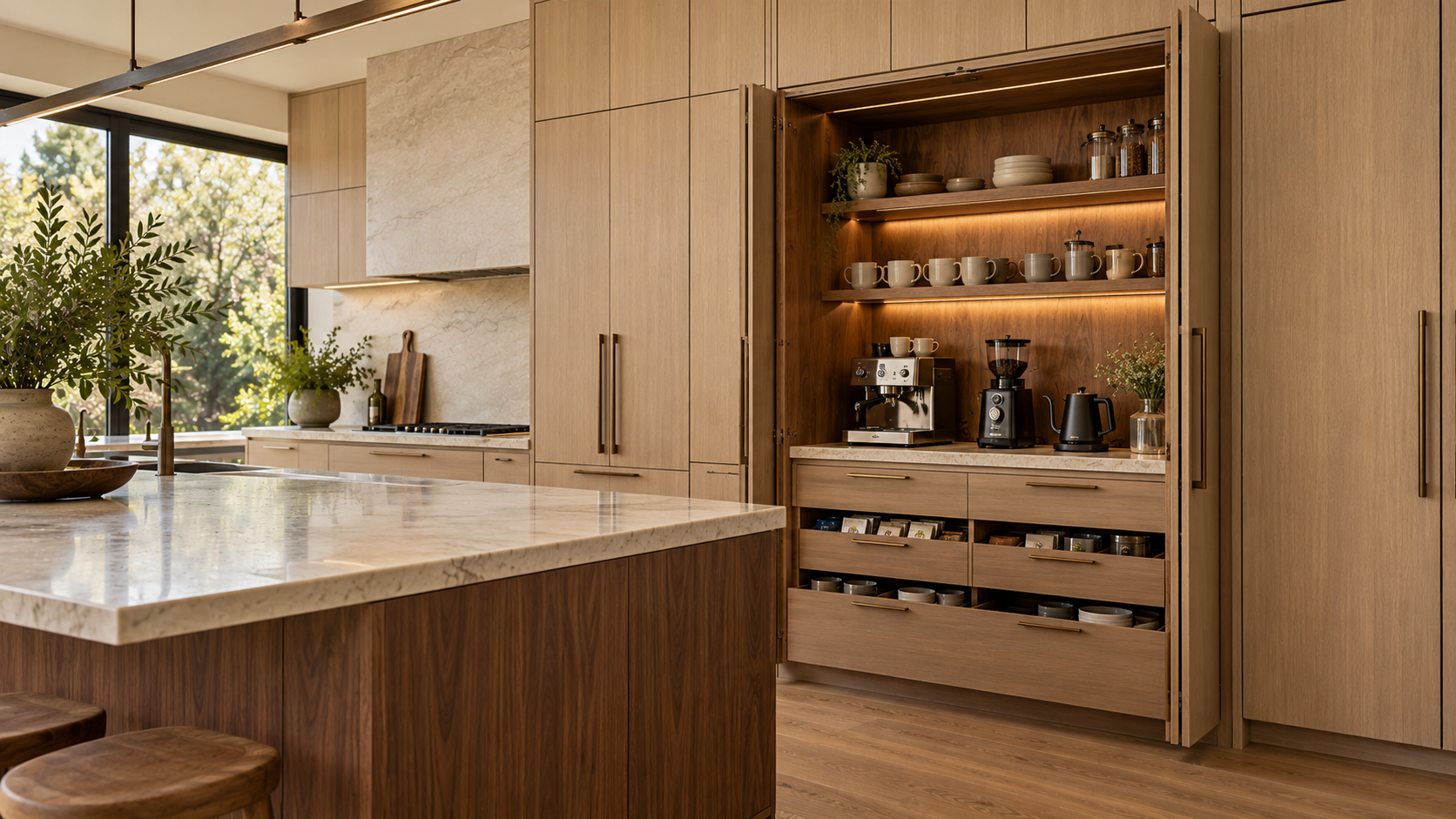
Create a Dedicated Coffee and Beverage Station
Coffee equipment often deserves its own storage strategy because it may be used several times throughout the day.
A dedicated station can consolidate the coffee maker, grinder, kettle, mugs, beans, tea, sweeteners, and other supplies into one area. It can remain open as a material niche or disappear behind cabinetry doors.
Locating the station outside the primary cooking zone can also prevent morning coffee traffic from interfering with someone preparing food.
Drawers below can organize smaller supplies, while upper cabinetry provides storage for mugs and glassware.
Store Heavy Appliances at an Accessible Height
Heavy appliances require a different approach.
A large stand mixer or other substantial equipment can become inconvenient if it needs to be lifted from a high shelf or carried across the kitchen every time it is used.
Deep lower drawers or cabinets near the appropriate work surface can provide easier access. Depending on the cabinetry system and appliance, specialized interior mechanisms may also be considered.
The goal is to minimize unnecessary lifting and carrying.
If someone bakes frequently, for example, storing the mixer close to the primary baking surface makes considerably more sense than placing it in a distant pantry simply because there is room.
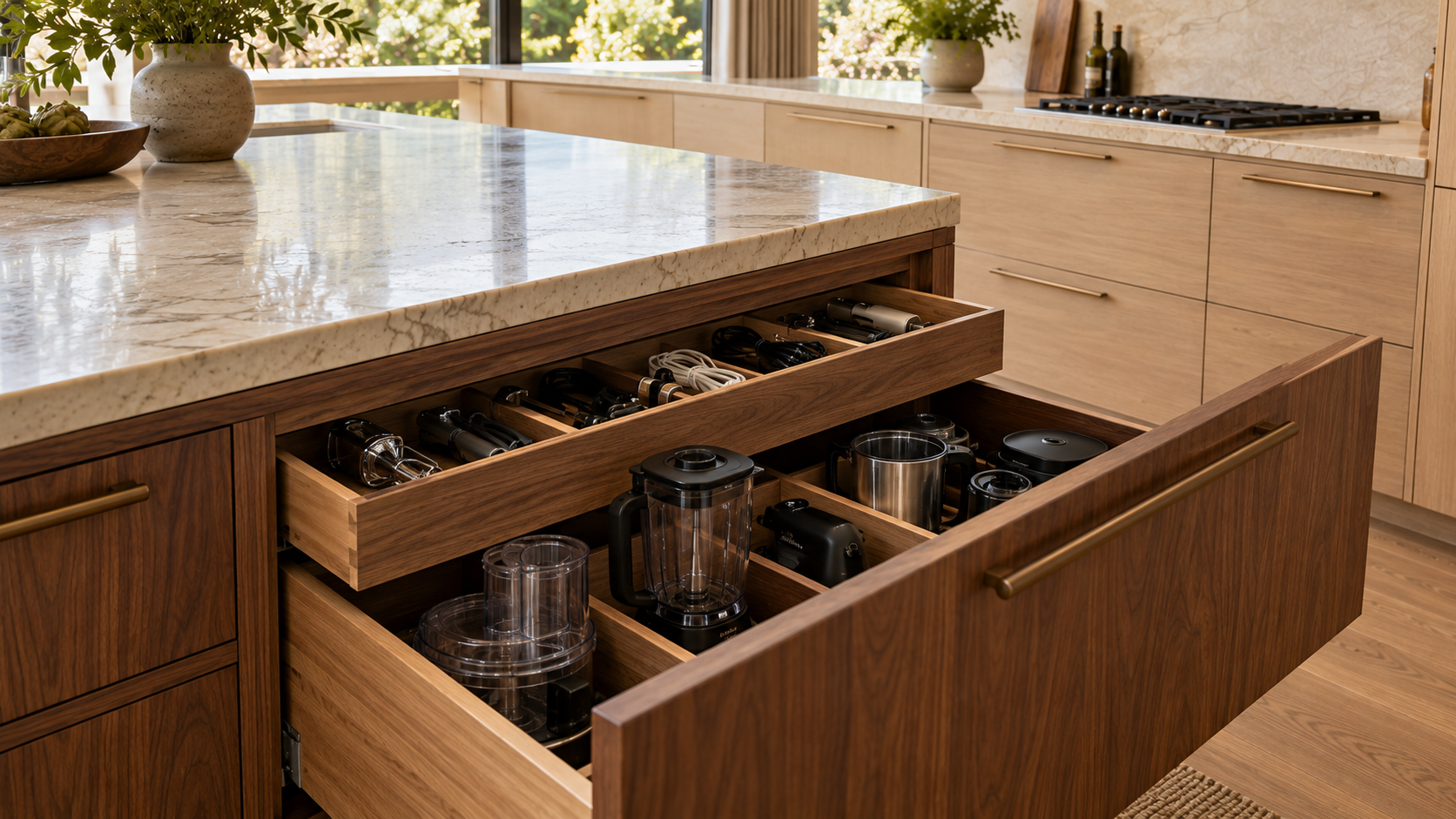
Use Deep Drawers for Appliances That Need to Be Put Away
Deep drawers can provide effective storage for appliances that do not need to remain ready for immediate use.
Unlike a deep cabinet with a fixed shelf, the drawer brings its contents outward. This makes it easier to see and retrieve blenders, food processors, hand mixers, or other equipment.
Drawer dimensions and hardware should be selected with the intended contents in mind, particularly when appliances are heavy.
Interior dividers can also prevent smaller pieces and attachments from becoming mixed together.
Consider a Pantry Appliance Counter
If the kitchen includes a walk-in, hidden, or generous cabinet pantry, part of it can function as an appliance zone.
A dedicated countertop can hold equipment that would otherwise occupy the main kitchen. This can be especially useful for appliances used frequently enough to remain accessible but not necessarily visible.
The pantry can also store accessories and ingredients nearby, creating complete activity zones. A mixer might sit beside baking supplies, while a toaster could remain close to breakfast foods.
This approach can preserve clear countertops in the primary kitchen without requiring every appliance to be packed away after each use.
Plan Electrical Requirements Early
Concealed appliance storage requires more than finding an empty cabinet.
If an appliance will be operated within a cabinet or pantry station, electrical outlets, ventilation, heat, clearances, and the appliance manufacturer's requirements need to be considered during design.
Not every appliance is appropriate to operate inside an enclosed cabinet.
Doors may need to remain fully open during use, and some appliances may need additional surrounding clearance. Equipment that produces significant heat or steam deserves particular attention.
These requirements should be resolved before cabinetry production rather than added after installation.
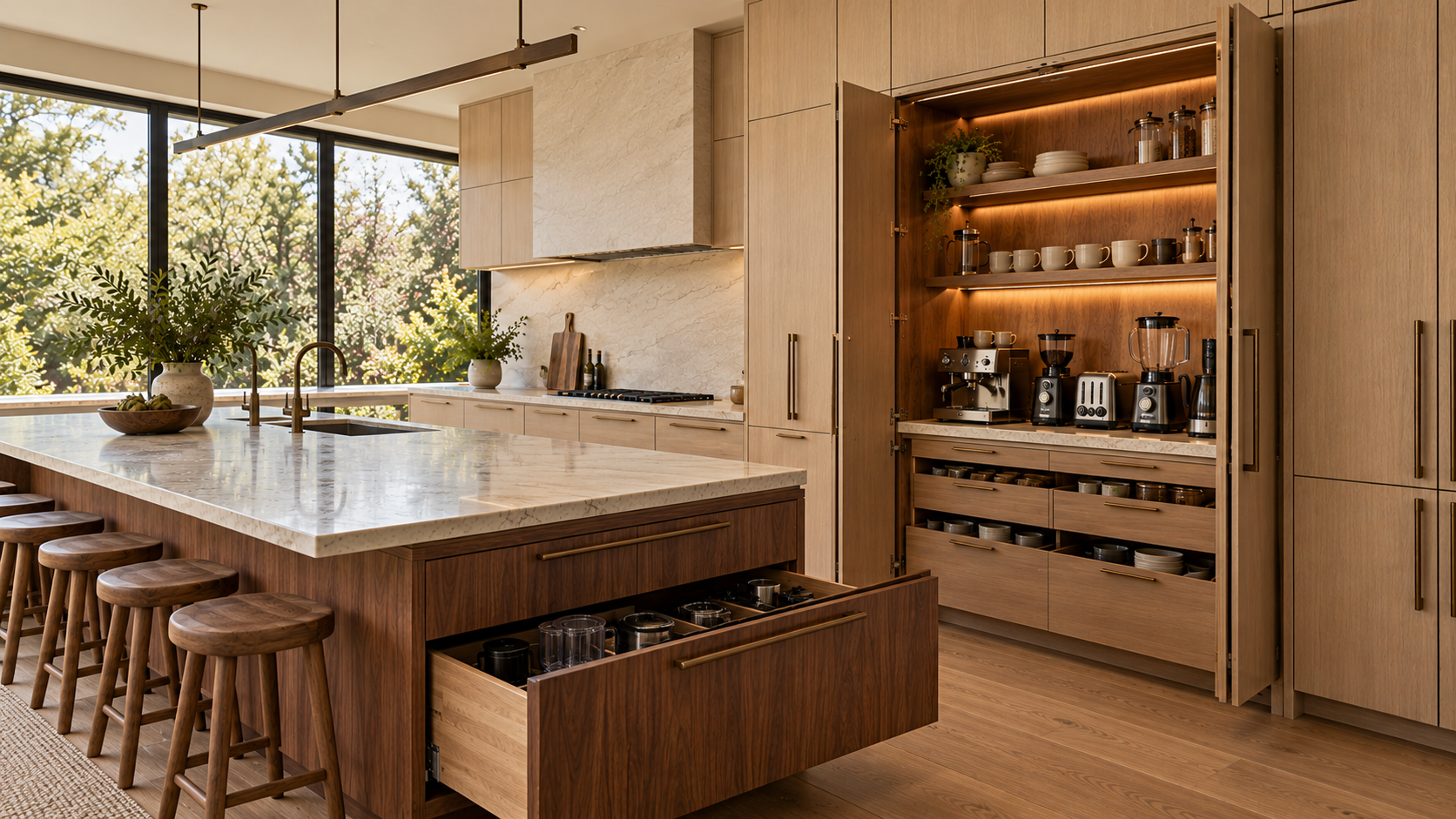
Keep Accessories With the Appliance
Appliance storage becomes less useful when the machine is in one cabinet and all of its accessories are somewhere else.
Mixer attachments, blender components, coffee filters, food-processor blades, and charging cords should have dedicated storage nearby.
A shallow drawer above or below the appliance can often handle these smaller pieces without requiring a large amount of space.
Grouping equipment with everything required to use it creates a more intuitive kitchen and makes it easier to return everything to its proper location afterward.
What Is the Best Way to Store Small Appliances?
There is no single storage solution for every appliance.
Daily equipment should remain extremely easy to access. Heavy appliances should minimize lifting. Occasional equipment can occupy secondary storage, while appliance garages and pantry counters can keep frequently used machines available without leaving them permanently visible.
Before ordering cabinetry, inventory the appliances you already own and consider which ones may be added later. Record their dimensions, where they are used, how frequently they are needed, and whether they require electricity, ventilation, water, or additional clearance.
The best small-appliance storage makes the kitchen look calmer without making it harder to use.
Explore Small-Appliance Storage With Atelier Design Society
Atelier Design Society works with homeowners, architects, interior designers, builders, and other design professionals planning premium cabinetry throughout Bay Area kitchens. At the Atelier Design Society showroom in Menlo Park, project teams can compare appliance stations, deep drawers, pantry storage, cabinet interiors, hardware, materials, and full-scale installations while developing storage around the appliances they actually use.
