
Lower cabinetry has traditionally relied on doors with shelves behind them. But in many kitchens, deep drawers can provide easier access and more efficient organization.
That does not mean every base cabinet should become a drawer stack. Doors, drawers, pull-outs, and specialized interiors each solve different storage problems.
The better question is: what needs to be stored here, and which cabinet configuration makes it easiest to reach?
Why Are Drawers So Useful in Lower Cabinets?
The biggest advantage of drawers is accessibility.
With a traditional cabinet and shelf, items near the back can be difficult to see or reach. A full-extension drawer brings the contents outward, allowing you to view and access storage from above.
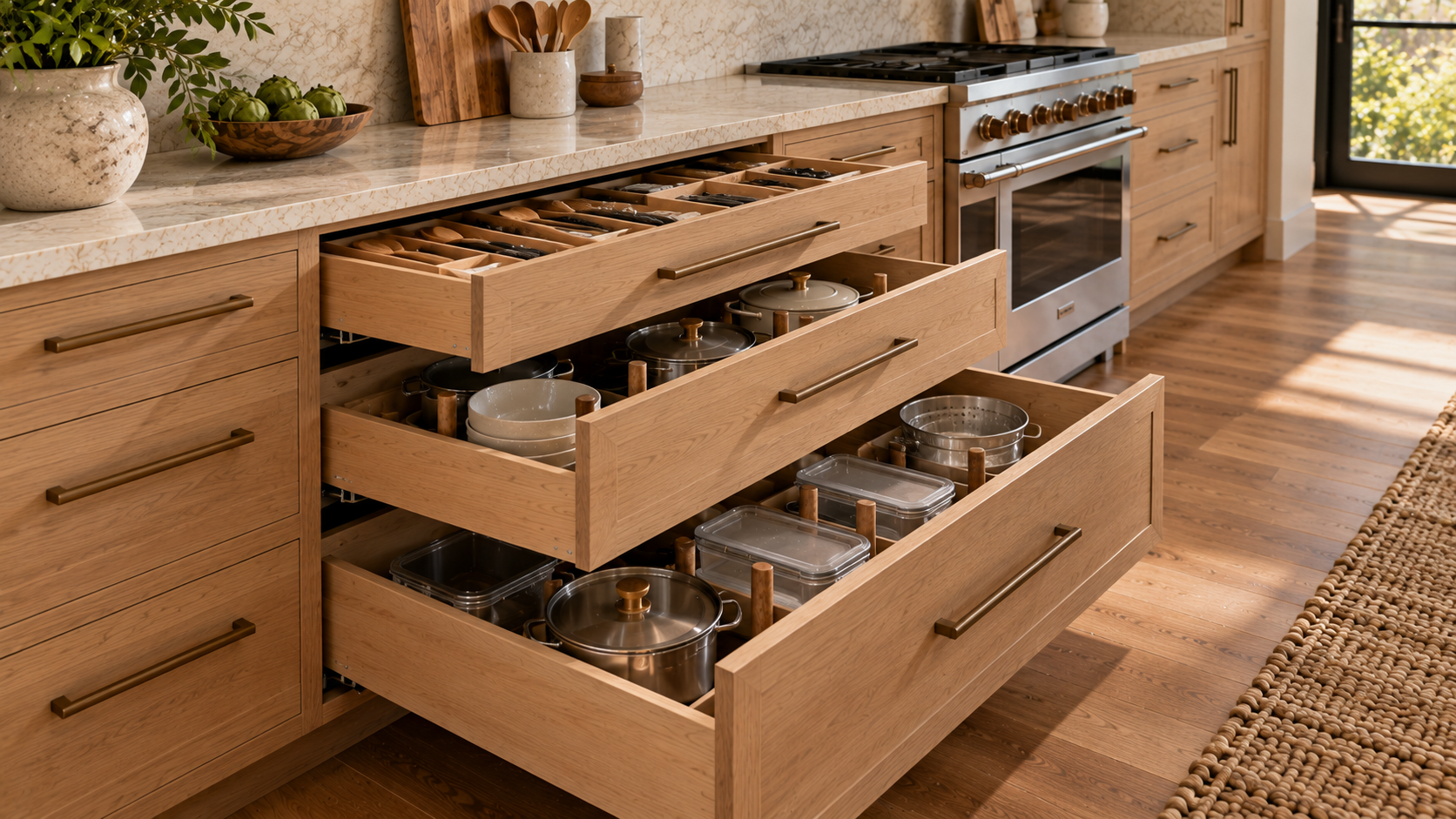
Deep drawers can work particularly well for pots, pans, mixing bowls, food containers, dishes, and other frequently used items.
They also allow storage to be divided by height. A shallow upper drawer can hold utensils while deeper drawers below accommodate larger cookware.
When Do Traditional Lower Cabinets Work Better?
Cabinets with doors still have an important role.
They can be useful for storing tall, bulky, or irregularly shaped objects that do not fit naturally into a drawer. Adjustable shelving can also provide flexibility when storage needs change.
Sink bases are another common example. Plumbing, disposals, filtration equipment, and other mechanical components can make a conventional cabinet interior more practical, although organizers and pull-outs can still improve the usable space.
Some specialized appliances may also require a cabinet configuration rather than drawers.
The decision should follow the contents instead of applying the same configuration across the entire kitchen.
Think About How Often You Use the Item
Frequently used items deserve the easiest storage locations.
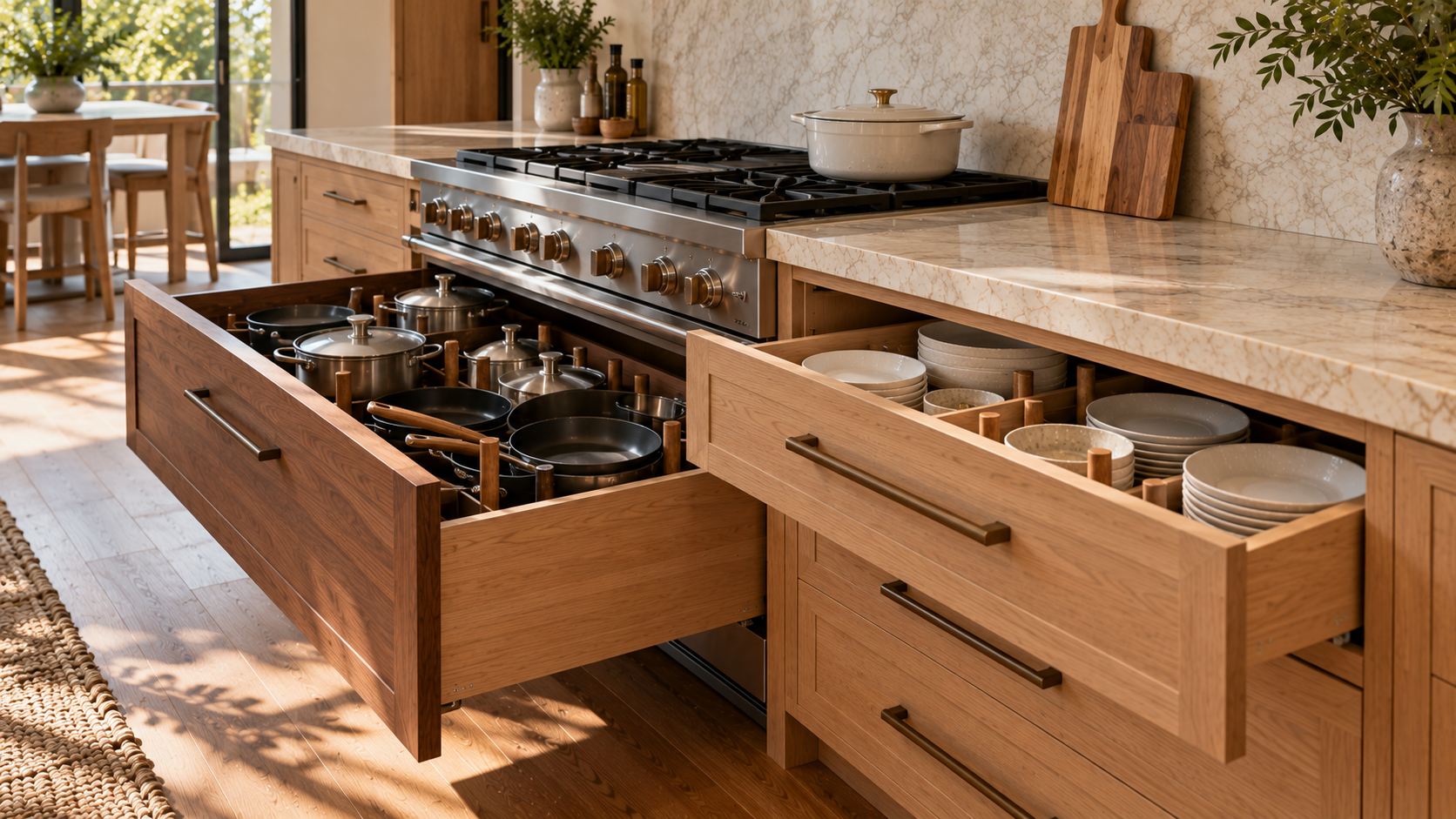
If cookware is used every evening, storing it in a deep drawer near the range may be more convenient than placing it behind two cabinet doors. Plates and bowls can also work well in drawers, particularly near the dishwasher or dining area.
Items used only occasionally can occupy less accessible cabinets.
This creates a hierarchy within the kitchen: prime drawer space is reserved for objects that need to be reached constantly, while traditional cabinets handle items that do not require the same immediate access.
Are Drawers Better for Heavy Cookware?
Deep drawers can be particularly useful for heavier items because they reduce the need to reach into the back of a cabinet.
However, drawer construction matters.
Wide drawers carrying cookware, dishes, or small appliances need appropriate glides and construction for the intended load. The drawer should also operate smoothly when fully loaded.
This is where cabinetry quality becomes important. A large drawer is only useful if its box, hardware, and installation are designed to support everyday use.
Before specifying unusually wide or heavily loaded drawers, the cabinetry manufacturer’s available configurations and hardware requirements should be reviewed.
What About Pull-Out Shelves?
Pull-outs can provide a middle ground between drawers and conventional shelves.
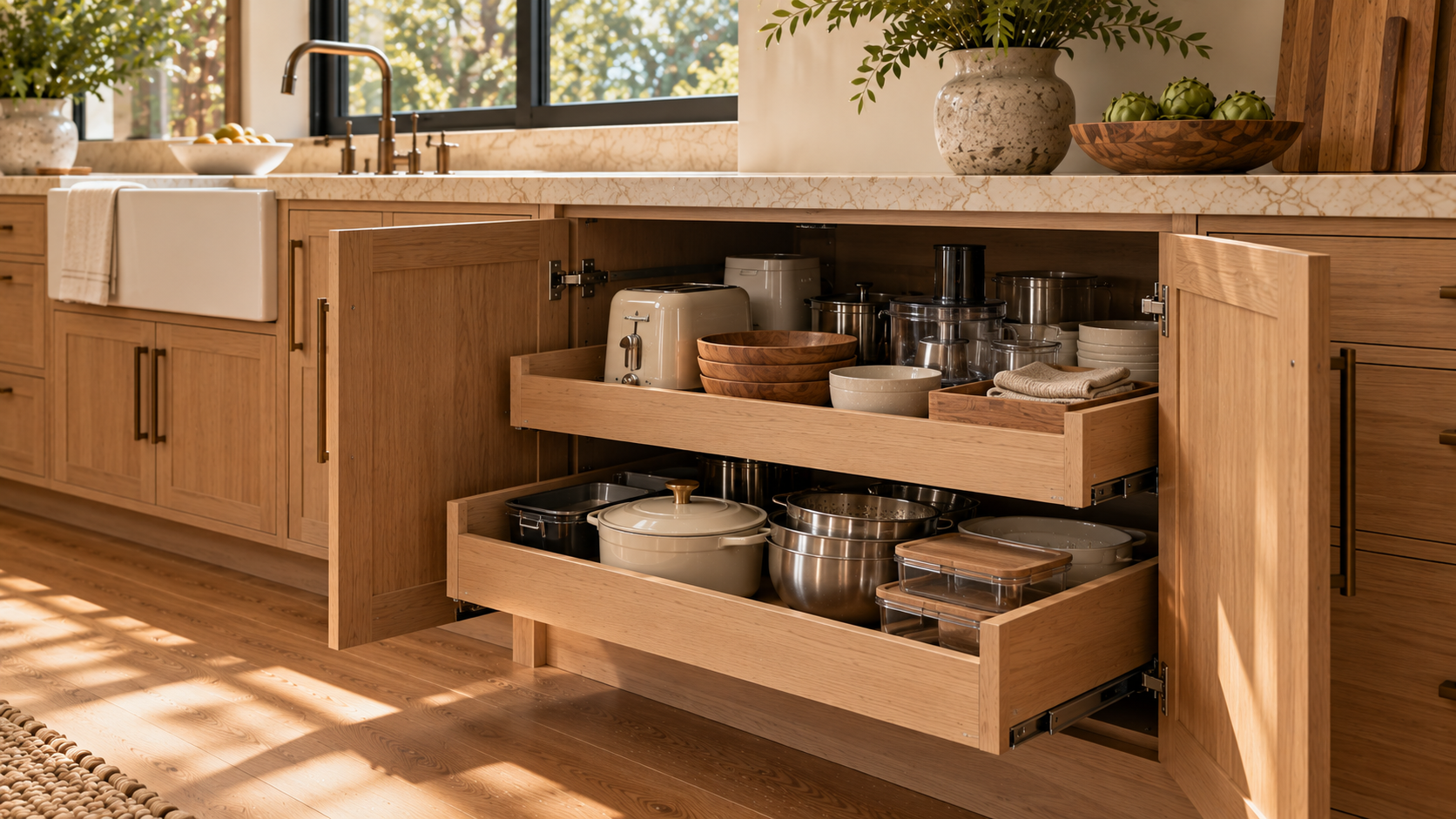
From the exterior, the cabinet may still have doors. Inside, shelves or trays extend outward to improve access to items stored at the back.
This can be useful when the desired exterior design calls for cabinet doors but the interior needs better accessibility.
Interior pull-outs can also work well in pantry cabinets and specialized storage areas.
The tradeoff is that accessing the contents may require opening the exterior doors first and then pulling out the interior storage. For items used constantly, a direct-access drawer may be simpler.
Consider the Exterior Cabinetry Design
Storage configuration also affects how the kitchen looks.
Multiple drawer fronts create stronger horizontal lines, while cabinet doors can produce larger, quieter exterior panels. The right combination depends on the architecture and overall cabinetry composition.
A kitchen does not need to choose between functionality and a clean elevation.
Interior drawers can sit behind larger doors, or drawer sizes can be coordinated carefully across adjacent cabinets to maintain consistent horizontal lines.
In custom cabinetry, exterior proportions and interior function can be developed together rather than treating one as secondary to the other.
Where Do Drawers Make the Most Sense?
Several areas often benefit from drawer storage.
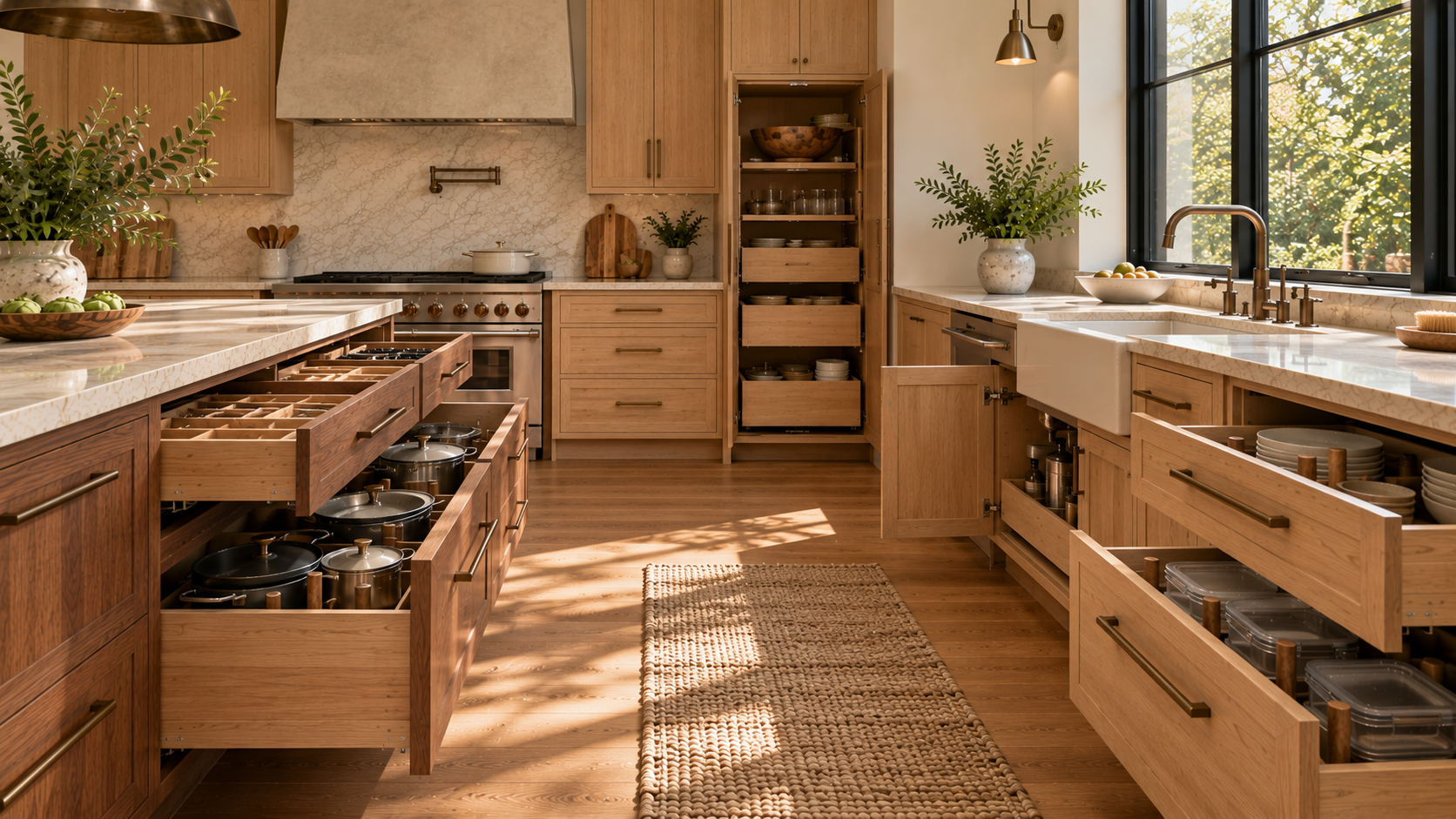
Near the range, deep drawers can hold cookware. Near the preparation area, they can organize utensils, knives, bowls, and containers. Near the dishwasher, drawers can store everyday dishes. Within an island, they can provide accessible storage directly beneath a large work surface.
But there is no reason to turn every base cabinet into the same three-drawer configuration.
The contents should determine drawer depth, width, and location.
Should a Kitchen Use Both?
For most kitchens, a combination provides the greatest flexibility.
Drawers can handle frequently used cookware, dishes, utensils, and containers. Door cabinets can accommodate plumbing, unusual equipment, taller items, and other storage needs. Pull-outs and specialized interiors can improve accessibility where a conventional cabinet exterior is preferred.
The objective is not to maximize the number of drawers. It is to reduce unnecessary reaching, stacking, and searching.
Planning the contents before ordering cabinetry makes that possible.
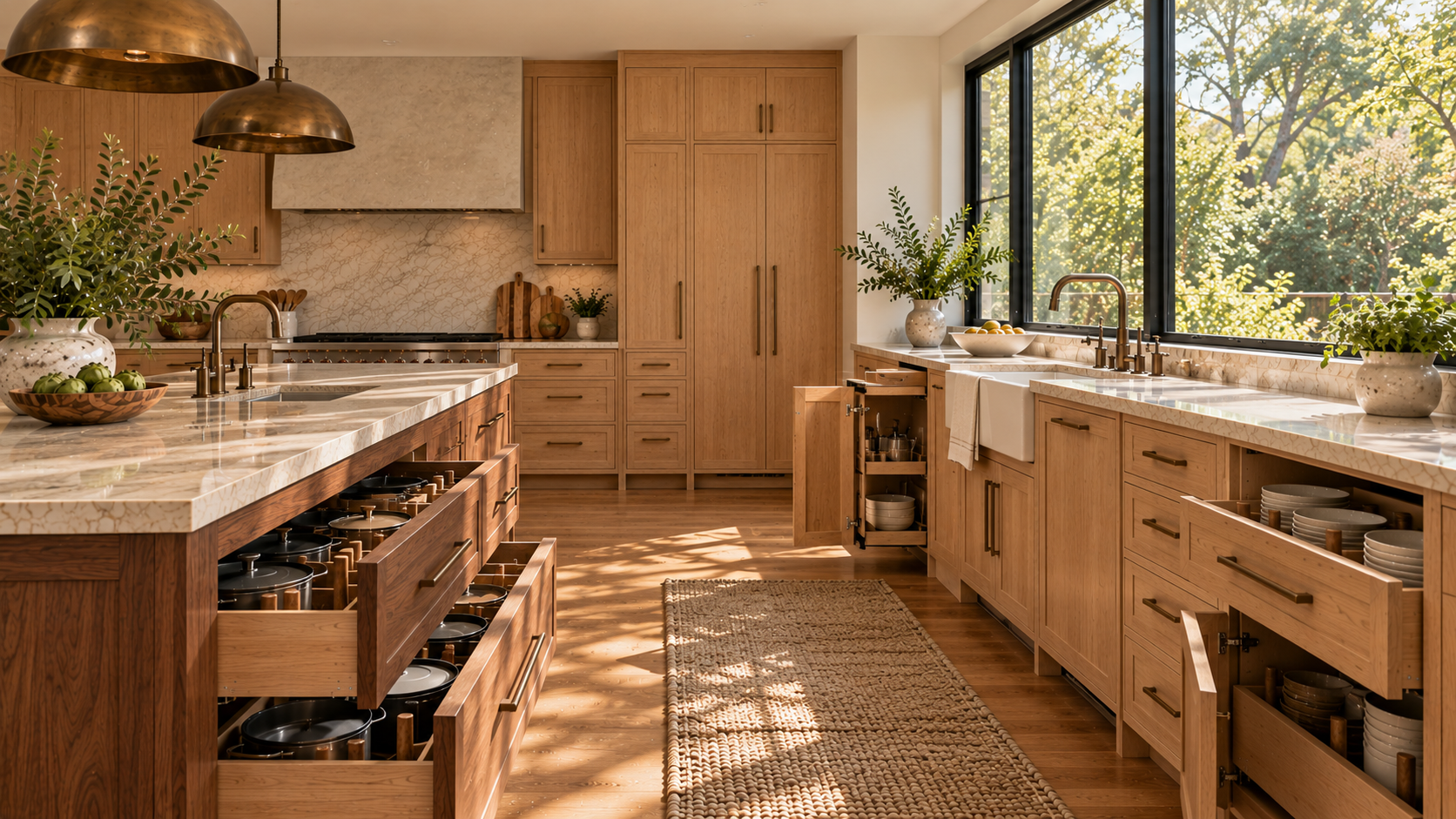
Drawers or Lower Cabinets: Which Should You Choose?
Start by inventorying what needs to be stored.
For frequently used cookware, dishes, utensils, and containers, drawers can provide excellent visibility and accessibility. For tall objects, plumbing, specialized equipment, or irregularly shaped items, cabinets with doors may offer greater flexibility.
Then consider the exterior design.
Drawer widths, door proportions, hardware, and interior organizers should be planned as part of the complete cabinetry elevation.
The best kitchen storage rarely depends on choosing one system exclusively. It comes from using each type of cabinetry where it performs best.
Explore Kitchen Storage With Atelier Design Society
Atelier Design Society works with homeowners, architects, interior designers, builders, and other design professionals planning premium cabinetry and storage throughout Bay Area kitchens. At the Atelier Design Society showroom in Menlo Park, project teams can compare drawer construction, cabinet interiors, pull-outs, storage accessories, materials, hardware, and full-scale installations while determining the right storage configuration for each kitchen zone.
