
Not every cabinet needs to look like a traditional built-in. Some of the most memorable kitchens and bathrooms feature cabinetry that feels closer to a carefully selected piece of furniture than a conventional storage unit.
A kitchen island with turned legs, a bathroom vanity with a beautifully detailed base, or a freestanding-looking cabinet in natural walnut can introduce warmth and individuality into a space. These details create a more collected atmosphere, where cabinetry contributes to the room's character rather than serving only a practical purpose.
Furniture-style cabinetry offers an opportunity to combine the craftsmanship of fine furniture with the storage, durability, and functionality expected from premium cabinetry.
The appeal of furniture-style cabinetry lies in its ability to make functional spaces feel more personal, architectural, and thoughtfully furnished.
What Is Furniture-Style Cabinetry?
Furniture-style cabinetry refers to cabinets designed with details traditionally associated with freestanding furniture.
These elements may include decorative legs, framed bases, furniture-inspired feet, inset doors, distinctive hardware, raised cabinet sections, and carefully finished exposed sides.
Unlike conventional cabinetry that often forms a continuous installation along a wall, furniture-style cabinetry can create the impression of individual pieces.
A kitchen island might resemble a substantial antique worktable, while a bathroom vanity may have the proportions and detailing of a refined dresser.
However, furniture-style cabinetry does not necessarily mean using actual antique furniture.
Premium cabinetry can be manufactured with furniture-inspired details while incorporating modern drawer systems, plumbing accommodations, durable finishes, and practical storage.
The objective is to achieve the character of furniture without sacrificing the performance required in kitchens and bathrooms.
Why Furniture-Style Cabinetry Adds Character
One of the defining qualities of furniture-style cabinetry is its ability to introduce variation into a room.
In kitchens, cabinetry often consists of repeated door styles, consistent heights, and continuous countertop surfaces. While this creates visual organization, it can sometimes make a space feel overly uniform.
A furniture-inspired piece introduces a different scale, silhouette, or material treatment.
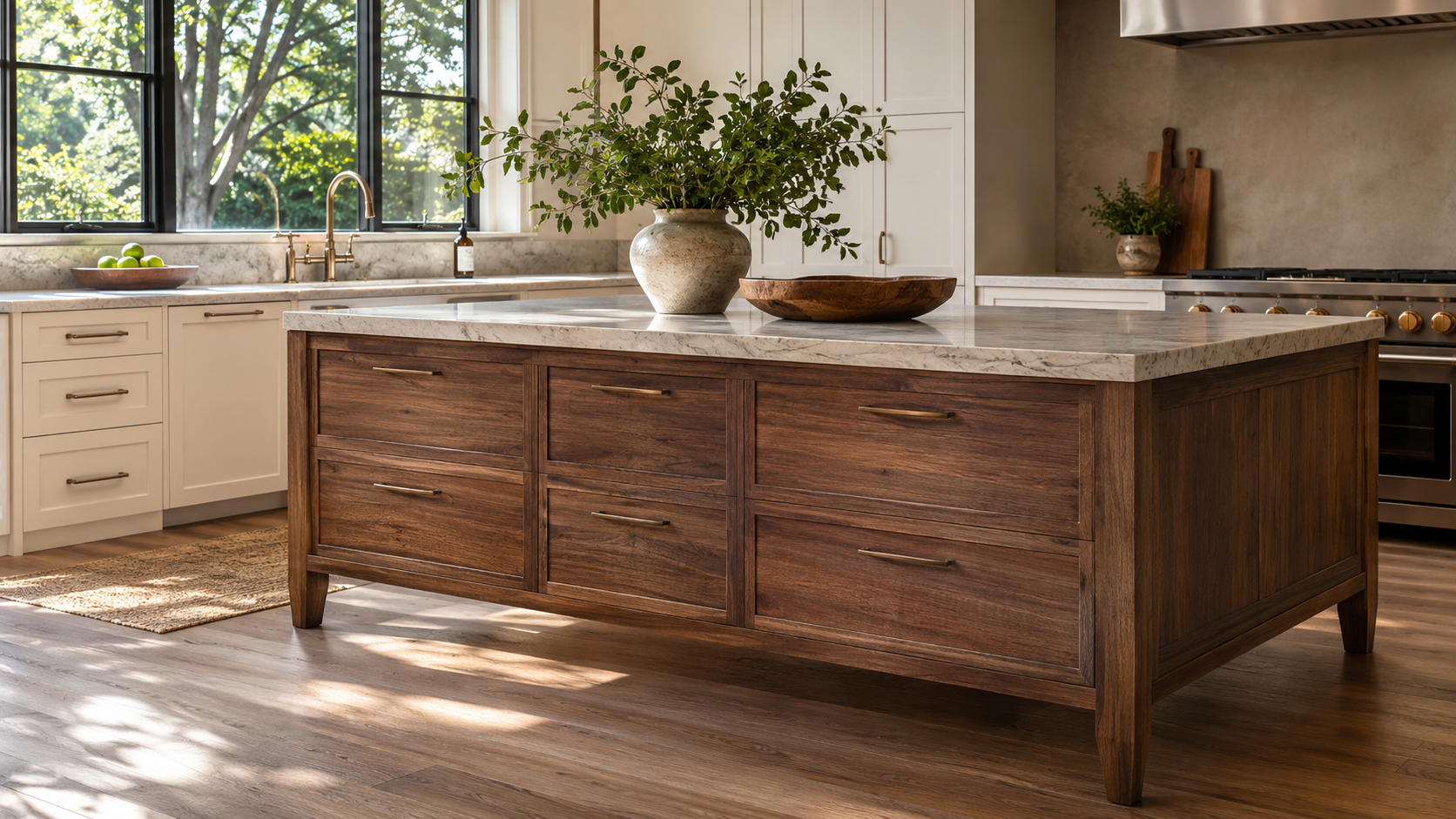
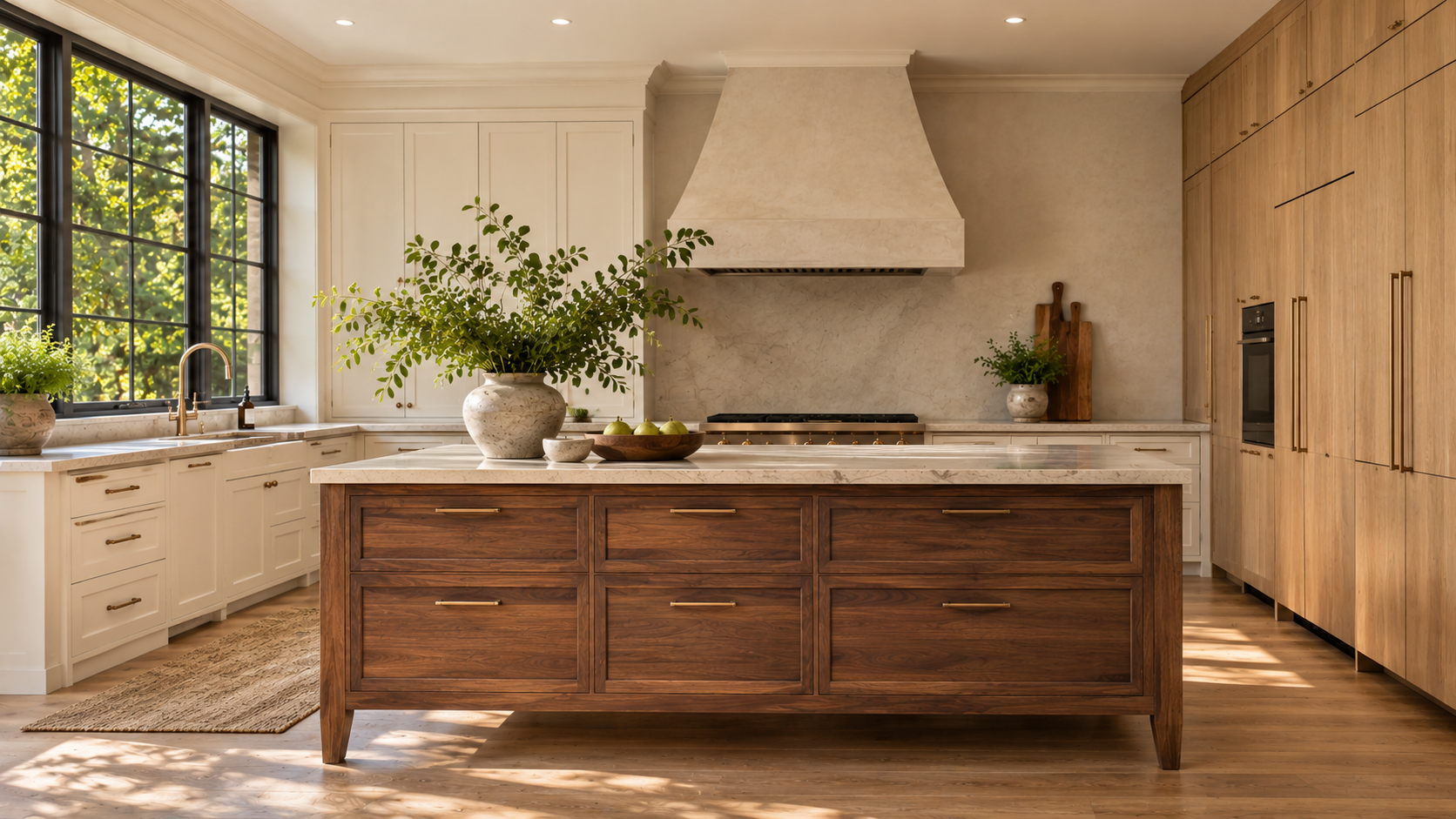
For example, a natural walnut island can become a focal point within a kitchen featuring warm white perimeter cabinetry.
The island may have more detailed drawer fronts, decorative legs, or a distinctive base, creating the impression of a separate piece selected specifically for the room.
This variation can make the kitchen feel more layered and personal.
The key is restraint. Furniture-inspired details should complement the surrounding architecture rather than compete with every other element.
Kitchen Islands Are a Natural Place for Furniture Details
The kitchen island is often the most effective location for furniture-style cabinetry because it can be viewed from multiple sides.
Unlike perimeter cabinets, which are typically positioned against walls, an island has the opportunity to present finished panels, legs, and other architectural details.
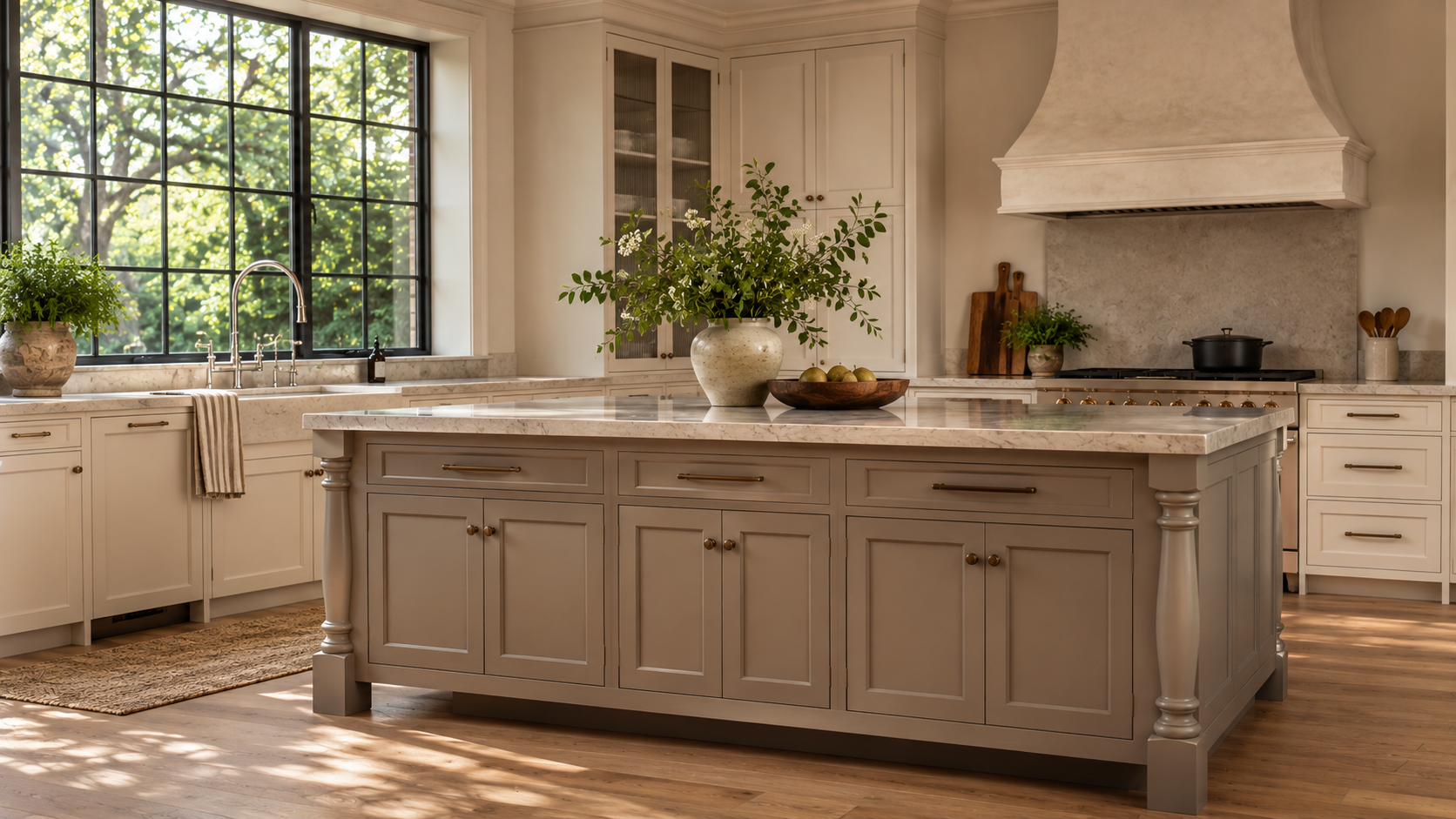
A furniture-style island may incorporate tapered legs, framed end panels, inset drawers, or a decorative base.
In traditional kitchens, turned legs and more detailed profiles can introduce a classic character.
In transitional interiors, simpler legs and restrained detailing may create a more contemporary interpretation.
The island's proportions are especially important.
A large island with excessively delicate legs may feel visually unbalanced, while heavy decorative supports can overwhelm a smaller kitchen.
Designers must also consider structural support, seating clearances, countertop weight, and the location of plumbing or electrical components.
The most successful furniture-style islands combine the visual character of a freestanding piece with the practical requirements of a working kitchen.
Bathroom Vanities Can Feel Like Beautiful Furniture
Furniture-style cabinetry is particularly effective in bathrooms, where a vanity often serves as the primary design feature.
A conventional built-in vanity may extend continuously between walls, while a furniture-inspired vanity can create a more distinctive focal point.
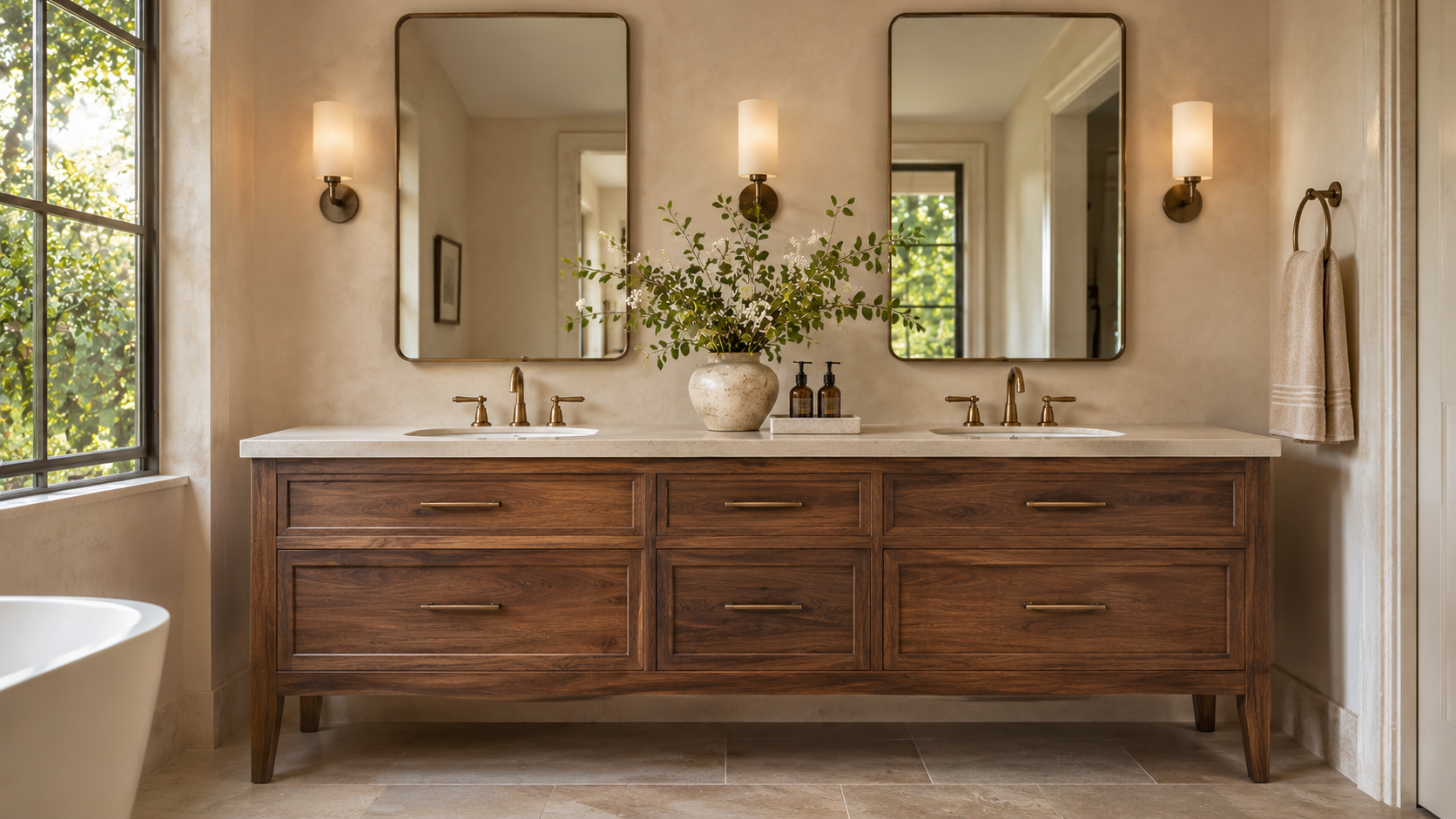
Natural wood finishes, exposed legs, decorative feet, and carefully proportioned drawer fronts can make the vanity resemble a refined dresser or console.
This approach works especially well in powder rooms and primary bathrooms where the cabinetry is visible from the entrance.
A walnut vanity with slender legs and a natural stone countertop can introduce warmth into a room with plaster walls and understated tile.
A painted vanity with framed doors and decorative feet may be more appropriate for a traditional residence.
However, bathroom cabinetry requires careful material selection.
Moisture-resistant construction, suitable finishing systems, plumbing clearances, and practical storage must all be considered.
Furniture-style detailing should never compromise the vanity's ability to perform in a humid environment.
Choose Wood Finishes That Highlight Craftsmanship
Natural wood is particularly well suited to furniture-style cabinetry because its grain and color variation contribute to the impression of a crafted piece.
Walnut can create a rich, sophisticated appearance, especially when paired with restrained hardware and carefully proportioned details.
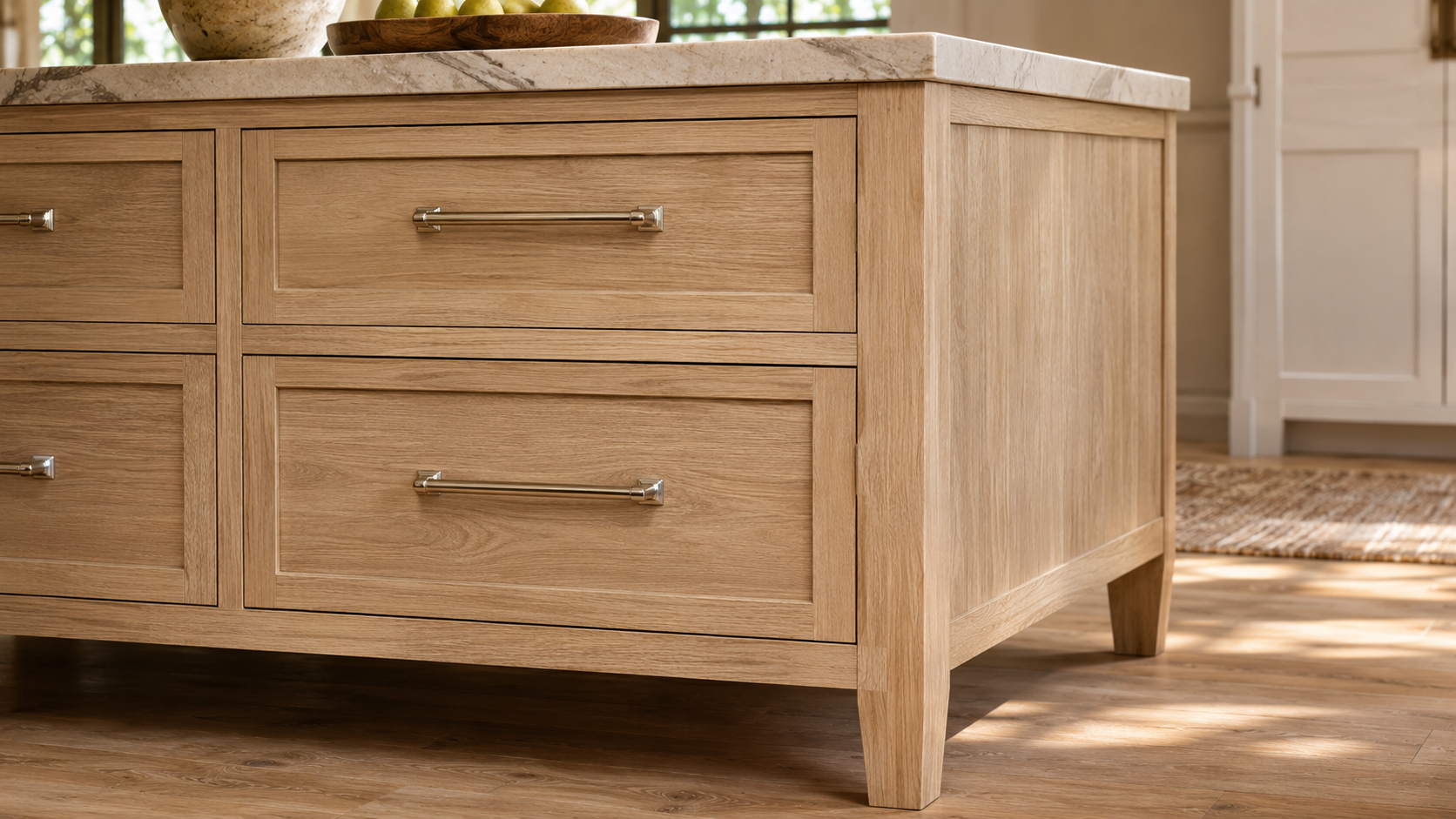
White oak offers a lighter alternative, with grain patterns that can support both contemporary and traditional furniture-inspired designs.
Stained finishes can also introduce depth while allowing the natural character of the wood to remain visible.
The choice of wood should respond to the room's existing materials.
A walnut island may complement natural oak flooring without matching it exactly, while a white oak bathroom vanity can introduce warmth alongside limestone or creamy stone surfaces.
The objective is to create a material relationship that feels deliberate rather than overly coordinated.
Cabinet Legs, Feet, and Bases Change the Entire Appearance
The base of a cabinet has a significant influence on whether it reads as architectural cabinetry or a freestanding furniture piece.
A conventional recessed toe-kick creates a practical working clearance and allows cabinets to sit visually close to the floor.
Furniture-style cabinetry may instead feature visible legs, decorative feet, or a shaped base.
These details introduce a sense of individuality.
For example, tapered legs can create a lighter, more refined appearance, while a substantial plinth base may make a cabinet feel grounded and architectural.
Traditional bracket feet can introduce a more historical character, particularly when paired with inset doors and detailed moldings.
However, the base must be appropriate for the cabinet's function.
Kitchen islands require adequate structural support, while bathroom vanities must accommodate plumbing and cleaning access.
The selected base should also relate to the scale of the cabinet and the architectural character of the room.
Inset Doors and Drawer Details Reinforce the Furniture Aesthetic
Cabinet door construction can contribute significantly to a furniture-inspired appearance.
Inset cabinetry, where doors and drawer fronts sit within a surrounding face frame, can create a precise, traditional furniture-like character.
This construction style is often associated with carefully crafted built-ins and fine furniture.
However, furniture-style cabinetry is not limited to inset doors.
Full-overlay cabinetry can also achieve a furniture-inspired appearance through distinctive proportions, exposed legs, finished end panels, and carefully selected hardware.
Drawer arrangements are another important consideration.
A vanity with several smaller drawers may resemble a traditional dresser, while a kitchen island with larger framed drawers can reference an antique worktable.
The goal is to select details that support the intended character without creating unnecessary visual complexity.
Furniture-Style Cabinetry Works in Contemporary Interiors Too
Furniture-inspired cabinetry is often associated with traditional kitchens, but the concept can be adapted to contemporary interiors.
The defining feature is the impression of an individual furniture piece, not the amount of decorative detailing.
A contemporary kitchen island might feature natural walnut cabinetry with a recessed base, carefully finished sides, and simple slab drawers.
A modern bathroom vanity may have slender wood legs, a minimal stone countertop, and discreet hardware.
These elements create a furniture-like silhouette without relying on traditional moldings or decorative profiles.
The result can feel warm and personal while maintaining the clean lines of a contemporary home.
This approach is particularly effective when the surrounding cabinetry remains restrained, allowing the furniture-inspired piece to establish a subtle focal point.
Balance Furniture Details With Architectural Cabinetry
Furniture-style cabinetry is most effective when used selectively.
A kitchen filled with decorative legs, detailed moldings, ornate hardware, and competing cabinet styles can feel visually overwhelming.
Instead, designers often establish a clear relationship between architectural cabinetry and furniture-inspired elements.
For example, a kitchen may feature simple floor-to-ceiling pantry cabinets and understated perimeter cabinetry, allowing a detailed walnut island to become the focal point.
In a bathroom, a furniture-style vanity may be paired with minimal wall finishes and restrained lighting.
This contrast helps the furniture-inspired cabinetry stand out without making the overall space feel overly decorative.
The objective is not to make every cabinet resemble furniture. It is to introduce character where it will have the greatest impact.
Consider Practical Storage and Everyday Use
Furniture-style cabinetry should remain functional.
Decorative legs, exposed bases, and specialized construction details can influence the amount of available interior storage.
A vanity with an open lower section may provide a lighter appearance but less enclosed storage than a conventional built-in.
Similarly, a kitchen island with decorative legs may require careful planning to accommodate drawers, seating, or appliances.
The cabinetry should be designed around the items being stored and the way the space will be used.
Modern drawer systems, concealed hinges, integrated organizers, and durable finishes can be incorporated without compromising the furniture-inspired appearance.
In bathrooms, moisture exposure and cleaning requirements should also influence the design.
The most successful solutions balance character, craftsmanship, and practical performance.
What Makes Furniture-Style Cabinetry Feel Timeless?
Furniture-style cabinetry has lasting appeal because it introduces craftsmanship, individuality, and a sense of permanence into functional spaces.
Rather than relying entirely on decorative trends, it draws inspiration from the proportions and detailing of well-made furniture.
Natural wood, carefully scaled legs, refined drawer fronts, and thoughtful hardware can create a sense of character that complements the surrounding architecture.
However, the most successful designs avoid excessive ornamentation.
A furniture-inspired cabinet should feel appropriate for the room, whether it is a traditional kitchen, contemporary bathroom, or transitional interior.
The key is to combine distinctive detailing with balanced proportions and practical construction.
When thoughtfully designed, furniture-style cabinetry brings the warmth and individuality of fine furniture into kitchens and bathrooms without compromising everyday function.
Explore Furniture-Style Cabinetry With Atelier Design Society
Atelier Design Society works with homeowners, architects, interior designers, builders, and other design professionals selecting premium cabinetry for Bay Area homes. At the Atelier Design Society showroom in Menlo Park, project teams can explore cabinetry collections, natural wood finishes, painted cabinetry, door styles, hardware, and furniture-inspired design details while developing kitchens and bathrooms that feel personal, refined, and architecturally cohesive.
