
Luxury interiors are not necessarily defined by the number of premium materials they contain. In many cases, the most sophisticated spaces are those where a carefully selected group of materials has been used with clarity and consistency.
Natural wood, beautifully finished cabinetry, thoughtfully selected stone, and refined metal details can create an exceptionally rich interior without introducing unnecessary visual complexity.
Material restraint allows each finish to be appreciated for its individual character while contributing to a larger architectural composition. It shifts the focus from how many materials are present to how well they work together.
A luxurious interior is not always about adding more. It is about recognizing when the materials already present are enough.
What Is Material Restraint in Interior Design?
Material restraint is an approach to design that prioritizes a carefully considered selection of finishes rather than introducing a different material for every surface or architectural feature.
In a kitchen, this might mean selecting one primary wood finish, a complementary painted cabinetry color, a natural stone surface, and a consistent metal finish.
Throughout an entire residence, the same approach may involve repeating selected materials across cabinetry, architectural millwork, flooring, and other interior elements.
This does not mean every surface needs to match. Material restraint allows for variation in texture, tone, and application while maintaining a clear overall direction.
The objective is to create an interior where every material has a purpose and contributes to the character of the space.
Fewer Materials Allow Craftsmanship to Become More Visible
When an interior contains numerous competing finishes, it can become difficult to appreciate the quality of individual elements.
Expressive stone, heavily textured wood, decorative metal finishes, patterned tiles, and distinctive cabinetry colors may all be beautiful independently. However, when introduced without a clear hierarchy, they can distract from one another.
A more restrained material palette allows craftsmanship to become more noticeable.
The precise alignment of cabinetry doors, the continuity of natural wood grain, the quality of a stone edge, and the relationship between adjoining surfaces become important visual features.
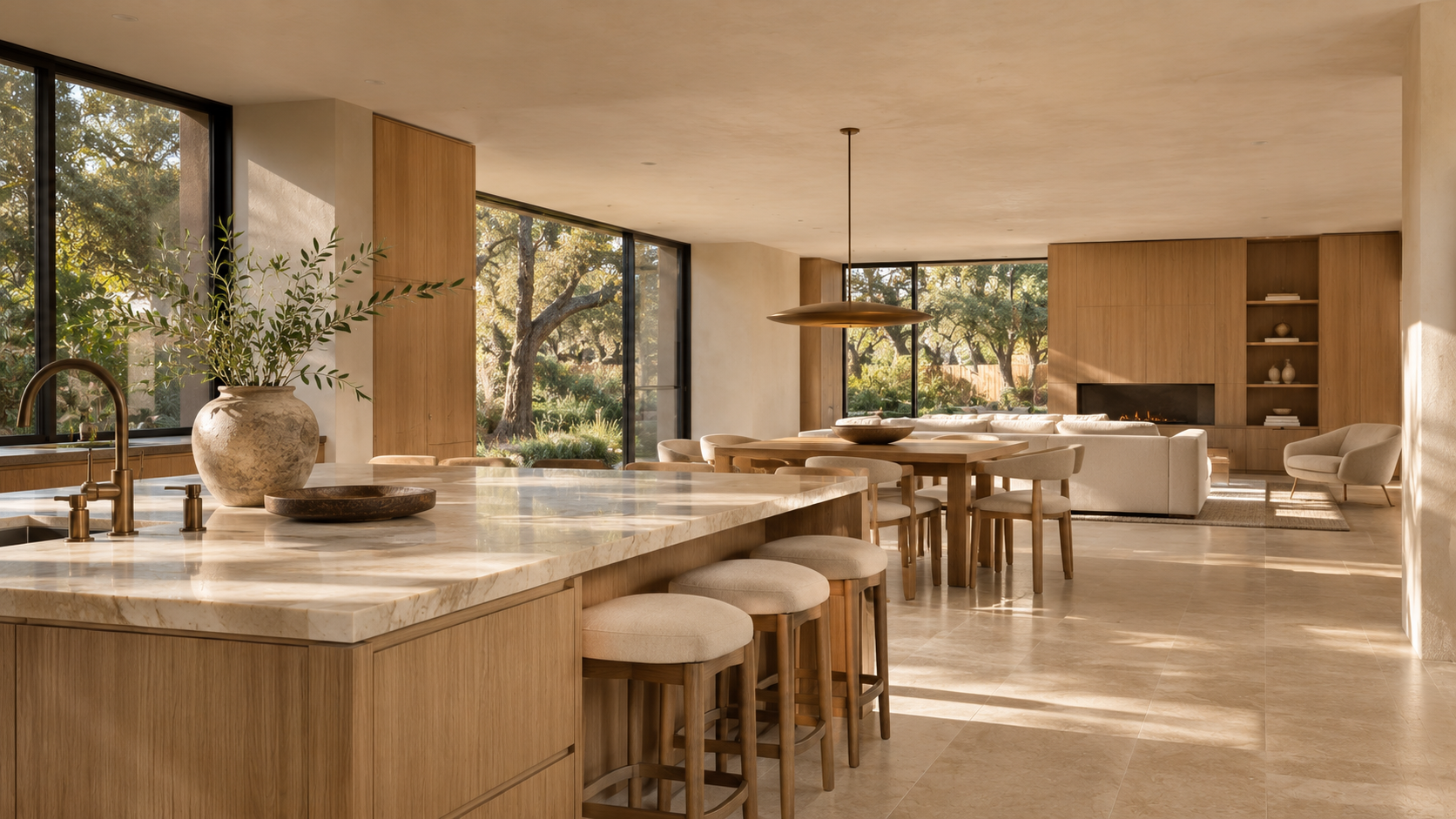
For example, a continuous wall of natural white oak cabinetry can communicate exceptional quality through carefully matched grain, consistent reveals, and refined proportions without requiring decorative embellishment.
Material restraint gives these details the visual space they deserve.
Establish a Clear Material Hierarchy
One of the most effective ways to develop a sophisticated interior is to establish which material should take visual priority.
A primary material might define the overall character of the room, while secondary materials provide contrast, balance, and practical functionality.
In a kitchen, this could involve:
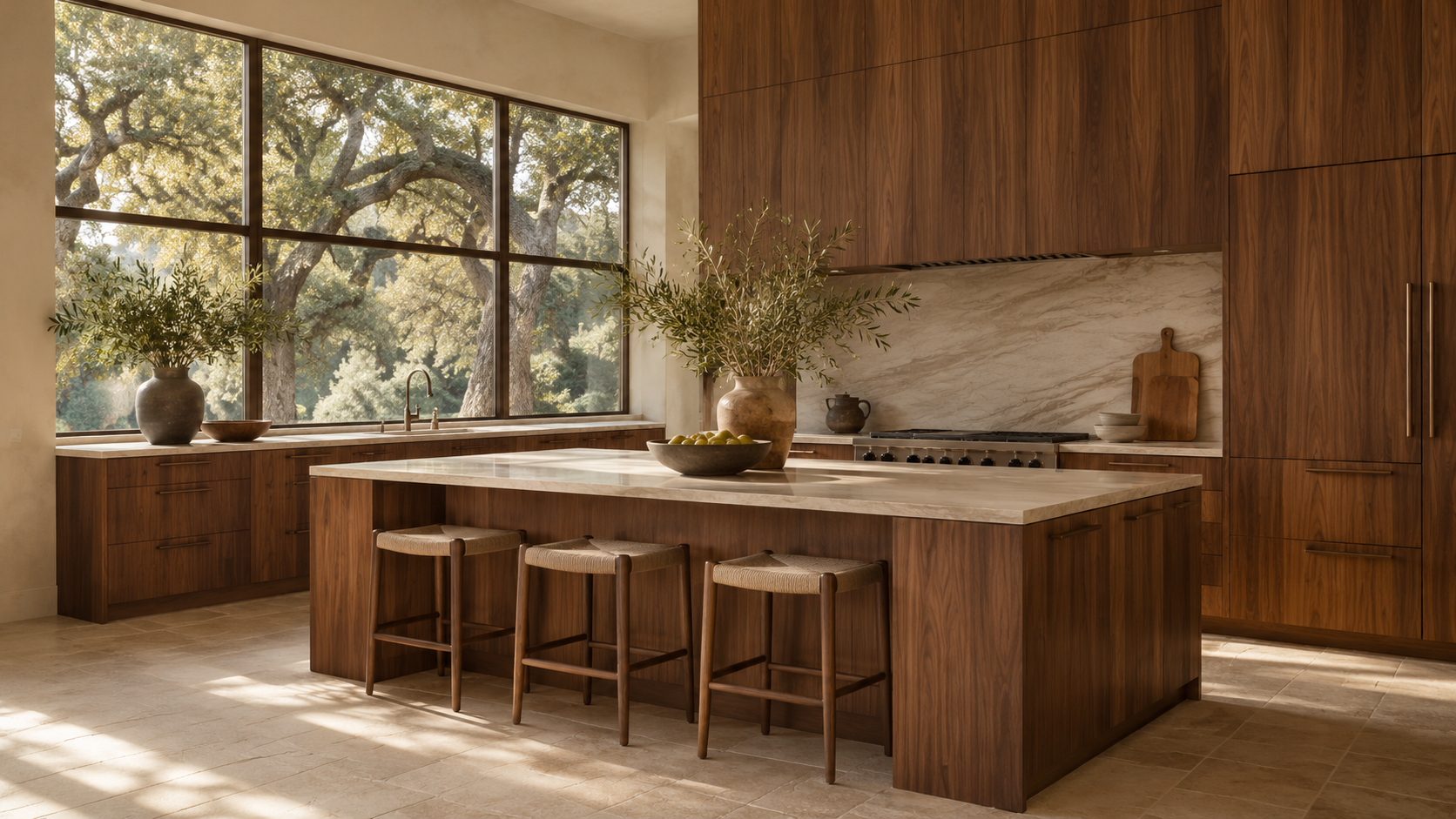
Natural walnut cabinetry as the primary architectural material.
Honed quartzite as a complementary work surface.
Warm plaster walls as a quiet background.
Aged bronze hardware as a subtle finishing detail.
Each material contributes something different without competing for the same level of attention.
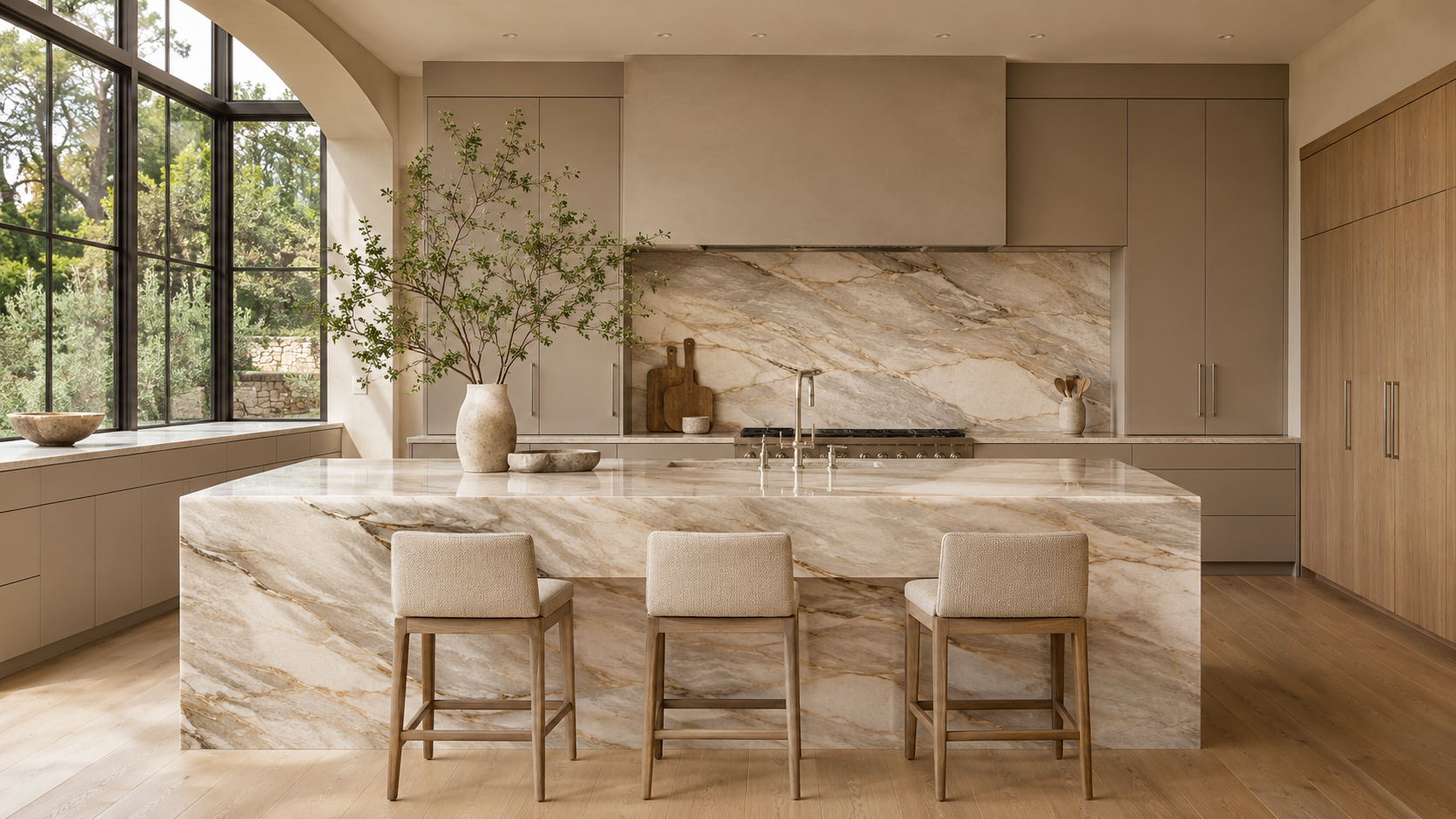
Alternatively, a kitchen featuring particularly expressive natural stone may benefit from understated painted cabinetry that allows the stone to remain the focal point.
A successful material palette is not one where every finish makes a statement. It is one where each finish understands its role within the composition.
Repeating Materials Creates Architectural Continuity
Repeating selected materials throughout an interior can create a stronger relationship between individual spaces.
In an open-plan residence, the kitchen cabinetry may relate to architectural paneling in the living room, built-in storage in the dining area, or cabinetry within a nearby home office.
This repetition establishes a recognizable material language throughout the home.
For example, natural rift-cut white oak used in kitchen cabinetry might also appear in a living room media wall or a custom dining room sideboard.
The material remains consistent, but its application changes according to the function of each space.
This approach can make a residence feel more intentionally designed than one where every room introduces an entirely different collection of finishes.
However, repetition should remain flexible. Variations in cabinet profiles, proportions, and complementary materials can give each room its own identity without interrupting the overall continuity.
Texture Can Create Richness Without Additional Materials
A limited material palette does not need to feel flat or monotonous.
Texture is one of the most effective ways to introduce depth while maintaining visual restraint.
Natural wood grain, honed stone, softly textured plaster, and brushed metal finishes each respond differently to light. These variations can create a layered interior even when the overall color palette remains relatively consistent.
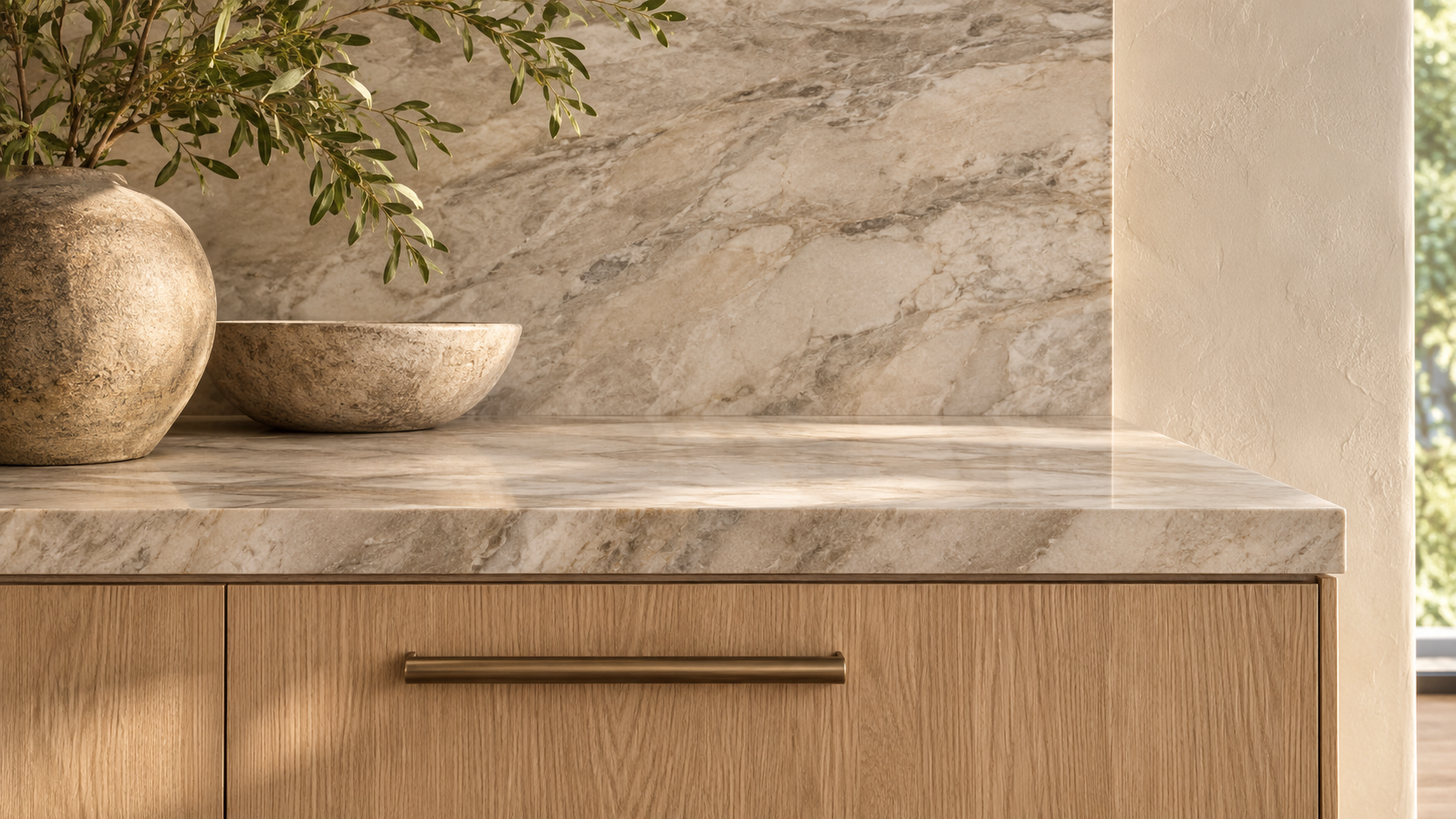
Consider a kitchen featuring natural white oak cabinetry, creamy honed quartzite, and warm plaster walls. Although the materials share similar undertones, their surface qualities create subtle contrast.
The wood introduces linear grain, the stone provides organic movement, and the plaster contributes a softer architectural background.
Finish sheen also influences the relationship between materials. Matte and low-sheen surfaces can create a softer appearance, while selectively introduced polished metal details provide contrast.
The richness comes from the inherent characteristics of the materials rather than the number of finishes used.
Material Restraint Does Not Mean Avoiding Contrast
A common misconception is that a restrained interior must use exclusively neutral colors or materials with similar tones.
In reality, contrast can be an important part of a sophisticated material palette.
A dark walnut island can provide depth within a kitchen featuring warm ivory cabinetry. A charcoal painted storage wall can establish a strong architectural feature beside lighter natural stone.
The distinction is that contrast should be deliberate rather than introduced repeatedly throughout the room.
Too many contrasting materials can create a fragmented appearance, particularly when each surface introduces a different color, texture, or pattern.
A carefully selected contrast, however, can establish balance and make individual materials more expressive.
Designers often consider the proportion of each finish as carefully as its color. A darker material used across one substantial cabinetry elevation may feel more cohesive than the same finish distributed across numerous unrelated elements.
The objective is not to eliminate contrast but to give it a clear architectural purpose.
A Restrained Palette Makes Cabinetry Details More Important
When cabinetry is designed within a limited material palette, its construction and detailing become increasingly significant.
Without numerous decorative finishes to attract attention, the proportions of doors, drawer fronts, hardware, and surrounding panels play a greater role in the finished appearance.
Consistent reveals, carefully aligned cabinet elevations, and coordinated grain direction can establish a sense of precision.
In natural wood cabinetry, the selection and arrangement of veneer or solid wood components can influence how the entire elevation reads.
Similarly, painted cabinetry benefits from carefully considered door profiles, consistent finishing, and appropriate hardware proportions.
These details should be evaluated during the cabinetry design process rather than treated as secondary decisions.
A restrained interior depends on the quality of its execution because the materials and architectural details remain clearly visible.
Consider How Materials Will Age Together
Material restraint can also support a more enduring approach to interior design.
When a kitchen relies on numerous highly distinctive finishes, replacing or updating one element may become difficult without affecting the surrounding palette.
A carefully coordinated selection of materials can provide greater flexibility as furnishings, lighting, and personal preferences evolve.
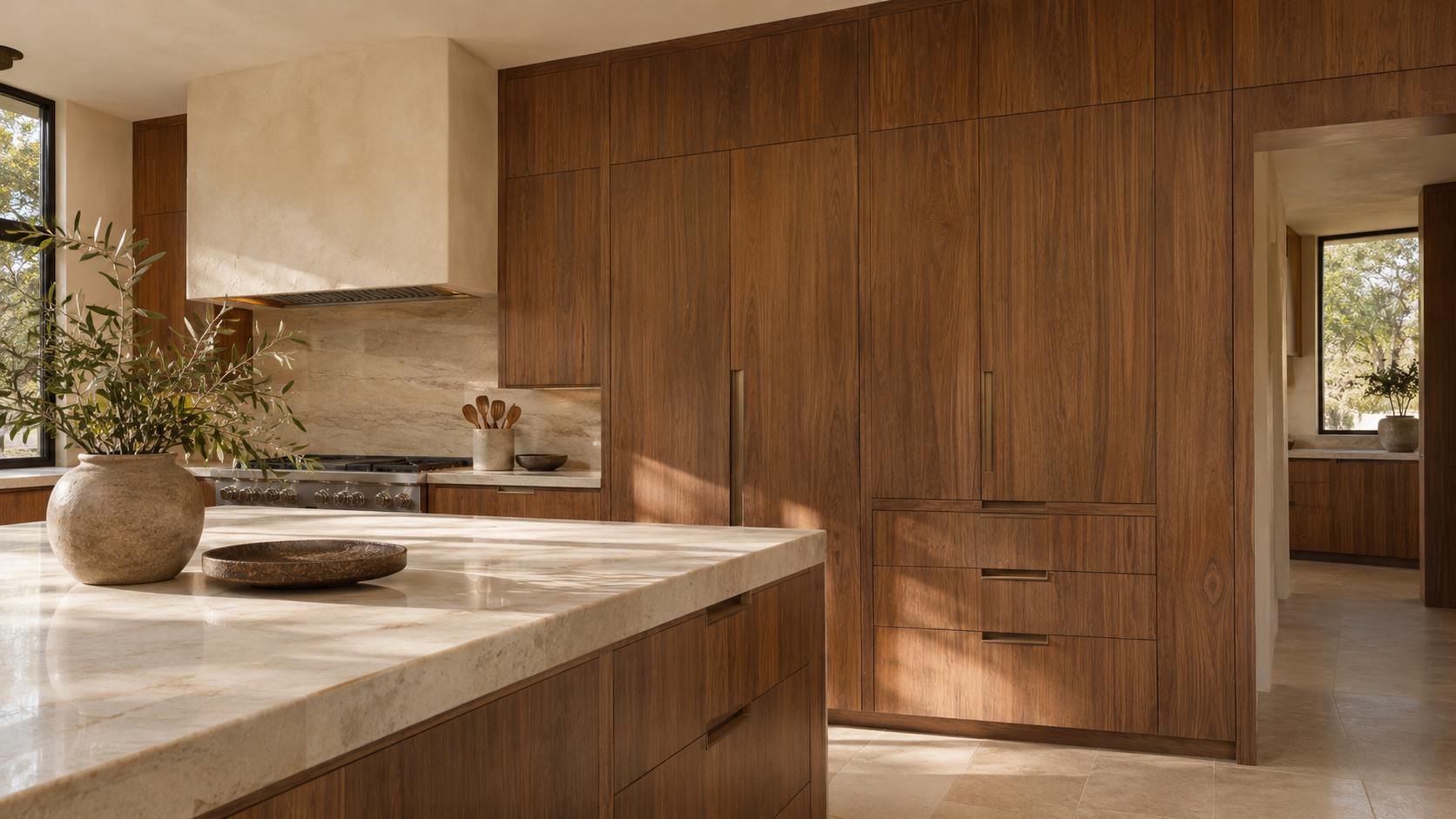
Natural wood may gradually change in color with exposure to light. Certain metals develop a patina, while natural stone may show signs of everyday use depending on its characteristics and maintenance.
These changes should be considered during material selection.
It is also important to distinguish between materials that develop desirable character and those that may require more maintenance than a household is comfortable providing.
A beautiful material is not necessarily the right choice for every application.
The most successful palettes consider appearance, maintenance, durability, and how the materials are likely to relate to one another over time.
Invest in Material Quality Rather Than Quantity
A restrained material palette can help homeowners and design professionals establish clearer investment priorities.
Rather than introducing numerous specialty finishes, decorative treatments, and competing architectural features, a project may benefit from directing more of its budget toward the elements that have the greatest long-term impact.
These might include premium cabinetry construction, carefully selected natural wood finishes, high-quality hardware, or a beautifully fabricated stone surface.
This does not automatically make the project less expensive. Exceptional materials and precise craftsmanship can represent a significant investment, even when the palette is limited.
However, material restraint encourages a more deliberate allocation of resources.
Instead of selecting additional finishes simply to make a space feel more luxurious, the design focuses on improving the quality and execution of the materials already present.
The perceived richness of an interior often comes from the quality of a few well-executed decisions rather than the accumulation of expensive features.
Extend Material Restraint Throughout the Entire Home
Material restraint becomes particularly valuable when cabinetry is being designed across multiple rooms.
A kitchen, primary bathroom, wardrobe, home office, and living area can each have distinct functional requirements while sharing a consistent material direction.
For example, natural walnut cabinetry may establish the primary wood finish throughout the residence. The kitchen could pair it with creamy quartzite, while the primary bathroom introduces limestone and the home office uses warm painted accents.
The materials are not repeated identically, but they remain connected through compatible undertones and architectural detailing.
This approach helps prevent individual rooms from feeling like unrelated design projects.
Considering cabinetry and surfaces together during the planning process also allows homeowners and project teams to evaluate how finishes will interact across the entire residence.
Why Material Restraint Creates a More Convincing Sense of Luxury
Material restraint is not about making an interior less expressive. It is about allowing its most meaningful qualities to become more visible.
Natural wood grain, exceptional stone, precise cabinetry construction, and carefully considered architectural proportions can communicate sophistication without requiring constant visual stimulation.
A limited palette also creates opportunities for stronger material relationships, more intentional contrasts, and greater continuity throughout the home.
The most successful interiors are not necessarily those with the fewest materials, but those where every material contributes something meaningful.
True material luxury comes from selection, quality, and execution. When each finish has been chosen with purpose, the interior does not need additional decoration to communicate its value.
Explore Refined Material Palettes With Atelier Design Society
Atelier Design Society works with homeowners, architects, interior designers, builders, and other design professionals selecting premium cabinetry and complementary surfaces for Bay Area homes. At the Atelier Design Society showroom in Menlo Park, project teams can explore natural wood cabinetry, painted finishes, premium surfaces, hardware, and architectural details together, developing refined material palettes that prioritize quality, continuity, and lasting character.
