How Premium Cabinetry Is Engineered for Everyday Use Kitchen Planning & Design
Premium cabinetry should look refined, but a kitchen is still a working space.
Doors are opened constantly. Drawers carry heavy cookware. Pantry storage is accessed every day. Appliances generate heat and require clearance. Countertops place weight on the cabinetry below them.
Good cabinetry design accounts for these realities from the beginning. The result should feel sophisticated while supporting the way the kitchen is actually used.
What Does “Engineered for Everyday Use” Mean?
Cabinetry is a system. The cabinet box, shelves, drawers, hinges, glides, doors, hardware, interior storage, and installation all need to work together.
Engineering affects how much weight components can support, how smoothly drawers operate, how doors remain aligned, and how cabinetry accommodates appliances and storage.
This is why evaluating premium cabinetry requires looking beyond the exterior door style.
Why Does Drawer Construction Matter?
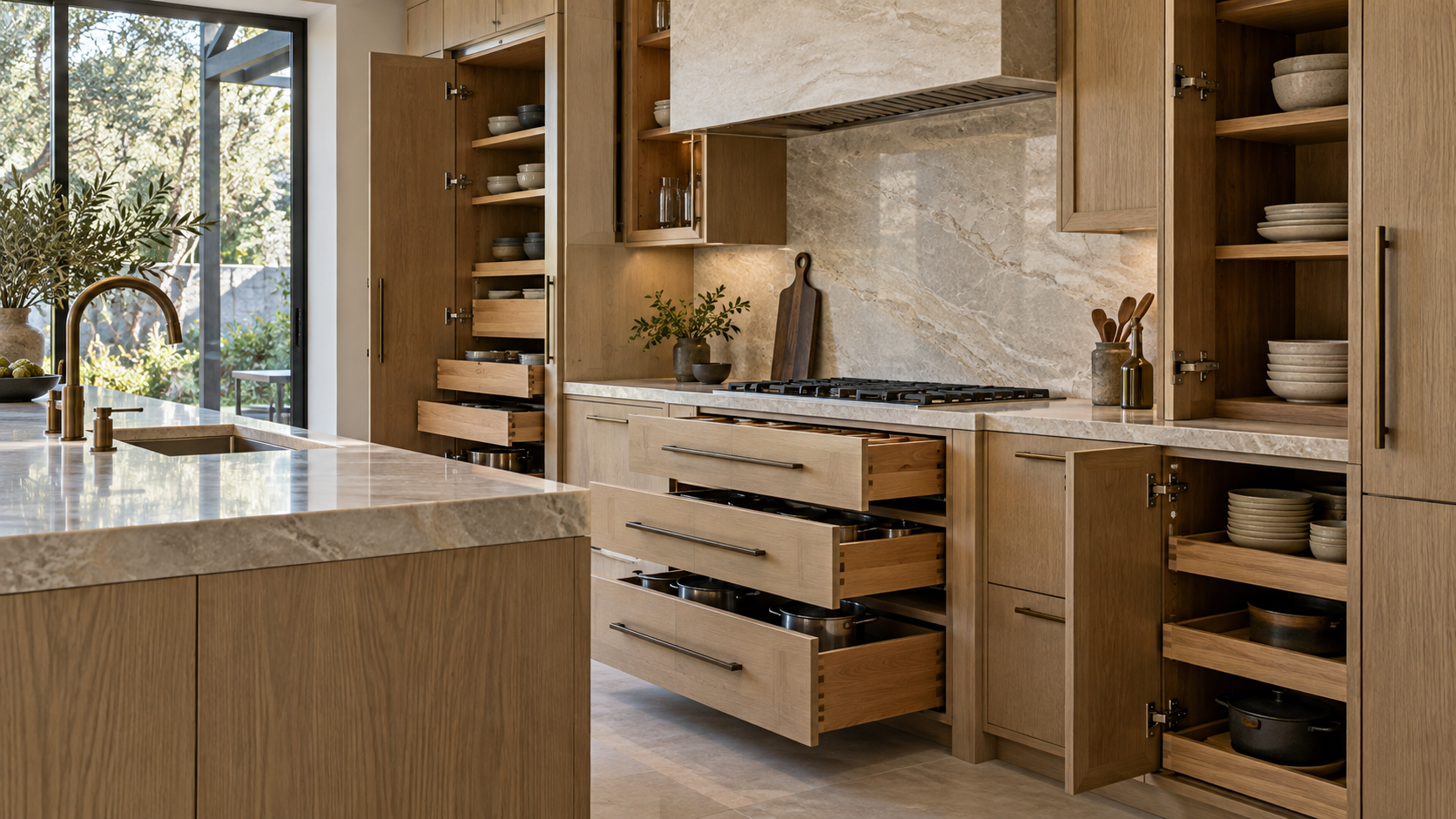
Kitchen drawers need to perform under repeated use and changing loads.
Wide drawers may hold cookware, dishes, serving pieces, or pantry items. Their construction and glide system need to support that use while remaining stable through the full range of movement.
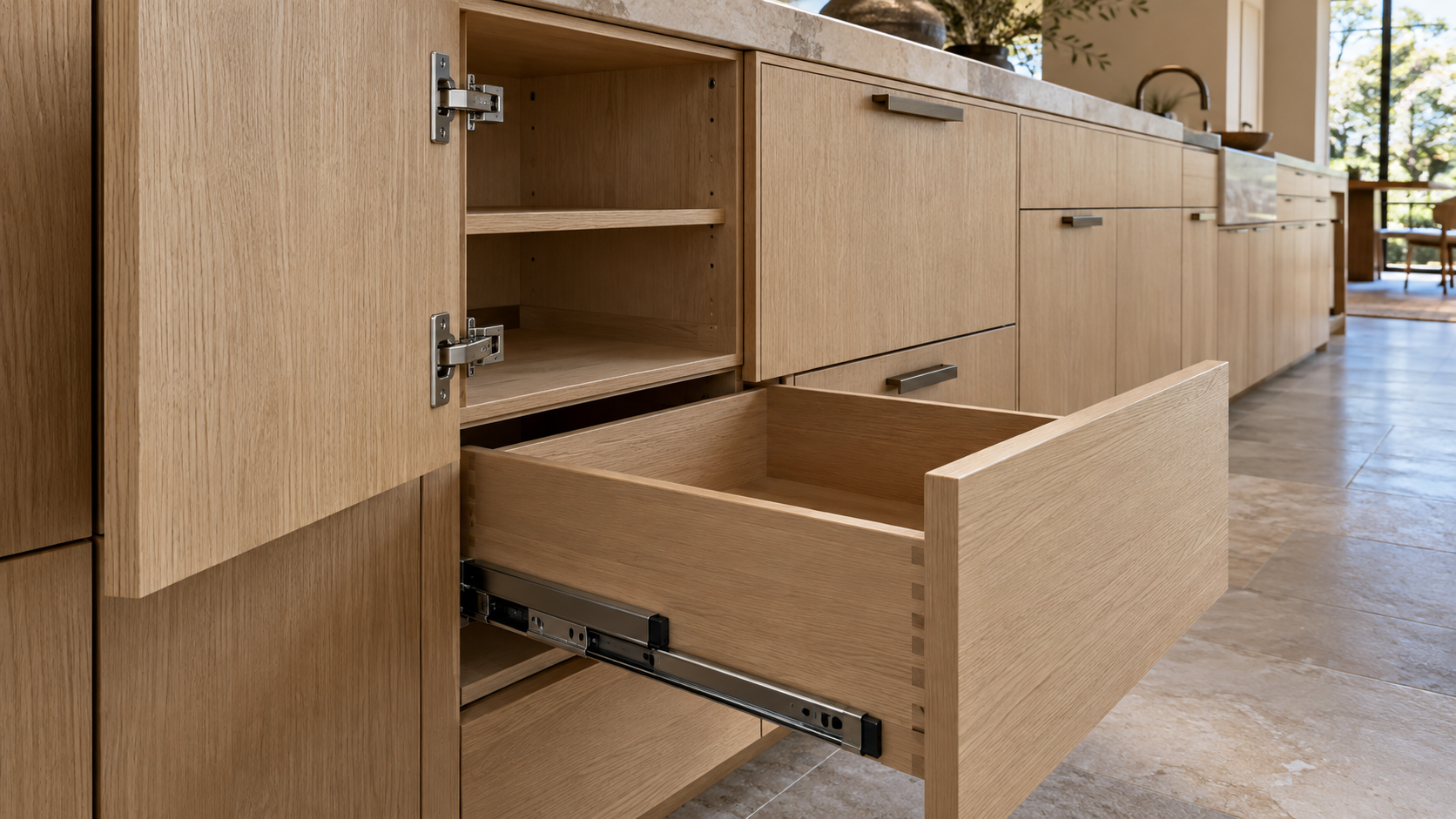
Full-extension glides can make the back of a deep drawer easier to access. Quality hardware should also allow the drawer to move smoothly without excessive side-to-side movement.
Soft-close is useful, but it should not be the only feature used to judge drawer quality. The drawer box, bottom, joinery, glide system, load capacity, alignment, and installation all contribute to performance.
How Are Cabinet Doors Designed for Repeated Use?
Doors place different demands on cabinetry.
Hinges need to support the size and weight of the door while maintaining alignment. Quality concealed hinges generally provide adjustment so installers can refine the door position and maintain consistent reveals.
Door dimensions and materials also matter. A small upper cabinet door behaves differently from a tall pantry or integrated appliance panel.
Premium cabinetry considers those differences rather than treating every door as an identical component.
How Should Storage Be Engineered Around Daily Routines?
Good storage begins with what needs to be stored.
Frequently used cookware may belong in deep drawers near the cooking area. Everyday dishes should be convenient to the places where they are used. Pantry storage needs to make its contents accessible rather than simply providing a large cabinet.
Small appliances create another consideration. Some homeowners want them immediately accessible, while others prefer dedicated cabinetry that keeps counters visually quiet.
Premium cabinetry provides opportunities to develop storage around these routines. The goal is not to include every available accessory. It is to make the interior of the kitchen as considered as the exterior.
Why Should Appliances Be Planned With the Cabinetry?
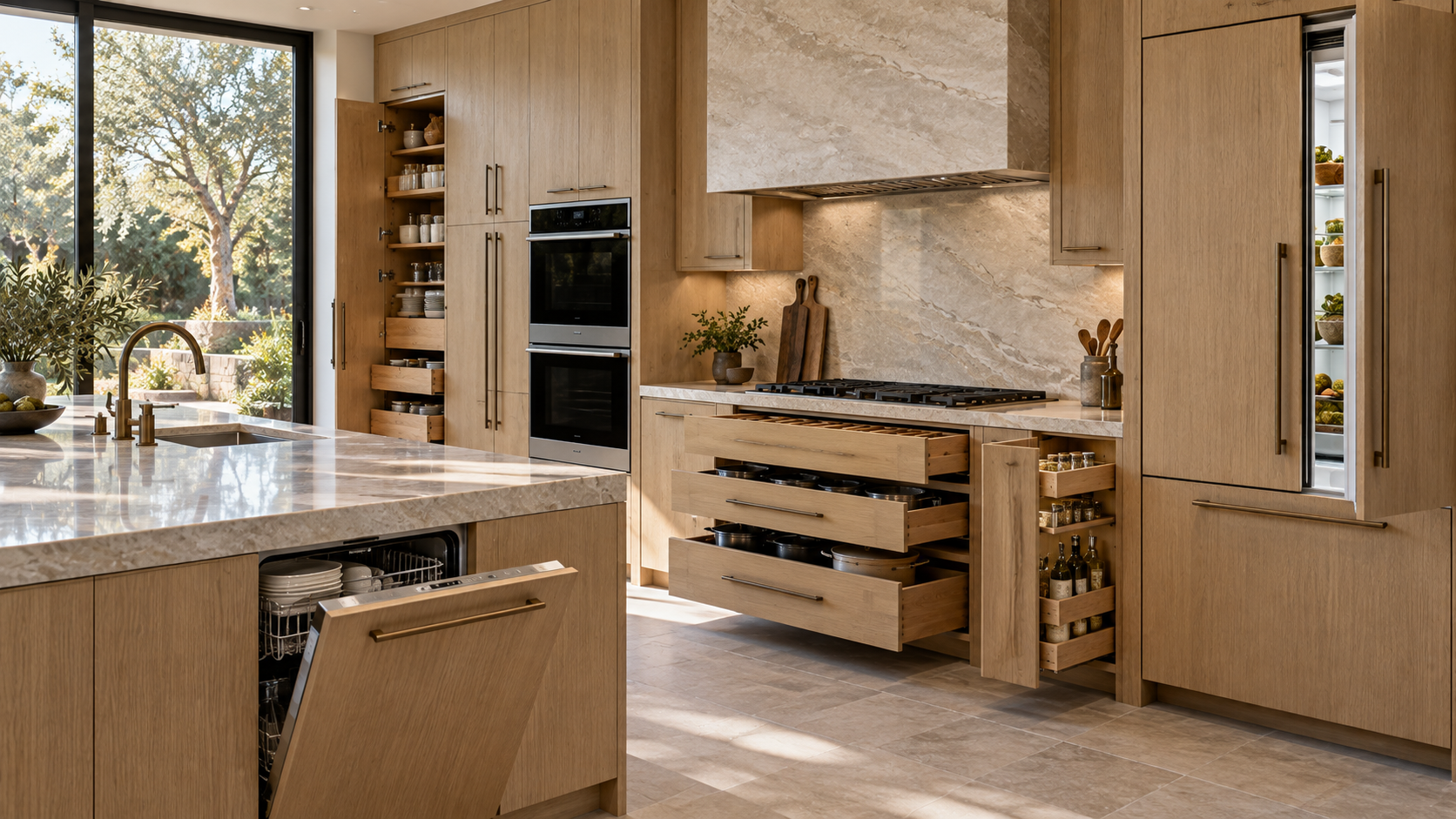
Appliances affect cabinet dimensions, openings, ventilation, panels, clearances, and surrounding storage.
A panel-ready refrigerator needs more than a matching cabinet front. The appliance specifications determine how the panel is sized and installed, how the doors operate, and what clearances are required.
Wall ovens, dishwashers, cooktops, beverage refrigeration, and other equipment introduce their own requirements.
This is why appliance information should be coordinated before cabinetry reaches final production. Cabinetry and appliances need to function as one system.
What Role Do Shelves and Cabinet Interiors Play?
Cabinet interiors carry much of the actual workload.
Shelves need appropriate support for their intended span and use. Tall pantry cabinets may require different interior planning than upper cabinets. Drawer interiors need to withstand frequent contact with cookware, utensils, and other household items.
Interior finishes also affect the experience of using the cabinetry. Clean edges, well-finished surfaces, substantial components, and thoughtfully integrated hardware contribute to a cabinet that feels refined even when the doors are open.
These details are easy to overlook when cabinetry is evaluated only from photographs.
How Does Kitchen Layout Affect Everyday Performance?
Engineering individual cabinets is only part of the process. Their placement matters just as much.
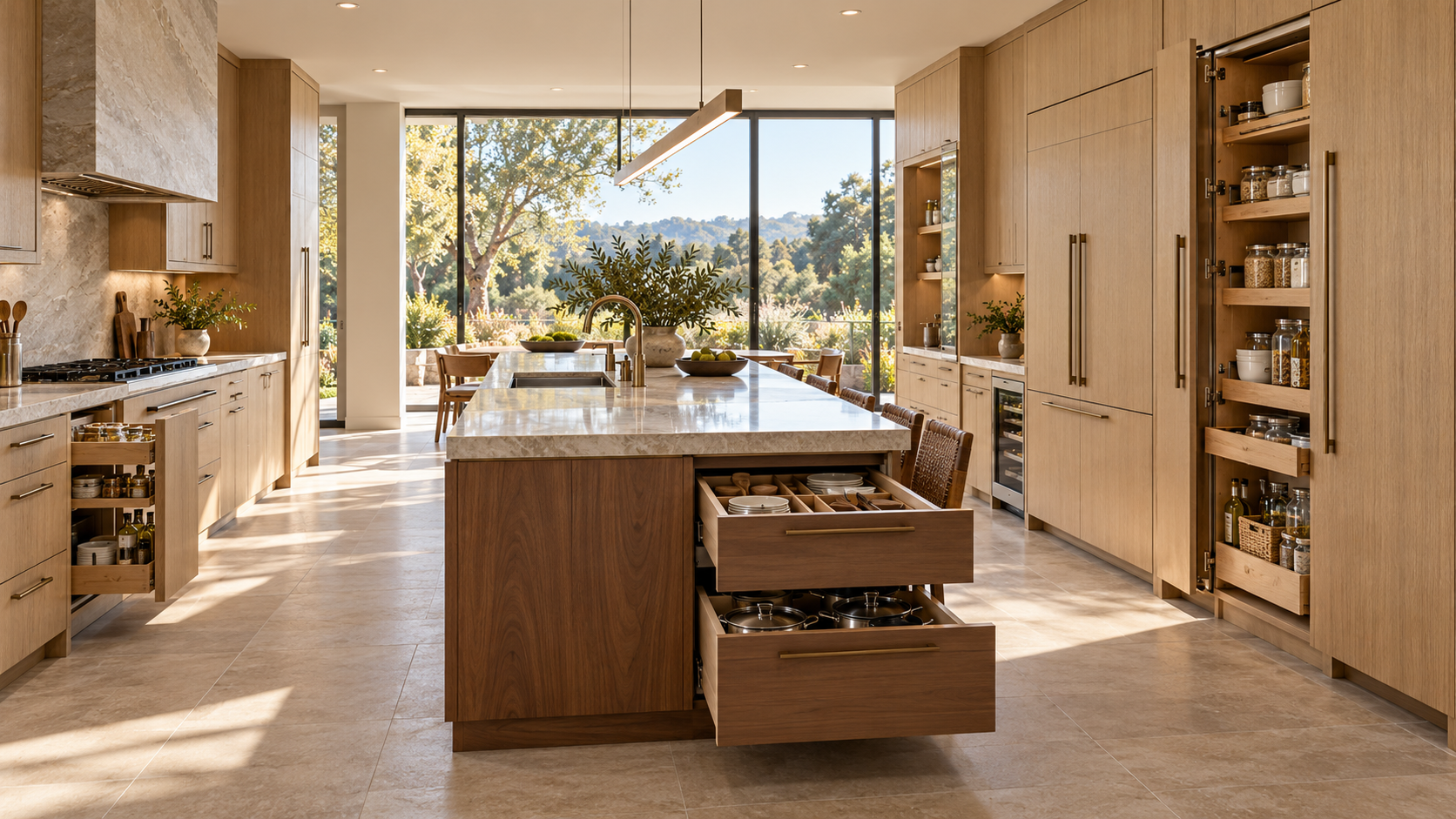
Storage should relate logically to cooking, preparation, cleanup, refrigeration, and serving. Wide drawers require enough clearance to open comfortably. Appliance doors should not create unnecessary conflicts with neighboring cabinets or circulation paths.
An island also needs to be evaluated as a working element, not simply a visual centerpiece. Its dimensions should respond to circulation, seating, storage, appliances, and the surrounding cabinetry.
A well-planned kitchen makes these relationships feel natural.
Why Does Installation Affect Long-Term Performance?
Even well-engineered cabinetry depends on accurate installation.
Cabinet boxes need to be level, aligned, and securely installed. Doors and drawers require final adjustment. Tall cabinetry, appliance panels, fillers, and end panels need to respond to actual site conditions.
Walls, floors, and ceilings are not always perfectly square or level, so the installation process must accommodate those conditions while preserving the intended alignment.
Precision at this stage affects both appearance and daily operation.
What Should You Look for When Evaluating Premium Cabinetry?
Do more than look at the doors.
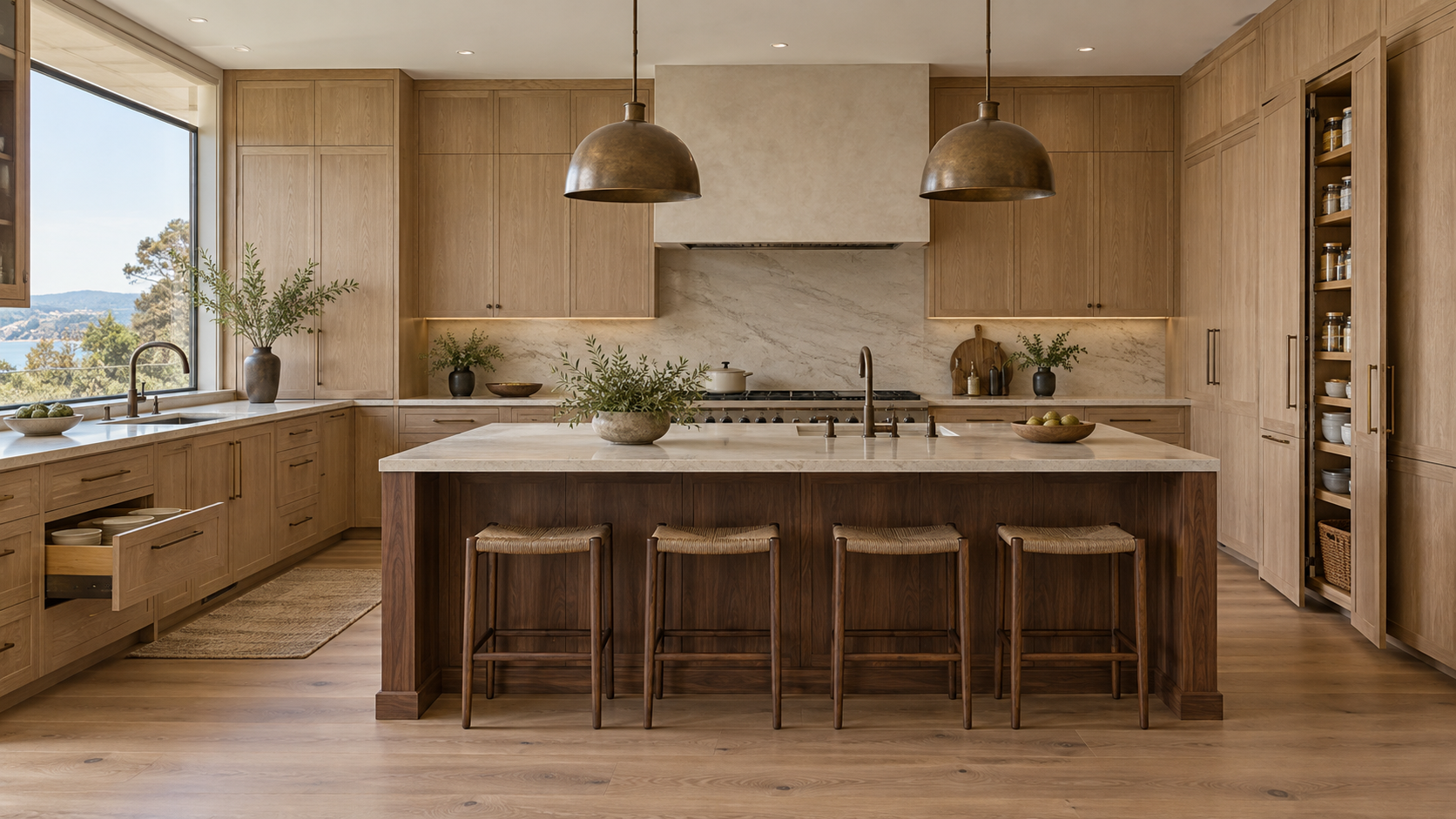
Open drawers fully. Feel how they move. Examine hinges and interior surfaces. Look at shelves, drawer boxes, hardware attachment, and storage systems. Consider how appliances are integrated and whether the cabinetry remains aligned when everything is closed.
Then consider the kitchen as a complete working environment.
Premium cabinetry should support repeated daily use without making the functional engineering visually dominant. When construction, hardware, storage, appliances, and layout are coordinated properly, the kitchen can feel effortless to use.
Explore Premium Cabinetry at Atelier Design Society
Atelier Design Society works with homeowners, architects, interior designers, builders, and other design professionals planning premium cabinetry for Bay Area homes. At the Atelier Design Society showroom in Menlo Park, project teams can examine cabinetry construction, drawers, hardware, interiors, storage solutions, appliance integration, materials, and full-scale installations while planning cabinetry around everyday use.