Why Cabinet Finish Quality Matters as Much as Door Style
Door style usually gets attention first. Shaker, slab, inset, narrow-frame, and other profiles can dramatically change the character of a kitchen.
But the door profile is only part of what you see.
The quality of the finish determines how color, wood grain, texture, sheen, edges, and details actually appear across the cabinetry. Two cabinets with similar door styles can look completely different when the finish quality is different.
In premium cabinetry, the finish is not simply a color applied at the end. It is part of the craftsmanship.
What Does Cabinet Finish Quality Actually Mean?
Finish quality describes how consistently and carefully the visible surfaces of the cabinetry are prepared and completed.
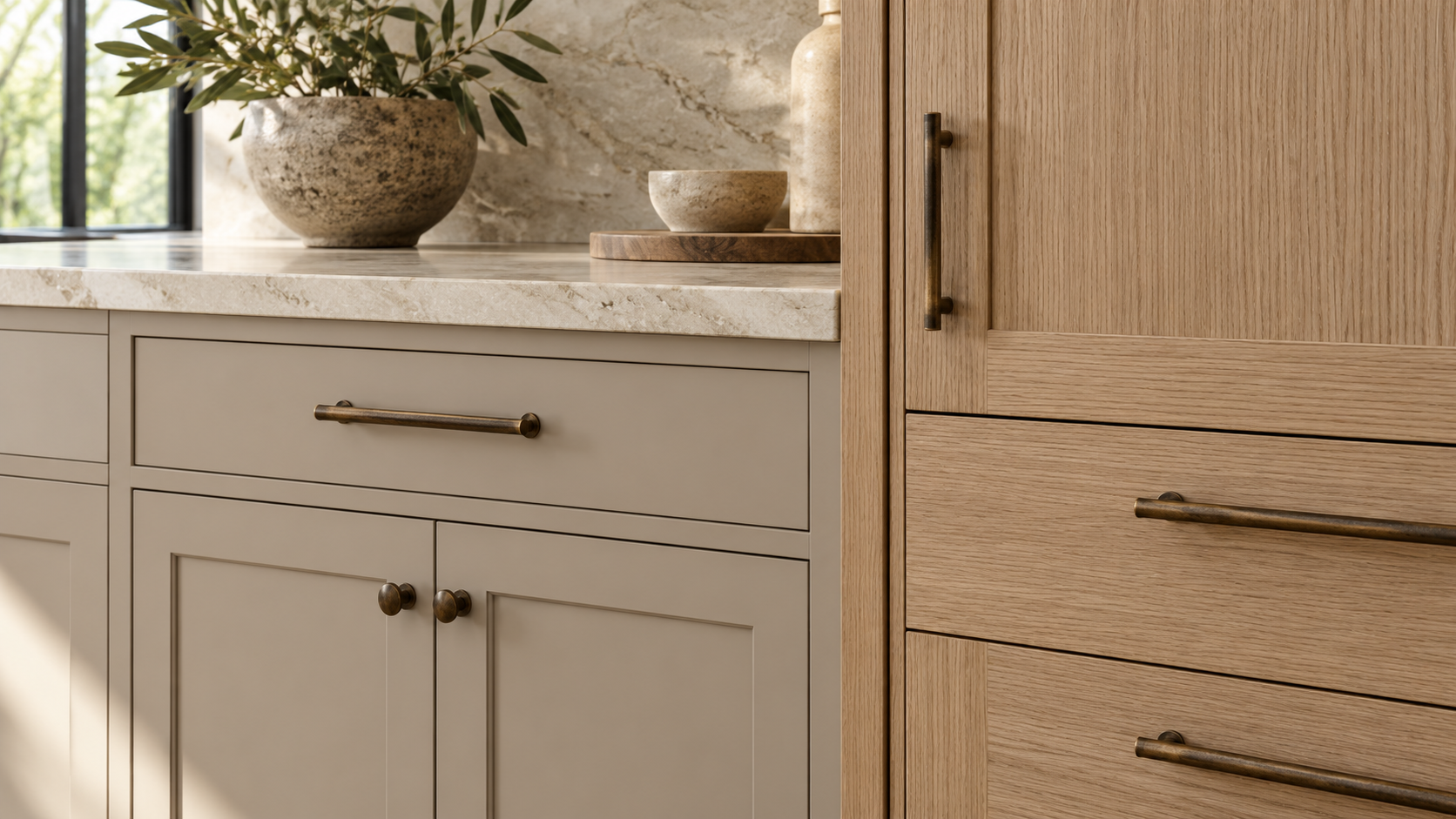
On painted cabinetry, designers look at color consistency, surface smoothness, sheen, corners, edges, and how the finish behaves across doors, drawers, frames, and panels.
On stained or natural wood cabinetry, the evaluation changes. Grain, color variation, veneer selection, stain absorption, and the relationship between neighboring components become more important.
A quality finish should complement the material rather than distract from it.
Why Is Painted Cabinetry Especially Sensitive to Finish Quality?
Paint creates a relatively uniform surface, which can make imperfections easier to notice.
Uneven sheen, inconsistent coverage, rough edges, or poorly resolved corners can become visible across large cabinetry elevations. This is especially true with simple door styles, where there are fewer decorative details to draw attention away from the surface itself.
Color also matters. A sophisticated warm white, mushroom, muted green, or other nuanced paint color depends on consistent application to maintain the intended appearance across doors, drawer fronts, panels, and moldings.
The simpler the cabinetry looks, the more important execution becomes.
How Does Finish Quality Affect Natural Wood Cabinetry?
Natural wood requires a different approach because variation is part of the material.
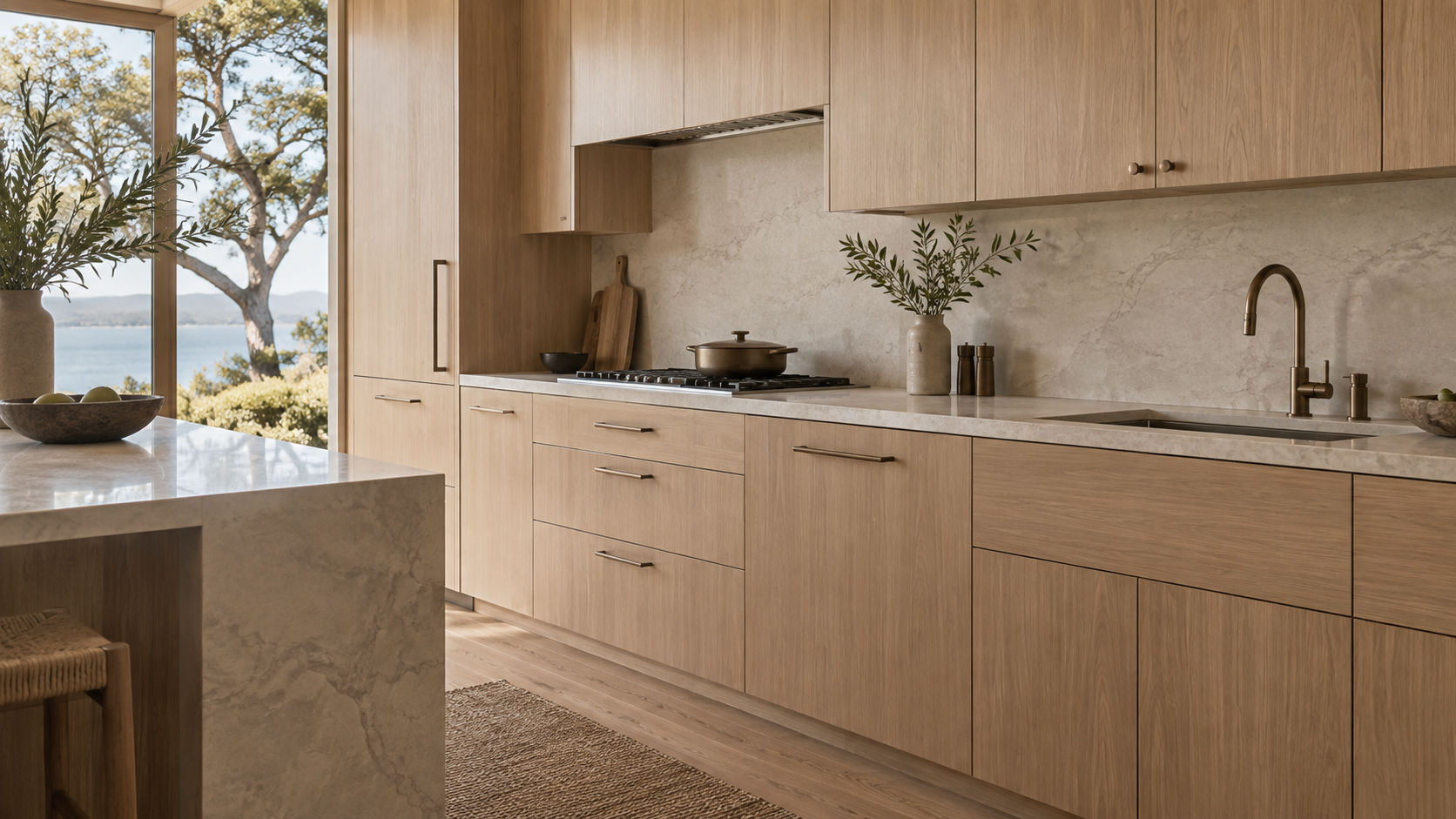
Walnut may contain meaningful changes in tone and grain. White oak can vary as well, while different cuts of the same species create noticeably different patterns. Rift-cut white oak, for example, is often selected when a more linear grain expression is desired.
A quality wood finish should protect the material while allowing its natural characteristics to remain visible.
Designers also consider how wood is distributed across an elevation. On large slab doors or drawer fronts, grain direction and tonal relationships can strongly influence whether the cabinetry feels cohesive.
Why Do Sheen and Texture Matter?
The same color can look very different depending on its sheen.
A highly reflective surface interacts strongly with windows and architectural lighting. A lower-sheen finish can create a quieter appearance and allow the cabinetry form to become more prominent.
Texture matters too. Some finishes create an exceptionally smooth surface, while others allow more of the natural character of the wood to remain visible.
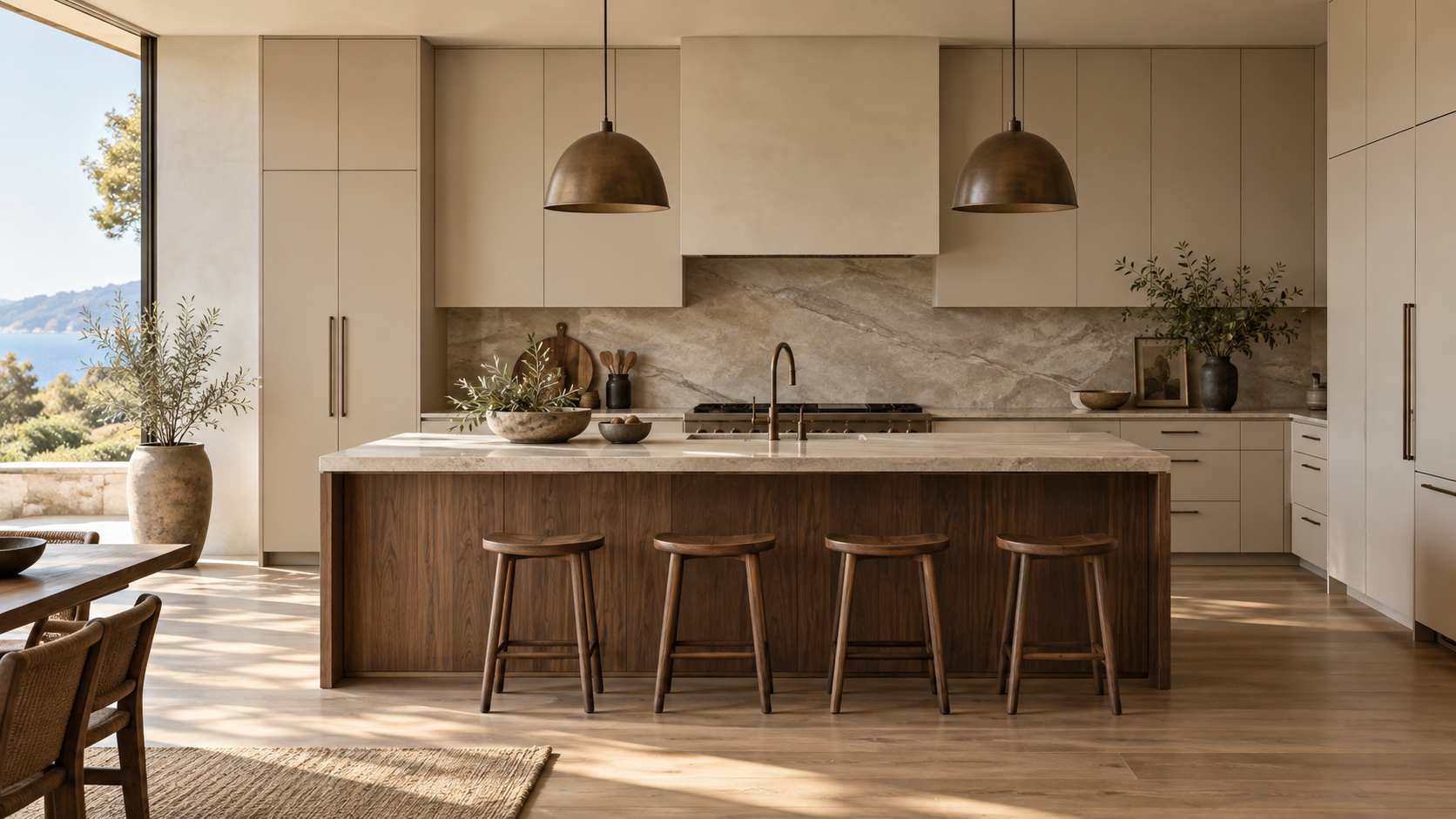
These qualities should be considered alongside countertops, flooring, wall finishes, and hardware. A kitchen filled with similarly reflective materials can feel very different from one that balances honed stone, natural wood, painted cabinetry, and restrained metal finishes.
Finish selection is therefore part of the complete material palette.
Why Are Edges and Corners Important?
Finish quality becomes particularly noticeable where surfaces change direction.
Look closely at door edges, drawer fronts, inside corners, frames, end panels, and transitions between components. These areas reveal how carefully the cabinetry has been prepared and finished.
This matters with both painted and natural wood cabinetry. The face of a door may look beautiful, but the complete piece should maintain the same level of refinement around its edges and adjacent surfaces.
Full-size displays are particularly useful because they allow you to examine these details across complete cabinets rather than judging finish quality from a small sample alone.
Does a More Expensive Finish Always Look Better?
Not necessarily.
The appropriate finish depends on the material, cabinetry design, architecture, and desired character of the room.
A heavily processed finish is not automatically more sophisticated than a restrained natural wood finish. Likewise, a custom paint color only adds value when it contributes meaningfully to the overall design.
What matters is the quality of preparation and execution, along with how successfully the finish supports the material and cabinetry style.
The goal is not simply to choose the most elaborate finish. It is to choose the right finish and have it executed well.
Why Should You See Cabinet Finishes in Person?
Screens cannot reliably communicate every characteristic of a cabinetry finish.
Color changes with lighting. Natural wood varies from sample to sample. Sheen and texture are particularly difficult to understand from photographs.
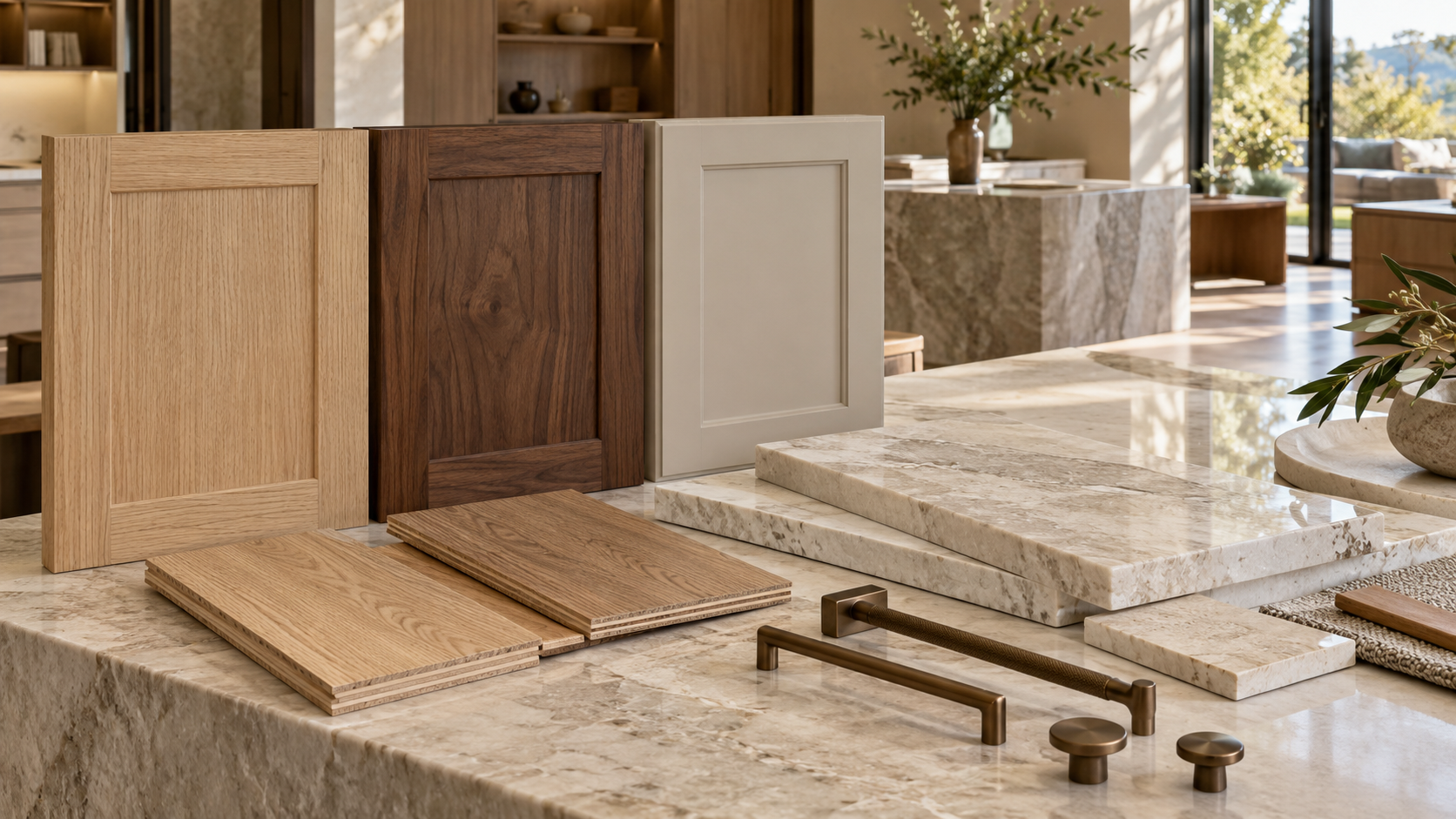
Seeing cabinetry in person also allows you to compare a small finish sample with a full-size installation. A color that appears subtle on one door may have a much stronger presence across an entire wall of cabinetry.
Look at the finish from different angles and under different lighting conditions. Then place it beside the stone, flooring, hardware, and other materials being considered for the project.
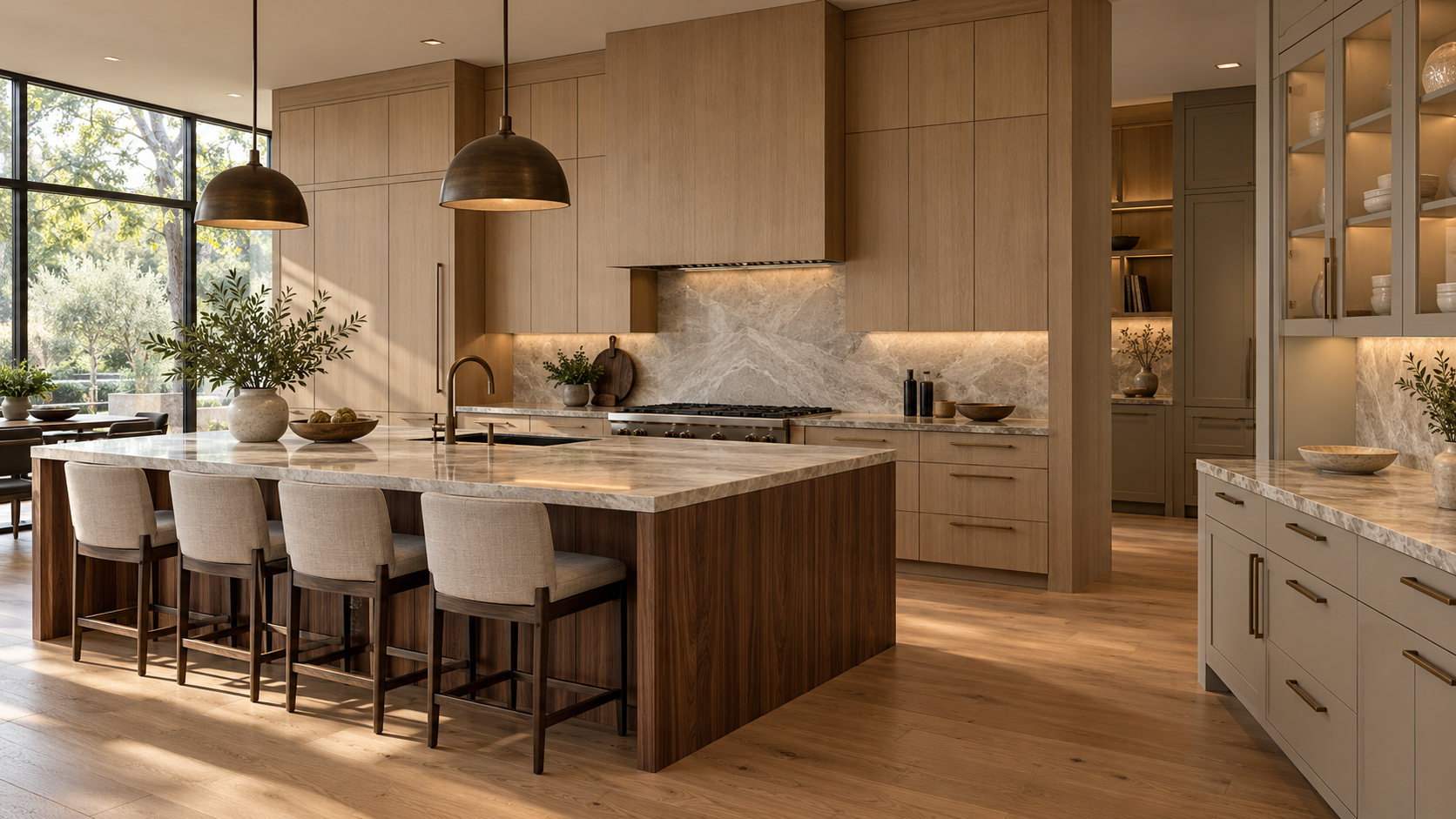
What Should You Look for When Comparing Cabinet Finishes?
Start with the overall appearance, then move closer.
Look for consistency across doors, drawers, panels, and frames. Examine edges and corners. With painted cabinetry, consider surface quality and sheen. With natural wood, study grain, tone, and how variation is handled across neighboring pieces.
Then step back and evaluate the complete cabinetry elevation.
A beautiful door style establishes the design language. The finish determines how successfully that design is expressed across the finished kitchen.
Explore Cabinet Finishes at Atelier Design Society
Atelier Design Society works with homeowners, architects, interior designers, builders, and other design professionals planning premium cabinetry throughout Bay Area homes. At the Atelier Design Society showroom in Menlo Park, project teams can compare natural woods, painted finishes, door styles, construction, hardware, surfaces, and full-scale installations while seeing how finish quality changes the final appearance of cabinetry.