How Cabinet Hardware Changes the Look of a Kitchen
Cabinet hardware may occupy only a small portion of a kitchen, but visually, it can change the character of the entire cabinetry installation.
A slim bronze pull can make white oak cabinetry feel warmer and more architectural. A substantial dark pull can add contrast to painted cabinets. Minimal hardware can allow natural wood grain and cabinetry proportions to become the focus.
The right hardware should do more than coordinate with the finish. Its scale, shape, placement, and relationship to the cabinetry all influence how the kitchen feels.
Why Does Cabinet Hardware Have Such a Strong Visual Impact?
Cabinet doors and drawers create large, relatively uninterrupted surfaces. Hardware introduces smaller points of contrast across those surfaces.
That means even a subtle change can affect the visual rhythm.
Long pulls emphasize vertical or horizontal lines. Small knobs create individual accents. Dark hardware becomes more graphic against light cabinetry, while hardware closer in tone to the cabinet finish can feel quieter.
Designers consider hardware as part of the cabinetry elevation rather than treating it as a final accessory.
How Does Hardware Finish Change the Palette?
Hardware introduces another material and finish into the kitchen.
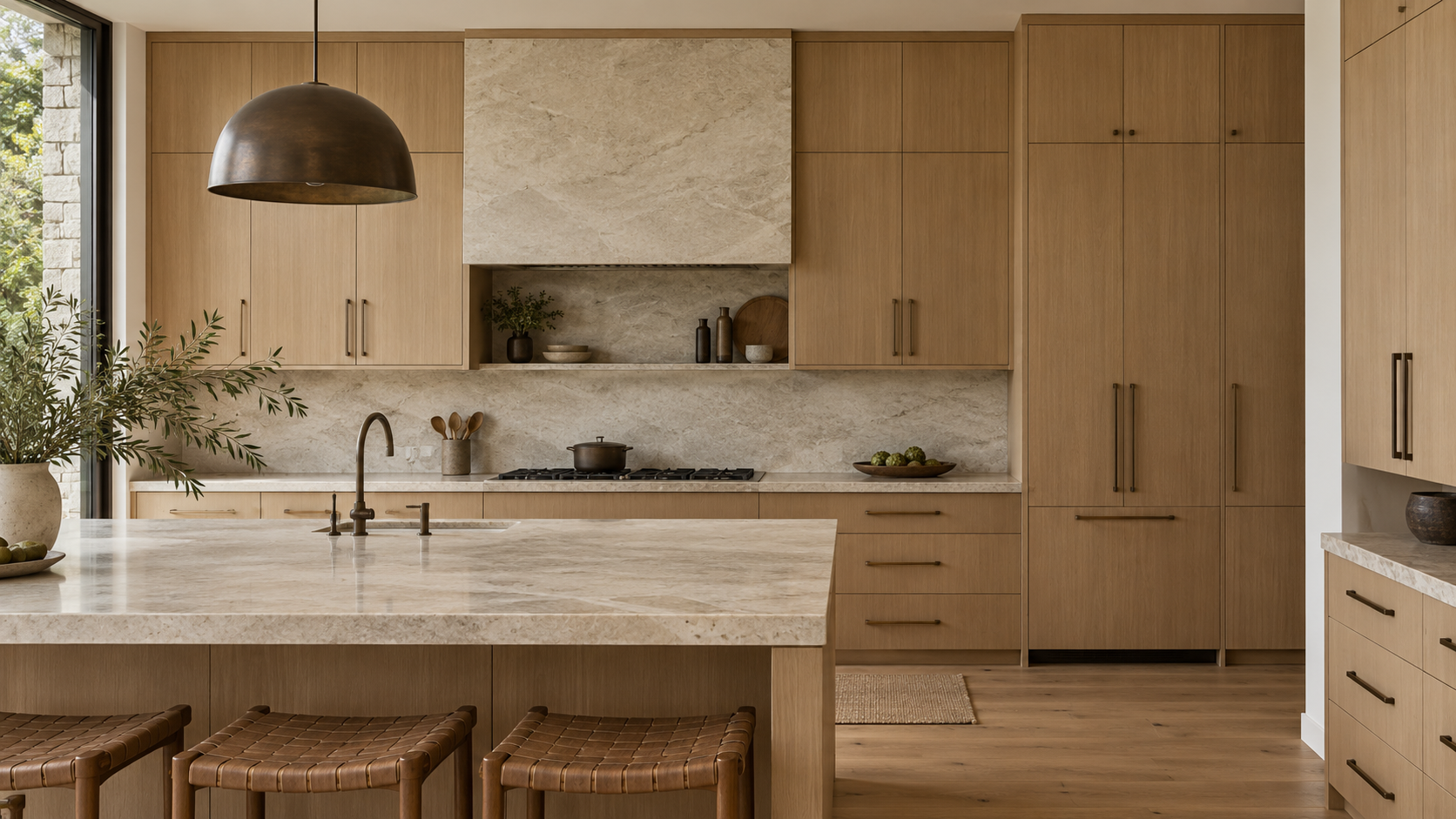
Warm bronze or brass tones can reinforce the warmth of walnut, white oak, or creamy stone. Darker finishes can create stronger contrast against light painted cabinetry. Polished metals reflect more light, while aged, brushed, or satin finishes tend to feel quieter.
The hardware does not necessarily need to match every metal in the room exactly.
Faucets, lighting, appliances, and cabinet hardware can relate without being identical. What matters is whether their undertones and finishes feel intentional together.
Whenever possible, compare the actual hardware against cabinetry and countertop samples rather than choosing it independently.
What Difference Does the Shape of the Hardware Make?
Shape can shift the character of cabinetry even when the finish remains the same.
A clean linear pull reinforces contemporary geometry. A softer curved form can reduce the visual rigidity of a cabinetry elevation. Knobs introduce smaller points of detail, while longer pulls create stronger lines across doors and drawers.
The door style matters too.
A highly detailed door already has significant visual structure. A simple slab front provides a quieter background, making the hardware itself more noticeable.
The objective is balance. Hardware should contribute to the design without competing with the cabinetry.
Why Does Hardware Scale Matter?
A pull can be beautiful on its own and still look wrong once installed on a large cabinet door.
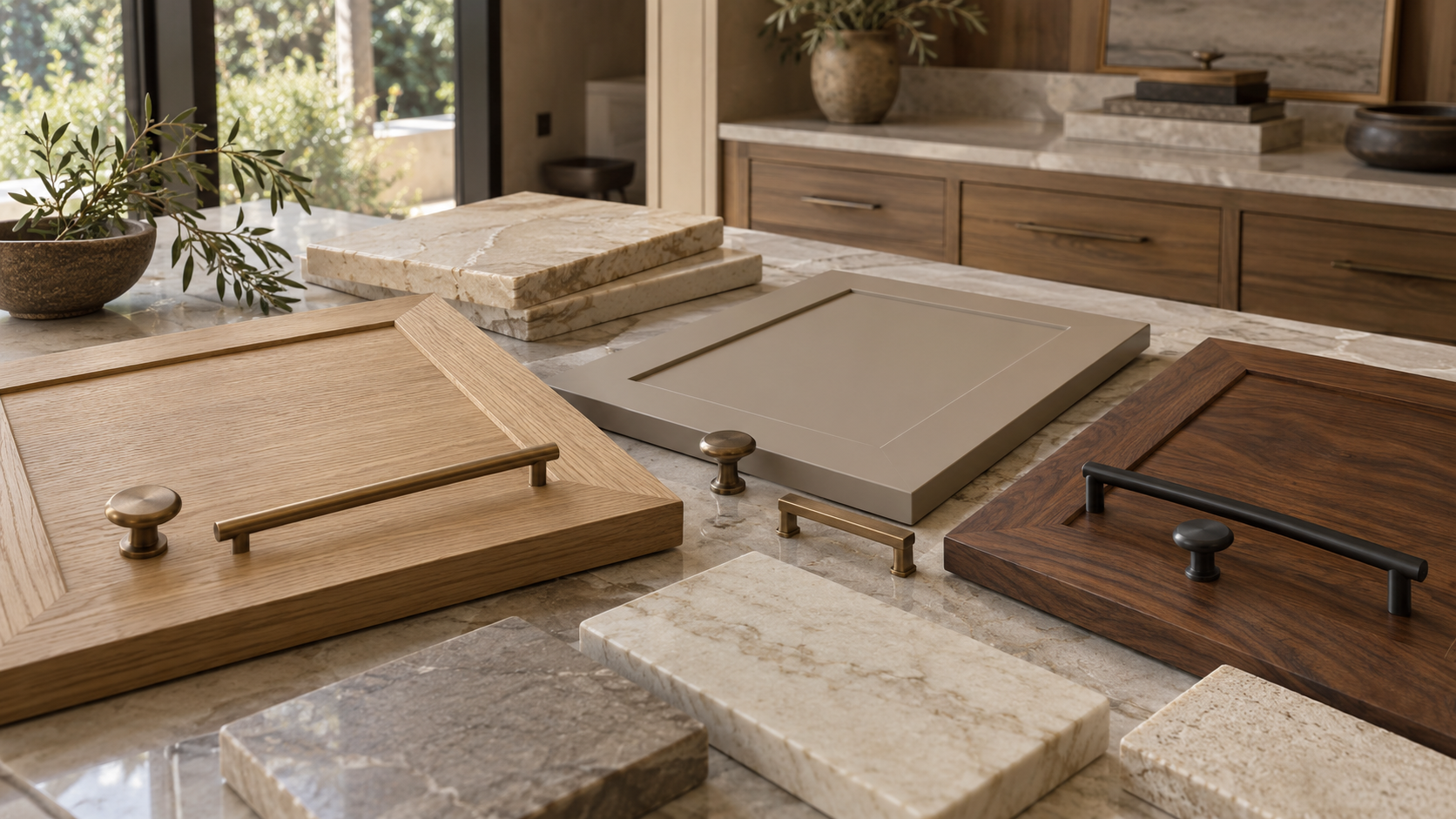
Scale should respond to the dimensions of the cabinetry. Tall pantry doors, wide drawers, narrow upper cabinets, and small drawer fronts create different proportions.
Using appropriately scaled hardware helps the cabinetry feel balanced. On an expansive wall of tall cabinets, hardware that is too small can appear visually disconnected from the doors. Oversized hardware on smaller fronts can dominate them.
Consistency does not always mean using one hardware size everywhere. A coordinated family of sizes can maintain the same design language while responding more appropriately to different cabinet dimensions.
How Does Placement Affect the Finished Kitchen?
Placement influences both function and visual alignment.
On drawers, centered pulls can reinforce the horizontal organization of the cabinetry. On tall doors, vertical pulls can strengthen the height of the elevation. Knobs and smaller pulls create different relationships with rails, stiles, and door edges.
Small placement changes become particularly noticeable when the same hardware repeats across a long run.
Before drilling, hardware placement should be considered across the complete elevation rather than one cabinet at a time.
Should Hardware Contrast With the Cabinets?
It can, but contrast should have a purpose.
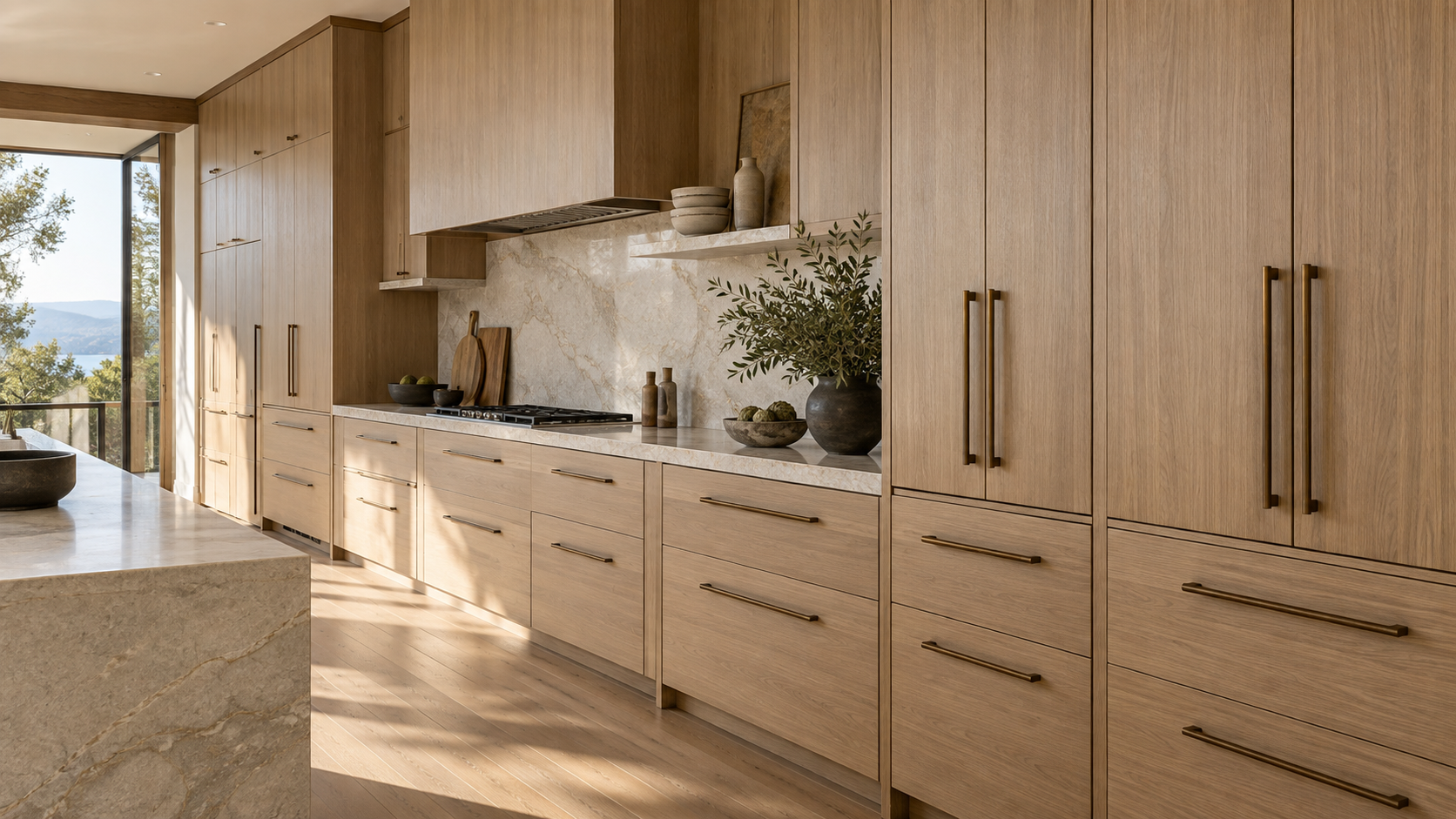
Dark hardware against warm white cabinetry creates a strong graphic effect. Aged bronze against walnut may blend more quietly into the material palette. Hardware with a softer tonal relationship to white oak can allow the grain to remain dominant.
Neither approach is inherently better.
Ask what you want to notice first. If the cabinetry material should be the focus, quieter hardware may support it. If the design needs additional definition, stronger contrast can help establish that rhythm.
This is another reason hardware should be selected alongside cabinetry, stone, and other finishes rather than at the very end of the project.
What About Integrated or Minimal Hardware?
Not every kitchen needs prominent pulls or knobs.
Finger pulls, edge pulls, integrated channels, and other low-profile approaches can reduce the visual presence of hardware. In some designs, this allows the cabinetry to read more like an architectural surface.
These solutions still require careful planning.
Door construction, drawer operation, appliance panels, accessibility, and everyday comfort should all be considered. A minimal appearance should not make cabinetry unnecessarily difficult to use.
Why Should You See Hardware With the Actual Cabinet Finish?
Metal finishes can look different depending on the materials around them.
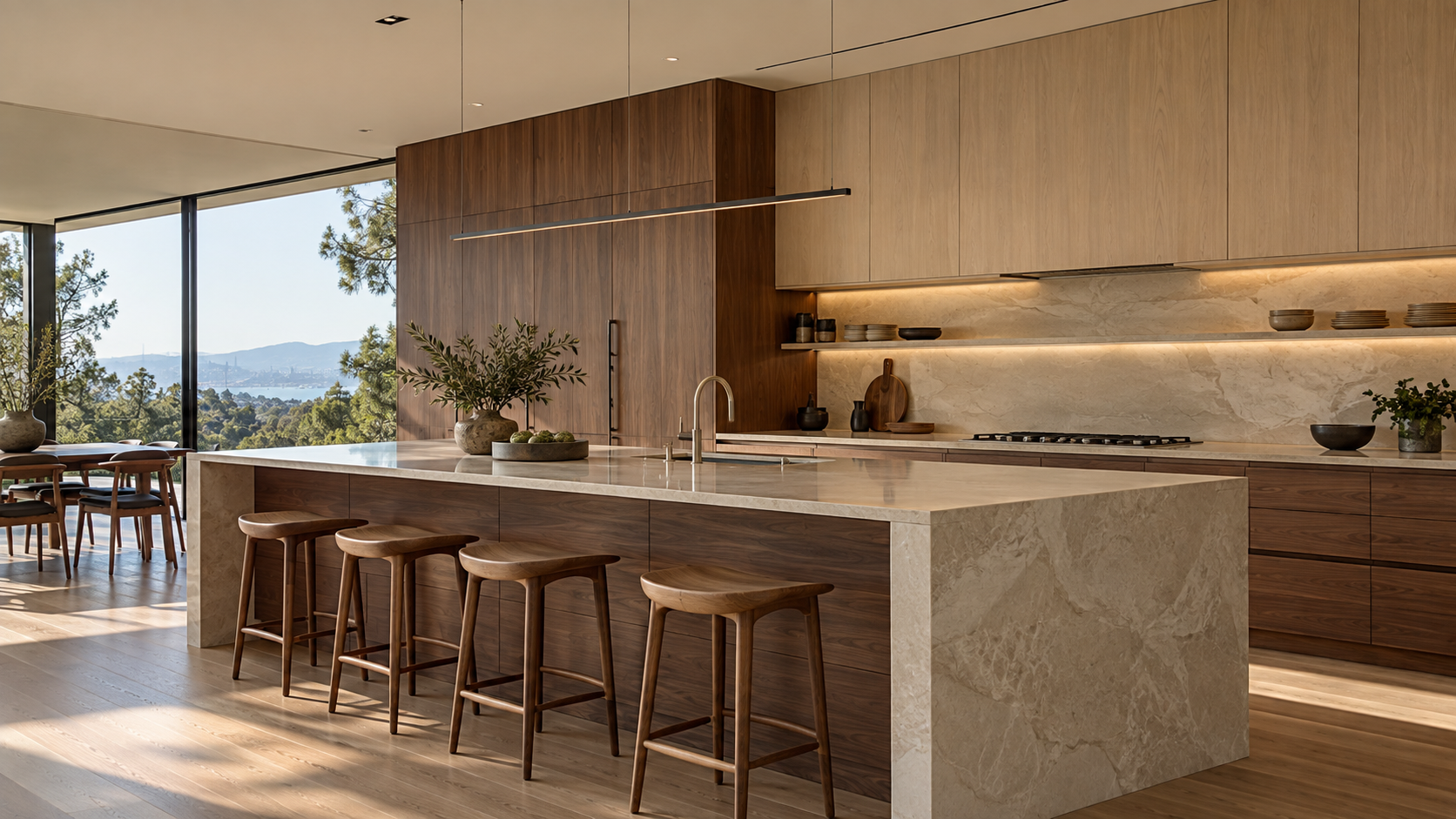
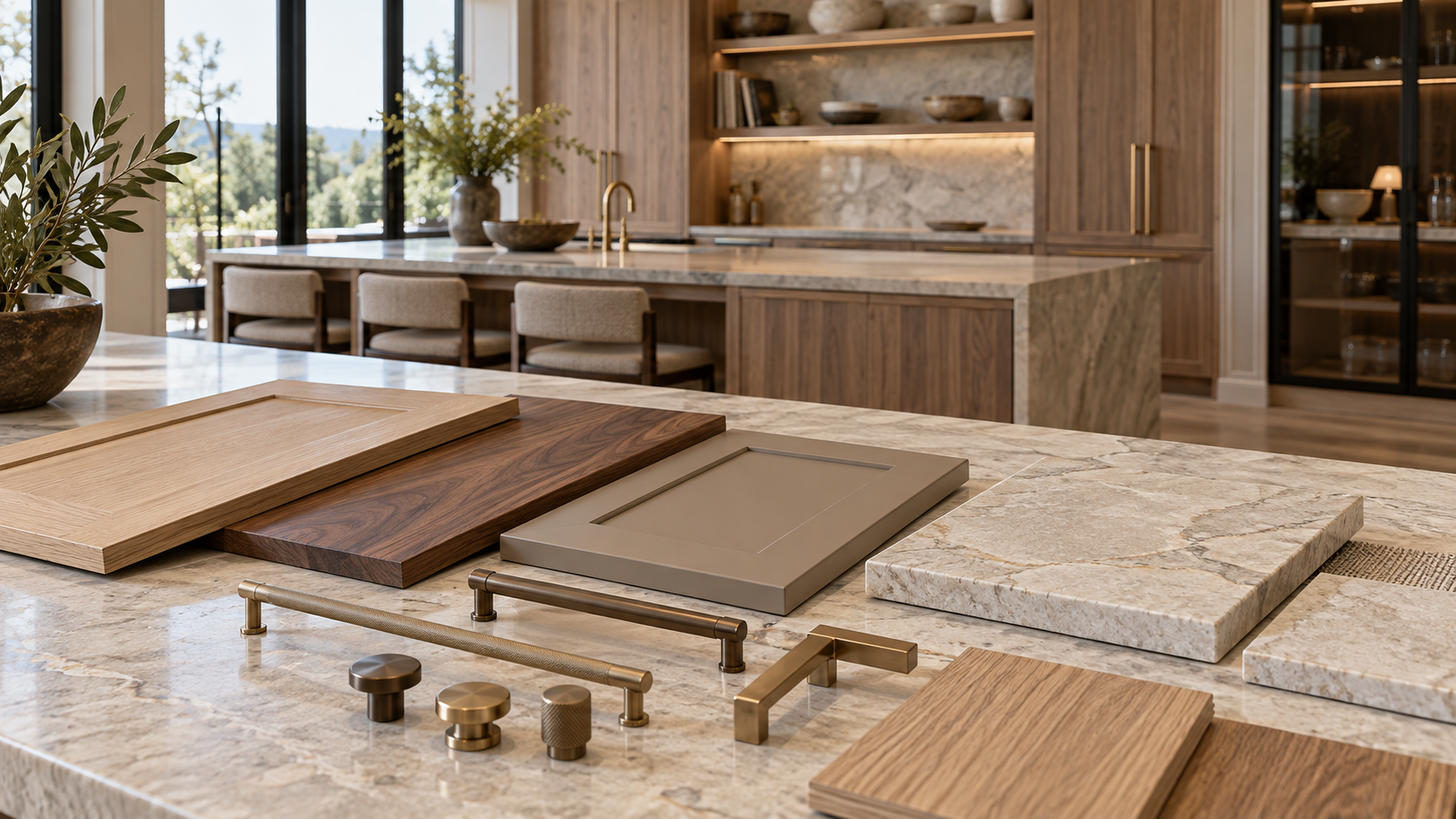
A bronze pull viewed by itself may appear quite dark. Against walnut, it may blend into the cabinetry. Against warm white paint, the same hardware can become a noticeable contrast.
Lighting also affects the relationship. Natural daylight, warm architectural lighting, and reflective stone surfaces can change how metal finishes appear.
Place hardware directly against the cabinetry sample and compare it with the countertop, flooring, and other important finishes. This provides much more useful information than selecting hardware from an isolated photograph.
How Should You Choose Cabinet Hardware?
Start with the cabinetry rather than the hardware.
Consider the door style, finish, grain, proportions, and overall architectural direction. Then evaluate hardware for scale, shape, finish, placement, and comfort.
Look at individual samples up close, but also imagine how the hardware will repeat across the complete kitchen. A single pull may seem subtle on a sample door but become a strong visual element when repeated twenty or thirty times.
The best hardware feels integrated with the cabinetry rather than applied to it as an afterthought.
Explore Cabinet Hardware at Atelier Design Society
Atelier Design Society works with homeowners, architects, interior designers, builders, and other design professionals planning premium cabinetry throughout Bay Area homes. At the Atelier Design Society showroom in Menlo Park, project teams can compare cabinetry materials, door styles, hardware, natural woods, painted finishes, surfaces, and full-scale installations while seeing how these details work together.