What Does “Fully Custom Cabinetry” Actually Mean?
“Custom cabinetry” is a term used broadly in kitchen design. But fully custom cabinetry means something more specific than choosing a door style, changing a finish, or selecting from a long list of options.
At its core, fully custom cabinetry is designed and manufactured around the requirements of an individual project. Dimensions, proportions, materials, finishes, storage, and architectural details can be developed specifically for the home rather than being limited to a predetermined catalog of standard configurations.
That flexibility can be valuable, but only when it serves the design.
What Makes Cabinetry Fully Custom?
Fully custom cabinetry begins with the project rather than a fixed collection of cabinet sizes.
Cabinet dimensions can be developed around the architecture, appliances, ceiling heights, windows, storage requirements, and desired proportions. Door styles, finishes, interior configurations, panels, moldings, and other details may also offer a much broader level of personalization.
This does not mean every cabinet needs to be unusual. A well-designed custom kitchen may look remarkably restrained. The difference is that the designer has greater control over how each component responds to the room.
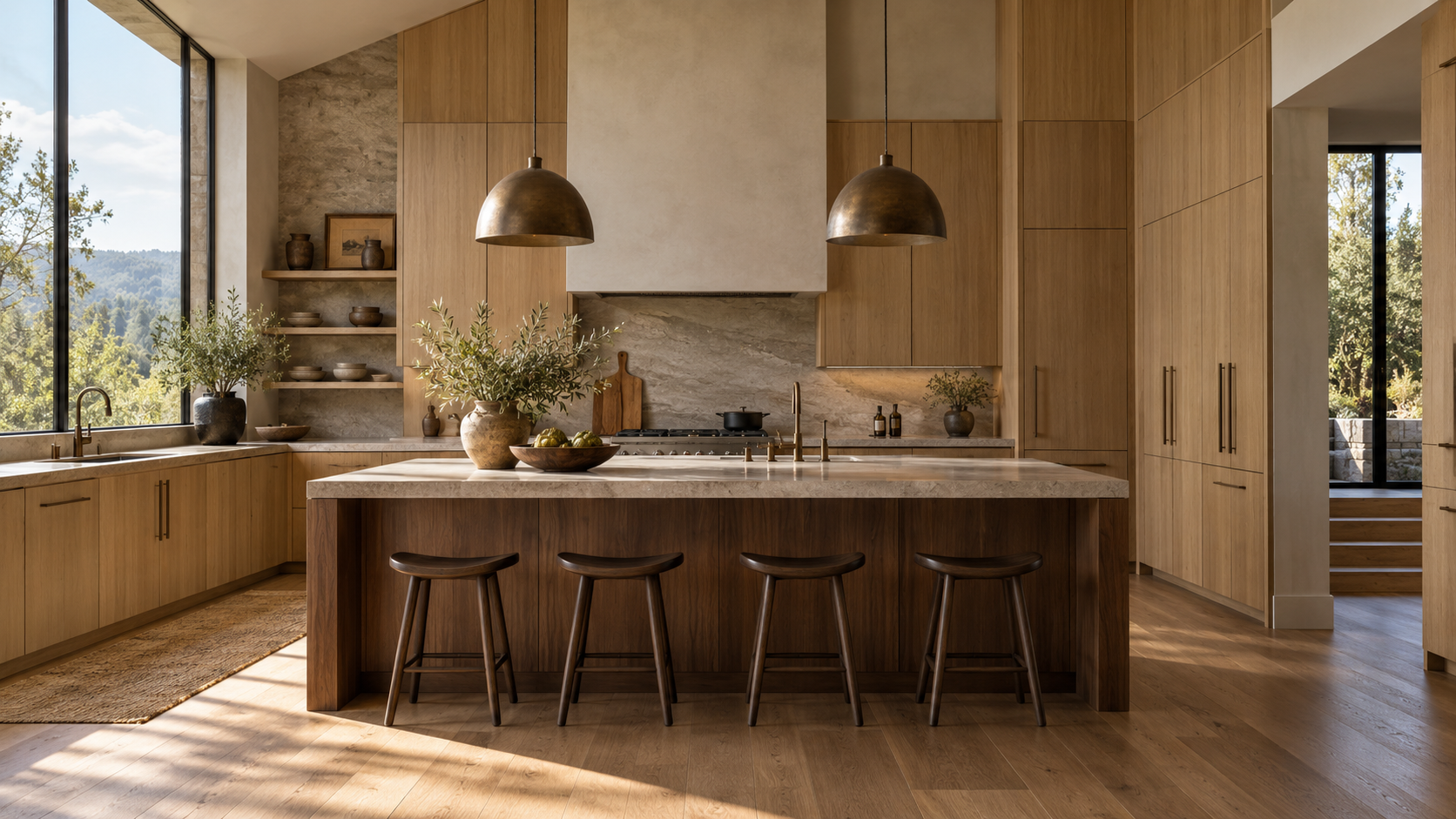
How Is Fully Custom Different From Semi-Custom?
Semi-custom cabinetry begins with an established system and allows modifications within that system. Depending on the manufacturer, those modifications may include cabinet dimensions, door styles, finishes, storage accessories, and other details.
Fully custom cabinetry generally provides greater freedom.
A cabinet can be developed for a particular dimension rather than selected from the closest available size. Unusual architectural conditions can be resolved more specifically. Finishes, details, and storage can also be developed around the design intent.
The exact capabilities still vary by manufacturer, so the label alone is not enough. When comparing cabinetry, ask specifically what can and cannot be modified.
Where Does Full Customization Make the Biggest Difference?
Customization becomes especially useful when the architecture does not fit neatly into standard dimensions.
A wall may terminate at an unusual point. A window may need cabinetry precisely balanced around it. Tall cabinets may need to meet a particular ceiling condition. An appliance may require a specialized panel or opening.
Instead of filling those conditions with unnecessary gaps or awkward transitions, custom cabinetry gives the design team more control over how they are resolved.
The result can feel more integrated because the cabinetry was developed around the room.
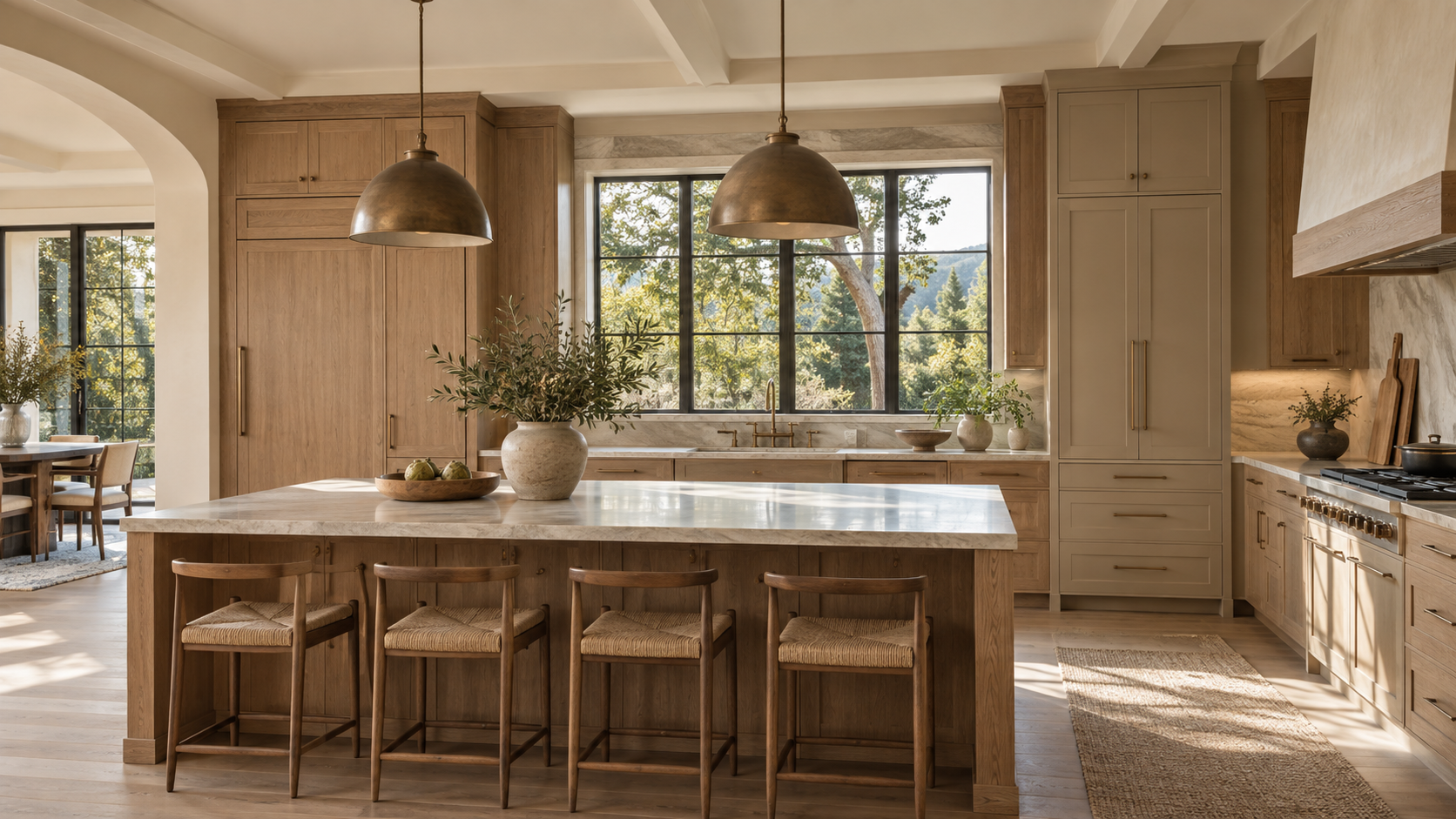
Does Fully Custom Mean More Material and Finish Options?
It can.
Fully custom cabinetry may provide greater freedom to specify wood species, grain characteristics, stains, painted finishes, door profiles, moldings, panels, and other visual details.
This becomes particularly valuable when cabinetry needs to coordinate with an established architectural palette or continue across several rooms.
For example, a project might use walnut in the kitchen, a related painted finish in the pantry, and cabinetry with different proportions in a primary bathroom while maintaining a consistent level of craftsmanship.
Customization allows those spaces to feel connected without making them identical.
Can the Cabinet Interiors Be Customized Too?
Yes. Fully custom cabinetry is not only about the exterior.
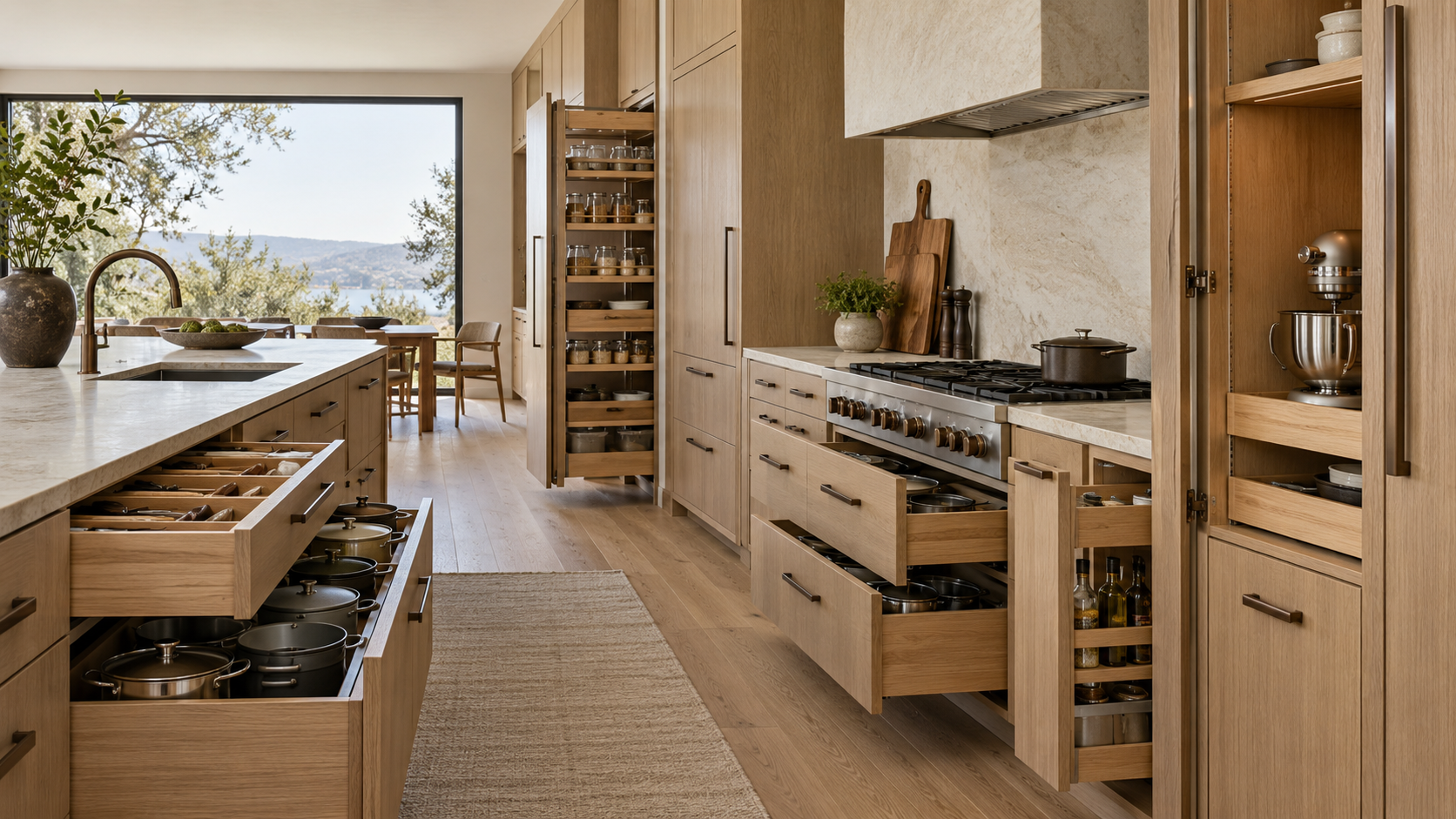
Drawer configurations, pantry storage, appliance storage, interior dividers, tall cabinets, specialty pull-outs, and other components can be developed around how the homeowners actually use the space.
The best customization solves a specific need.
A dedicated appliance cabinet may make sense for one household, while another may need deep drawers for cookware or specialized pantry storage. Customization is most effective when the interior organization begins with real routines rather than adding accessories simply because they are available.
Does Fully Custom Automatically Mean Higher Quality?
Not necessarily.
Customization describes flexibility. It does not independently guarantee quality.
Construction still matters. So do drawer systems, hinges, cabinet interiors, joinery, finishes, reveals, manufacturing precision, and installation.
When evaluating fully custom cabinetry, examine the actual construction rather than relying on the word “custom.” Open the drawers. Look at the cabinet boxes and interiors. Examine finish quality and alignment. Ask how the cabinetry is engineered and what details can truly be customized.
A premium custom cabinet should combine design flexibility with strong execution.
Why Does Fully Custom Cabinetry Usually Cost More?
Greater flexibility generally requires more project-specific design, engineering, manufacturing, finishing, and coordination.
Non-standard dimensions and specialized components can require additional production work. Custom finishes or architectural details may add further complexity. The cabinetry also needs to coordinate accurately with appliances, stone, plumbing, lighting, and actual site conditions.
That does not mean every project benefits from maximizing customization.
The value comes from using custom capabilities where they improve the architecture, function, proportions, or material language of the home.
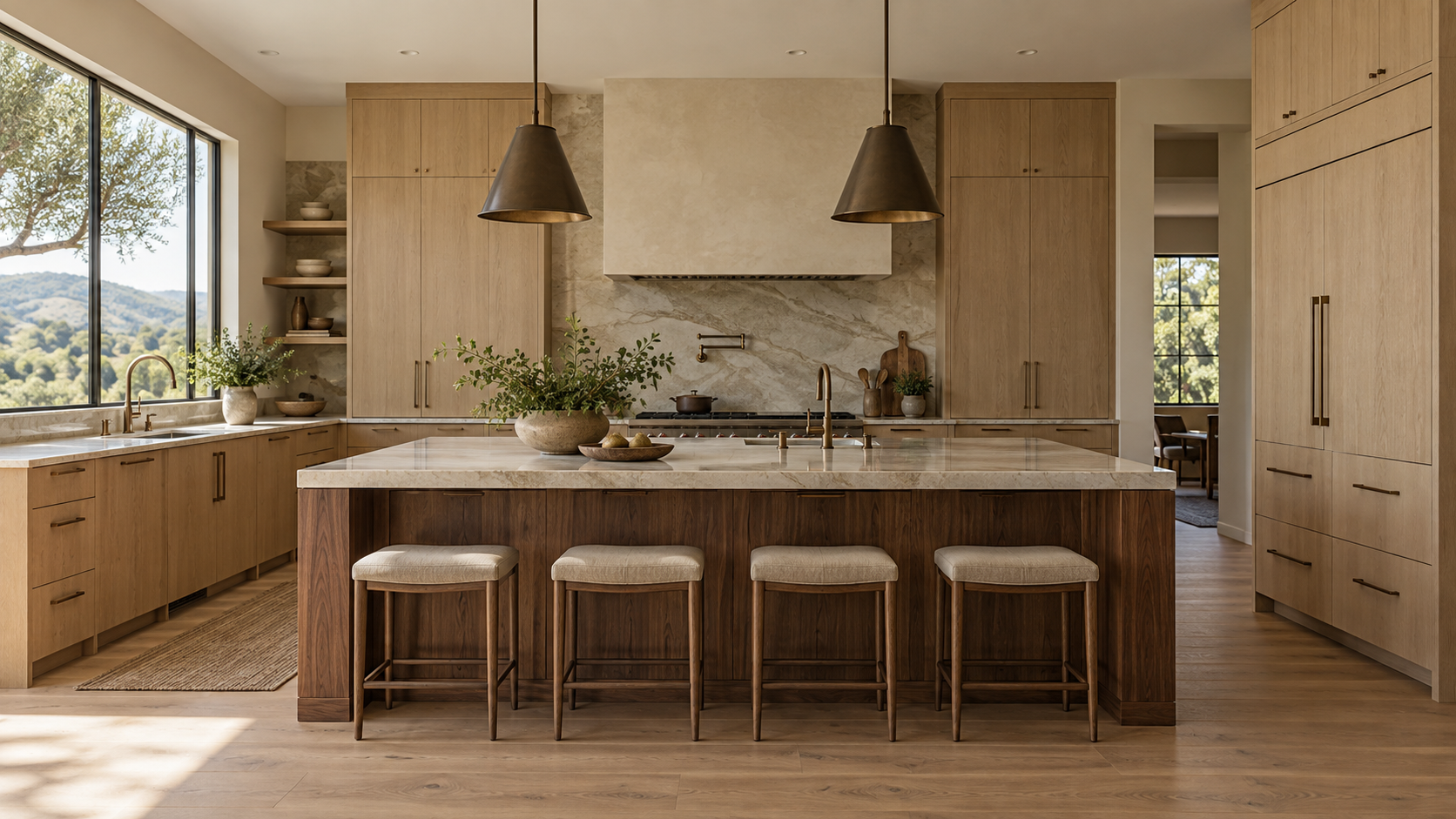
When Is Fully Custom Cabinetry Worth Considering?
Fully custom cabinetry can be particularly useful for custom homes, substantial remodels, unusual architecture, highly integrated kitchens, and projects where cabinetry extends throughout multiple rooms.
It can also make sense when a specific material, finish, proportion, or storage solution is central to the design.
For a more straightforward project, a premium semi-custom collection may provide all the flexibility required.
The objective is not to choose the category with the most options. It is to select the cabinetry system that gives the design team enough control to execute the project properly.
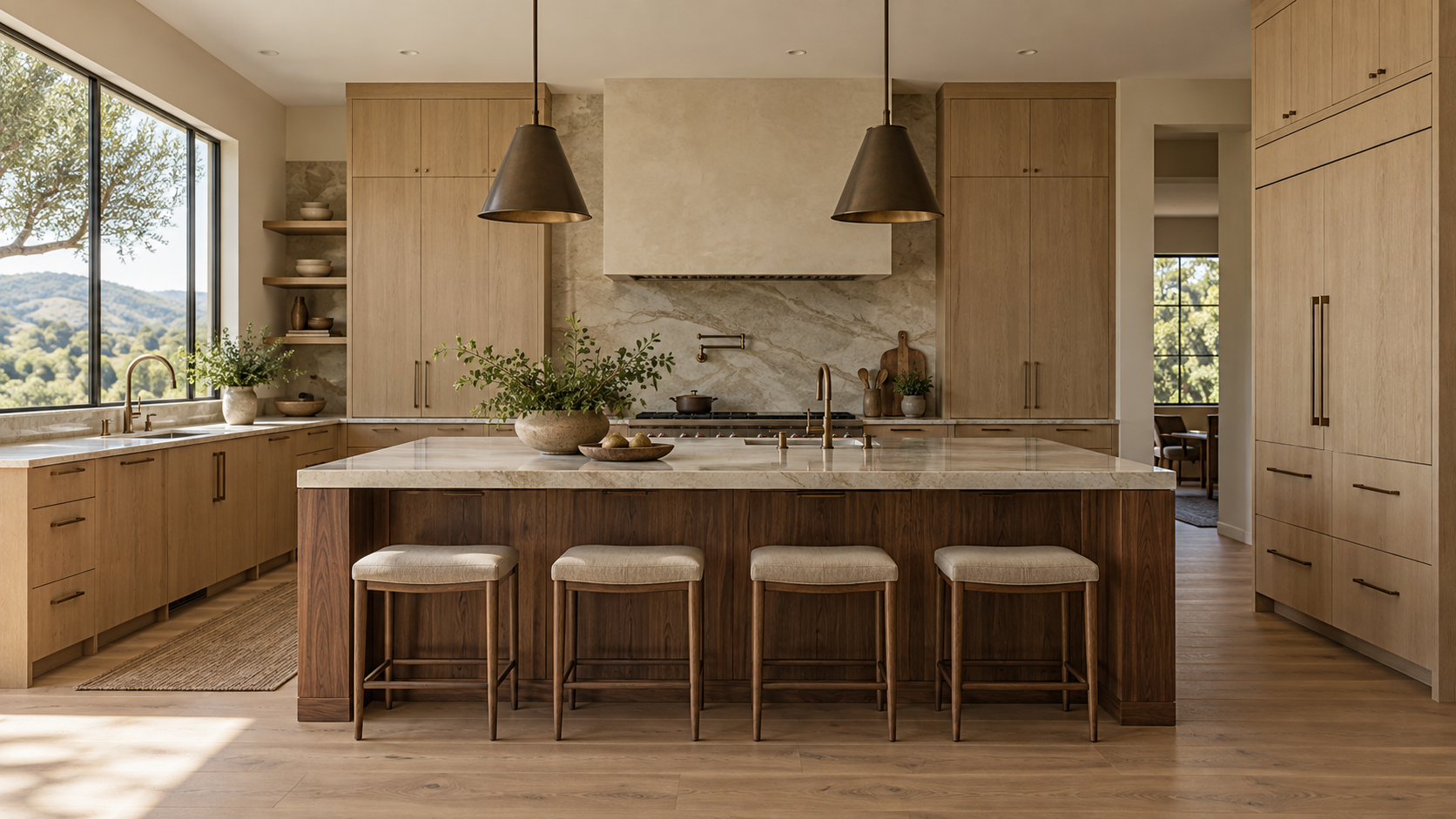
What Does Fully Custom Cabinetry Really Mean?
Fully custom cabinetry means greater control over how the cabinetry responds to the project.
Dimensions can be developed around the architecture. Materials and finishes can support a specific design language. Storage can respond to the household, and details can be coordinated with appliances and surrounding construction.
But customization should never be the objective by itself.
The strongest custom cabinetry uses that flexibility selectively, creating a kitchen that feels resolved because the cabinetry was designed for the home rather than simply placed inside it.
Explore Fully Custom Cabinetry at Atelier Design Society
Atelier Design Society works with homeowners, architects, interior designers, builders, and other design professionals planning premium cabinetry throughout Bay Area homes. At the Atelier Design Society showroom in Menlo Park, project teams can compare custom cabinetry, materials, finishes, construction, interiors, storage solutions, hardware, and full-scale installations while determining the appropriate level of customization for their project.