Custom, Semi-Custom and Stock Cabinetry: Understanding the Real Differences
The terms stock, semi-custom, and custom cabinetry are used constantly in kitchen design, but they are not always explained clearly.
The difference goes beyond price. Each category offers a different level of flexibility in dimensions, materials, finishes, door styles, storage, and architectural detailing.
There is also no universal industry formula that makes every cabinet line fit neatly into one category. Capabilities vary by manufacturer. The better approach is to understand what each cabinetry collection actually allows you to change.
What Is Stock Cabinetry?
Stock cabinetry is generally produced in predetermined sizes, configurations, door styles, and finishes.
Because the available choices are standardized, the design needs to work within an established catalog. This can simplify specification and may suit projects where extensive customization is unnecessary.
The limitation is flexibility. If a wall, appliance, ceiling condition, or design concept requires an unusual dimension or highly specific detail, a stock system may offer fewer ways to respond.
That does not automatically make stock cabinetry poorly constructed. Customization level and construction quality are separate considerations.
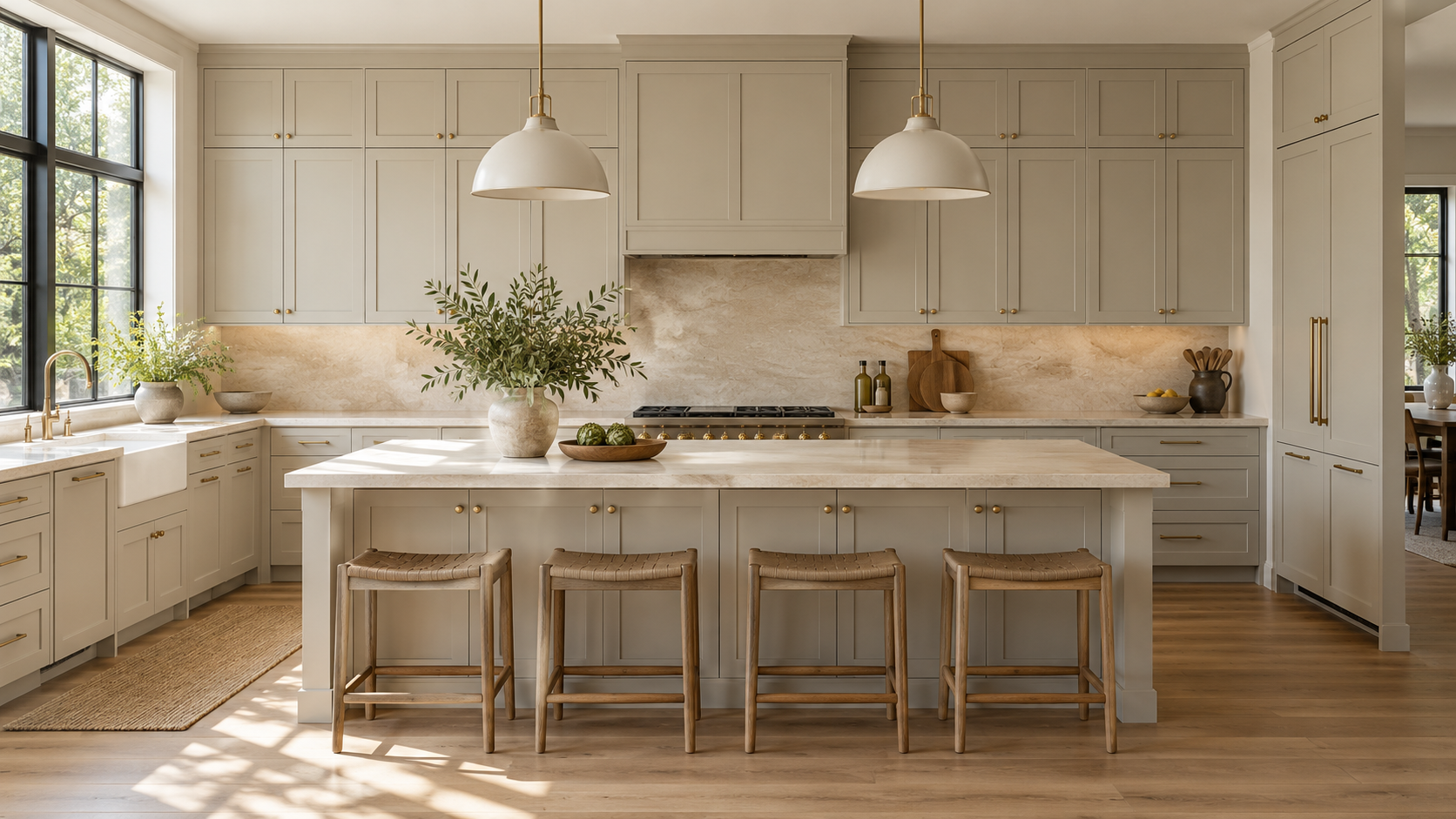
What Is Semi-Custom Cabinetry?
Semi-custom cabinetry begins with an established cabinetry system but provides more choices within that system.
Depending on the manufacturer, options may include modifications to cabinet dimensions, a broader selection of door styles, multiple wood species and painted finishes, interior storage accessories, decorative details, and other configuration choices.
This additional flexibility can make semi-custom cabinetry appropriate for projects that need more personalization than a stock collection provides without requiring every component to be individually designed.
However, the term semi-custom does not tell you exactly what can be modified. One manufacturer may offer considerably more flexibility than another.
The actual capabilities of the collection matter more than the category name.
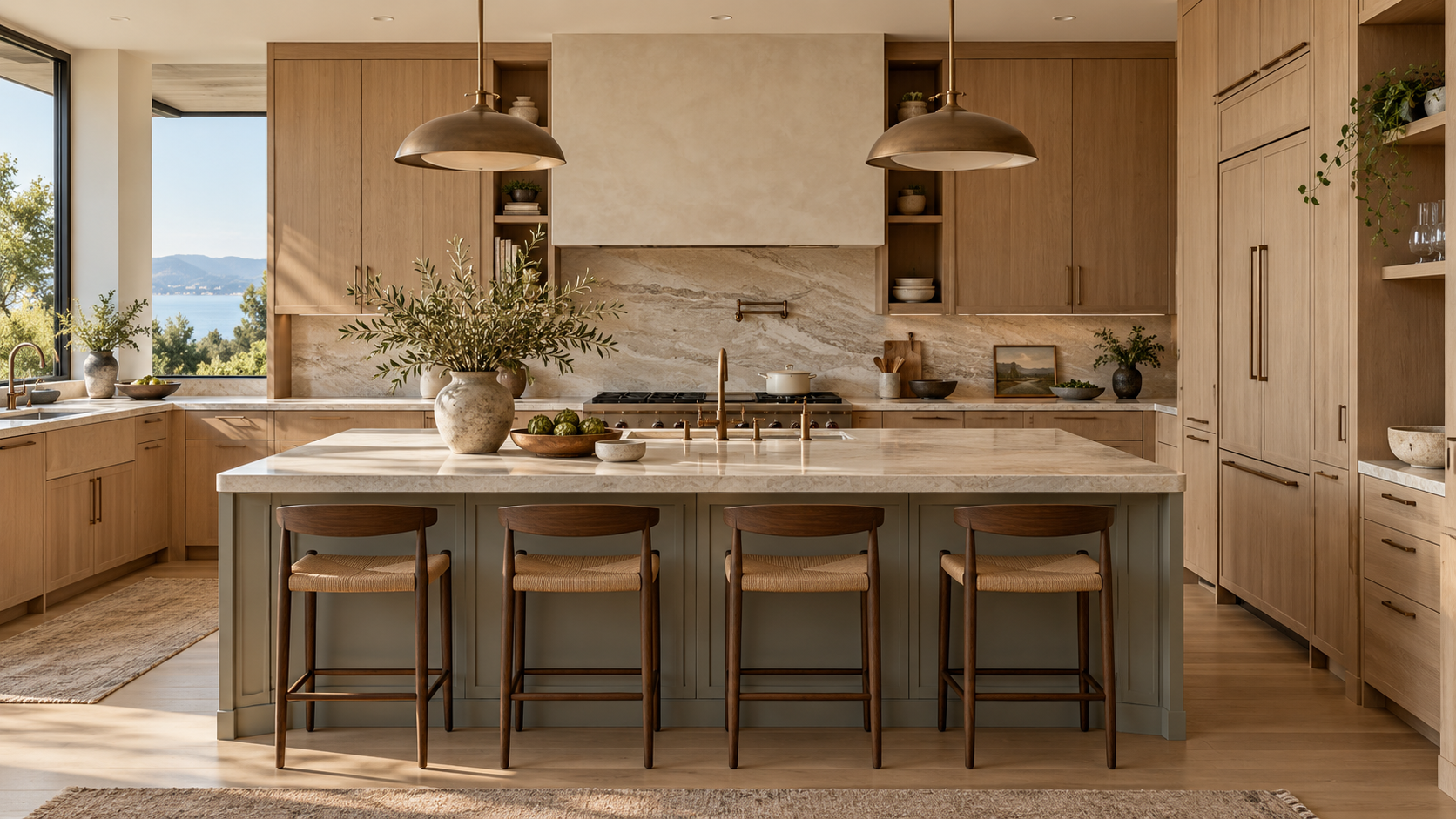
What Makes Cabinetry Truly Custom?
Custom cabinetry provides a much broader ability to respond to the specific project.
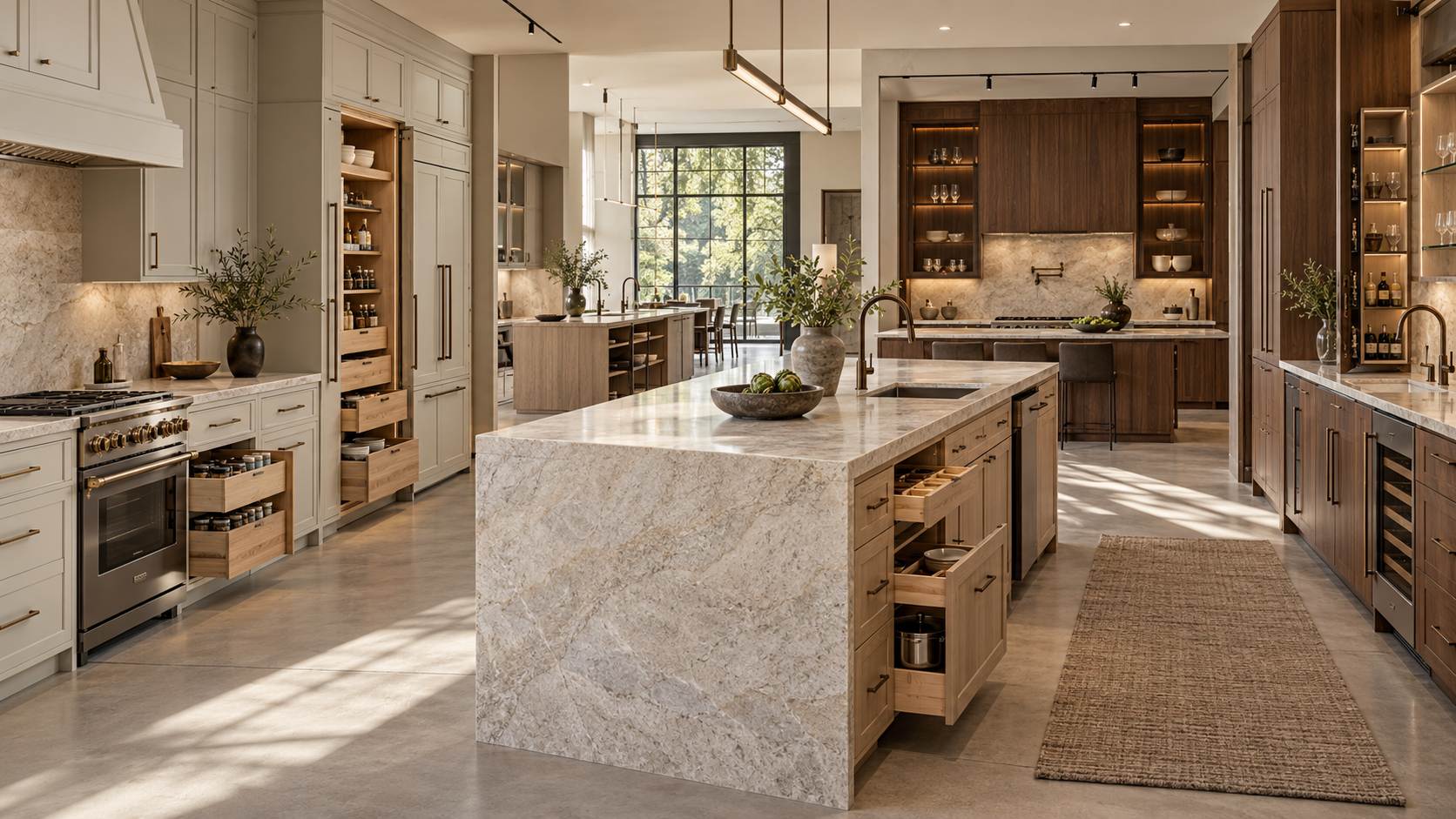
Rather than forcing the architecture to conform to a limited set of standard configurations, cabinetry can be developed around unusual dimensions, specific proportions, specialized storage, distinctive materials, custom finishes, architectural details, and challenging site conditions.
This flexibility can be particularly valuable in large remodels, custom homes, historic properties, or projects where cabinetry is intended to function almost like built-in furniture.
Custom does not mean that every cabinet needs to be unusual. Often, its value is the ability to customize only where the architecture or design requires it.
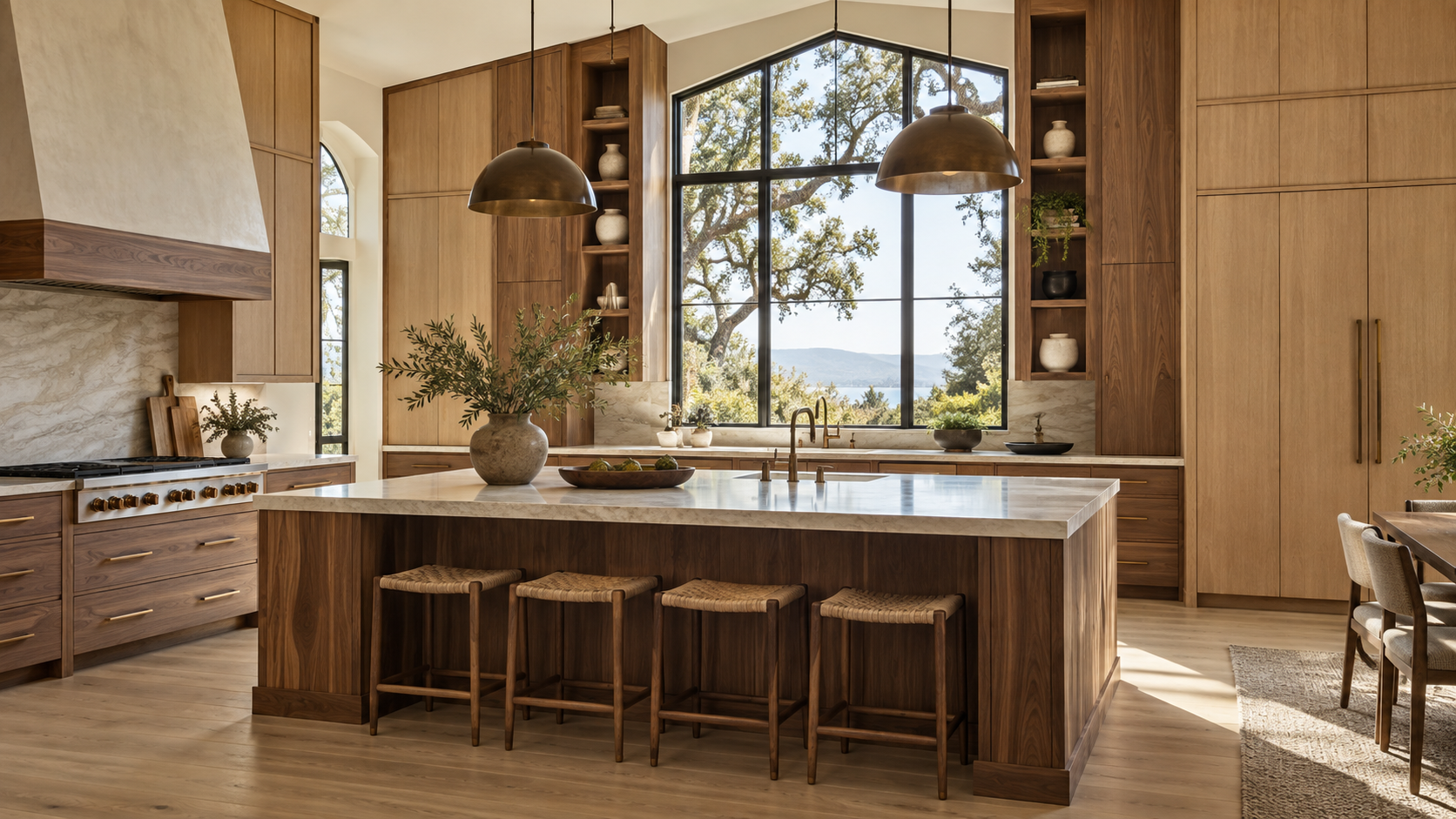
Is Custom Cabinetry Always Higher Quality?
Not automatically.
Custom describes flexibility. Quality describes execution.
A cabinetry line may offer extensive customization, but construction, materials, hardware, finishes, joinery, and manufacturing precision still need to be evaluated independently.
The same principle applies to semi-custom cabinetry. A premium semi-custom collection may offer excellent construction and sophisticated finishes even though it operates within a defined system.
When comparing cabinetry, look beyond the category. Examine the cabinet boxes, drawers, hardware, finishes, interiors, reveals, and full-scale installations.
How Much Flexibility Does Your Project Actually Need?
This is often the more useful question.
A straightforward kitchen may work successfully within an established cabinetry system. A complex remodel might require modified dimensions to resolve existing architecture. A custom home may benefit from cabinetry developed alongside the architectural plans from the beginning.
Appliances also influence the decision. Panel-ready refrigerators, specialized cooking equipment, beverage refrigeration, and other integrated appliances can introduce specific dimensional and ventilation requirements.
The goal should be to select enough flexibility to execute the design properly, rather than paying for customization simply because the word “custom” sounds more premium.
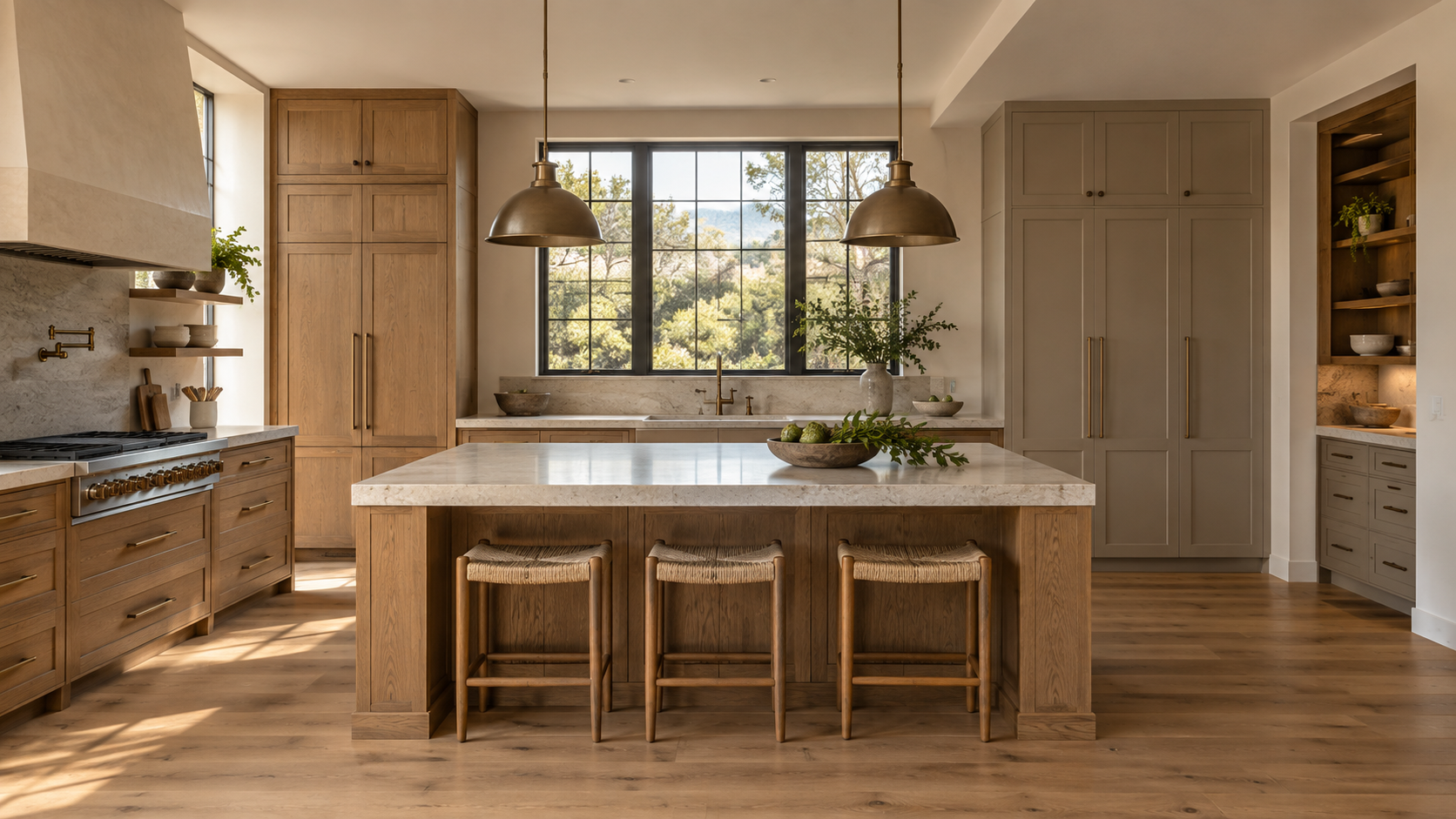
What Should You Compare Beyond the Customization Level?
Whether you are evaluating stock, semi-custom, or custom cabinetry, several other factors deserve equal attention.
Look at cabinet box construction and interior finishes. Open drawers and examine their construction and glides. Test hinges. Compare door and drawer alignment. Study natural wood and painted finishes at full scale.
Then ask what can actually be modified within the collection.
Can cabinet dimensions change? Are custom paint colors available? What wood species and finishes are offered? Can storage interiors be configured differently? Can appliance panels and architectural details be developed for the project?
Specific answers are more useful than a broad category label.
Custom vs. Semi-Custom vs. Stock: What Should You Remember?
The primary difference is the amount of design flexibility available.
Stock cabinetry generally works within predetermined sizes, configurations, and finishes. Semi-custom cabinetry expands those options while remaining within an established system. Custom cabinetry provides substantially greater freedom to respond to specific dimensions, materials, details, and architectural conditions.
But those labels do not tell you everything about quality.
Construction, materials, finishes, hardware, precision, and installation still need to be evaluated separately. The right cabinetry is the system that provides the quality and flexibility your project actually requires.
Compare Cabinetry Options at Atelier Design Society
Atelier Design Society works with homeowners, architects, interior designers, builders, and other design professionals planning premium cabinetry throughout Bay Area homes. At the Atelier Design Society showroom in Menlo Park, project teams can compare cabinetry collections, construction, customization capabilities, natural woods, painted finishes, hardware, interiors, storage solutions, and full-scale installations.