
For someone who bakes regularly, storing a mixer in one cabinet, baking sheets somewhere else, and ingredients across the kitchen creates unnecessary movement. A dedicated baking station brings the tools, ingredients, appliances, and work surface together in one intentional zone.
Custom cabinetry makes that possible without requiring the baking area to look separate from the rest of the kitchen. The station can be highly specialized inside while remaining visually connected through wood species, finish, color, hardware, and cabinetry proportions.
Start With the Way You Bake
Before designing the cabinetry, consider the actual routine. A frequent bread baker may need space for flour, proofing equipment, mixing bowls, and a generous work surface. Someone focused on cakes and pastries may prioritize a stand mixer, baking pans, decorating tools, and smaller ingredients.
The most frequently used equipment should be easiest to reach. Less common molds, specialty pans, and seasonal supplies can occupy higher or secondary storage.
This determines the size of the station before materials and finishes are selected.
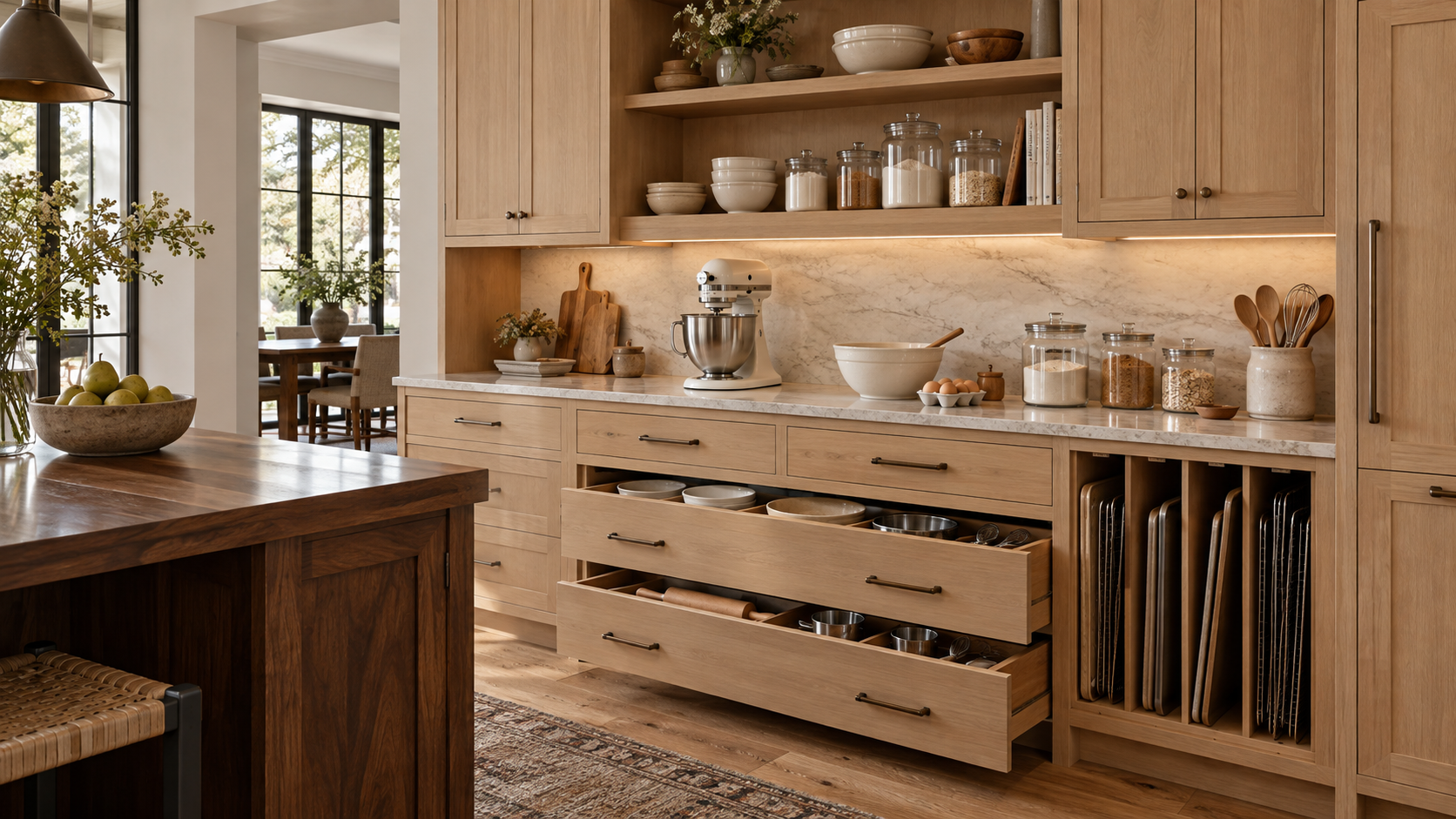
Give the Mixer an Accessible Home
A stand mixer is often one of the largest and heaviest appliances in a baking setup. Its location deserves more consideration than simply finding an empty shelf.
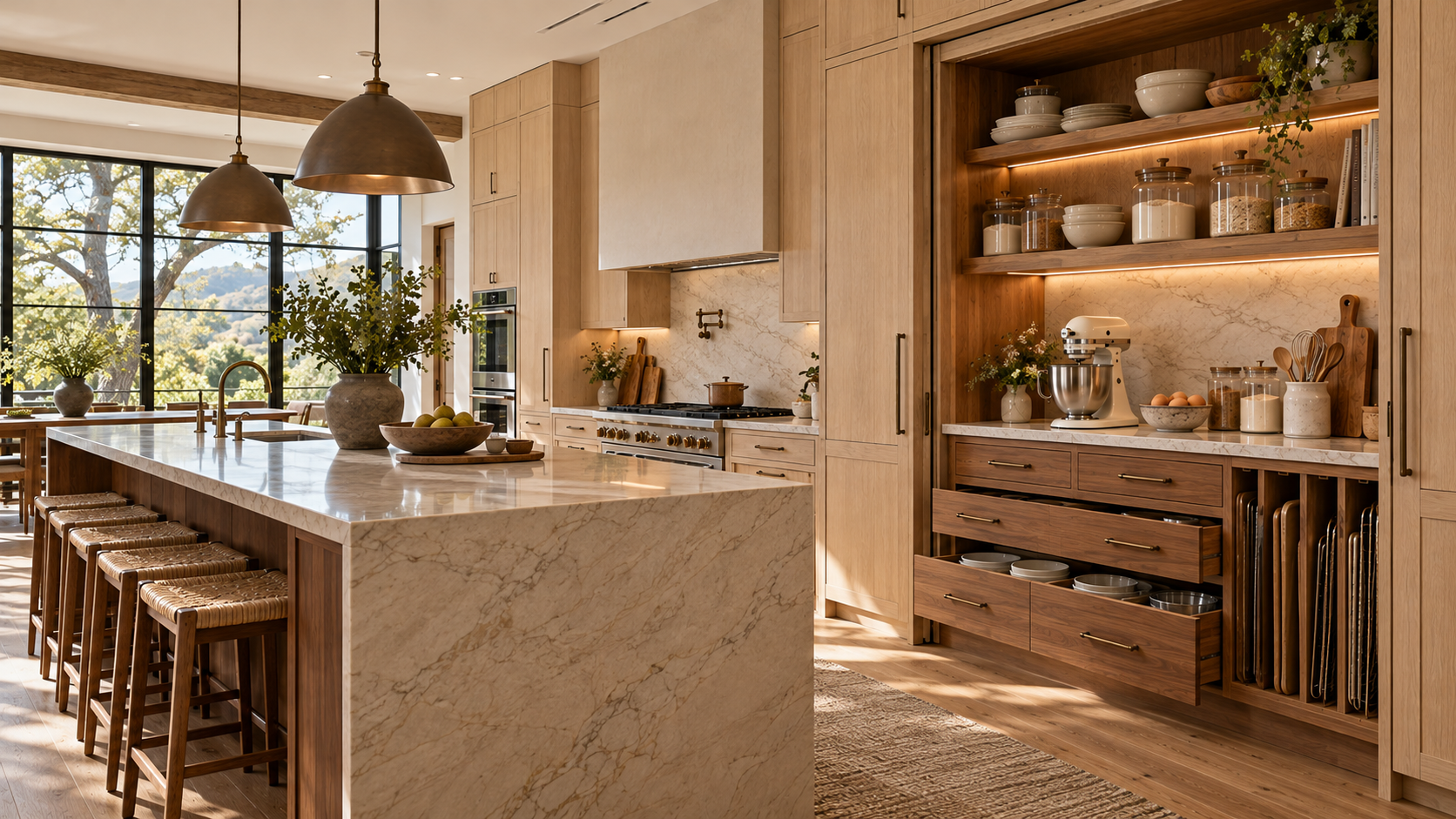
If it is used frequently, keeping it directly on the baking counter may be the most practical solution. It can also sit within a concealed appliance station that opens when needed.
For a cleaner countertop, a deep lower cabinet or drawer may work, provided the appliance can be lifted comfortably. Specialized mechanisms may also be available depending on the cabinetry system.
Whichever solution is selected, measure the actual mixer, including the clearance required to tilt or raise its head and remove the bowl.
Plan Drawers Around Baking Tools
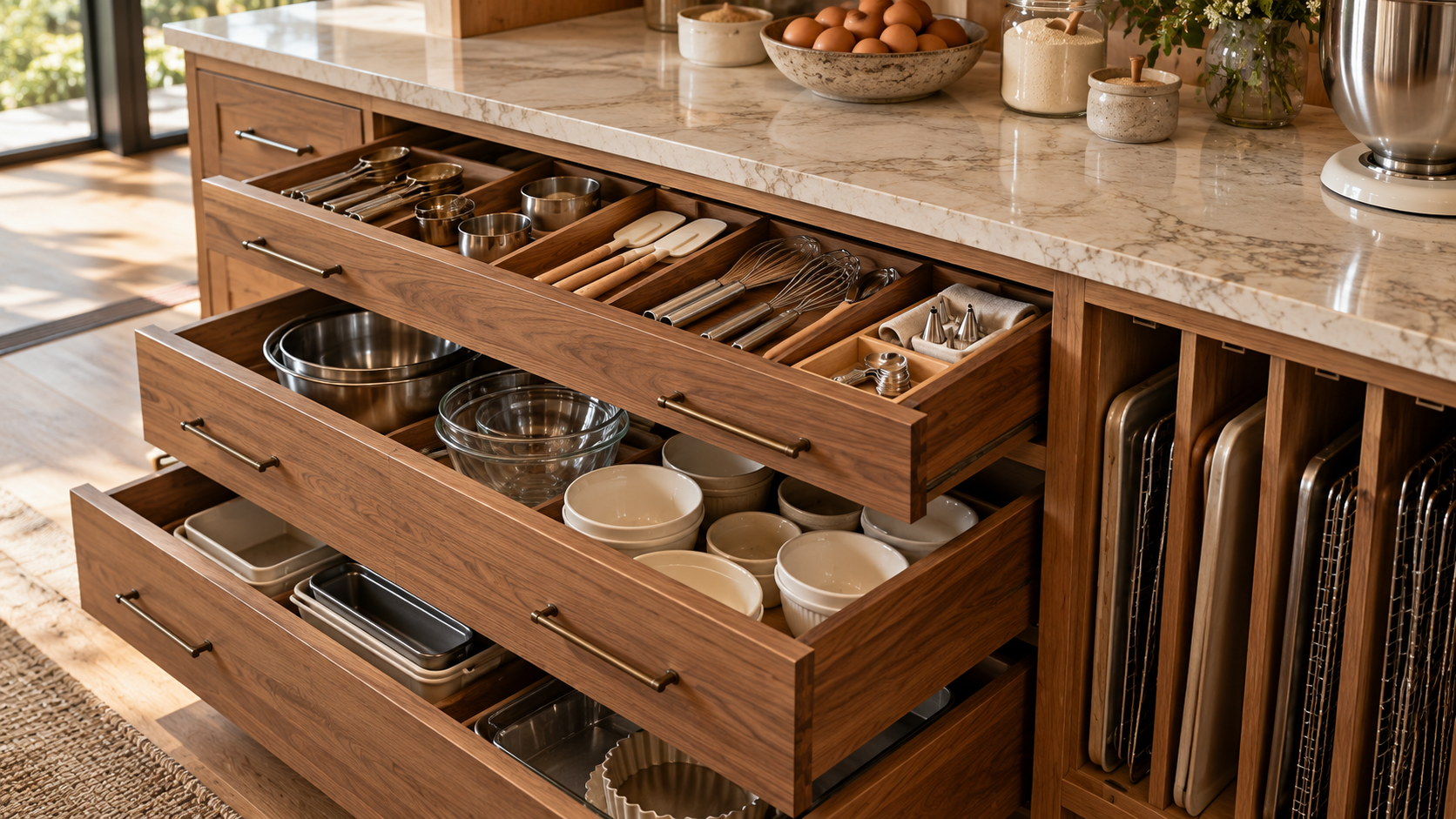
Baking requires many small tools, including measuring cups, spoons, spatulas, whisks, rolling tools, piping accessories, and cutters.
Shallow drawers with dividers can keep these pieces organized directly beneath the work surface. Deeper drawers can hold mixing bowls, baking dishes, and larger equipment.
Baking sheets, cooling racks, cutting boards, and trays often benefit from vertical dividers rather than horizontal stacks.
The objective is simple: someone should be able to stand at the baking counter and reach most essential tools without moving across the kitchen.
Keep Ingredients Close to the Work Surface
Flour, sugar, baking powder, chocolate, extracts, and other frequently used ingredients should have dedicated storage near the station.
Shallow shelves or drawers can keep smaller ingredients visible, while deeper lower storage can accommodate larger containers. If bulk ingredients are common, cabinetry dimensions should account for the containers used to store them.
A nearby pantry can support the station, but everyday baking ingredients should not require repeated trips across the kitchen.
Choose a Work Surface That Supports the Station
The countertop is a major part of a baking station because it becomes the primary work surface for rolling, mixing, portioning, and preparing dough.
The material should be selected for the kitchen as a whole while considering how the baking area will actually be used.
The station can continue the primary kitchen countertop for visual continuity, or a carefully selected secondary surface can subtly distinguish the baking zone.
Countertop thickness, cabinetry height, backsplash conditions, and nearby outlets should all be coordinated before production.
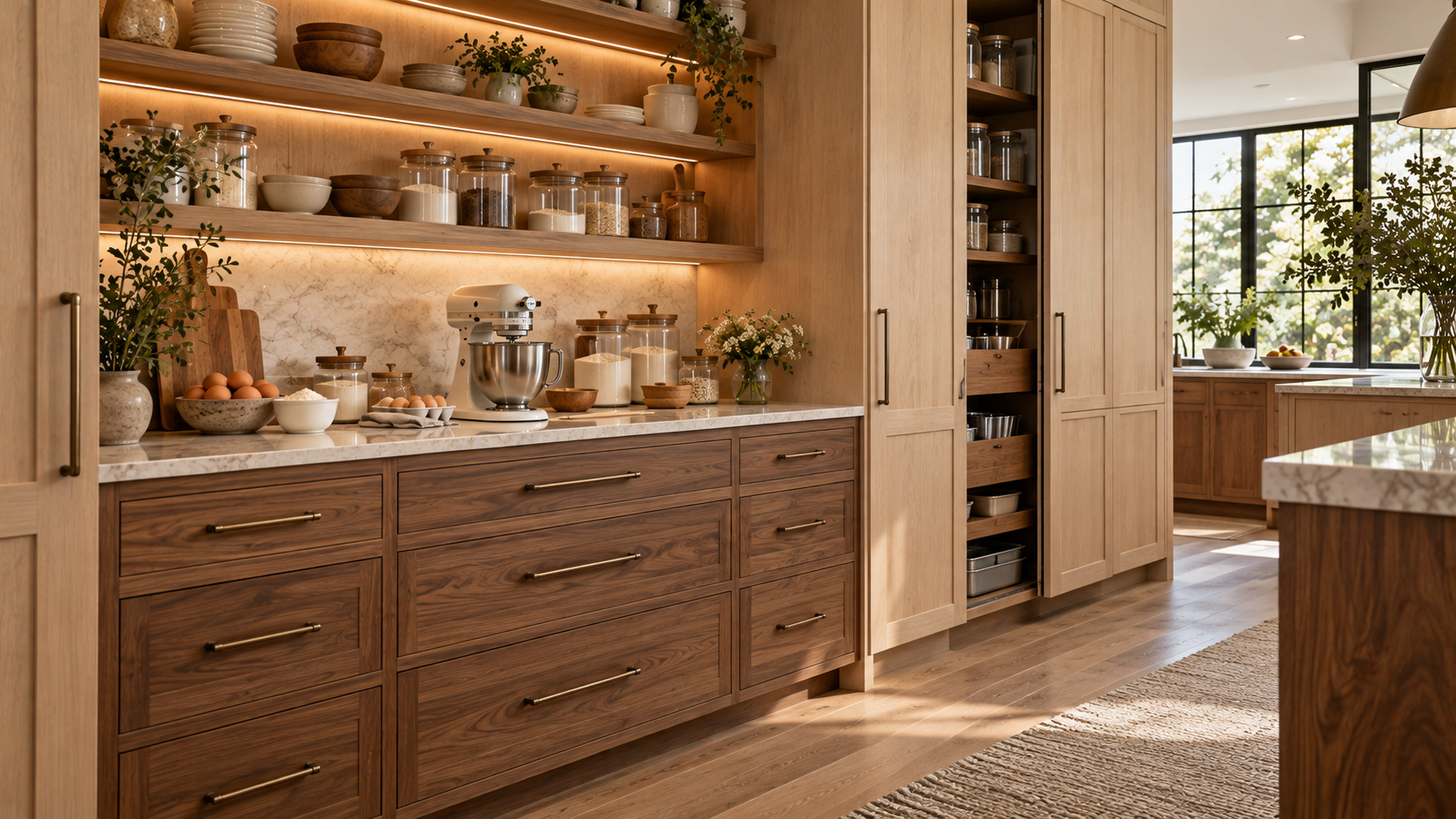
Use Wood and Color to Make the Station Feel Intentional
A dedicated baking station does not need to match every cabinet exactly.
In a kitchen with rift-cut white oak perimeter cabinetry, the baking station might introduce natural walnut interiors or lower cabinets to create subtle distinction. In a painted kitchen, a complementary color can identify the zone without making it feel disconnected.
The key is maintaining a relationship between materials.
Repeating the same hardware, countertop, wood tone, or cabinetry proportions can connect two different finishes. This allows the baking station to have its own identity while remaining part of the larger architectural composition.
For a quieter kitchen, the opposite approach works equally well. Continuing the same wood and finish can make the specialized storage almost disappear.
Consider a Concealed Baking Station
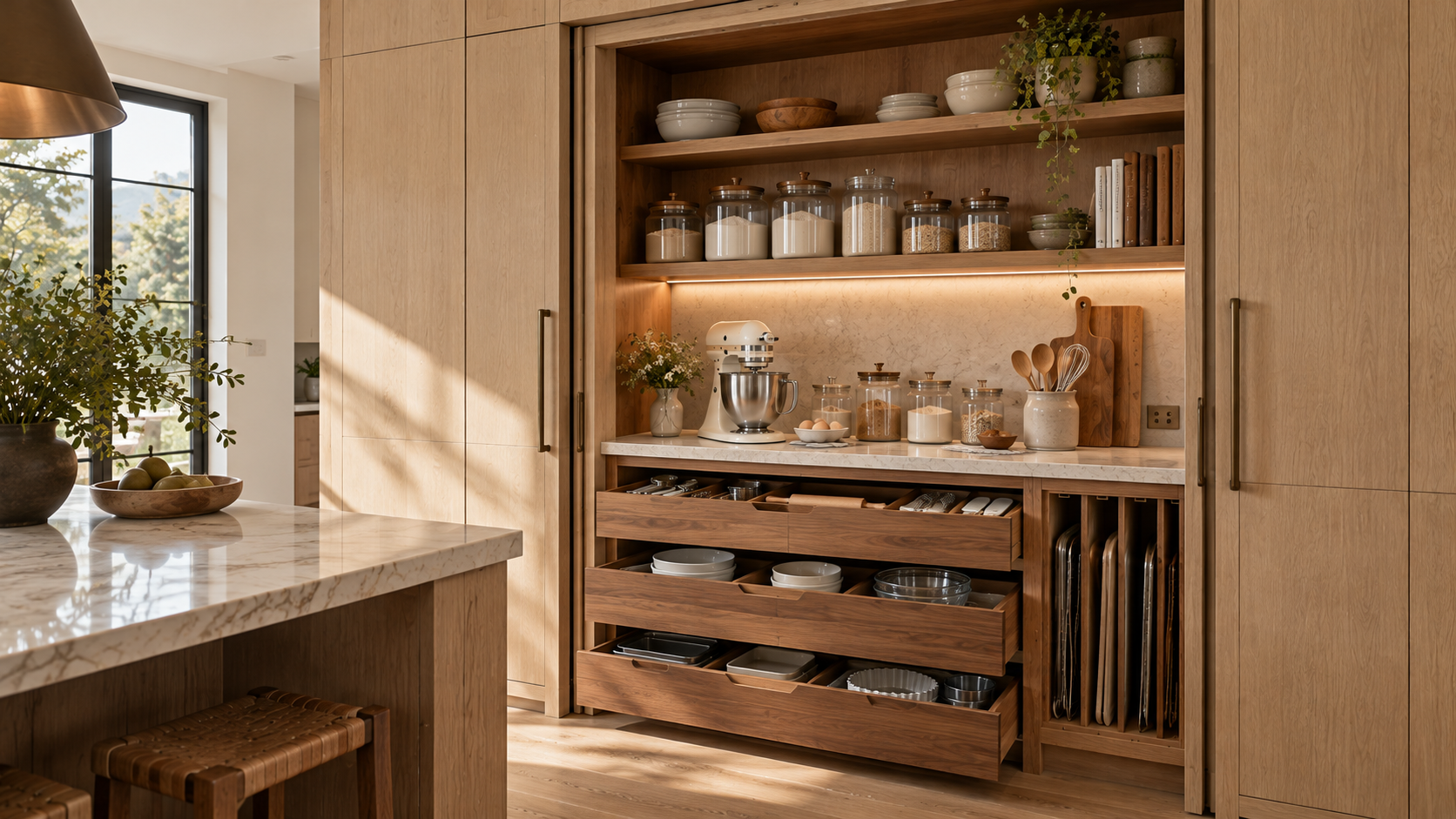
In an open-plan kitchen, the entire baking zone can be concealed behind tall cabinetry doors.
Pocket or retractable doors can reveal a work surface, mixer, ingredients, outlets, and organized storage when baking begins. When everything is finished, the doors close and the station becomes part of the cabinetry wall again.
This approach requires careful planning. Door operation, counter depth, appliance dimensions, electrical outlets, lighting, heat, and equipment clearances all need to be resolved before cabinetry is ordered.
Coordinate Electrical and Lighting Early
A baking station often includes equipment that requires power, so outlet placement should be established before cabinetry production.
Consider the mixer, hand mixer, food processor, scale, or any other equipment normally used in the area. Outlets should be accessible without creating unnecessary visual clutter.
Integrated lighting can also make the work surface more functional, particularly when the station sits inside tall cabinetry or a recessed niche.
Electrical requirements, appliance clearances, and manufacturer instructions should be reviewed as part of the cabinetry design rather than after installation.
What Should You Plan Before Ordering a Baking Station?
Start with the equipment and ingredients you use most frequently. Measure the mixer and other appliances, identify the baking tools that need drawers, determine how baking sheets will be stored, and decide how much ingredient storage should remain within reach.
Then consider the architectural side of the design: cabinetry material, finish, countertop, hardware, lighting, electrical requirements, and whether the station should remain visible or disappear behind doors.
Custom cabinetry allows the baking station to respond to a specific routine without looking like a separate utility area. When storage, materials, and function are planned together, it can become one of the most useful parts of the kitchen.
Explore Custom Kitchen Cabinetry With Atelier Design Society
Atelier Design Society works with homeowners, architects, interior designers, builders, and other design professionals planning premium cabinetry throughout Bay Area kitchens. At the Atelier Design Society showroom in Menlo Park, project teams can compare natural woods, painted finishes, cabinetry interiors, drawer configurations, appliance storage, hardware, and full-scale installations while developing specialized spaces such as baking stations.
