
The most useful kitchen storage is not necessarily the kitchen with the most cabinets. It is the one where the right items are stored close to where they are actually used.
Someone who cooks elaborate meals every evening needs different storage than someone who primarily prepares quick breakfasts and simple dinners. A frequent baker may need immediate access to a mixer, baking sheets, and ingredients, while someone who entertains regularly may prioritize serving pieces, glassware, and beverage storage.
Before deciding what goes inside the cabinetry, start with how you actually cook.
Start With Your Everyday Cooking Routine
Think through a typical meal from beginning to end.
Where do you take ingredients out? Where do you wash and prepare them? Which cookware do you reach for most often? Where do dishes go after they leave the dishwasher?
These routines reveal where storage should be located.
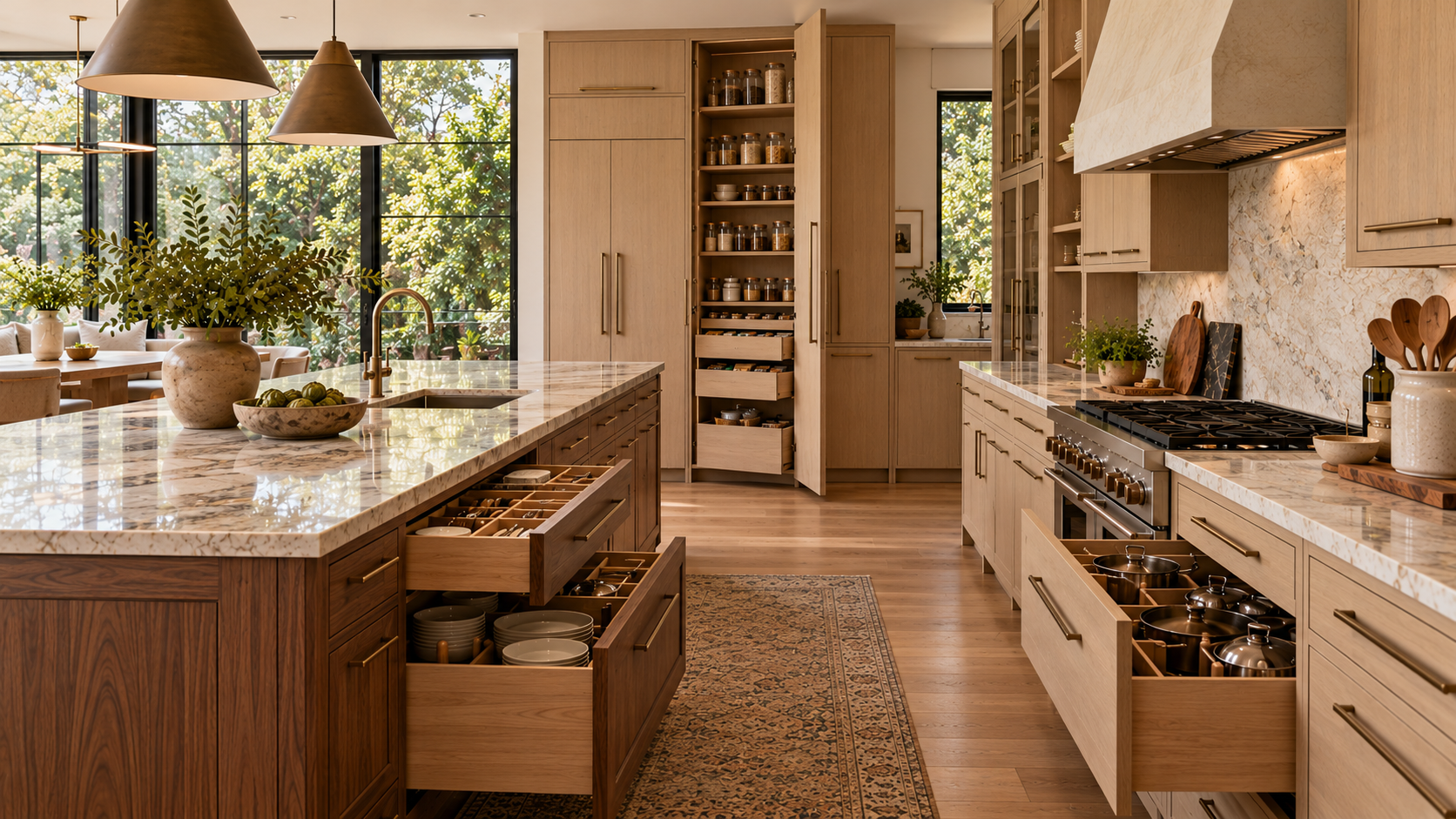
Frequently used cookware might belong in deep drawers beside the range. Knives, cutting boards, and mixing bowls may be more useful near the primary preparation surface. Everyday dishes can often be stored near the dishwasher and dining area.
The goal is to reduce unnecessary movement by placing storage around the activities it supports.
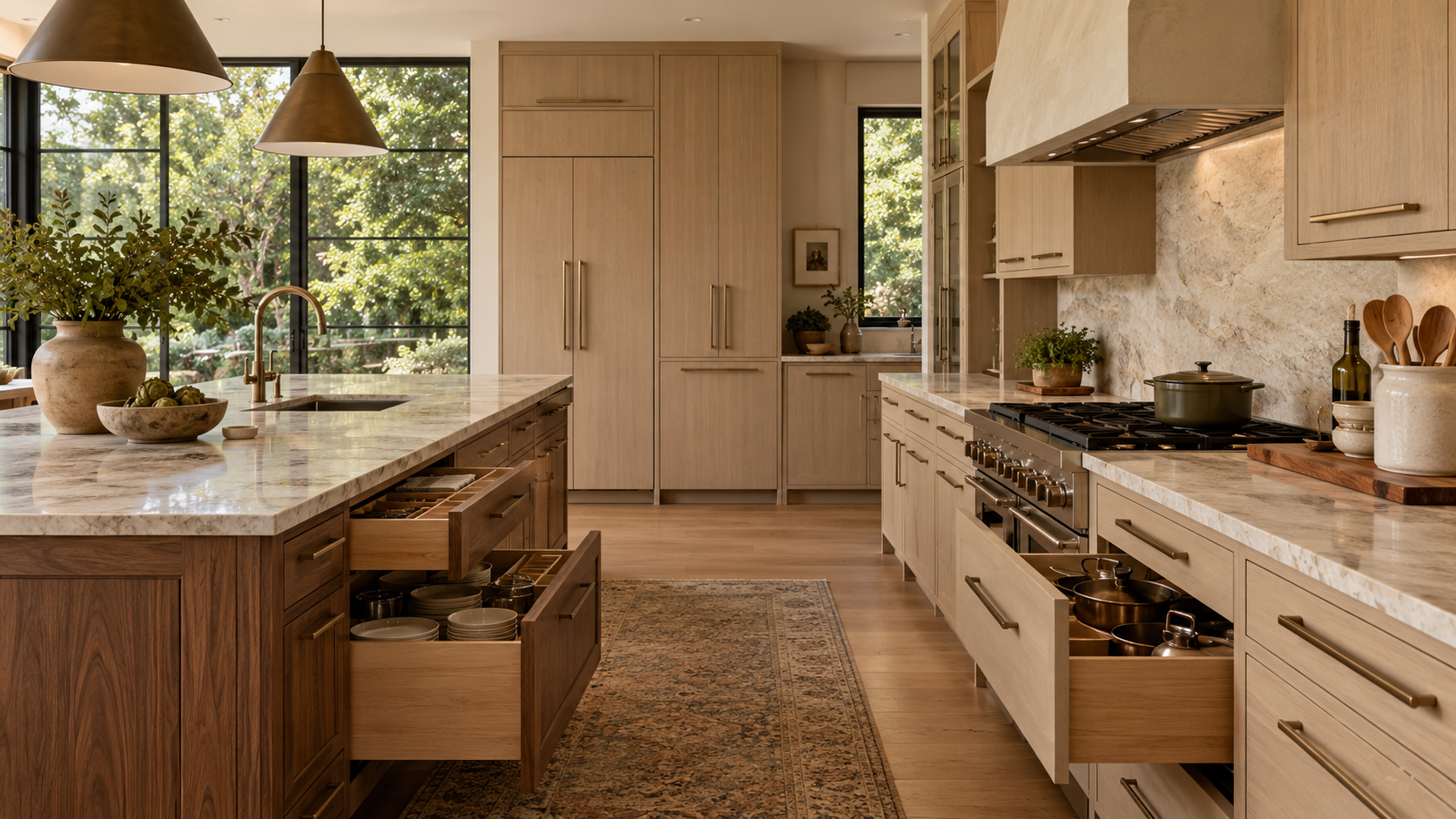
Create a Dedicated Preparation Zone
Most kitchens have an area where the majority of chopping, mixing, and ingredient preparation happens.
Storage surrounding this area should support those tasks.
A shallow drawer can hold knives, peelers, measuring tools, and other preparation utensils. Deeper drawers below can accommodate mixing bowls, containers, and frequently used equipment. Vertical dividers can keep cutting boards immediately accessible.
If the island is the primary preparation surface, much of this storage can be incorporated directly below it.
Instead of walking between several cabinetry walls, the essential preparation tools remain within one compact zone.
Keep Cookware Near the Range
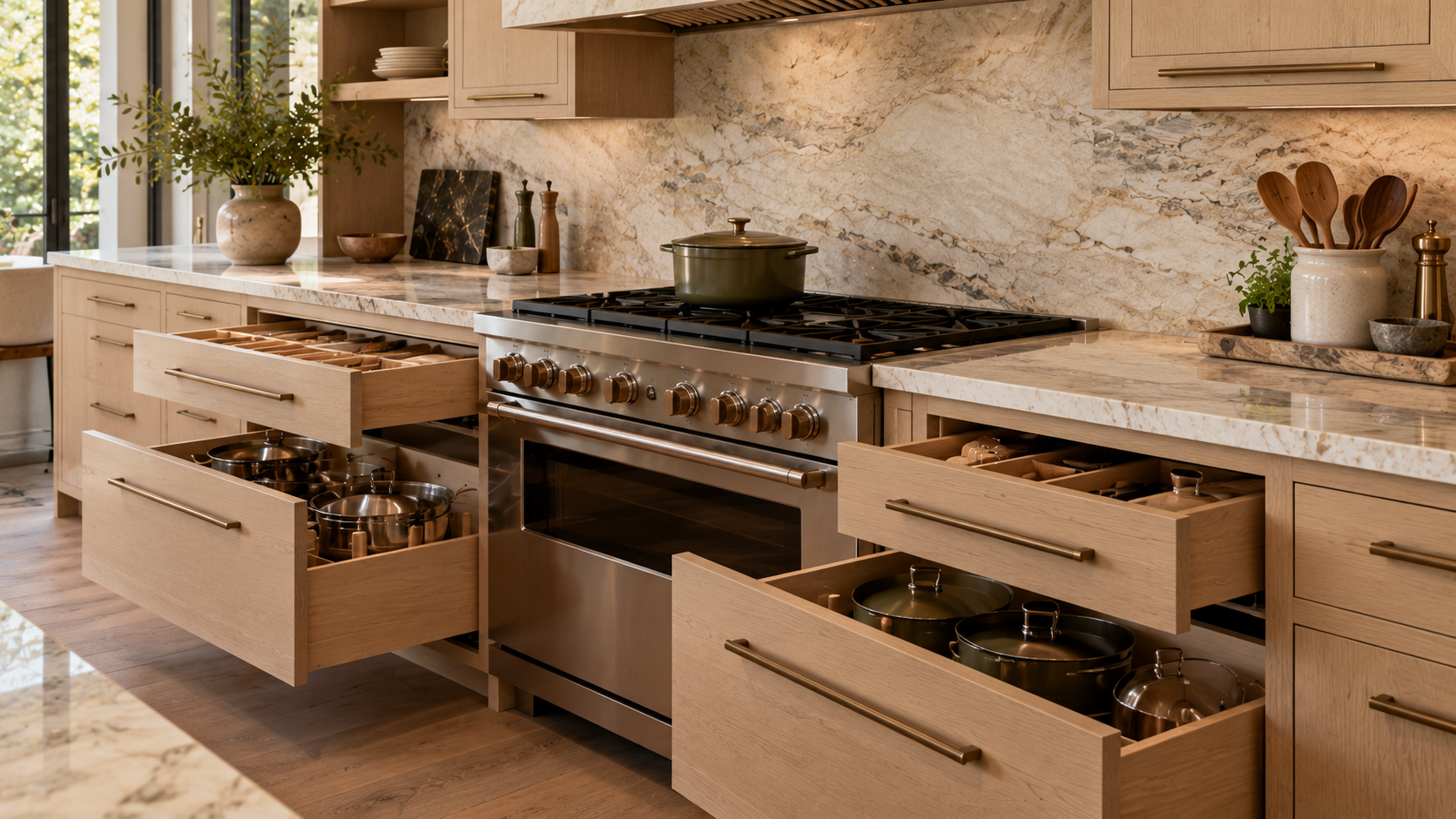
Pots, pans, lids, and cooking utensils are usually most useful close to the primary cooking appliance.
Deep drawers can work particularly well because cookware remains visible from above and can be accessed without reaching into the back of a cabinet.
The exact configuration should reflect what you use.
Someone who regularly cooks with several large pots may need deeper, wider drawers. A household that primarily uses a few skillets and saucepans may benefit from smaller drawers and use the remaining cabinetry for other storage.
Lids can also be organized separately with dividers rather than stacked underneath cookware.
Design Differently if You Bake Frequently
Baking creates a different set of storage requirements.
A frequent baker may need convenient access to a stand mixer, flour, sugar, measuring tools, baking sheets, cooling racks, mixing bowls, and specialty equipment.
Vertical dividers can organize baking sheets and racks, while deep drawers can hold bowls and ingredients. Heavy appliances should be stored where they can be accessed without unnecessary lifting.
If baking is an important part of the household routine, a dedicated section of cabinetry can keep those supplies together rather than distributing them throughout the kitchen.
A generous uninterrupted work surface nearby makes the zone even more useful.
Plan Food Storage Around How You Shop
Cooking habits begin before food reaches the countertop.
Someone who shops frequently for fresh ingredients may need different pantry storage than a household that buys dry goods or bulk items in larger quantities.
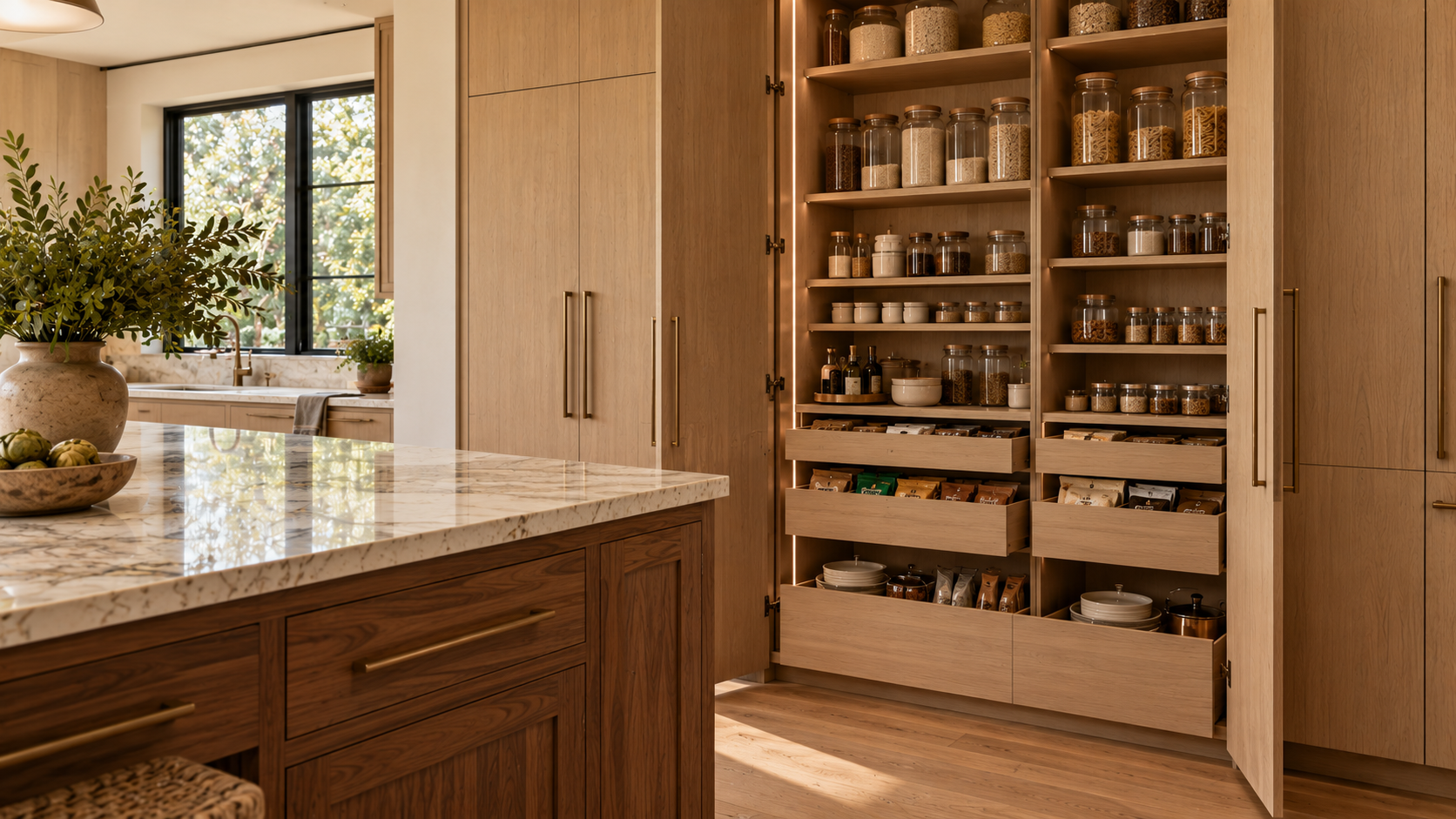
Adjustable shelves, pantry drawers, and pull-outs can accommodate different categories without forcing everything onto deep fixed shelves.
Visibility is particularly important.
If ingredients disappear behind other ingredients, storage capacity is being gained at the expense of usability. Shallower shelving or drawers can often make food easier to see, reducing unnecessary searching and forgotten items.
Consider Your Small Appliances
Small appliances often reveal how well a kitchen has been planned.
If you use a toaster and coffee maker every morning, storing them somewhere difficult to reach simply to keep the countertop clear may become frustrating. Equipment used occasionally can be stored farther away.
An appliance garage or concealed work station can provide a useful middle ground, allowing frequently used appliances to remain accessible while reducing visual clutter.
Before cabinetry is ordered, confirm appliance dimensions and consider electrical outlets, shelf height, door operation, ventilation, heat, and manufacturer requirements.
Storage should make appliances easier to use, not simply easier to hide.
Think About Cleanup as Part of Cooking
Storage planning should continue through the cleanup process.
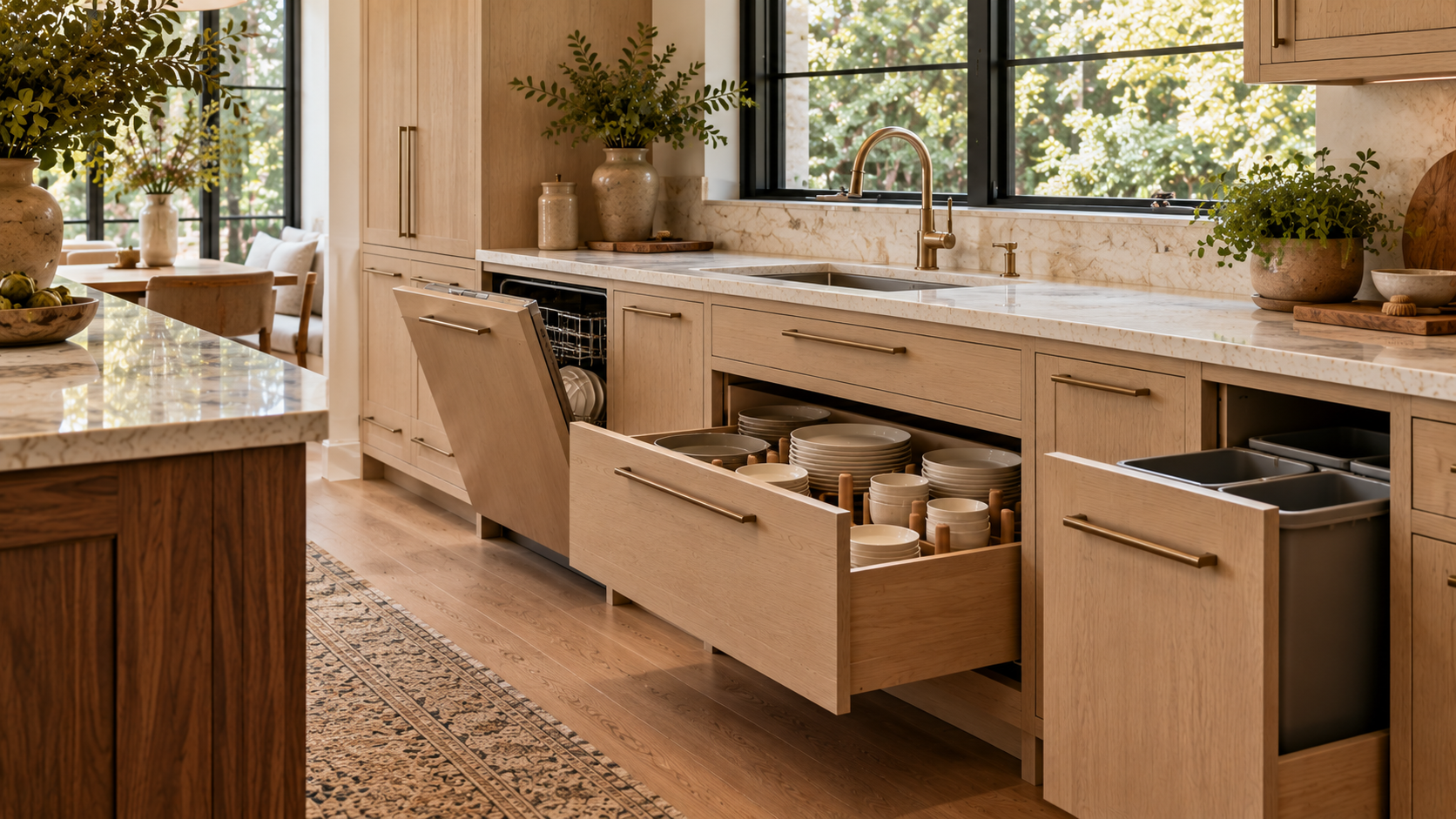
Everyday dishes and glassware can be positioned near the dishwasher so unloading requires fewer steps. Waste and recycling pull-outs can sit near food preparation and cleanup areas. Cleaning products can be organized beneath the sink or in nearby cabinetry while maintaining access to plumbing.
If dishes are used daily, lower drawers may also provide a practical alternative to upper cabinetry.
Thinking about cleanup alongside preparation and cooking creates a kitchen that functions as a complete system rather than a collection of individual storage features.
Plan for More Than One Cook
If two or more people regularly prepare meals together, storage should help them work without constantly crossing paths.
One person might work at the range while another prepares ingredients at the island. Keeping cookware near the cooking zone and preparation tools within the island allows both areas to function independently.
Shared items should be positioned where they can be reached without interrupting another person’s workspace.
This is also where aisle width and cabinet operation become important. Drawers, appliance doors, and pantry doors should be considered in their open positions so multiple people can comfortably use the kitchen at the same time.
How Should You Plan Storage Before Ordering Cabinetry?
Start with your routine rather than a list of cabinet accessories.
Identify the meals you prepare most often, the cookware and appliances you regularly use, where food is stored, where preparation happens, and how dishes move through the kitchen afterward.
Then assign storage to those activities.
Deep drawers, vertical dividers, pantry pull-outs, appliance garages, interior organizers, and other specialized features are most valuable when they solve a specific problem.
A kitchen designed around cooking habits can require fewer unnecessary organizers while making the storage you do have significantly more useful.
Explore Kitchen Storage With Atelier Design Society
Atelier Design Society works with homeowners, architects, interior designers, builders, and other design professionals planning premium cabinetry and storage throughout Bay Area kitchens. At the Atelier Design Society showroom in Menlo Park, project teams can compare drawer configurations, pantry interiors, appliance storage, cabinet accessories, materials, hardware, and full-scale installations while developing storage around the way the kitchen will actually be used.
