
Wood cabinetry is shaped by more than species and finish. The direction of the grain can significantly change how cabinetry feels in a room, especially across large islands, tall pantry walls, and floor-to-ceiling installations.
Vertical grain can emphasize height and create a more architectural rhythm. Horizontal grain can visually widen an elevation and reinforce long, low proportions. When grain is carefully coordinated across multiple doors and drawers, cabinetry can read as one continuous composition rather than a collection of individual boxes.
For natural wood kitchens, grain direction should be considered early, alongside door style, cabinetry layout, and finish.
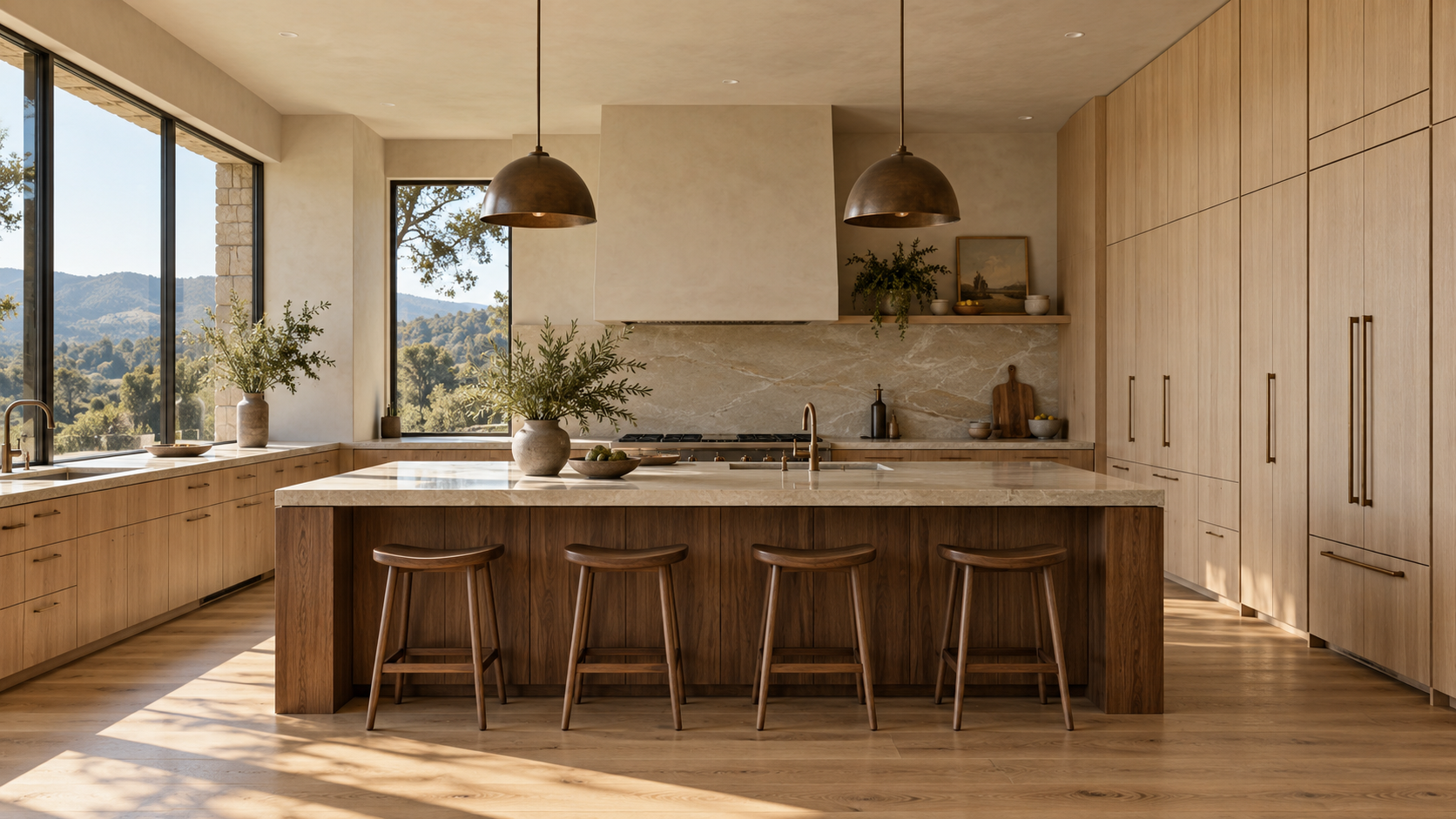
Vertical Grain Can Emphasize Height
Vertical grain naturally draws the eye upward.
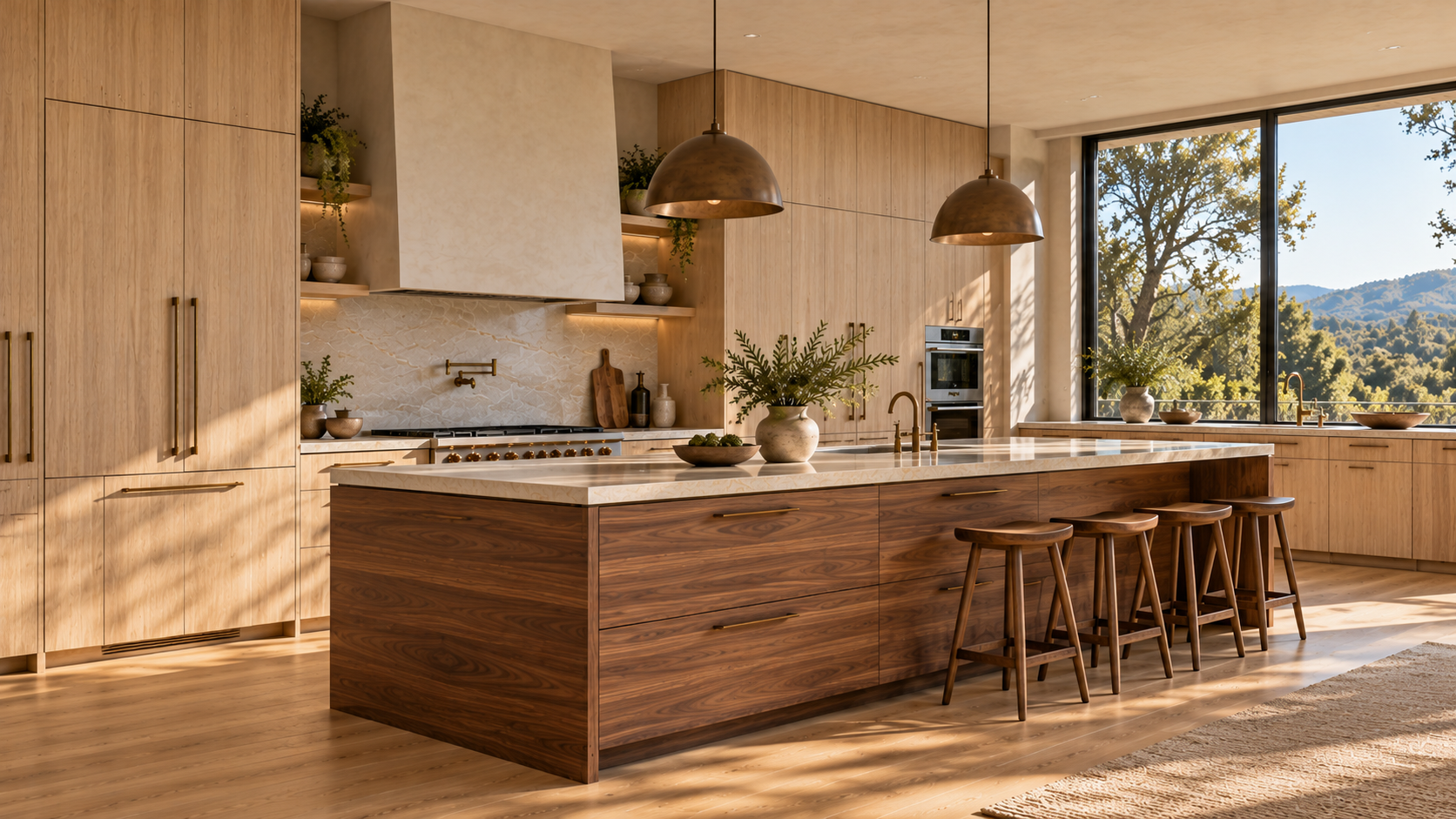
On tall pantry doors, refrigerator panels, and floor-to-ceiling cabinetry, it can reinforce the height of the room and create long, uninterrupted lines. This is particularly effective with woods such as rift-cut white oak, where the relatively linear grain can give large elevations a calm, structured appearance.
Vertical grain can also help multiple tall cabinet doors feel connected when their proportions and reveals are carefully coordinated.
In kitchens with high ceilings, this approach can strengthen the relationship between the cabinetry and the architecture rather than making the cabinets feel like separate furniture placed against the wall.
Horizontal Grain Can Make Cabinetry Feel Wider
Horizontal grain creates a different visual effect.
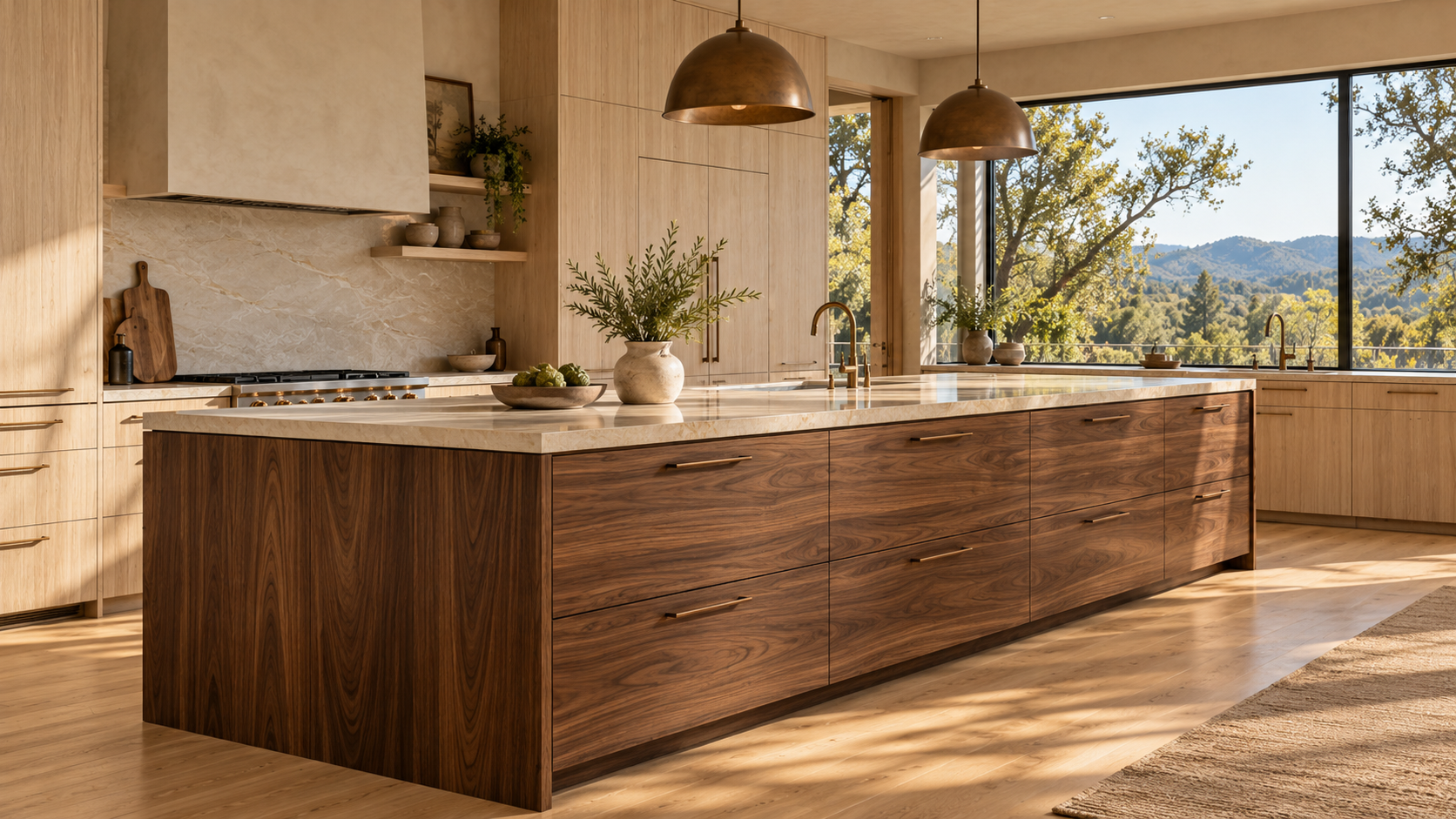
Instead of pulling the eye upward, it directs attention across the cabinetry. This can emphasize width and create a lower, more elongated appearance.
It can be especially effective on wide drawer banks, floating vanities, media cabinetry, or long kitchen islands where horizontal proportions are already important to the architecture.
The effect becomes stronger when grain continues visually across adjacent drawer fronts. Rather than reading as several separate drawers, the elevation can feel like one larger wood surface divided by precise reveals.
This approach works particularly well in contemporary interiors where long, uninterrupted lines are part of the design language.
Grain Continuity Can Make Cabinetry Feel More Custom
Direction is only part of the decision. The relationship between adjacent pieces also matters.
When grain is carefully coordinated across neighboring doors, drawer fronts, and panels, the cabinetry can appear more intentional and architectural. On a large island, for example, horizontal grain may visually continue from one drawer front to the next. On tall cabinetry, vertical grain can create a consistent rhythm across multiple doors.
Without thoughtful coordination, dramatic changes in grain can make a large elevation feel visually fragmented.
This does not mean natural variation should disappear. Real wood contains differences in grain and tone, and those characteristics are part of its appeal.
The goal is to determine how much continuity the design requires while still allowing the material to look authentic.
Think About Grain Direction With Door and Drawer Proportions
Grain direction should support the geometry of the cabinetry.
Tall, narrow doors naturally lend themselves to vertical grain because both the door proportion and wood movement reinforce the same direction. Wide drawers can work particularly well with horizontal grain for the same reason.
The effect becomes more noticeable as cabinetry becomes simpler.
On slab doors, there is little decorative detailing to interrupt the wood surface, so grain becomes one of the primary visual elements. Its direction, variation, and relationship from panel to panel can strongly influence the finished design.
More detailed door styles may place less visual emphasis on uninterrupted grain, although wood selection and orientation still matter.
Grain Can Help Establish a Focal Point
Not every wood surface needs to follow the same grain strategy.
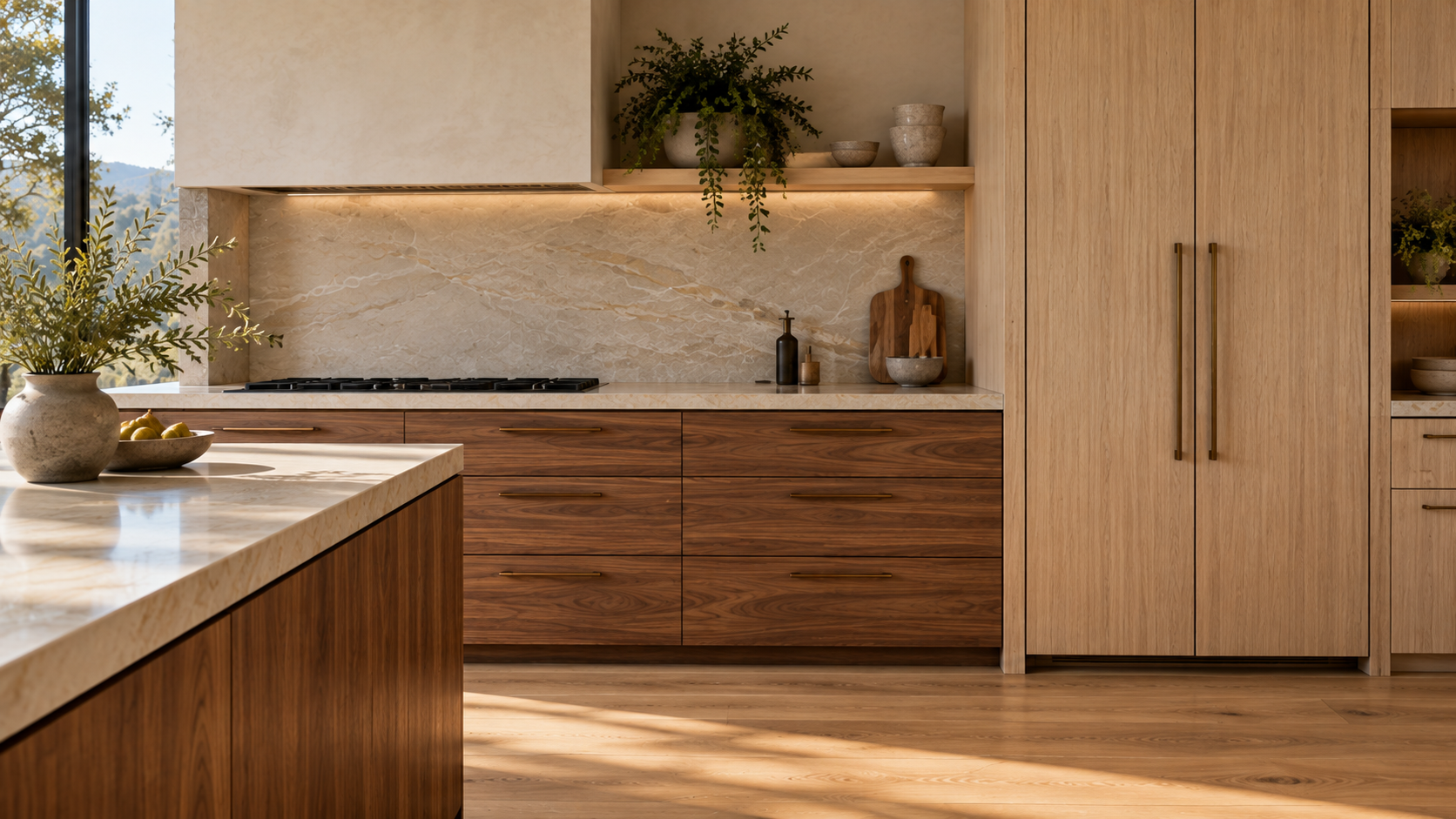
A kitchen might use vertical white oak grain across tall perimeter cabinetry while introducing horizontal walnut grain on the island. The contrast can subtly distinguish the island without relying on a dramatic color change.
Grain direction can also highlight a bar, appliance station, vanity, or other specialized cabinetry.
This works best when there is a clear hierarchy. Too many competing grain directions within the same elevation can make an otherwise minimal kitchen feel unnecessarily busy.
A deliberate change, however, can help one cabinetry element stand apart while remaining connected through wood tone, stone, hardware, or surrounding architecture.
Consider the Entire Elevation Before Ordering
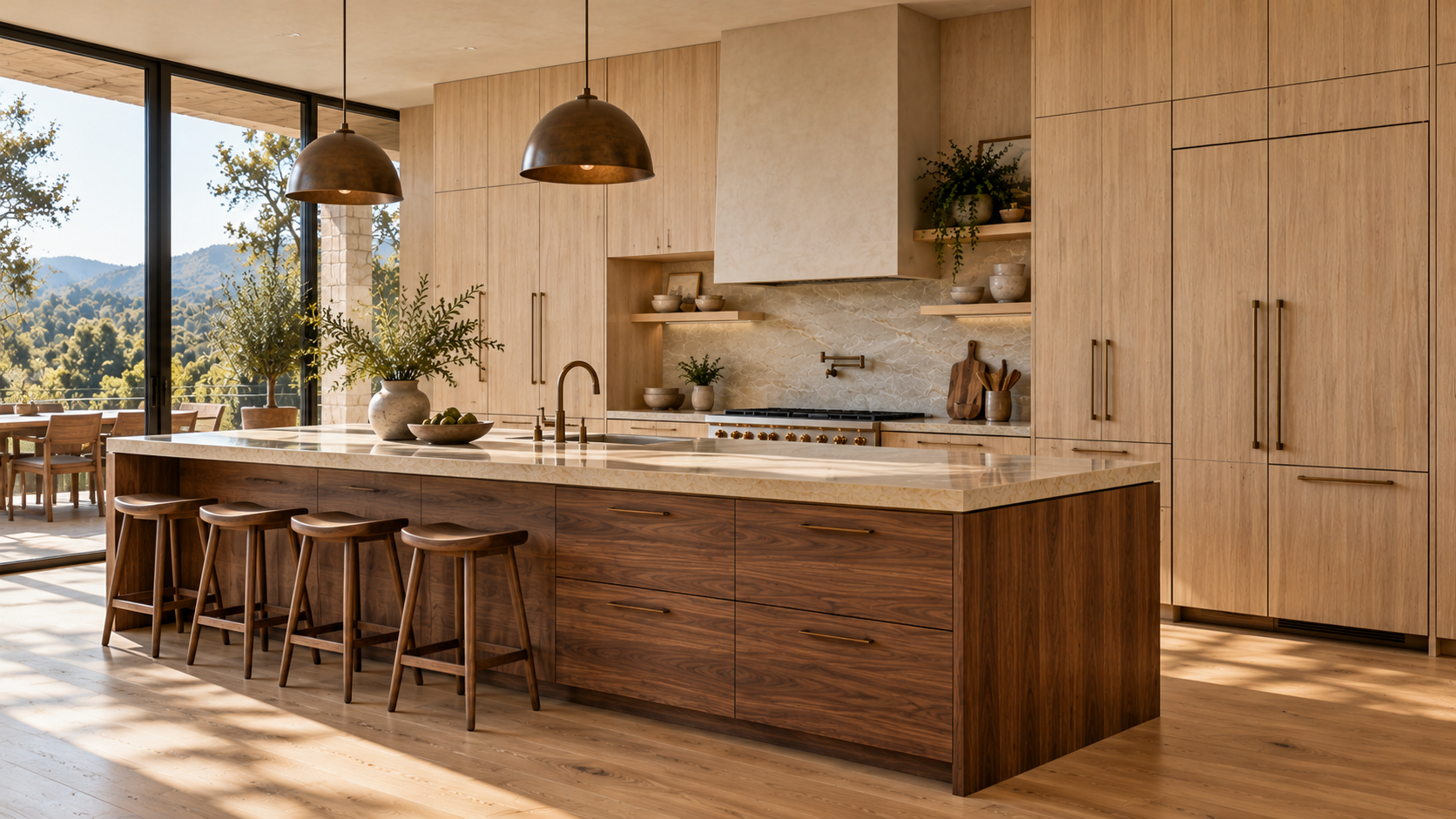
Grain direction should not be decided one cabinet at a time.
Look at the complete wall or island elevation and consider where doors, drawers, appliance panels, fillers, and end panels meet. A grain strategy that looks appropriate on one door may feel disconnected when repeated across an entire cabinetry wall.
This is particularly important with integrated appliances. Refrigerator and dishwasher panels become part of the cabinetry composition, so their grain orientation should relate to adjacent doors.
Large end panels and island backs also deserve attention because they can expose significant areas of uninterrupted wood.
Planning these surfaces together helps the cabinetry read as a complete architectural element.
Which Wood Grain Direction Should You Choose?
Start with the proportions of the cabinetry and the architecture around it.
Vertical grain can strengthen tall cabinetry and emphasize height. Horizontal grain can reinforce wide drawers, islands, and long cabinetry elevations. In some kitchens, combining both creates useful contrast and hierarchy.
Also consider how grain will transition between adjacent doors, drawers, appliance panels, and finished ends. With natural wood cabinetry, these details become part of the design rather than simply a background finish.
The best grain direction is the one that supports the proportions of the cabinetry and makes the entire elevation feel intentional.
Explore Natural Wood Cabinetry With Atelier Design Society
Atelier Design Society works with homeowners, architects, interior designers, builders, and other design professionals selecting premium cabinetry and finishes for Bay Area homes. At the Atelier Design Society showroom in Menlo Park, project teams can compare natural woods, grain patterns, cabinetry finishes, door styles, hardware, and full-scale installations while evaluating how these details influence the finished interior.
