
White oak and walnut are two of the most compelling wood choices for luxury cabinetry, but they create noticeably different interiors.
White oak tends to feel lighter, quieter, and more architectural. Walnut introduces deeper color, richer contrast, and a stronger visual presence. Both can work in contemporary, transitional, and highly customized homes, so the better choice depends less on which wood is more luxurious and more on the atmosphere, architecture, and material palette you want to create.
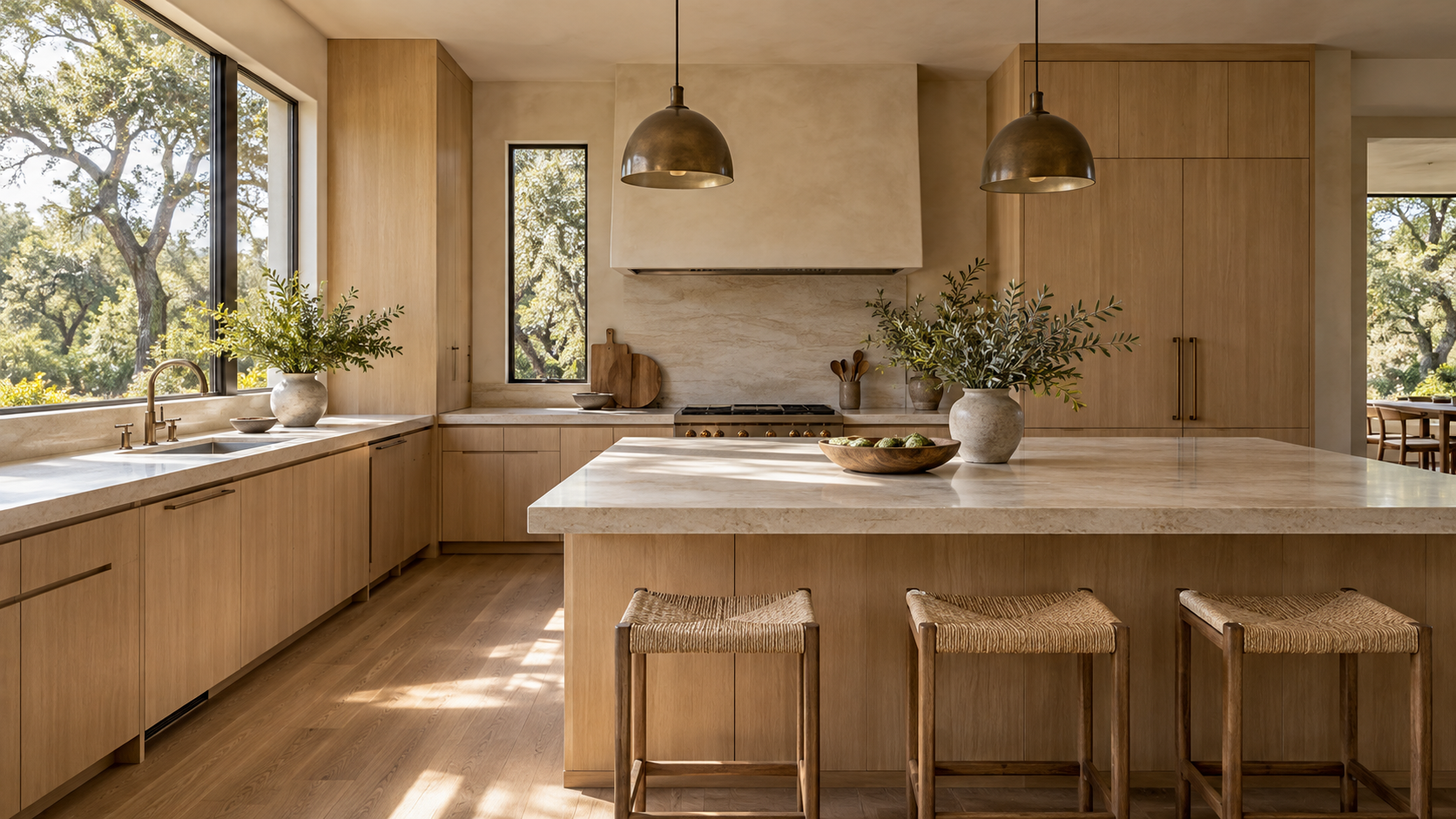
White Oak Creates a Lighter, More Subtle Foundation
White oak is especially effective when the goal is warmth without making the cabinetry visually heavy. Its lighter coloring allows large cabinetry elevations to feel substantial while still maintaining an airy quality.
Grain selection also influences the result. Rift-cut white oak is frequently used for contemporary cabinetry because its relatively linear grain can reinforce clean architectural lines across tall doors, drawer fronts, and large panels.
Natural or lightly toned finishes allow that grain to remain visible while coordinating easily with creamy stone, plaster, metal, and other restrained materials.
For interiors with abundant natural light or a strong connection to the landscape, white oak can create a particularly calm transition between architecture and surrounding natural materials.
Walnut Brings Greater Depth and Contrast
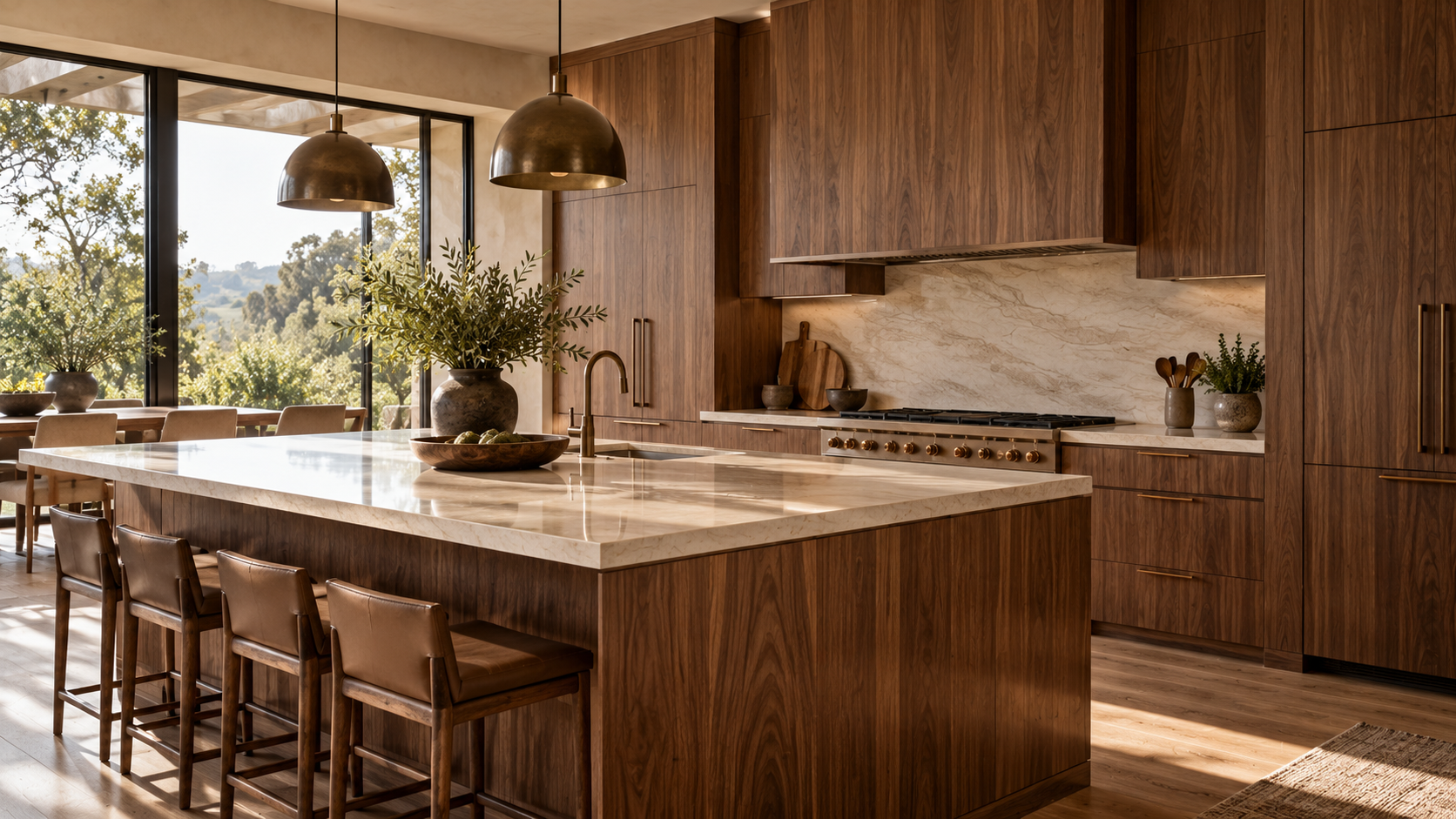
Walnut sits at the other end of the visual spectrum.
Its naturally deeper brown coloring and expressive grain can give cabinetry a richer, more dramatic character. Instead of receding into the architecture, walnut can become one of the defining materials in the room.
That makes it especially effective for islands, bars, libraries, vanities, and cabinetry walls where the wood is intended to have a strong presence.
Walnut can still feel highly contemporary when paired with simple door profiles and restrained detailing. The richness comes from the material itself rather than decorative ornament.
In a large kitchen, that visual weight can also be useful. Walnut cabinetry can make an expansive room feel warmer and more grounded.
Consider the Scale and Natural Light of the Room
The amount of cabinetry in the space can affect which wood feels most appropriate.
Floor-to-ceiling walnut across a large wall creates a much stronger visual presence than the same elevation in lightly finished white oak. That may be exactly what a large, bright room needs, but it can feel more dominant in a compact kitchen with limited daylight.
White oak can help substantial cabinetry feel visually lighter, particularly when it surrounds integrated appliances or extends to the ceiling.
Walnut does not need to be avoided in smaller spaces. Instead, it can be used more selectively, perhaps on an island, beverage station, or interior cabinet niche rather than every elevation.
The question is how much visual weight the architecture can comfortably support.
White Oak and Walnut Can Work Together
Choosing between the two does not always require using only one.
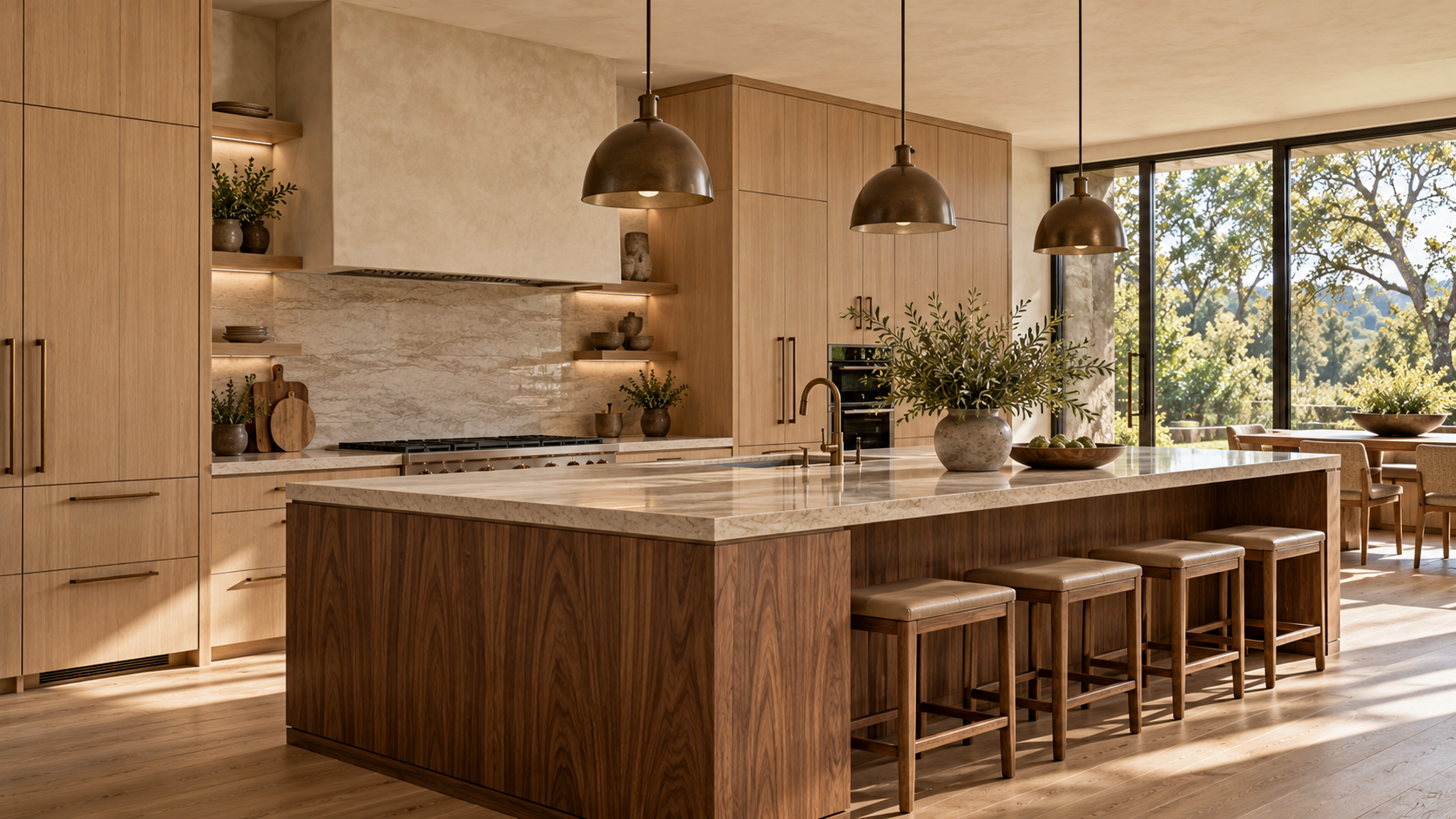
White oak and walnut can create a sophisticated combination when each material has a clear role. A kitchen might use rift-cut white oak for tall and perimeter cabinetry, then introduce walnut on the island to establish a focal point.
Walnut can also appear inside a white oak appliance station, bar, or display cabinet. The darker interior creates depth when the doors are open without changing the overall character of the kitchen.
The combination works best when it feels intentional rather than alternating randomly between woods.
Compare Each Wood With Stone, Flooring, and Hardware
Cabinetry should never be selected in isolation.
White oak works particularly well with palettes built around light stone, warm whites, plaster, muted metals, and other natural materials. Depending on its finish, it can blend quietly with the surrounding architecture or provide subtle warmth against cooler surfaces.
Walnut introduces stronger contrast. Against creamy quartzite or lighter stone, its darker color can clearly define an island or cabinetry wall.
Flooring is equally important. If the kitchen already contains a large amount of oak flooring, additional white oak cabinetry may create a highly tonal interior. Walnut can provide separation. In another home, repeating oak in slightly different but coordinated tones may create exactly the continuity the architecture needs.
View actual cabinetry, stone, flooring, and hardware samples together whenever possible. Undertones become much easier to recognize when the materials are seen side by side.
Think Beyond the Kitchen
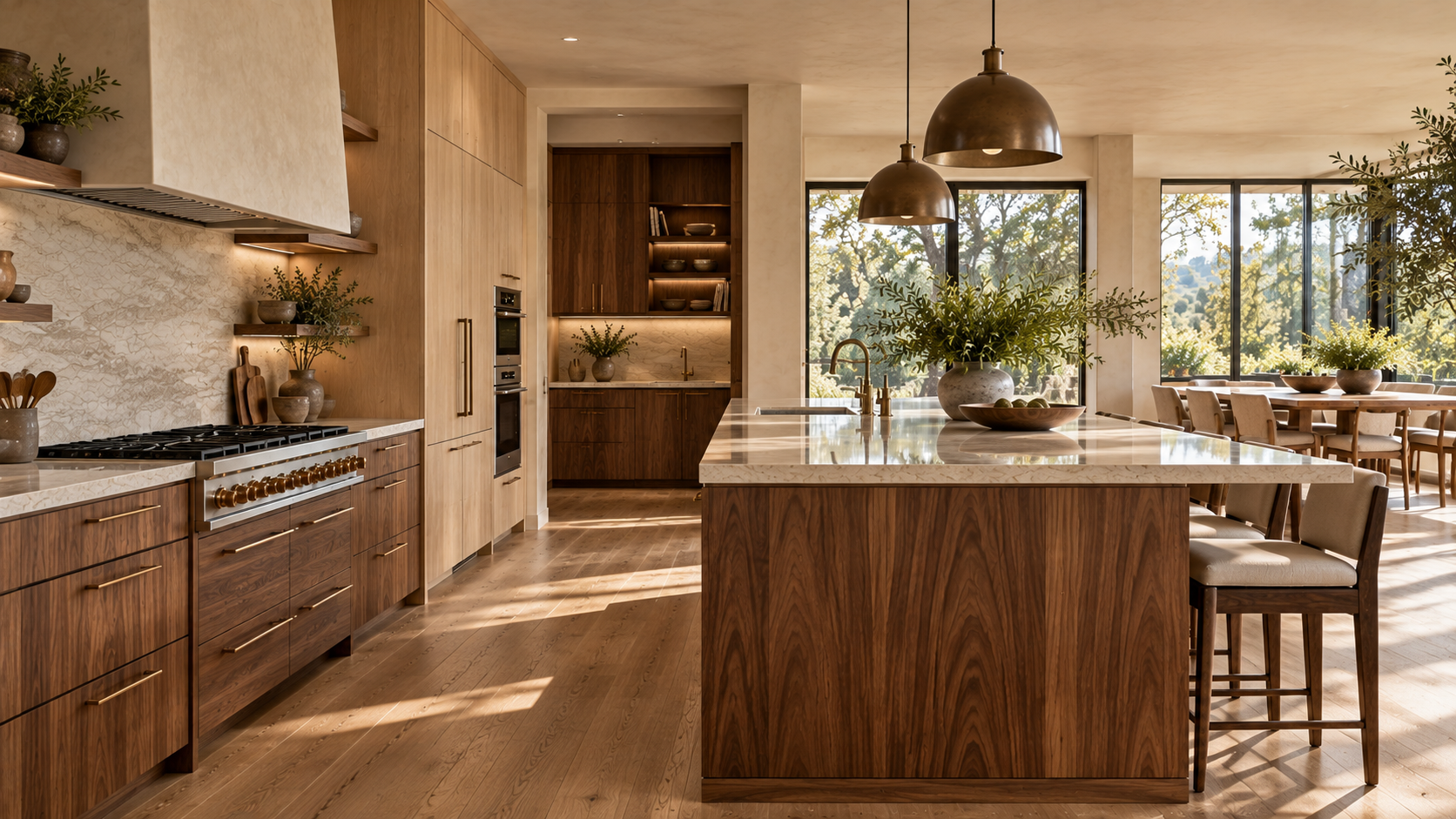
For a whole-home cabinetry project, consider how the wood will continue into adjacent spaces.
White oak can provide a quiet foundation across a kitchen, bathroom vanities, wardrobes, home office, and other built-ins. Walnut can create stronger moments in spaces such as a library, bar, primary suite, or media room.
You can also establish one wood as the primary material and use the other selectively throughout the residence.
This creates continuity without requiring every cabinet to match.
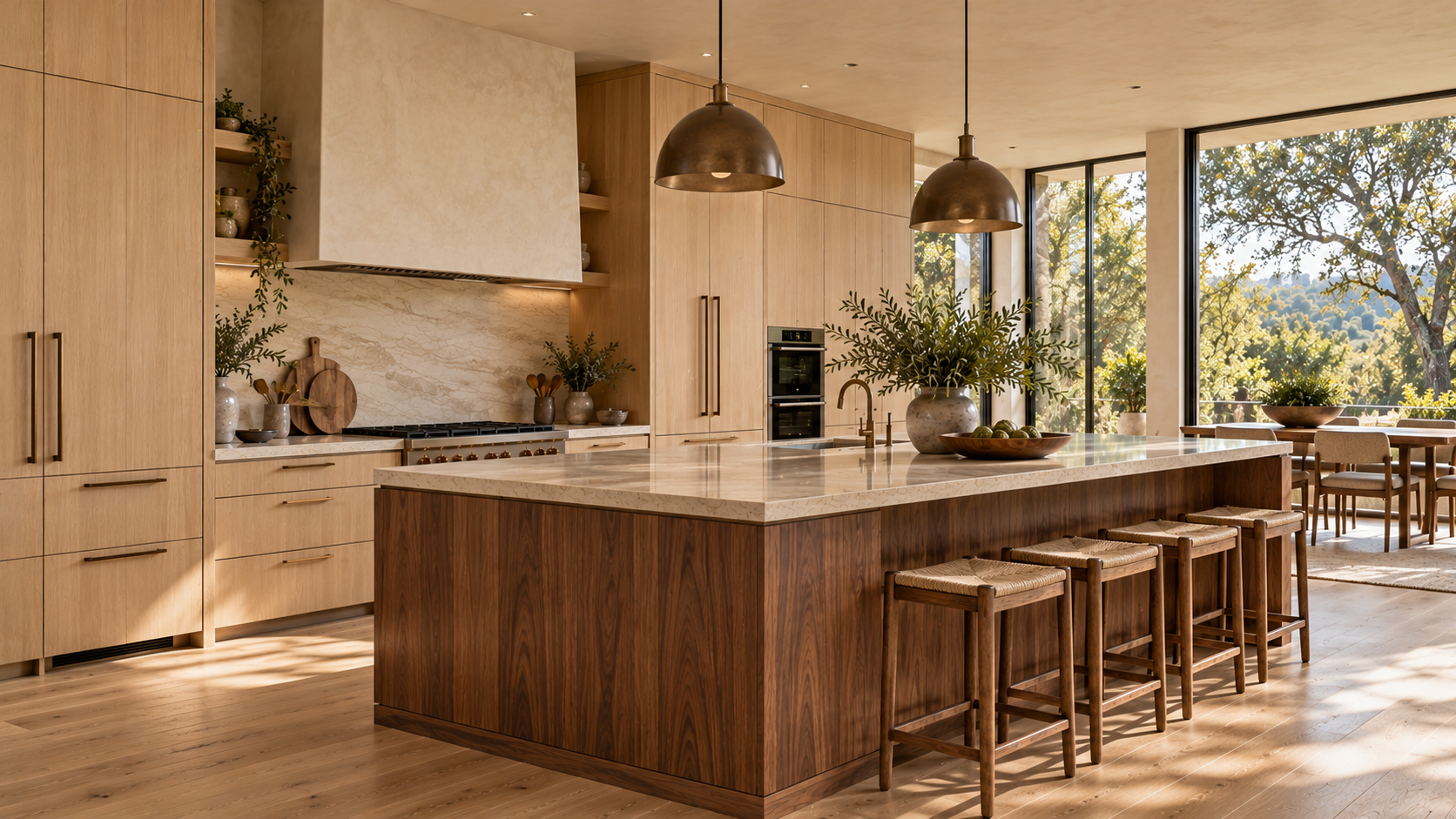
Which Wood Fits Your Interior?
Choose white oak when you want cabinetry to feel lighter, calm, textural, and closely integrated with the architecture. It is particularly effective for expansive cabinetry walls where natural grain is desired without introducing too much visual weight.
Choose walnut when you want greater richness, depth, and contrast. It can establish a strong focal point or bring warmth to a large contemporary interior.
For many projects, the strongest answer is a thoughtful combination of both.
The final decision should consider the scale of the room, natural light, flooring, stone, hardware, surrounding architecture, and cabinetry throughout the rest of the home. Most importantly, compare actual finished samples rather than making the decision from photographs alone.
Explore White Oak and Walnut Cabinetry With Atelier Design Society
Atelier Design Society works with homeowners, architects, interior designers, builders, and other design professionals selecting premium cabinetry and finishes for Bay Area homes. At the Atelier Design Society showroom in Menlo Park, project teams can compare white oak, walnut, stains, painted finishes, grain patterns, hardware, surfaces, and full-scale cabinetry installations while developing a cohesive material palette.
