
“Natural oak” and “white oak” are often used side by side when discussing cabinetry, but they do not necessarily describe two different wood species.
White oak refers to a type of oak. Natural oak usually describes the appearance or finish of oak that has been kept relatively close to its natural color. A cabinet described as “natural oak” may actually be made from white oak with a clear or lightly toned finish.
Understanding that distinction is important when selecting cabinetry because the wood species, cut, grain, and finish all influence the final appearance.
White Oak Is a Wood, Natural Oak Is Usually a Look
White oak is widely used for cabinetry and furniture. Its heartwood generally ranges from light to medium brown and can have subtle olive undertones. It also has a naturally pronounced grain. Wood Database
“Natural oak,” however, is not a precise species designation in the same way.
In cabinetry conversations, the term is commonly used to describe oak finished to preserve a light, natural wood appearance rather than dramatically changing it with a dark stain or opaque paint.
That means two samples both labeled “natural oak” can look different depending on the oak selected, the veneer or lumber, grain cut, finish system, and natural variation within the wood.
This is why the actual cabinetry sample matters more than the name alone.
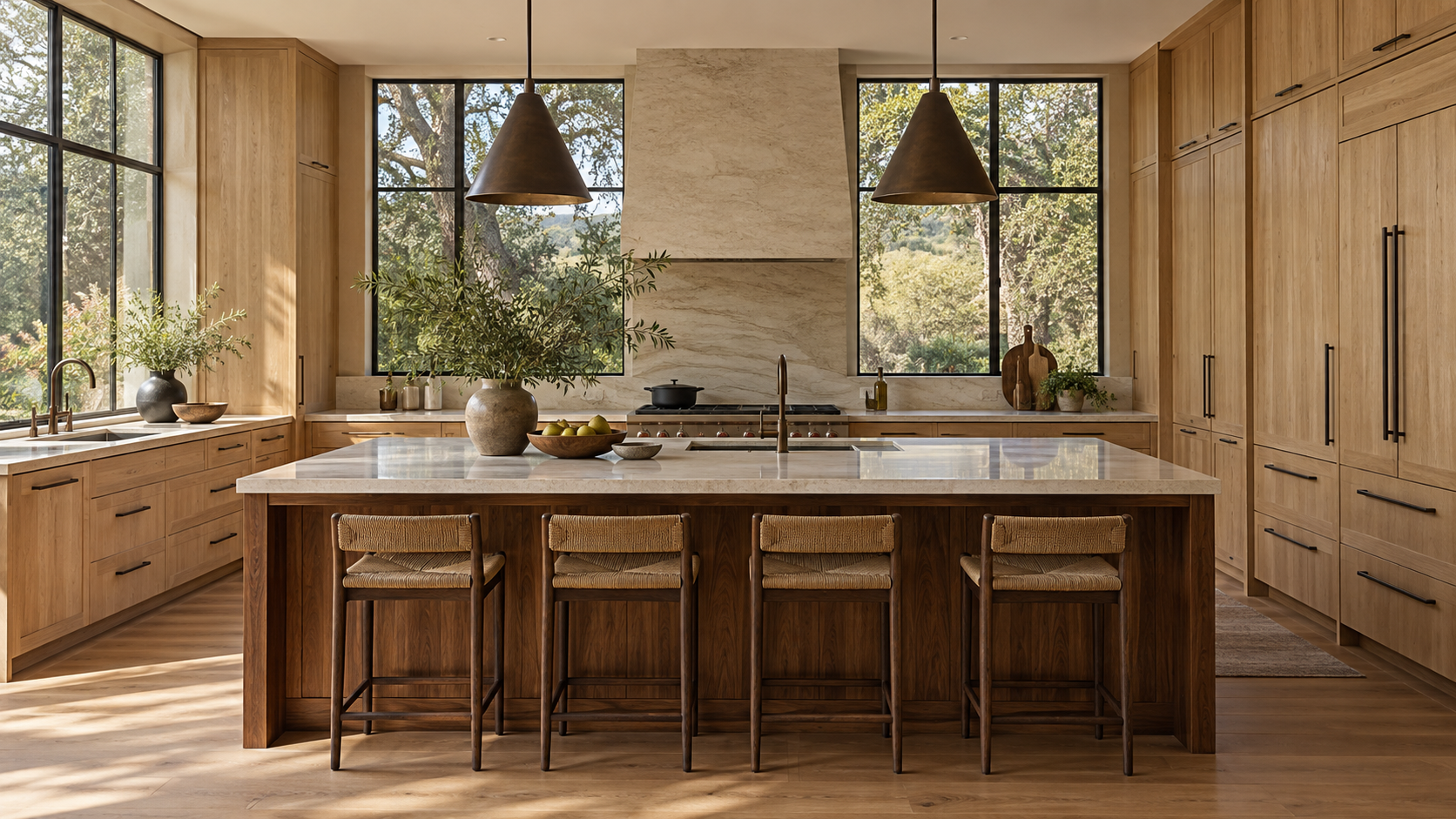
Grain Cut Can Change White Oak Dramatically
When selecting oak cabinetry, the way the wood is cut can be nearly as important visually as the species itself.
White oak has a straight grain and relatively coarse texture, but different cuts reveal that grain differently. Quartersawn white oak can show prominent ray fleck, while rift-sawn white oak is often selected when a more consistent linear appearance is desired. Wood Database
For contemporary cabinetry, rift-cut or rift-sawn white oak can create long, relatively straight grain lines that reinforce the vertical proportions of tall cabinetry and the horizontal geometry of drawers.
A more varied grain can create additional movement and character.
Neither is inherently better. The decision depends on whether the kitchen needs quiet visual consistency or a more expressive natural wood surface.
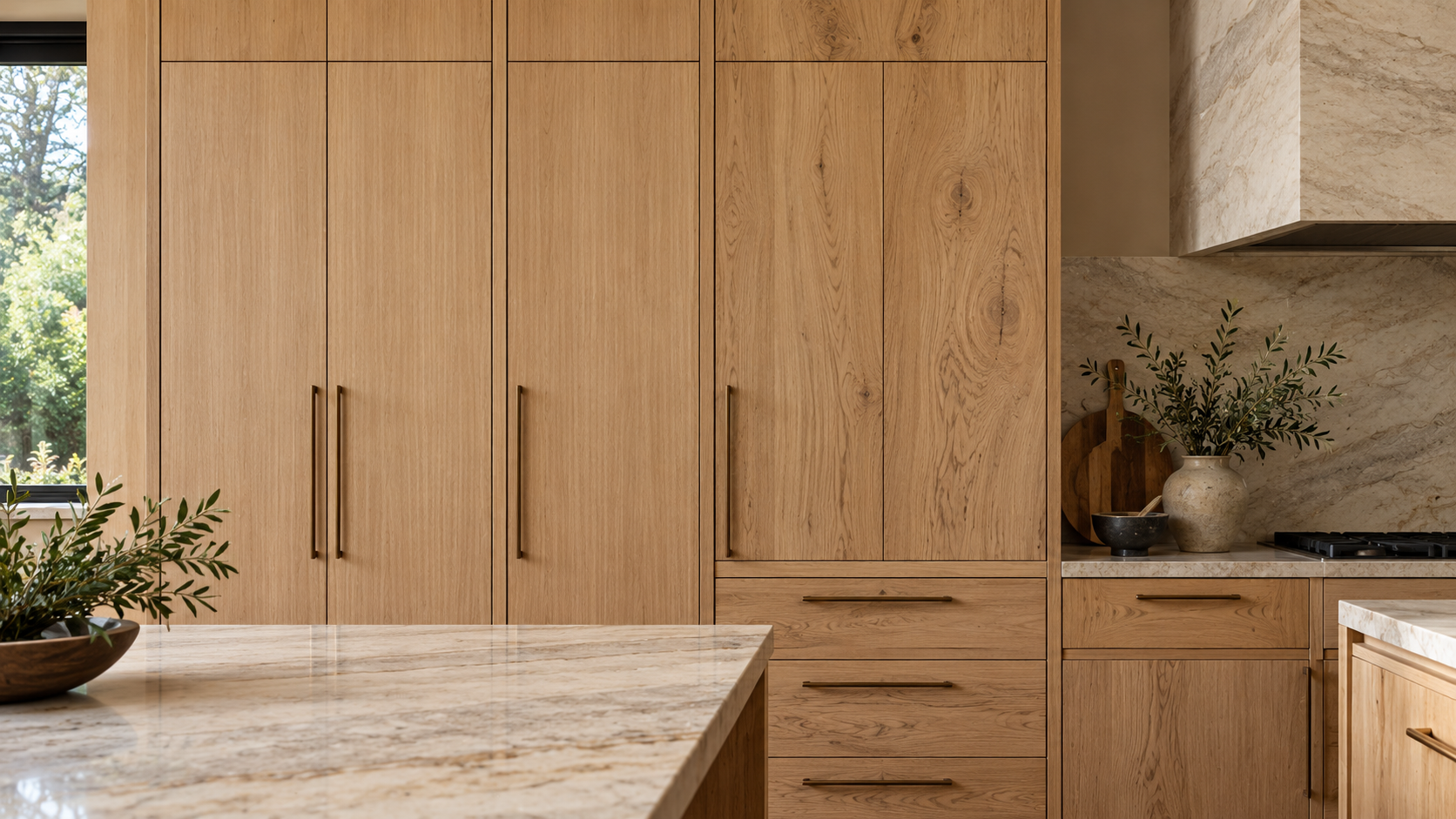
The Finish Changes the Color More Than the Name Suggests
White oak does not mean bright white cabinetry.
In its natural state, white oak typically has light-to-medium brown coloring, sometimes with an olive cast, and individual pieces naturally vary. Color alone is not even a reliable method for distinguishing white oak from other oak groups.
Once a finish is applied, the appearance can shift further.
A clear or lightly toned finish can preserve a pale, natural character. Other finishes can make white oak warmer, creamier, more golden, deeper brown, or more muted.
For that reason, homeowners should avoid selecting cabinetry based solely on terms such as “natural,” “light oak,” or “white oak.”
The actual finished sample is what will appear in the home.
Think About Undertones With the Rest of the Palette
Oak cabinetry rarely exists by itself.
Stone, flooring, wall finishes, hardware, lighting, and adjacent furniture can all change how the wood is perceived.
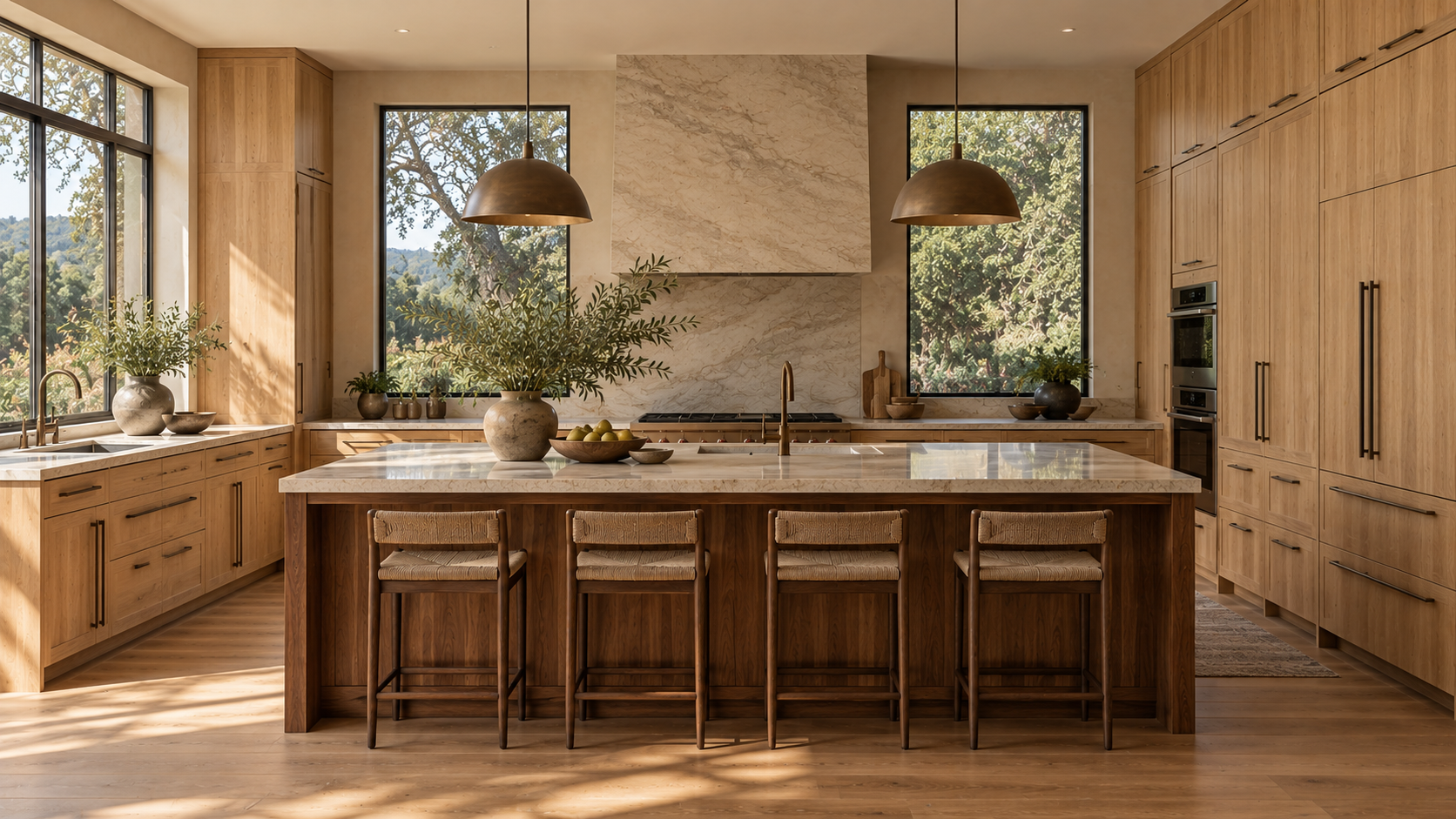
A warm oak finish beside creamy stone may create a soft tonal palette. The same cabinetry next to a cooler white surface may make its warmth more noticeable.
Flooring deserves particular attention because it can introduce another large wood surface. The floor and cabinetry do not need to match exactly, but their undertones and grain should feel intentional together.
Hardware can provide another layer. Aged bronze or darker metals can add definition against pale oak, while quieter finishes may allow the wood grain to remain the primary feature.
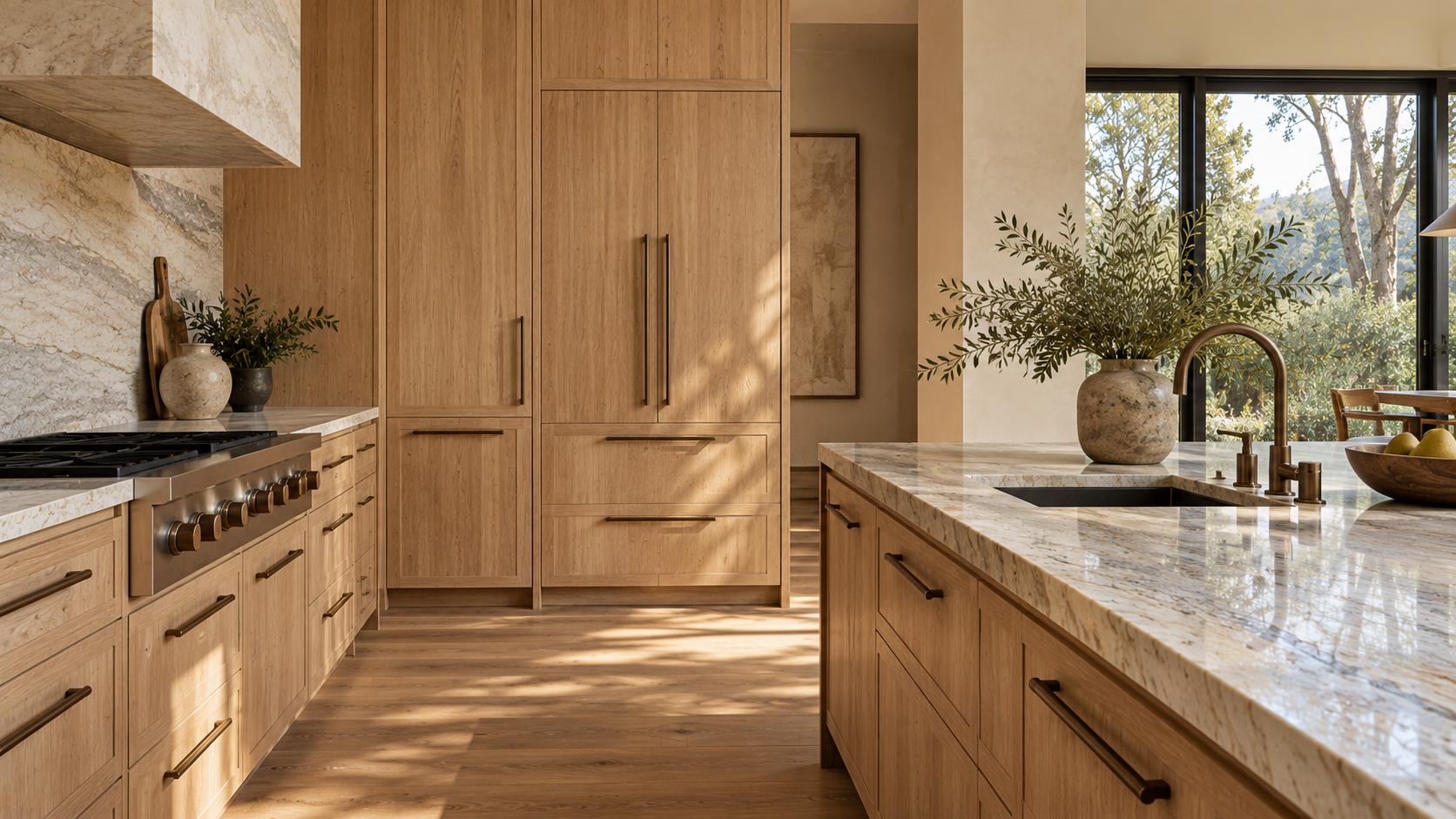
Natural Variation Is Part of Real Wood Cabinetry
Natural wood should not be expected to look perfectly uniform.
White oak can vary in color and grain from one piece to another. Wood Database That variation can give cabinetry depth and prevent a large wood elevation from feeling artificial.
The amount of variation desired should still be discussed during specification.
A highly architectural kitchen may call for careful grain selection and sequencing across adjacent panels. Another project may intentionally embrace more visible tonal and grain variation.
This becomes particularly noticeable on floor-to-ceiling cabinetry, large islands, and uninterrupted banks of drawers.
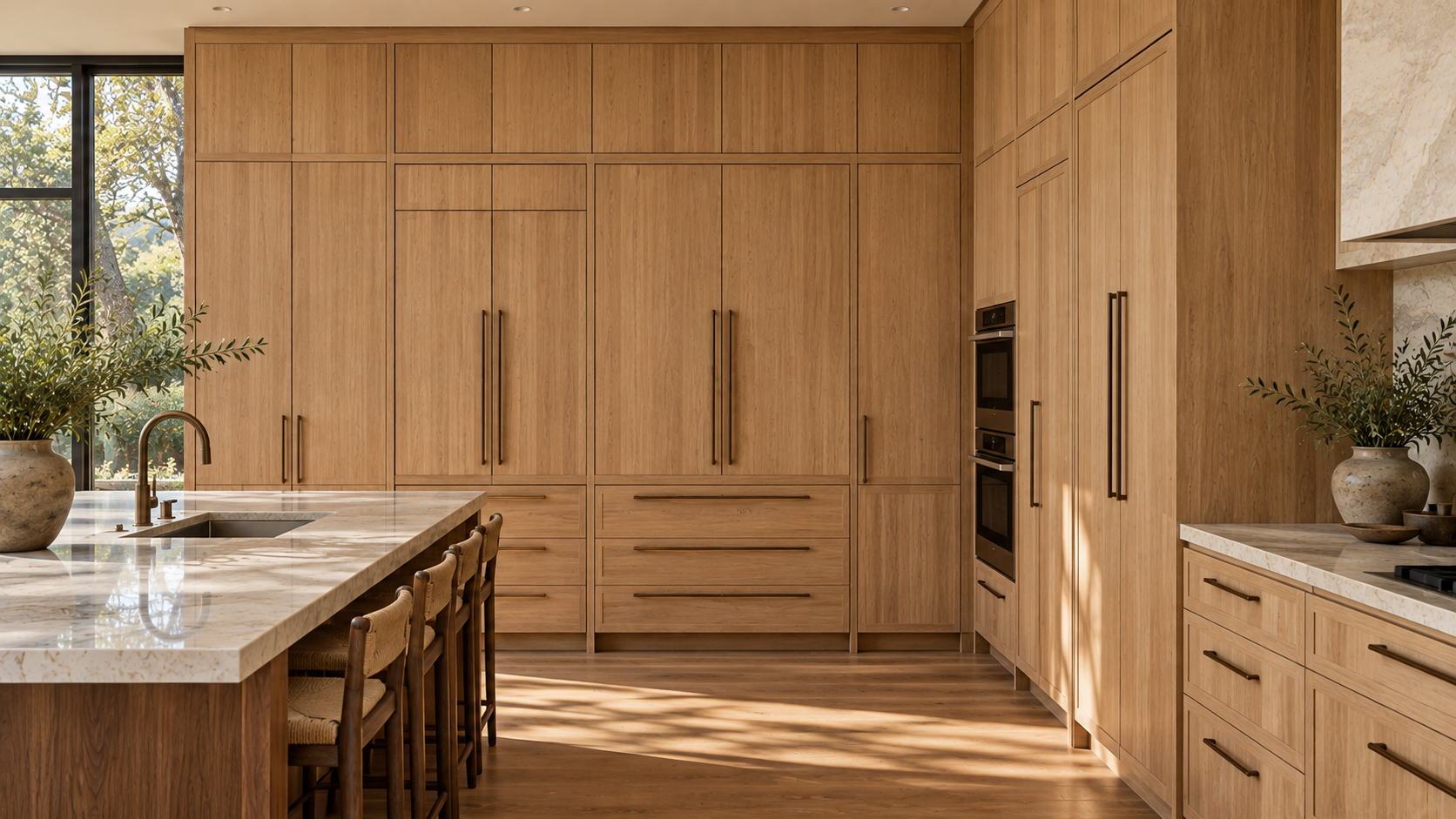
Should You Choose a Natural Finish on White Oak?
A natural or lightly finished white oak can work particularly well when the goal is a warm, understated kitchen where the cabinetry contributes texture without introducing a strong painted color.
It can also pair effectively with stone, plaster, metal, and other natural materials.
But the right finish depends on the project.
Some kitchens benefit from a slightly warmer oak tone. Others need a more muted finish to coordinate with flooring or stone. In certain homes, combining natural oak with painted cabinetry or walnut can create greater depth.
The decision should come from the entire material palette rather than selecting the cabinetry finish in isolation.
What Should You Compare Before Selecting Oak Cabinetry?
Do not stop at the wood name.
Ask which oak species is being specified, how the grain is cut, what finish is applied, how much natural variation to expect, and how grain will be handled across doors and panels.
Then view the finished sample alongside the actual stone, flooring, hardware, and other major materials whenever possible.
“Natural oak” may describe the look you want, while white oak may be the material used to create it. Understanding both helps ensure the cabinetry that arrives matches the character, warmth, and grain you envisioned.
Explore Oak Cabinetry With Atelier Design Society
Atelier Design Society works with homeowners, architects, interior designers, builders, and other design professionals selecting premium cabinetry and finishes for Bay Area homes. At the Atelier Design Society showroom in Menlo Park, project teams can compare natural woods, white oak cabinetry, grain patterns, stains, painted finishes, hardware, surfaces, and full-scale installations before developing the final material palette.
