Plywood vs. Furniture Board Cabinets: What Should You Know?
When comparing kitchen cabinets, much of the attention goes to what you can see: the door style, wood species, paint color, and hardware. But the materials used to construct the cabinet box matter too.
Two terms you may encounter are plywood and furniture board. Both are engineered wood products used in cabinetry, but they are manufactured differently and can perform differently depending on their quality, thickness, engineering, finish, hardware, and intended application.
The important question is not simply which material sounds more premium. It is how the complete cabinet system is constructed.
What Is Plywood Cabinet Construction?
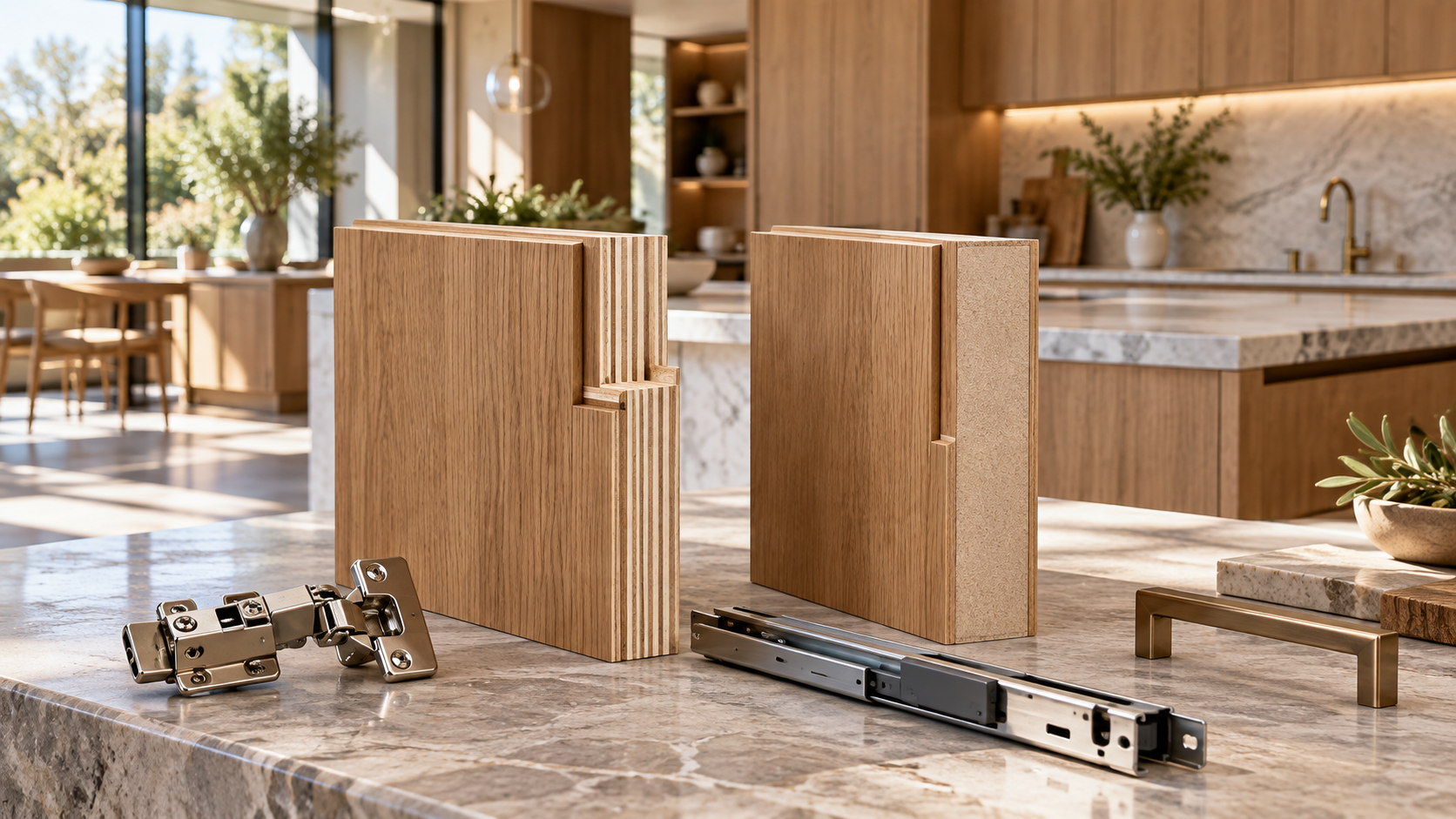
Plywood is made from multiple thin layers of wood veneer bonded together, typically with the grain direction alternating between layers. This layered construction gives the panel dimensional stability and strength.
In cabinetry, plywood may be used for cabinet boxes, shelves, drawer components, or other structural elements depending on the manufacturer and collection.
But the word “plywood” alone does not establish quality. Thickness, veneer quality, adhesives, finishing, edge treatment, and overall cabinet engineering still matter.
When comparing plywood cabinetry, look at the actual construction rather than assuming every plywood cabinet is equivalent.
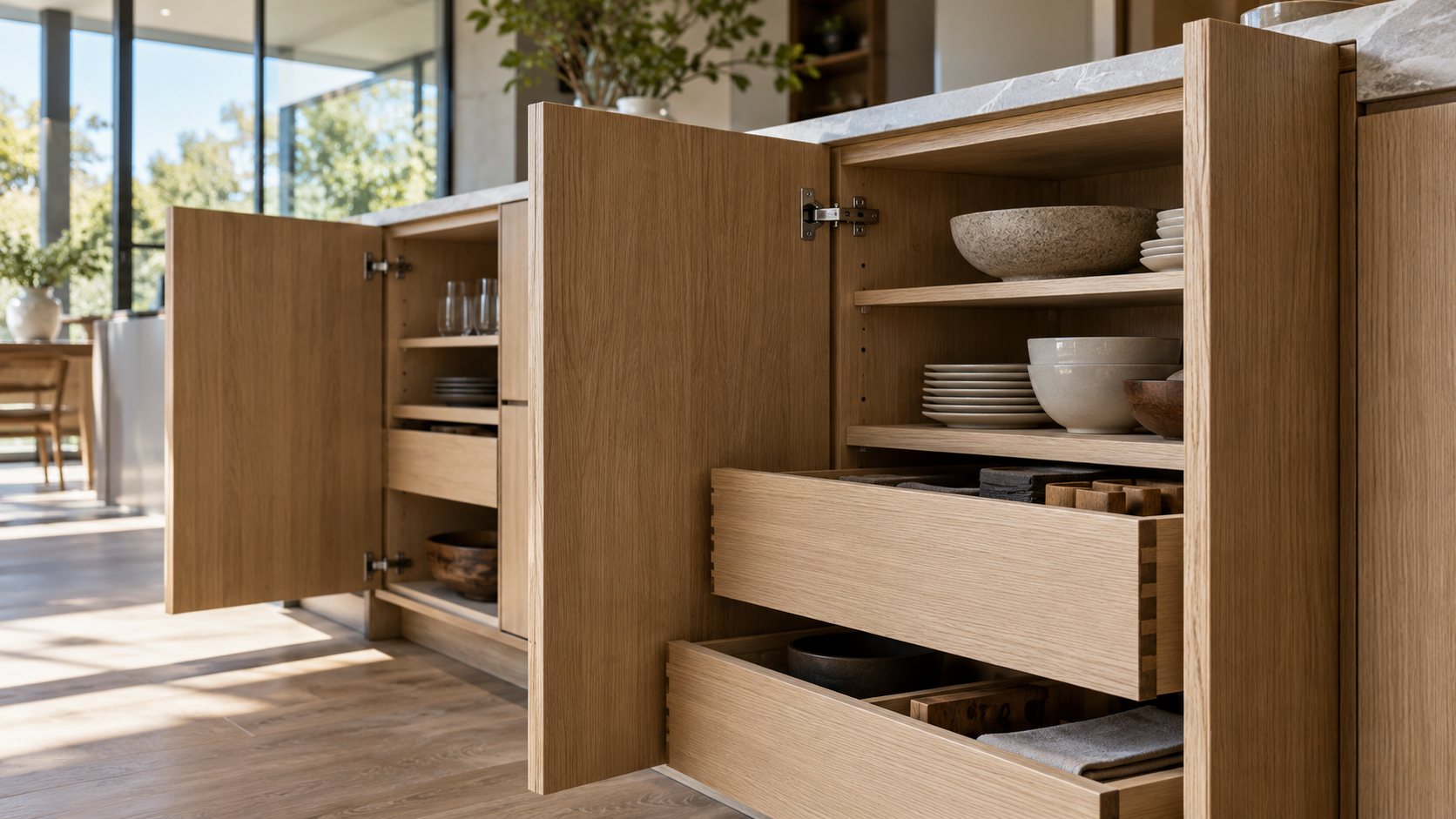
What Is Furniture Board?
Furniture board is generally an engineered panel made from wood particles or fibers bonded with resin and compressed into a dense, consistent sheet. In cabinetry, the finished panel may be covered with a veneer, laminate, melamine, or another decorative surface.
Its uniform composition can create a smooth, consistent substrate for cabinet interiors and finished surfaces.
As with plywood, quality varies. Panel density, thickness, surface treatment, edge finishing, hardware attachment, and manufacturing standards all influence how the finished cabinet performs.
A well-engineered furniture board cabinet should therefore be evaluated as a complete system rather than dismissed based solely on the material name.
Is Plywood Always Better?
Not necessarily.
Plywood is often valued for its strength-to-weight characteristics and layered construction, but cabinet quality cannot be determined from box material alone.
A poorly constructed cabinet does not become premium simply because plywood is included in the specification. Likewise, a carefully engineered cabinetry system using high-quality furniture board should not automatically be considered inferior.
When evaluating either option, ask about panel thickness, shelves, backs, drawer construction, hardware, joinery, edge finishing, and how the components work together.
The complete construction matters more than one material specification viewed in isolation.
How Do Strength and Hardware Matter?
Cabinet boxes need to support shelves, doors, drawers, countertops, hardware, and the items stored inside them. Material selection therefore needs to work with the engineering of the cabinet.
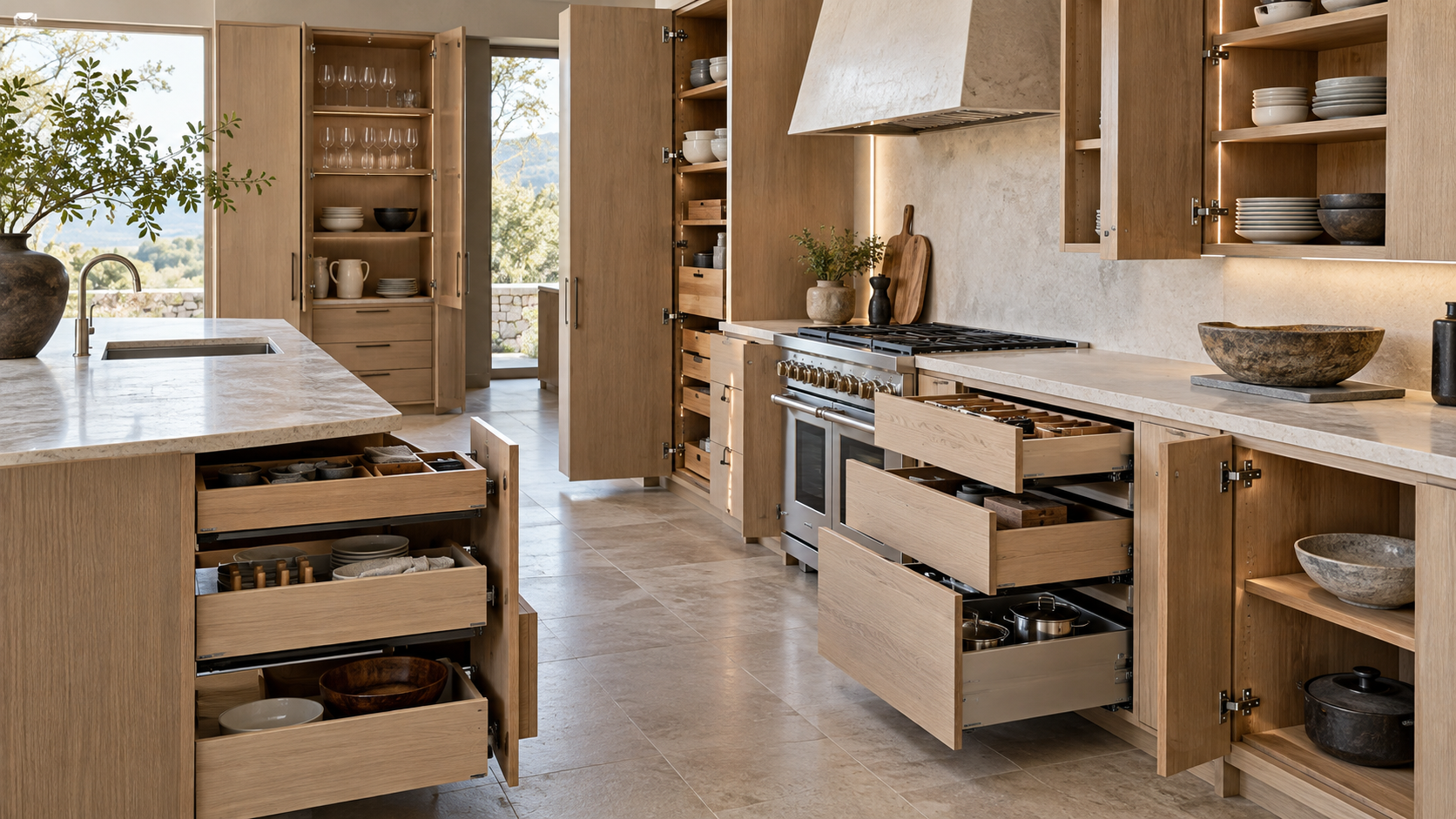
Hardware attachment is part of that equation. Hinges, drawer slides, pull-outs, and adjustable shelving rely on properly designed connection points.
Instead of trying to judge strength by touching a single loose sample, inspect a completed cabinet. Open wide drawers. Extend pull-outs. Look at tall cabinetry and shelves. Pay attention to whether the components feel stable and operate consistently.
This gives you a better understanding of how the material performs as part of the finished cabinet.
What About Moisture?
Kitchen cabinetry exists around sinks, dishwashers, plumbing, and everyday spills, so moisture is an important consideration for any cabinet material.
Plywood and furniture board respond differently depending on their construction, adhesives, density, coatings, edge protection, and duration of exposure. Neither should be treated as waterproof simply because of its category.
Finished edges and properly protected surfaces matter. So does addressing plumbing leaks or standing water quickly.
If moisture resistance is particularly important for your project, ask how the specific cabinetry collection handles exposed edges, sink cabinets, finished interiors, and other potentially vulnerable areas.
Should Cabinet Interiors Influence Your Decision?
Yes, but consider more than the core material.
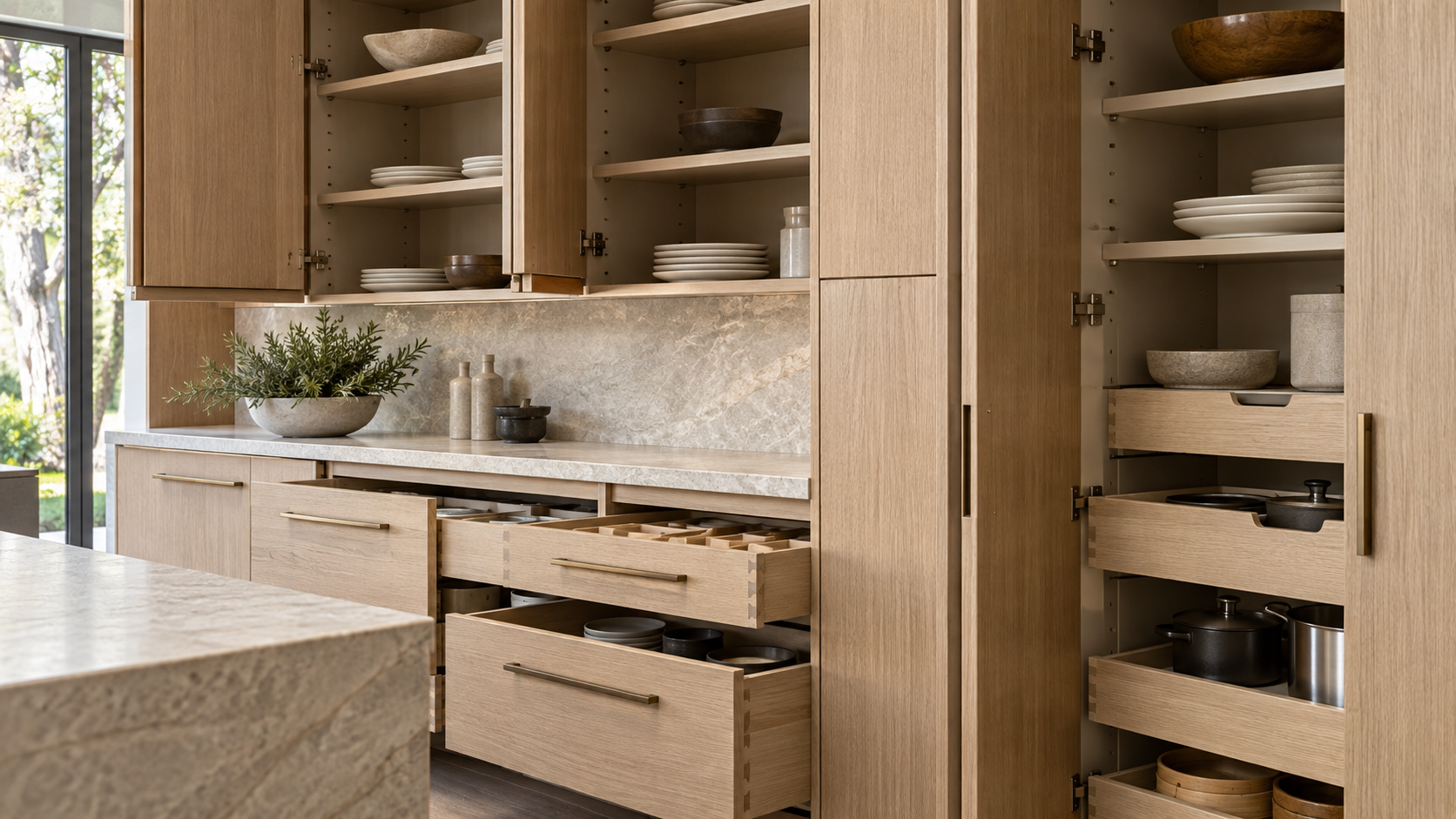
Open the cabinets and examine the interior finish. Look at shelf thickness, edge quality, backs, drawer boxes, hardware, and the consistency of the surfaces.
The interior should feel like an intentional part of the cabinetry rather than something that was ignored because it remains behind closed doors.
For a premium kitchen, exterior beauty and interior construction should support each other.
What Questions Should You Ask in a Cabinet Showroom?
Instead of asking only, “Is this plywood?” ask what materials are used throughout the cabinet.
Find out how the cabinet box is constructed, what is used for shelves and backs, how drawers are made, what hardware system is specified, and which construction details vary between cabinetry collections.
Then look at the physical cabinet.
Open it. Examine the edges and interiors. Test the drawers. Compare the construction with another display. Understanding what you are actually purchasing is more useful than making a decision from one material name.
Plywood vs. Furniture Board: Which Should You Choose?
There is no useful answer based solely on the material name.
Plywood has a layered veneer construction, while furniture board uses compressed wood particles or fibers to create a dense, consistent panel. Each can vary significantly in specification and manufacturing quality.
When comparing cabinets, consider the box material alongside panel thickness, hardware, shelving, drawers, finishes, edge treatment, engineering, and overall craftsmanship.
The best way to understand those differences is to inspect the actual cabinetry rather than relying only on a specification sheet.
Compare Cabinet Construction at Atelier Design Society
Atelier Design Society works with homeowners, architects, interior designers, builders, and other design professionals evaluating premium cabinetry for Bay Area homes. At the Atelier Design Society showroom in Menlo Park, project teams can examine cabinetry construction, interiors, hardware, natural woods, painted finishes, storage solutions, and full-scale installations while comparing options for their project.