Full Overlay vs. Inset Cabinets: What’s the Difference?
Full overlay and inset cabinets can both create refined, high-end kitchens, but they achieve their appearance differently.
The main distinction is the relationship between the cabinet doors, drawer fronts, and face frame. With full overlay cabinetry, the doors and drawers cover most of the frame. With inset cabinetry, they fit precisely inside the frame.
That construction difference affects the visible lines, proportions, interior access, level of precision, and often the cost of the cabinetry.
What Are Full Overlay Cabinets?
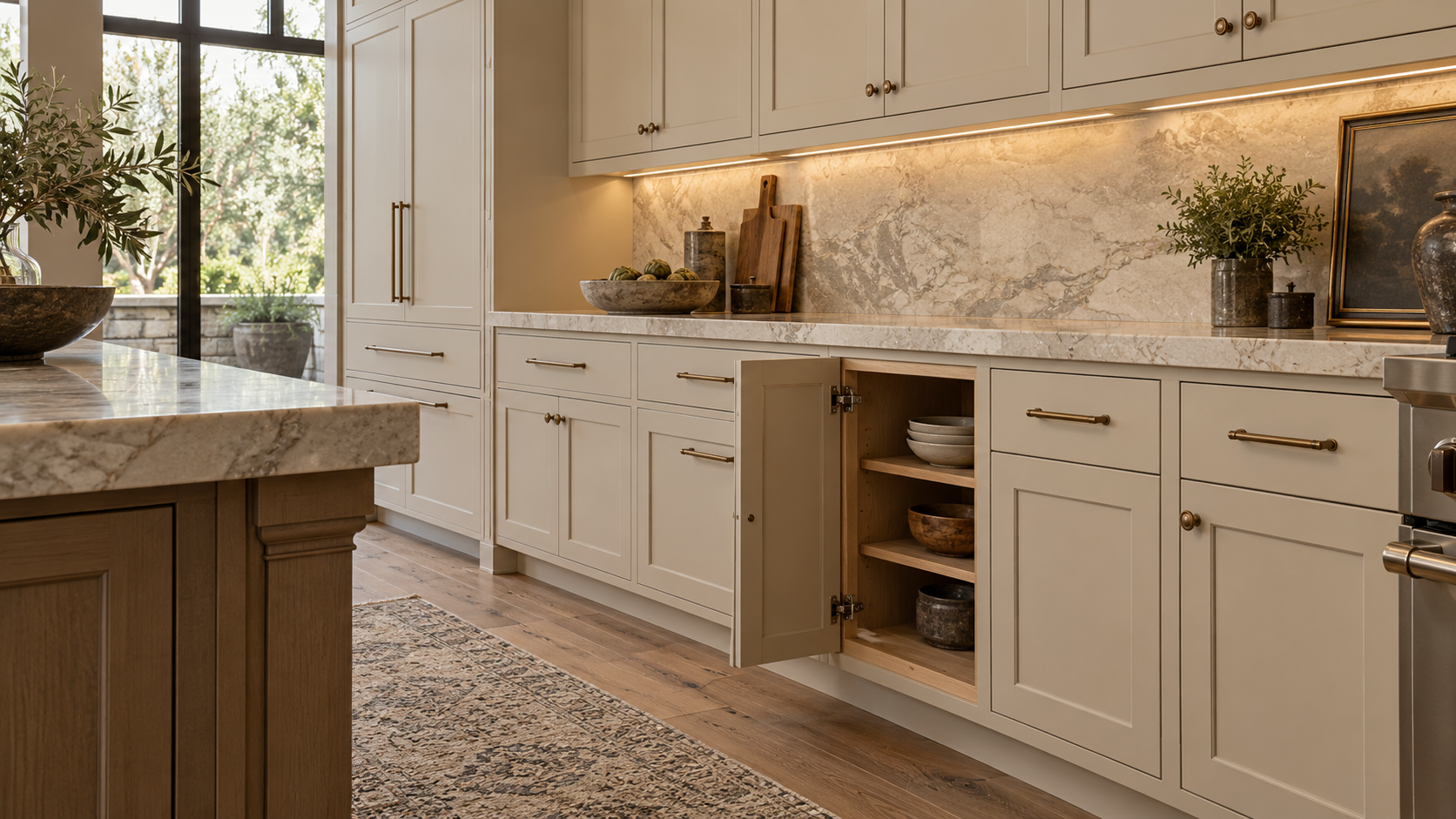
Full overlay cabinetry uses doors and drawer fronts that sit over the cabinet face frame, covering most of it when closed. Only narrow portions of the frame may remain visible between adjacent fronts.
This creates a relatively continuous exterior while still using framed cabinet construction.
Full overlay cabinetry can work with many design directions. A simple painted door can create a clean transitional kitchen, while natural wood and restrained hardware can give the same construction a warmer, more contemporary expression.
The term “full overlay” describes how the fronts relate to the cabinet frame, not a specific design style.
What Are Inset Cabinets?
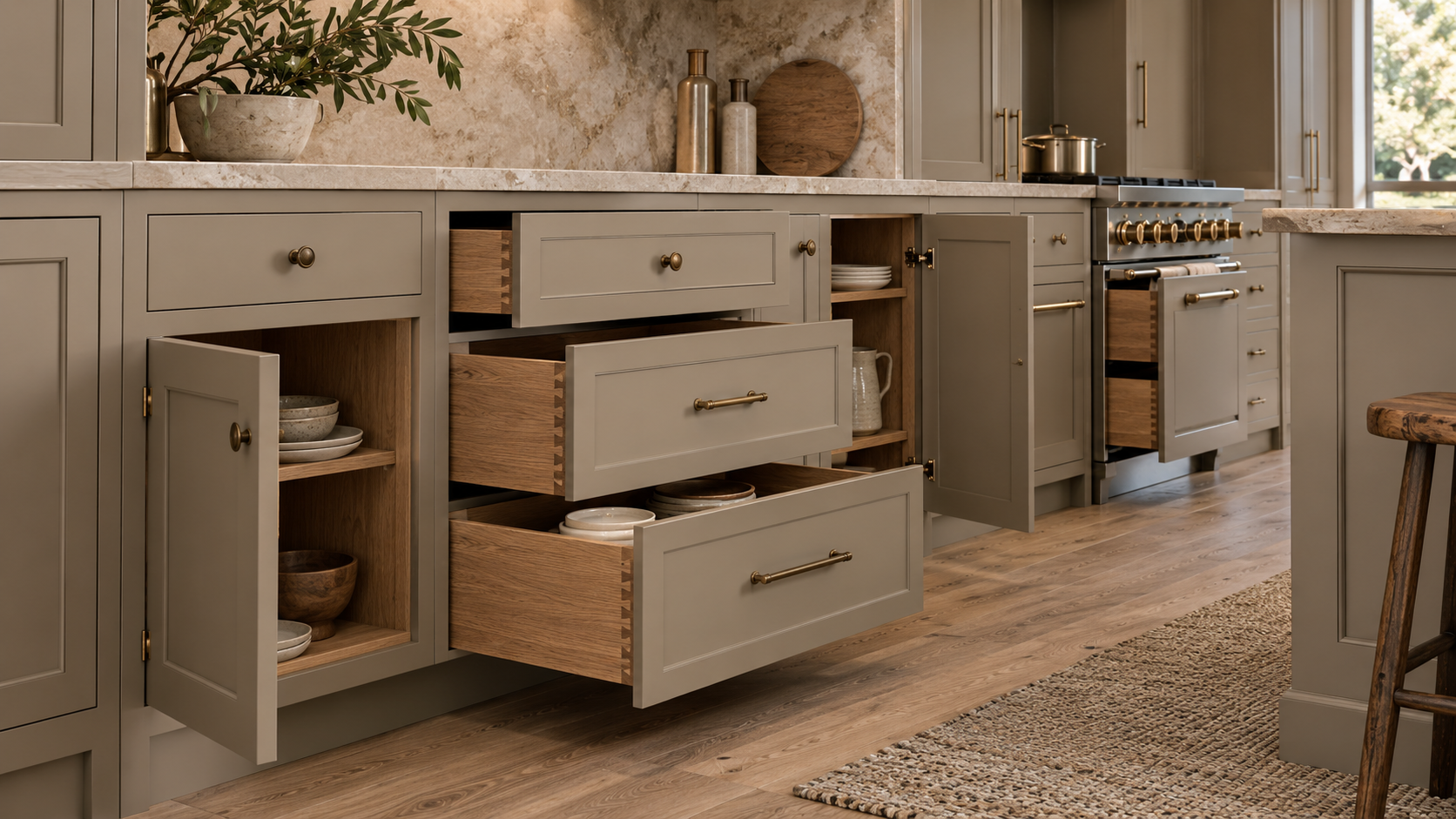
Inset cabinetry also uses framed construction, but the doors and drawer fronts sit inside the openings of the face frame rather than covering them.
When closed, the fronts are flush with the frame. This leaves the frame visible and creates consistent reveals around individual doors and drawers.
Those reveals become an important part of the design.
Because each front needs to fit precisely within its opening, inset cabinetry typically requires careful manufacturing, finishing, adjustment, and installation. Small inconsistencies can be more visible because the frame remains exposed around every front.
What Is the Main Visual Difference?
With full overlay cabinetry, the doors and drawer fronts become the dominant exterior surface because they conceal most of the frame.
With inset cabinetry, the frame remains part of the visible composition.
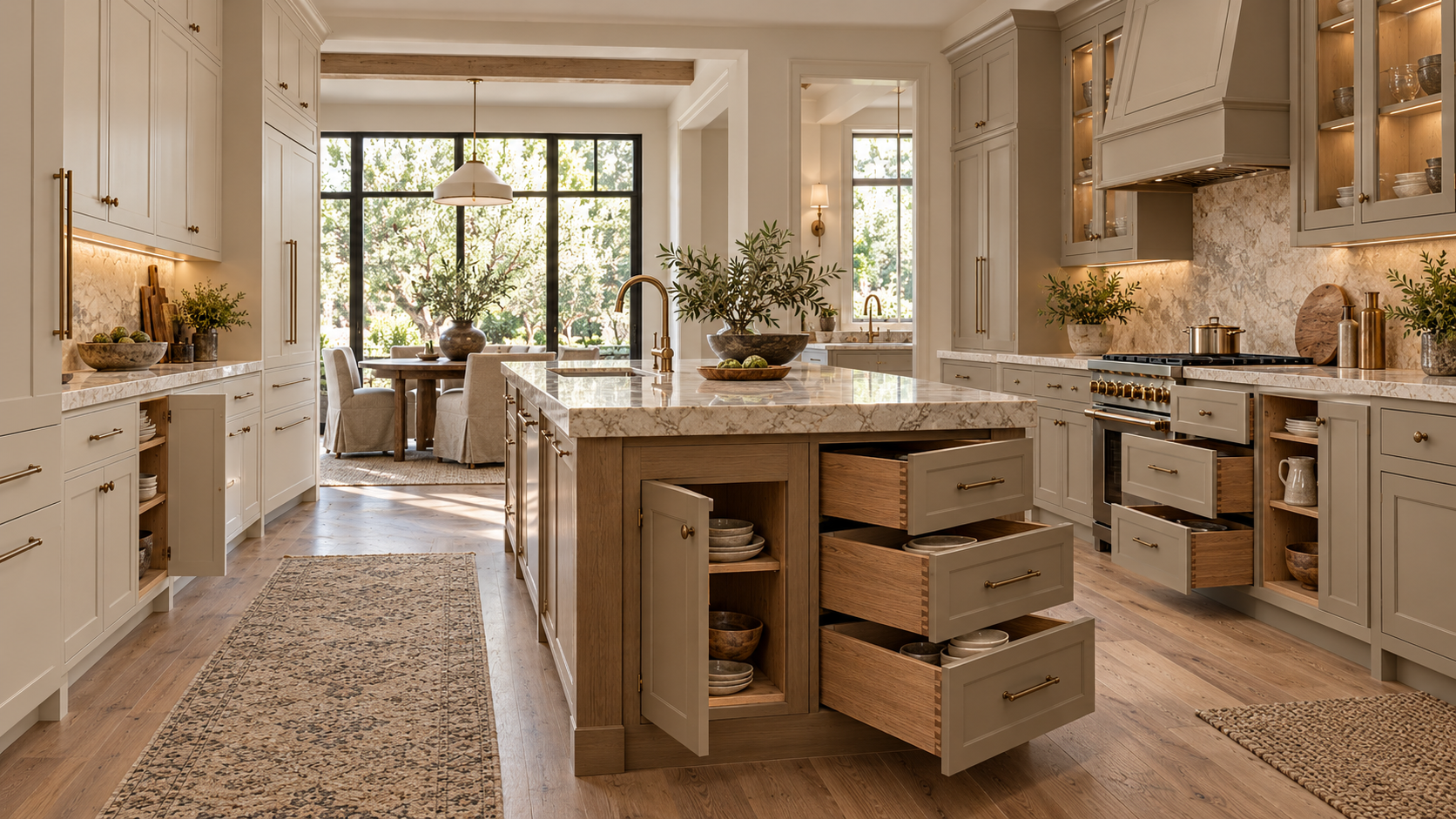
That creates different lines across the kitchen. Inset cabinetry can emphasize individual openings and create a furniture-like level of detail. Full overlay can create broader, more continuous areas of doors and drawers with less visible framing.
The difference is much easier to understand at full scale than from two individual cabinet door samples.
Does One Provide More Interior Access?
Because full overlay doors sit over the face frame, the frame still exists behind them. The cabinet opening therefore remains influenced by framed construction.
Inset cabinetry also retains that frame, with the additional visual relationship created by fitting the fronts inside it.
If maximizing interior access is a major priority, it may also be useful to compare both systems with frameless cabinetry, which eliminates the front face frame altogether.
When visiting a showroom, open the cabinets rather than evaluating only the exterior. Look at the usable opening, shelving, drawer widths, pull-outs, and how easily stored items can be accessed.
Why Does Inset Cabinetry Often Cost More?
The simple appearance of inset cabinetry can require more precision to produce.
Each door and drawer front needs to fit accurately within its framed opening. Reveals need to remain visually consistent, and adjustments become more noticeable because the face frame is exposed.
Full overlay construction covers more of the frame, which can make the relationship between each front and the underlying opening less visually demanding.
The actual price difference depends on the cabinetry collection, materials, finishes, door style, customization, hardware, project size, and installation. Construction type is only one part of the overall cabinetry cost.
Is Inset More Traditional Than Full Overlay?
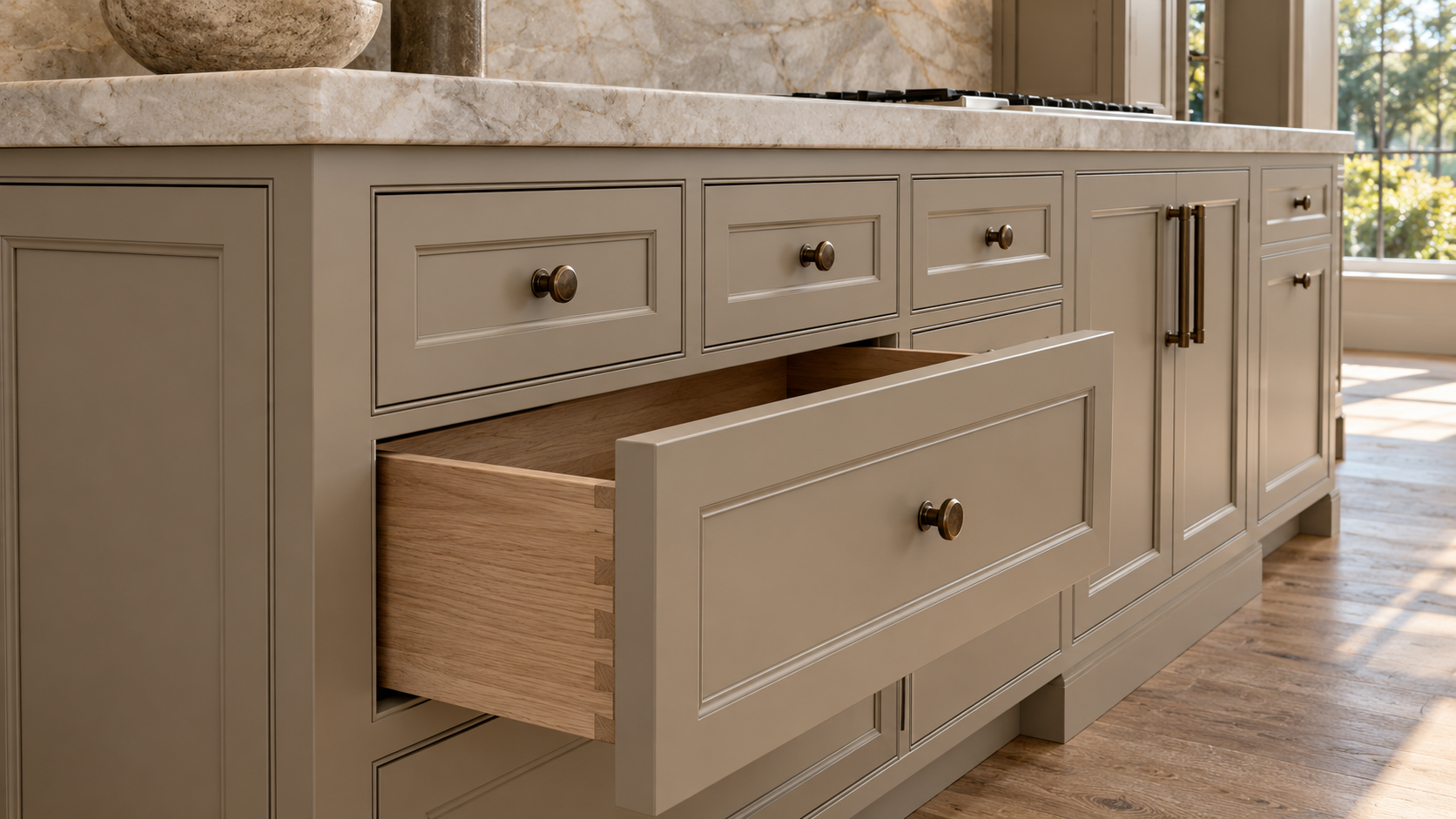
Inset cabinetry is frequently associated with traditional or furniture-inspired kitchens because of its visible frame and precise individual openings. However, it does not need to look ornate.
A restrained door profile, warm neutral paint, simple hardware, honed stone, and clean architectural proportions can make inset cabinetry feel quiet and contemporary.
Full overlay cabinetry is also versatile. Depending on the door style and material, it can work in transitional, contemporary, and more traditional interiors.
Construction provides the framework. Materials and detailing determine much of the final aesthetic.
How Should You Decide Between Them?
Start with the architecture and the type of cabinetry expression you want.
If you prefer visible frame lines, flush fronts, and a more furniture-like level of detailing, inset cabinetry may support the design.
If you want framed construction with less of the frame visible and a more continuous exterior, full overlay may be a better fit.
Then consider storage, materials, budget, customization, and how the cabinetry will interact with appliances and surrounding architecture.
Neither option should be selected from a small door sample alone.
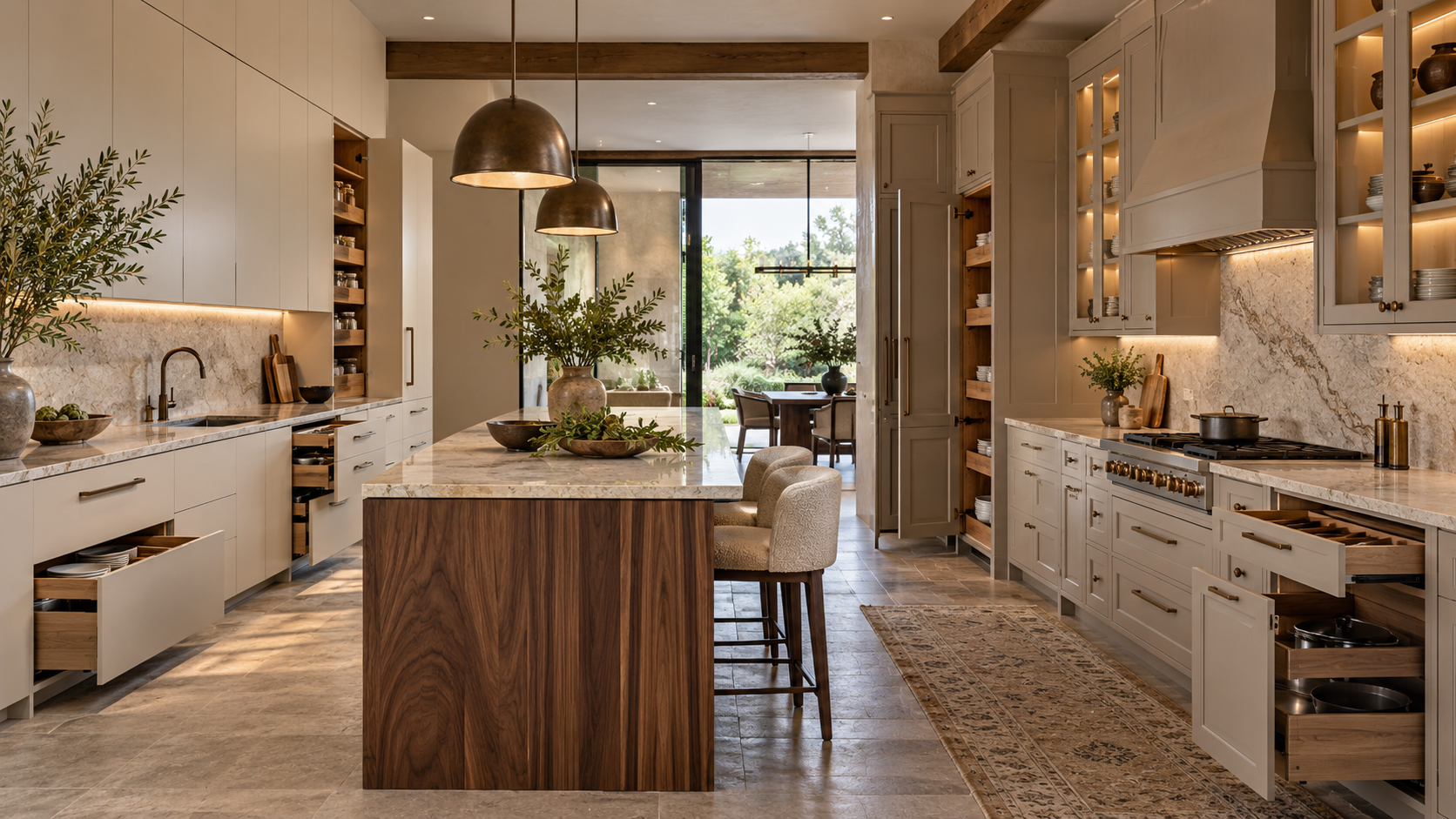
Full Overlay vs. Inset: What Should You Remember?
Both are forms of framed cabinetry. The difference is primarily where the doors and drawer fronts sit.
Full overlay cabinetry places them over the face frame, concealing most of it.
Inset cabinetry fits them inside the frame, leaving the frame and surrounding reveals visible.
That seemingly small construction difference changes the proportions and detailing of the finished kitchen. Seeing both systems in person allows you to compare those differences at the scale they will actually appear in your home.
Compare Cabinet Construction at Atelier Design Society
Atelier Design Society works with homeowners, architects, interior designers, builders, and other design professionals evaluating premium cabinetry for Bay Area homes. At the Atelier Design Society showroom in Menlo Park, project teams can compare cabinetry construction, natural woods, painted finishes, door styles, hardware, interiors, storage solutions, and full-scale installations before determining which approach best supports the project.