What Is Inset Cabinetry and Why Does It Cost More?
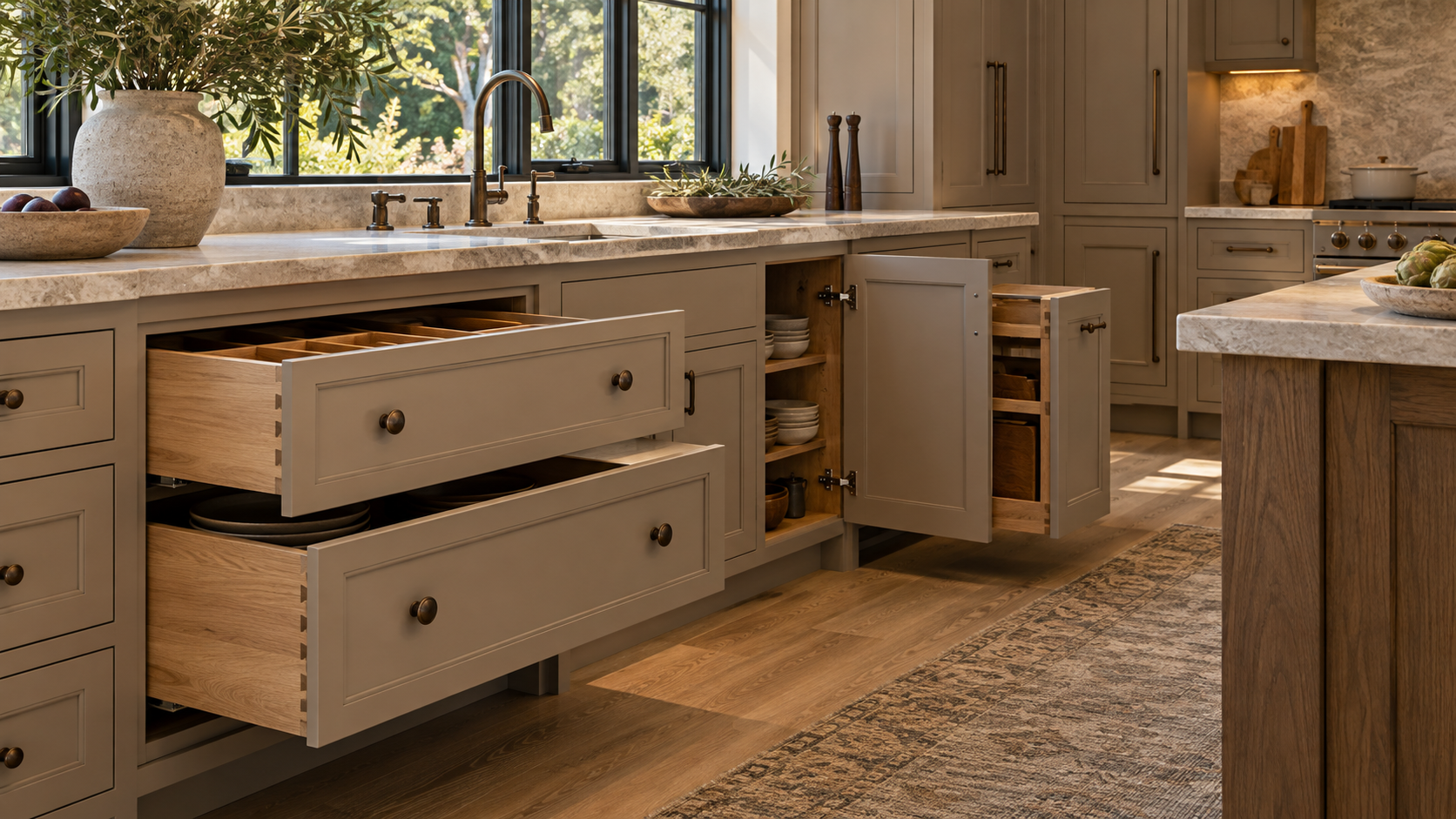
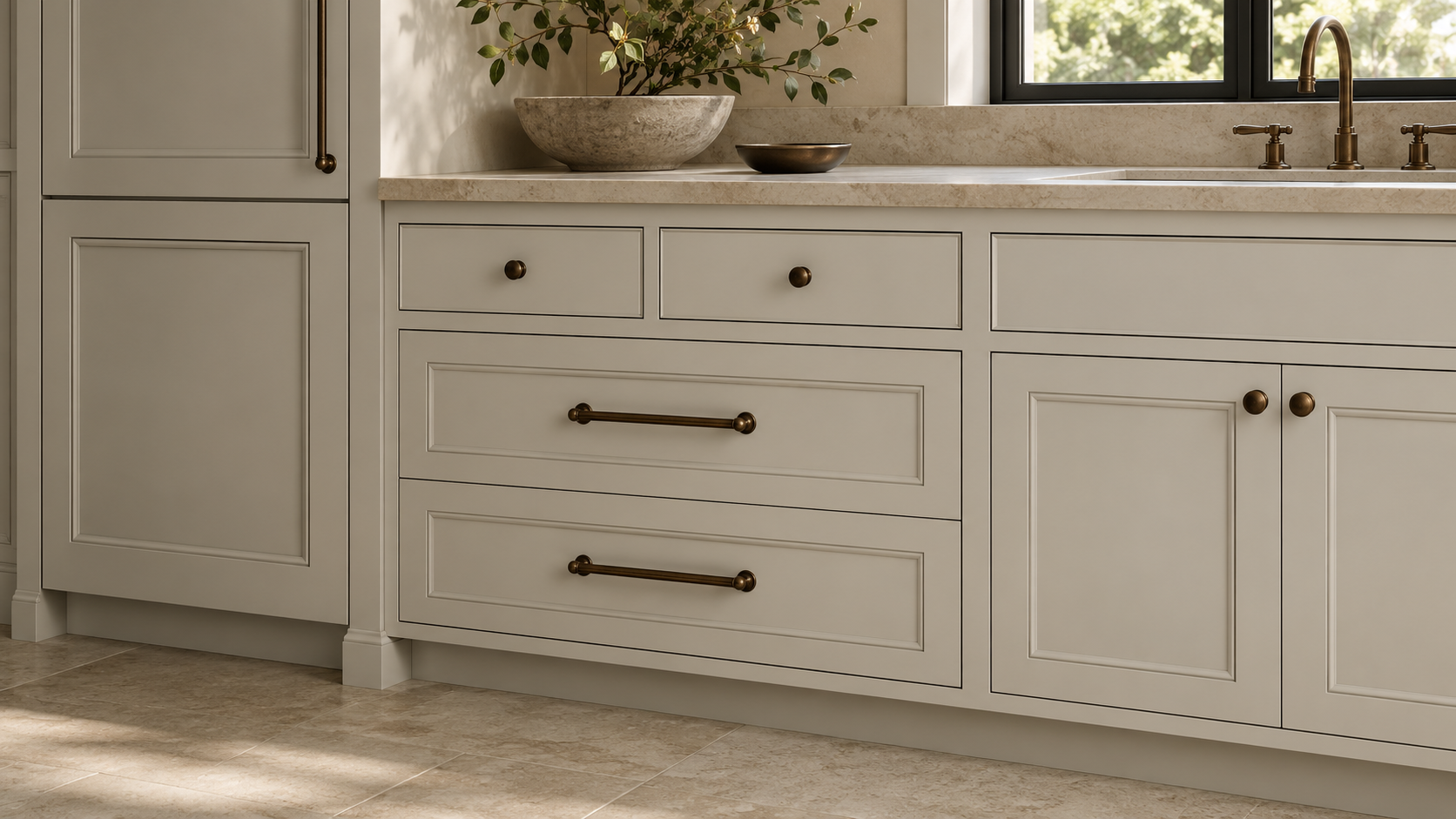
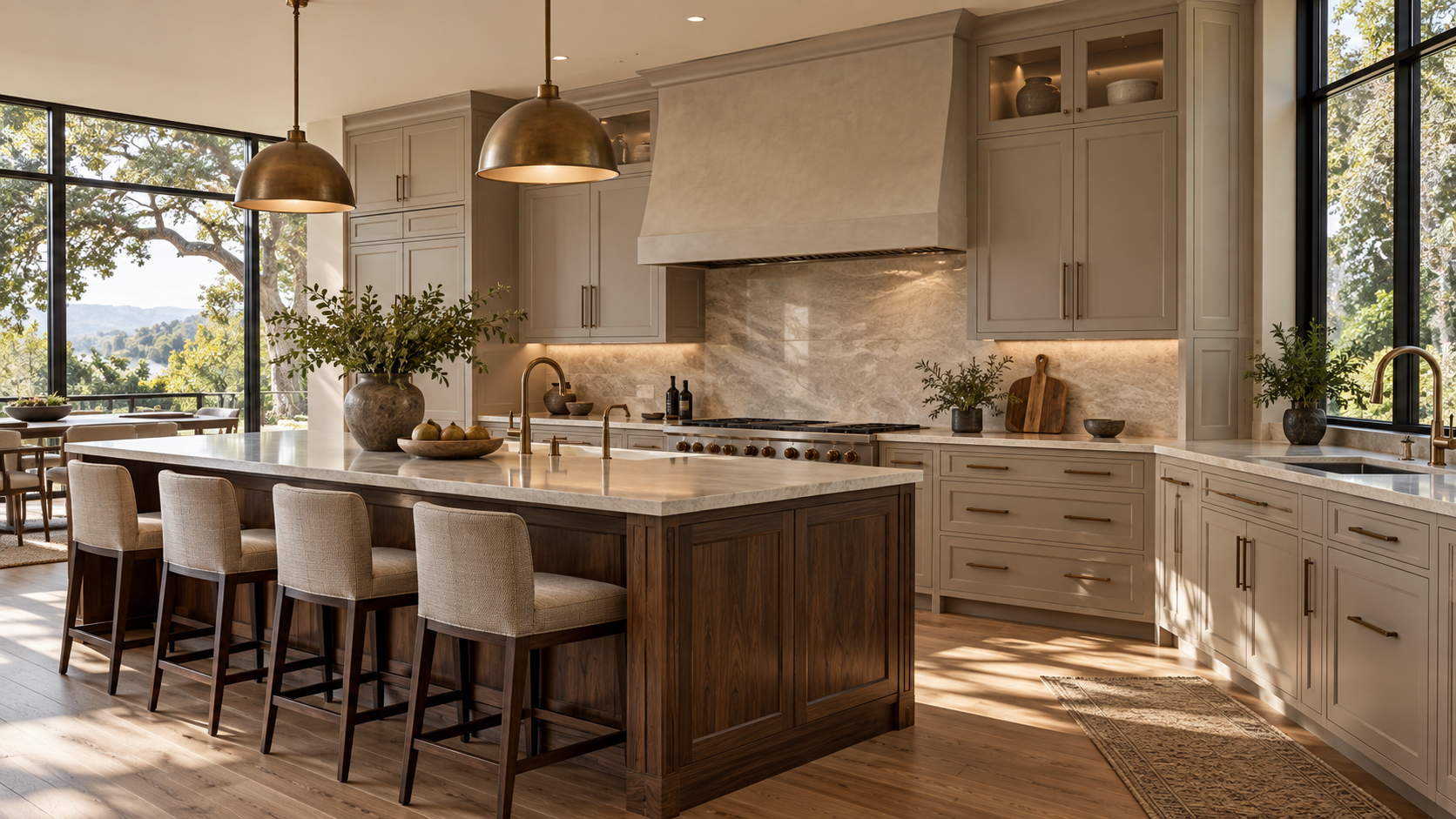
Inset cabinetry is known for its precise, furniture-like appearance. Instead of sitting over the cabinet frame, the doors and drawer fronts are fitted inside it, creating a flush surface with visible, consistent reveals around each opening.
The finished look can appear simple, but achieving that simplicity requires precision. Cabinet construction, door sizing, alignment, hardware, finishing, and installation all need to work together closely.
That additional level of craftsmanship is one of the main reasons inset cabinetry often costs more than other cabinet construction styles.
What Is Inset Cabinetry?
Inset cabinetry is a type of framed cabinetry. A face frame is attached to the front of the cabinet box, and the doors and drawer fronts are sized to fit within the openings of that frame.
When everything is closed, the fronts sit flush with the face frame rather than covering it.
This creates the distinctive lines associated with inset cabinetry. The frame remains visible around each door and drawer, making the spacing between components part of the design.
Because those reveals are exposed, small inconsistencies can be easier to notice. Precision matters.
Why Does Inset Cabinetry Require More Precision?
With overlay cabinetry, the doors and drawer fronts cover more of the cabinet frame. In inset construction, the fronts sit inside individual framed openings.
That means the spacing around each front remains visible.
Doors and drawers need to be sized and aligned carefully so the reveals remain consistent across the cabinetry elevation. This becomes especially noticeable when several drawers or tall cabinet doors appear beside one another.
The result can feel restrained and architectural, but there is less visual tolerance for imprecise alignment.
Why Does Inset Cabinetry Usually Cost More?
Several factors can contribute to the higher cost.
The face-frame construction itself requires additional components. Doors and drawer fronts must be fitted precisely within those openings. Manufacturing and finishing require careful tolerances, and installation needs to preserve the intended alignment.
Hardware and door configurations may also differ depending on the cabinetry design and manufacturer.
The exact price difference varies by cabinetry collection, finish, door style, customization, project size, and installation requirements. Inset construction should therefore be evaluated as part of the complete cabinetry specification rather than through a universal percentage or price premium.
Does Inset Cabinetry Have a Particular Style?
Inset cabinetry is often associated with traditional architecture, but the construction itself does not determine the entire aesthetic.
Door profile, color, hardware, proportions, countertop material, and surrounding architecture all influence the final result.
A detailed door profile with decorative hardware can create a more traditional expression. A restrained door, quiet painted finish, minimal hardware, and simple stone can make inset cabinetry feel considerably more contemporary.
This flexibility is part of its appeal. The visible frame adds architectural structure without requiring the kitchen to feel ornate.
How Does Inset Compare With Frameless Cabinetry?
The difference becomes particularly clear when the cabinets are opened.
Inset cabinetry uses a face frame, so part of that frame remains visible around the interior opening. Frameless cabinetry eliminates the front face frame, allowing more direct access to the cabinet interior.
From the exterior, inset cabinetry emphasizes individual framed openings and precise reveals. Frameless cabinetry can create a more continuous surface with closely aligned doors and drawers.
Neither construction method is automatically higher quality. Both can be premium systems when they are well engineered, manufactured, finished, and installed.
What Should You Look for in Quality Inset Cabinetry?
Start with the reveals. Look at the spacing around doors and drawers and whether those lines remain consistent across the cabinetry.
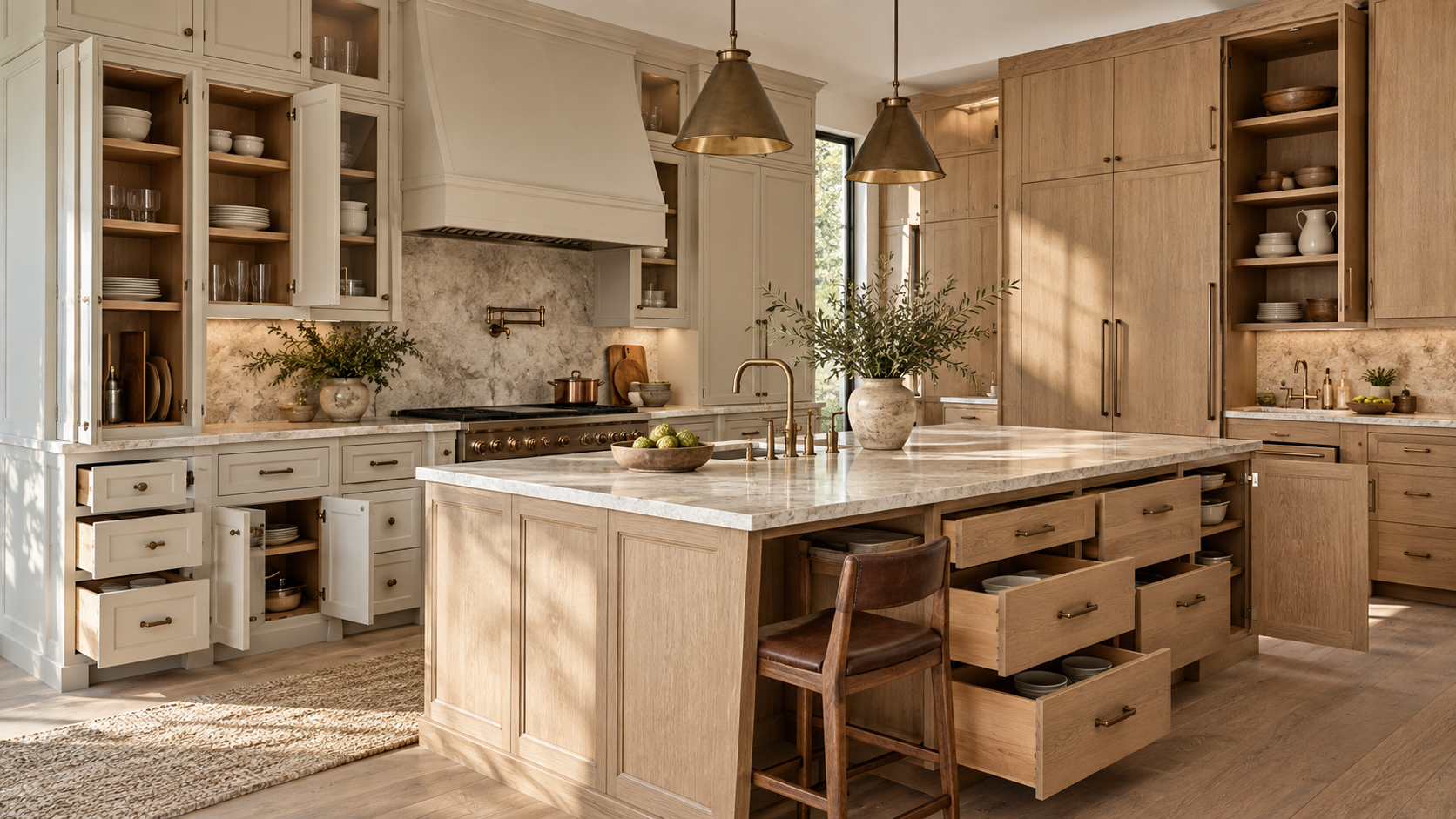
Open several doors and drawers. Examine the face frame, hinges, drawer construction, interior finish, and how smoothly the components operate. Then close everything and evaluate the complete elevation from farther away.
Also look at corners, end panels, appliance integration, and cabinetry-to-ceiling conditions. The precision of inset cabinetry should continue throughout the installation rather than stopping at the individual door.
Natural wood inset cabinetry deserves additional attention because grain direction and tonal variation become another visible part of the composition.
Is Inset Cabinetry Worth the Additional Cost?
That depends on what matters most to the project.
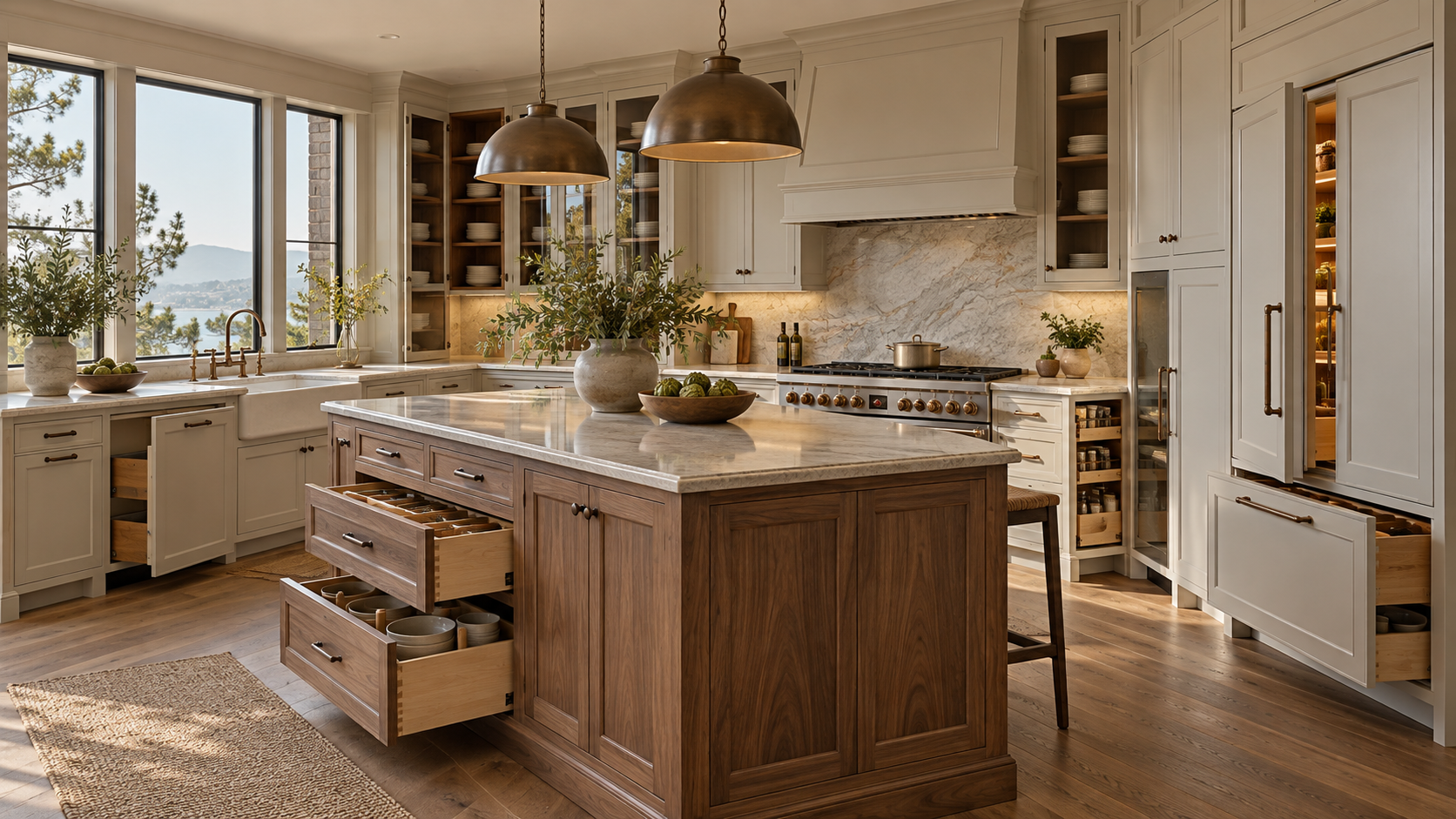
If the architectural character of inset doors, visible frame lines, and furniture-like detailing is central to the design, the additional construction and precision may be worthwhile.
If maximum interior access or a very continuous, minimal exterior is more important, a premium frameless system may be more appropriate.
The decision should not be based on the assumption that the more expensive construction is automatically better. It should be based on which system supports the architecture, functionality, material palette, and level of detailing you want for the home.
What Should You Know Before Choosing Inset Cabinets?
Inset cabinetry is primarily about construction and precision. Doors and drawer fronts fit within a face frame, creating visible reveals that become an intentional part of the design.
That detail can create a refined, furniture-like appearance, but it also requires careful manufacturing, finishing, alignment, and installation. Those additional requirements help explain why inset cabinetry frequently carries a higher cost.
Seeing inset cabinetry at full scale is one of the best ways to decide whether those details matter to your project.
Explore Inset Cabinetry at Atelier Design Society.
Atelier Design Society works with homeowners, architects, interior designers, builders, and other design professionals evaluating premium cabinetry for Bay Area homes. At the Atelier Design Society showroom in Menlo Park, project teams can compare inset, framed, and frameless cabinetry alongside natural woods, painted finishes, hardware, interiors, storage solutions, surfaces, and full-scale installations.