Framed vs. Frameless Cabinetry: Understanding the Construction
Framed and frameless cabinetry can both be used to create sophisticated, high-quality kitchens. The difference is not simply visual. It begins with how the cabinet box is constructed.
That construction affects the opening of the cabinet, interior access, door and drawer relationships, and some of the design possibilities available for the kitchen.
Understanding the difference makes it easier to evaluate cabinetry beyond door style and finish.
What Is Framed Cabinetry?
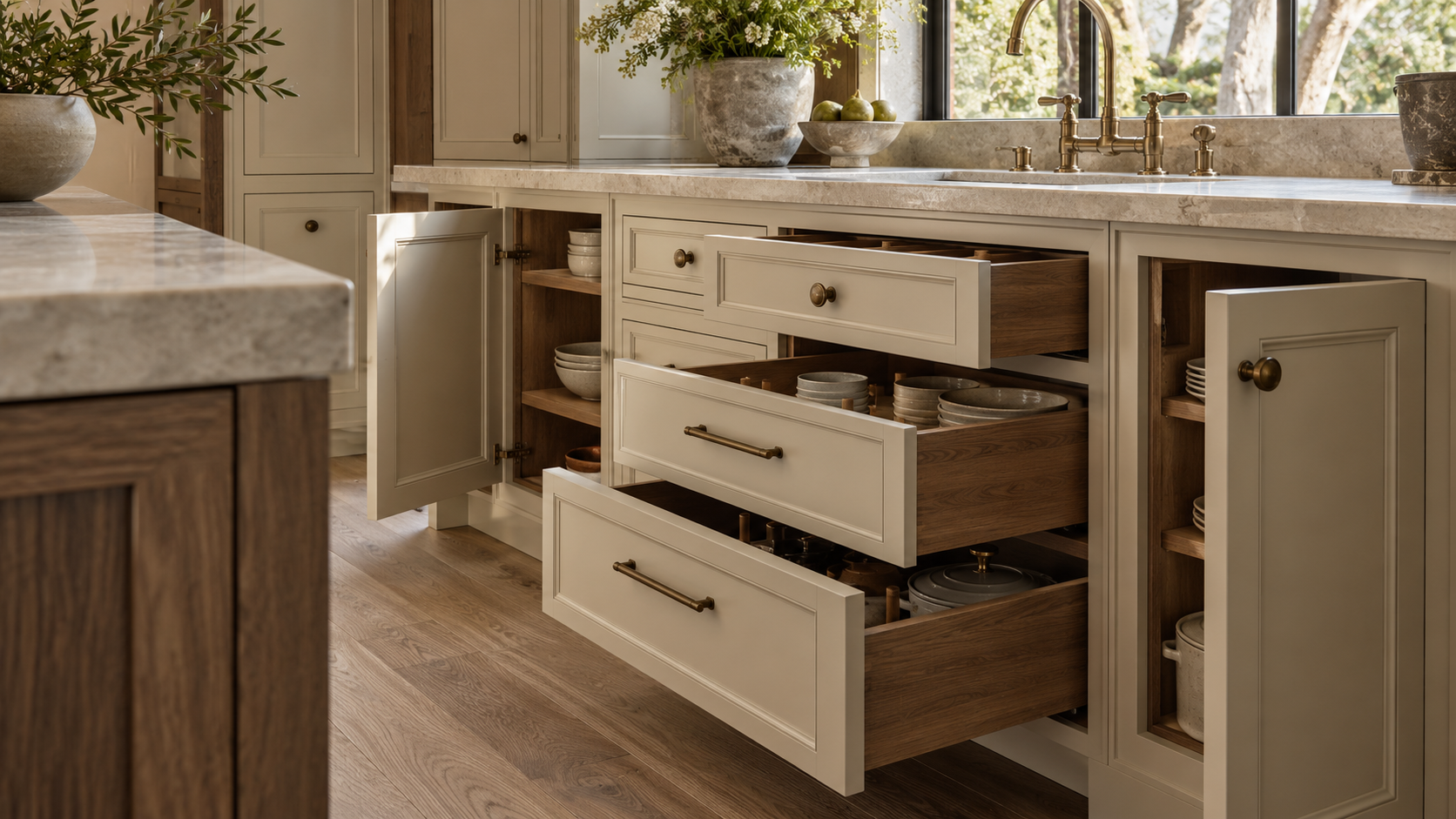
Framed cabinetry has a face frame attached to the front of the cabinet box. The doors and drawers connect to this frame rather than directly to the cabinet box.
When you open the cabinet, portions of the frame remain visible around the opening. Depending on the design, doors can sit in different relationships to that frame.
Inset cabinetry is one example. With inset construction, doors and drawer fronts sit within the face frame, creating a precise, furniture-like appearance. Because the reveals remain visible, careful alignment becomes an important part of the finished design.
Framed construction can work with traditional architecture, but it is not limited to traditional kitchens. Door style, finish, hardware, proportions, and surrounding materials determine much of the final character.
What Is Frameless Cabinetry?
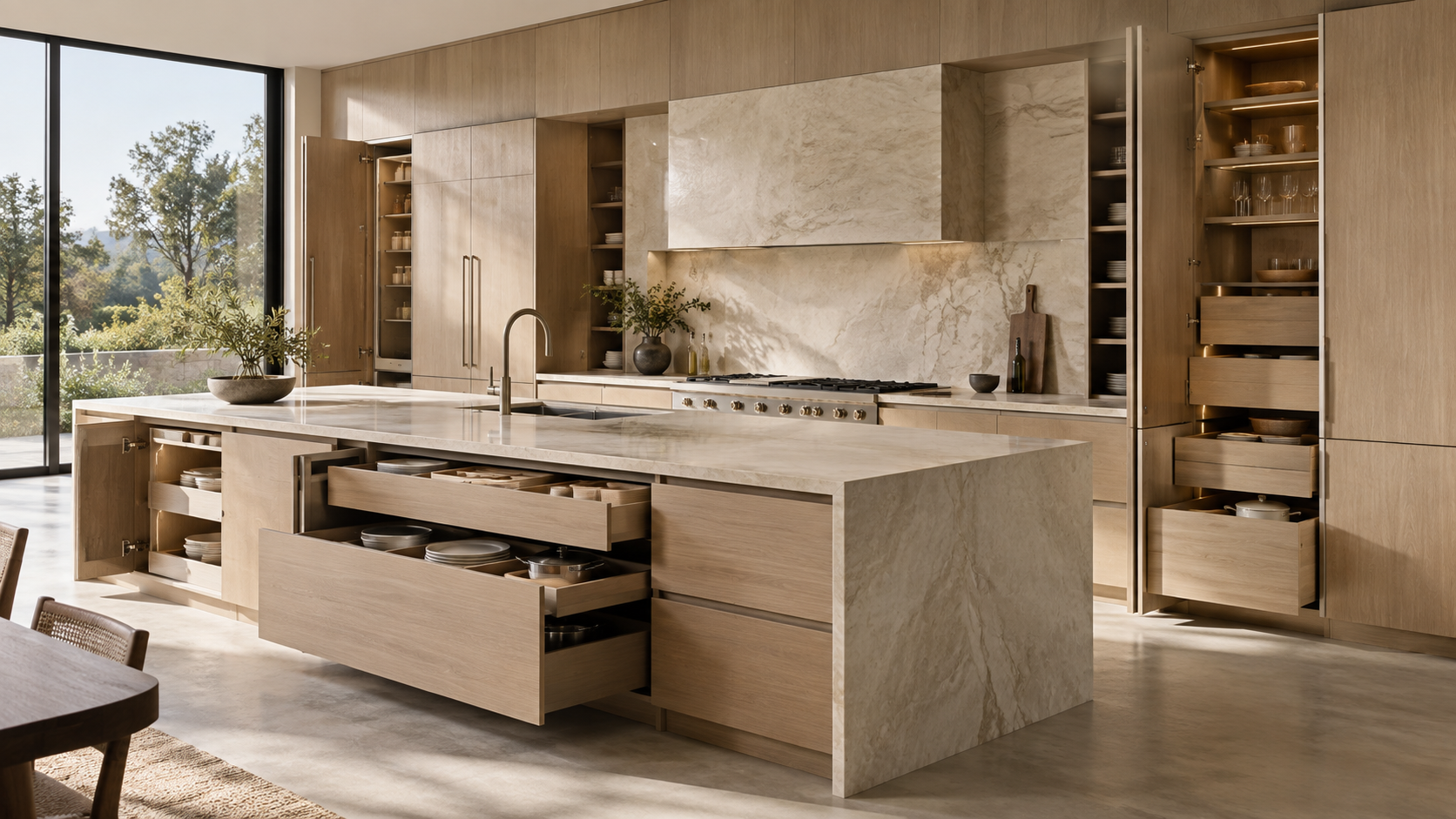
Frameless cabinetry does not have a separate face frame attached to the front of the cabinet box. Doors and drawer hardware connect directly to the cabinet structure.
This creates a more open cabinet interior and allows doors and drawers to form a closely aligned exterior surface.
Frameless construction is frequently associated with contemporary kitchens because it works particularly well with clean elevations and slab doors. However, frameless cabinetry is a construction method, not a single aesthetic. Different door profiles, materials, finishes, and hardware can change its appearance considerably.
How Do Framed and Frameless Cabinets Look Different?
The construction method influences the proportions you see from the exterior.
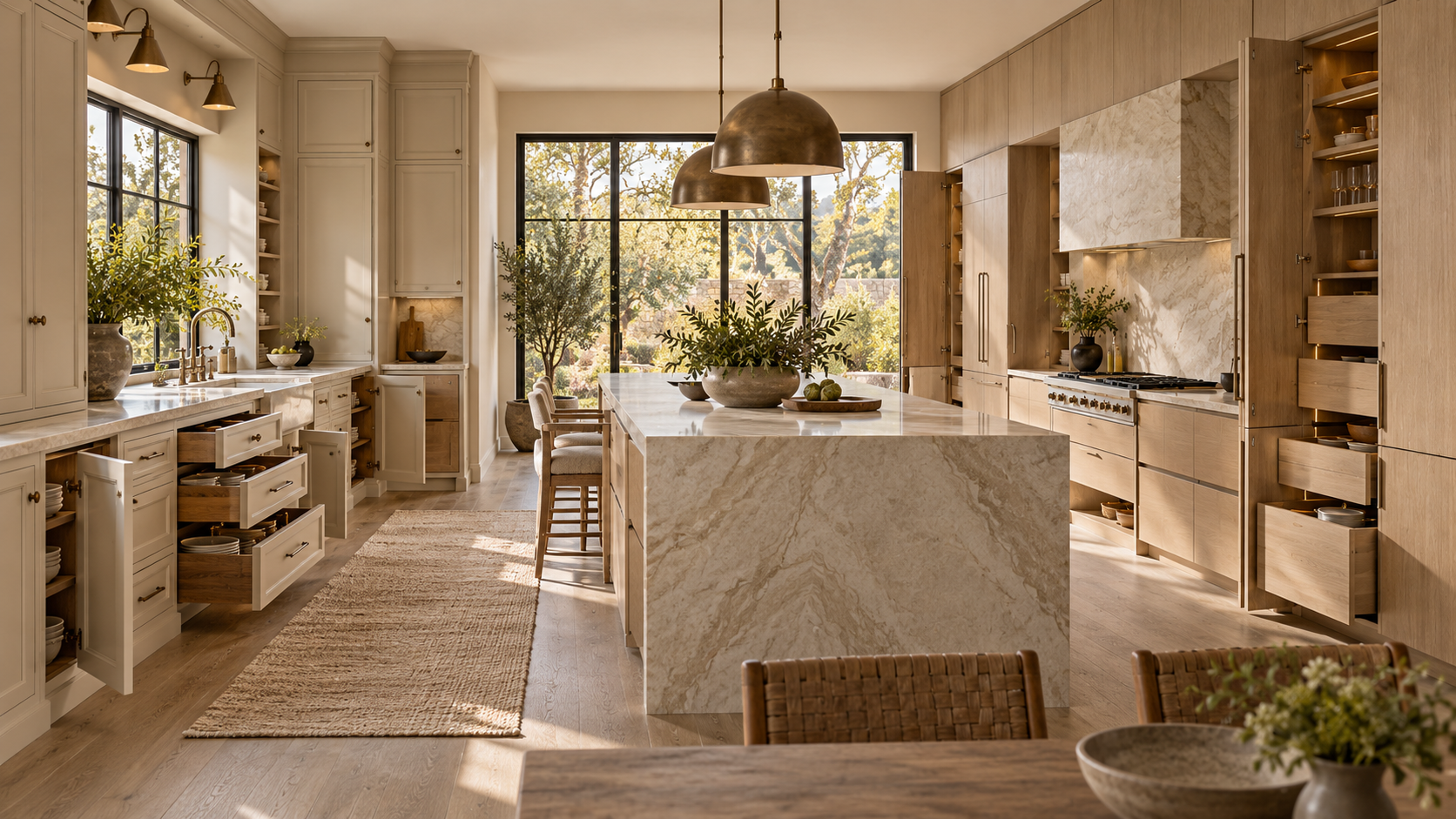
With framed cabinetry, the face frame becomes part of the cabinet structure and can contribute to the visual rhythm of doors and drawers. Inset cabinetry makes that relationship particularly visible because the fronts sit inside the frame.
Frameless cabinetry can create a more continuous exterior because doors and drawer fronts cover most of the cabinet box edges. This can support a streamlined appearance with tighter visual relationships between adjacent fronts.
Neither approach automatically creates a better-looking kitchen. The appropriate choice depends on the architecture, desired proportions, door style, and overall design direction.
Does Frameless Cabinetry Provide More Interior Access?
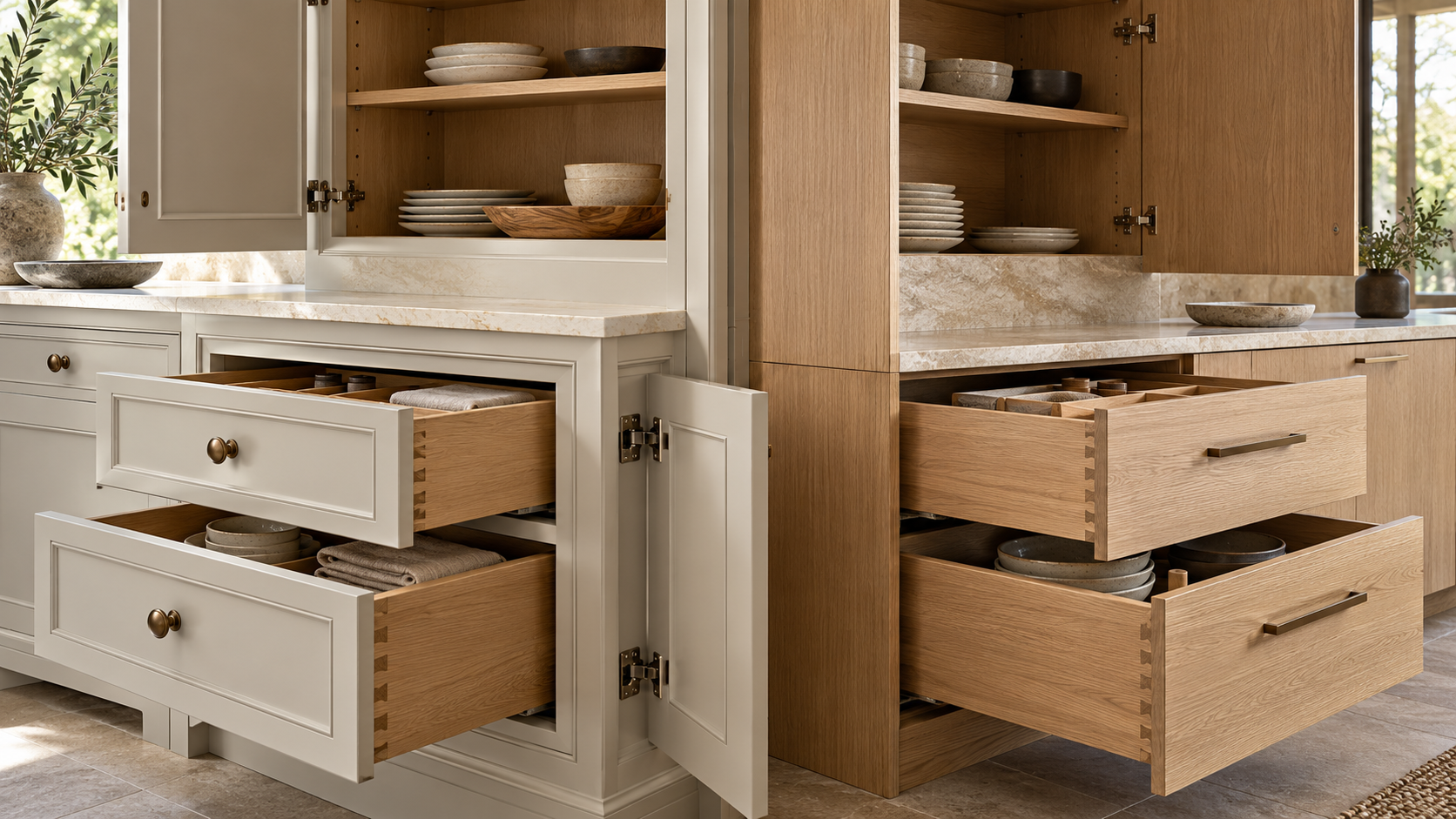
Because frameless cabinetry eliminates the face frame at the front of the cabinet box, the opening can provide more direct access to the interior.
This can be particularly noticeable in drawers, pull-outs, and narrower cabinet configurations.
With framed cabinetry, the frame occupies some space around the opening. That does not make framed cabinetry impractical. It simply creates a different relationship between the cabinet structure and usable opening.
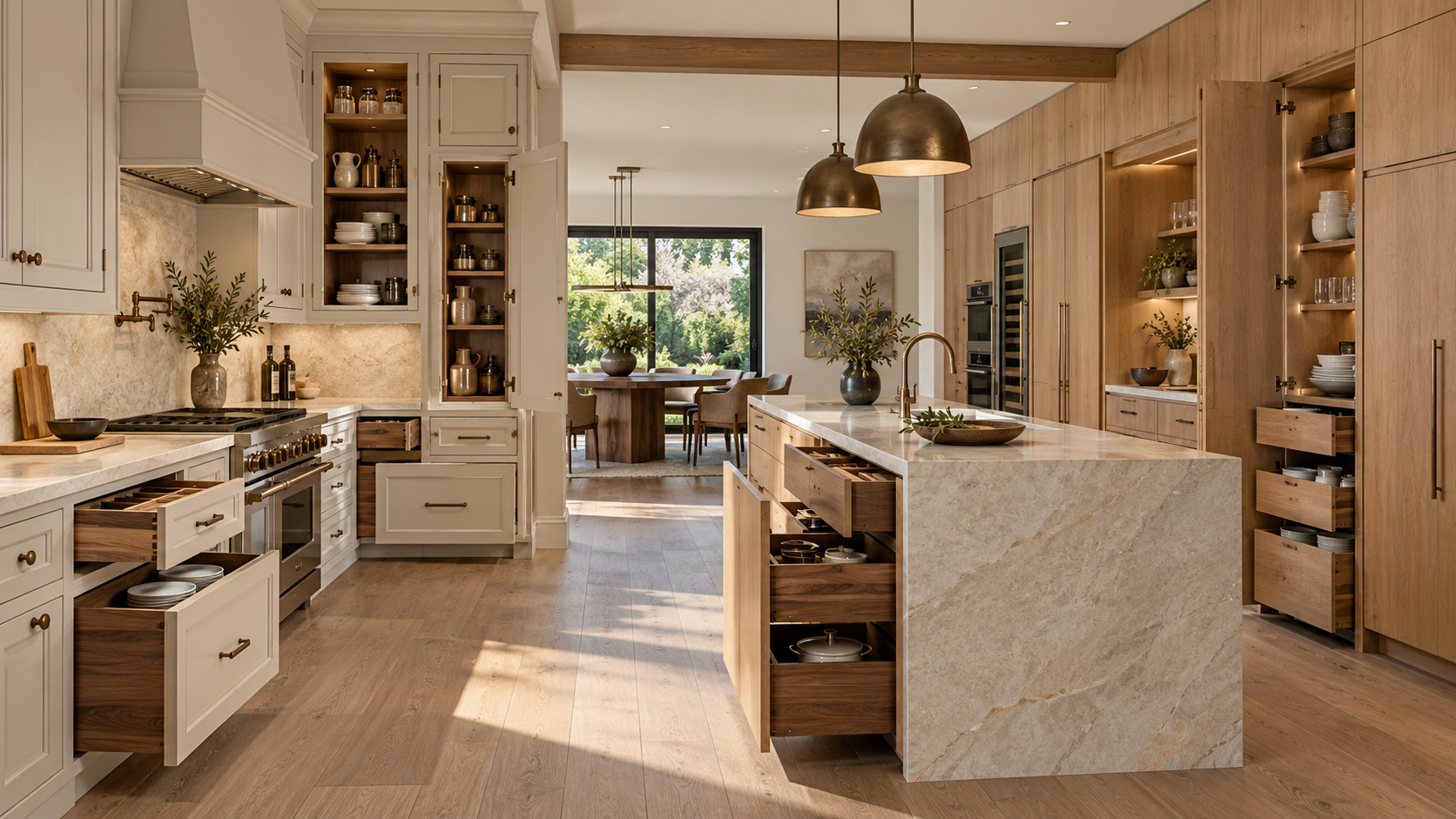
When comparing the two systems, open the doors and drawers rather than relying only on exterior appearance. Look at how easily you can access shelving, storage accessories, and interior components.
What About Strength and Quality?
Framed versus frameless does not determine quality on its own.
A well-constructed frameless cabinet can be premium cabinetry, just as a carefully built framed cabinet can be. Quality depends on the complete system, including materials, engineering, joinery, hardware, drawer construction, finishes, manufacturing precision, and installation.
When comparing cabinetry, examine how the box is constructed and finished. Test drawers and hinges. Look at shelf support and interior components. Check exterior alignment and the consistency of reveals.
Construction type is one factor. Execution matters just as much.
Which Construction Works With Your Kitchen Style?
If you prefer inset cabinetry with visible frame lines and a furniture-like level of detail, framed construction may support that direction.
If you prefer uninterrupted elevations, full-access interiors, or clean slab fronts, frameless cabinetry may be appropriate.
But avoid choosing based only on labels such as “traditional” or “modern.” A restrained framed kitchen can feel contemporary, while frameless cabinetry can be designed with warmer materials and more transitional detailing.
Consider the architecture of the home, the door style, materials, hardware, appliances, and the proportions of the complete cabinetry elevation.
Why Is Seeing Both in Person Useful?
Construction differences become much easier to understand when you can physically open the cabinetry.
Look at the front of the cabinet with the doors closed. Then open it and examine the structure. Pull out drawers, look at the usable opening, inspect the hinges, and compare the relationship between the cabinet box and door fronts.
Full-size displays also allow you to evaluate something drawings cannot fully communicate: how each construction method feels across an entire kitchen.
Framed or Frameless: Which Should You Choose?
There is no universal answer.
Framed cabinetry uses a face frame at the front of the cabinet box and can support designs such as inset cabinetry. Frameless cabinetry removes that front frame, providing a more direct interior opening and allowing closely aligned exterior fronts.
Both can be designed and built to a high standard.
The more useful question is which construction method supports your architecture, storage requirements, preferred proportions, and overall design direction. Seeing both systems at full scale can make that decision considerably clearer.
Compare Cabinet Construction at Atelier Design Society
Atelier Design Society works with homeowners, architects, interior designers, builders, and other design professionals evaluating premium cabinetry for Bay Area homes. At the Atelier Design Society showroom in Menlo Park, project teams can compare cabinetry construction, natural woods, painted finishes, door styles, hardware, interiors, storage solutions, and full-scale installations while determining which approach is appropriate for their project.