How Can You Tell if Kitchen Cabinets Are High Quality?
High-quality kitchen cabinetry is not defined by one door style, wood species, or price point. The differences often become clearer when you look beyond the exterior.
Construction, alignment, hardware, interior components, finish quality, storage, and installation details all contribute to how cabinetry looks, feels, and performs over time.
If you are comparing kitchen cabinets in a showroom, these are some of the details worth examining closely.
Start With the Cabinet Construction
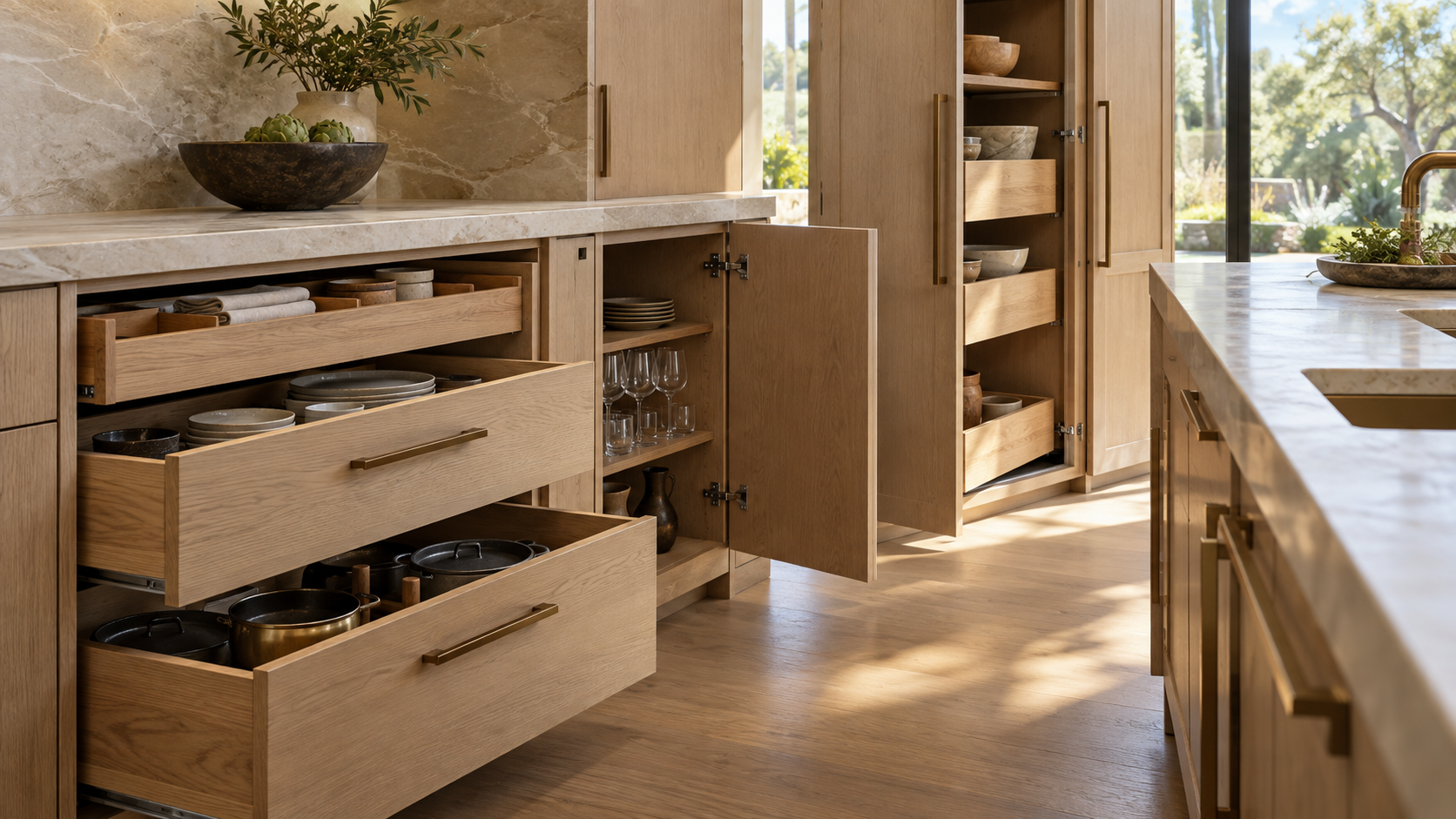
Open the cabinet doors and look inside. The cabinet box, shelving, drawer construction, joinery, and interior finish provide useful information about how the cabinetry is made.
Look for components that feel substantial and appropriately constructed for their purpose. Shelves should sit securely. Drawers should feel stable when extended. Interior surfaces should be consistently finished.
You may also encounter different construction systems, including framed and frameless cabinetry. One is not automatically higher quality than the other. What matters is how well the system is engineered, manufactured, finished, and suited to the project.
Check Door and Drawer Alignment
Close the cabinetry and look carefully at the complete elevation.
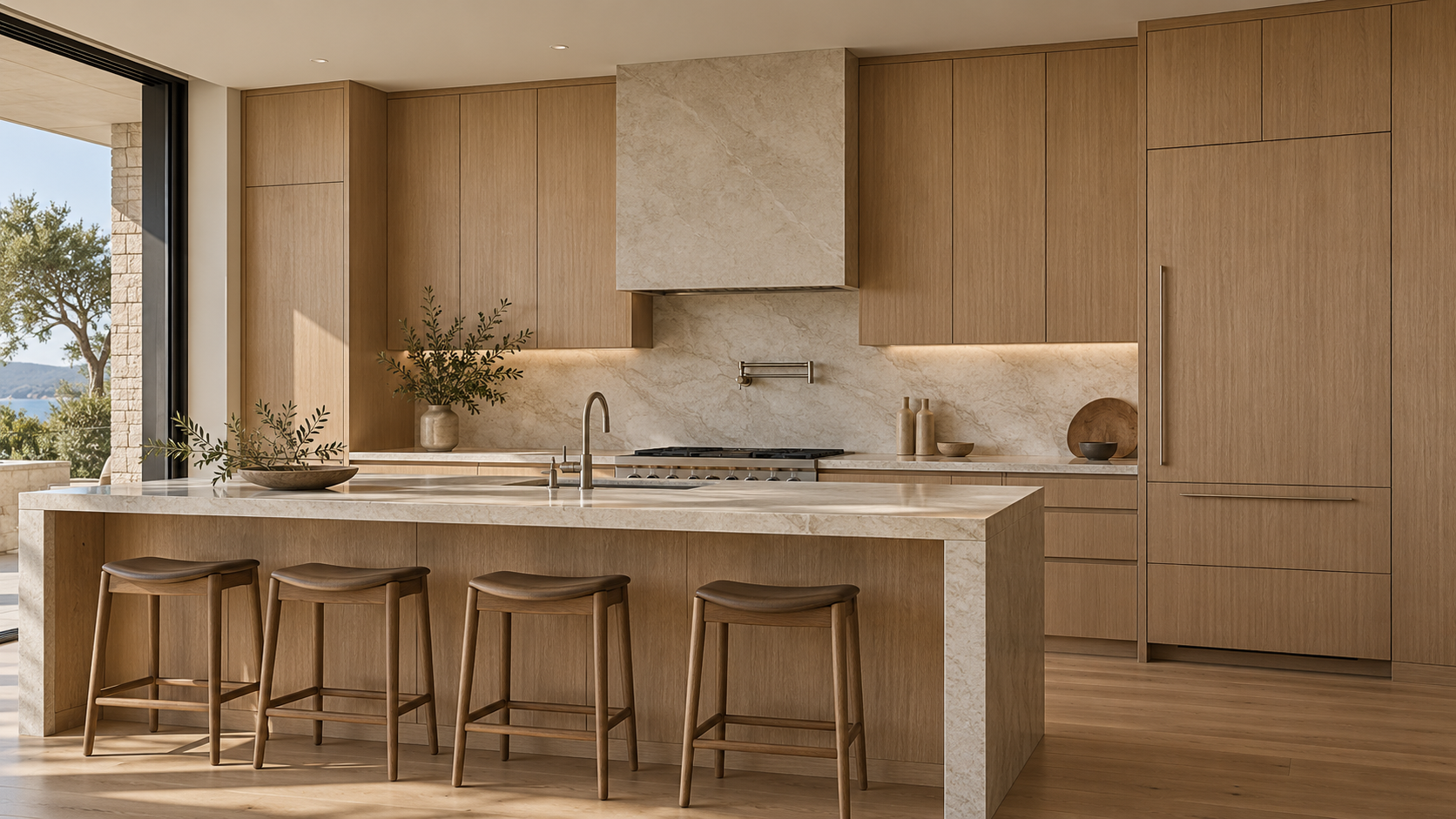
Doors and drawers should create consistent lines. Examine the spacing between fronts, alignment across neighboring cabinets, and transitions around corners, appliances, and end panels.
These details become particularly important with minimalist cabinetry. Slab doors and simple profiles have fewer decorative elements to distract the eye, so inconsistent reveals or alignment can become more noticeable.
Stand close enough to inspect the details, then step back. High-quality cabinetry should feel considered at both distances.
Test How the Hardware Feels
A showroom gives you the opportunity to interact with cabinetry rather than judging it from photographs.
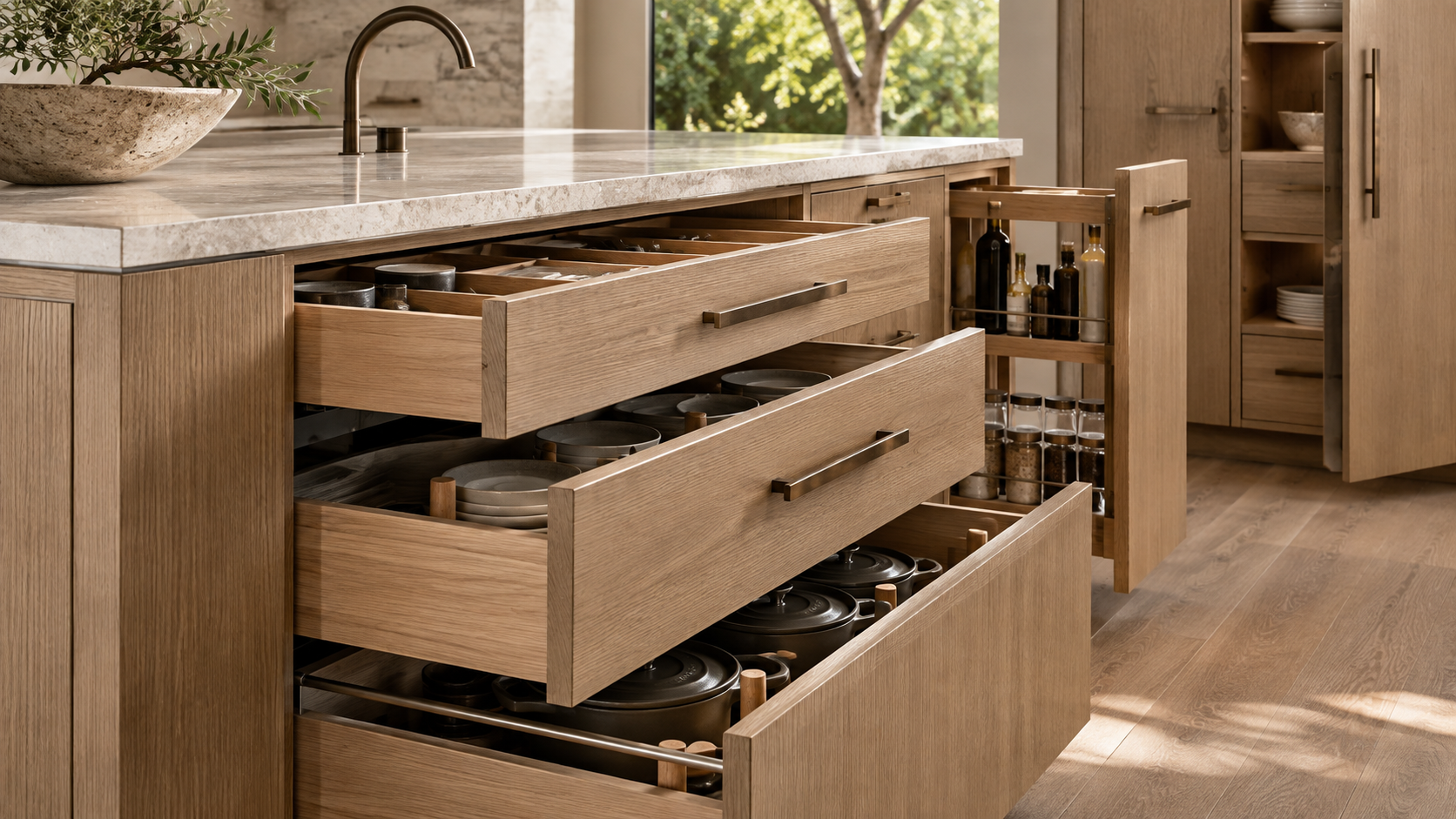
Open and close several doors. Extend drawers fully. Test pull-outs and interior storage mechanisms. Pay attention to whether the movement feels controlled, stable, and consistent.
Hinges and drawer systems are functional components that will be used repeatedly, so their quality matters.
Also look at how hardware has been integrated into the cabinetry. Handles, pulls, concealed mechanisms, and other components should feel proportional to the door and drawer fronts rather than appearing like an afterthought.
Examine the Finish Closely
Finish quality can have a significant effect on how cabinetry looks at full scale.
With painted cabinetry, examine the consistency of the surface, color, edges, and sheen. Look at several doors rather than judging a single sample.
With natural wood, variation is expected. The goal is not perfect uniformity. Instead, consider how grain direction, tonal variation, and individual pieces have been handled across the cabinetry elevation.
Rift-cut white oak, for example, is often selected for its more linear grain character. Walnut may introduce greater tonal variation and movement. Seeing these materials across several full-size doors gives you a more realistic understanding of the finished result.
Look at the Details Around the Edges
Quality often becomes visible where materials meet.
Examine end panels, corners, fillers, toe kicks, cabinet-to-ceiling conditions, and transitions around appliances. Look at how the cabinetry meets stone and adjacent architectural elements.
These areas may seem minor when reviewing individual samples, but they become part of the overall kitchen once everything is installed.
The strongest cabinetry designs consider these transitions early rather than treating them as leftover conditions to resolve on site.
Consider the Interior Storage
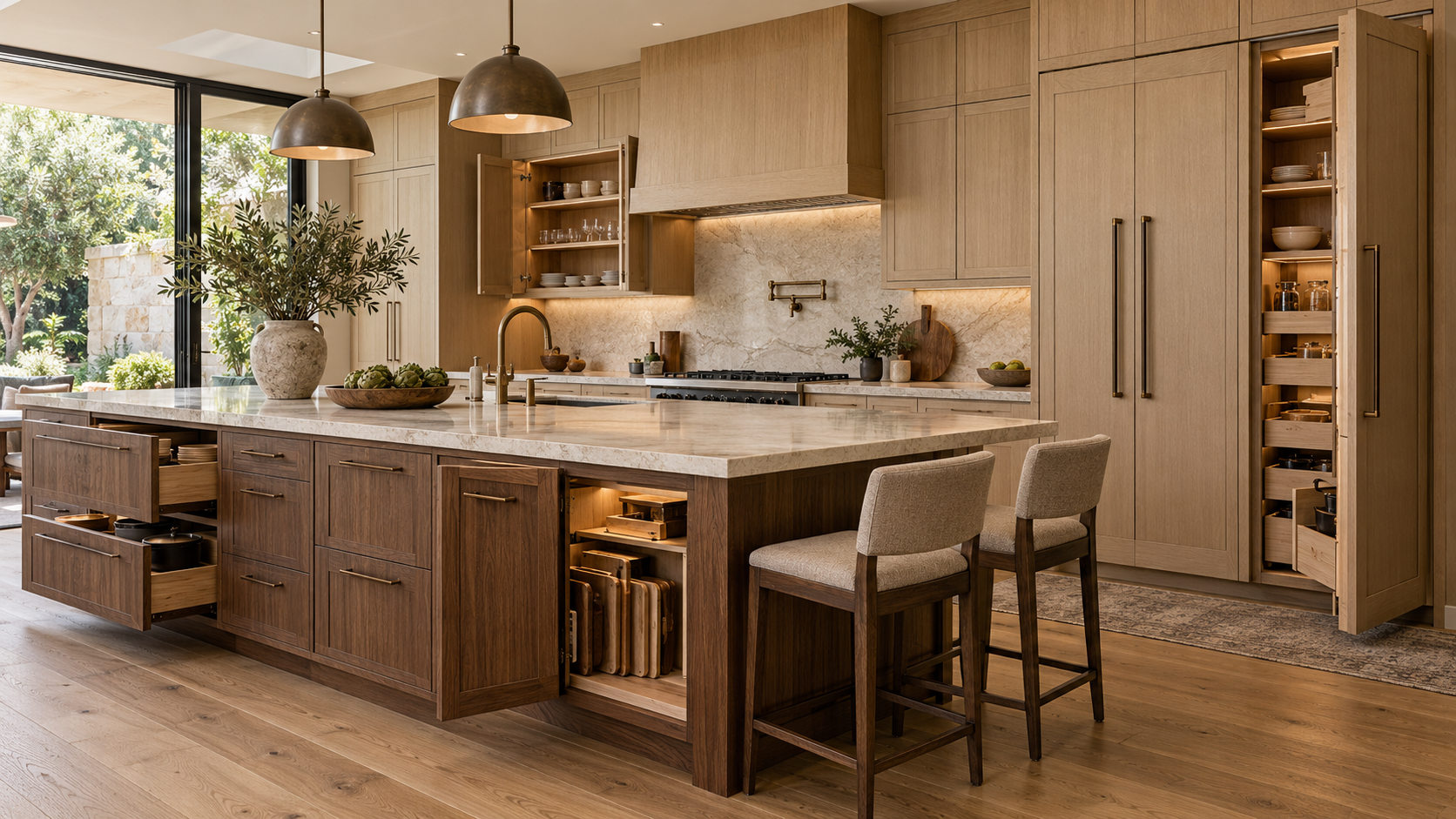
High-quality cabinetry should also work well once the doors are open.
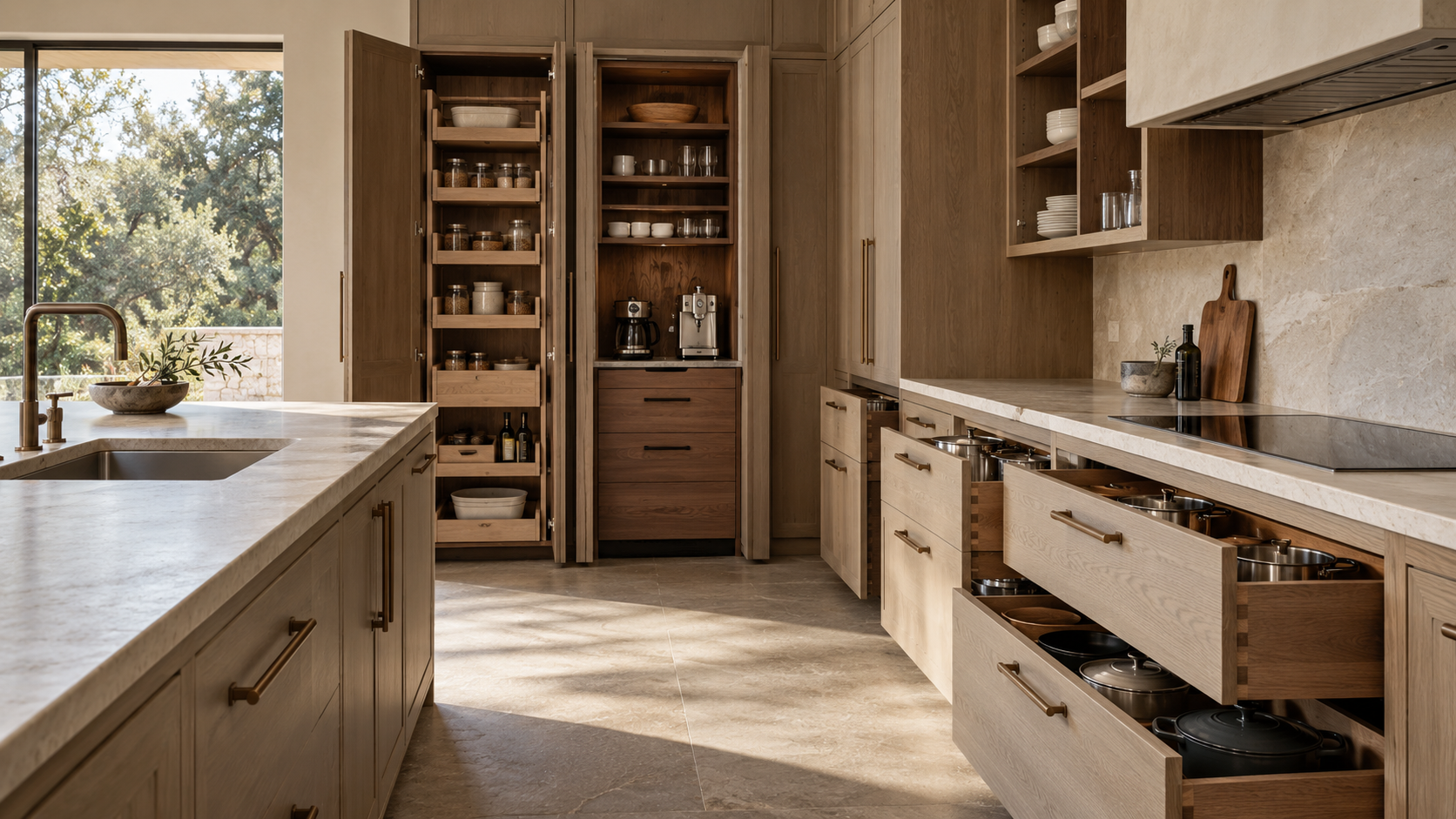
Look at drawer depths, pantry configurations, adjustable shelving, appliance storage, waste and recycling solutions, and other interior options. Consider whether the system can be adapted to how the household actually uses the kitchen.
More accessories do not automatically mean better cabinetry. The important question is whether the interiors are well made and whether the available configurations solve useful storage problems.
A thoughtfully planned kitchen might use deep drawers for cookware, tall storage for pantry items, and concealed cabinetry for frequently used countertop appliances. Each solution should have a reason.
Ask What Can Be Customized
Quality and customization are not exactly the same thing, but customization can reveal how well a cabinetry collection can respond to a specific project.
Ask about available dimensions, finishes, door styles, interior configurations, panels, moldings, and special applications. If your kitchen has unusual dimensions or architectural conditions, find out how those situations are handled.
Not every cabinet needs to be completely custom. A premium semi-custom collection may provide the flexibility required for many projects, while fully custom cabinetry may make sense where unusual dimensions, finishes, millwork, or specialized details are important.
The better question is whether the cabinetry can support the design without forcing unnecessary compromises.
Do Not Judge Quality From the Door Sample Alone
A beautiful cabinet door does not tell you everything about the cabinetry behind it.
This is why full-size displays are useful. They allow you to examine how multiple doors align, how tall cabinetry is proportioned, how appliances are integrated, how interiors function, and how the finish looks across a larger surface.
You can also compare different cabinetry collections under similar showroom conditions instead of relying entirely on photography or marketing images.
What Should You Check Before Choosing Kitchen Cabinets?
When evaluating cabinetry, look at the complete system rather than one attractive finish.
Open the doors and drawers. Examine the construction. Check alignment and reveals. Look closely at finishes and natural wood grain. Test the hardware. Inspect interior storage and the details around corners, panels, appliances, stone, and ceilings.
Then step back and look at the cabinetry as part of the room.
High-quality cabinetry should combine thoughtful construction with precise detailing, functional interiors, appropriate materials, and a design that can be properly coordinated with the architecture of the home.
Compare Cabinet Quality at Atelier Design Society
Atelier Design Society works with homeowners, architects, interior designers, builders, and other design professionals evaluating premium cabinetry for Bay Area homes. At the Atelier Design Society showroom in Menlo Park, project teams can compare cabinetry construction, natural woods, painted finishes, hardware, interiors, storage solutions, surfaces, and full-scale installations while determining which options are appropriate for their project.