
An organized kitchen is not created by adding as many storage accessories as possible. It comes from deciding what needs to be stored, where it is used, and how easily it should be accessed.
In a luxury kitchen, cabinetry can conceal everyday clutter while keeping cookware, dishes, food, appliances, and household essentials exactly where they are needed. The best features are the ones that support the household's actual routines while allowing the kitchen to remain visually calm.
Here are the cabinetry features worth considering before the design is finalized.
Deep Drawers for Everyday Cookware
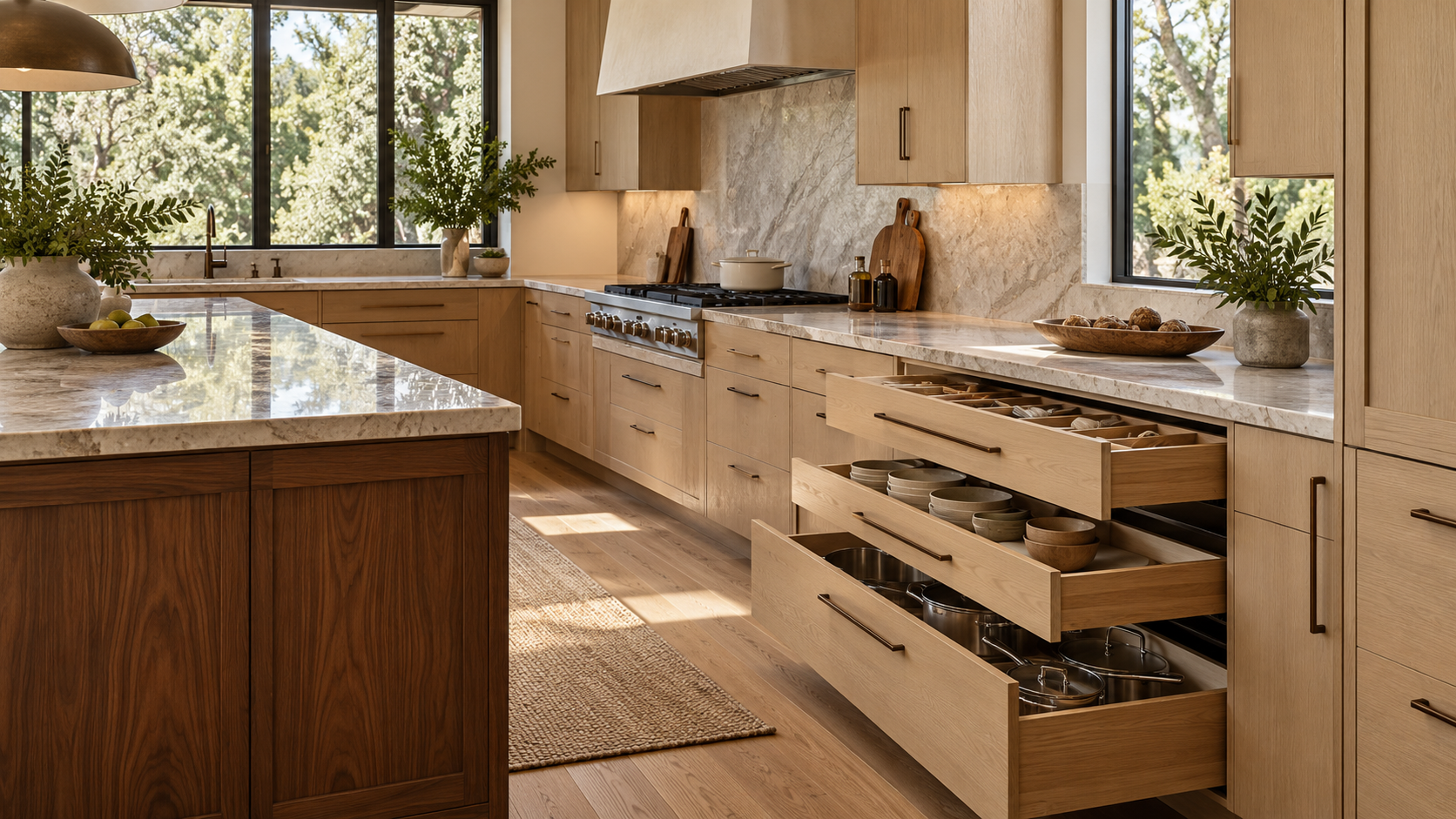
Deep drawers are one of the most useful alternatives to traditional lower cabinets.
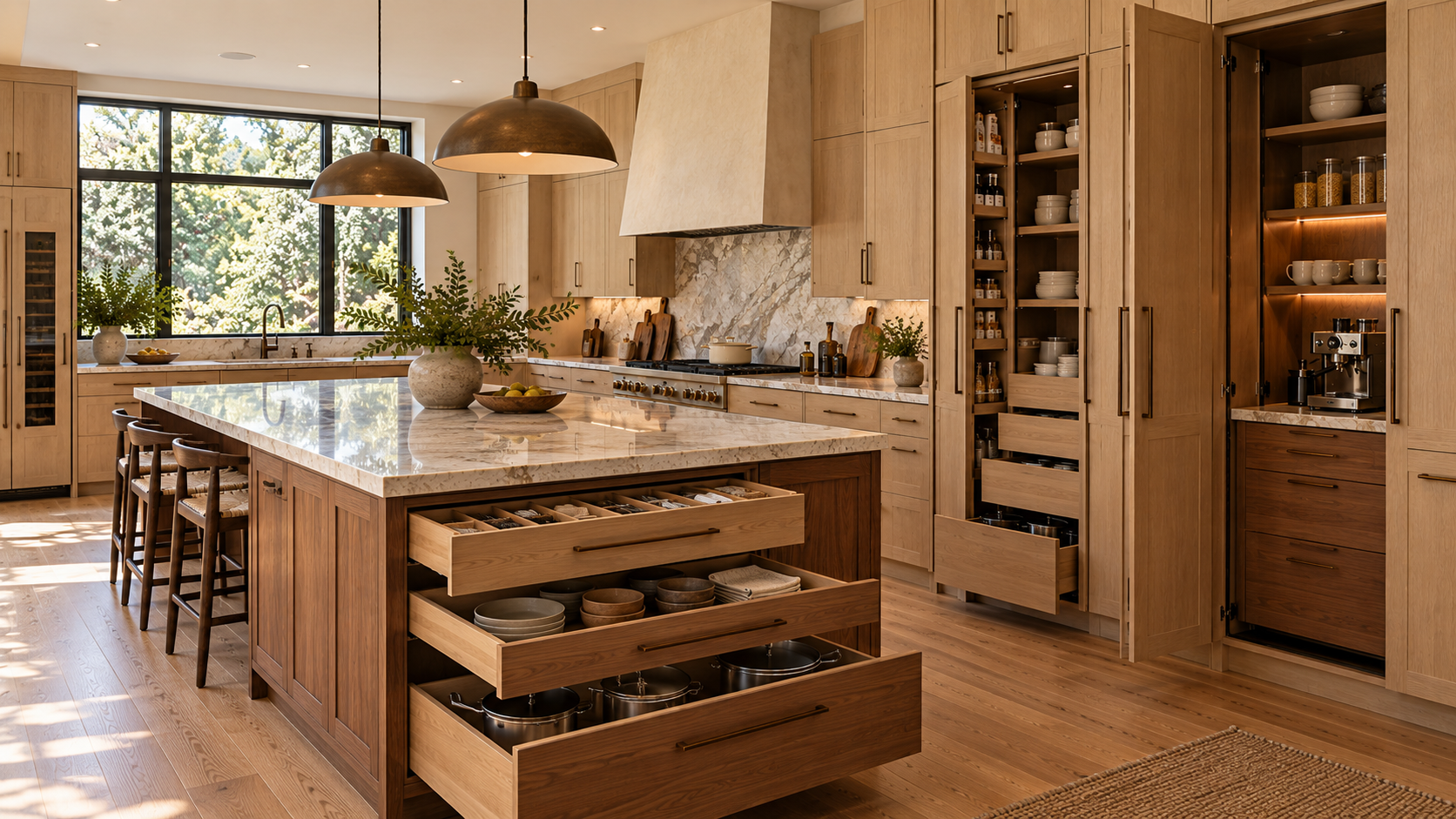
Pots, pans, mixing bowls, dishes, and food-storage containers can be viewed from above rather than stacked behind cabinet doors. Full-extension hardware also allows access to items stored at the back.
Drawer dimensions should reflect their contents. A kitchen may need wide, deep drawers for cookware near the range, shallower drawers for preparation tools, and another configuration for dishes near the dishwasher.
The objective is not to repeat identical drawer stacks throughout the room, but to match each one to its purpose.
Interior Drawer Organization
Even a generous drawer becomes frustrating when everything inside moves together.
Dividers and inserts can create dedicated locations for utensils, knives, measuring tools, spices, serving pieces, and other smaller items. The most useful systems are designed around what the household owns rather than predetermined categories.
This is especially valuable in preparation zones, where several frequently used tools need to remain immediately accessible.
Interior organization can also allow the exterior cabinetry to remain visually simple. A clean drawer front can conceal a much more detailed system inside.
Vertical Dividers for Flat Items
Cutting boards, baking sheets, cooling racks, trays, and platters are often easier to store vertically than in stacks.
Dividers allow individual pieces to be removed without lifting everything above them.
Location is important. Baking sheets might belong near the oven, while cutting boards are more useful beside the primary preparation area.
A narrow cabinet that might otherwise provide awkward storage can become extremely useful when designed specifically for these items.
Pull-Out Pantry Storage
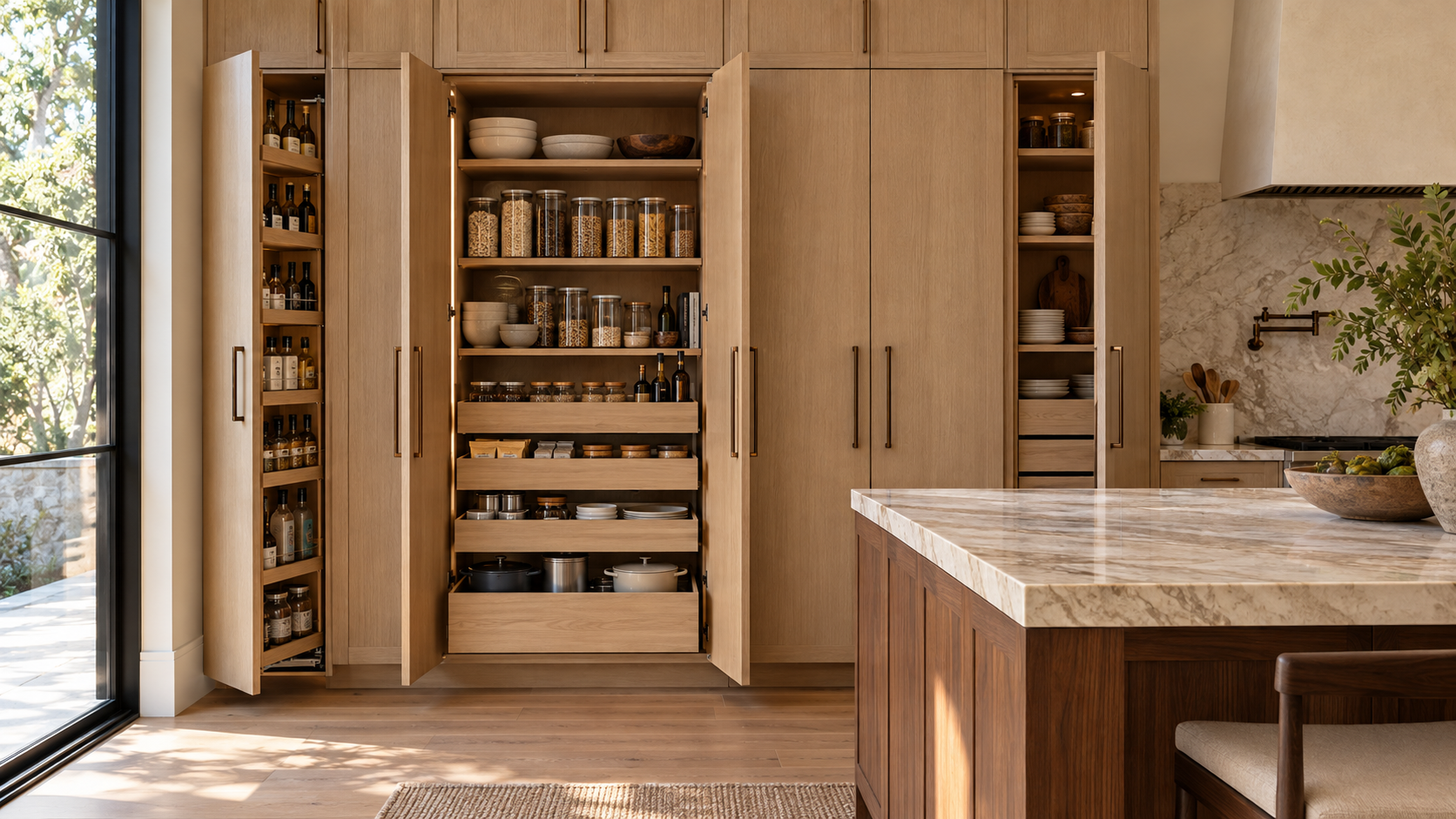
Pantry storage should make ingredients easier to see, not simply create more places to put them.
Pull-outs can make narrow or deep cabinets more accessible by bringing their contents forward. Interior drawers can organize smaller packages, while adjustable shelving provides flexibility for different container heights.
In larger kitchens, floor-to-ceiling pantry cabinetry can concentrate significant storage into one elevation. This can allow other walls to remain lighter and less crowded with upper cabinets.
Concealed Small-Appliance Storage
Small appliances can quickly consume a large portion of the available countertop.
An appliance garage or concealed work station can provide a permanent location for frequently used equipment while allowing the main kitchen to remain visually quieter.
The feature should be planned around the actual appliances. Cabinet depth, opening height, electrical outlets, door operation, ventilation, heat, and manufacturer clearance requirements all need to be considered.
Frequently used equipment should remain easy to access. Concealing an appliance is only useful if doing so does not make everyday use inconvenient.
Integrated Waste and Recycling
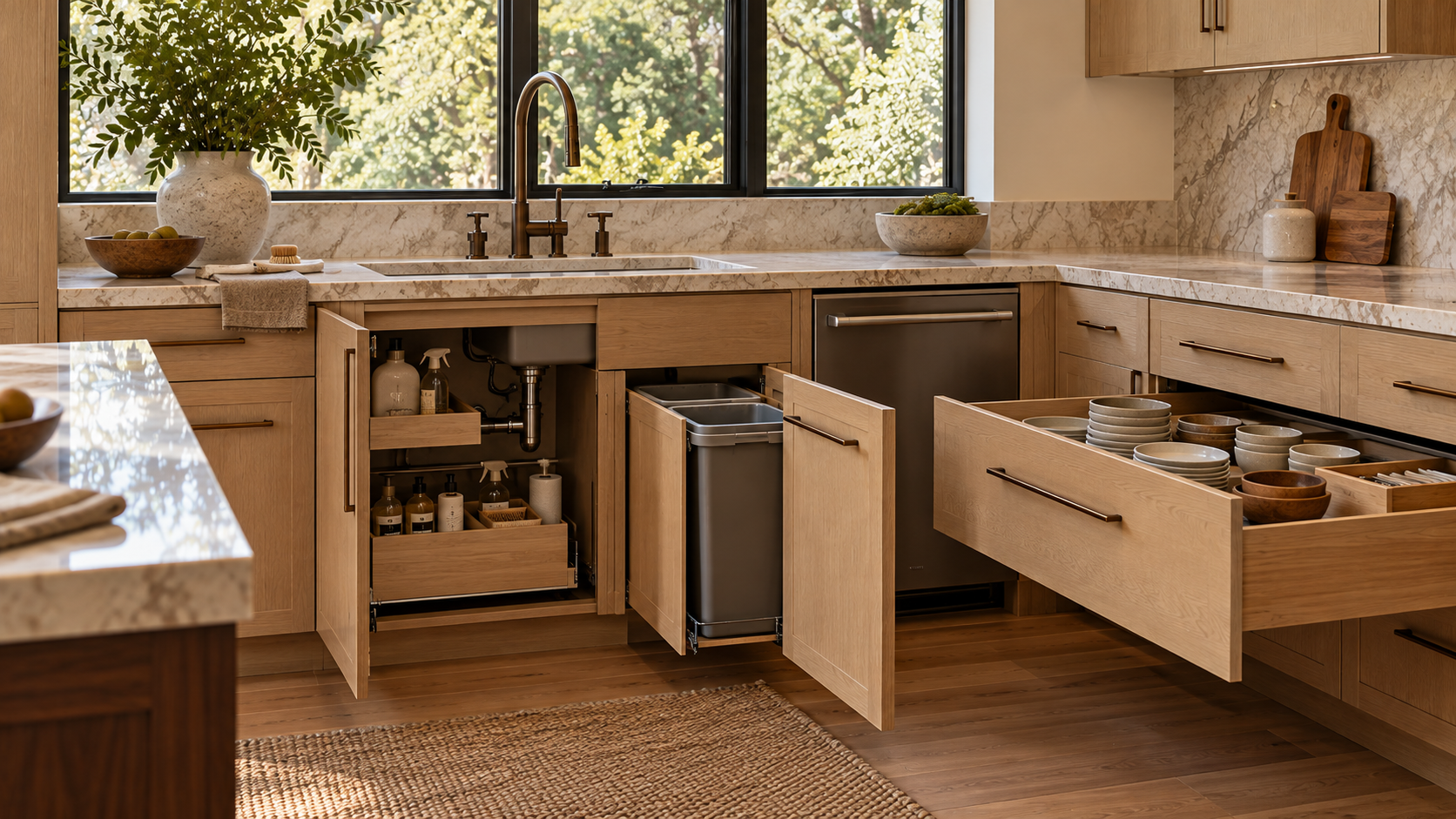
Waste and recycling storage can be incorporated into lower cabinetry close to the areas where it is needed most.
A pull-out near the primary preparation zone allows scraps and packaging to be discarded while cooking. Another location near the sink may work better when cleanup is the priority.
Container sizes should be determined before the cabinet is finalized, particularly if the household separates recycling, compost, and general waste.
When planned properly, these everyday functions disappear behind the same cabinetry fronts as the rest of the kitchen.
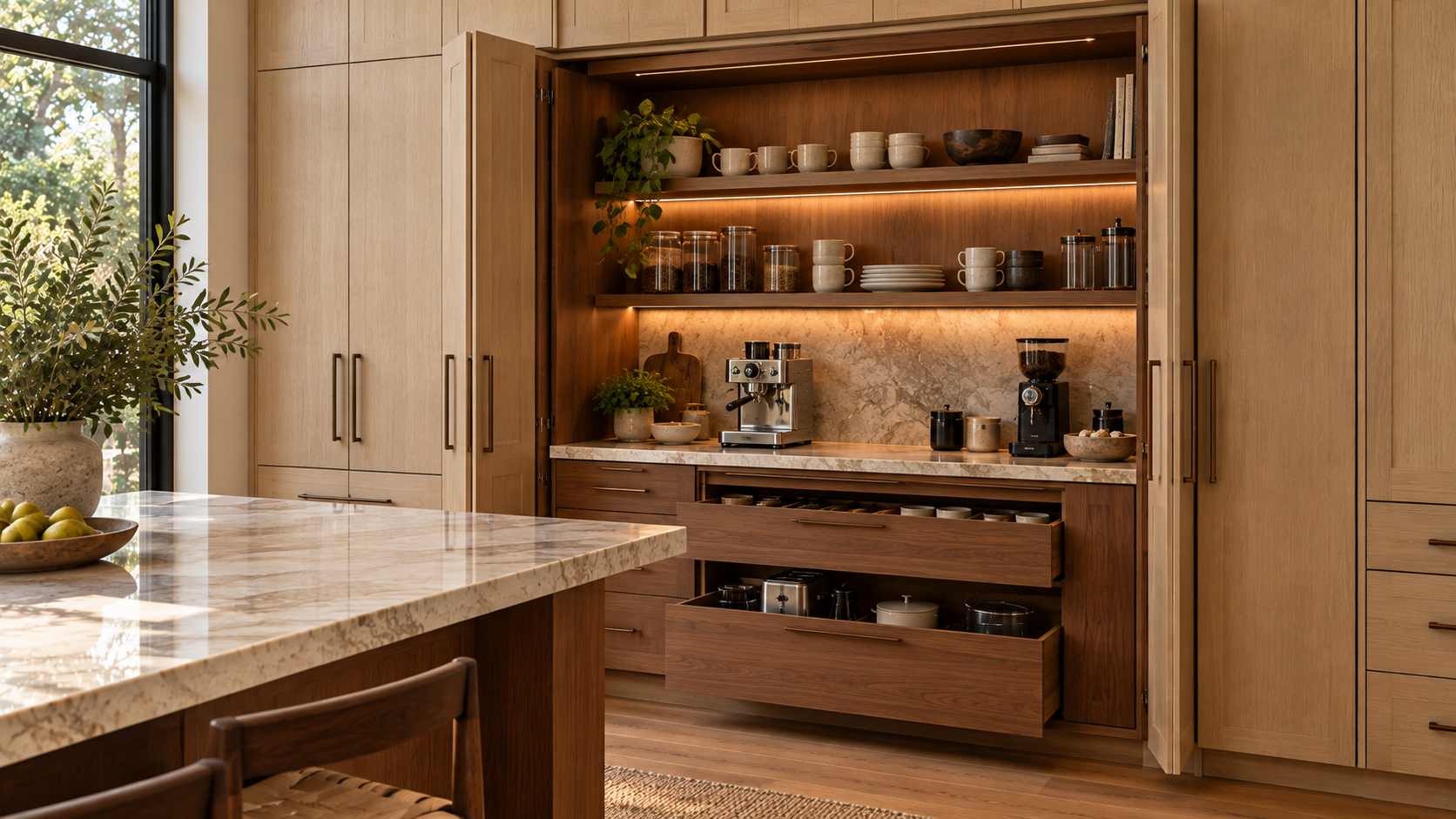
A Dedicated Coffee or Beverage Station
Coffee equipment, mugs, tea, glassware, and beverage supplies can create significant countertop clutter when they are distributed throughout the kitchen.
Grouping them into one cabinetry zone can simplify both storage and routine.
A coffee station might remain open as a material niche or disappear behind pocket or retractable doors. Drawers below can organize supplies, while upper cabinets hold mugs and glassware.
If electrical equipment or plumbing will be incorporated, those requirements should be coordinated before cabinetry production.
Seating-Side Island Storage
A kitchen island has more storage potential than its primary working side.
Cabinets beneath or near the seating area can hold items that do not need constant access, such as serving pieces, seasonal tableware, entertaining supplies, or extra glassware.
This keeps valuable working-side drawers available for cookware, preparation tools, and everyday dishes.
The cabinetry should be designed so storage does not compromise comfortable seating, legroom, or circulation around the island.
Organized Sink and Cleanup Storage
The sink cabinet is often one of the most challenging areas to organize because plumbing and other mechanical components occupy part of the interior.
Planning around these elements can create more usable storage for cleaning products, dishwashing supplies, and other essentials.
Nearby cabinetry can also support the cleanup routine. Dish drawers positioned close to the dishwasher reduce movement when unloading, while waste storage can sit within the same general zone.
Organization should follow the entire workflow rather than treating each cabinet independently.
Interior Storage Behind Larger Cabinet Doors
Not every storage feature needs to be expressed on the exterior.
Interior drawers and pull-outs can sit behind larger cabinet doors, allowing the outside elevation to remain quieter while providing detailed organization inside.
This can be particularly effective within tall pantry cabinetry. Large exterior panels maintain an architectural appearance, while interior drawers divide food, appliances, and household supplies into accessible categories.
It is a useful example of how luxury cabinetry can balance visual simplicity with highly specific function.
The Best Feature Is the One You Will Actually Use
Specialized storage should solve a real problem.
A pull-out, divider, appliance garage, or dedicated drawer is valuable when it supports something you regularly do. Adding features simply because they are available can consume cabinet space without making the kitchen more functional.
Before ordering cabinetry, inventory the items that need to live in the kitchen and organize them by activity: preparation, cooking, cleanup, food storage, beverages, entertaining, and everyday household use.
Then determine which cabinetry features make those routines easier.
How Should You Choose Cabinetry Features?
Start with the household, not the accessory catalog.
Consider which cookware is used most frequently, where dishes are unloaded, which appliances stay out every day, how food is stored, and what tends to accumulate on the countertop.
Then design cabinetry around those patterns.
The most organized luxury kitchens often appear surprisingly simple from the outside because the complexity has been resolved inside the cabinets. Thoughtful drawers, pantry interiors, appliance storage, waste solutions, and customized organizers allow everyday necessities to remain accessible without dominating the room.
Explore Kitchen Organization With Atelier Design Society
Atelier Design Society works with homeowners, architects, interior designers, builders, and other design professionals planning premium cabinetry and storage throughout Bay Area kitchens. At the Atelier Design Society showroom in Menlo Park, project teams can compare drawer configurations, pantry interiors, appliance storage, cabinet accessories, natural woods, hardware, and full-scale installations while developing organization around the way the kitchen will actually be used.
