
Two-tone cabinetry offers an opportunity to introduce contrast, depth, and personality into a kitchen without relying on a single finish throughout the space.
Combining natural wood with painted cabinetry, using different finishes for an island and perimeter cabinets, or introducing a contrasting pantry wall can create a more layered interior.
However, not every combination feels cohesive. When colors and materials are selected independently, the result can appear disconnected rather than thoughtfully designed.
Successful two-tone cabinetry is about more than choosing two attractive finishes. It requires a clear relationship between materials, proportions, architectural features, and the surrounding interior.
Start With a Clear Design Direction
Before selecting cabinetry colors, consider what the combination should accomplish.
Some kitchens use two-tone cabinetry to establish a focal point. Others use contrasting finishes to define different functional areas or introduce warmth into an otherwise neutral interior.
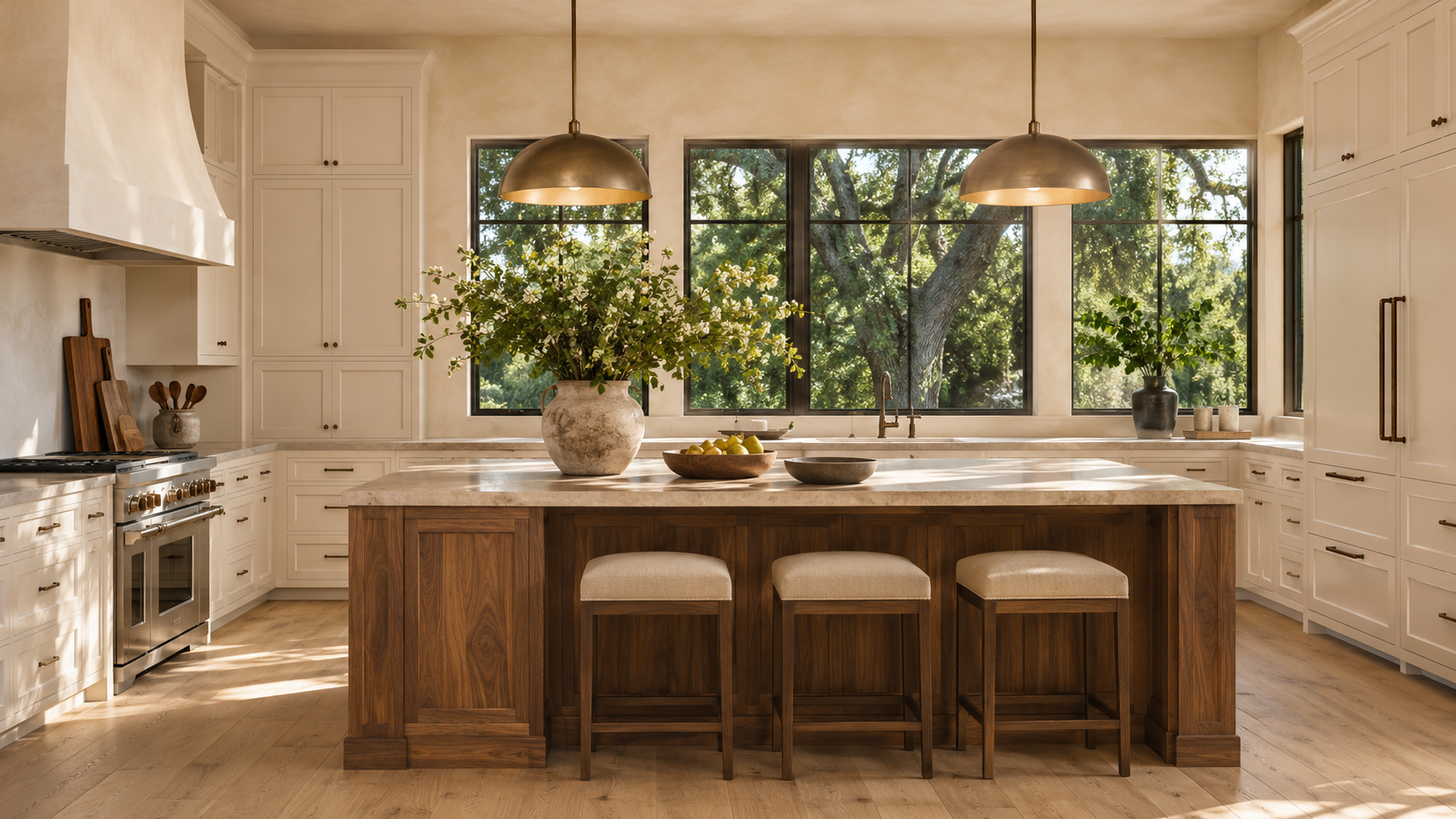
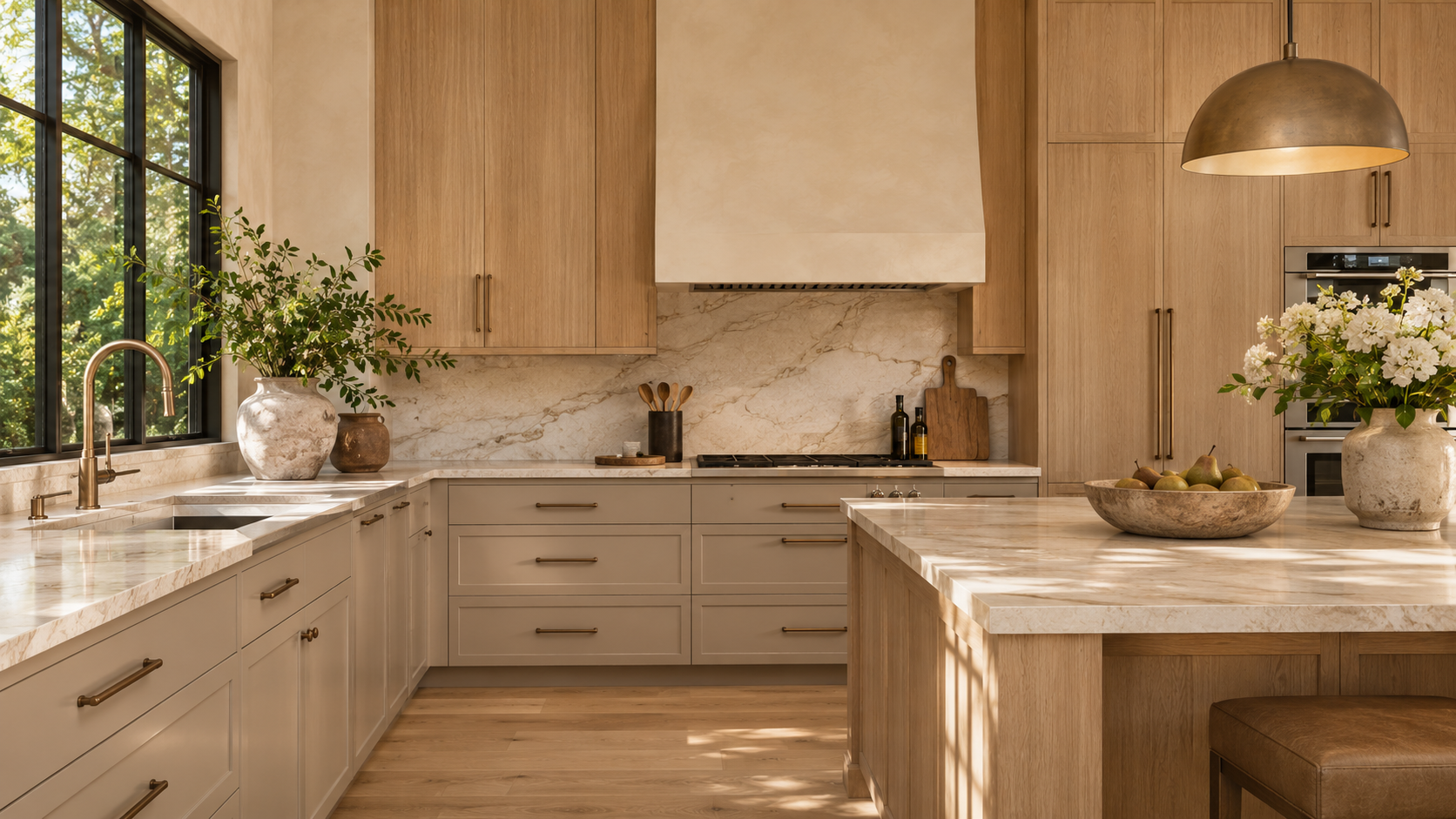
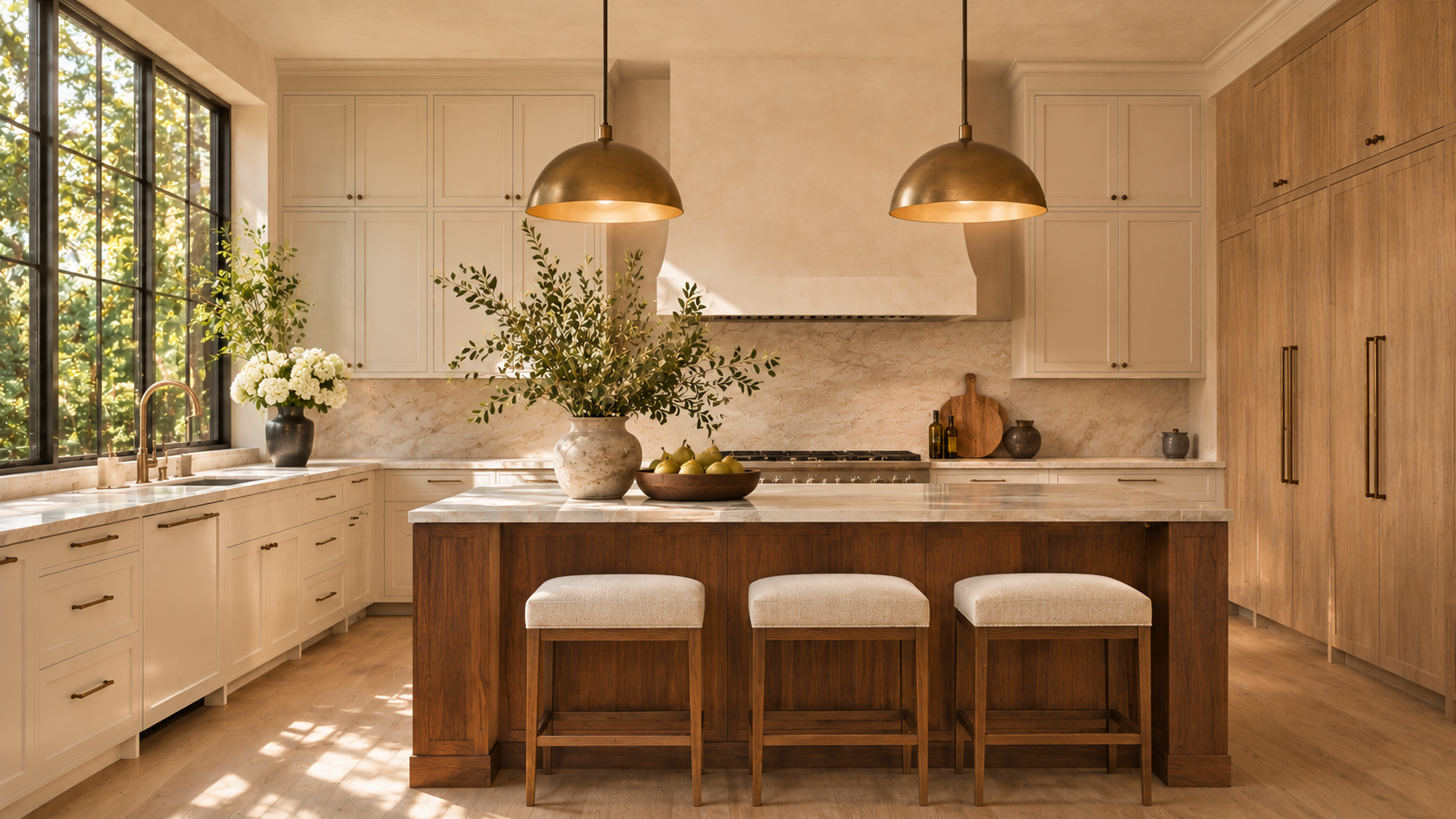
For example, a walnut island surrounded by warm white cabinetry creates a distinct central feature. A wall of rift-cut white oak cabinets paired with painted lower cabinets can establish a quieter, more architectural composition.
The combination should have a purpose.
Rather than dividing the kitchen into two colors simply for variety, designers consider how each finish contributes to the overall space.
Choose Finishes That Share a Common Undertone
One of the most important considerations in two-tone cabinetry is how the finishes relate to one another.
Two colors do not need to match, but their undertones should feel compatible with the overall material palette.
Warm white cabinetry can pair beautifully with natural walnut, beige-toned white oak, or deep brown stains. A muted taupe or soft charcoal finish may also complement natural wood when the undertones are carefully balanced.
Problems can arise when finishes introduce competing color temperatures.
For example, a cool gray cabinet finish may feel disconnected beside strongly golden wood unless other materials help bridge the difference.
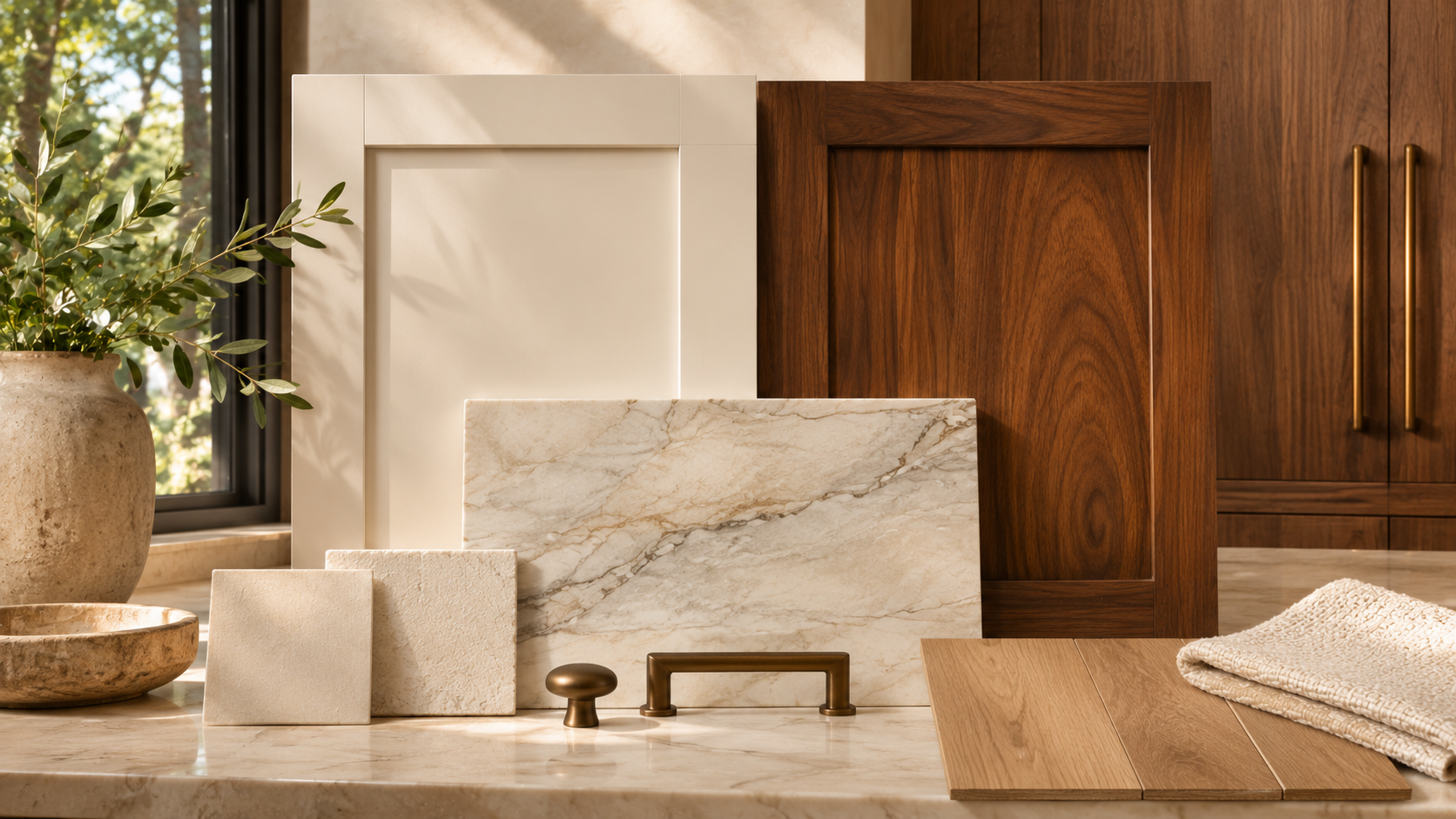
Compare finished cabinetry samples together with the selected countertops, flooring, wall finishes, and hardware. A combination that looks appealing in isolation may change significantly when placed beside the actual materials.
Use Natural Wood to Introduce Warmth
Combining painted cabinetry with natural wood is one of the most versatile approaches to two-tone kitchen design.
White oak introduces subtle grain and organic texture, while walnut offers deeper color and more expressive natural variation.
These materials can soften painted cabinetry and create a more layered appearance without introducing an additional bold color.
A contemporary kitchen might combine muted charcoal cabinets with natural white oak, while a transitional kitchen could feature warm white cabinetry and a walnut island.
The wood should feel connected to other elements in the room, whether through flooring, furniture, architectural details, or the broader interior palette.
Let the Architecture Determine Where Finishes Change
The placement of each finish is just as important as the colors themselves.
Rather than switching materials at arbitrary points, designers often use existing architectural divisions to establish transitions.
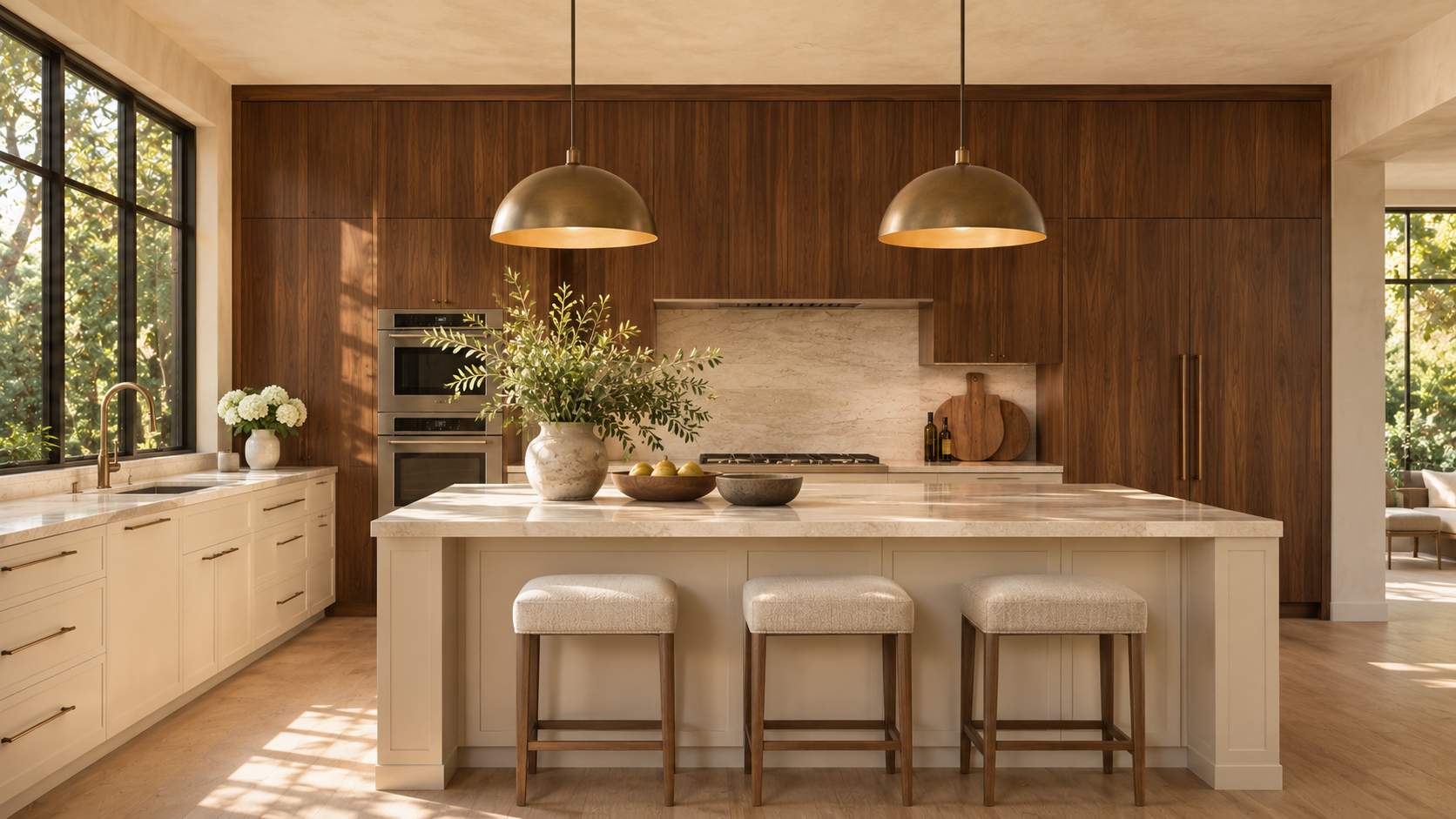
An island can have a different finish because it is physically separate from the perimeter cabinetry. A recessed pantry wall may become a natural location for a contrasting wood. A tall cabinetry elevation can also be treated as one continuous architectural element.
This approach allows the materials to reinforce the kitchen's layout.
Transitions should feel deliberate, particularly where tall cabinets meet lower cabinets or where integrated appliances interrupt a cabinetry wall.
A clear material boundary generally creates a more organized appearance than frequent changes between finishes.
Consider the Visual Weight of Each Finish
Darker colors and richly stained woods typically carry more visual weight than lighter finishes.
This can be useful when establishing focal points, but the amount and placement of darker cabinetry should be considered carefully.
A dark walnut island can anchor a bright kitchen without making the entire room feel heavy. Conversely, a large wall of dark cabinetry may become the dominant feature, especially in a smaller space.
Lighter cabinetry can help maintain openness, while darker finishes introduce depth and definition.
The goal is not necessarily an equal distribution of both finishes.
An intentional two-tone kitchen often uses one material as the foundation and the second as a supporting feature.
Keep Door Styles and Details Consistent
Two-tone cabinetry already introduces visual variation through color and material.
Using too many different door profiles, hardware styles, or decorative details can make the composition feel unnecessarily complicated.
A consistent slab door style can help unify painted and wood cabinetry in a contemporary kitchen. Similarly, matching Shaker-style profiles can create continuity in a transitional interior.
Hardware does not always need to be identical, but it should feel coordinated.
Consistent cabinet reveals, aligned drawer fronts, and thoughtful proportions also help the different finishes read as parts of one complete design.
When the detailing is cohesive, the contrast between finishes feels more intentional.
Coordinate Two-Tone Cabinetry With Countertops and Flooring
The surrounding materials can either strengthen or weaken a two-tone combination.
Countertops often act as a visual connection between contrasting cabinet finishes.
For example, creamy quartzite can complement both warm white cabinetry and natural walnut, allowing the two materials to feel connected.
Flooring also plays an important role.
Natural oak floors may introduce a third wood tone, making it essential to compare undertones rather than assuming all wood finishes will coordinate automatically.
A successful palette does not require every material to match. It requires enough shared characteristics to create a sense of continuity.
Avoid Adding Too Many Competing Finishes
Two-tone cabinetry works best when the overall palette remains controlled.
Introducing multiple painted colors, several wood species, dramatic stone, and contrasting hardware can make it difficult to establish a clear visual hierarchy.
This does not mean a kitchen must be minimal.
A richly layered interior can still feel cohesive when materials have a clear relationship and each finish serves a specific purpose.
Consider which elements should attract attention and which should provide a quieter background.
If the cabinetry includes strong contrast, a more restrained countertop may help balance the composition. If the stone has dramatic movement, simpler cabinet finishes may allow it to remain the focal point.
Think Beyond the Kitchen
Two-tone cabinetry can also help connect the kitchen to adjacent spaces.
In an open-plan residence, a walnut kitchen island may relate to wood paneling, dining furniture, or nearby built-ins. Warm white cabinetry can continue into a pantry or laundry room while another finish introduces variation.
This creates continuity without requiring every cabinet in the home to look identical.
For larger Bay Area residences, considering cabinetry finishes across multiple rooms early in the design process can help establish a more cohesive architectural palette.
How Do You Make Two-Tone Kitchen Cabinets Look Cohesive?
Begin with the overall design direction rather than selecting two finishes independently.
Choose materials with compatible undertones, establish where each finish belongs, and consider how the combination affects the room's visual balance.
Keep cabinetry detailing consistent and evaluate the finishes alongside countertops, flooring, lighting, and surrounding architectural elements.
Most importantly, avoid introducing contrast without a clear reason.
The most successful two-tone kitchens feel like one complete design, not two separate cabinetry selections placed in the same room.
Explore Two-Tone Cabinetry With Atelier Design Society
Atelier Design Society works with homeowners, architects, interior designers, builders, and other design professionals selecting premium cabinetry for Bay Area homes. At the Atelier Design Society showroom in Menlo Park, project teams can compare painted finishes, natural woods, stains, door styles, hardware, and surfaces while developing coordinated cabinetry palettes.
