
Dark kitchen cabinetry can bring remarkable depth, warmth, and sophistication to an interior. Deep walnut, charcoal, espresso, and muted black finishes create a strong architectural presence that lighter cabinetry may not achieve.
However, dark cabinetry requires careful consideration. When used across large surfaces without enough contrast, natural light, or material variation, it can make a kitchen feel visually dense.
The key is balancing dark cabinetry with lighter surfaces, thoughtful proportions, natural materials, and intentional lighting. A darker palette can feel just as open and inviting as a lighter one when these elements work together.
Choose the Right Dark Cabinet Finish
Not all dark cabinetry creates the same atmosphere.
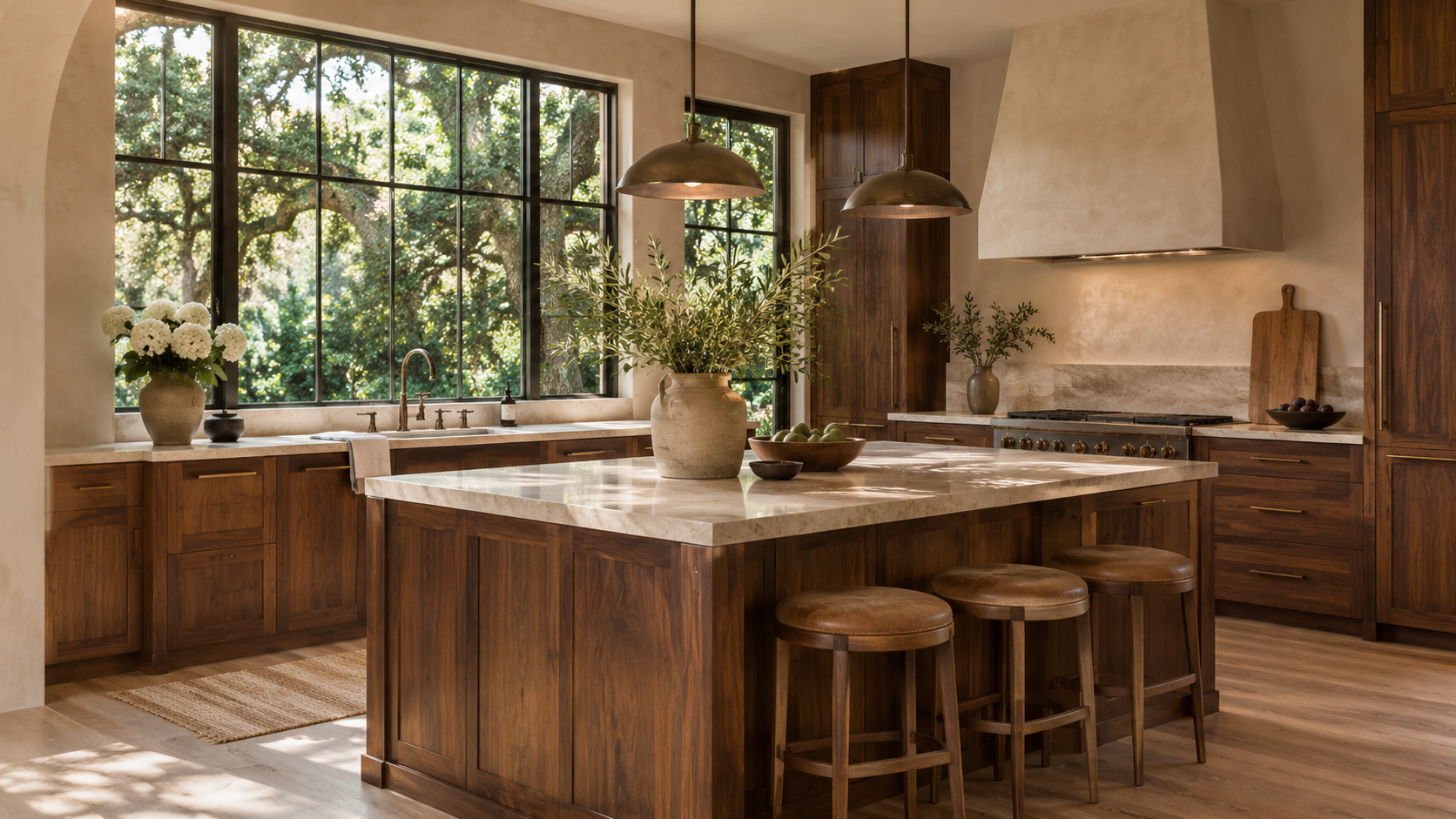
Deep walnut introduces natural grain and warm brown undertones, giving cabinetry richness without the uniform appearance of a solid painted surface. Espresso-stained oak can offer similar depth while maintaining visible wood texture.
Charcoal and soft black painted finishes create a more contemporary appearance. Their visual impact depends on undertones, sheen, and surrounding materials.
A slightly warm charcoal may feel softer beside creamy stone and natural flooring than a cool, blue-black finish.
For a luxury kitchen, compare actual finished samples in the space rather than choosing a dark color from a photograph. Subtle differences become particularly noticeable across large cabinetry elevations.
Balance Dark Cabinets With Lighter Countertops
Countertops are one of the most effective ways to introduce visual relief into a dark kitchen.
Creamy quartzite, soft white marble, and other lighter stone surfaces can create contrast against dark cabinetry while bringing additional lightness to the composition.
The relationship between the countertop and backsplash also matters.
Extending a light stone backsplash behind dark cabinets can create a continuous surface that visually opens the kitchen. In contrast, pairing dark cabinets with dark countertops and a dark backsplash creates a more dramatic, enclosed effect.
Neither approach is inherently wrong, but the amount of contrast should respond to the room's size, lighting, and architecture.
A lighter countertop is particularly useful when dark cabinetry extends across several walls.
Use Dark Cabinetry Selectively
A kitchen does not need to feature dark cabinetry everywhere to benefit from its character.
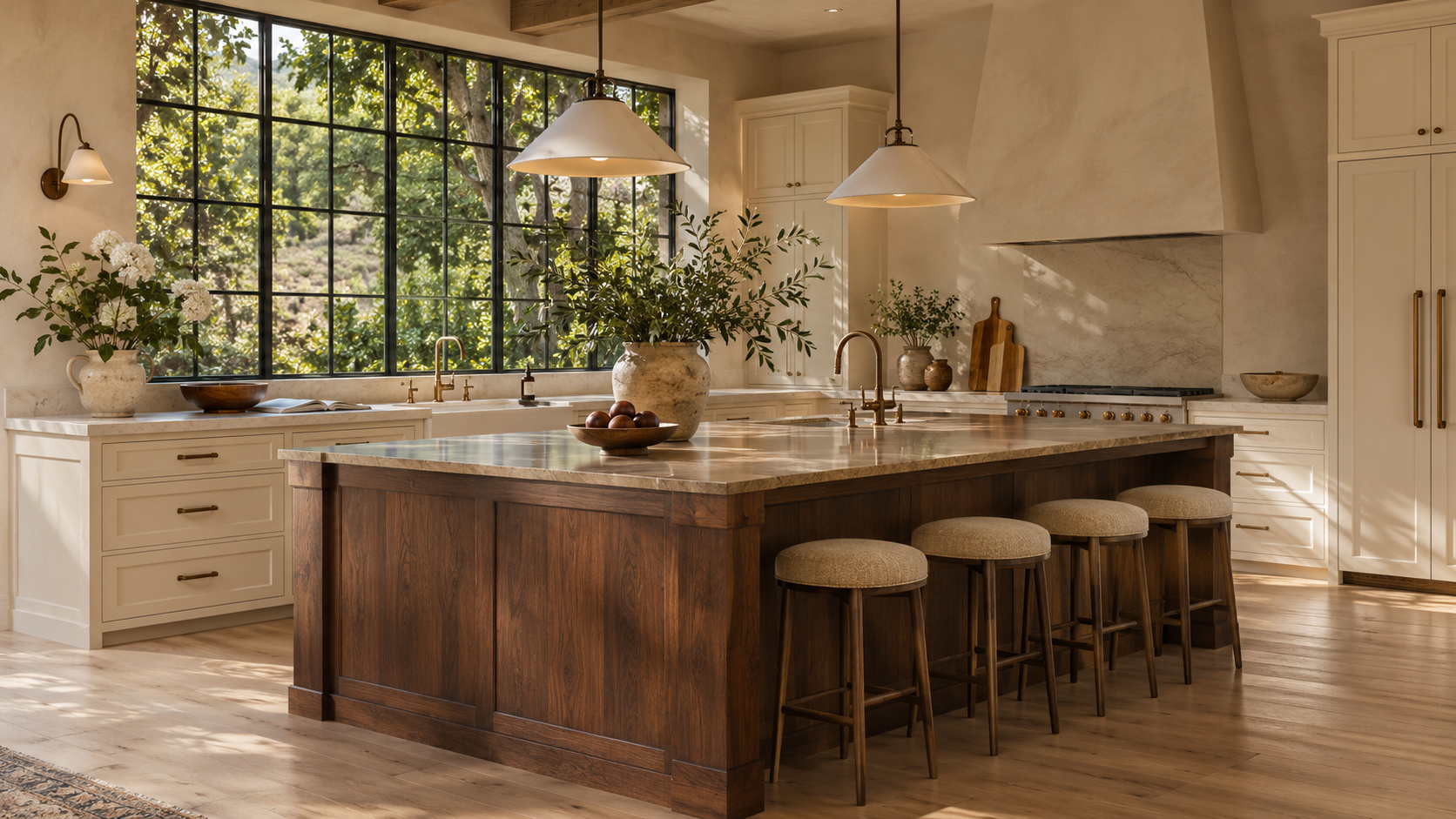
A dark walnut island can become a focal point within a kitchen of warm white or natural oak cabinetry. Alternatively, a deep charcoal pantry wall can create definition while the remaining cabinetry stays lighter.
This approach establishes a clear visual hierarchy.
The darker element becomes intentional rather than overwhelming, and lighter cabinetry provides balance.
In an open-plan home, selective dark cabinetry can also help define the kitchen within a larger living space without introducing additional walls or architectural divisions.
Let Natural Light Influence the Cabinetry Layout
Natural light plays an important role in how dark cabinetry is perceived.
A kitchen with large windows, generous ceiling height, and open sightlines can accommodate more dark cabinetry without feeling enclosed.
In a smaller or less naturally illuminated kitchen, concentrating dark finishes on lower cabinets or a single wall may create a better balance.
Tall dark cabinetry placed directly beside a major window can also change how light moves through the room.
Consider preserving open wall areas around windows and positioning tall pantry cabinets or integrated appliances where they will have less impact on daylight.
The cabinetry layout should support the available light rather than compete with it.
Pair Dark Cabinetry With Natural Wood and Warm Materials
Dark cabinetry becomes more inviting when it is surrounded by materials that introduce warmth and texture.
Light oak flooring, natural stone, warm plaster, and subtle metal finishes can soften the contrast created by dark cabinets.
Wood grain is particularly valuable because it adds movement and variation to an otherwise deep-colored surface.
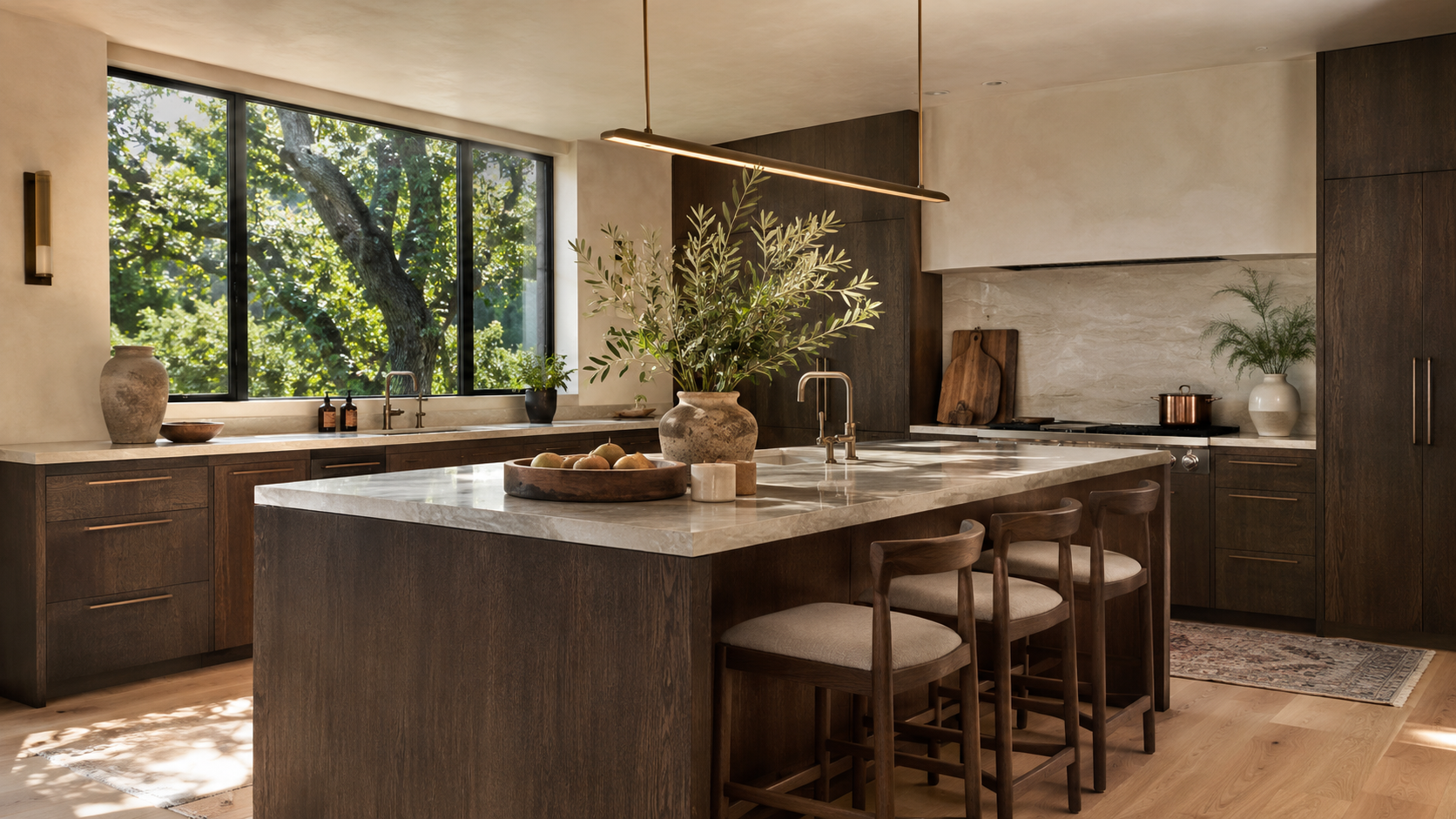
For example, dark-stained rift-cut white oak can provide a quieter linear appearance, while walnut introduces more expressive grain and natural color variation.
Combining dark wood with lighter natural materials can create depth without making the kitchen feel overly formal.
Consider Cabinet Door Style and Proportions
Dark cabinetry tends to emphasize its overall silhouette, making door style and proportions especially important.
Simple slab doors can create a continuous architectural surface, particularly when paired with integrated appliances and carefully aligned reveals.
Refined Shaker-style doors introduce subtle dimension without requiring excessive ornamentation.
On large cabinetry walls, consistent door widths, vertical alignment, and restrained hardware can help the composition feel organized rather than visually busy.
Dark finishes can also make certain surface imperfections, fingerprints, and dust more noticeable, particularly on smooth matte or glossy surfaces. The finish should therefore be evaluated for both appearance and everyday maintenance.
Use Lighting to Create Depth
A dark kitchen benefits from layered lighting that supports the cabinetry and work surfaces.
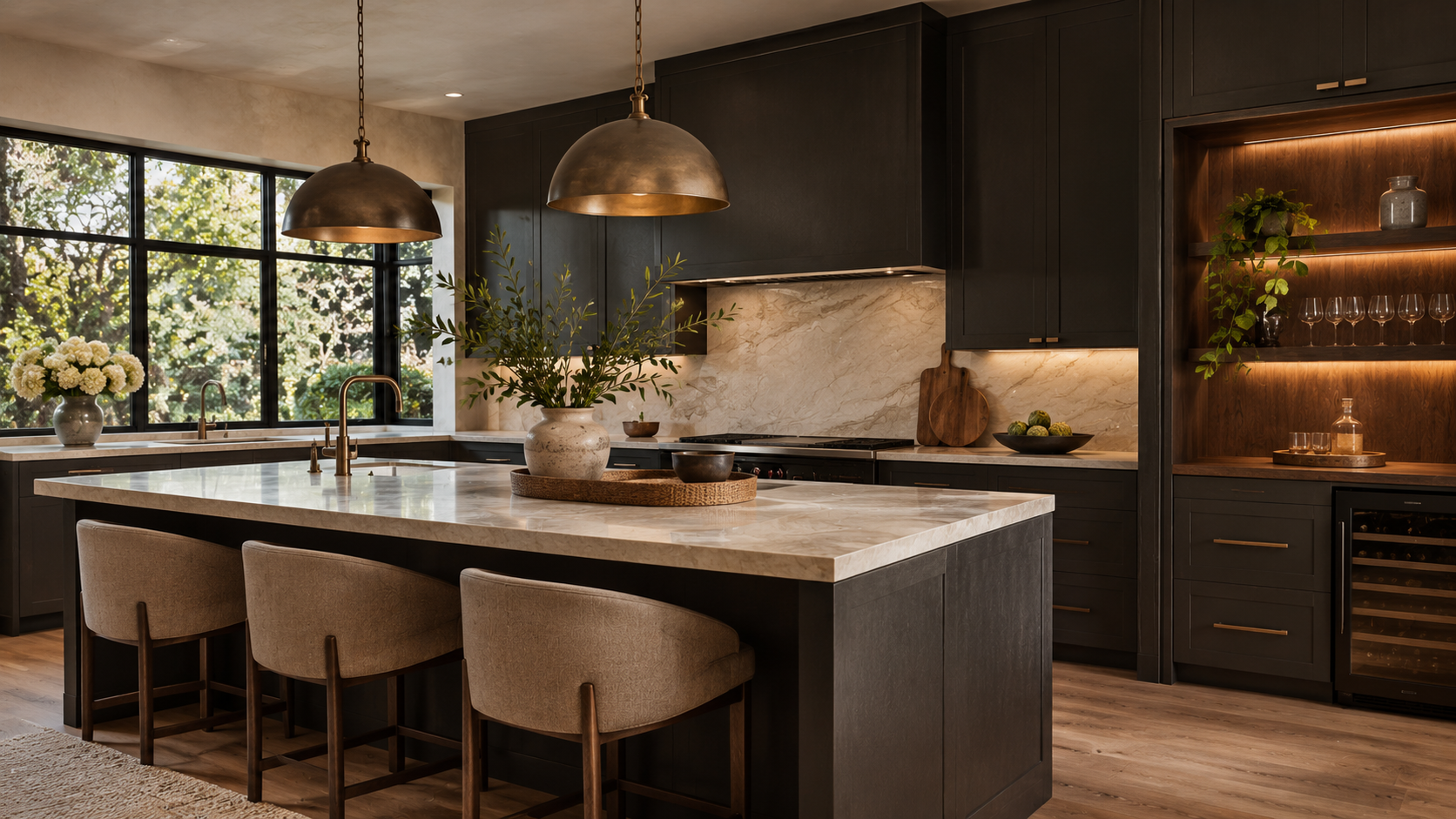
Under-cabinet lighting can illuminate countertops and prevent the backsplash from feeling shadowed. Integrated lighting within open shelves, glass-front cabinets, or beverage stations can introduce depth.
Pendant lighting over an island can provide task illumination while contributing to the room's overall atmosphere.
The color temperature of the lighting also influences the cabinetry finish. Warm lighting may emphasize brown undertones in walnut or espresso finishes, while cooler lighting can change the appearance of charcoal or black cabinetry.
Review lighting and finish samples together whenever possible.
Avoid Too Many Competing Dark Surfaces
Dark cabinetry can lose its impact when every surrounding element carries the same visual weight.
Dark flooring, dark stone, dark walls, and dark cabinetry may create a cohesive dramatic interior, but they also require careful planning to maintain definition between surfaces.
A more balanced approach is to choose which element should have the strongest presence.
If the cabinetry is the primary dark material, lighter stone and flooring can provide contrast. If the island is the focal point, surrounding cabinetry can remain more restrained.
This allows each material to contribute to the design without competing for attention.
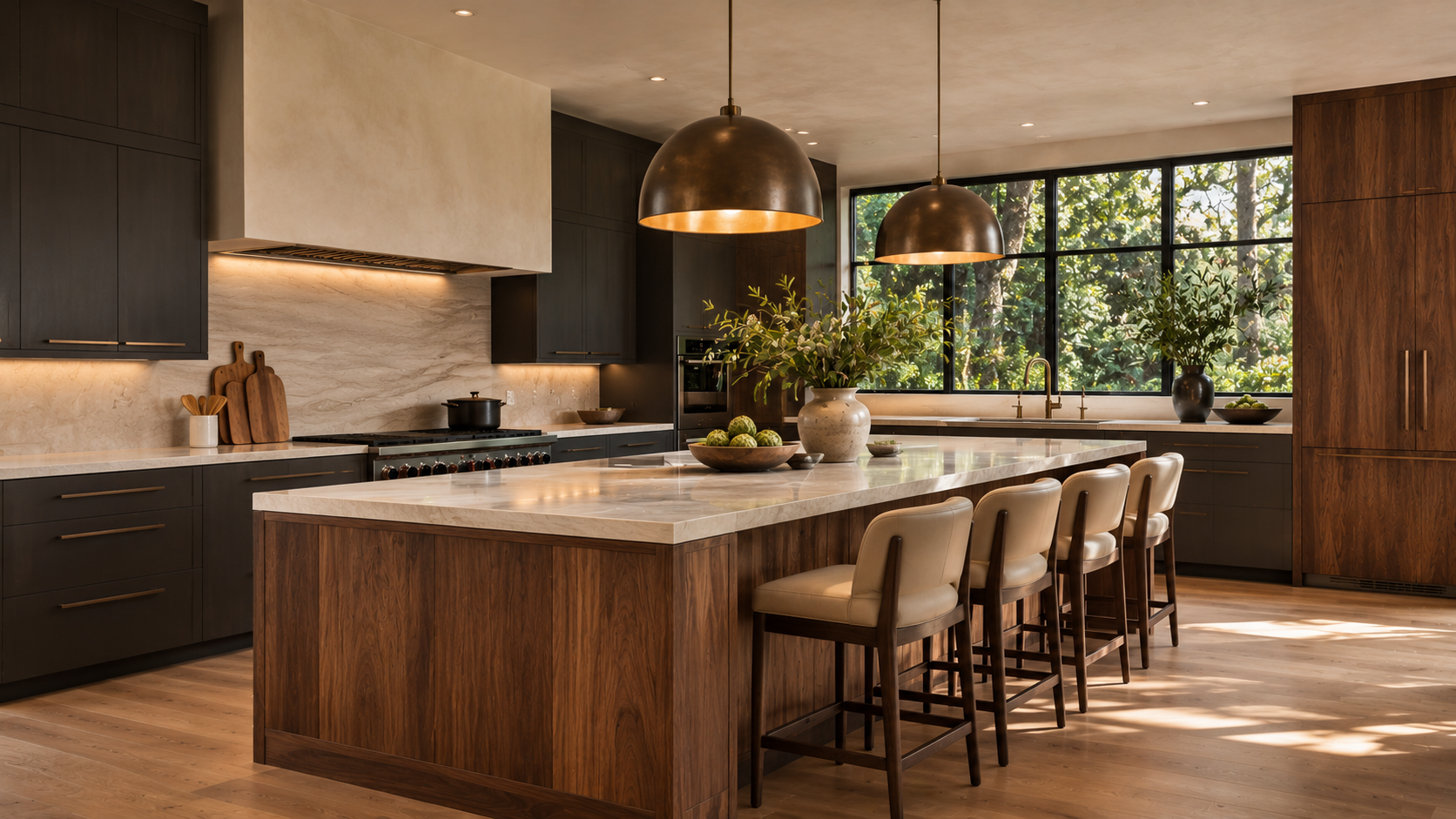
How Do You Keep Dark Kitchen Cabinets From Feeling Heavy?
Start by considering how much dark cabinetry the room can comfortably support.
Large, naturally illuminated kitchens may accommodate expansive dark cabinetry walls, while smaller kitchens may benefit from using dark finishes selectively.
Lighter countertops, natural flooring, warm wall finishes, and thoughtful lighting can help maintain balance. Door proportions, grain direction, and hardware should also support the architecture.
Most importantly, compare the complete material palette before finalizing the cabinetry.
Dark cabinetry works best when its visual weight feels intentional, creating depth and sophistication without overwhelming the room.
Explore Dark Cabinetry With Atelier Design Society
Atelier Design Society works with homeowners, architects, interior designers, builders, and other design professionals selecting premium cabinetry for Bay Area homes. At the Atelier Design Society showroom in Menlo Park, project teams can compare dark wood stains, walnut cabinetry, painted finishes, natural woods, door styles, hardware, and surfaces while developing a balanced material palette.
