
White kitchen cabinets have been a defining feature of residential design for decades. Their popularity comes from their versatility, ability to reflect light, and compatibility with a wide range of architectural styles.
But as natural wood cabinetry, warmer neutrals, and more personalized interiors become increasingly prominent, homeowners may wonder whether white cabinets still feel relevant.
White kitchen cabinets can absolutely be timeless. The difference lies in the shade of white, cabinetry proportions, finish quality, and how they are paired with the surrounding materials.
Why White Kitchen Cabinets Remain a Classic Choice
White cabinetry offers a neutral foundation that can adapt to different interior styles without requiring the entire kitchen to follow one particular trend.
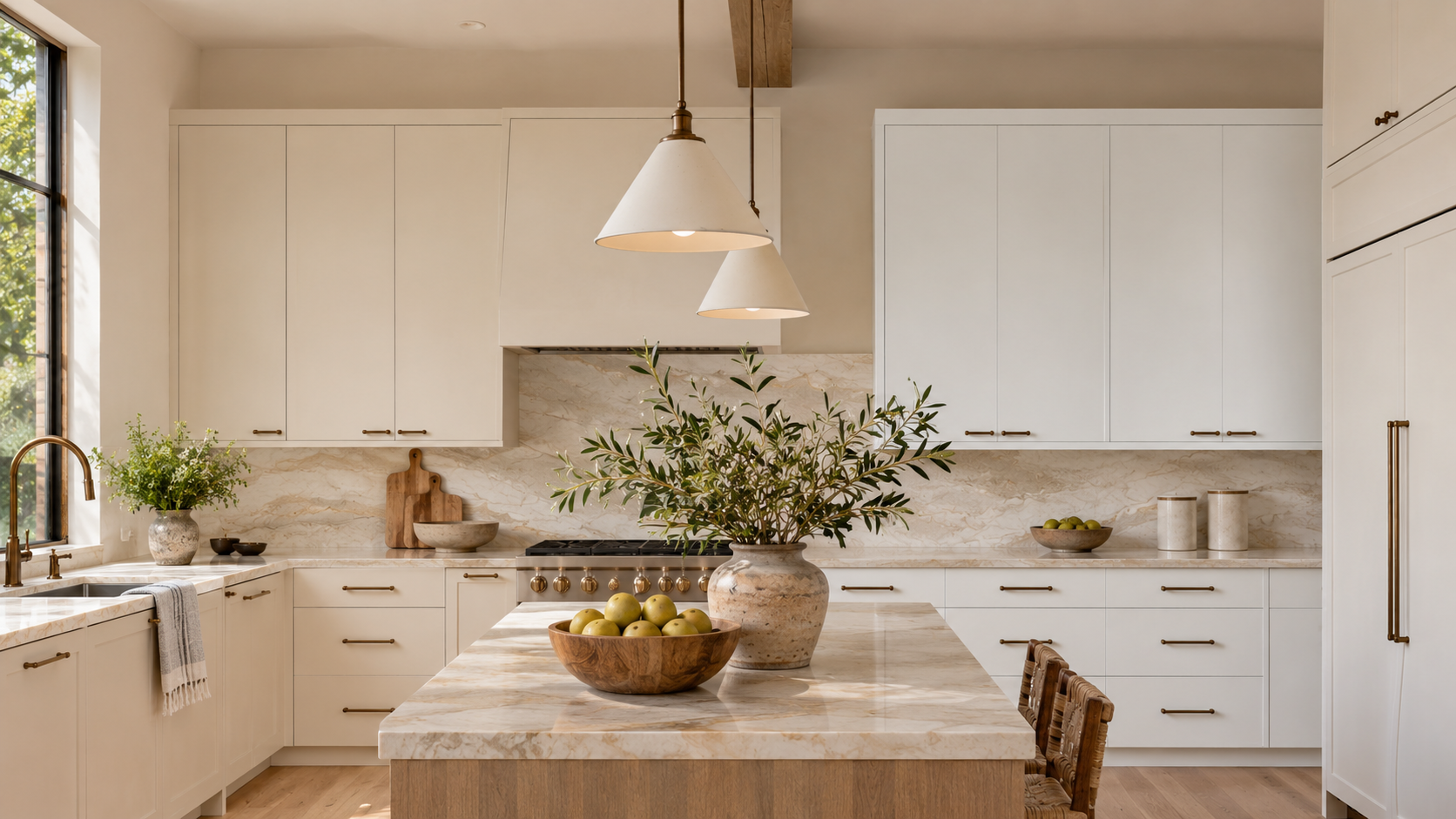
In traditional kitchens, white cabinets can emphasize detailed door profiles, moldings, and classic proportions. In contemporary interiors, simple white slab doors can create clean architectural surfaces that allow stone, lighting, and other materials to take visual priority.
White also reflects light, which can make a kitchen feel brighter and more open, particularly in spaces with limited natural daylight.
However, timelessness depends on more than the color itself. A well-proportioned kitchen with quality materials and thoughtful detailing is more likely to age gracefully than one designed around a temporary aesthetic.
Choosing the Right Shade of White Matters
Not all white cabinetry creates the same effect.
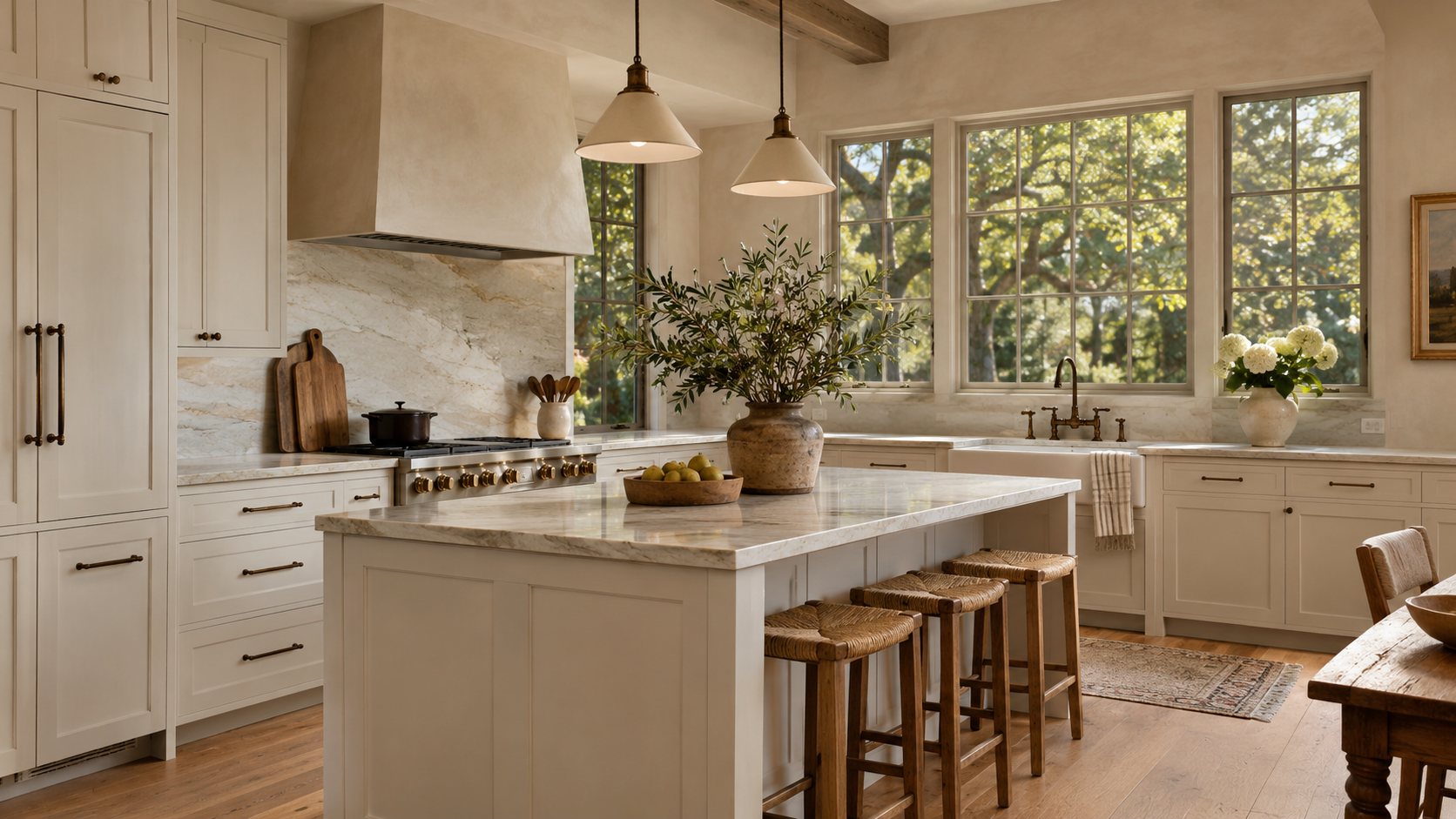
Bright, cool whites can feel crisp and contemporary, while warmer whites introduce a softer, more inviting character. Creamy whites and subtle off-whites can also coordinate naturally with stone, wood, and plaster finishes.
The undertone becomes especially important when selecting countertops.
A cabinet finish with cool blue undertones may appear disconnected beside a warm ivory quartzite. Similarly, a creamy cabinet color can look noticeably yellow when paired with an extremely cool white surface.
For a cohesive result, compare actual finished cabinetry samples with the selected stone, flooring, and wall materials.
The goal is not to find the perfect white in isolation, but to choose the white that works with the entire interior.
Warm White vs. Bright White Cabinets
Warm white cabinetry is often associated with softer, more layered interiors. It works particularly well with natural oak, walnut, limestone, creamy quartzite, and warm metal finishes.
Bright white cabinetry can create a sharper, more minimal appearance. It may be appropriate for kitchens with cooler materials, strong contemporary geometry, or a deliberately crisp palette.
Neither option is inherently more timeless.
The most important consideration is whether the shade supports the architecture and surrounding materials rather than creating an unintended contrast.
Door Style Influences How Timeless White Cabinets Feel
The door profile plays a significant role in the overall character of white cabinetry.
Shaker-style doors remain a versatile option because their simple frame detailing works across traditional, transitional, and contemporary kitchens.
Slab doors create a quieter, more minimal appearance, especially when combined with integrated appliances and restrained hardware.
Inset cabinetry can introduce a more furniture-like character through its precise relationship between doors, drawers, and surrounding frames.
The right door style should respond to the home's architecture.
A highly detailed traditional door may feel out of place in a minimal contemporary residence, while an extremely flat slab door may not provide enough architectural character for a more traditional interior.
Pair White Cabinets With Natural Wood
One way to give white cabinetry greater depth is to combine it with natural wood.
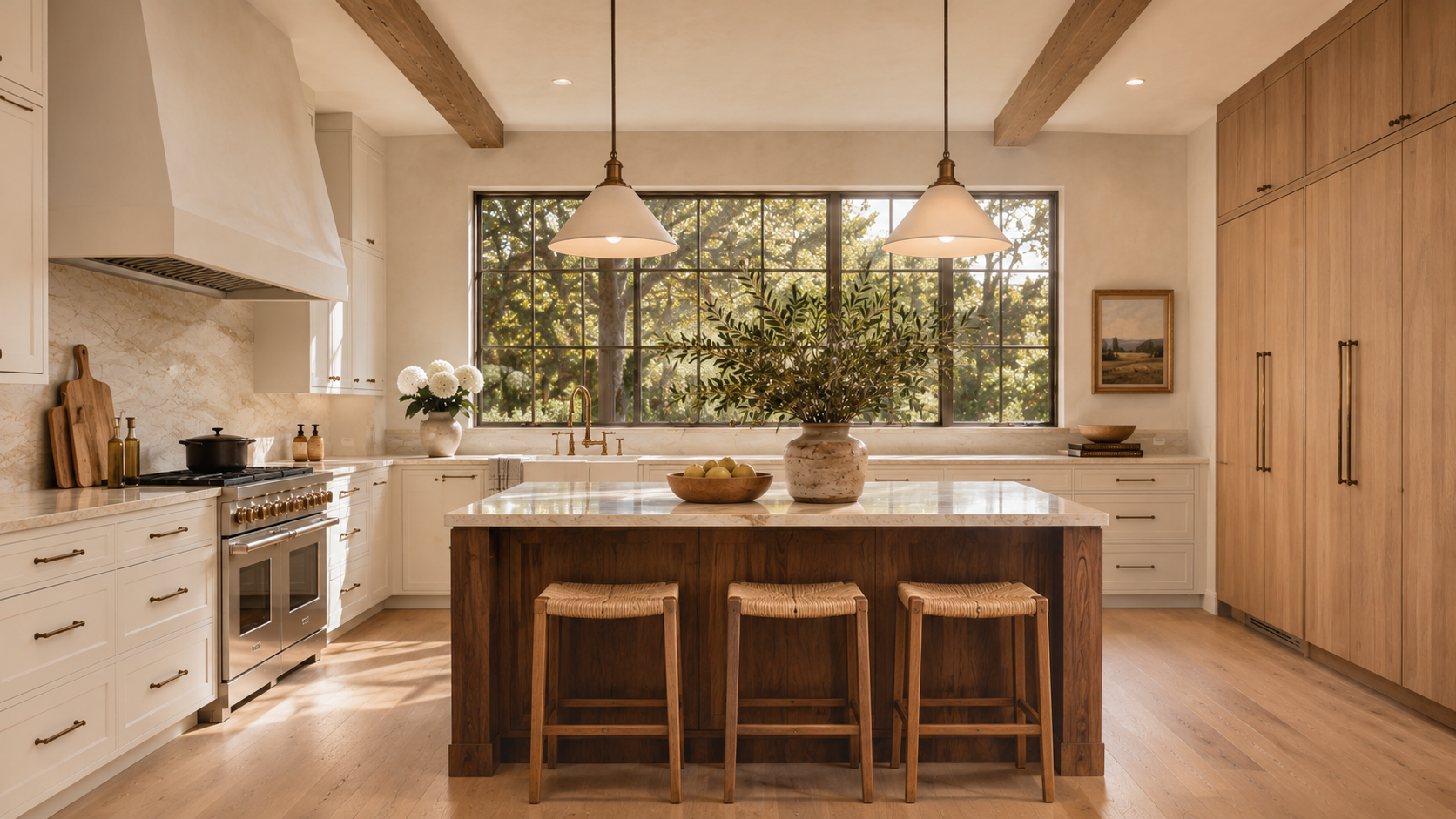
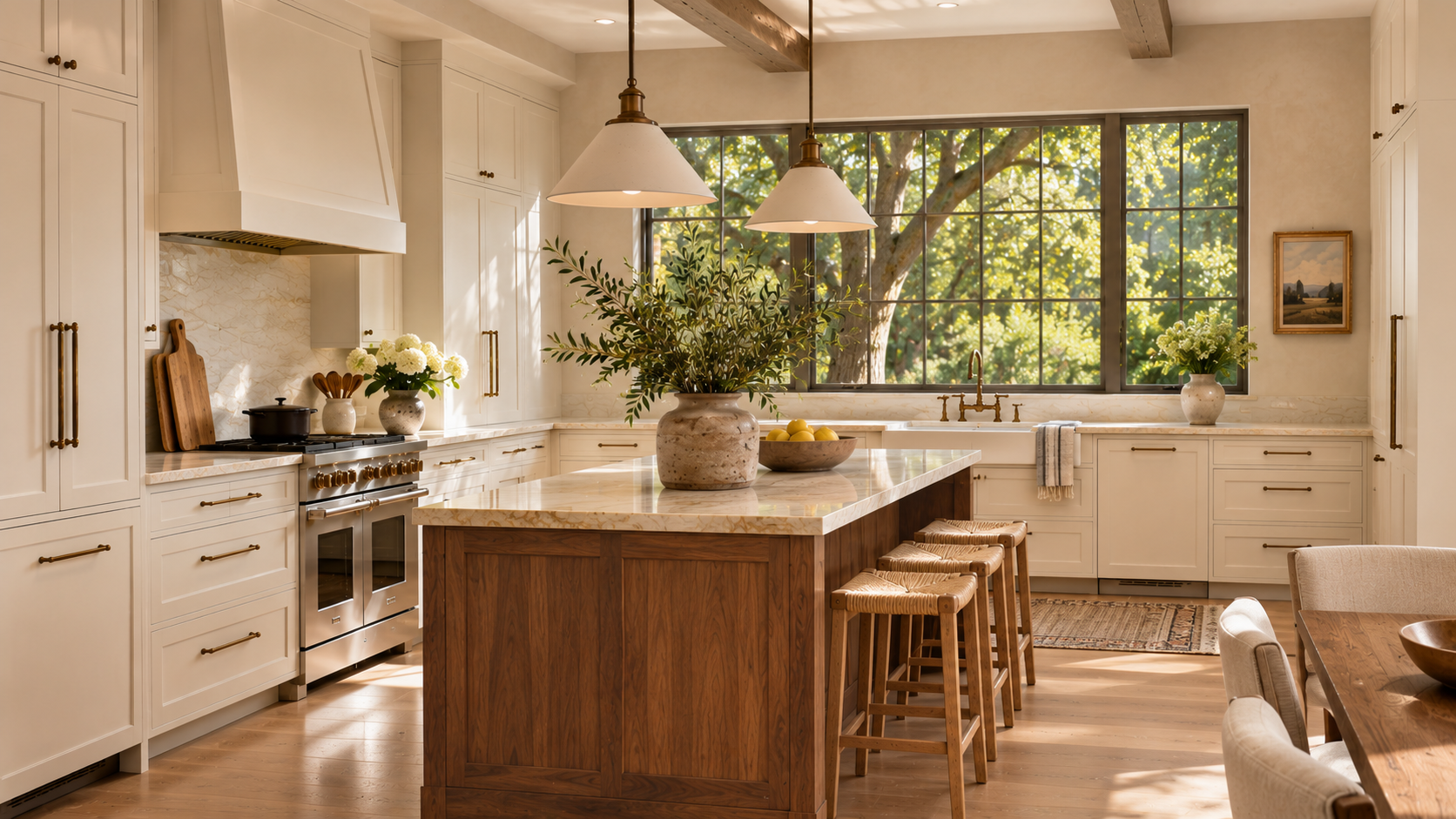
A kitchen might use white perimeter cabinetry with a walnut island, or introduce rift-cut white oak on tall pantry cabinets while maintaining white lower cabinets.
This approach creates contrast without relying on bold color.
Natural wood also introduces visible grain and texture, helping the kitchen feel more layered and connected to the surrounding architecture.
For Bay Area homes where indoor and outdoor spaces often share a strong visual relationship, white cabinetry paired with natural oak or walnut can create a warm, understated palette.
Countertops and Hardware Can Change the Entire Look
White cabinetry provides a relatively neutral background, allowing countertops and hardware to influence the kitchen's character.
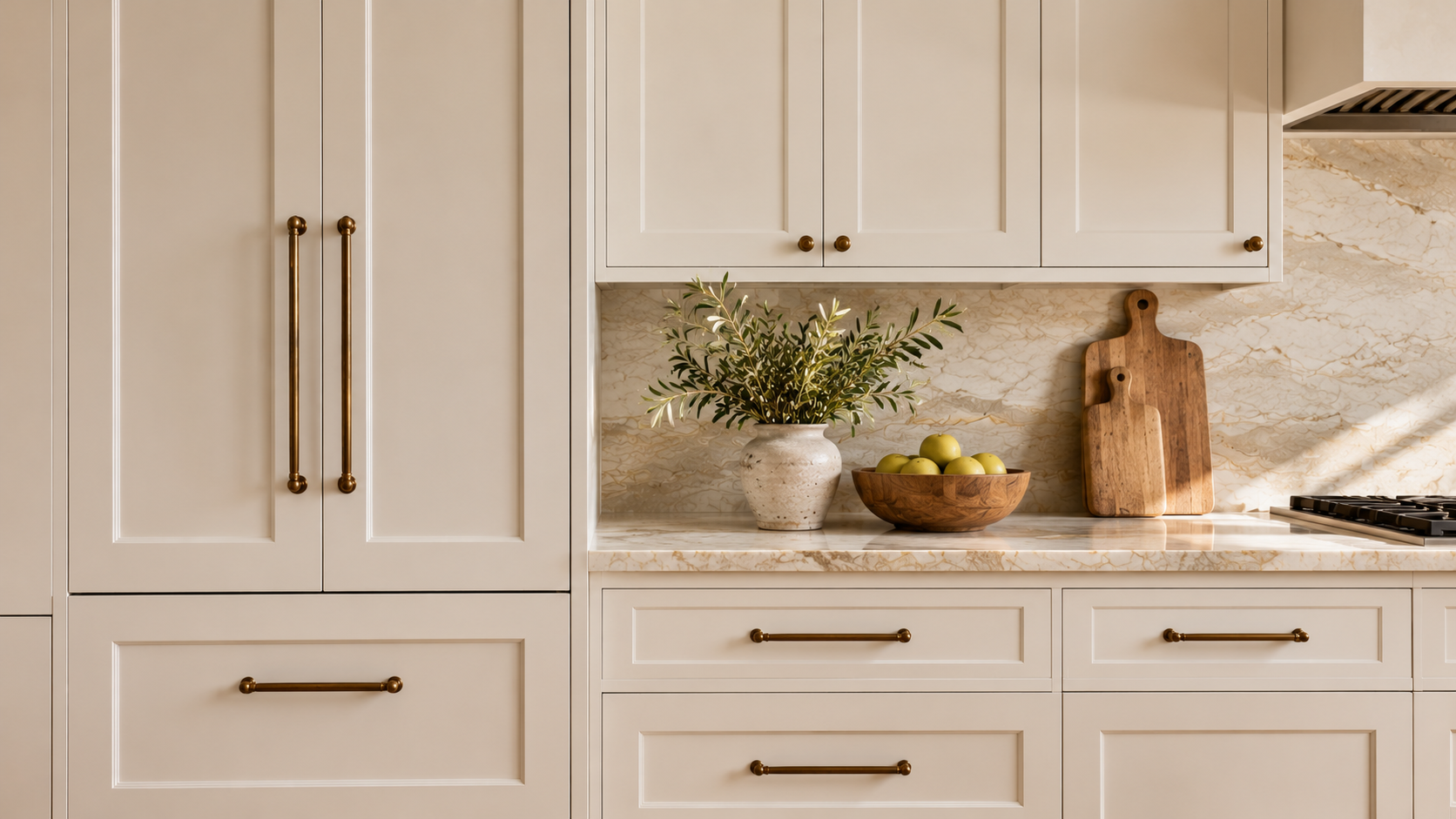
Creamy quartzite with subtle movement can introduce warmth and natural texture. Marble may create a more traditional or refined appearance, depending on its veining and finish.
Hardware also matters.
Aged bronze can add warmth and definition, while polished nickel may support a more classic palette. Minimal hardware or integrated pulls can make white cabinetry feel more contemporary.
The objective is to create a balanced relationship between these elements.
Highly decorative stone, prominent hardware, and detailed cabinetry can compete for attention when used together. A more restrained combination often allows the materials to remain relevant across changing design preferences.
The Quality of the Finish Matters
White cabinetry makes surface quality particularly noticeable.
Uneven paint, inconsistent sheen, visible imperfections, and poorly finished edges can become more apparent across large, uninterrupted cabinet elevations.
Premium painted cabinetry depends on appropriate surface preparation, finishing systems, and manufacturing standards.
It is also important to understand that painted cabinetry requires care. Chips, scratches, and wear can occur over time, particularly around frequently used doors and drawers.
Ask about the manufacturer's finishing process, recommended maintenance, and available touch-up procedures before selecting a painted finish.
Avoid Designing Around Temporary Trends
White cabinetry can feel dated when the entire kitchen is built around a highly specific trend.
An overly cool palette, excessive decorative detailing, or a combination of finishes selected solely because they are popular at the moment may limit the design's longevity.
Instead, focus on cabinetry proportions, material quality, functional storage, and a palette that complements the home's architecture.
A white kitchen does not need to be completely neutral or minimal to feel timeless.
It can include expressive stone, warm wood, architectural lighting, and personalized details. The important consideration is whether those choices feel connected rather than decorative additions.
Consider White Cabinetry Throughout the Home
White cabinetry can also support a cohesive whole-home design.
A kitchen with warm white cabinetry may connect naturally to bathroom vanities, laundry storage, built-ins, and other architectural elements.
That does not mean every room needs identical cabinets.
White can serve as one recurring finish while natural woods, painted colors, and other materials introduce variation throughout the residence.
This approach creates continuity without making every space feel repetitive.
Are White Kitchen Cabinets a Good Long-Term Choice?
Yes. White cabinetry remains a strong choice for homeowners who appreciate a light, versatile, and adaptable kitchen.
The key is selecting the right shade, door style, finish quality, and surrounding materials.
Warm whites can create softer interiors, while neutral whites may suit more contemporary architecture. Natural wood, carefully selected stone, and restrained hardware can add depth without overwhelming the design.
White cabinets are most timeless when they are selected as part of a complete architectural palette rather than treated as a standalone trend.
Explore White Cabinetry With Atelier Design Society
Atelier Design Society works with homeowners, architects, interior designers, builders, and other design professionals selecting premium cabinetry for Bay Area homes. At the Atelier Design Society showroom in Menlo Park, project teams can compare painted cabinetry, warm white finishes, natural woods, door styles, hardware, and surfaces while developing a cohesive material palette.
