
White oak is one of the most versatile materials for luxury cabinetry, but the stain you choose can dramatically change its appearance.
A natural finish can highlight its light, organic character, while warmer stains introduce depth and richness. Cooler or muted finishes can create a more contemporary appearance, and deeper brown stains can give white oak a stronger architectural presence.
The right stain should complement the wood's natural grain while working with the flooring, countertops, lighting, and overall interior palette.
Understand White Oak's Natural Color
Before selecting a stain, it helps to understand what white oak looks like without one.
White oak typically has light to medium brown coloring, often with subtle beige, golden, or olive undertones. Its appearance also varies depending on the grain cut and individual pieces of wood.
Rift-cut white oak tends to have relatively straight, consistent grain, making it popular for contemporary cabinetry. Plain sawn white oak often displays more expressive cathedral patterns.
These characteristics influence how a stain appears. The same finish may look noticeably different on two pieces of white oak.
For that reason, the wood species, grain selection, and stain should be considered together.
Natural and Light Stains for a Softer Look
Natural or lightly toned finishes are popular when the goal is a warm, understated kitchen.
They preserve much of white oak's original character and allow the grain to remain a central design feature.
Light finishes work particularly well with creamy quartzite, warm plaster, natural stone, and restrained metal hardware. They can also help floor-to-ceiling cabinetry feel visually lighter.
However, a finish labeled "natural" does not necessarily leave the wood completely unchanged. Clear coatings can deepen or warm the color, while certain finishing systems are designed to maintain a paler appearance.
Always compare finished samples rather than relying on the stain name.
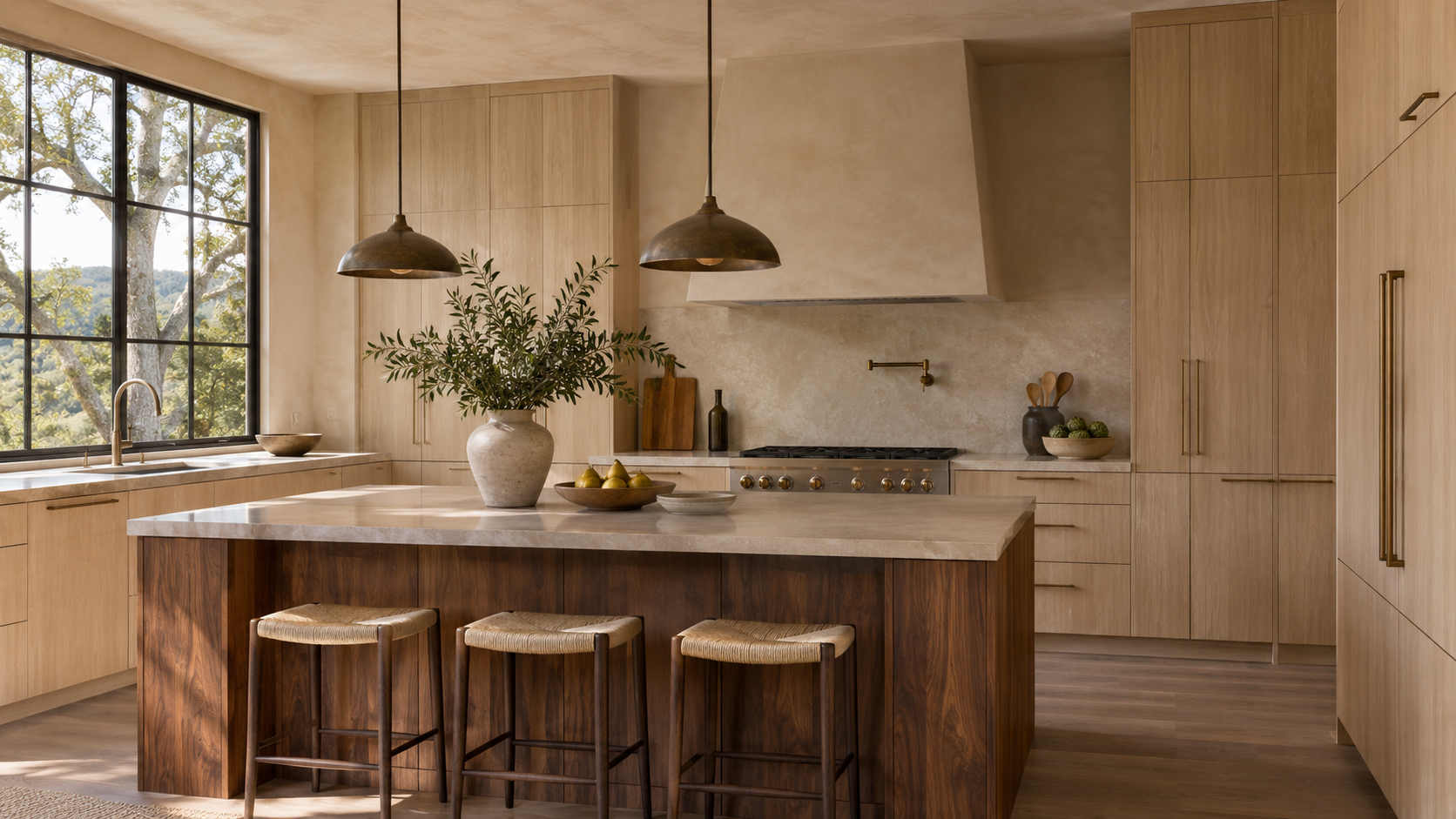
Warm Stains Add Depth and Richness
Warm stains can introduce honey, amber, caramel, or medium brown tones to white oak.
These finishes emphasize the natural warmth of the material and can make cabinetry feel particularly inviting in traditional, transitional, and contemporary interiors.
A medium brown stain can also create greater contrast against light stone countertops and pale walls.
The important consideration is controlling undertones.
Some warm stains can become noticeably yellow or orange under certain lighting conditions. A stain that looks balanced in a showroom may appear warmer when installed beside a particular floor or countertop.
Comparing samples under the project's actual lighting conditions helps avoid unexpected results.
Cooler and Muted Stains for Contemporary Interiors
Not every white oak kitchen needs a golden or warm brown finish.
Muted beige, taupe, and softly gray-toned stains can create a quieter, more contemporary appearance.
These finishes may be useful when the surrounding palette includes cooler stone, neutral flooring, or architectural materials with restrained undertones.
However, gray stains require careful evaluation. Depending on the product and wood, they can emphasize certain parts of the grain or create an uneven appearance.
The objective should be a balanced finish that complements the wood rather than making it look artificially colored.
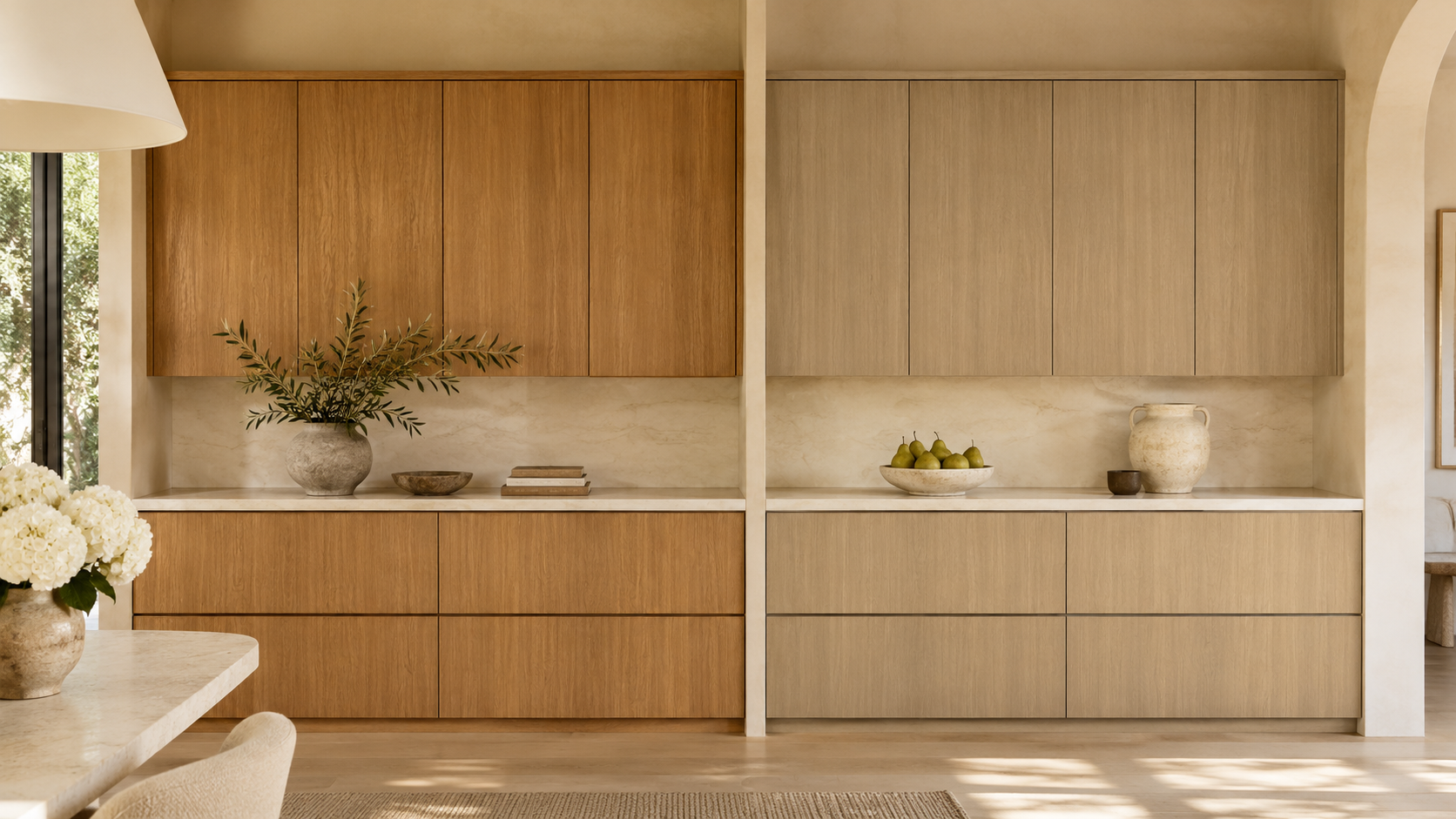
Dark Stains Can Create a More Dramatic Kitchen
White oak can also be finished in deeper brown tones.
A dark stain gives cabinetry greater visual weight and can create a sophisticated contrast with lighter stone, walls, and flooring.
This approach works particularly well on islands, bars, libraries, and cabinetry walls intended to become focal points.
Dark stains can still reveal white oak's grain, although the visibility depends on the finish and its opacity.
Before choosing a darker color, consider the amount of cabinetry and natural light in the room. An entire wall of dark cabinetry will have a different effect than a single stained island.
Coordinate the Stain With Flooring and Countertops
One of the most important steps is comparing the cabinet stain with the materials surrounding it.
White oak cabinetry does not need to match the flooring exactly. In fact, slightly different wood tones can create a more layered interior when their undertones are compatible.
A warm cabinet stain paired with very cool flooring may create an unintended contrast. Similarly, a gray-toned stain can feel disconnected from creamy stone with strong golden undertones.
Countertops should be considered at the same time.
Creamy quartzite may complement natural or warm white oak, while cooler stone selections may work better with more neutral stains. The specific slab matters more than the general stone category.
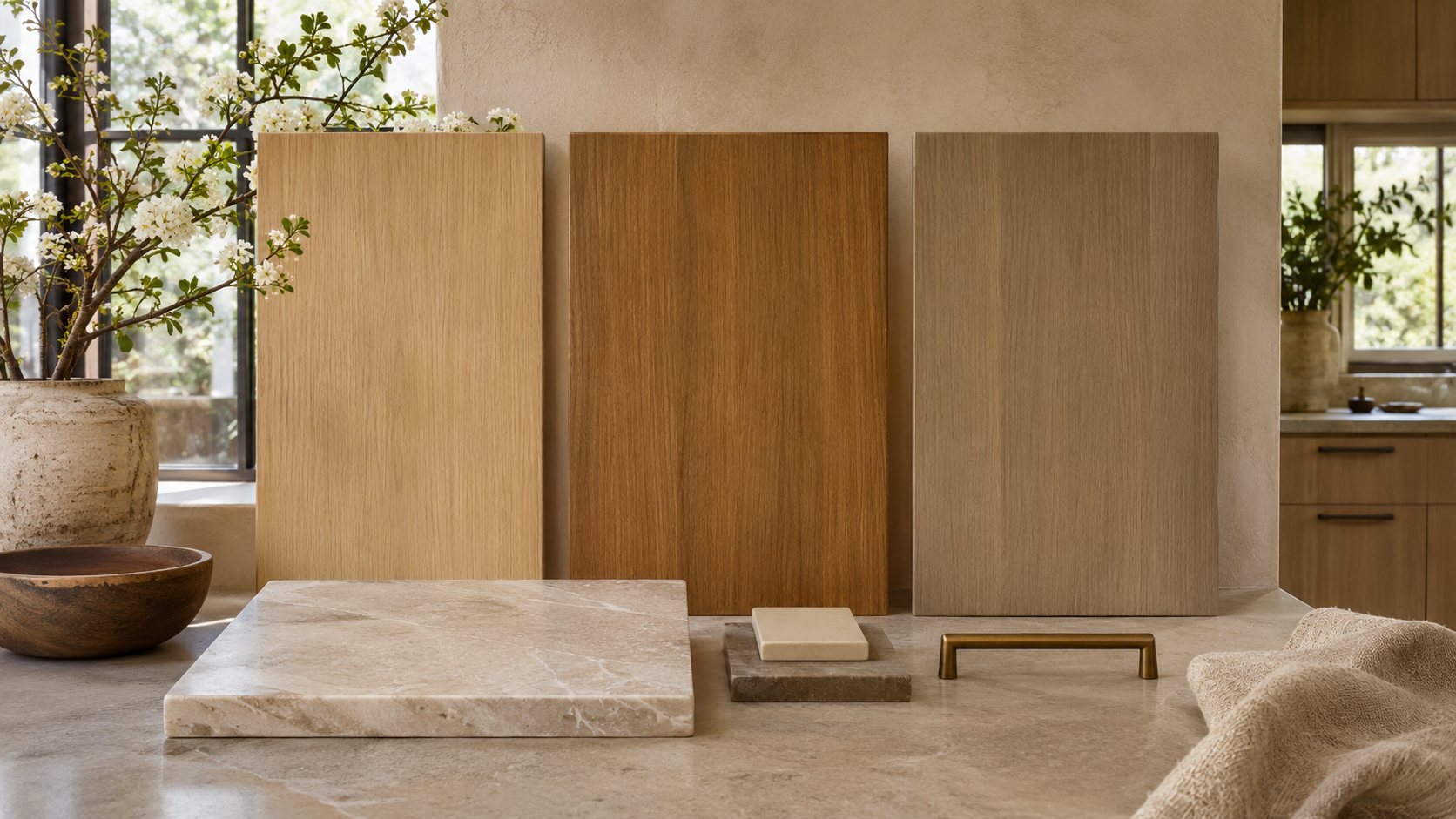
Consider How Lighting Changes the Finish
Lighting can significantly influence how a stain appears.
Natural daylight often reveals wood undertones differently from warm interior lighting. A finish that appears neutral during the day may look more golden under warm artificial light.
Cabinet orientation also matters. A tall cabinetry wall facing large windows may receive more direct light than a recessed appliance station or pantry.
Whenever possible, review larger finished samples in the actual room at different times of day.
This is particularly important for white oak because subtle variations in color can become more noticeable across expansive cabinetry elevations.
The Finish Should Work With the Grain
Stain color is only one part of the finished appearance.
Rift-cut white oak often emphasizes long, linear grain patterns, while plain sawn oak can reveal more dramatic movement. Quarter-cut white oak may display distinctive ray fleck.
Some stains highlight these differences more strongly than others.
For large slab doors and integrated appliance panels, grain consistency can be just as important as stain color. Ask how the cabinetry manufacturer selects and coordinates wood across adjacent panels.
A carefully chosen stain combined with thoughtful grain selection can create a more cohesive result than focusing on color alone.
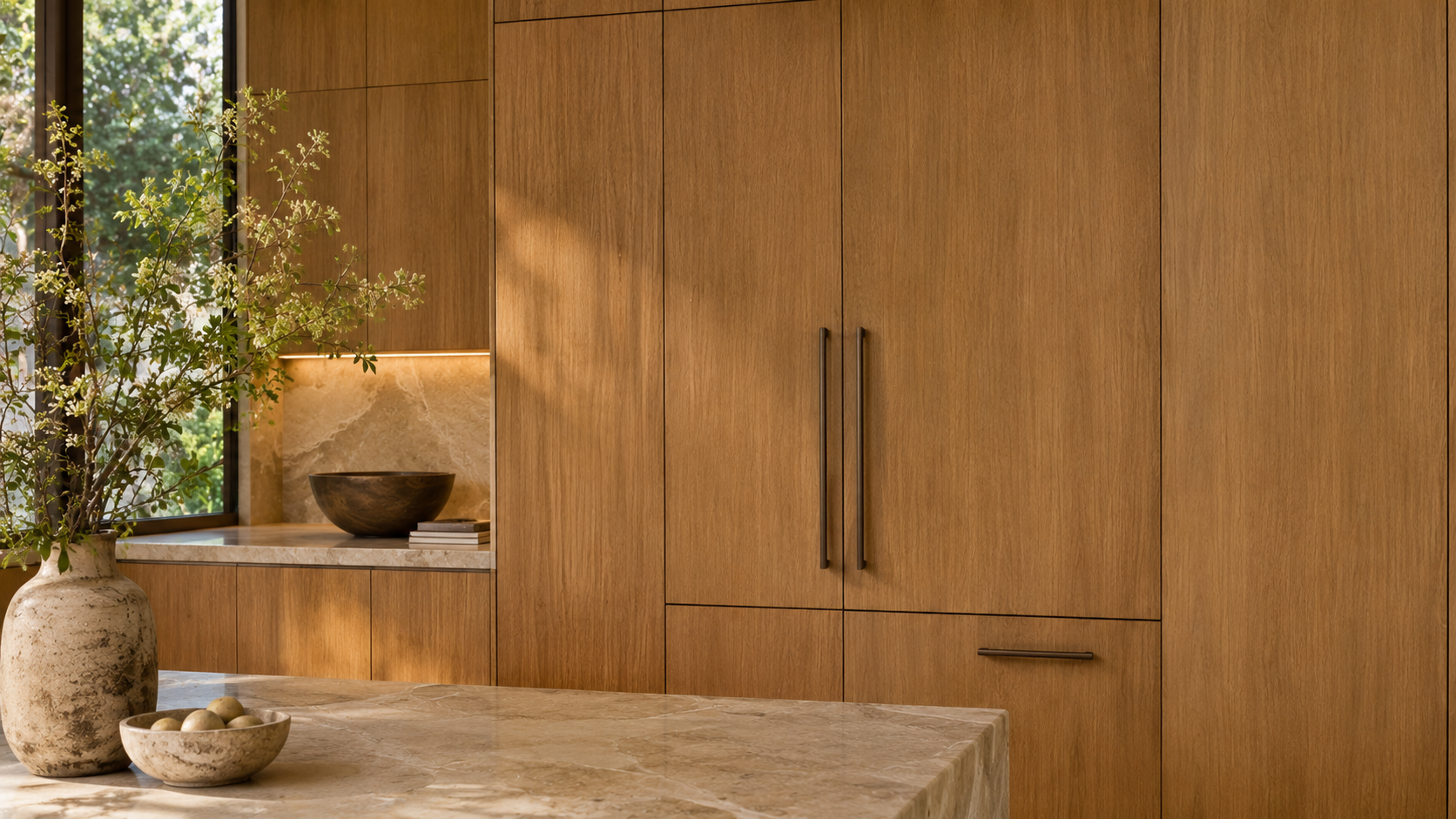
Ask About the Complete Finishing System
A stain provides color, but the protective topcoat is also important.
Different finishing systems can affect the final sheen, color, appearance, and resistance to everyday wear.
Matte and low-sheen finishes are often selected for contemporary cabinetry because they create a restrained appearance. Other sheen levels may emphasize the wood's depth or reflect more light.
Ask the cabinetry manufacturer which stains and finishing systems are available, whether custom color matching is possible, and what maintenance is recommended.
A sample should represent the complete factory-applied finish, not simply stain applied to unfinished wood.
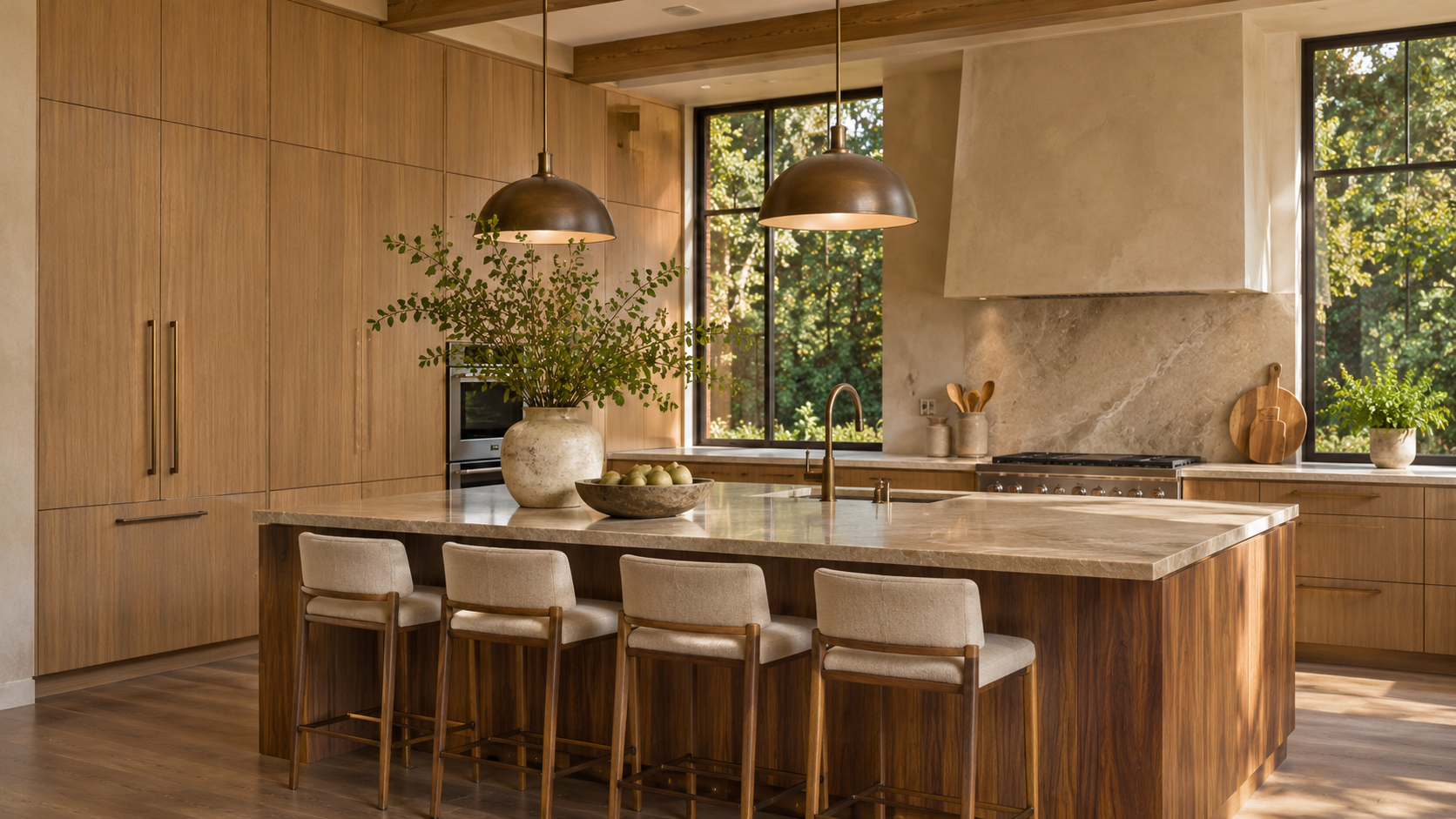
How Do You Choose the Best White Oak Stain?
Start by identifying the overall appearance you want.
A natural or light stain can create a soft, understated interior. A warmer medium stain adds richness, while muted tones can support a more restrained contemporary palette. Darker stains introduce greater contrast and visual weight.
Then compare finished samples alongside the actual flooring, stone, hardware, and wall materials.
Pay attention to undertones, grain visibility, sheen, and the way the finish changes under different lighting conditions.
The best white oak stain is not necessarily the most popular color. It is the finish that makes the cabinetry feel connected to the architecture and surrounding materials.
Explore White Oak Cabinet Finishes With Atelier Design Society
Atelier Design Society works with homeowners, architects, interior designers, builders, and other design professionals selecting premium cabinetry for Bay Area homes. At the Atelier Design Society showroom in Menlo Park, project teams can compare white oak finishes, natural woods, stains, painted cabinetry, grain patterns, hardware, and surfaces while developing a cohesive material palette.
