
When selecting natural wood cabinetry, the species and finish are only part of the decision. How the wood is cut from the log influences its grain pattern, visual character, and dimensional movement.
Plain sawn, rift sawn, and quarter sawn are three common terms used to describe lumber cuts. Each creates a different appearance, from expressive grain patterns to the clean, linear texture often associated with contemporary luxury kitchens.
Understanding these differences is especially important when specifying white oak, walnut, and other natural woods for custom cabinetry.
What Is Plain Sawn Wood?
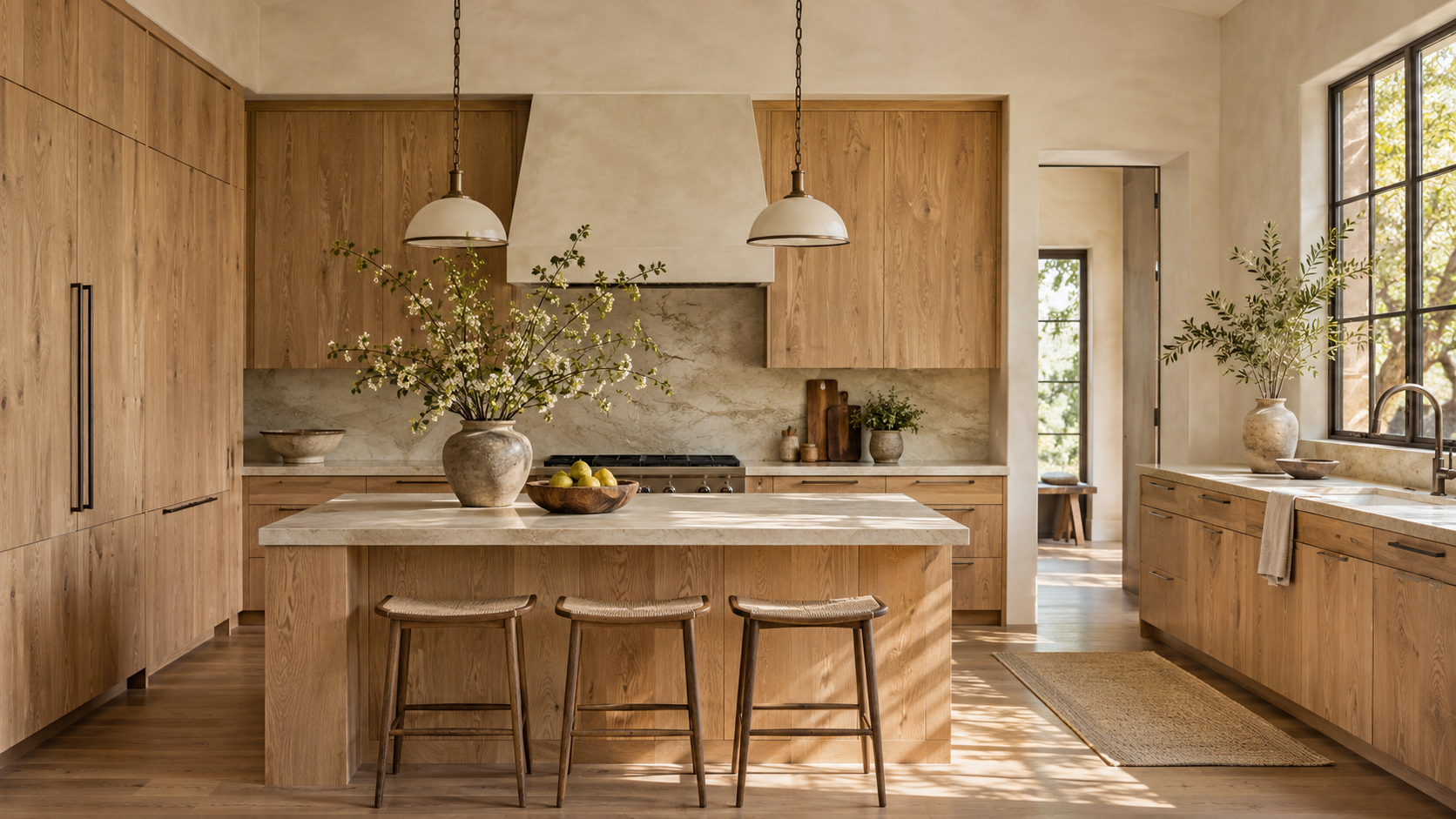
Plain sawn lumber, also called flat sawn, is produced using a cutting method that generally creates boards with prominent, varied grain patterns. Depending on where a board comes from within the log, the grain may appear straight, curved, or cathedral-shaped.
This gives plain sawn cabinetry a more expressive natural appearance.
It can be particularly attractive in traditional, transitional, and contemporary kitchens where visible wood character is part of the design.
Plain sawing also generally produces a higher lumber yield than more selective cutting methods, making it a common and often more economical option.
However, flat sawn boards typically experience more movement across their width as humidity changes than quarter sawn boards of the same species.
What Is Rift Sawn Wood?
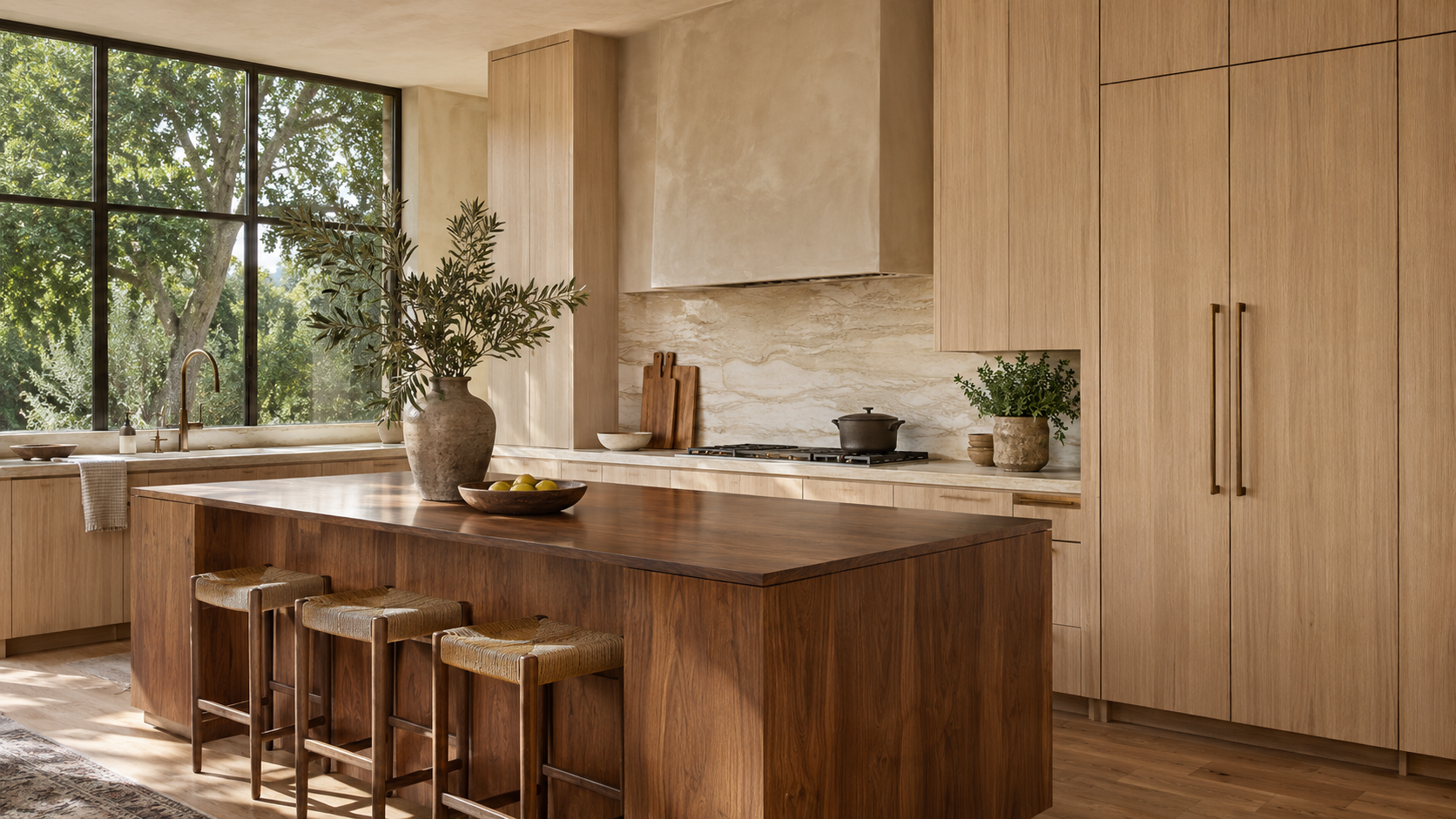
Rift sawn wood is valued for its relatively straight, consistent grain.
In traditional rift sawing, boards are cut so the growth rings meet the board's face at approximately 30 to 60 degrees, although terminology and grading conventions can vary.
The resulting grain is generally more linear and less expressive than the cathedral patterns commonly seen in plain sawn lumber.
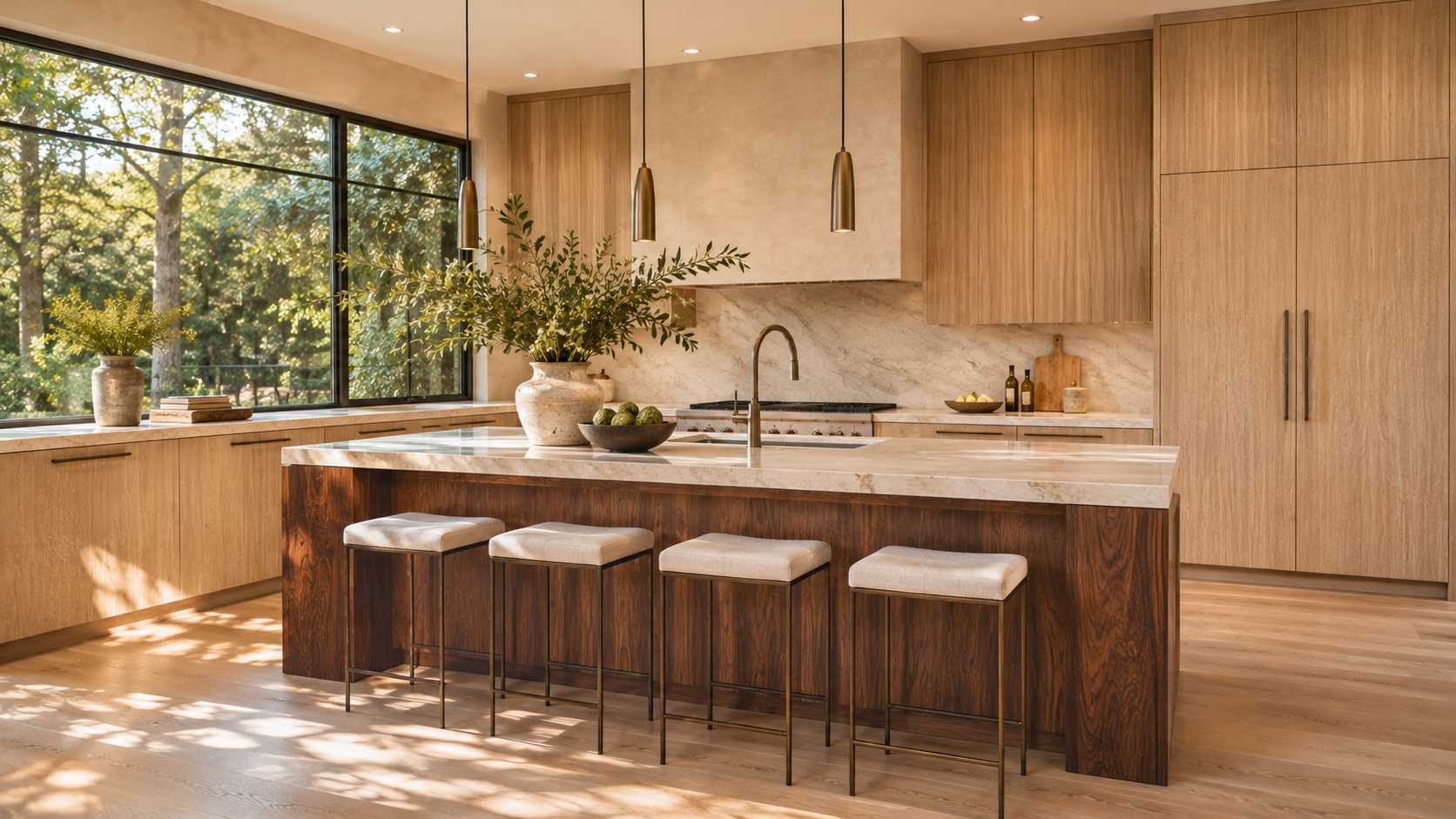
Rift sawn white oak is especially popular in contemporary cabinetry because its restrained grain complements slab doors, tall cabinetry walls, and clean architectural proportions.
It can create a more consistent appearance across adjacent panels, although natural variation remains.
Producing true rift sawn lumber can also involve greater material waste and processing, contributing to higher costs.
What Is Quarter Sawn Wood?
Quarter sawn lumber is produced by first dividing the log into quarters and then cutting boards to create growth-ring angles generally around 60 to 90 degrees relative to the board's face.
This produces a relatively straight grain appearance, but quarter sawn wood can reveal distinctive characteristics that differentiate it from rift sawn material.
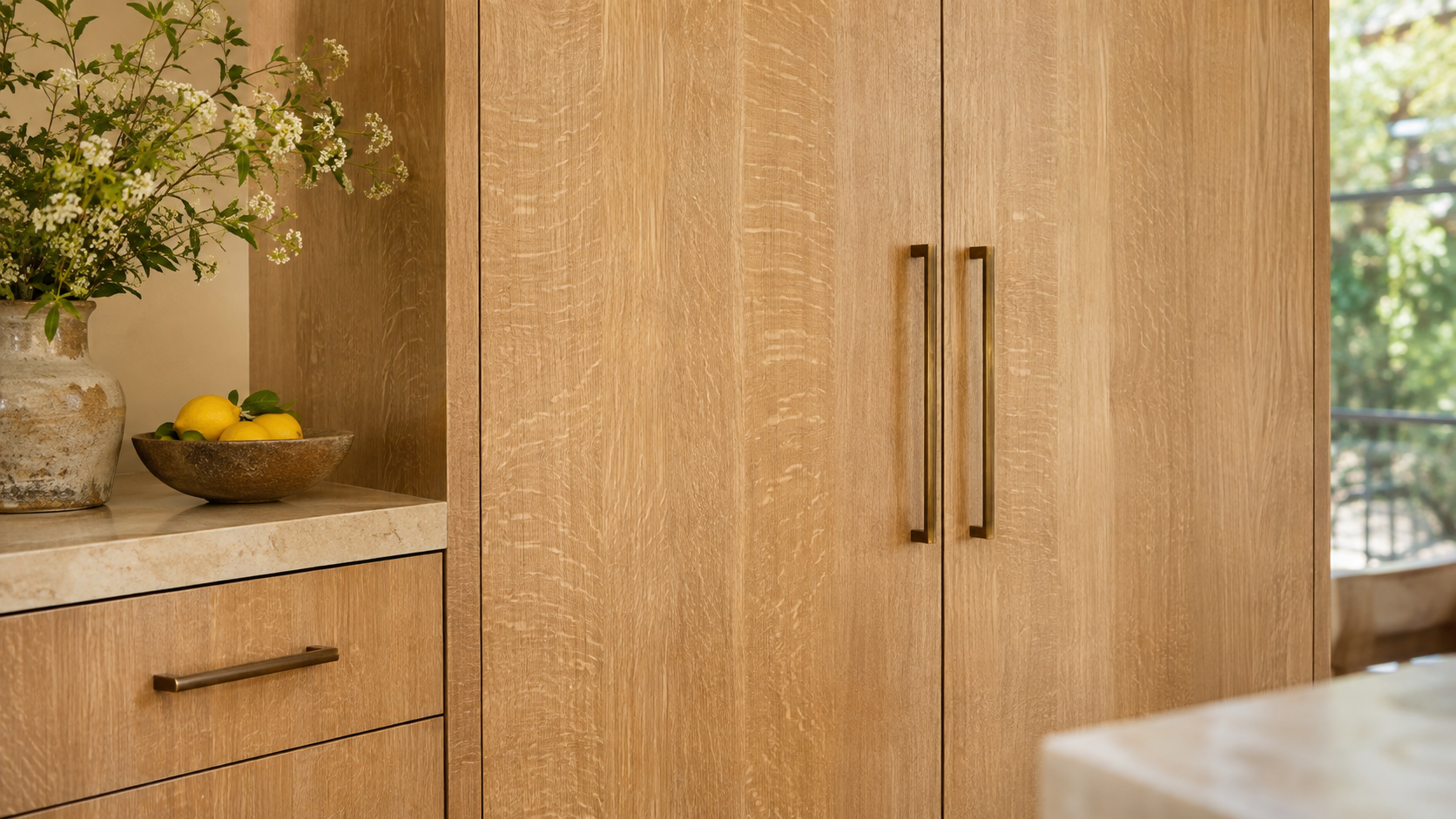
In white oak, quarter sawing often exposes medullary rays, creating decorative markings known as ray fleck.
These markings can appear as small ribbons or reflective patterns across the surface, giving the wood a recognizable character.
Quarter sawn lumber also generally has better dimensional stability across its width than plain sawn lumber of the same species, which can be useful in cabinetry and furniture construction.
How Does the Cut Affect Cabinetry Design?
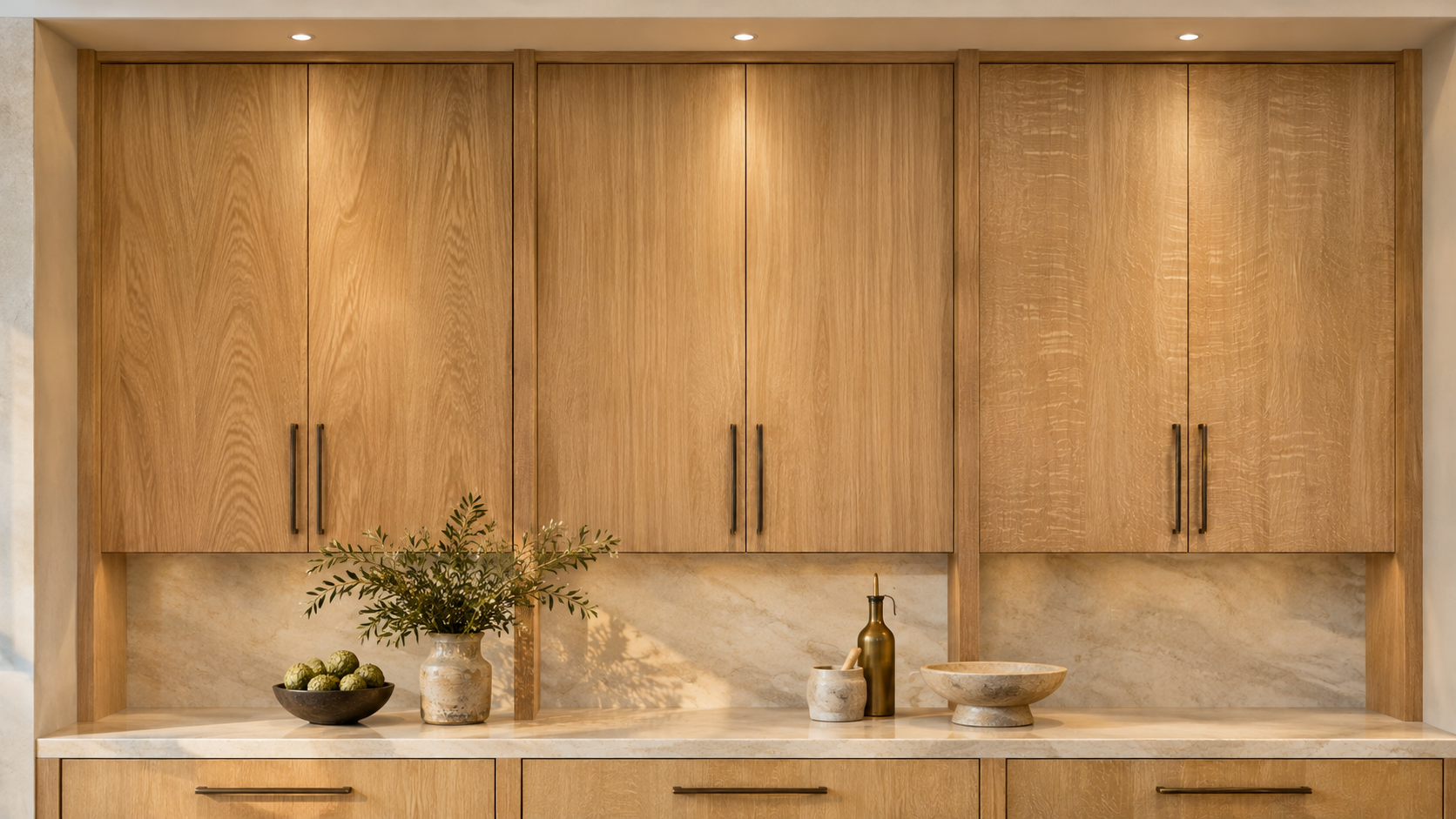
The difference becomes especially noticeable across large cabinetry surfaces.
Plain sawn wood introduces more movement and variation, which can make cabinetry feel organic and textured. Rift sawn wood creates a quieter visual rhythm, particularly when used across tall doors and wide elevations.
Quarter sawn wood offers a relatively linear appearance while introducing the distinctive ray patterns found in certain species, especially white oak.
For a minimal kitchen with floor-to-ceiling cabinetry, rift sawn white oak may provide the most restrained appearance. For a project emphasizing natural character, plain sawn wood may feel more appropriate.
Quarter sawn oak can be an excellent choice when the design calls for visible craftsmanship and a distinctive grain.
Does the Wood Cut Affect Durability?
The cutting method influences dimensional stability, but it does not determine cabinetry quality by itself.
Wood naturally expands and contracts as moisture conditions change. Quarter sawn and rift sawn boards generally experience less movement across their width than plain sawn boards.
However, premium cabinetry also depends on appropriate material selection, moisture control, construction methods, finishing, and installation.
For example, many contemporary cabinet doors use engineered substrates with decorative wood veneers rather than wide solid-wood slabs. Their dimensional behavior depends on the complete panel construction, not simply the grain appearance.
This is an important distinction when comparing custom cabinetry specifications.
What About Rift-Cut and Quarter-Cut Veneers?
Cabinetry terminology can become more complicated when veneers are involved.
Solid lumber may be described as plain sawn, rift sawn, or quarter sawn. Decorative veneers are commonly described as plain sliced, rift cut, or quarter cut.
These terms describe related grain appearances, but the manufacturing processes are not identical.
In luxury cabinetry, a rift-cut white oak veneer can provide the consistent linear grain desired for large slab doors and panels.
Veneer selection also allows manufacturers to coordinate grain across adjacent cabinet fronts, depending on the product and specification.
When comparing cabinetry collections, ask whether the visible wood surface is solid lumber, veneer, or another engineered wood product, and how the grain is selected and matched.
Which Wood Cut Is Best for Your Cabinetry?
The best choice depends on the character you want the cabinetry to contribute.
Choose plain sawn when you appreciate expressive grain, natural variation, and a more organic wood appearance.
Choose rift sawn when you prefer clean, linear grain that supports contemporary cabinetry and large architectural elevations.
Choose quarter sawn when you want relatively straight grain with distinctive natural character, particularly the ray fleck associated with white oak.
Before finalizing the specification, compare actual finished samples and confirm the material construction, grain selection, and panel-matching approach. Two cabinetry collections using the same wood species can look substantially different because of how that wood is cut and finished.
Explore Natural Wood Cabinetry With Atelier Design Society
Atelier Design Society works with homeowners, architects, interior designers, builders, and other design professionals selecting premium cabinetry for Bay Area homes. At the Atelier Design Society showroom in Menlo Park, project teams can compare natural wood species, grain patterns, veneers, stains, finishes, door styles, and full-scale cabinetry installations to make more informed material decisions.
