Soft-Close Hinges and Drawer Glides: What Actually Matters?
Soft-close hardware has become common in premium kitchen cabinetry, but the words “soft-close” do not tell you everything about the quality of a cabinet.
Two cabinets can both have soft-close doors and drawers while feeling very different in daily use. The hardware itself, how it is integrated, the weight it supports, the range of adjustment, and the precision of the cabinetry all influence performance.
When comparing cabinetry, the better question is not simply, “Does it have soft-close?” It is, “How well does the entire hardware system work?”
What Does Soft-Close Actually Mean?
Soft-close hardware controls the final portion of a door or drawer as it closes. Instead of allowing it to slam shut, a damping mechanism slows the movement and brings it into the closed position more gently.
For cabinet doors, this function is typically incorporated into or paired with the hinge system. For drawers, it is part of the drawer glide or slide system.
Soft-close can improve the experience of using cabinetry, but the feature should operate smoothly and consistently. A mechanism that catches abruptly, requires excessive force, or behaves differently from one cabinet to another should not be considered premium simply because it carries the soft-close label.
What Should You Look for in a Cabinet Hinge?
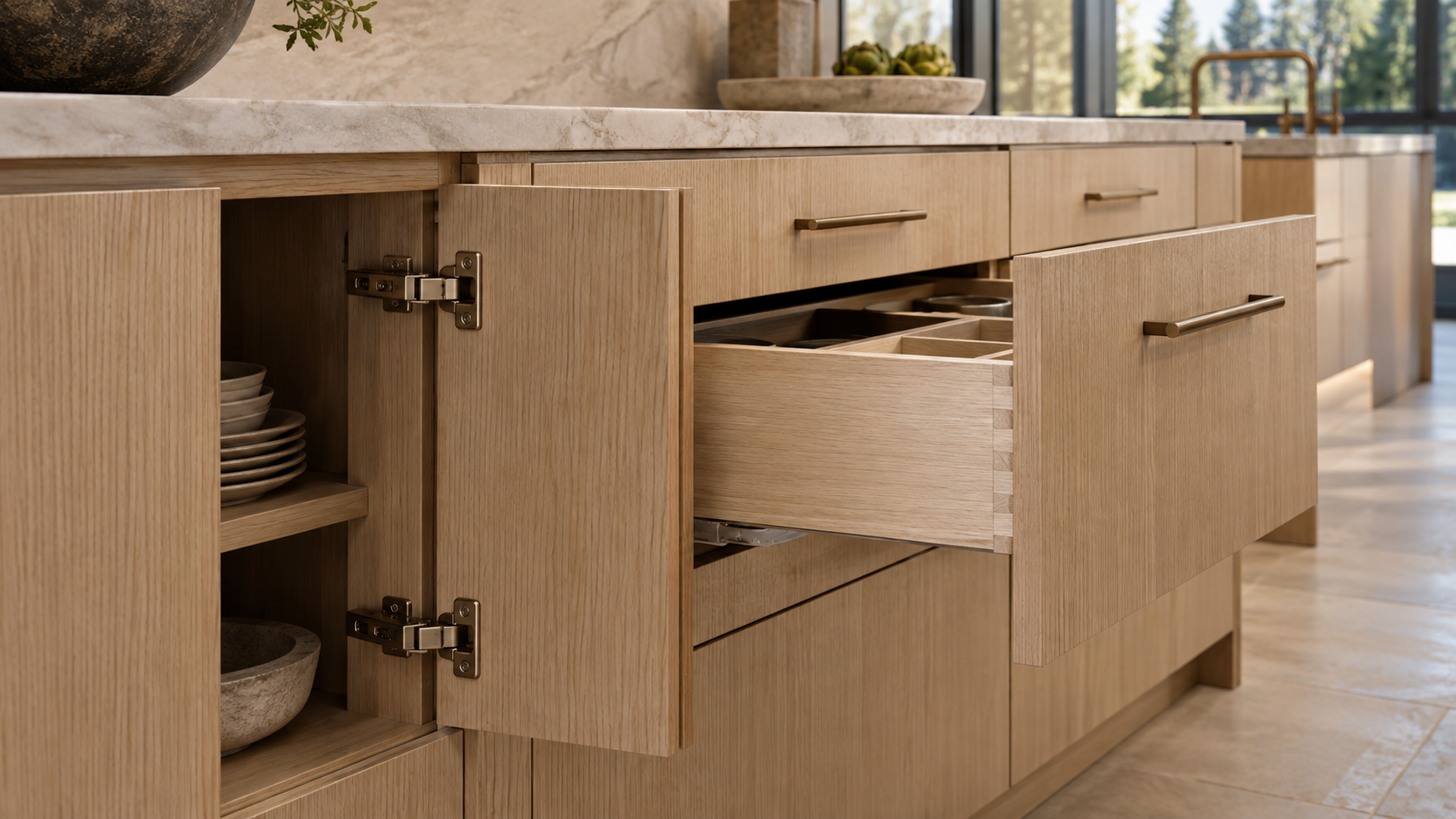
A quality hinge needs to do more than prevent a door from slamming.
Open the door fully and move it through its range of motion. The movement should feel controlled and stable. When closed, the door should return to the correct position and remain properly aligned with surrounding cabinetry.
Adjustment is also important. Cabinet hinges are typically designed to allow installers to refine door positioning so reveals and alignment can be corrected during installation and adjusted later when appropriate.
The hardware should also suit the size, weight, and construction of the door. A tall cabinet door places different demands on its hinges than a small upper cabinet door.
What Matters With Drawer Glides?
Drawer glides have a major influence on how cabinetry feels in everyday use.
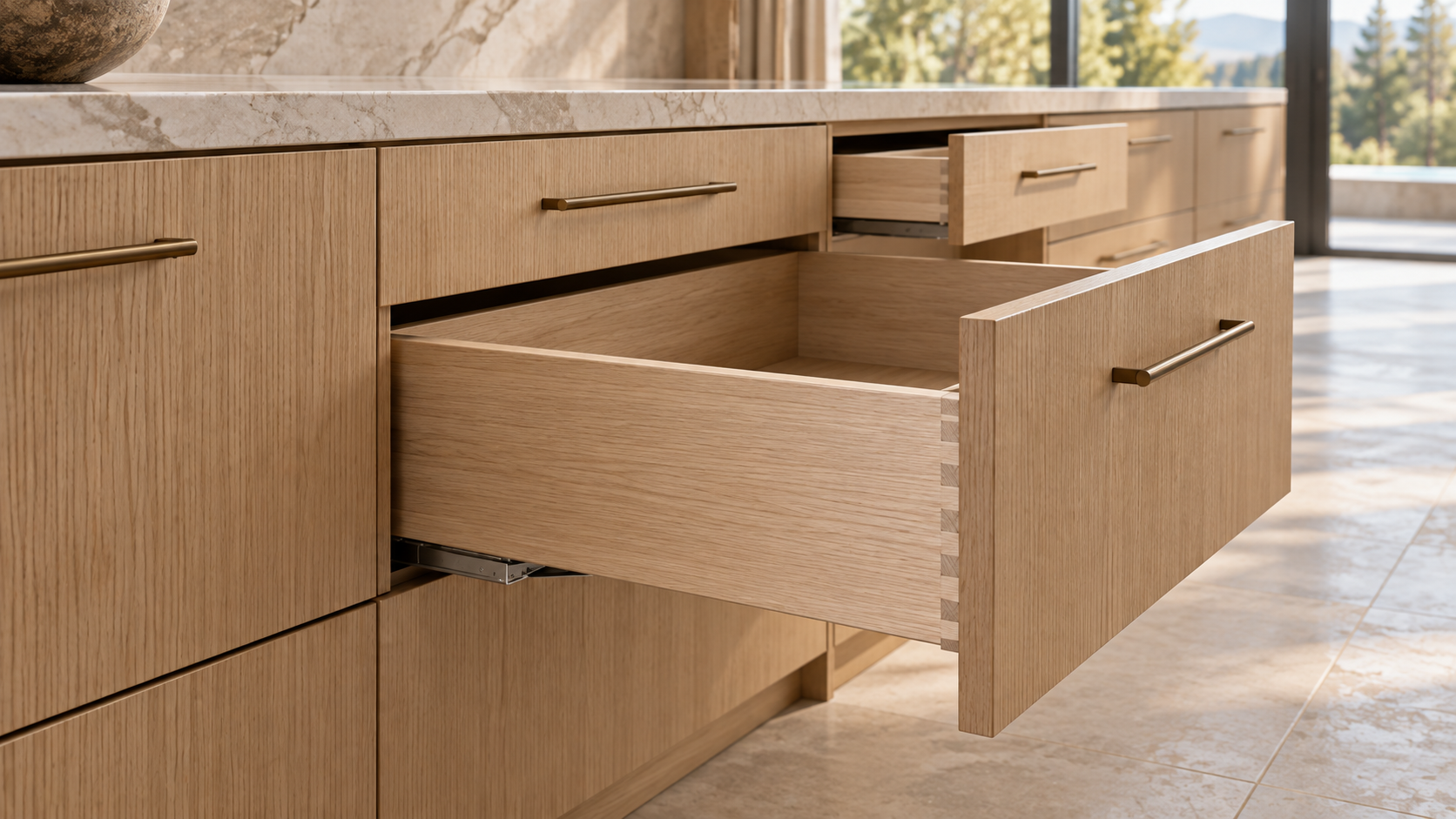
A premium drawer should move smoothly from closed to fully extended without excessive resistance or side-to-side movement. The glide system also needs to support the drawer appropriately, particularly when the drawer is wide, deep, or intended for heavier storage.
Full-extension glides are useful because they allow access to items at the back of the drawer. Undermount glides conceal much of the hardware beneath the drawer box, creating a cleaner interior appearance.
Soft-close is another function within that system, not a substitute for proper support and movement.
Why Does Load Capacity Matter?
A utensil drawer and a wide cookware drawer do not perform the same job.
Drawer hardware is engineered for specific applications and load ranges. A deep drawer intended for cookware, dishes, or other heavier items needs a glide system appropriate for its size and expected use.
This is why testing an empty showroom drawer provides only part of the information. Ask how the drawer system is specified and whether different hardware is used for larger or heavier configurations.
The objective is not simply a smooth drawer on the day of installation. It is consistent operation under the conditions the drawer was designed to handle.
Does the Hardware Affect Cabinet Alignment?
Yes. Hardware and alignment are closely connected.
Concealed hinges typically provide adjustment that helps position cabinet doors accurately. Drawer systems also need to be installed and adjusted correctly so fronts align with neighboring doors and drawers.
This becomes especially noticeable in kitchens with slab doors, inset cabinetry, or long horizontal drawer runs. When the design is visually simple, inconsistent reveals can become obvious.
Premium hardware gives the cabinetry system the ability to be adjusted precisely, but careful installation is still essential.
Is Concealed Hardware Better?
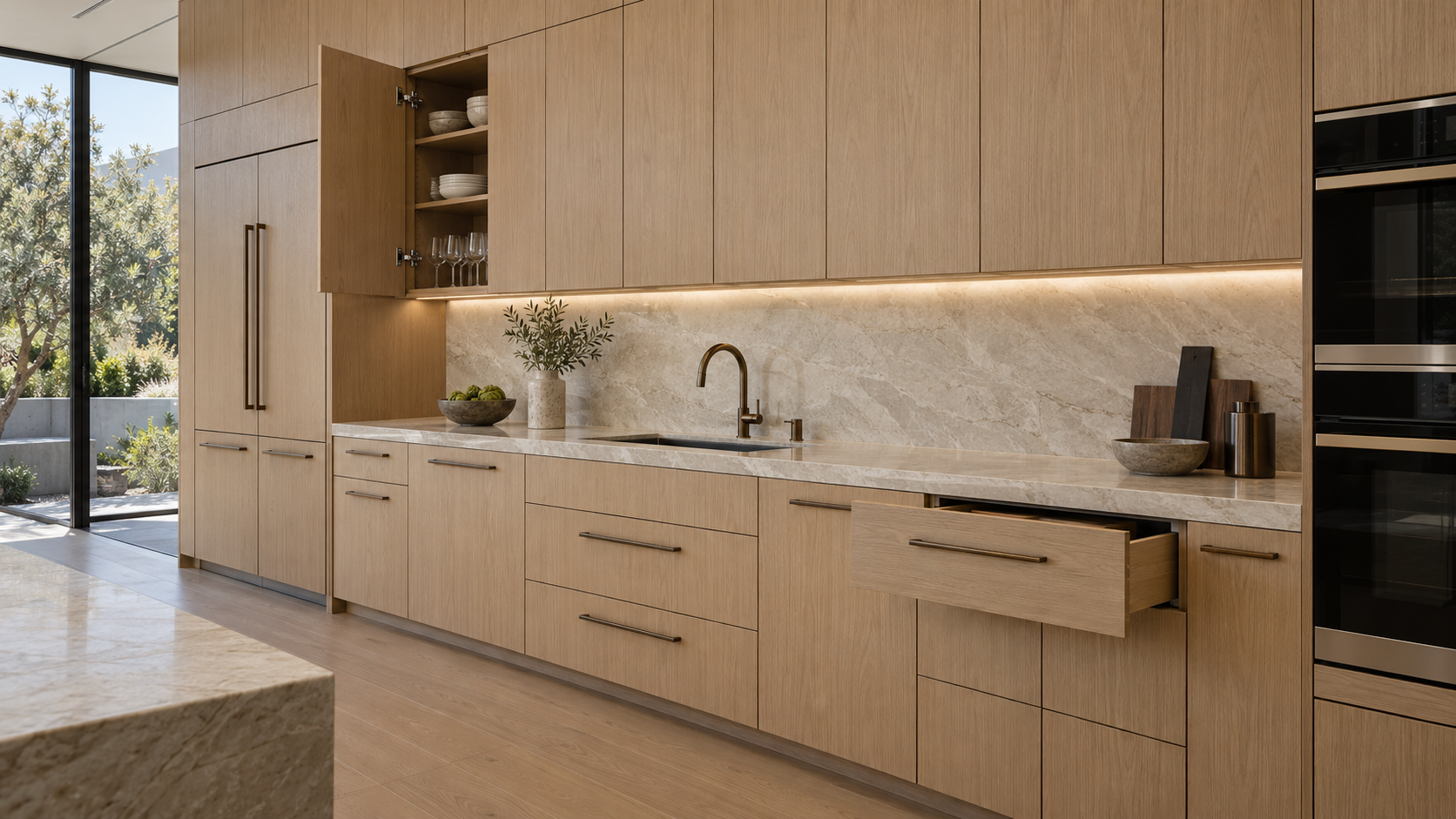
Concealed hardware can contribute to a cleaner appearance, particularly inside drawers and behind cabinet doors.
Undermount drawer glides keep the sides of the drawer box visually uninterrupted. Concealed hinges allow the exterior cabinetry to remain focused on doors, materials, and proportions rather than visible mechanical components.
But concealment alone does not establish quality.
The hardware still needs to operate smoothly, support the application, allow appropriate adjustment, and integrate correctly with the cabinet construction.
What Should Soft-Close Feel Like?
This is one of the easiest details to evaluate in person.
Open several cabinet doors and close them from different positions. Do the same with shallow and deep drawers. The soft-close mechanism should engage predictably and complete the closing motion without an abrupt stop.
Also pay attention to consistency. One drawer should not feel dramatically different from another similar drawer.
Hardware is touched constantly, so even subtle differences in movement become noticeable over time.
What Should You Test in a Cabinet Showroom?
Do not evaluate hardware from a specification sheet alone.
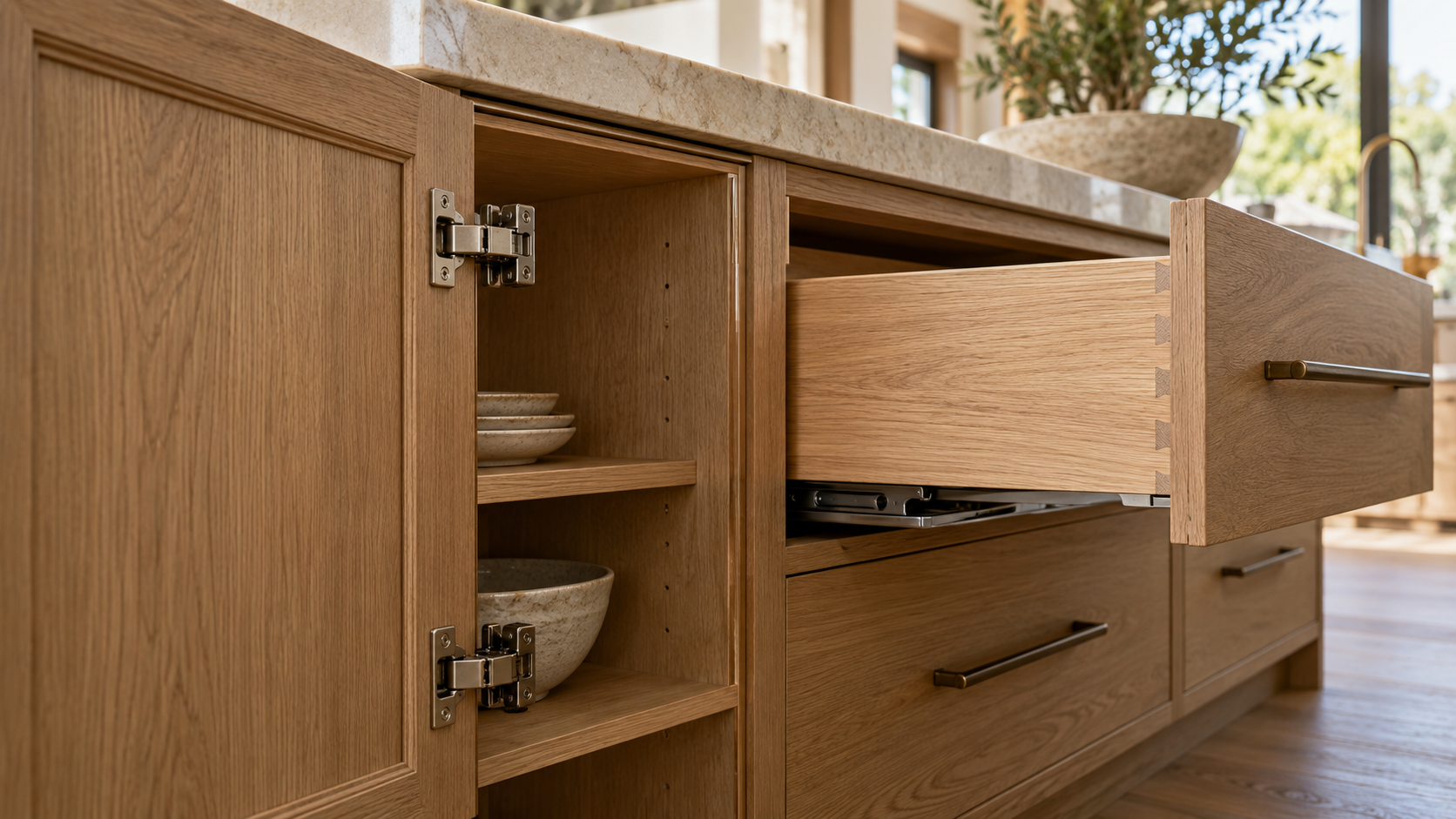
Open a small door and a tall door. Test shallow and deep drawers. Extend the drawers completely and notice their stability. Close them at a normal pace and observe how the soft-close mechanism engages.
Look at the cabinetry again once everything is closed. Doors and drawers should return to their intended positions with clean, consistent alignment.
If a particular drawer will hold heavy cookware or dishes, ask about the hardware specified for that application.
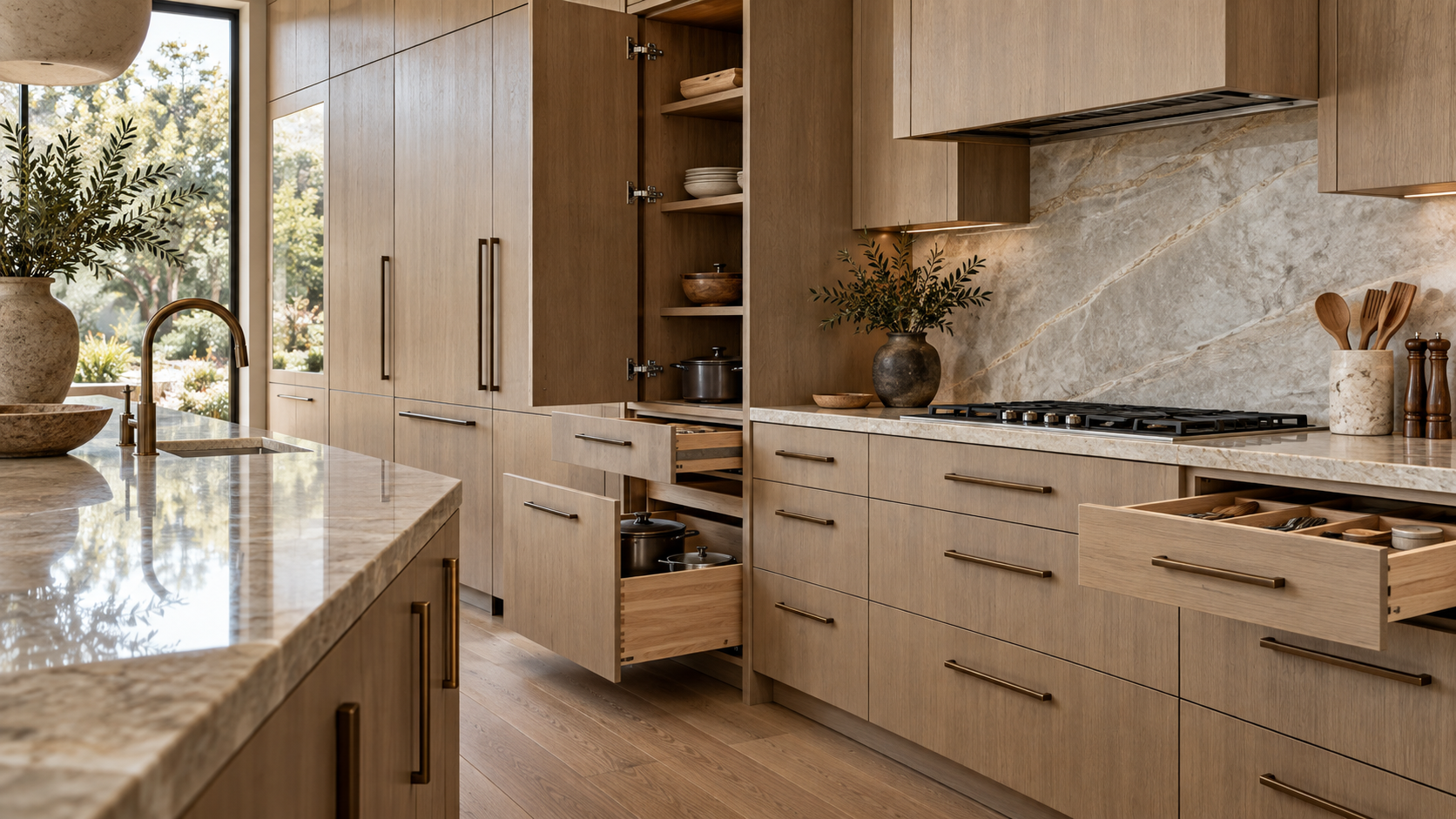
What Actually Matters With Cabinet Hardware?
Soft-close is useful, but it should be treated as one part of a larger hardware system.
Look for smooth operation, stability, appropriate support, full-extension access where needed, useful adjustability, consistent closing behavior, and precise integration with the cabinetry.
Most importantly, test the hardware in the context of the actual cabinet.
A premium hinge or drawer glide should contribute to cabinetry that feels controlled, substantial, and precise every time it is used.
Experience Cabinet Hardware at Atelier Design Society
Atelier Design Society works with homeowners, architects, interior designers, builders, and other design professionals evaluating premium cabinetry for Bay Area homes. At the Atelier Design Society showroom in Menlo Park, project teams can operate full-scale cabinetry and compare hinges, drawer glides, interiors, storage solutions, construction, materials, and finishes in person.