How Cabinet Box Construction Affects the Finished Kitchen
Cabinet box construction is mostly hidden once a kitchen is complete, but its influence is visible throughout the finished space.
The cabinet box creates the structure behind doors, drawers, shelves, appliances, and finished panels. Its construction affects alignment, interior space, hardware performance, installation, and how precisely multiple cabinets come together.
That is why evaluating premium cabinetry should involve more than choosing an attractive door style. The structure behind the door matters too.
What Is the Cabinet Box?
The cabinet box is the structural body of the cabinet. It typically includes the sides, bottom, back, and other components needed to support shelves, drawers, doors, and hardware.
Depending on the cabinetry system, boxes may use plywood, furniture board, or other engineered materials. Construction can also be framed or frameless, which changes how the front of the cabinet is built.
These decisions may seem technical, but they influence how the cabinetry functions and how the finished kitchen looks.
How Does Box Construction Affect Alignment?
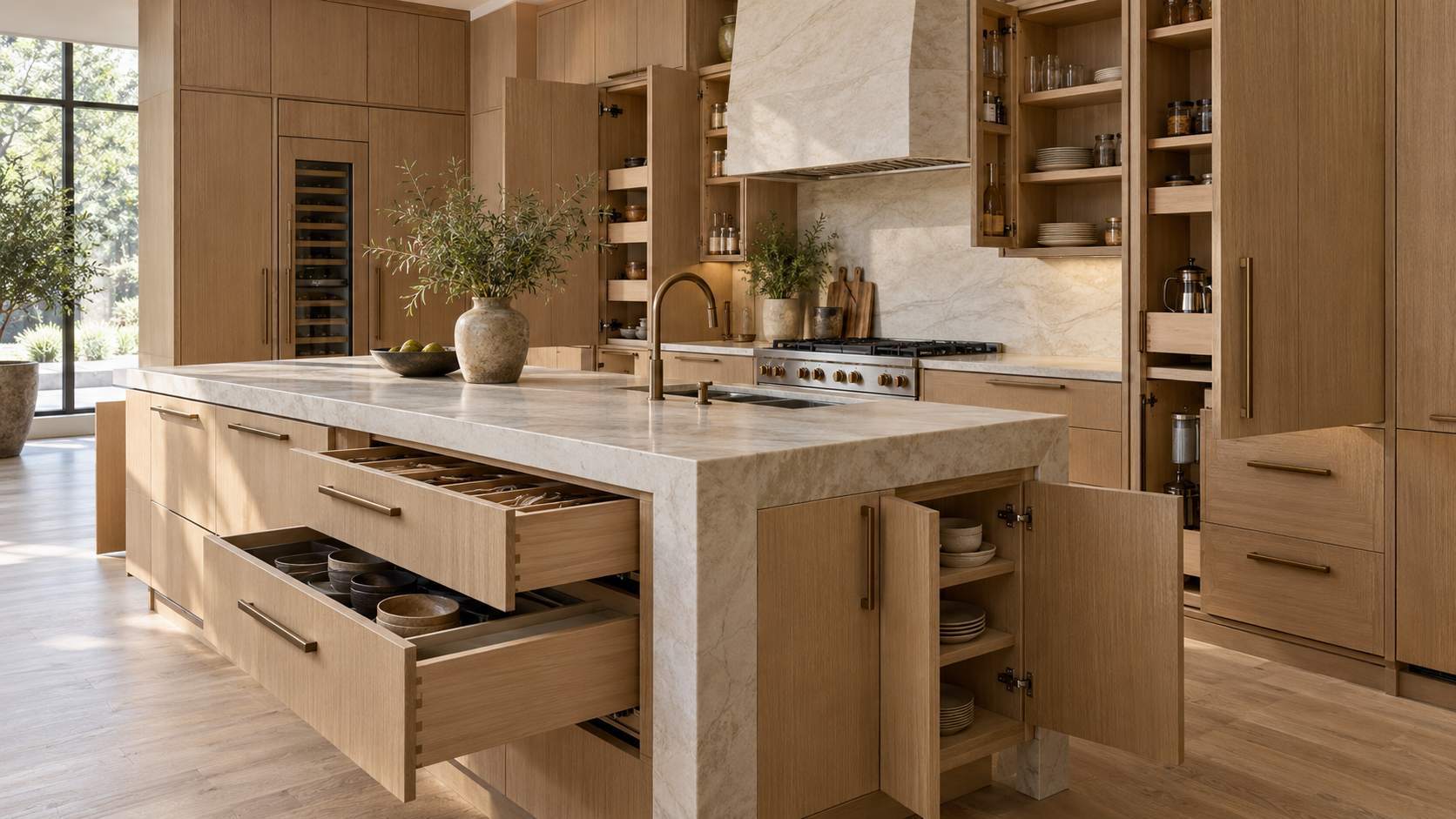
A finished kitchen often contains multiple cabinet boxes installed beside one another. Those individual units eventually need to read as one cohesive architectural composition.
Consistent construction helps create accurate relationships between doors, drawers, end panels, fillers, and neighboring cabinets. Once the fronts are installed, the reveals and horizontal lines should appear deliberate rather than irregular.
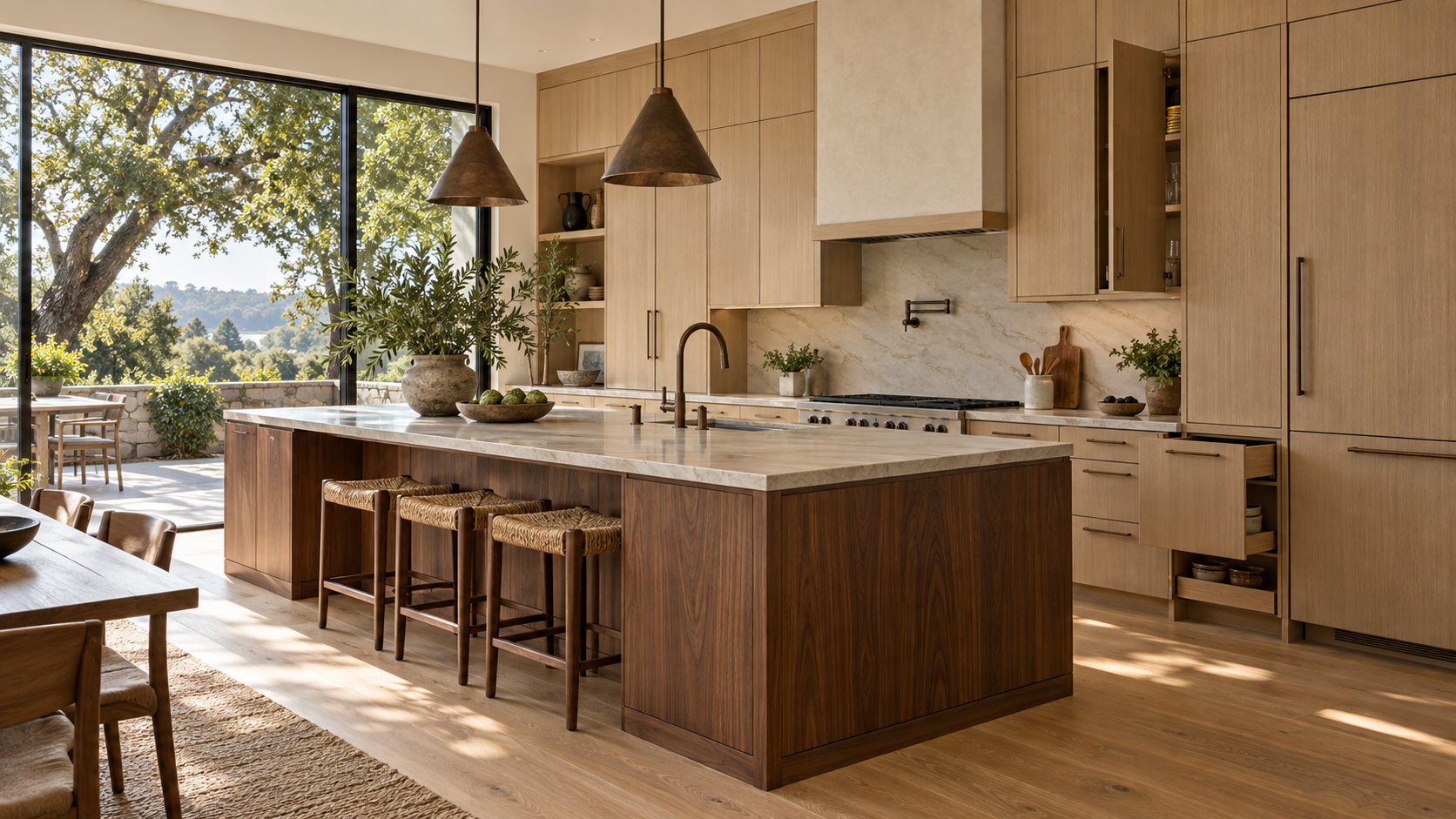
This becomes particularly important in visually restrained kitchens. Long runs of slab doors, stacked drawers, tall pantry cabinets, and integrated appliances can make small alignment differences easier to see.
The exterior precision of the kitchen begins with the structure behind it.
Does the Cabinet Box Affect Interior Space?
Yes, particularly when comparing framed and frameless construction.
Framed cabinets have a face frame attached to the front of the box. That frame becomes part of the opening and influences how the interior is accessed.
Frameless cabinets eliminate the separate front face frame. Doors attach directly to the cabinet structure, allowing a more direct opening into the interior.
Neither system is automatically better. The difference affects proportions, access, door relationships, and the overall design language of the cabinetry.
Why Do Shelves, Backs, and Interior Components Matter?
The cabinet box is more than its side panels.
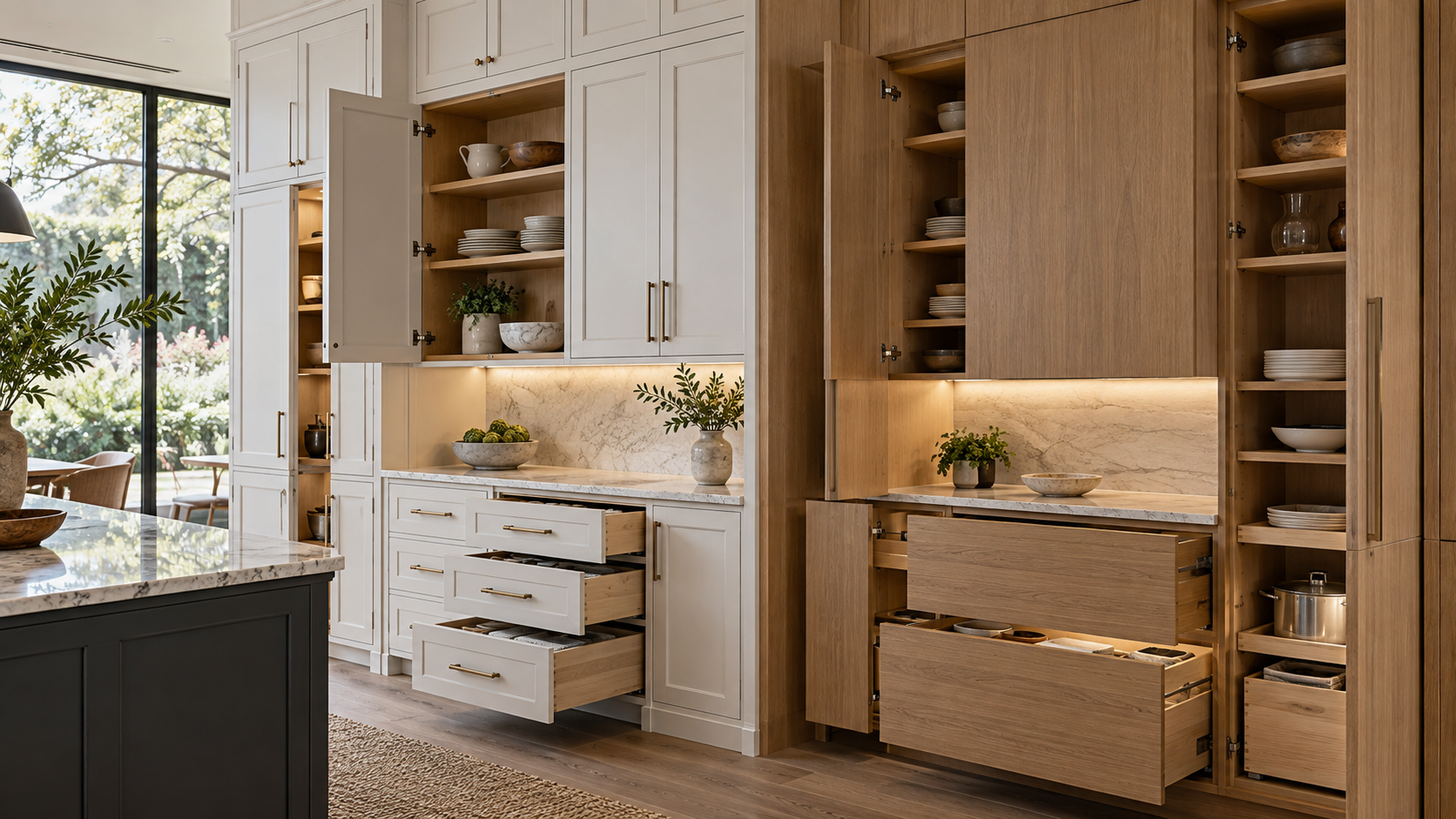
Shelves need to support the items stored on them. Cabinet backs contribute to the complete assembly and provide finished interior surfaces. Edges, connection points, and interior panels should also feel considered.
Look at how adjustable shelves fit within the cabinet and whether their support feels appropriate for the intended use. Examine the interior finish and transitions between components.
These details are especially important in tall pantry cabinets and other storage areas where the interior is used heavily.
How Does Box Construction Affect Hardware?
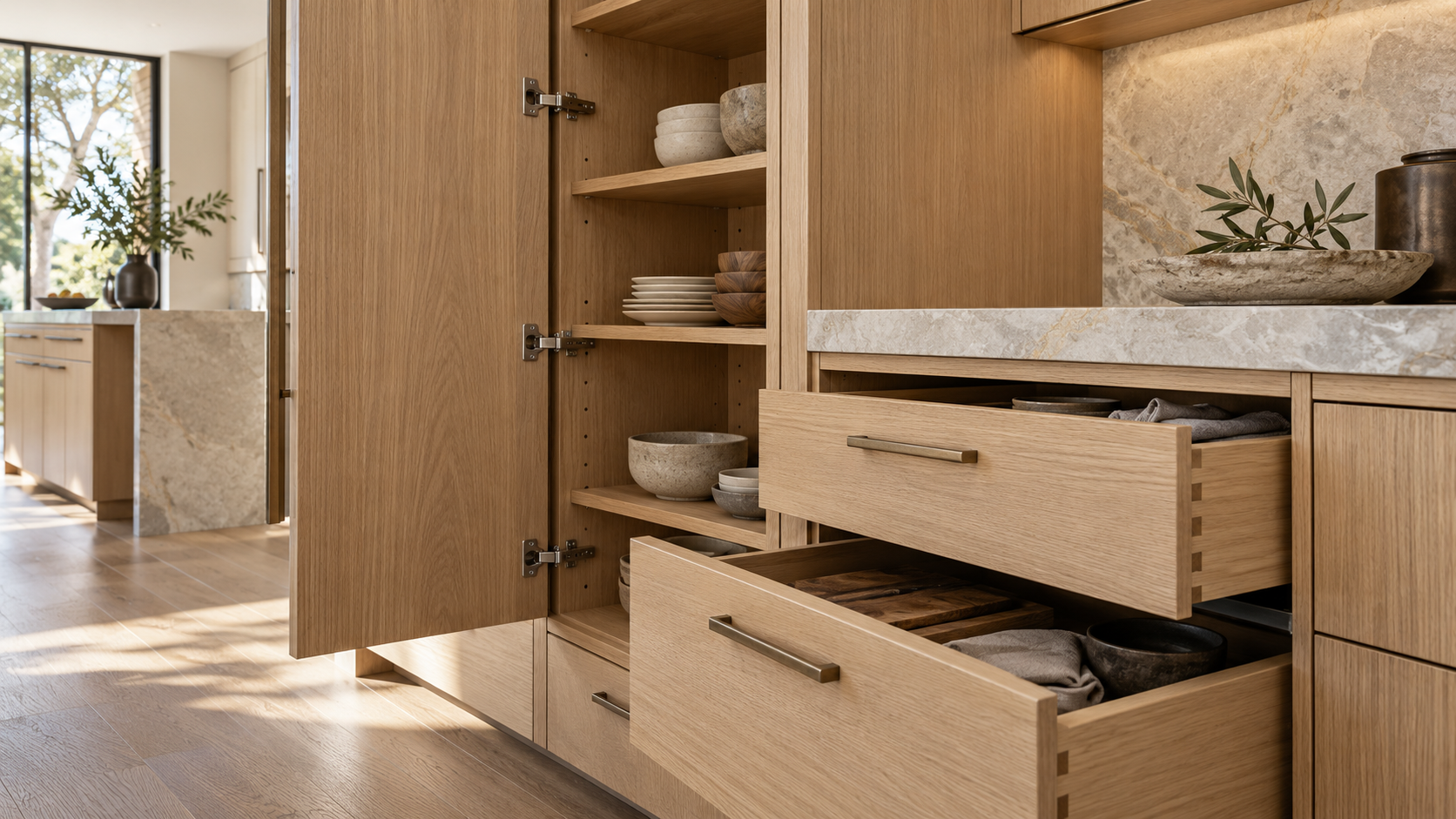
Hinges, drawer glides, pull-outs, and other hardware depend on the cabinet structure for support and accurate positioning.
A premium hardware system performs best when it is properly integrated with the cabinet construction. Concealed hinges need secure attachment and sufficient adjustment to maintain door alignment. Drawer glides need to remain correctly positioned while supporting the drawer through repeated use.
The box, hardware, and drawer system should therefore be evaluated together.
Open the cabinetry. Extend the drawers completely. Test tall doors. A finished kitchen may look quiet and simple, but considerable engineering is working behind those surfaces.
What Happens Around Appliances and Architectural Conditions?
Cabinet boxes do not exist independently from the rest of the kitchen.
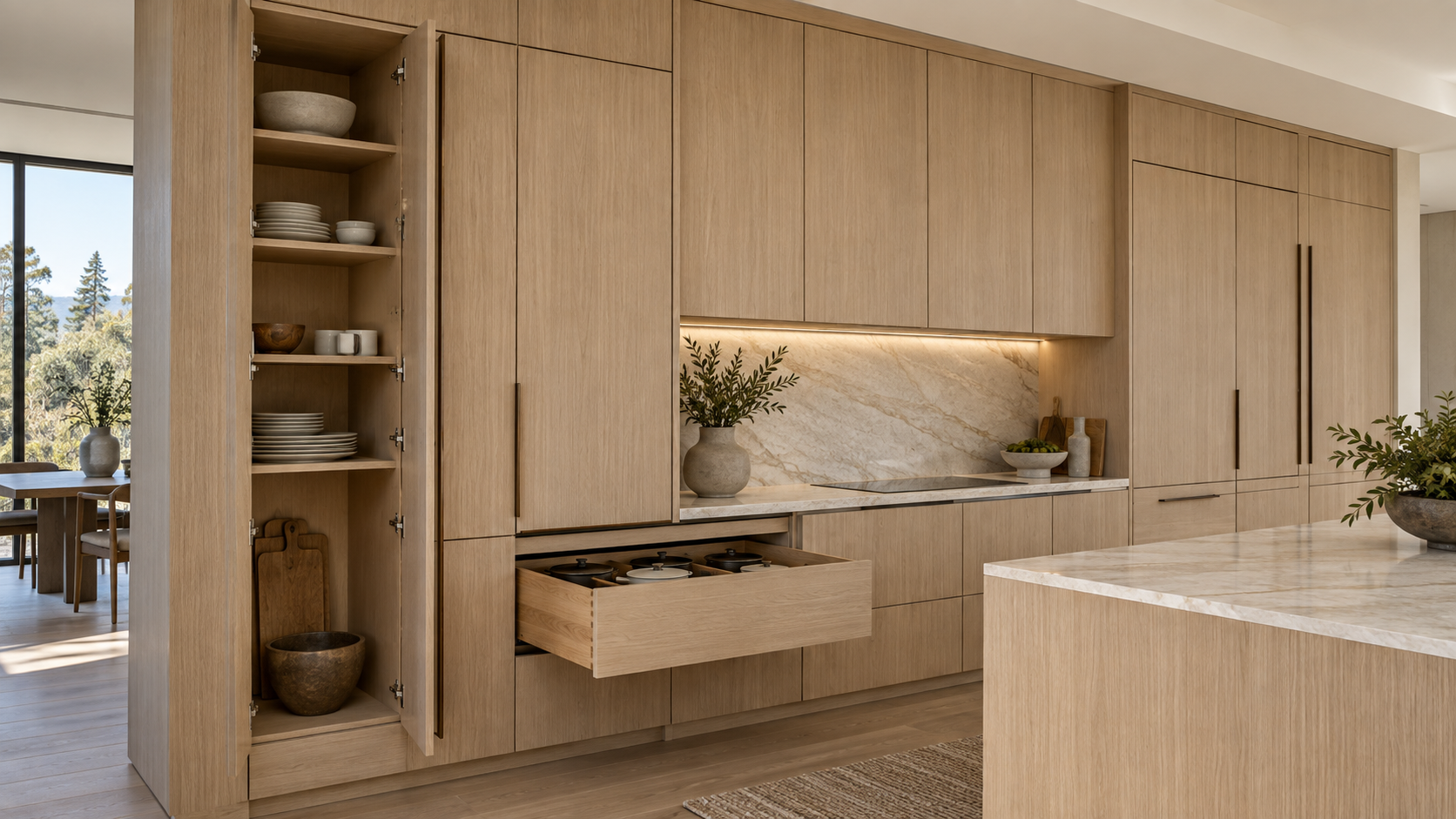
They meet refrigerators, ovens, dishwashers, walls, ceilings, countertops, islands, and architectural openings. Those transitions need to be planned carefully so the finished cabinetry appears integrated with the room.
End panels, fillers, appliance panels, and other finishing components help resolve these conditions. Their proportions and placement can affect whether the kitchen looks like a collection of separate cabinets or a coordinated architectural installation.
This is one reason accurate dimensions and technical coordination matter before cabinetry enters production.
Why Does Installation Matter?
Even well-made cabinetry depends on careful installation.
Walls, floors, and ceilings are not always perfectly level or square. Cabinet boxes need to be positioned and aligned so doors, drawers, panels, countertops, and appliances can meet correctly.
Installation is also where individual cabinets begin to read as a complete kitchen.
Look at long horizontal lines, adjacent doors, corners, end panels, appliance transitions, and the relationship between base and tall cabinetry. Precision should remain consistent across the entire room.
What Should You Look for When Comparing Cabinet Boxes?
Do not judge the box from one material specification alone.
Look at the materials, panel construction, shelves, backs, interior finish, edges, hardware attachment, drawer integration, and overall precision. Compare how the cabinetry feels when open with how it looks when everything is closed.
A well-designed cabinet box should support the parts of the kitchen you interact with every day while helping the finished cabinetry remain precise and cohesive.
Much of that structure eventually disappears from view. Its effect on the kitchen does not.
Explore Cabinet Construction at Atelier Design Society
Atelier Design Society works with homeowners, architects, interior designers, builders, and other design professionals evaluating premium cabinetry for Bay Area homes. At the Atelier Design Society showroom in Menlo Park, project teams can examine cabinet box construction, framed and frameless systems, interiors, hardware, drawers, materials, and full-scale installations while comparing cabinetry for their project.