What to Look for When Comparing Cabinet Displays in a Showroom
A cabinet showroom gives you something photographs and small samples cannot: the opportunity to evaluate cabinetry at full scale.
But when several displays look beautiful, knowing what to compare can be difficult. Instead of focusing only on door style or color, look closely at construction, proportions, finishes, interiors, hardware, and the small details that determine how cabinetry will look and function in a real home.
Here is what deserves your attention when comparing cabinet displays in person.
1. Look at the Overall Proportions First
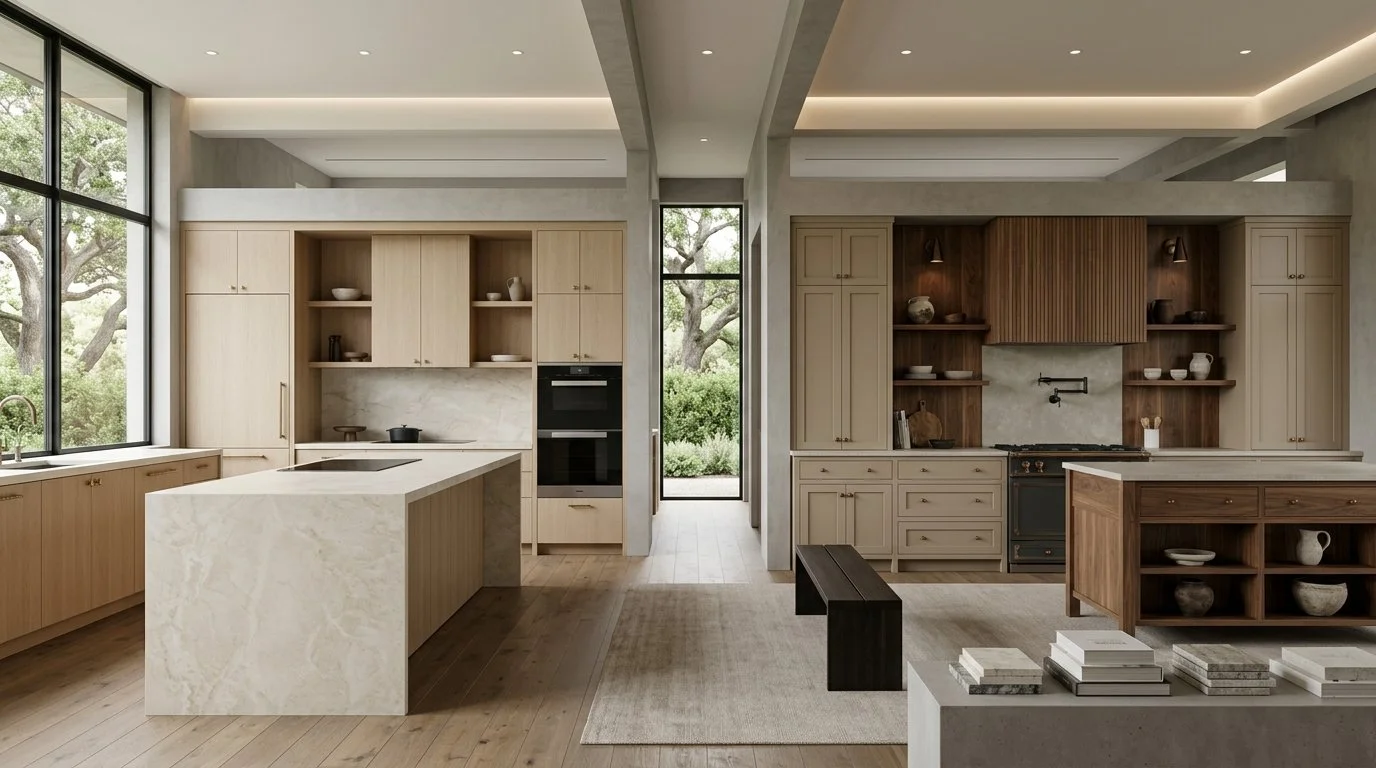
Before examining individual details, stand back and look at the complete cabinetry elevation.
Notice the relationship between doors, drawers, tall cabinets, open areas, appliances, and surrounding architecture. Does the composition feel balanced? Are there too many divisions, or does the cabinetry read as a calm architectural element?
Full-scale displays are especially useful for understanding proportion. A door style that looks attractive on a small sample can feel very different when repeated across an entire wall.
2. Examine Door and Drawer Alignment
Once you have looked at the overall composition, move closer.
Check the spacing between doors and drawers. Look at reveals, corners, end panels, and transitions between different cabinet sections. Open several doors and drawers, then close them again and see how consistently everything aligns.
Simple cabinetry can make these details particularly noticeable. A clean slab door leaves little visual distraction, so precise alignment and proportion become an important part of the finished appearance.
3. Compare Construction, Not Just Style
Two cabinet displays can have a similar exterior appearance while being constructed differently.
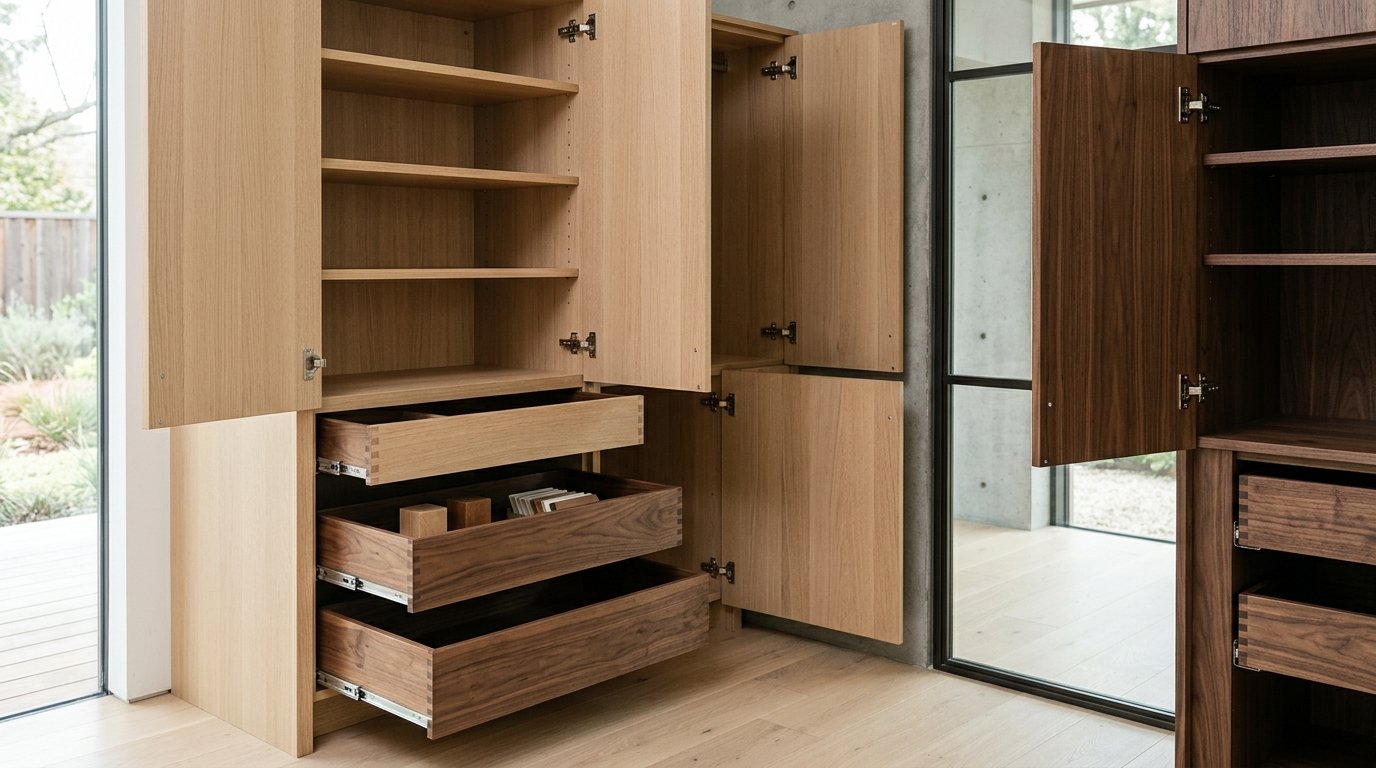
Open the cabinetry and examine the boxes, drawers, shelving, hinges, and interior finishes. Notice how substantial the components feel and how smoothly the hardware operates.
This is also a good opportunity to compare different cabinetry systems. Framed and frameless construction, for example, can create different interior access and exterior proportions.
Understanding what is behind the door helps you compare cabinetry based on more than appearance.
4. Study the Finish at Full Scale
Cabinet finishes should be evaluated across more than a small door sample.
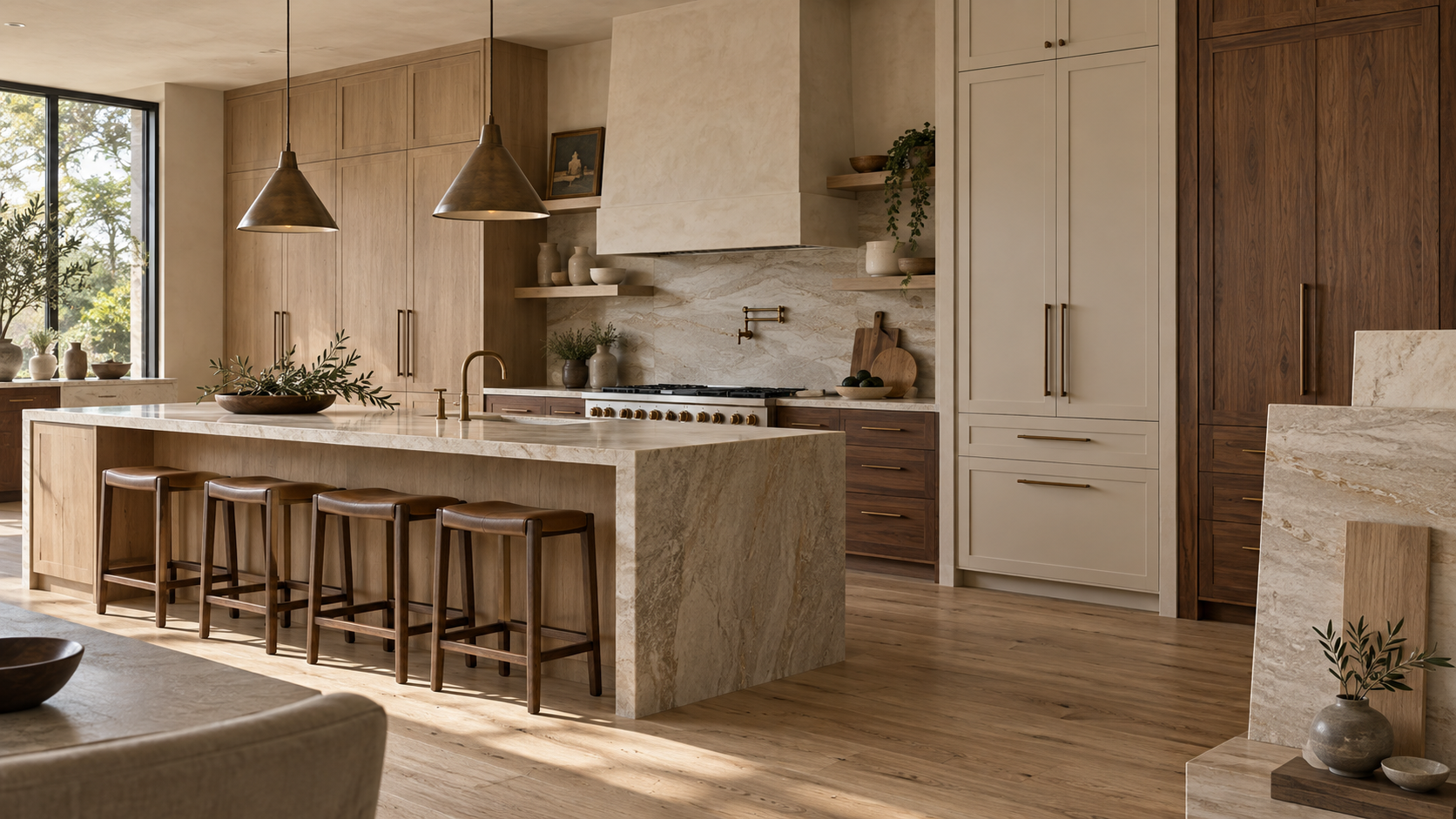
With natural wood, look at grain direction, variation, stain, and how the material changes across several adjacent doors. Rift-cut white oak may create a quieter linear appearance, while walnut can introduce more tonal movement and depth.
For painted cabinetry, look at color and sheen across larger surfaces. Observe the finish from different angles and under different lighting conditions.
The question is not simply whether you like the finish. Consider whether you would still like it across an entire kitchen.
5. Pay Attention to How Materials Work Together
A good display also allows you to evaluate cabinetry in context.
Look at how the cabinetry interacts with countertops, backsplash materials, flooring, hardware, wall finishes, and lighting. Notice whether the materials compete for attention or create a clear hierarchy.
If you are already considering a flooring or stone material for your project, bring a physical sample when possible. Comparing it directly with cabinet finishes can reveal undertones and relationships that are difficult to judge online.
6. Test the Interior Storage
Do not spend the entire showroom visit looking at closed cabinets.
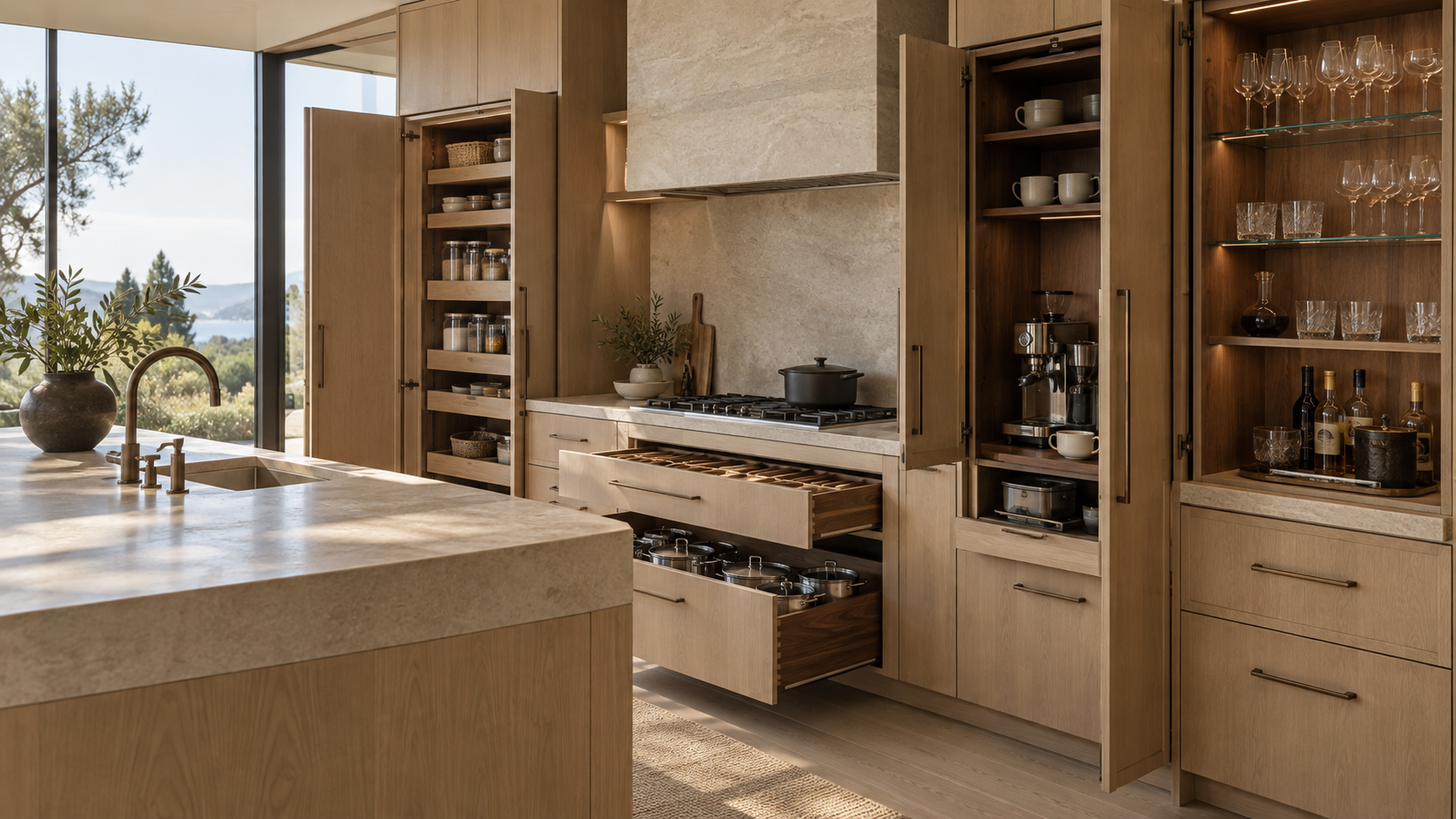
Open drawers, pantry cabinets, appliance storage, corner solutions, and tall cabinetry. Think about whether those interiors would actually support the way you use your kitchen.
A beautifully designed drawer system may be useful for cookware but unnecessary somewhere else. A tall pantry might work well for one household while another needs more drawers or dedicated appliance storage.
Use the displays to understand the possibilities, then consider which solutions solve real problems in your own home.
7. Look at the Details Around Appliances and Architecture
Some of the most useful details in a cabinet display are not the cabinets themselves, but how they connect to everything around them.
Examine panel-ready appliances, cabinetry-to-ceiling conditions, countertop edges, end panels, fillers, integrated lighting, and transitions around walls or architectural openings.
These details show how thoughtfully the cabinetry system can be resolved within a complete room.
If your project has unusual ceilings, windows, existing flooring, or specific appliances, ask how the cabinetry can respond to those conditions. A showroom display can become a starting point for understanding what is possible in your own space.
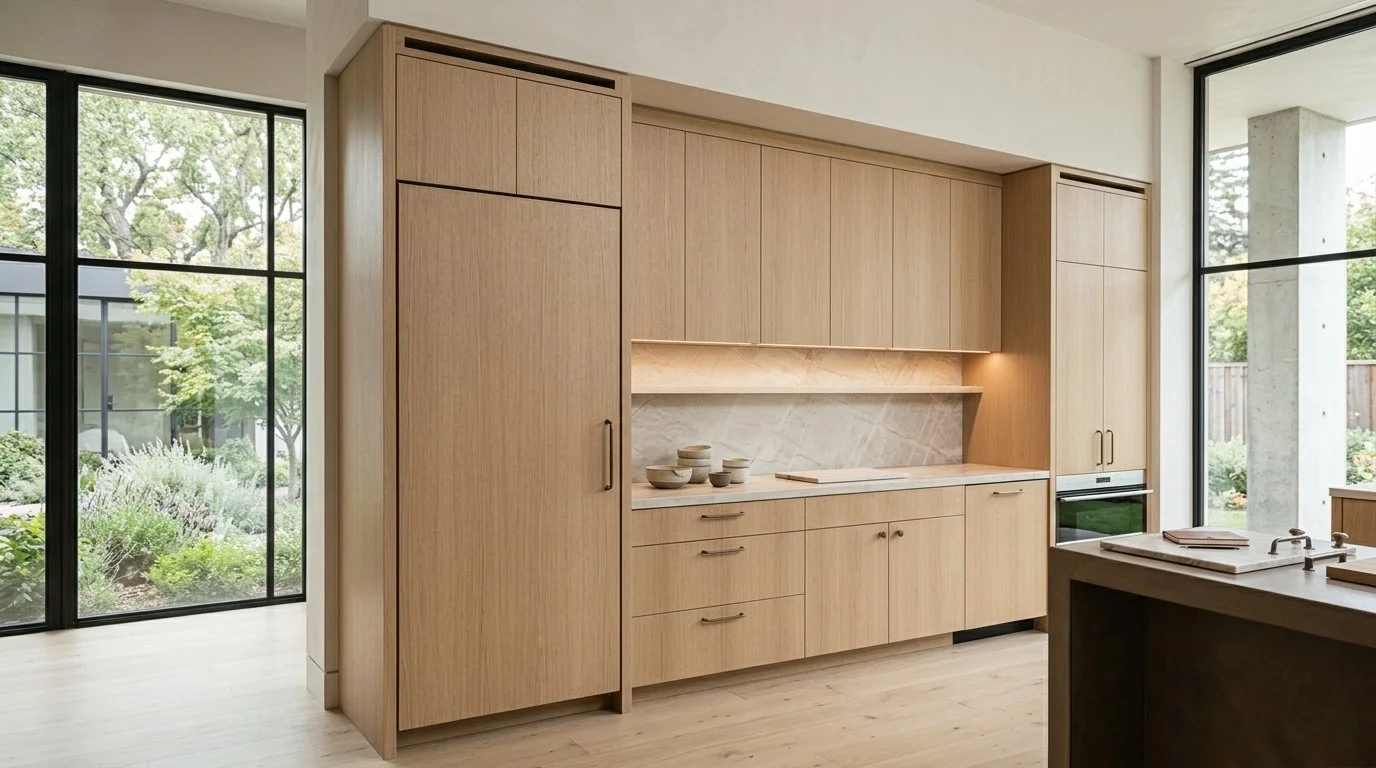
What Should You Compare Before Choosing Cabinetry?
When comparing cabinet displays, look beyond which kitchen you find most attractive. Pay attention to how the cabinetry is built, how the doors and drawers align, how finishes appear at scale, how interiors function, and how the cabinetry connects with appliances and surrounding materials.
Also ask questions. Find out which details are standard, which can be customized, what construction system you are seeing, and whether the displayed finish accurately represents the range of variation you can expect.
A showroom visit is most useful when you touch, open, compare, and examine the cabinetry rather than simply walking through the displays.
Compare Cabinetry in Person at Atelier Design Society
Atelier Design Society works with homeowners, architects, interior designers, builders, and other design professionals evaluating premium cabinetry for Bay Area homes. At the Atelier Design Society showroom in Menlo Park, project teams can compare cabinetry construction, natural woods, painted finishes, hardware, interiors, storage solutions, surfaces, and full-scale installations before developing a direction for their project.