7 Questions to Ask Before Choosing a Cabinet Showroom
Choosing a cabinet showroom is about more than finding a place with attractive displays. The right showroom should help you understand cabinetry quality, compare materials in person, explore different levels of customization, and make decisions that work with the architecture and scope of your project.
Before selecting a cabinetry partner for a kitchen remodel, new construction home, or whole-home project, ask these seven questions.
1. Can I See Full-Scale Cabinetry Displays?
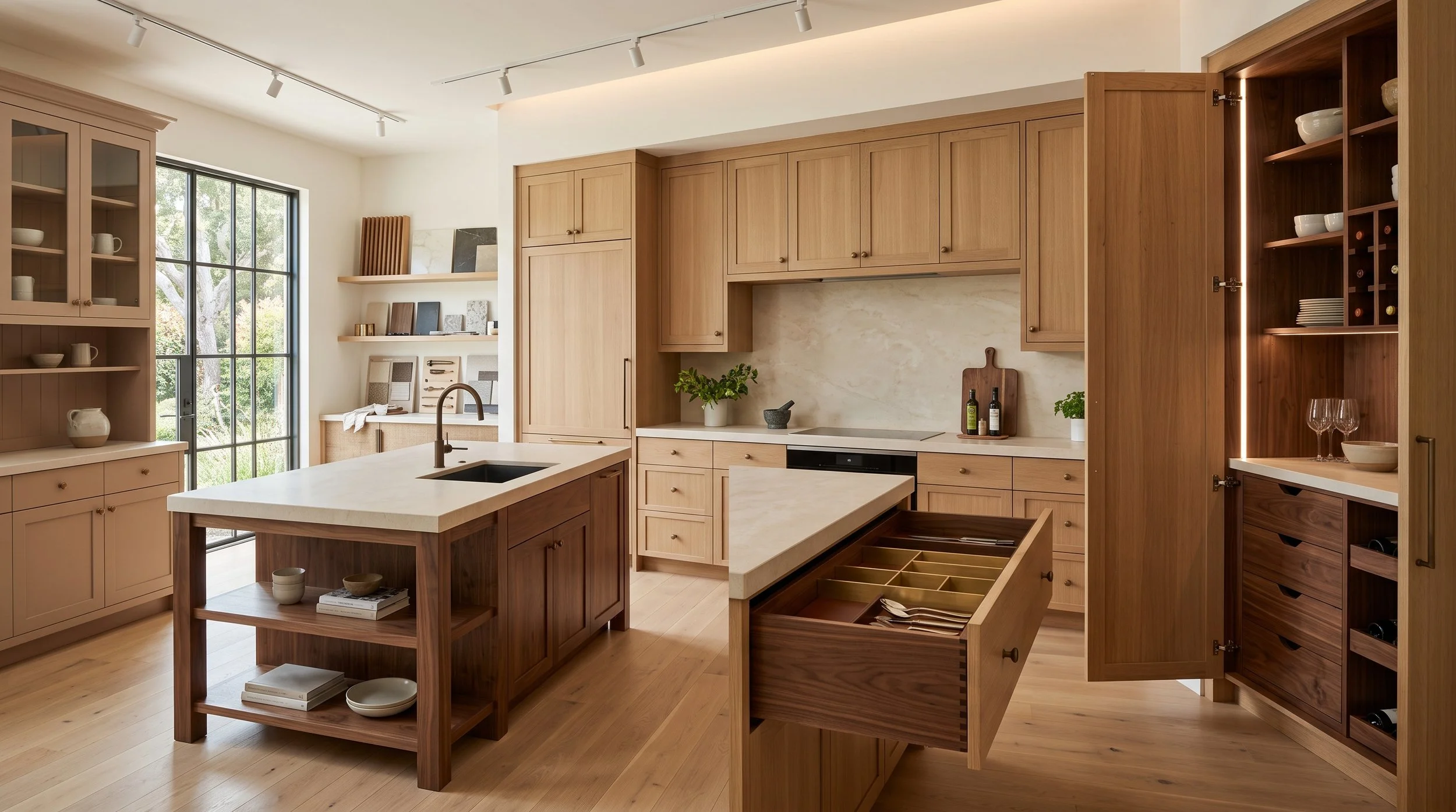
Small door samples are useful, but they cannot show you everything about cabinetry.
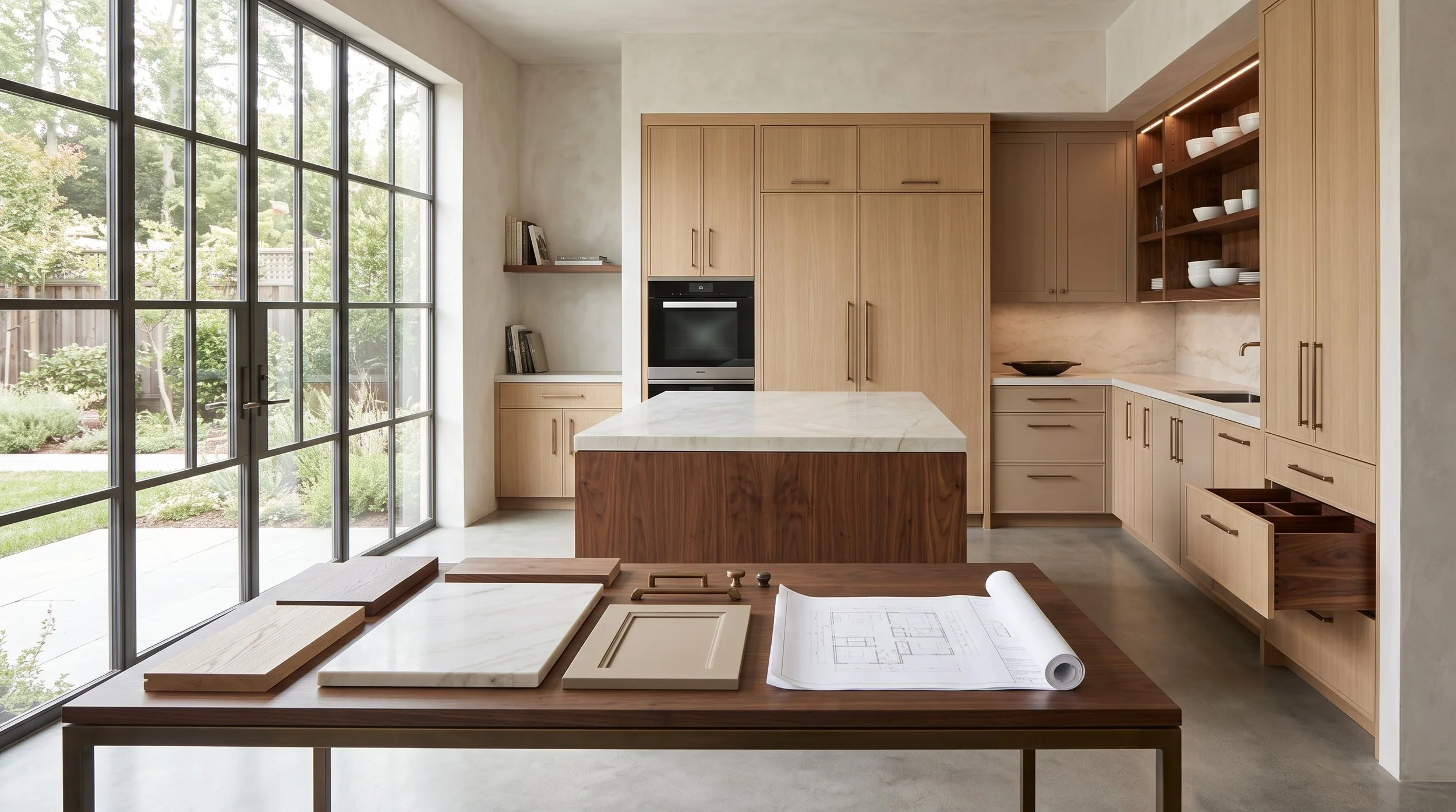
Full-scale displays allow you to experience proportions, door and drawer alignment, interior construction, hardware, integrated appliances, storage, and how finishes look across a larger surface. You can also see details that may be difficult to evaluate online, including reveals, grain direction, panel conditions, and transitions between cabinetry and stone.
A showroom should help you understand how the cabinetry will actually look and function once installed in a home.
2. What Cabinetry Options and Levels of Customization Are Available?
Not every project requires the same cabinetry solution. Ask whether the showroom offers fully custom, semi-custom, framed, frameless, or other cabinetry options appropriate for different design requirements.
A highly customized residence may require specific dimensions, unusual finishes, specialized storage, or architectural detailing. Another project may be well served by a premium cabinetry collection with broad choices in finishes, door styles, and configurations.
Having access to different options makes it easier to select cabinetry based on the project rather than forcing the project into one system.
3. Can I Compare Materials in Person?
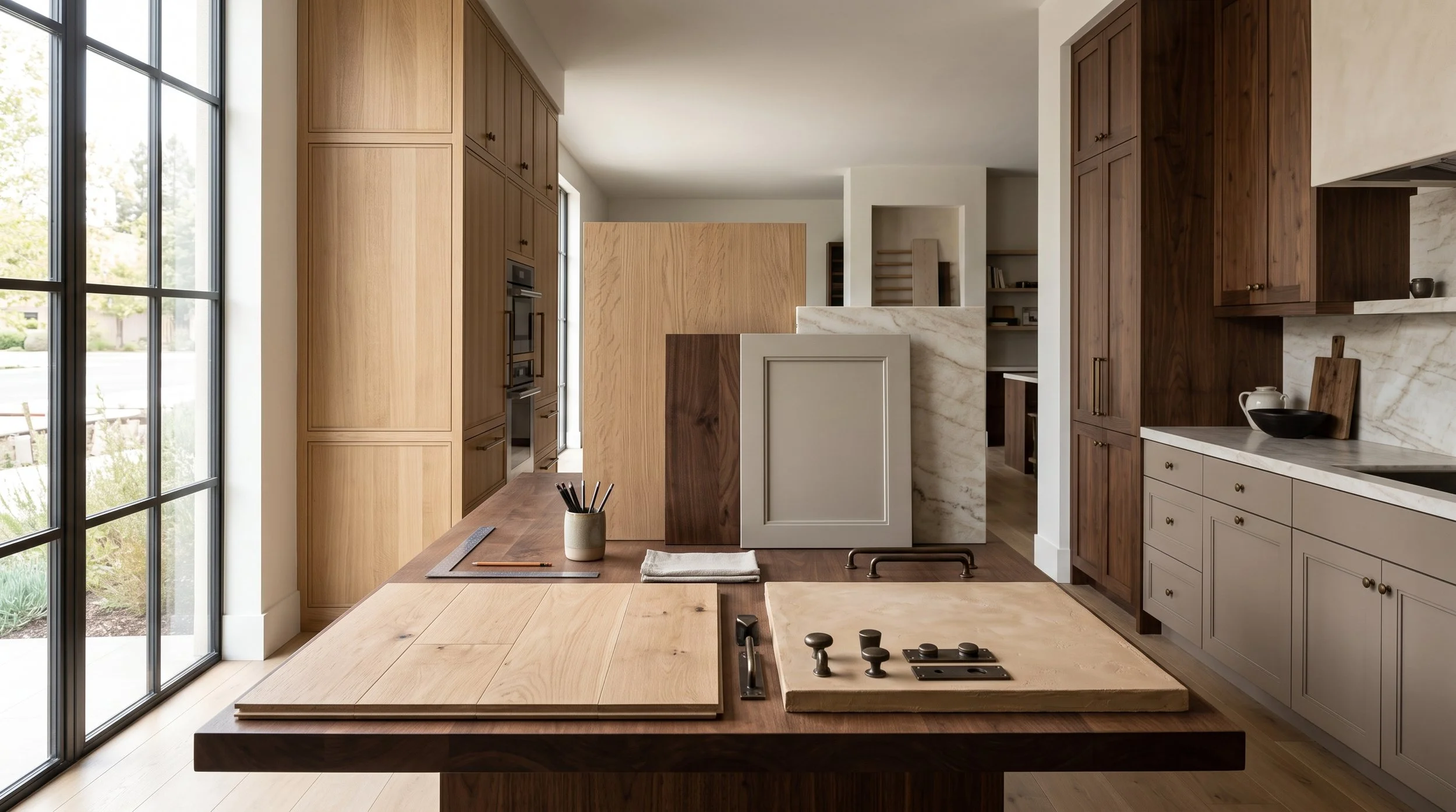
Cabinetry finishes should be evaluated physically whenever possible. Wood grain, stain, paint color, texture, and sheen can look significantly different on a screen.
Ask whether you can compare cabinetry samples with stone, flooring, hardware, and other materials being considered for the project. If you already have flooring or finish samples, bring them with you.
The objective is to understand the complete palette rather than approving each material independently.
4. Will You Help Coordinate Cabinetry With the Rest of the Project?
Cabinetry does not exist independently. Appliances, plumbing, electrical locations, lighting, flooring, stone, windows, ceilings, and architectural openings can all affect it.
Ask how the cabinetry team works with homeowners and project professionals during the specification process. If an architect, interior designer, or builder is involved, understand how cabinetry information and decisions will be coordinated with them.
This becomes increasingly important on complex remodels and custom homes, where small dimensional changes can affect several trades.
5. Can We Plan Cabinetry Beyond the Kitchen?
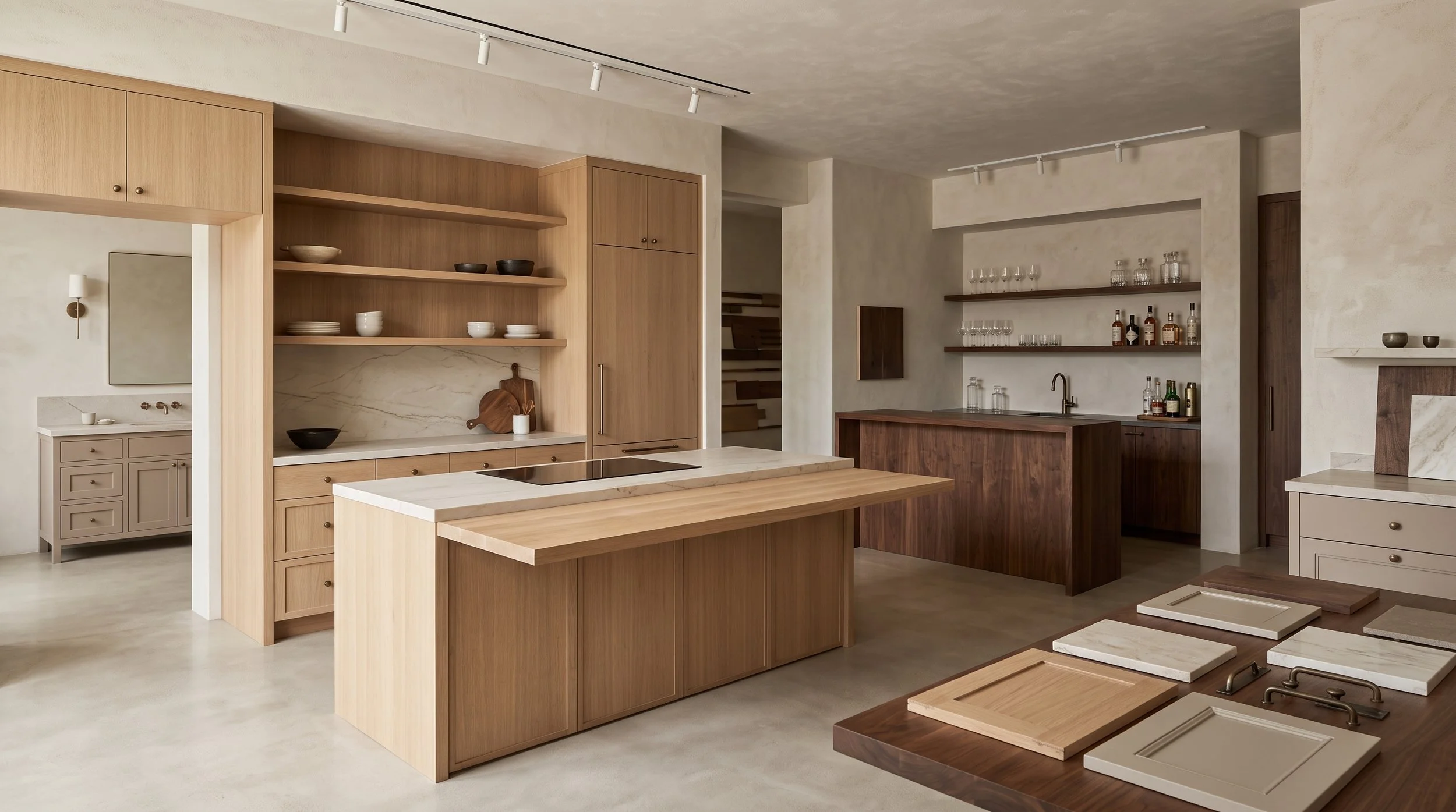
If your project includes cabinetry in several rooms, ask whether the showroom can help develop those spaces together.
Bathroom vanities, wardrobes, bars, home offices, libraries, laundry rooms, mudrooms, media spaces, and secondary kitchens can all benefit from being considered as part of a larger cabinetry strategy.
This does not mean using identical cabinetry everywhere. It allows wood species, painted finishes, hardware, proportions, and details to evolve throughout the home while maintaining a consistent material language.
6. What Happens Between Selection and Installation?
A showroom appointment is only one part of the cabinetry process. Before choosing a cabinetry partner, understand what happens after the initial selections are made.
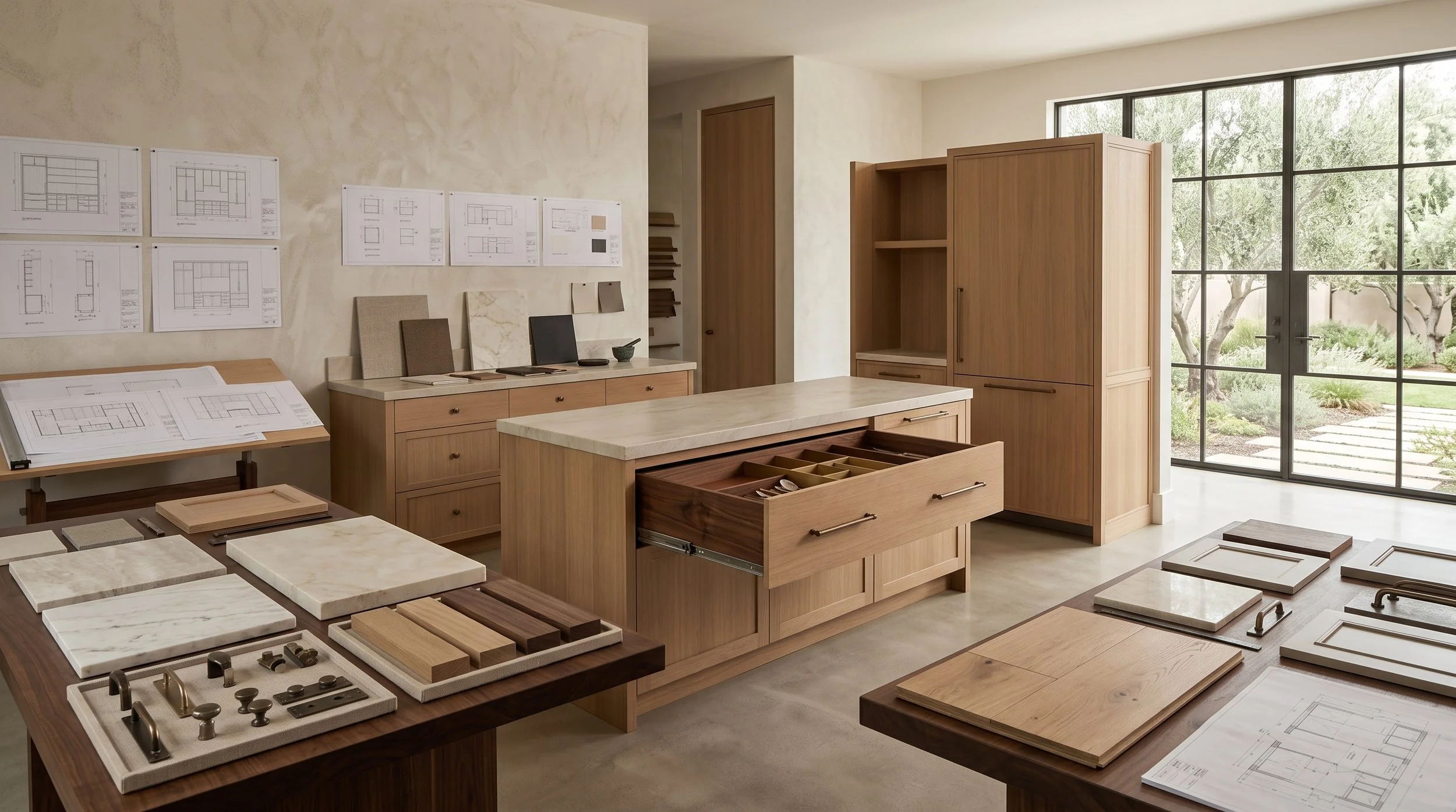
Ask how the project moves from design direction to specification, drawings, approvals, production, delivery, and installation coordination. Find out when appliance information is required, when finishes need to be approved, and what must be confirmed before cabinetry can be ordered.
You should also understand how shop drawings and final cabinetry details are reviewed. A clear process helps ensure that the design developed in the showroom translates accurately to the finished home.
7. Can the Showroom Support the Specific Needs of My Project?
Finally, ask whether the showroom is the right resource for the actual scope of your project.
A kitchen-only remodel has different requirements from a large custom residence with cabinetry throughout multiple rooms. A project led by an interior designer may need a different workflow from one being managed directly by a homeowner and builder.
Discuss the project type, approximate scope, location, timeline, design team, and level of customization you are considering. This gives both sides an opportunity to determine how the cabinetry process should move forward.
A strong showroom experience should provide more than products to choose from. It should give the project a clearer direction.
How Do You Choose the Right Cabinet Showroom?
Before making a decision, look beyond the number of cabinet doors on display. Consider whether you can experience cabinetry at full scale, compare real materials, understand different levels of customization, plan multiple rooms, and receive the coordination your project requires.
The showroom should also give you a clear understanding of what happens after selections are made. Cabinetry is a significant part of a remodel or custom home, and the process behind it matters as much as what you see on the showroom floor.
Those seven questions can help you determine whether a showroom is equipped to support the project from early specification through the stages that follow.
Visit Atelier Design Society
Atelier Design Society works with homeowners, architects, interior designers, builders, and other design professionals planning premium cabinetry throughout the Bay Area. At the Atelier Design Society showroom in Menlo Park, project teams can compare cabinetry collections, natural woods, painted finishes, construction, hardware, interiors, storage solutions, surfaces, and full-scale installations while developing a coordinated direction for the project.