Cabinetry for Portola Valley Custom Homes: Balancing Warmth and Modern Design
Portola Valley homes often sit in close conversation with the landscape. Mature trees, open views, natural light, and quieter residential architecture create a setting where highly polished or overly decorative interiors can feel disconnected from their surroundings. For a modern custom home, the challenge is finding the right balance. Cabinetry needs enough precision to support clean architecture, but enough material warmth to keep the interior from feeling cold.
Natural wood, restrained painted finishes, tactile stone, thoughtful proportions, and carefully controlled detailing can create that balance without pushing the home toward either extreme.
What Makes Warm Modern Cabinetry Work?
Warm modern design is less about a specific cabinet style and more about how materials and proportions are handled. Clean cabinet elevations provide architectural structure. Natural wood introduces grain and variation. Stone and plaster add texture. Hardware can remain quiet rather than becoming decorative.
The result should feel streamlined but not sterile. In Portola Valley, this approach can also create a stronger relationship between the interior and the natural environment surrounding the home.
1. Start With Natural Wood
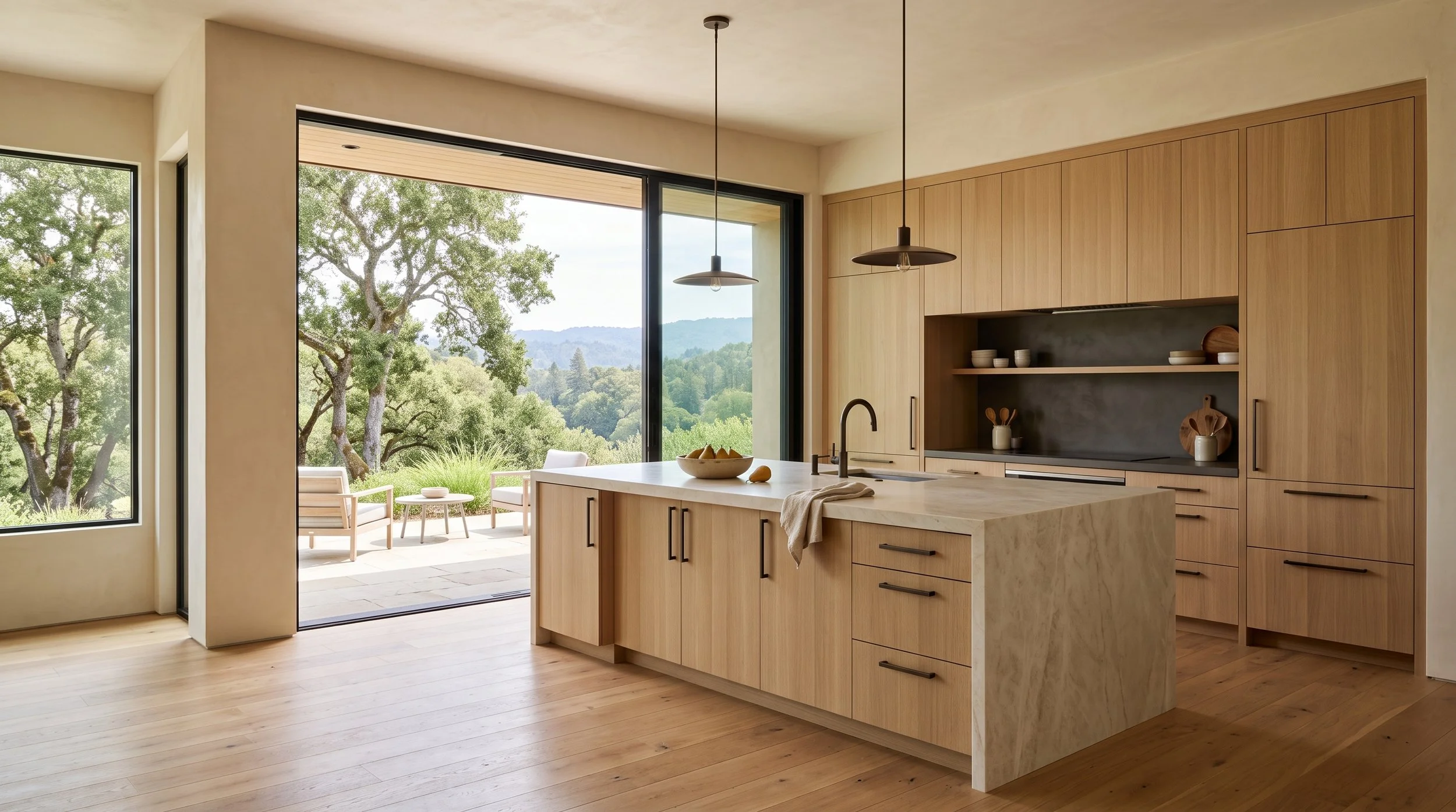
Wood is one of the most effective ways to bring warmth into contemporary cabinetry. Rift-cut white oak works particularly well when the design calls for clean lines and controlled grain. Walnut creates greater depth and can be useful for islands, bars, libraries, or other areas where a richer material is appropriate.
The exact finish matters. Pale wood can feel airy and architectural, while warmer stains create a more grounded atmosphere. Samples should be reviewed with the home’s flooring, stone, and natural light rather than selected independently.
2. Keep Cabinet Profiles Restrained
Modern cabinetry does not necessarily require completely flat slab doors throughout the home. Slab cabinetry can create the cleanest expression, particularly with natural wood where uninterrupted grain becomes part of the design. A narrow-frame or understated recessed-panel door can introduce slightly more architectural detail without making the room feel traditional.
The right choice depends on the home. A highly contemporary residence may support frameless slab cabinetry, while a home combining modern and more traditional architectural references may benefit from a subtle frame. The goal is to choose a door style that reinforces the architecture rather than competing with it.
3. Use Stone to Add Texture, Not Just Contrast
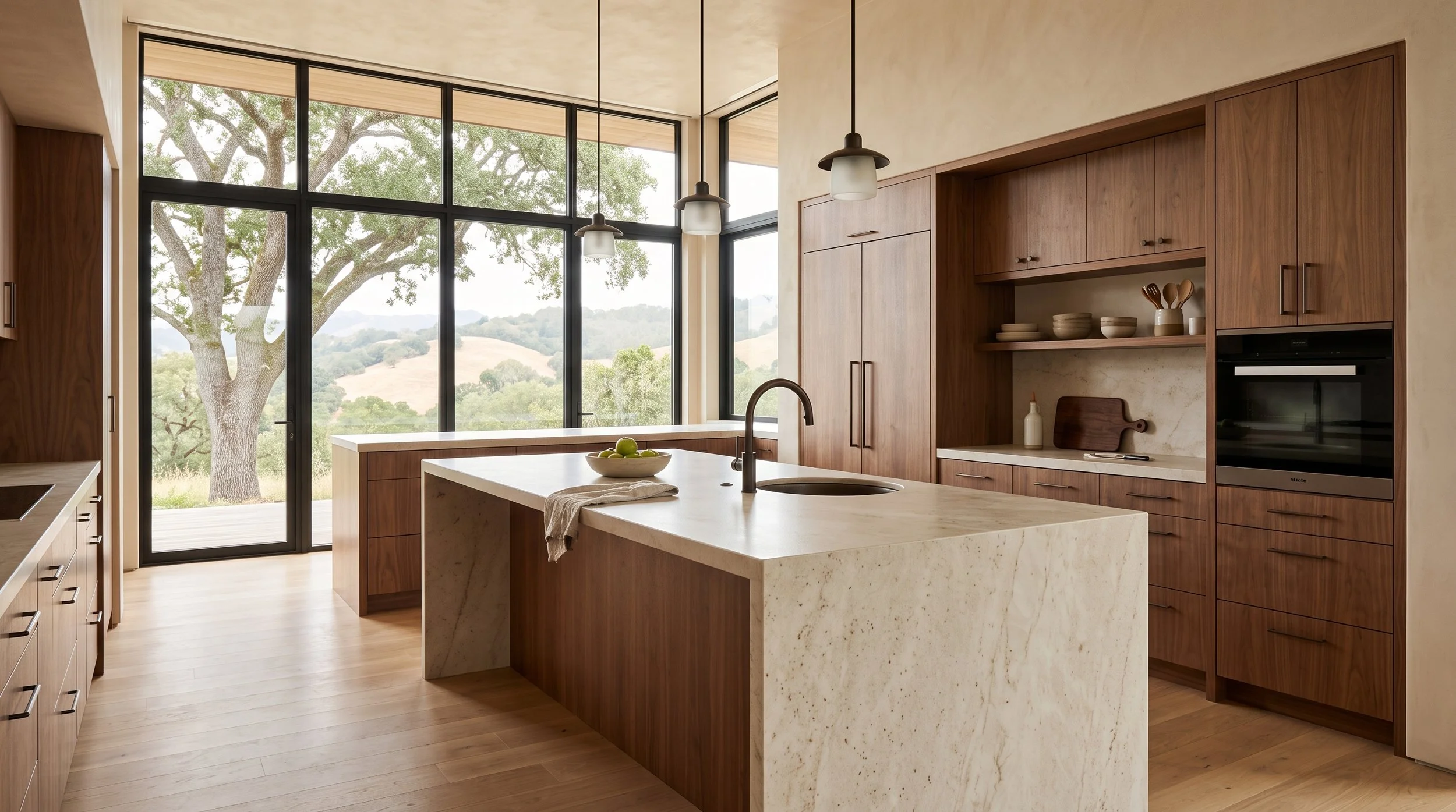
Stone can help bridge modern geometry and natural warmth. Instead of relying only on dramatic contrast, consider the texture, mineral variation, and finish of the surface. Creamy quartzite, softly figured natural stone, or quieter honed surfaces can introduce movement without overwhelming the cabinetry.
A honed finish can also soften reflected light and contribute to a more tactile interior. If the cabinetry already has significant wood grain, the stone may need less movement. If the cabinetry is painted and restrained, a more expressive slab can take a stronger role.
4. Let the Landscape Influence the Palette
A connection to nature does not require a literal interpretation. The cabinetry does not need to match the trees outside, nor does every surface need to be earthy. Instead, the landscape can influence the overall temperature and material character of the interior.
Natural oak, walnut, warm neutral paint, honed stone, plaster, and restrained metals can create subtle relationships with the surroundings. Large windows make this especially important. Exterior greenery becomes part of the room visually, so cabinetry finishes should be evaluated against both interior materials and the views beyond them.
5. Introduce Painted Cabinetry Carefully
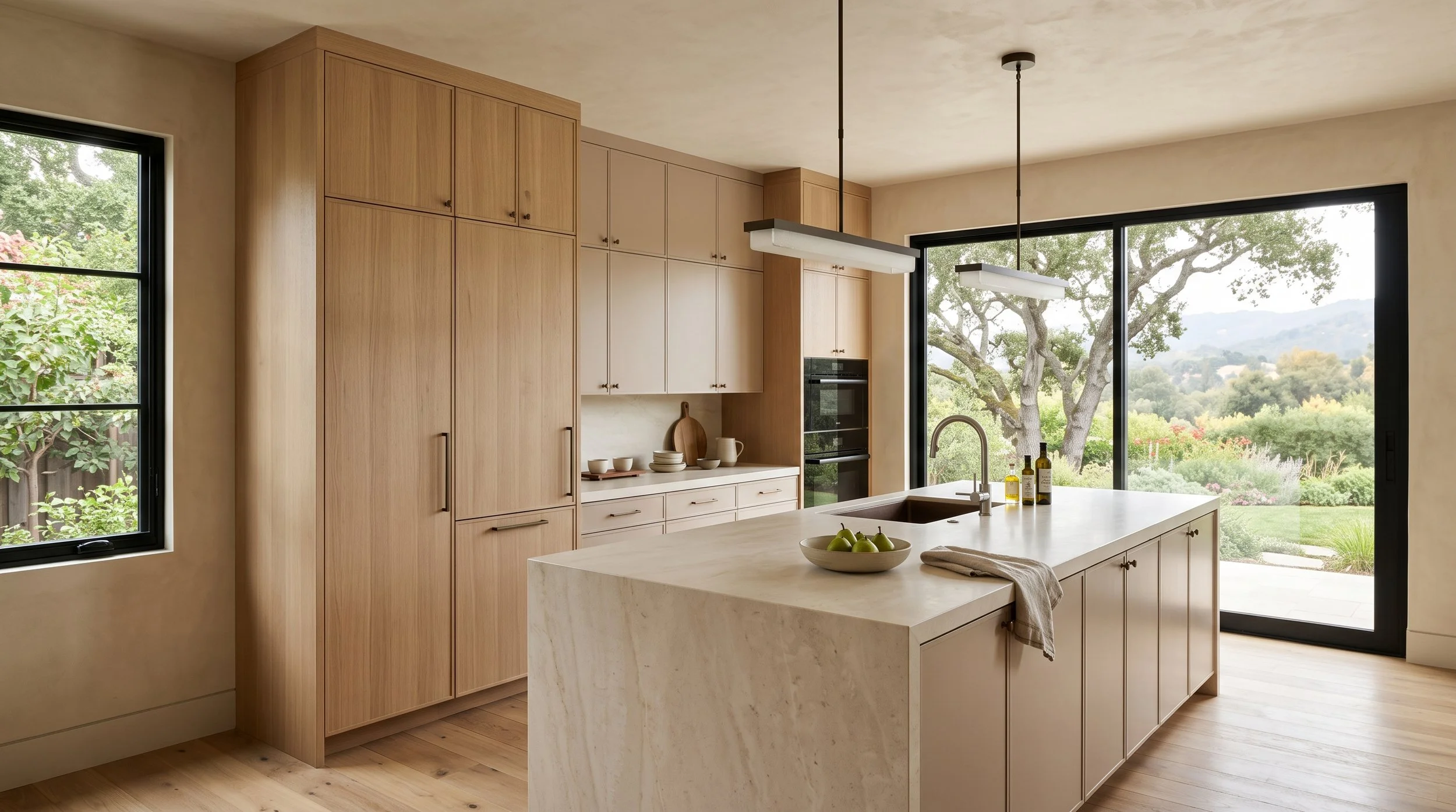
Natural wood does not need to carry the entire interior. Painted cabinetry can provide contrast and give the eye a place to rest. Warm mushroom, taupe, muted mineral tones, or deeper charcoal can work alongside natural woods without making the palette feel disconnected.
Paint can also help distinguish different functions. For example, a white oak kitchen may include a painted secondary cabinet wall, while walnut appears in an adjoining bar. The combination creates more depth than repeating one material everywhere.
6. Keep Hardware and Appliances Visually Controlled
Modern cabinetry benefits from fewer visual interruptions. Integrated panel-ready appliances can allow refrigeration and dishwashers to become part of the cabinetry elevations. This is particularly effective in open-plan homes where the kitchen is visible from living and dining areas.
Hardware can follow the same principle. Some cabinetry may use integrated pulls or discreet edge details. Where visible hardware is appropriate, restrained bronze or other quiet metal finishes can add warmth without becoming a dominant decorative element. The objective is not to hide everything. It is to decide intentionally which elements deserve visual attention.
7. Use Lighting to Reveal Materials
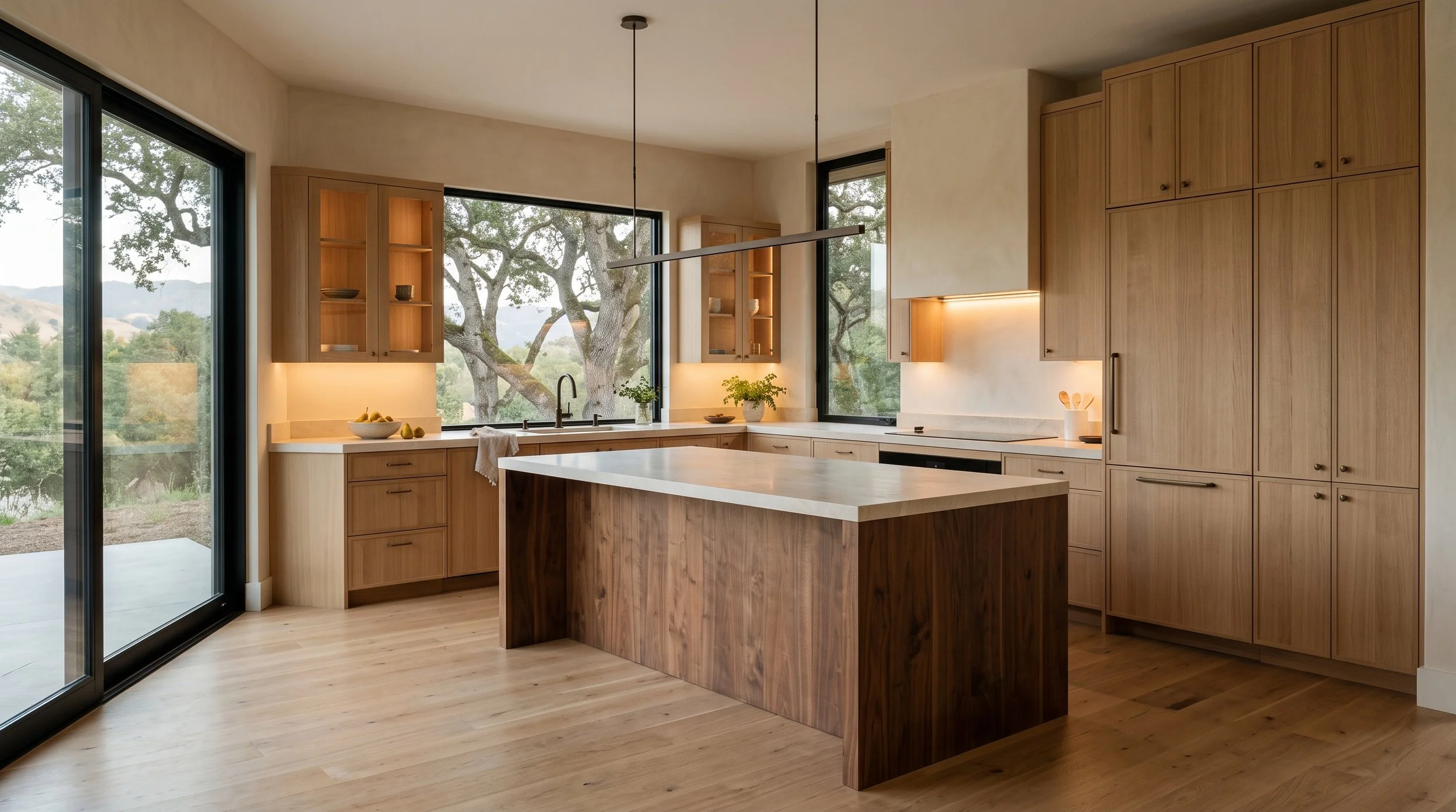
Natural materials change throughout the day. Morning light may emphasize the pale grain of white oak. Afternoon light can deepen walnut. Integrated cabinetry lighting can reveal interior materials and stone texture after natural light fades.
Lighting should therefore be coordinated with cabinetry early, particularly for under-cabinet illumination, interior cabinet lighting, open shelving, and architectural features. Warm modern interiors depend heavily on this relationship between material and light.
How Do You Carry Warm Modern Cabinetry Through the Home?
The kitchen can establish the material language without requiring every room to repeat it. White oak might continue into a home office or primary bathroom. Walnut can create a richer atmosphere in a bar or library. Painted cabinetry can appear in bathrooms, laundry rooms, or other secondary spaces.
Continuity can come from related undertones, door proportions, hardware, stone, or architectural detailing. This is particularly useful in open custom homes where several rooms may be visible at once. Each space can have its own identity while remaining part of the same interior.
How Much Detail Does a Modern Kitchen Need?
Usually less than expected. When the wood grain, stone, proportions, and architecture are strong, additional decoration can dilute the design. A carefully aligned cabinet wall or beautifully proportioned island may provide more impact than several decorative features competing for attention.
That does not mean the cabinetry should be simplistic. Interior storage, construction quality, integrated lighting, and precise material transitions can be highly detailed even when the exterior remains quiet. Restraint places more importance on execution.
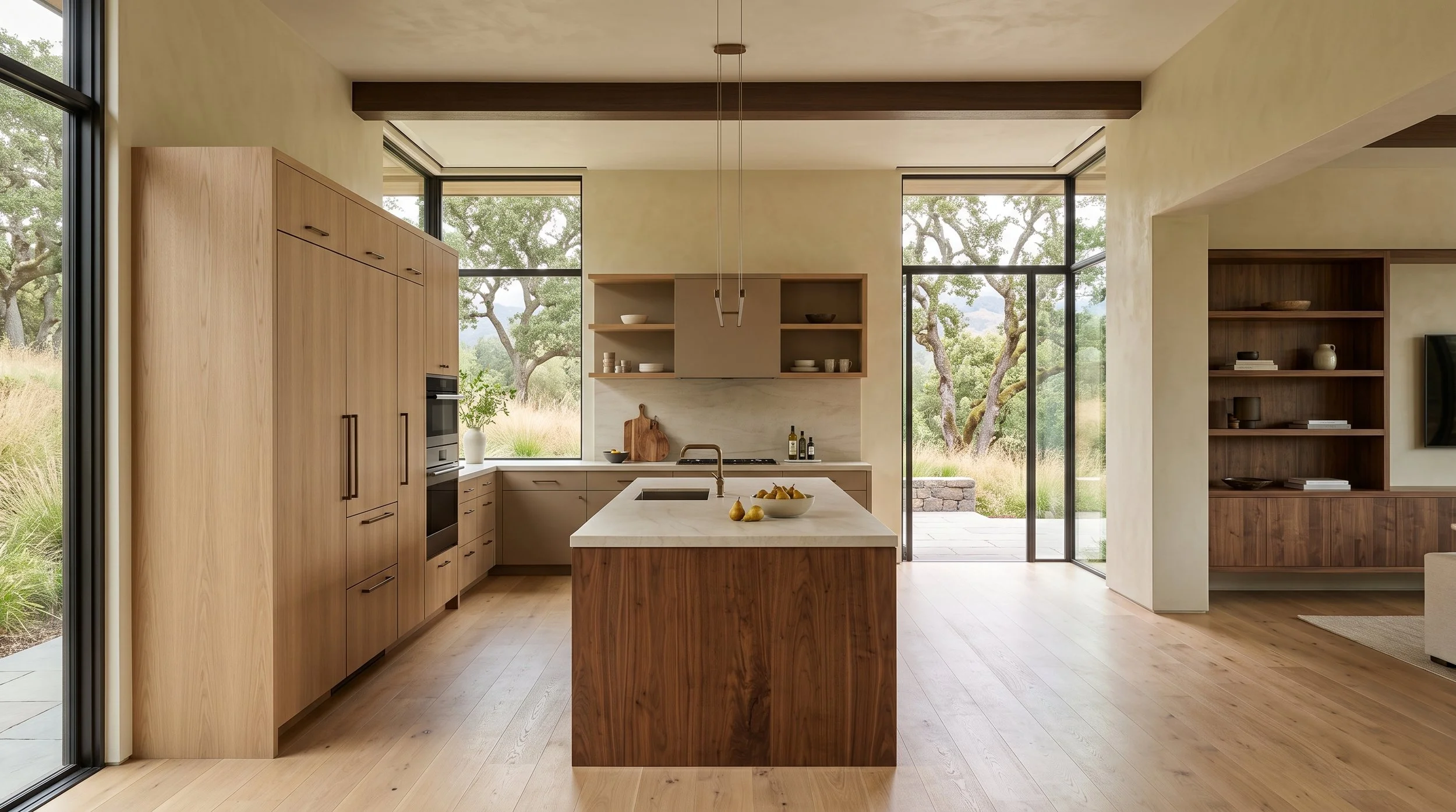
Finding the Balance Between Warmth and Modern Design
Modern cabinetry works best when clean architecture is balanced by materials with natural depth. Wood introduces grain and warmth. Stone adds texture. Painted cabinetry can provide quiet contrast. Integrated appliances and restrained hardware keep elevations controlled, while natural and architectural lighting reveal the character of those materials throughout the day.
For a Portola Valley custom home, the surrounding landscape can become part of that material conversation. The result can feel distinctly modern without becoming cold, and naturally warm without becoming rustic.
Explore Cabinetry for Your Portola Valley Home
Atelier Design Society works with homeowners, architects, interior designers, builders, and other design professionals planning premium cabinetry for custom homes in Portola Valley and throughout the Bay Area.
At the Atelier Design Society showroom in Menlo Park, project teams can compare natural woods, painted finishes, cabinetry construction, stone, hardware, interiors, storage solutions, and full-scale installations while developing a material palette that balances modern architecture with warmth and natural character.