Columbia Cabinets: Modern Cabinetry for Contemporary Bay Area Homes
Contemporary cabinetry can look deceptively simple. A wall of flat-panel cabinets may have no decorative molding. Hardware might nearly disappear. Appliances can be concealed behind panels. A kitchen may use only two or three materials.
But when there are fewer details, every detail becomes easier to see. The alignment between doors matters. The width of the reveals matters. Grain direction matters. The way a cabinet terminates against a wall matters. Even a small change in sheen can alter how an entire elevation responds to daylight.
That is one reason modern cabinetry is not simply traditional cabinetry with the decoration removed. It requires its own level of consideration.
Columbia Cabinets offers custom cabinetry across a broad range of styles, materials, finishes, design enhancements, organization systems, and specialty hardware. Its current material offering includes walnut, rift-cut white oak, maple, painted materials, eco veneers, TFL, and high-pressure laminates, giving contemporary projects options beyond a single modern aesthetic.
For contemporary homes in Menlo Park, Palo Alto, Atherton, and across the Bay Area, that flexibility can be particularly useful. Because a modern kitchen does not need more decoration. It needs the right materials, proportions, and details in the right places.
What Actually Makes Cabinetry Feel Modern?
Modern cabinetry is usually defined less by one particular door style and more by visual restraint. Flat or minimally detailed doors are an obvious starting point. But the larger composition matters more.
A contemporary cabinet elevation often relies on:
Long uninterrupted lines
Consistent reveals
Controlled material transitions
Integrated appliances
Limited hardware
Carefully proportioned panels
That means something as simple as a tall pantry wall can become an architectural element. The eye notices where doors begin and end. It notices whether the refrigerator disappears naturally into the elevation. It notices whether a wood grain travels intentionally across several panels or stops abruptly.
Columbia's current product range includes door styles and materials spanning walnut, rift-cut white oak, laminates, painted surfaces, and other contemporary options, allowing those compositions to be developed in several different directions.
The result does not have to look cold. Modern cabinetry can be warm, tactile, quiet, and highly residential.
Does Contemporary Cabinetry Have to Be Slab?
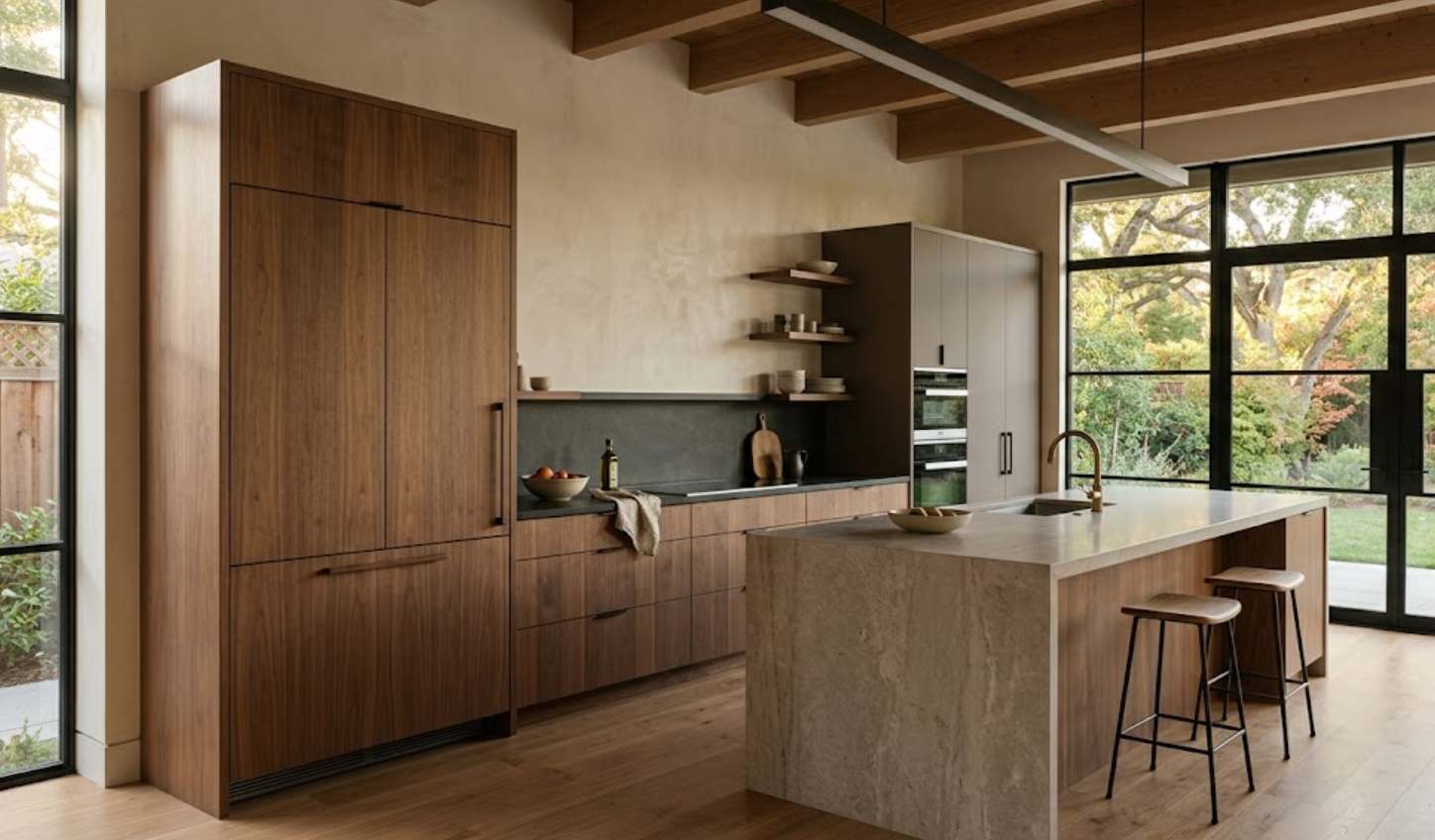
No. Slab doors are strongly associated with contemporary design because their uninterrupted surfaces create a quiet visual field.
But contemporary cabinetry can also use restrained frame profiles, glass, metal details, or other materials when those elements support the architecture. The difference is usually in how much visual information is introduced.
A very narrow frame can add shadow and dimension without making the cabinetry feel traditional. A glass cabinet can break up a long elevation without becoming decorative. A textured laminate can create interest through surface rather than ornament.
The goal is not to follow a rule that says modern equals flat. It is to decide how much detail the room actually needs.
Which Materials Work Well for Modern Cabinetry?
Contemporary cabinetry can be particularly effective when materials are allowed to speak clearly. Natural wood is an obvious example.
Columbia currently offers hardwood and material options including:
Walnut
Rift-cut white oak
Red oak
Maple
Cherry
Clear and knotty alder
Eco veneers
Thermally fused laminates
High-pressure laminates
Each creates a different expression. Walnut can introduce depth and warmth. Rift-cut white oak can produce a quieter, more linear grain. Painted cabinetry can create large uninterrupted fields of color. TFL and HPL surfaces can offer controlled woodgrain, matte, or other contemporary effects.
The best choice depends on what the cabinetry needs to do visually. If the architecture already contains expressive stone, dramatic lighting, and strong exterior views, the cabinetry may benefit from becoming quieter. If the rest of the room is restrained, cabinetry material can carry more of the visual character.
Why Does Grain Direction Matter So Much in Contemporary Kitchens?
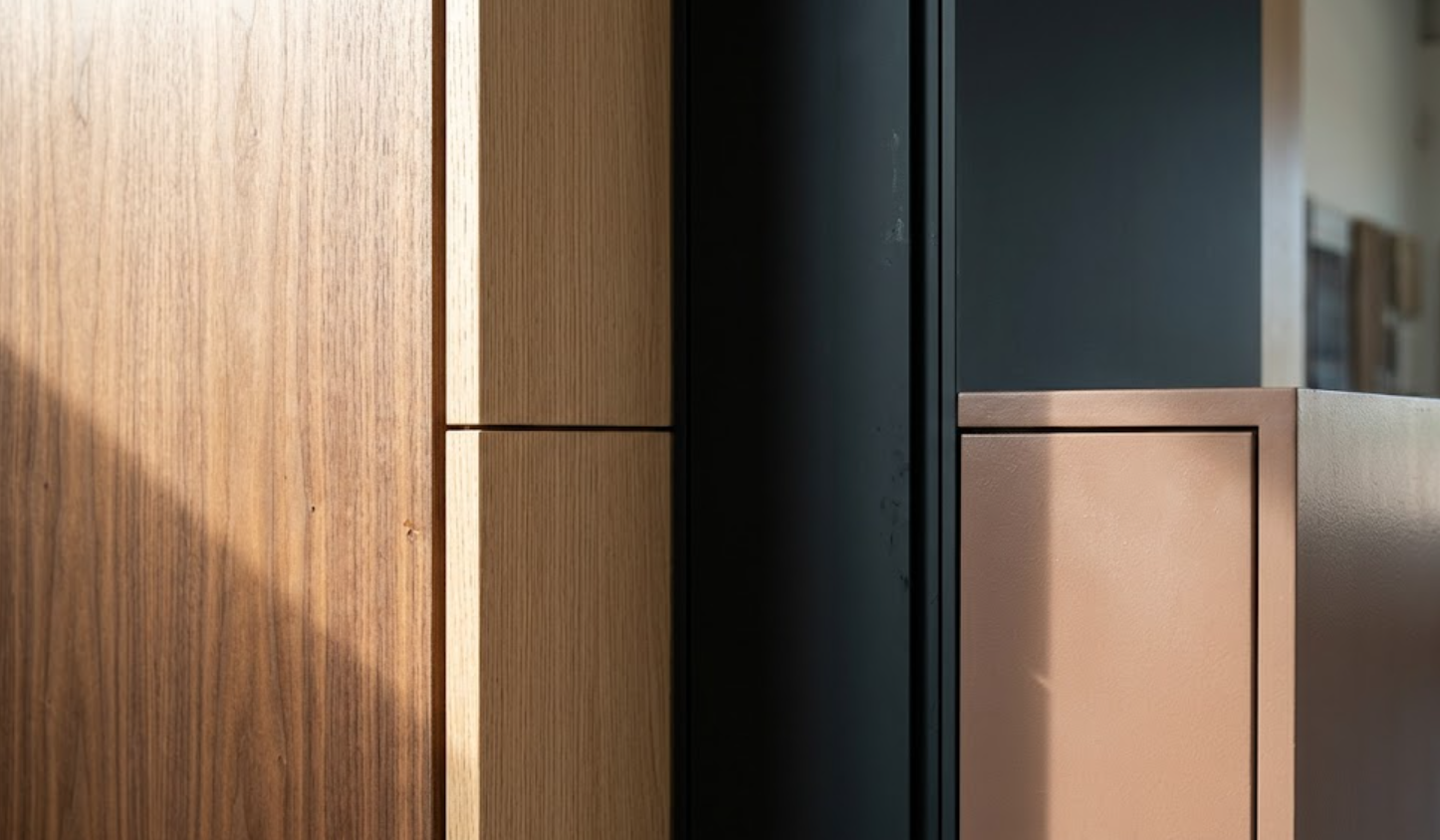
Because on a simple cabinet door, the grain becomes the detail.
A traditional door may contain rails, stiles, molding, hardware, and shadow lines. A walnut slab door has far fewer visual elements. The wood itself takes over.
Vertical grain can reinforce height across tall cabinetry. Horizontal grain can visually connect adjacent drawer fronts. Intentional sequencing can make several cabinet panels read almost as one larger material composition. Random grain direction can create the opposite effect.
None of these approaches is universally correct. But they should be intentional. In a contemporary kitchen, material orientation is part of the elevation. It deserves the same attention as cabinet dimensions.
How Important Are the Reveals Between Modern Cabinet Doors?
Very. A reveal is the small gap visible between adjacent doors, drawers, and panels.
On highly detailed cabinetry, those gaps are only one of many lines. On minimalist cabinetry, they may become the primary lines across an entire wall. That means consistency matters.
A series of tall doors with carefully aligned horizontal breaks can make a cabinetry wall feel calm and architectural. Poorly considered divisions can make the same wall feel much busier.
This is one reason modern cabinetry can require significant precision despite appearing visually simple. The fewer lines you have, the more important each one becomes.
Can Modern Cabinetry Still Feel Warm?
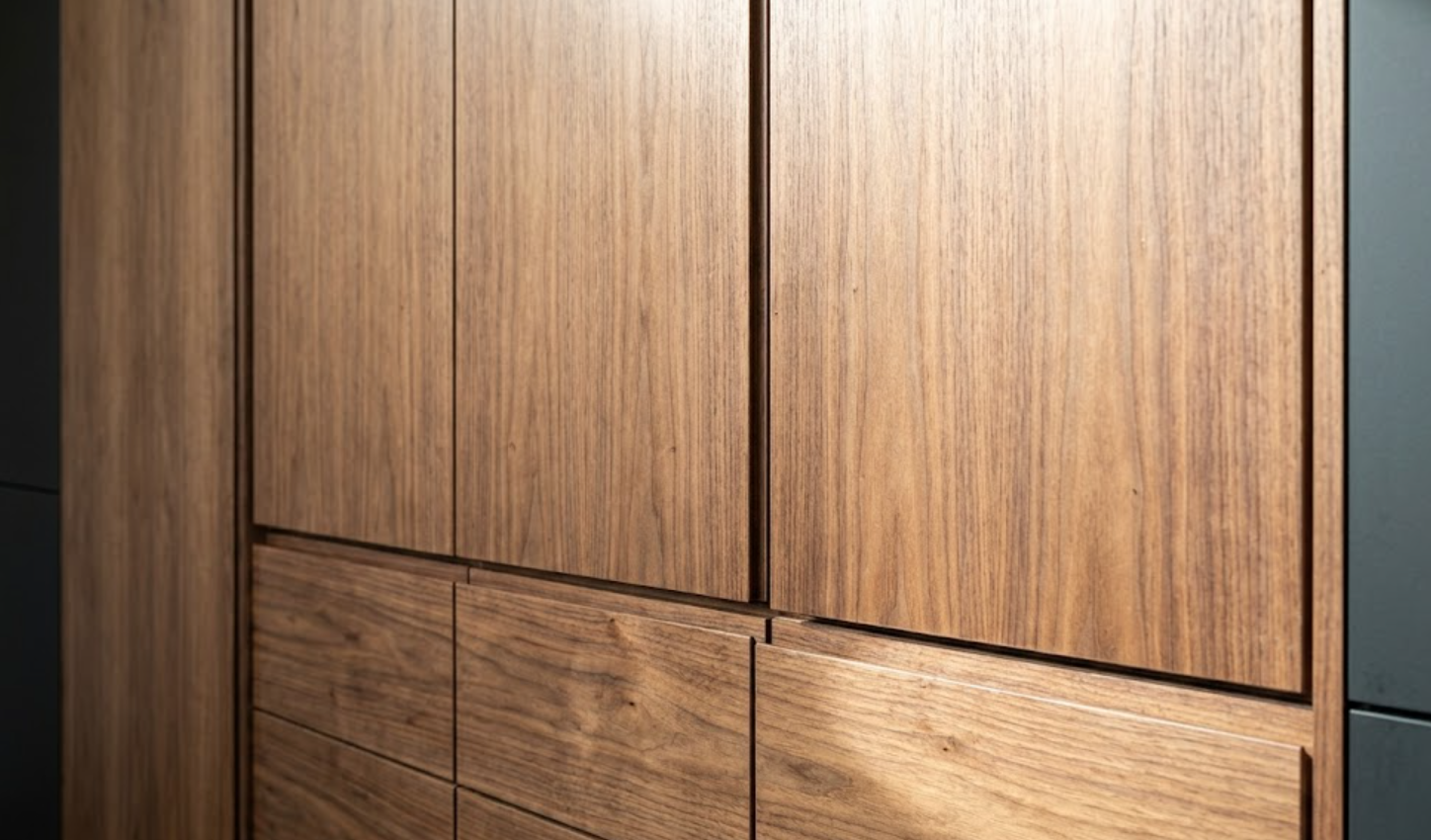
Absolutely. Modern does not have to mean sterile.
Warmth can come from natural wood, paint color, stone, lighting, texture, and the materials surrounding the cabinetry. Walnut is one way to introduce it. So is rift-cut white oak.
But warmth does not have to come exclusively from wood. A muted clay, mushroom, olive, charcoal-brown, or mineral-colored painted finish can make simple cabinetry feel much more residential than a bright white surface.
Columbia's current finish catalog includes extensive stain and paint selections as well as custom requests and multiple specialty finish options.
Natural light matters too. In Peninsula homes with strong relationships to gardens and outdoor spaces, warm cabinetry can help connect interior materials with the landscape beyond the glass. A contemporary room can be minimal without feeling empty.
What Role Do Matte Finishes Play in Contemporary Cabinetry?
Matte surfaces can help large cabinetry elevations feel quieter. Rather than reflecting every window, light fixture, and object in the room, a matte finish absorbs more visual activity. That can be especially effective on tall cabinetry.
Columbia currently offers ultra-matte TFL and super-matte HPL options in addition to its wood and painted finishes.
These materials also create opportunities to contrast textures. A matte cabinet wall beside natural walnut can make the wood feel warmer. A restrained matte finish beside honed stone can create a very quiet architectural palette.
But matte should still be evaluated in person. Color, texture, fingerprints, sheen, and the way a surface reacts to daylight can be difficult to judge accurately from a screen.
How Can Modern Cabinetry Hide Appliances?
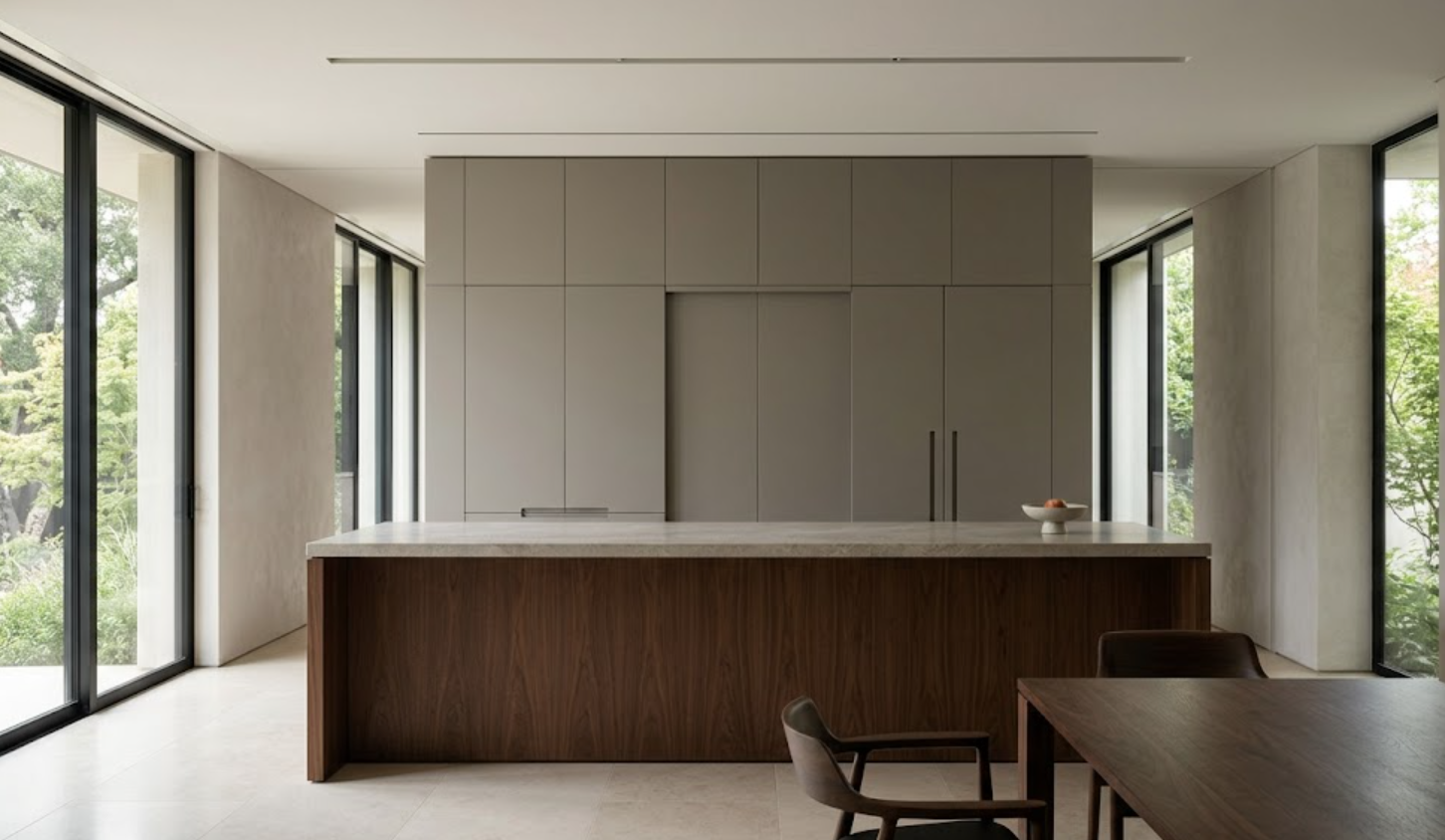
Appliance integration is one of the most effective tools in contemporary kitchen design. A refrigerator can become part of a tall cabinet wall. A dishwasher can disappear beneath the countertop. Smaller appliances can live behind pocket or retracting doors. Coffee equipment can occupy a dedicated cabinet zone rather than remaining permanently on the counter.
The goal is not necessarily to hide evidence that the room is a kitchen. It is to control what becomes visually dominant.
A large stainless-steel refrigerator may interrupt a quiet walnut elevation. Paneling it can allow the cabinetry material to continue.
But integration requires coordination. Door swings, ventilation, panel specifications, appliance clearances, hardware, and surrounding cabinet dimensions all need to work together. This is where the simplicity of the finished room depends on considerable planning behind it.
Does Modern Cabinetry Sacrifice Storage for Appearance?
It should not. A clean exterior does not require an empty interior.
Columbia's current accessory program includes:
Pull-out pantry storage
Spice storage
Under-sink organization
Tray dividers
Waste solutions
Utensil storage
Food-container organizers
Knife storage
Lift mechanisms
Other interior systems
The important part is deciding which solutions actually support the household. A hidden pantry pullout can preserve a clean cabinet wall while keeping food accessible. Deep drawers can eliminate the need to reach into the back of lower cabinets. An appliance cabinet can create a quieter countertop while keeping frequently used equipment ready.
This is one of the strengths of well-planned contemporary cabinetry. The outside can become calmer precisely because the inside is doing more work.
Are Contemporary Cabinets Difficult to Maintain?
That depends heavily on the selected material and finish. A very dark flat door may show fingerprints more readily than a textured wood surface. Natural wood will contain variation by design. Painted cabinetry has different care considerations from laminate.
Columbia describes its finishes as using professional-grade post-catalyzed finishing systems designed for durability and residential performance, while also noting that hand-applied finishes and natural materials can contain variations in color and sheen.
That distinction matters. A contemporary surface should not be selected only because it looks perfect under showroom lighting. Think about what will happen when someone touches it twenty times a day.
The most practical finish may not be the one with the least texture or visual variation. It is the one whose appearance and maintenance expectations fit the household.
Can Contemporary Cabinetry Work Beyond the Kitchen?
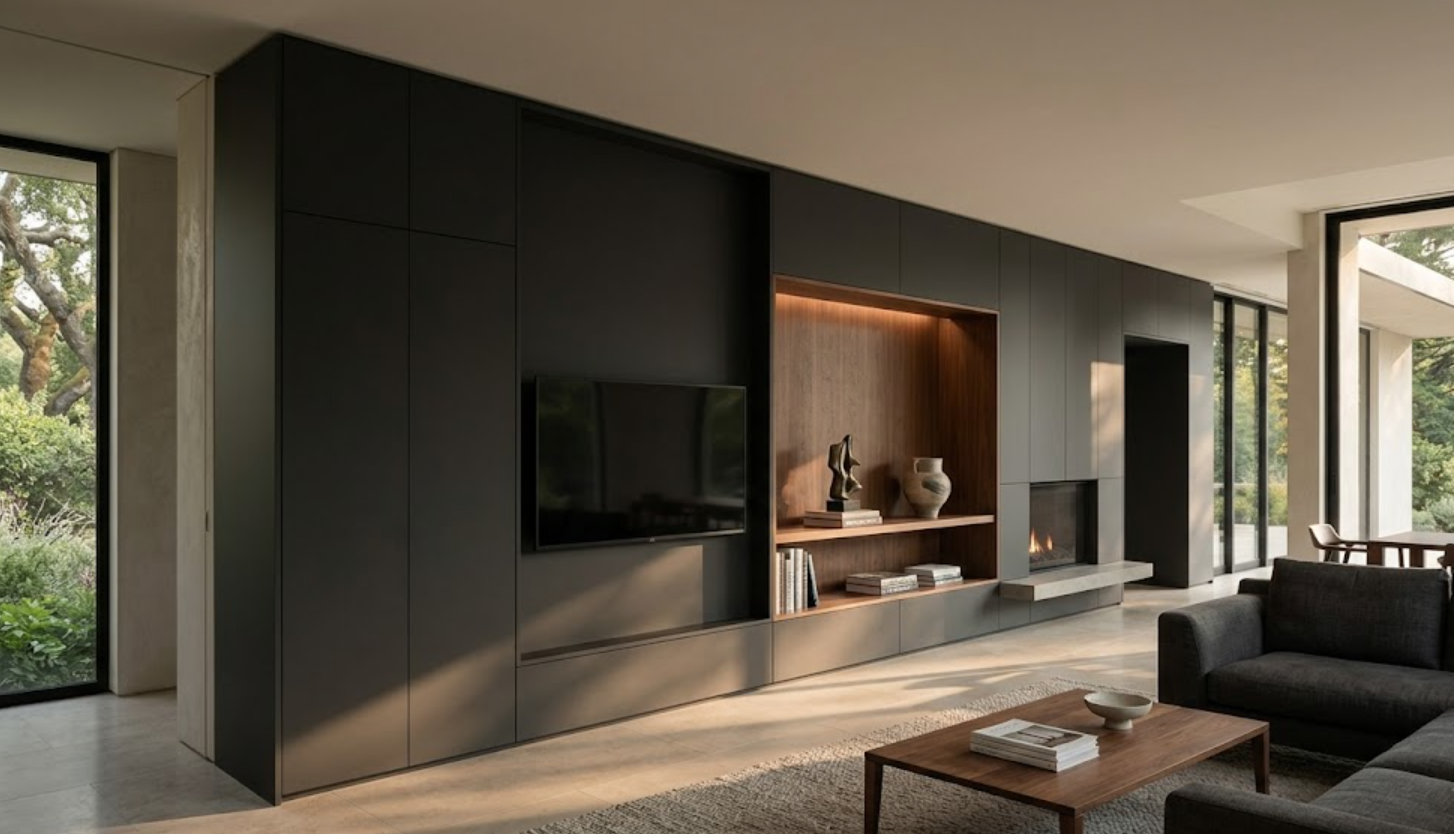
Yes, and this is where modern cabinetry can become particularly architectural.
The same visual language can extend into:
A bar
A home office
A media room
A bathroom
A wardrobe
Other built-ins
It can do so without copying the kitchen exactly. A walnut kitchen might connect to a charcoal office through similar proportions. A bathroom vanity could use the same matte material in a different color. A bar might bring back walnut only inside an open niche.
The connection can be subtle. Columbia describes its cabinetry as customizable around different lifestyles and living spaces, with options across door styles, materials, finishes, organization, and hardware.
For a contemporary home, this can help cabinetry function as part of the architecture throughout the residence rather than as a series of unrelated furniture pieces.
Is Columbia Cabinetry Only for Ultra-Modern Homes?
No. Columbia's current product offering extends from contemporary styles to more detailed traditional cabinetry, with numerous woods, painted finishes, moldings, and decorative options.
That flexibility matters because many Bay Area homes are not purely modern. A Palo Alto renovation may preserve parts of an older architectural shell while introducing a more contemporary kitchen. A Menlo Park home may combine traditional exterior architecture with cleaner interior detailing. A new Atherton residence might mix warm contemporary cabinetry with more classic materials elsewhere.
Modernization does not always require creating a stylistic break with the house. Sometimes it means simplifying what is already there.
How Do You Keep Contemporary Cabinetry From Looking Dated?
Avoid designing entirely around whatever visual detail is most recognizable at the moment. Trends move quickly. Architecture moves more slowly.
Natural materials, thoughtful proportions, functional storage, and well-resolved details tend to give a design more room to age.
That does not mean avoiding personality. A dark color can be beautiful. A distinctive wood can be beautiful. An unusual material can be beautiful.
The question is whether the decision belongs to the home or was added simply because it appeared repeatedly on a screen that year.
Columbia says its cabinetry combines traditional woodworking processes with modern manufacturing, and its current catalog spans natural hardwoods alongside contemporary engineered surfaces. That range gives a designer options. Restraint determines how they are used.
Why Consider Columbia Cabinets for a Contemporary Bay Area Home?
Columbia can be worth considering when a project needs modern cabinetry without being locked into one material or one version of contemporary design.
Its current range includes:
Walnut
Rift-cut white oak
Painted materials
Eco veneers
TFL
HPL
Extensive finish options
Organization systems
Specialty hardware
A broad selection of door styles
The company also describes combining machine precision with hand assembly, sanding, finishing, and in-house production of many wood components. Its maple and walnut drawers use dovetail construction, and doors, moldings, and accessories are made to order.
Those capabilities provide the tools. The design still determines the outcome.
For a contemporary residence in Menlo Park, Palo Alto, Atherton, Woodside, Portola Valley, Los Altos, or elsewhere on the Peninsula, the strongest cabinetry solution should respond to the architecture, the materials around it, and the way the household actually uses the space.
Modern cabinetry works best when the finished result looks simple. Even when getting there was anything but.
Explore Columbia Cabinetry in Menlo Park
Atelier Design Society works with homeowners, architects, interior designers, builders, and other design professionals exploring premium cabinetry for Bay Area residences.
Visit the Atelier Design Society showroom in Menlo Park to explore Columbia cabinetry, compare contemporary materials and finishes, and discuss how different cabinetry options can work within your project's architecture.