How to Choose Cabinetry That Will Still Look Beautiful 10 Years From Now
A kitchen can look current the day it is finished and dated five years later. That usually is not because the cabinetry suddenly became unattractive. It happens when too many decisions were tied to a moment.
A door style chosen because it was everywhere online. A color selected because it was trending. Hardware that immediately identifies the year it was installed. A dramatic detail repeated so often that the room has nowhere quiet for the eye to rest.
For homeowners investing in custom cabinetry in Menlo Park and across the Bay Area, longevity is worth thinking about from the beginning.
The goal is not to create a kitchen with no personality. It is to make choices that still feel considered after the novelty wears off.
Cabinetry occupies too much visual space, costs too much to replace casually, and interacts with too many other elements of the home to be treated like a short-term design decision.
So what actually helps cabinetry age well?
Does “Timeless” Cabinetry Mean Playing It Safe?
No. Timeless cabinetry is not necessarily neutral, simple, or traditional.
A dark walnut kitchen can age beautifully. So can painted cabinetry in a distinctive color. A contemporary slab door can feel just as lasting as a Shaker profile.
The difference is usually whether those choices make sense for the architecture.
Cabinetry tends to age better when it looks like it belongs to the home rather than when it tries to make the home follow a trend.
A contemporary Menlo Park residence with clean architectural lines may support quiet slab cabinetry naturally. An older Palo Alto home with more visible millwork may benefit from a restrained framed door. A Woodside residence surrounded by natural materials may carry richer wood cabinetry particularly well.
Timelessness starts with context. Not caution.
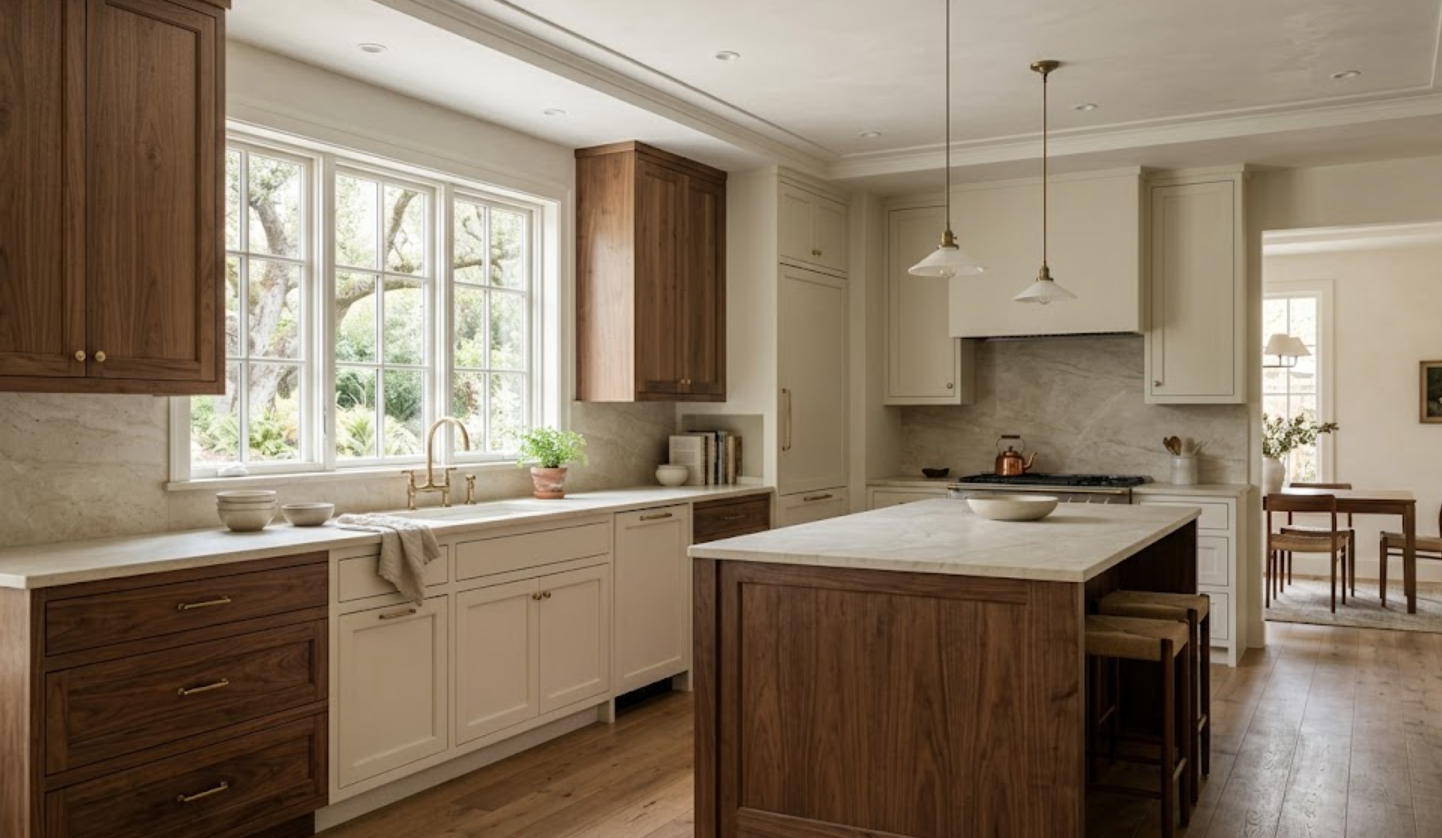
Which Cabinet Door Styles Tend to Age Well?
There is no single answer. What matters more than the name of the door style is its proportion.
Shaker cabinetry is often described as timeless, but a heavy frame, oversized molding, or highly decorative treatment can still make it feel tied to a particular period.
Slab cabinetry can also age well when the panel proportions, material, reveals, and hardware are thoughtfully handled. A narrow-frame door can sit somewhere between the two.
Before choosing, look at the door at full scale. Then imagine it repeated across an entire wall.
A small detail that feels interesting on one sample can become visually dominant when repeated twenty times.
Cabinetry that ages well usually has enough detail to feel intentional without requiring every door to demand attention.
Should You Avoid Cabinetry Trends Completely?
No. A trend can be a useful source of inspiration. It becomes risky when it is the only reason for the decision.
Design evolves. There is nothing wrong with being influenced by what feels current.
The better question is whether you would still choose the material, color, door, or detail if it stopped appearing in your feed tomorrow.
For example, a deep green painted kitchen may be trending at one moment. But if the color works with the architecture, natural light, stone, flooring, and homeowner’s taste, it can still feel appropriate long after that trend moves on.
The same applies to wood species, hardware finishes, slab doors, inset cabinetry, and other popular details.
A trend becomes less risky when there is another reason behind it.
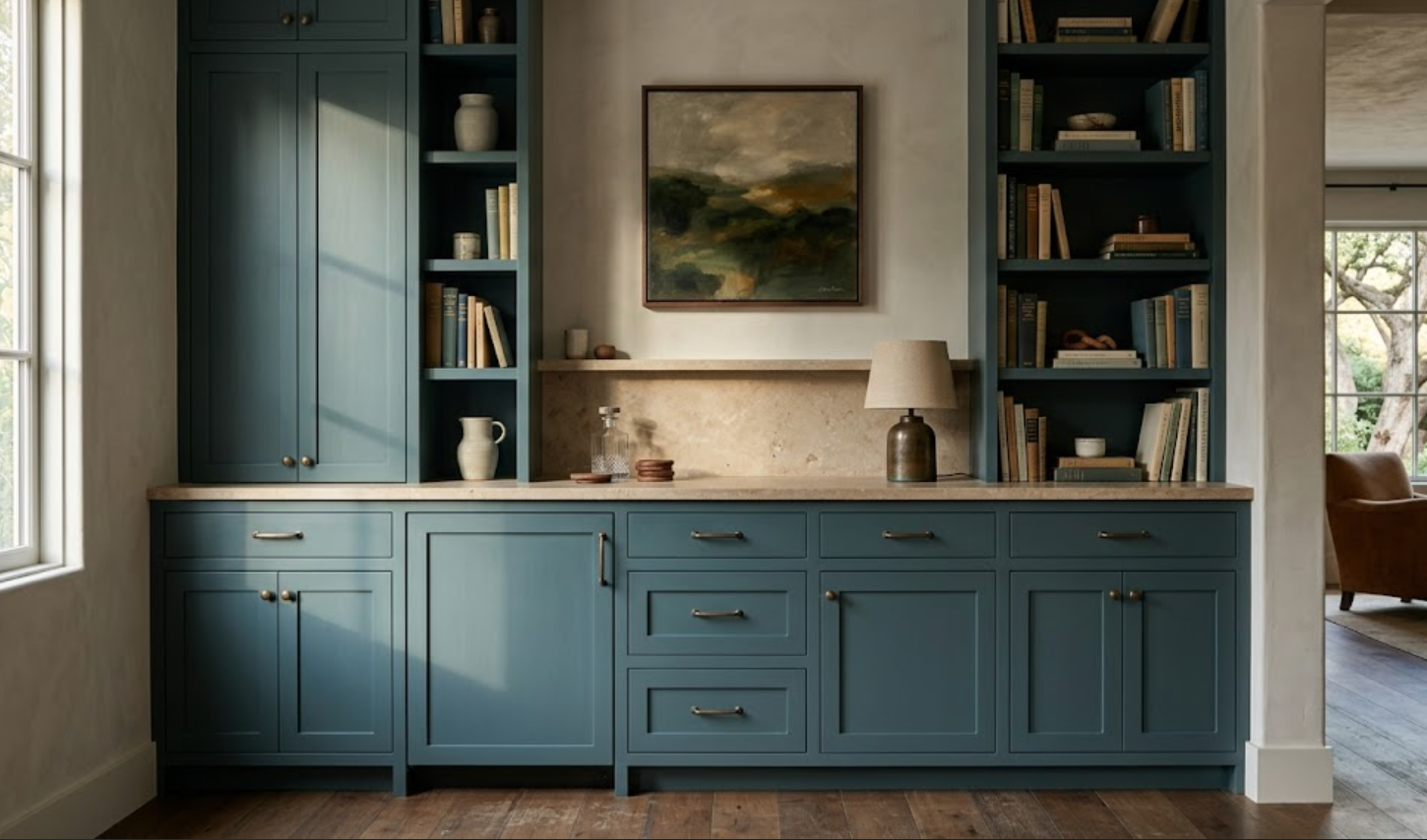
Which Cabinet Materials Tend to Look Better With Age?
Natural materials often develop character rather than simply looking “used.” Wood is a good example.
Walnut, white oak, and other natural wood species contain variation by nature. Their grain, tone, and movement are part of what makes them interesting. That means the material does not depend on absolute visual perfection.
Painted cabinetry behaves differently. A well-executed painted finish can remain beautiful for years, but color and surface quality become more prominent because the material itself is visually uniform.
Neither is inherently more timeless. The right choice depends on the architecture, light, surrounding materials, and how much visual variation the homeowner wants to live with.
What tends to date poorly is material chosen solely because it mimics something else unsuccessfully. If you want the character of walnut, using real walnut where appropriate often communicates that more convincingly than selecting a surface only because it approximates the look.
Does Natural Wood Always Look Timeless?
No. Wood species can trend too. So can stain colors.
The same wood can feel entirely different depending on how it is cut, finished, and combined with other materials.
A heavily gray-stained wood may strongly reflect one design era. An orange-toned stain may do the same. A more restrained finish that allows the natural characteristics of the material to remain visible can give the cabinetry more flexibility over time.
Grain direction also matters. On large slab doors, it becomes one of the dominant visual elements of the room.
If the material is going to carry that much visual responsibility, it should be selected intentionally.
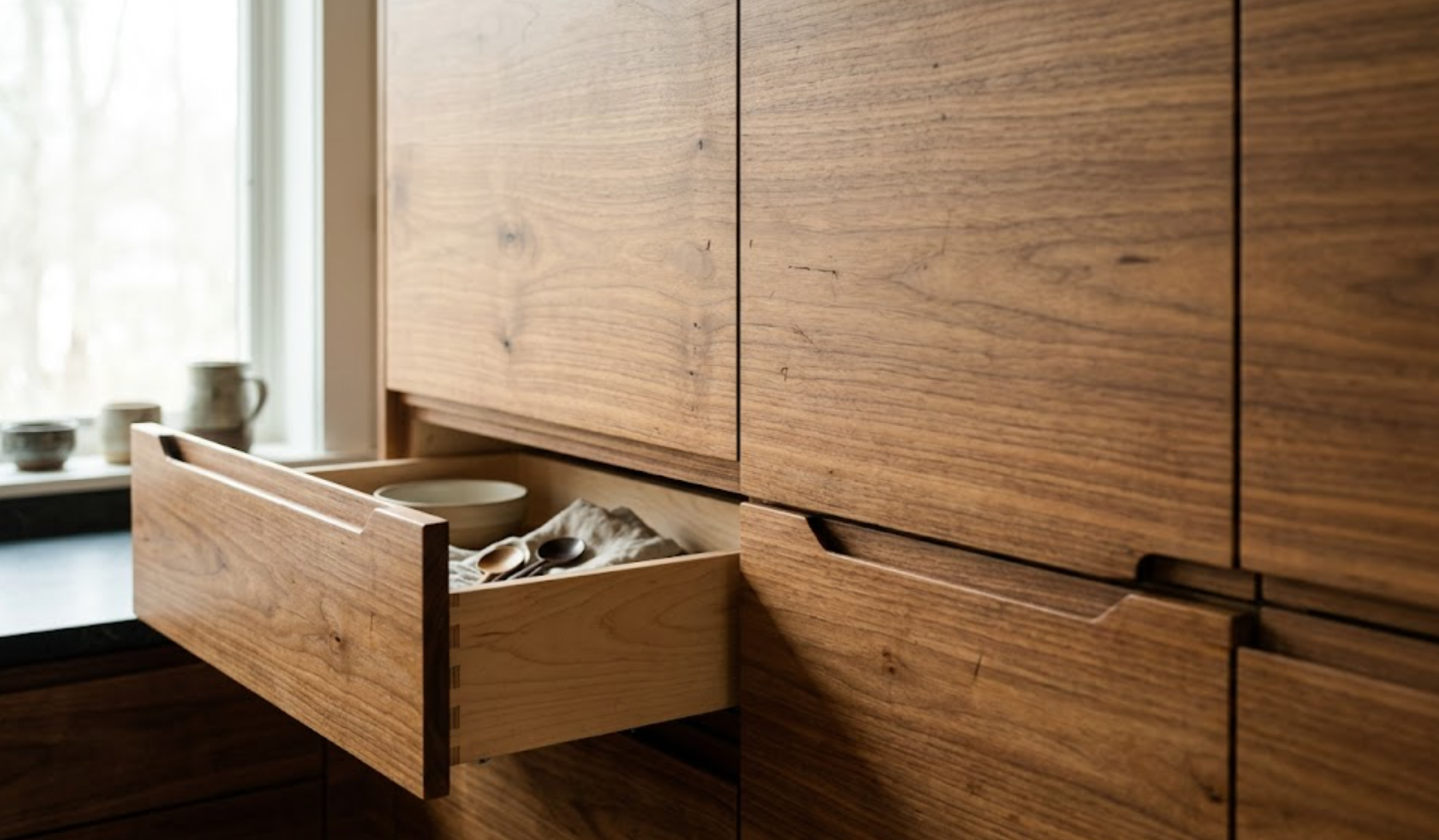
How Important Are Cabinet Proportions?
Extremely.
Proportion is one of the design elements people often feel without consciously identifying.
A cabinet wall can look balanced because the door widths relate naturally to the room. An island can feel substantial without looking oversized. Upper cabinetry can meet the ceiling in a way that feels deliberate rather than stretched. Drawer heights can align across an elevation.
Those relationships tend to age more gracefully than decorative tricks because they are rooted in scale and architecture.
This is also where custom cabinetry can provide an advantage. Rather than forcing an elevation into a predetermined sequence of cabinet sizes, dimensions can be adjusted to create a more considered composition.
Good proportion rarely announces itself. It simply makes the room feel settled.
Should You Choose Hardware for Longevity or Personality?
Ideally, both.
Hardware is easier to replace than cabinetry, so it is one area where homeowners can take slightly more risk. But hardware still affects the entire visual rhythm of the room.
A very distinctive oversized pull repeated across dozens of doors can date cabinetry more quickly than a restrained design. That does not mean every cabinet needs a tiny invisible handle.
Scale matters.
Placement matters.
Material matters.
A well-proportioned bronze, nickel, blackened metal, or other finish can develop a relationship with lighting, plumbing fixtures, and surrounding architectural details.
If hardware changes later, the cabinetry underneath should still feel complete. That is a useful test.
What About Cabinet Colors?
Color can age beautifully when it is selected as part of a palette rather than as an isolated statement.
Look at:
Flooring
Stone
Wall color
Natural light
Adjacent rooms
Exterior views
The cabinetry color should participate in those relationships.
Bay Area homes often have significant natural light, which can make a color change substantially throughout the day. A warm gray may appear nearly neutral in one room and unexpectedly green in another. A dark blue may feel restrained in morning light and much stronger at night.
This is why physical samples matter.
Do not choose a cabinetry color from a screen. Whenever possible, look at a larger sample vertically in the actual room.
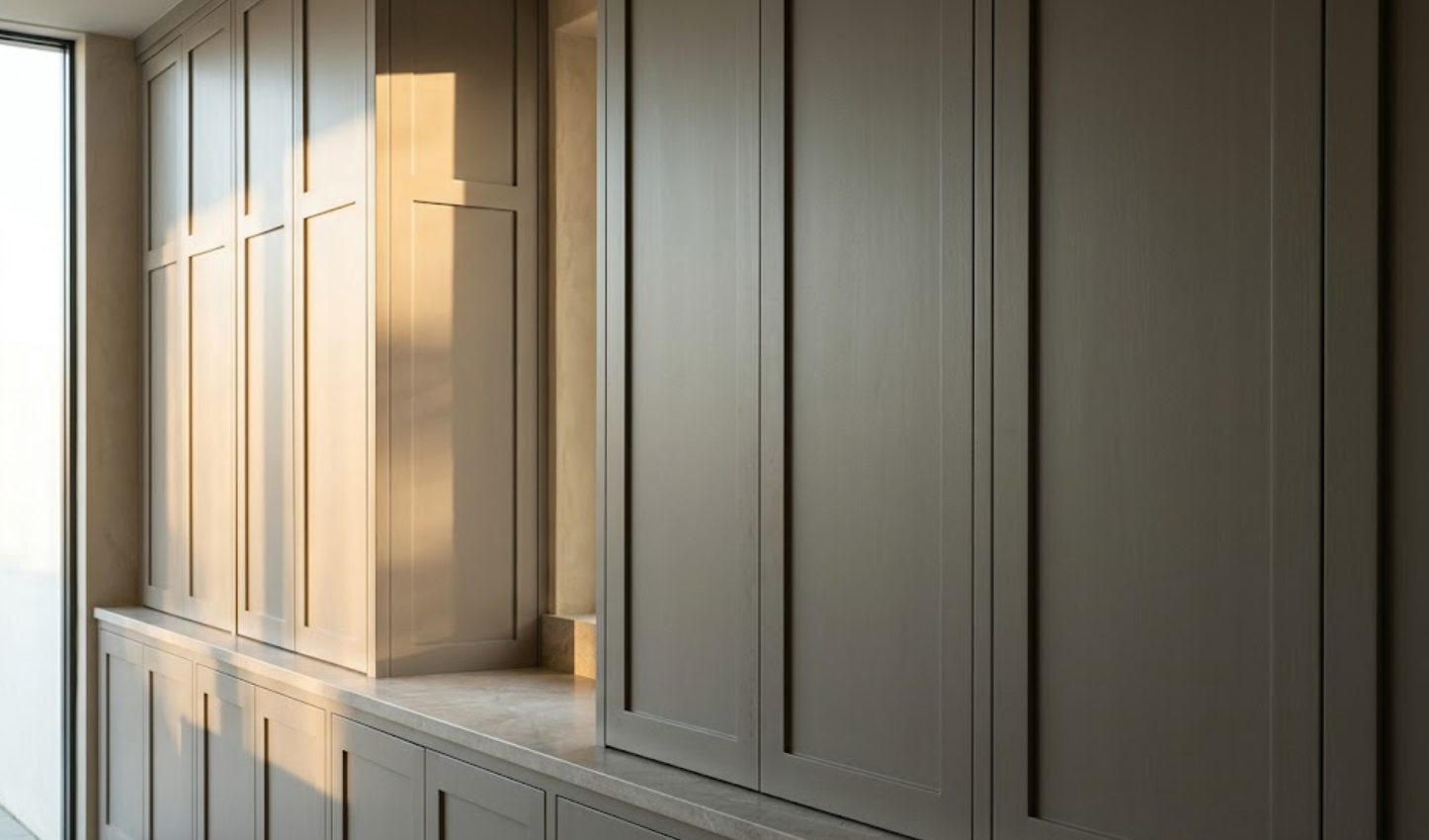
How Much Should You Think About Maintenance?
More than most inspiration images encourage.
A surface can be beautiful and still be wrong for the household.
Very dark matte cabinetry may show fingerprints. Highly detailed doors create more edges to clean. Certain natural materials may show wear differently from painted surfaces.
That does not automatically make any of these poor choices. It means expectations should match reality.
Think about who uses the kitchen:
Children
Pets
Frequent entertainers
Serious home cooks
A household that barely cooks will interact with cabinetry differently from one preparing several meals a day.
Cabinetry that ages beautifully is cabinetry whose normal use was anticipated from the beginning.
Does Storage Design Affect How Cabinetry Ages?
Yes, because clutter can make even beautiful cabinetry feel unsuccessful.
A kitchen with insufficient storage may gradually fill countertops with appliances. A poorly planned pantry can lead to additional freestanding storage. A lack of drawer organization can make everyday use frustrating.
Those problems do not make the cabinetry visually outdated. But they can make homeowners want to change the kitchen long before the cabinet doors themselves need replacing.
Good storage extends the useful life of a design.
Plan around actual cookware, food, appliances, entertaining habits, and daily routines rather than filling the room with generic cabinets.
Longevity is functional too.
How Can Appliance Integration Help a Kitchen Age Better?
Large appliances often change aesthetically faster than cabinetry.
Panel-ready refrigeration and dishwashers can reduce the amount of visible appliance styling in the room. That does not mean every appliance must disappear. A range may intentionally remain visible.
But controlling which appliances become visual focal points can help the kitchen architecture remain dominant even when equipment is eventually replaced.
The key is planning integration correctly. Panels, ventilation, clearances, hinges, hardware, and surrounding cabinetry must all be coordinated.
A clean result depends on technical work that happens long before installation.
Should Cabinetry Match Throughout the Entire Home?
Not exactly.
A home often ages better when it has a consistent design language rather than one repeated cabinetry formula.
The kitchen might use walnut. A bathroom may introduce a painted vanity. A library could bring walnut back inside open shelving. A wardrobe might use quieter slab cabinetry with related hardware.
Those rooms can feel connected without looking copied.
This also gives the home more flexibility. If every room is built around one highly recognizable finish or door style, the entire house can become tied to the same design moment.
Variation creates room for longevity.
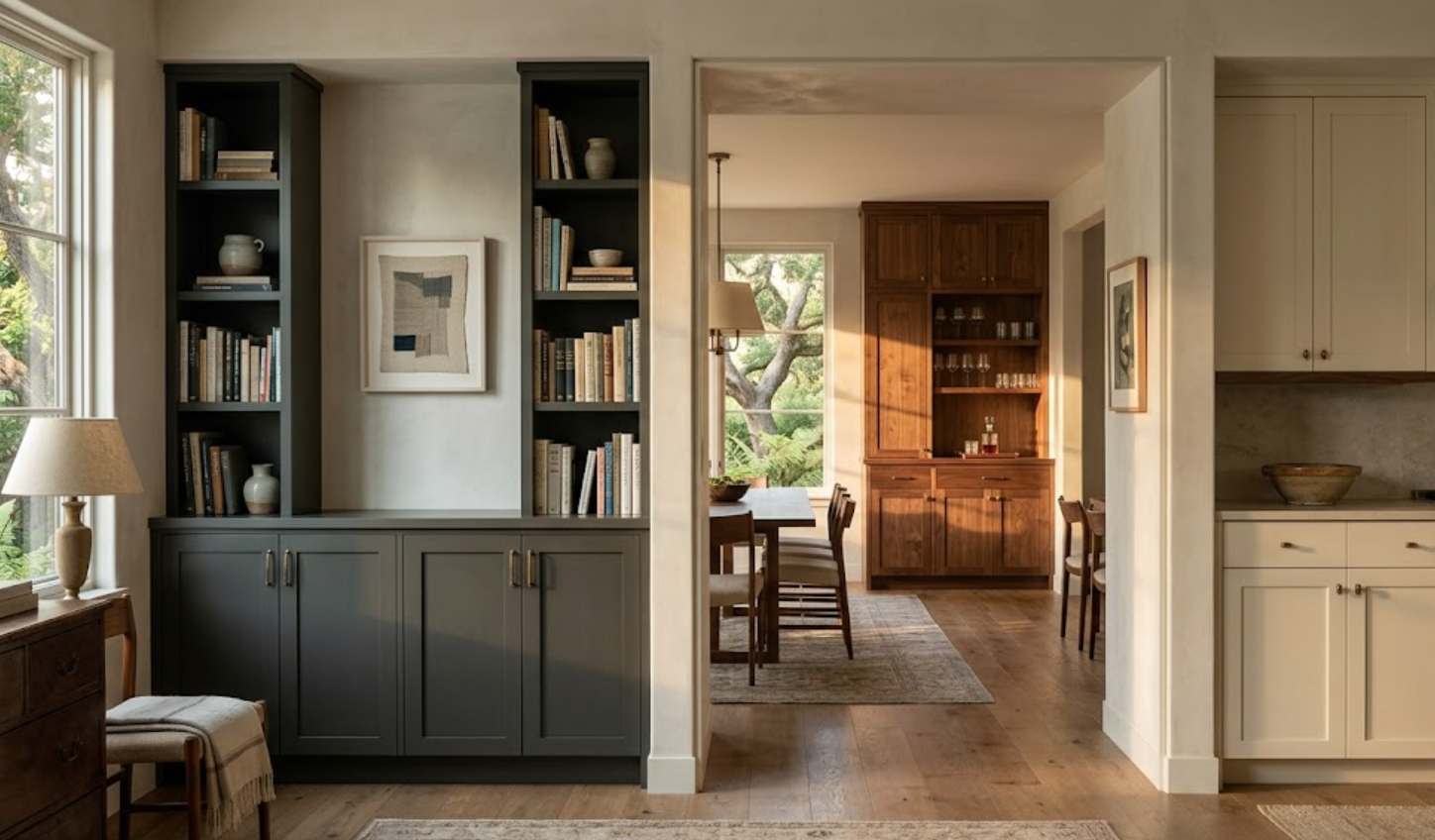
What Cabinetry Choices Are Most Likely to Feel Dated?
Usually the choices made only because they are recognizable:
An exaggerated door profile
A finish selected solely because it is trending
Hardware whose scale overwhelms the cabinetry
Too many decorative details competing in one room
A material trying very hard to imitate something else
A feature repeated everywhere because it looked interesting once
This does not mean avoiding bold decisions. It means giving bold decisions a reason.
If the architecture supports it, keep it. If the homeowner genuinely loves it, consider it. If it solves a functional problem, even better.
If the only explanation is “everyone is doing this right now,” think twice.
How Do You Evaluate Whether a Cabinetry Choice Will Still Work in 10 Years?
Ask a few different questions:
Does it make sense with the architecture?
Would you choose it if you had never seen it on social media?
Does the material look good at full scale?
Can the finish handle the way your household actually uses the room?
Is the cabinetry proportioned well without relying on decoration?
Does the storage solve real problems?
Can hardware or surrounding finishes change in the future without requiring the cabinetry to be replaced?
Does the room still have somewhere quiet for your eye to rest?
A kitchen does not need every surface to be interesting.
Restraint gives the details that matter more room to remain beautiful.
Choosing Cabinetry for the Long Term
No one can guarantee that a kitchen designed today will look exactly as fashionable ten years from now. That should not be the goal.
The goal is cabinetry that still feels appropriate:
Well proportioned
Useful
Made from materials you genuinely like
Connected to the architecture
Flexible enough to live with changing furniture, paint, lighting, hardware, and personal taste
For homeowners and design professionals planning custom cabinetry in Menlo Park, Atherton, Palo Alto, Woodside, Portola Valley, Los Altos, and surrounding Bay Area communities, those decisions are often more valuable than trying to predict the next design trend.
Beautiful cabinetry should not need to look new forever. It should continue to look like it belongs.
Explore Timeless Custom Cabinetry in Menlo Park
Atelier Design Society works with homeowners, architects, interior designers, builders, and other design professionals exploring premium cabinetry for kitchens and spaces throughout the home.
Visit the Atelier Design Society showroom in Menlo Park to compare cabinetry materials, door styles, finishes, hardware, and construction at full scale before making decisions intended to last.