Grabill Cabinets: What Makes Truly Bespoke Cabinetry Different?
There is a point in some residential projects when selecting cabinetry from a list of standard options starts to feel backward.
The architecture may call for an unusual proportion. An interior designer may have a specific color that needs to continue across several materials. An existing home may contain millwork worth respecting rather than replacing with something unrelated. Or a kitchen may simply need a detail that does not exist in a typical cabinet catalog.
That is where truly bespoke cabinetry becomes different.
It is not simply about choosing a premium wood species or upgrading a finish. It is about having enough flexibility to let the cabinetry respond to the project instead of requiring the project to adapt to the cabinetry.
That distinction is central to Grabill Cabinets. The Indiana manufacturer describes its approach as “true custom,” with the ability to customize cabinetry dimensions, door styles, finishes, moldings, hoods, islands, posts, and other architectural elements. It also offers custom color and style matching, including work intended to coordinate with existing millwork.
For homeowners, architects, and interior designers working on luxury residences in Menlo Park and throughout the Bay Area, those capabilities raise a more useful question than simply, “Are these high-end cabinets?”
The better question is:
How much of the cabinetry can actually be designed around this particular home?
What Does “Bespoke Cabinetry” Actually Mean?
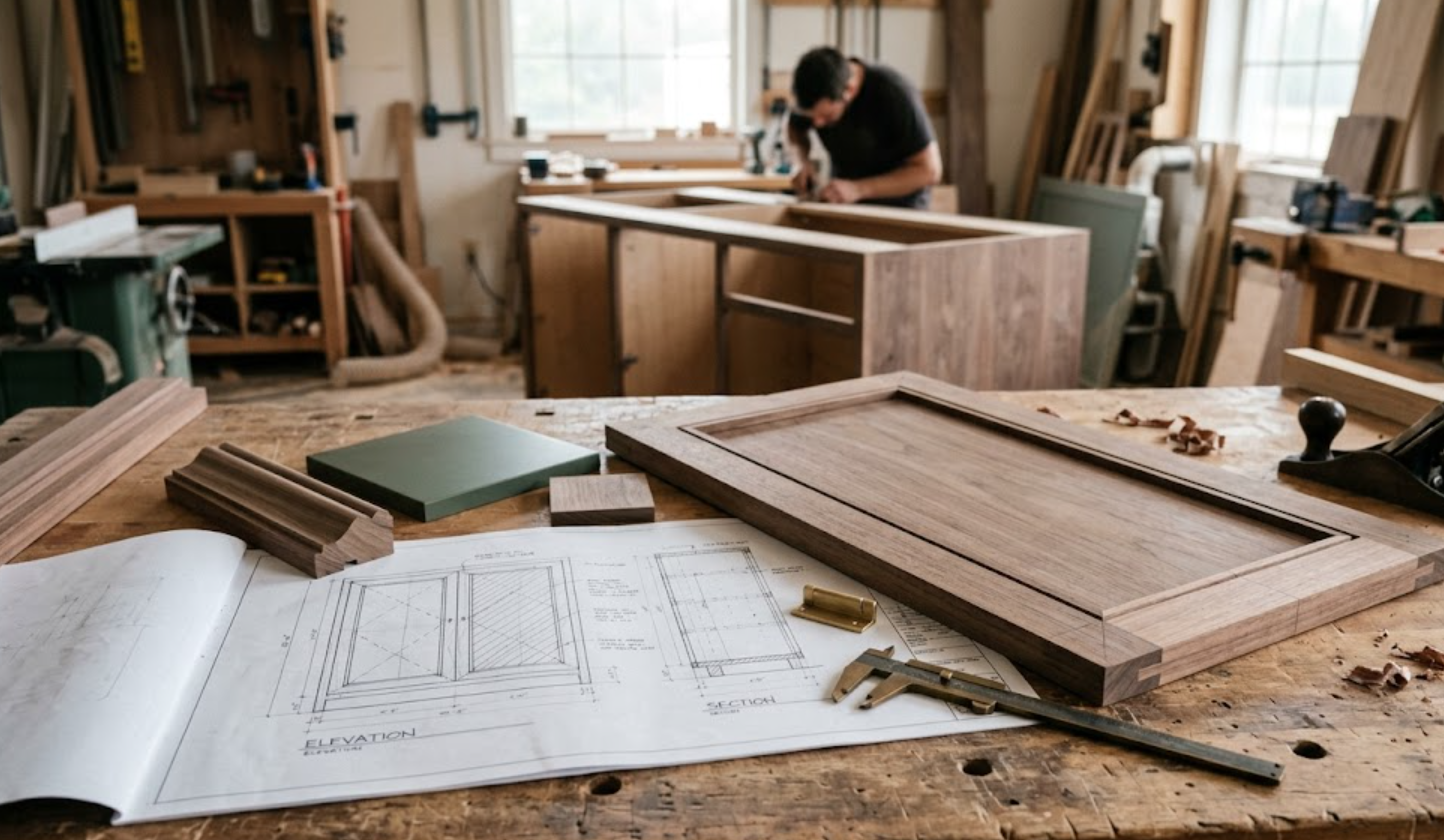
Bespoke cabinetry is cabinetry developed around the requirements of an individual project rather than assembled primarily from predetermined combinations.
There are many levels of customization within the cabinetry industry.
A semi-custom line might allow modifications to cabinet widths, finishes, door styles, and interior configurations. That can provide more than enough flexibility for many excellent kitchens.
True custom cabinetry moves the boundary farther.
With Grabill, customization can extend to original door styles, custom moldings and profiles, hoods, posts, islands, accent pieces, colors, finishes, and other details created specifically for the project. The company states that it can also source materials and manufacture to project specifications even when the requested solution is outside its standard offering.
That matters because bespoke cabinetry is less about having more choices.
It is about having fewer artificial boundaries around the design.
How Is True Custom Cabinetry Different From Having Lots of Options?
This distinction is important.
A cabinetry manufacturer can offer hundreds of combinations and still operate within a defined system.
Choose door A.
Finish B.
Cabinet configuration C.
Hardware D.
There may be thousands of possible outcomes, but each one still originates from an established menu.
True custom becomes valuable when the answer you need is not on that menu.
Perhaps an architect has drawn a specific molding profile.
Perhaps the proportions of a door need to change.
Maybe a hood should be designed as an architectural object rather than selected from a standard collection.
Or the cabinetry needs to relate to original millwork in an older residence.
Grabill specifically lists custom moldings, custom hoods, islands, posts, accent pieces, original door styles, and color and style matching for restoration projects among its customization capabilities.
That changes the conversation from:
“Which available option is closest?”
to:
“What does the project actually require?”
Can Grabill Create Custom Cabinet Door Styles?
Yes.
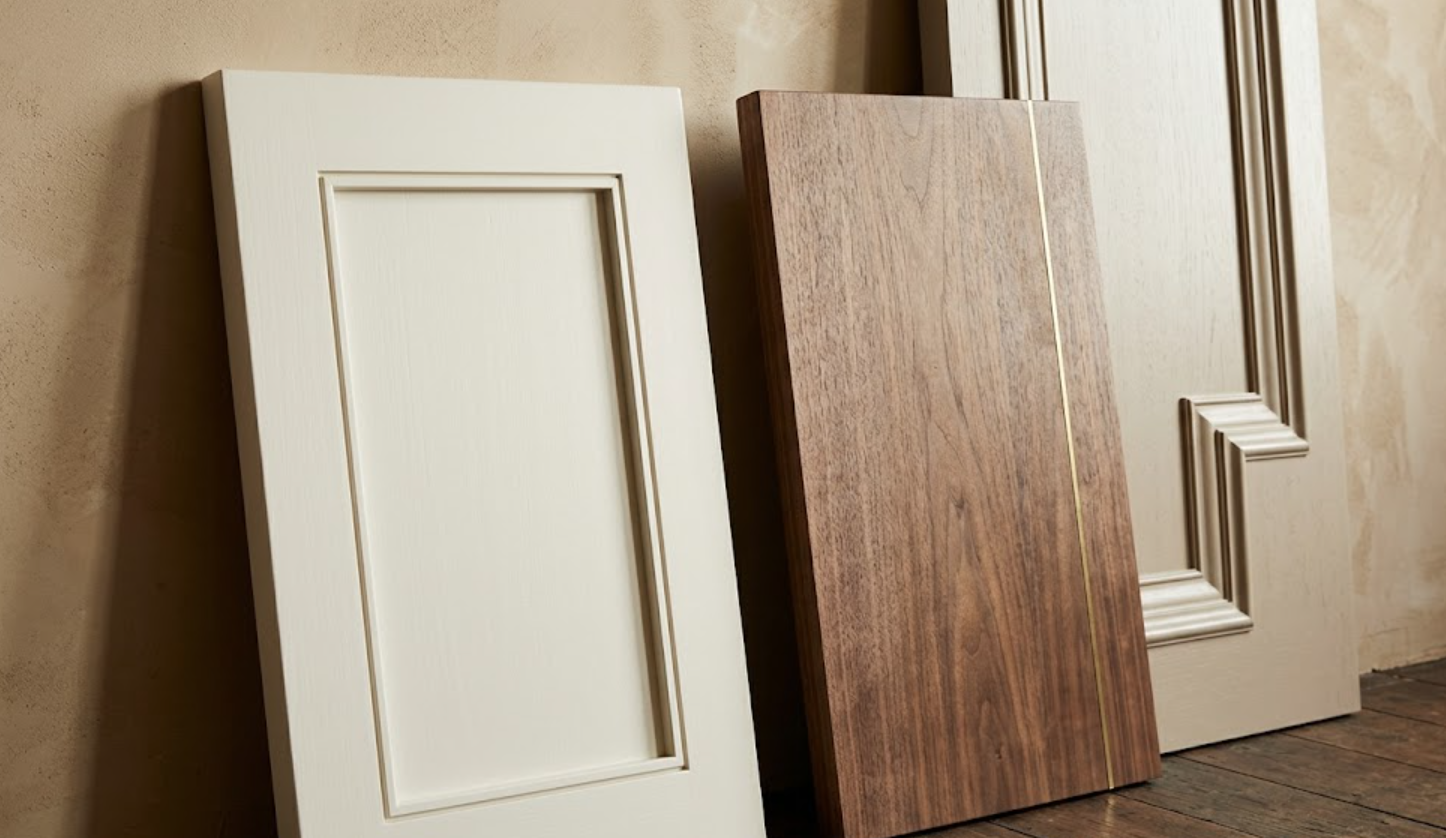
Grabill maintains an extensive collection of existing door styles, including traditional, transitional, and contemporary designs, but the company also states that custom door styles can be developed for individual projects.
That can be more important than it initially sounds.
A small change in rail or stile width can alter the character of an entire kitchen.
The depth of a recessed panel changes how shadows appear.
An applied molding can move cabinetry toward a more furniture-like expression.
Metal inlays can introduce another layer of detail. Grabill's current door offering includes examples using chrome and brushed-brass inlays, along with styles in maple, walnut, hickory, rift-cut woods, painted finishes, glazes, and contemporary materials.
For a highly considered residence, those proportions can be treated as part of the architecture rather than simply a decorative selection.
How Custom Can a Cabinetry Finish Be?
Potentially very custom.
Grabill states that it can develop painted, stained, glazed, natural, and other custom finishes, including matching colors or sheens from existing objects, photographs, or older finishes. The company says it has matched thousands of paints, stains, glazes, and distressing treatments.
This can matter considerably in a custom home.
Imagine an interior designer developing a very specific mineral-green palette.
The cabinetry color may need to relate to plaster, stone, upholstery, metalwork, and natural light rather than match a standard paint chip exactly.
Or consider the renovation of an established Palo Alto or Woodside residence where existing millwork is being preserved.
Introducing cabinetry that is technically “similar” may not be enough.
Custom color development allows the cabinetry to participate in a much more precise material conversation.
And color is only part of the finish.
Sheen changes how light interacts with cabinetry.
Grabill's catalog includes multiple sheen levels as well as a high-gloss buff process for applicable slab doors and drawers.
A quiet matte-like appearance and a highly reflective finish can make the same basic cabinetry geometry feel entirely different.
Why Does Finish Quality Matter So Much on Luxury Cabinetry?
Because cabinetry is touched constantly.
A finish has two jobs.
It establishes the appearance of the wood or painted surface, and it protects that surface from everyday use.
Grabill describes a multi-step finishing process that includes sanding primer layers, baking painted finishes, correcting imperfections, and applying a protective topcoat. The company also emphasizes high-solids coatings as part of its approach to finish durability.
The visual part matters too.
On a large wall of cabinetry, subtle differences in sheen, surface preparation, and finish consistency become much more noticeable than they are on a small sample.
This is especially true with painted cabinetry, where light can travel across several doors at once.
The simpler the design, the less there is to hide behind.
What Does Old-World Craftsmanship Mean in Modern Cabinetry?
The phrase can sound nostalgic until you look at what it means in construction.
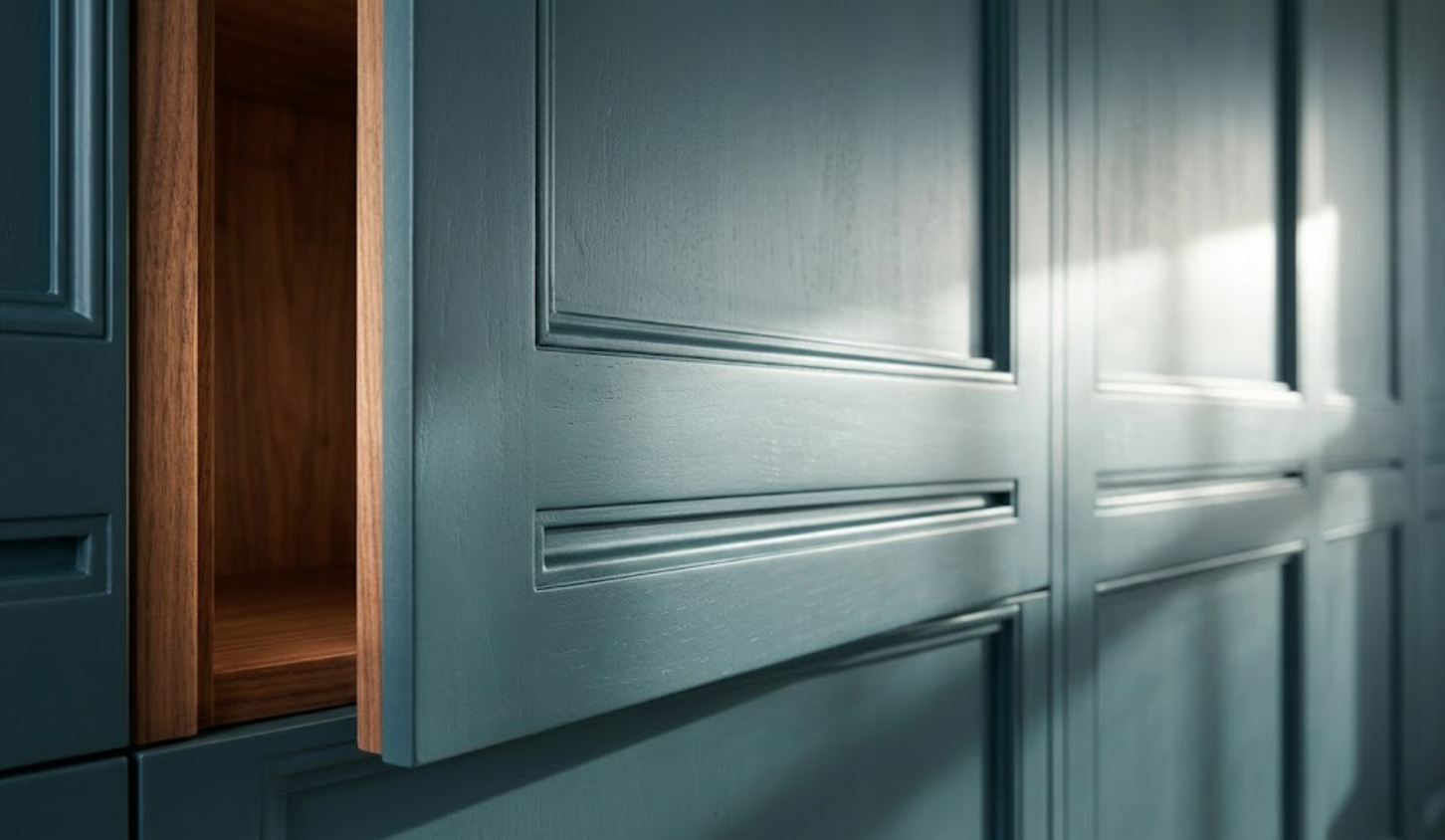
Grabill describes using traditional joinery methods, including wooden dowels to reinforce joints and interlocking joints in its mitered doors. It also says dowels are hand-glued rather than relying solely on an automated glue application.
That does not mean the cabinetry has to look traditional.
Craftsmanship and style are separate questions.
A contemporary walnut kitchen can still depend on careful joinery.
A flat slab elevation still requires precise construction.
A minimal cabinet wall can actually make inconsistencies more obvious because there are fewer decorative details competing for attention.
This is one of the more interesting aspects of bespoke cabinetry.
Traditional making techniques can support very contemporary architecture.
Can Bespoke Cabinetry Solve Unusual Architectural Conditions?
This is where custom capabilities become particularly useful.
Real homes do not always provide ideal cabinet dimensions.
There may be an unusually tall ceiling.
An angled wall.
An existing structural condition.
A window that interrupts an elevation.
An appliance that needs to disappear into a particular composition.
Or a historic architectural detail that should remain intact.
In those situations, forcing standard cabinetry into the room can create fillers, awkward proportions, or compromises elsewhere in the design.
Custom cabinetry gives the design team another option:
Respond to the condition directly.
That might mean changing a cabinet dimension, developing a special panel, reproducing an existing molding, or creating a one-off architectural element.
Grabill specifically states that it can replicate moldings and fabricate custom profiles in-house, including for restoration work.
Is Bespoke Cabinetry Only About Appearance?
No.
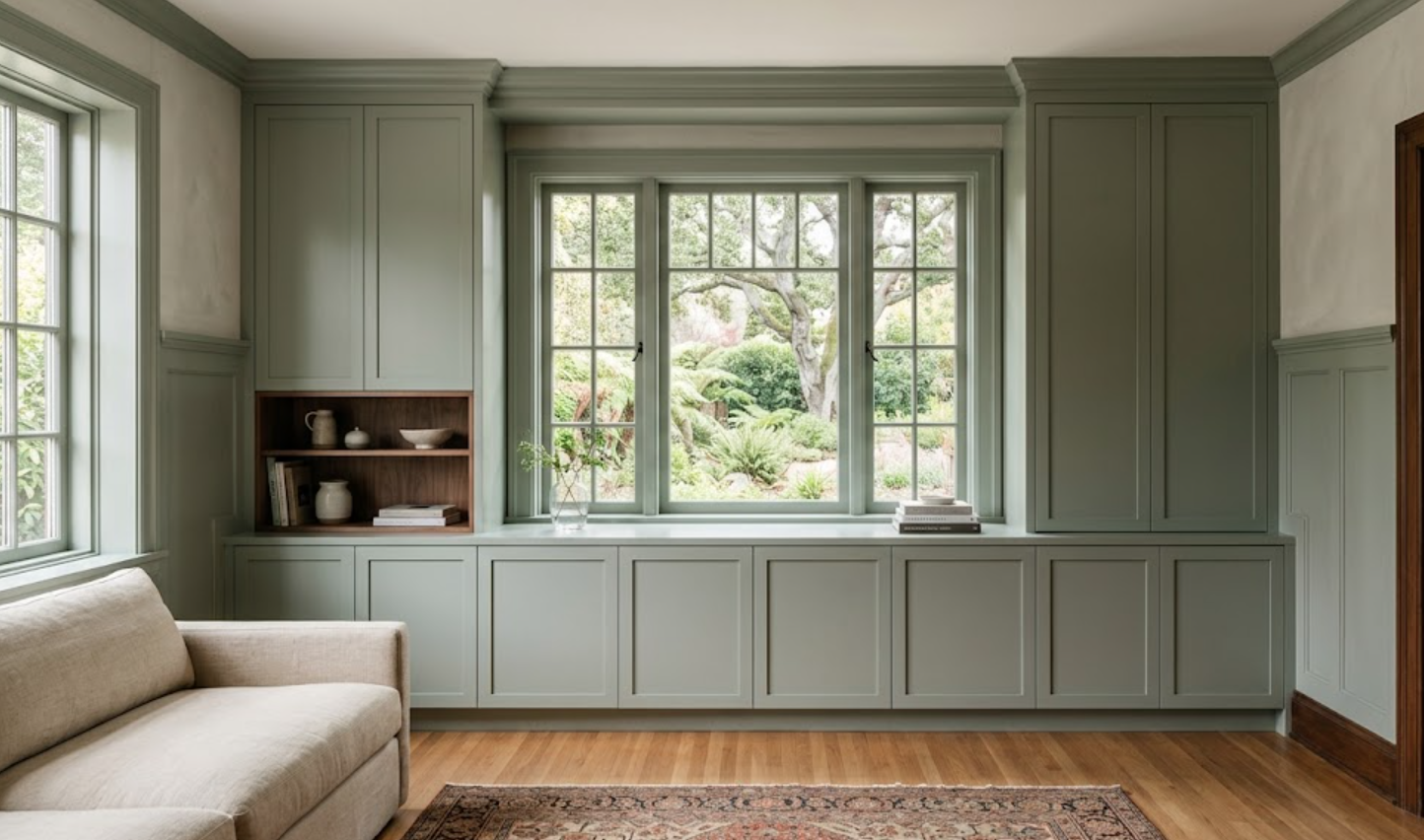
Customization should also happen inside the cabinets.
A kitchen designed for someone who cooks every night should not necessarily have the same interior configuration as one designed primarily for entertaining.
A homeowner with an extensive collection of cookware may need drawers of specific depths and widths.
A coffee station may need to accommodate particular equipment.
A bar might require glassware storage, refrigeration, and serving pieces.
An appliance garage needs to be designed around the appliances actually going inside it.
Once the cabinetry becomes truly custom, exterior appearance and interior function can be developed together.
That is a more useful definition of luxury than simply adding decorative details.
The cabinet can look specific because it is specific.
Can Grabill Cabinetry Extend Beyond the Kitchen?
Yes.
Grabill states that its cabinetry can be customized for kitchens, bathrooms, living rooms, offices, laundry rooms, mudrooms, and other areas of the home. Its project gallery also includes installations spanning kitchens, bathrooms, offices, and laundry spaces.
That becomes particularly relevant in larger custom homes.
A kitchen may establish the primary cabinetry language.
A bar can reinterpret it.
Bathroom cabinetry may become quieter.
A library can become more furniture-like.
An office may require completely different internal functions.
The advantage of bespoke cabinetry is that continuity does not require duplication.
Materials, proportions, molding profiles, colors, or details can move through the home while each room remains appropriate to its purpose.
How Can Bespoke Cabinetry Work With Architects and Interior Designers?
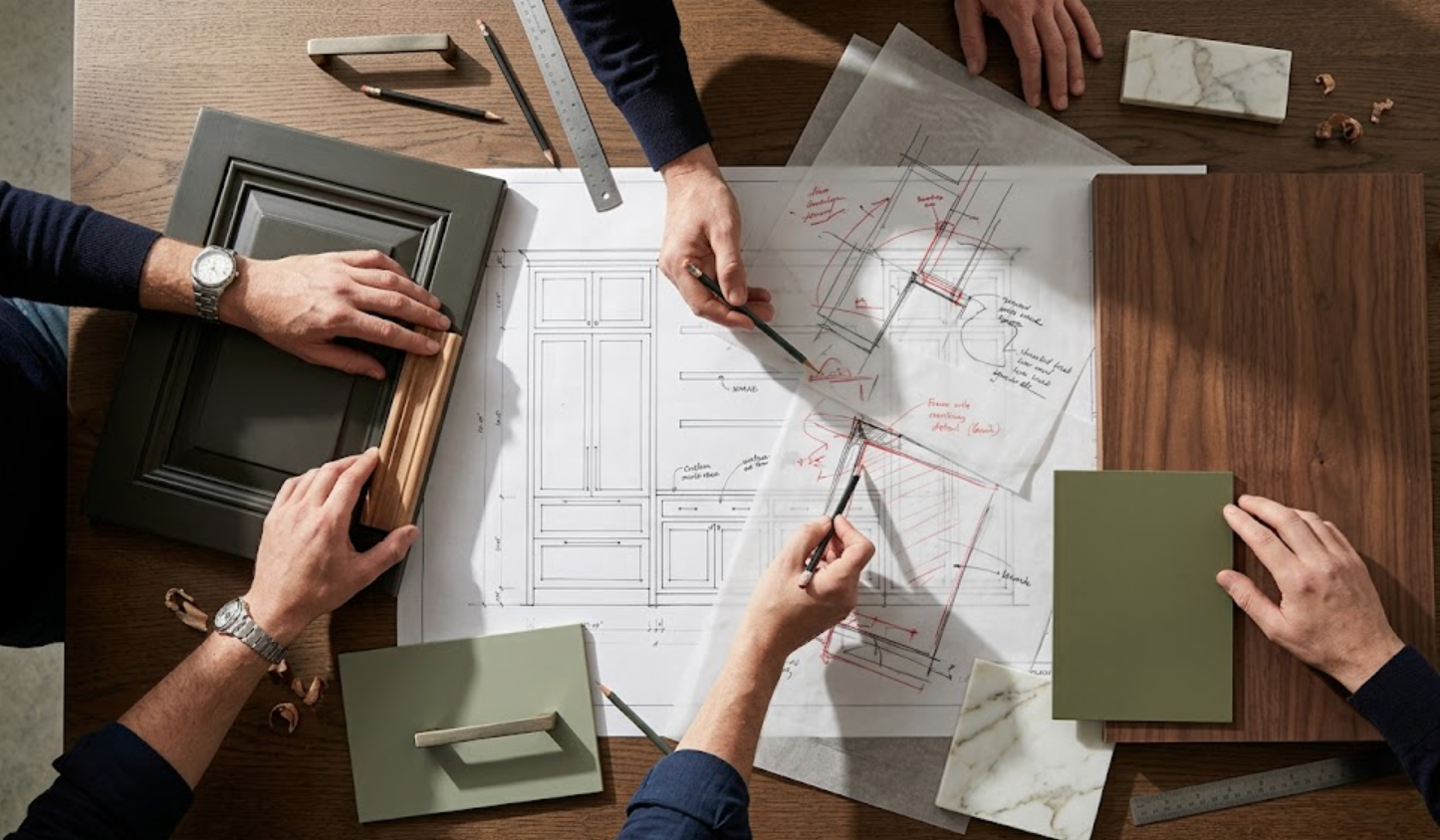
The best custom cabinetry process is collaborative rather than prescriptive.
An architect may establish the proportions and architectural relationships.
An interior designer may develop the material and color direction.
The cabinetry designer understands how those ideas translate into cabinet construction, storage, hardware, finishes, and installation.
The manufacturer then needs enough flexibility to execute the result.
Grabill specifically emphasizes collaboration with designers and states that it can work from custom design requirements, source materials, and manufacture to specifications outside its standard offering.
For highly detailed residential projects, that relationship matters.
The goal should not be for cabinetry limitations to gradually simplify the original design until it becomes something easier to manufacture.
The goal is to understand how the design can actually be built.
When Is Truly Bespoke Cabinetry Worth Considering?
Not every project needs it.
If a room works beautifully within established cabinetry dimensions and the desired finish already exists, customization for its own sake adds little value.
Bespoke cabinetry becomes more relevant when the design contains something genuinely specific.
An unusual architectural condition.
A particular proportion.
A finish that needs to be developed rather than selected.
Existing millwork that should be matched.
A custom hood or furniture-like built-in.
A material that falls outside a standard program.
Or simply an architectural idea that should not be compromised because it is inconvenient to manufacture.
That is the distinction.
Bespoke cabinetry is most valuable when customization solves a real design problem.
Why Consider Grabill Cabinets for a Bay Area Custom Home?
Grabill is worth considering for projects where cabinetry needs to move beyond a predetermined collection of standard combinations.
The company has been producing cabinetry since 1946 and describes its approach around true customization, traditional joinery, custom finish development, and collaboration with design professionals.
Its current offering ranges from detailed traditional doors to contemporary full-flush designs, walnut cabinetry, rift-cut woods, painted finishes, custom colors, metal inlays, and custom profiles.
That breadth can be particularly useful in the Bay Area, where luxury residential projects range from established homes in Palo Alto and Woodside to contemporary architecture in Menlo Park, Atherton, Portola Valley, and Los Altos.
The objective is not to make the cabinetry look “custom.”
Ideally, someone walking into the finished home should simply feel that the cabinetry belongs there.
The complicated part happened long before they arrived.
Explore Grabill Cabinetry in Menlo Park
Atelier Design Society works with homeowners, architects, interior designers, builders, and other design professionals exploring premium cabinetry for Bay Area residences.
For projects where standard cabinetry options begin to limit the architecture, Grabill offers another level of flexibility through custom dimensions, profiles, finishes, architectural details, and project-specific fabrication.
Visit the Atelier Design Society showroom in Menlo Park to explore Grabill cabinetry, compare materials and finishes, and discuss what level of customization makes sense for your project.