Custom vs. Semi-Custom Cabinets: What’s Right for Your Bay Area Home?
Two kitchens can look equally polished in a photograph and come from very different cabinetry systems.
One may use semi-custom cabinets built from an established range of sizes, finishes, and configurations. The other may use custom cabinetry designed around the exact dimensions and architectural conditions of the room.
From across the kitchen, the distinction may not be obvious. It usually becomes clearer in the details.
How precisely the cabinetry fits between walls. What happens around an unusual window. Whether a difficult corner becomes useful storage. How closely a finish can be tailored to the rest of the home. Whether an appliance disappears completely into the cabinetry or the design has to adjust around standard dimensions.
For Bay Area homeowners planning a kitchen renovation, custom home, or larger cabinetry project, understanding the difference between custom and semi-custom cabinets can help determine where additional flexibility actually matters and where it may not.
The right choice depends less on which category sounds more luxurious and more on what the home and project actually require.
What Is the Difference Between Custom and Semi-Custom Cabinets?
The simplest difference is how much of the cabinetry can be changed to fit the project.
Semi-custom cabinetry generally starts with an established system. You select from available cabinet sizes, door styles, finishes, storage options, and modifications offered by the manufacturer. There can still be considerable flexibility, but the design works within a defined set of parameters.
Custom cabinetry allows significantly more control over dimensions, configurations, materials, finishes, and architectural details.
Instead of asking: “Which available cabinet works here?”
The conversation can become: “What cabinet should be designed for this exact condition?”
That distinction becomes increasingly important as the architecture becomes more specific.
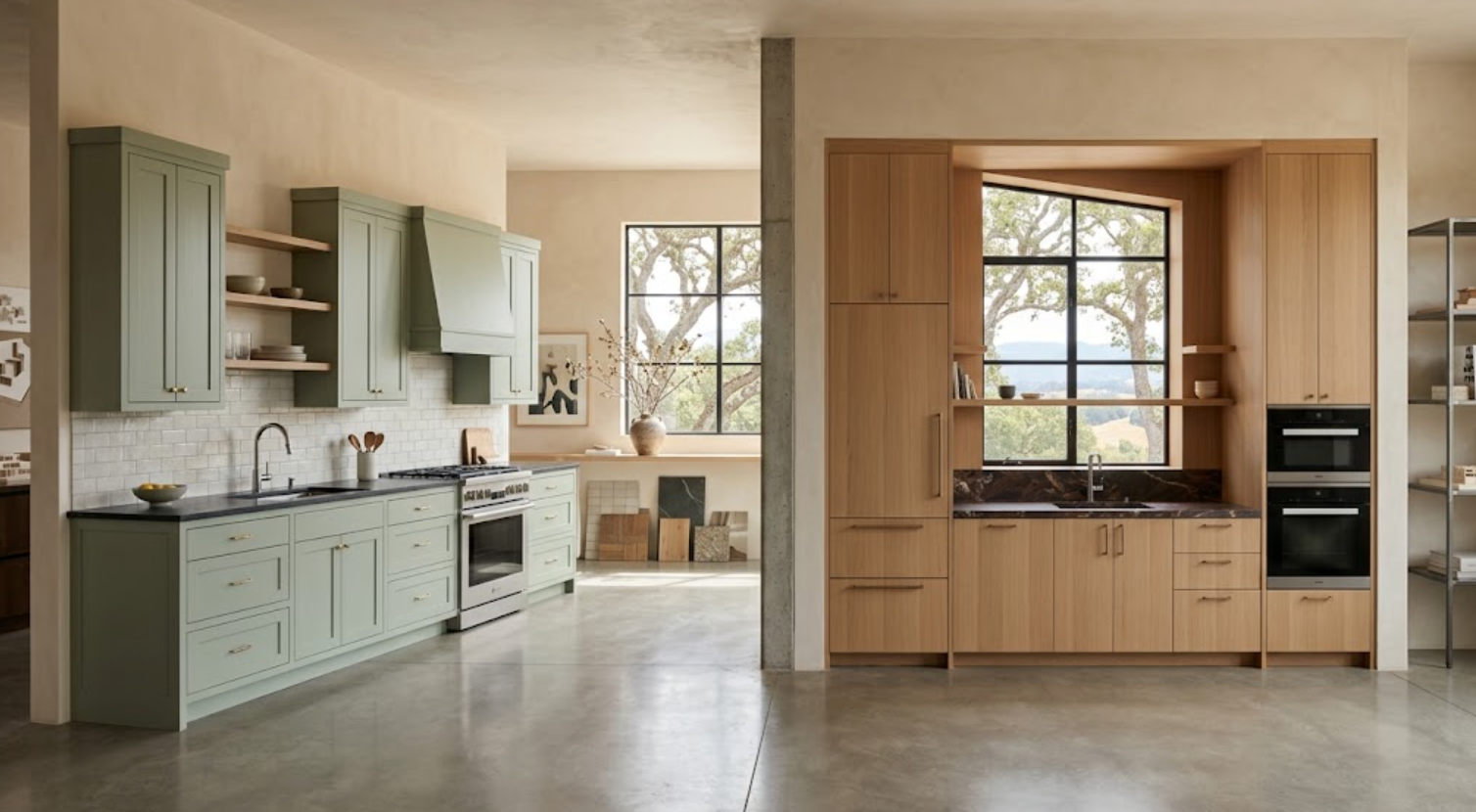
Is Semi-Custom Cabinetry Actually Customizable?
Yes. The term semi-custom can sometimes make the cabinetry sound more restrictive than it really is.
Depending on the manufacturer, homeowners and designers may have access to numerous door styles, wood species, painted finishes, cabinet configurations, interior accessories, and dimensional modifications.
That can provide more than enough flexibility for many kitchens. A well-designed semi-custom kitchen should not automatically look standardized. Good planning can make an established cabinetry system feel integrated and intentional.
The limitation appears when the project asks the cabinetry to do something outside that system. That is where the difference between semi-custom and custom becomes more meaningful.
When Does Semi-Custom Cabinetry Make Sense?
Semi-custom cabinetry can be a strong choice when the architecture works reasonably well with available cabinet dimensions and the desired design falls within the manufacturer’s options.
For example, imagine a kitchen with straightforward wall dimensions, standard appliance sizes, a conventional island, and a finish already offered by the cabinetry line. There may be little reason to customize every cabinet.
Instead, the budget can be directed toward the areas where it will have greater impact, such as countertops, appliances, hardware, lighting, or a few strategically customized details.
Semi-custom can also make sense when homeowners want a premium cabinetry experience but do not require unusual dimensions or highly specialized finishes.
The important question is whether the cabinetry system supports the design. Not whether it carries the custom label.
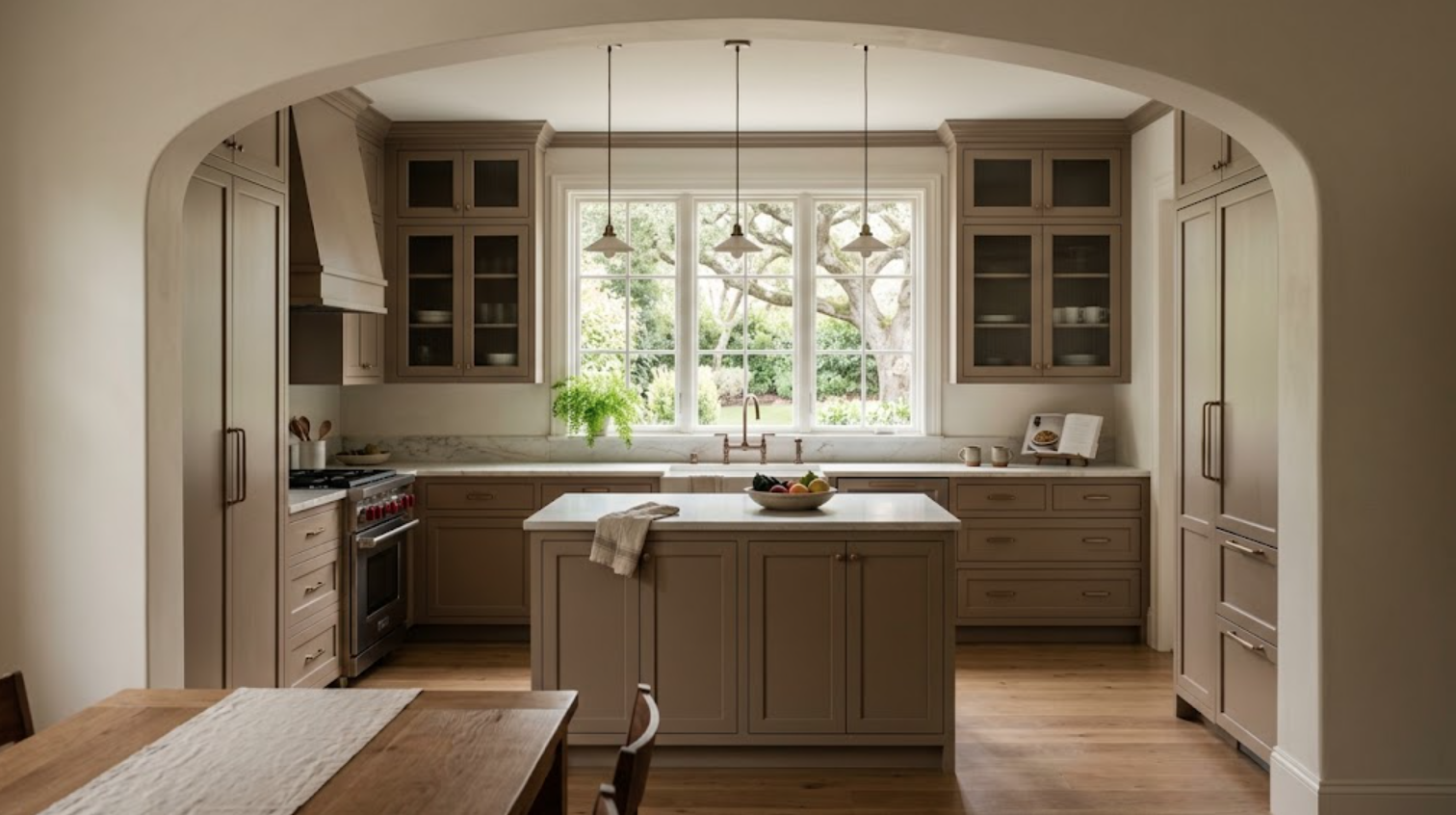
When Is Custom Cabinetry Worth Considering?
Custom cabinetry becomes especially valuable when the design should respond precisely to the architecture.
That could mean:
Working around an unusual window
Taking cabinetry to a specific ceiling height
Creating a highly integrated appliance wall
Designing storage around a homeowner’s collection or routine
Matching cabinetry to existing architectural millwork
Developing an unusual cabinet depth
Creating a specific finish
Resolving a room where standard dimensions leave awkward gaps
These situations are common in the Bay Area because the housing stock is so varied. A remodeled mid-century home in Menlo Park can present completely different conditions from an older Palo Alto residence or a newly constructed home in Atherton.
Custom cabinetry gives the design team more freedom to respond to those differences.
Does Custom Cabinetry Use Space More Efficiently?
It can.
One of the advantages of greater dimensional flexibility is the ability to design around the actual room rather than forcing the room to accommodate predetermined cabinet sizes.
Consider a wall that is 117 inches wide. If the available cabinet dimensions do not divide cleanly into that space, semi-custom cabinetry may require fillers or adjustments.
There is nothing inherently wrong with that. A skilled designer can incorporate them thoughtfully.
Custom cabinetry simply creates another possibility: designing the cabinets specifically around the available dimensions. That can be particularly useful in smaller kitchens, unusual floor plans, or rooms where every inch matters.
But maximizing every inch is not always the goal. Sometimes a little negative space produces a better elevation.
Efficiency should serve the design, not control it.
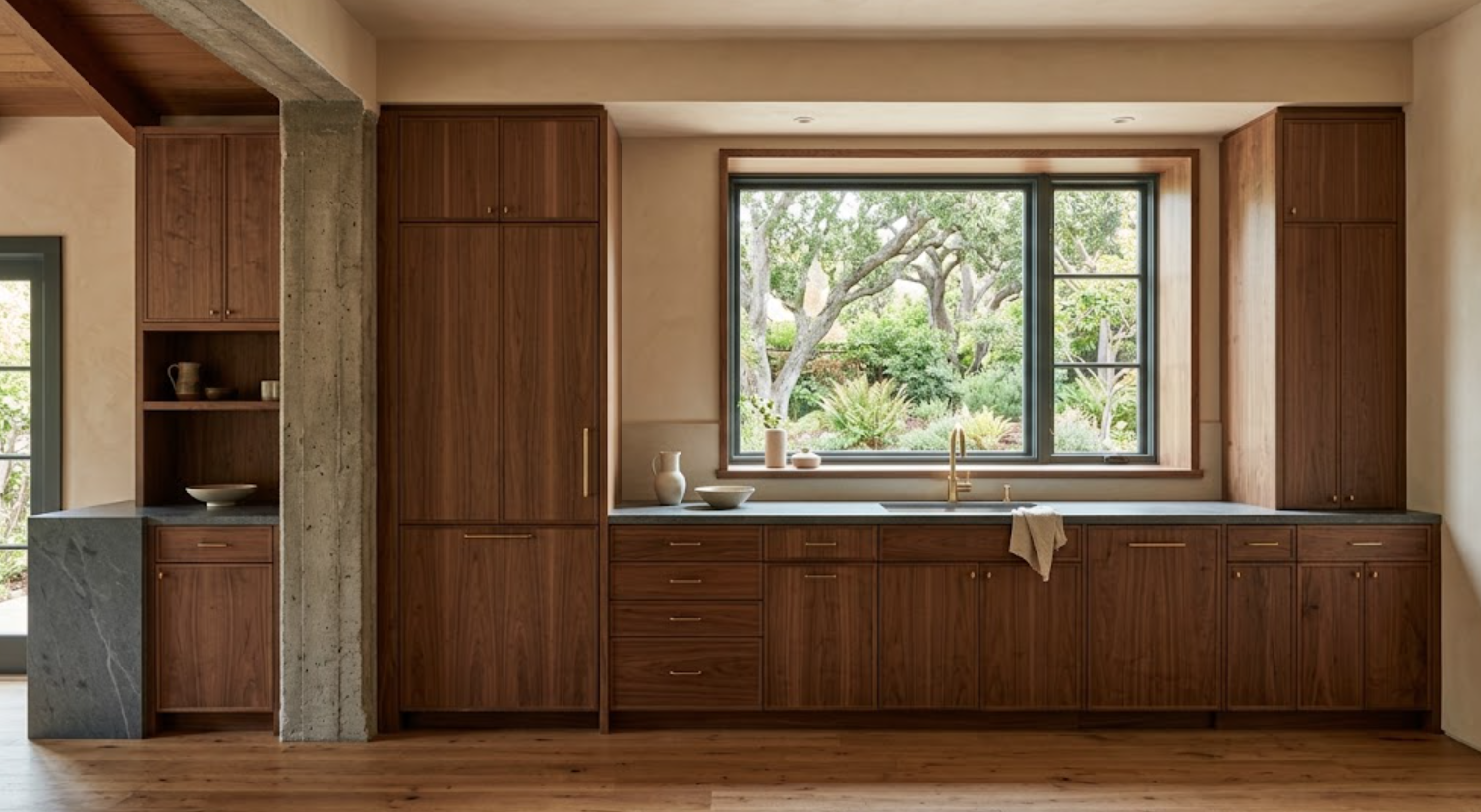
What About Finishes and Materials?
This is another area where the distinction can become important.
Semi-custom cabinetry typically offers a curated collection of finishes established by the manufacturer. That can be an advantage. The finishes have already been developed for the cabinetry line, making selection more straightforward.
If the perfect walnut, white oak, painted color, or stain already exists within that collection, there may be no need to go further.
Custom cabinetry can provide greater flexibility when the project requires something more specific. Perhaps the cabinetry needs to relate closely to existing woodwork. Maybe an interior designer has developed a particular paint color for the architecture. Or the homeowner wants a stain adjusted to coordinate with flooring or furniture.
The question is not whether having more options is automatically better. It is whether those additional options contribute meaningfully to the design.
Can Semi-Custom Cabinets Still Look Luxurious?
Absolutely.
Luxury is not determined by how many modifications were available on the order form. A well-designed semi-custom kitchen can have excellent proportions, sophisticated finishes, beautiful hardware, strong construction, and thoughtful storage.
Conversely, unlimited customization does not guarantee good design. A custom cabinet can still be poorly proportioned. A specialty finish can still be wrong for the room.
More options only help when they are used intentionally. That is why the cabinetry designer matters regardless of which system is selected.
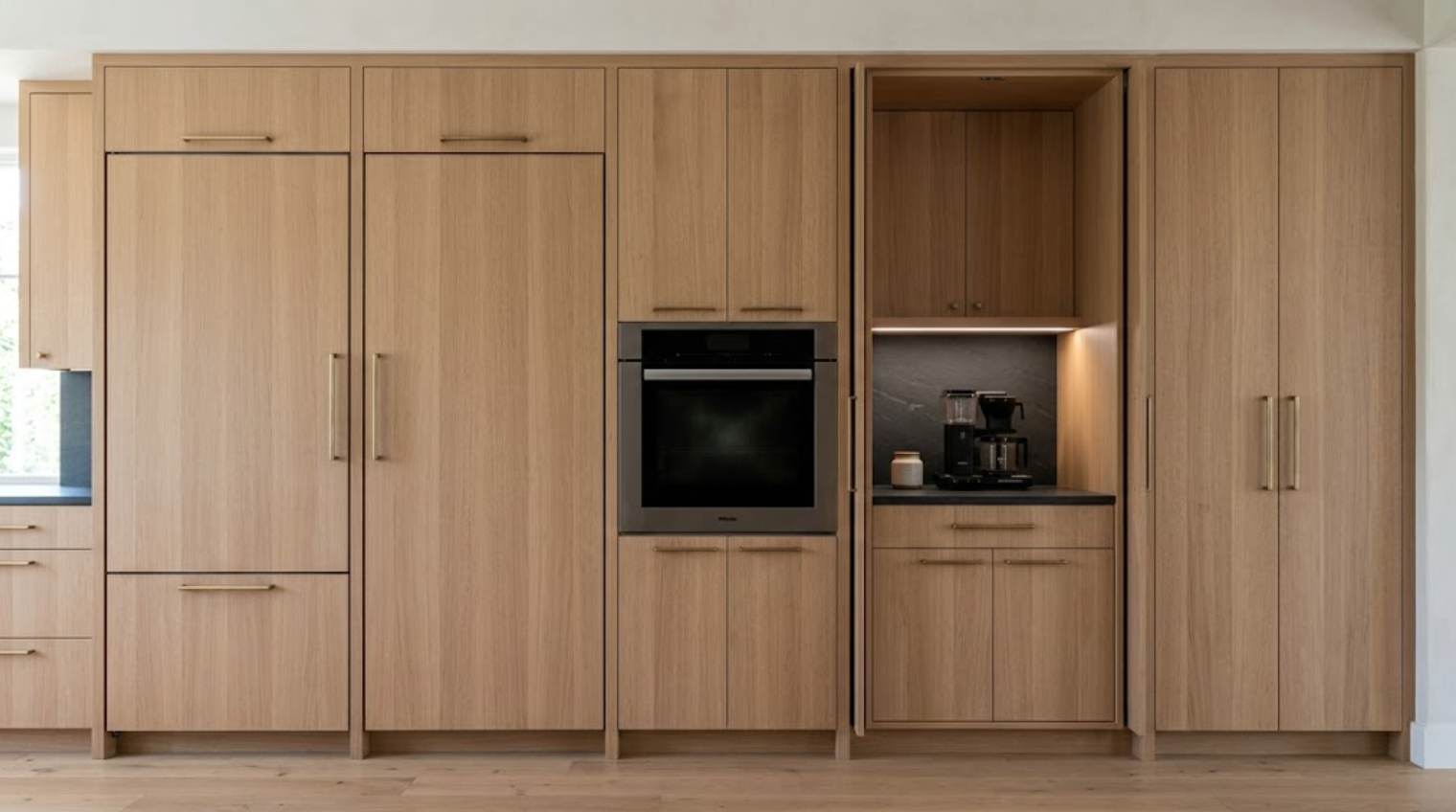
Is Custom Cabinetry Better for Integrated Appliances?
It can offer more flexibility, particularly when the goal is a highly architectural appliance integration.
Panel-ready refrigerators and dishwashers can often be incorporated into both semi-custom and custom cabinetry. The difference becomes more noticeable when the design involves unusual appliance combinations, precise panel alignment, specialized clearances, or an entire wall intended to read as one continuous cabinetry composition.
In those cases, greater control over dimensions can make coordination easier.
Appliance selections should therefore happen relatively early in the cabinetry process. The cabinet design and appliance specifications need to work together.
What About Cabinetry Beyond the Kitchen?
The custom versus semi-custom decision becomes even more interesting when cabinetry extends throughout the home.
A bathroom vanity may require a very specific width between two walls. A wardrobe may need to respond to a homeowner’s clothing and storage needs. A home office could require cabinetry around monitors, equipment, or an architectural window. A bar may need specialized bottle storage. A media room might need ventilation and precise dimensions for electronics.
A laundry room may work perfectly with a semi-custom system.
Different rooms can justify different solutions. A whole-home cabinetry project does not necessarily require choosing one level of customization for every space.
The better approach is to evaluate what each room needs.
Is Custom Cabinetry Always More Expensive?
Generally, greater customization can increase cost because the cabinetry may require additional design, engineering, manufacturing, finishing, or specialized construction.
But the comparison is not always as simple as:
Semi-custom = inexpensive
Custom = expensive
Cabinetry pricing is influenced by many variables:
Wood species
Door style
Finish
Interior accessories
Hardware
Cabinet construction
Number of cabinets
Specialty details
Installation
A highly upgraded semi-custom kitchen can represent a significant investment. A thoughtfully designed custom project may concentrate customization only where it adds meaningful value.
The most useful comparison is based on the actual design being considered rather than cabinetry category alone.
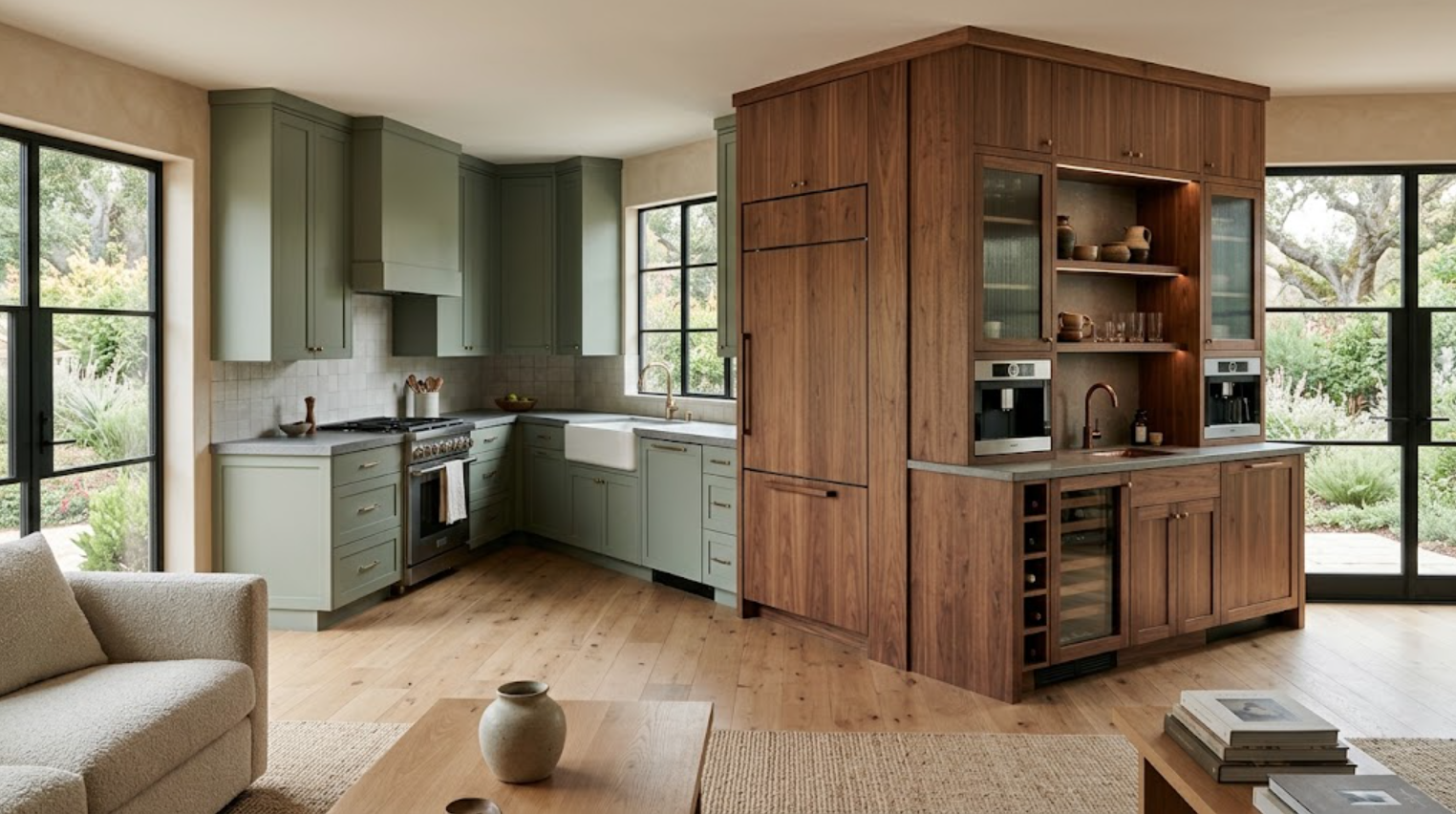
Should You Choose Custom or Semi-Custom Cabinets?
Start with the project rather than the label.
Consider:
How complicated is the architecture?
Are standard cabinet dimensions working naturally within the room?
Are you looking for a finish already offered by the manufacturer?
Do appliances require unusual integration?
Are there difficult corners, ceiling conditions, or windows?
Does storage need to be designed around something highly specific?
Will cabinetry continue into several areas of the home?
Where would additional customization actually improve the finished space?
If semi-custom cabinetry supports the design beautifully, additional customization may not add much. If the architecture continually forces compromises, custom cabinetry may be worth considering.
Sometimes the best answer lies somewhere between the two.
What Should You Compare in a Cabinet Showroom?
Do not evaluate custom and semi-custom cabinetry only through photographs.
See the cabinets at full scale.
Open the drawers.
Compare interior construction.
Look at available finishes.
Ask which dimensions can be modified.
Find out what is standard and what requires customization.
Discuss the actual architectural plans if you have them.
This is where a showroom visit becomes particularly useful. You can move the conversation away from abstract categories and toward what each cabinetry option would actually mean for your home.
Custom vs. Semi-Custom Cabinets for Bay Area Homes
Neither choice is automatically right for every luxury home.
Semi-custom cabinetry can be an excellent solution when its dimensions, finishes, and available modifications align naturally with the project.
Custom cabinetry becomes more valuable when the architecture, material palette, storage requirements, or design concept demands greater control.
For Bay Area homeowners, the decision is often less about choosing between two categories and more about determining where flexibility matters.
Spend money and design effort where they improve the room. Keep things straightforward where they do not.
That usually leads to a more thoughtful cabinetry plan than choosing based on the label alone.
Compare Cabinetry Options in Menlo Park
Atelier Design Society works with homeowners, interior designers, architects, builders, and other design professionals planning premium cabinetry throughout the Bay Area.
At the Atelier Design Society showroom in Menlo Park, you can compare cabinetry construction, finishes, door styles, storage options, and different levels of customization in person.
Bring your plans, inspiration, or project questions and use the visit to understand which cabinetry solution makes sense for the architecture, priorities, and scope of your home.