How to Choose a Luxury Cabinet Showroom in the Bay Area
Cabinetry is difficult to evaluate from a screen.
A finish can look warmer in a photograph than it does in person. A door that appears substantial online may feel completely different when you hold it. Drawer construction, hardware, interior accessories, wood grain, edge details, and finish quality are even harder to understand without seeing and touching them.
That is why choosing the right cabinet showroom can be an important part of planning a high-end kitchen or whole-home cabinetry project.
For homeowners, interior designers, architects, and builders across the Bay Area, a good showroom should offer more than rows of cabinet doors. It should help you understand what you are actually specifying.
Here is what to look for when choosing a luxury cabinet showroom in the Bay Area, and what is worth paying attention to once you walk through the door.
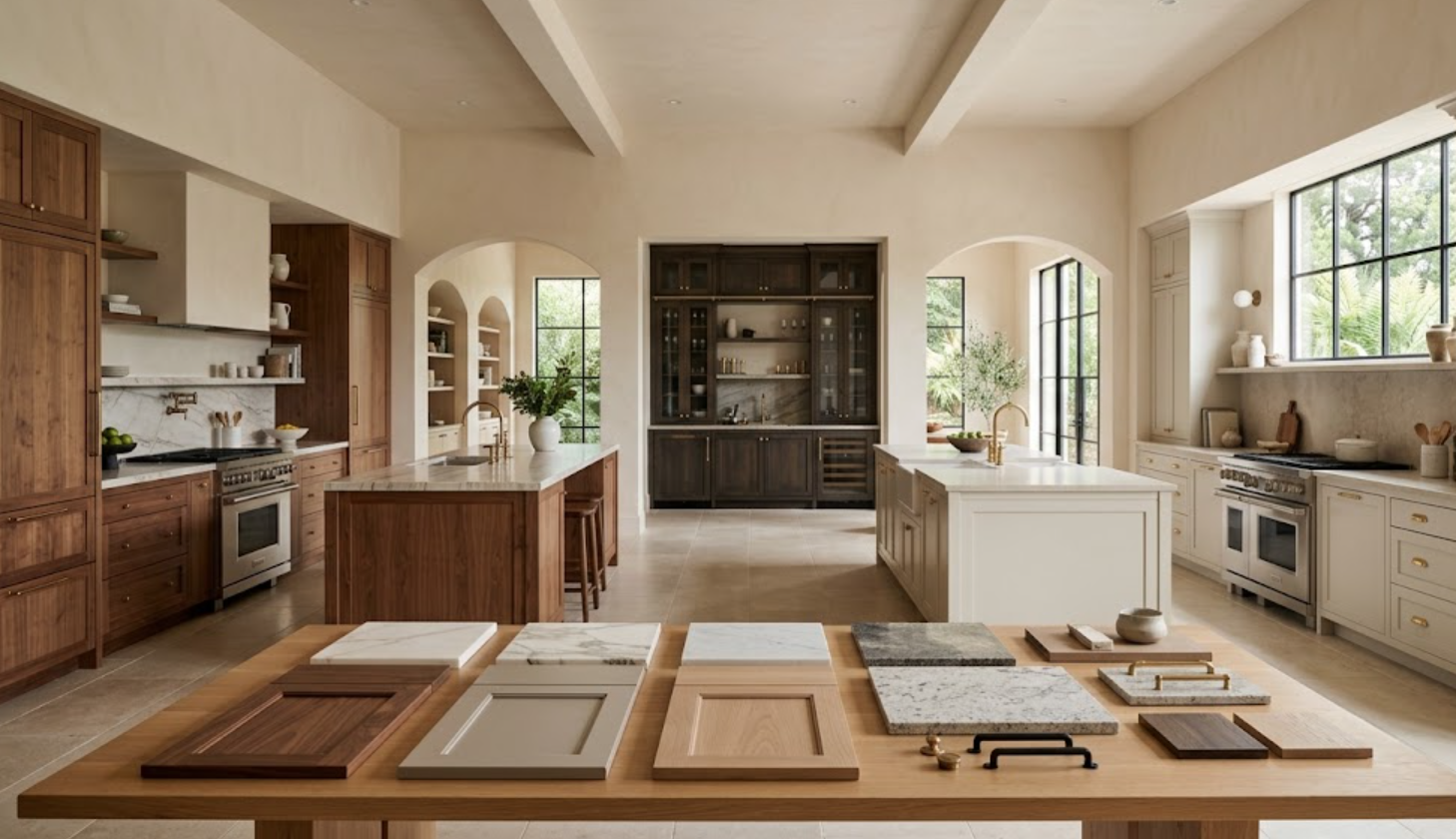
1. Can You See Full-Scale Cabinetry, Not Just Samples?
A cabinet door sample tells you something. A full installation tells you much more.
It allows you to see how doors align across an elevation, how tall cabinetry meets the ceiling, how appliance panels are integrated, how reveals and fillers are handled, and how the cabinetry feels when you actually stand in front of it.
You can:
Open a drawer.
Feel its weight.
See how the hardware moves.
Look inside a cabinet.
Notice how the finish responds to light across a larger surface.
For a luxury project, those details matter. When visiting a showroom, look for displays that allow you to evaluate cabinetry as an architectural system rather than as a collection of individual doors.
2. Does the Showroom Represent the Level of Cabinetry You Are Actually Considering?
Not every showroom is built for the same type of project.
Some focus primarily on standard cabinetry and straightforward kitchen layouts. Others work with highly customized homes where cabinetry may need to accommodate unusual dimensions, integrated appliances, architectural constraints, specialty finishes, or cabinetry beyond the kitchen.
Neither model is inherently wrong. The important thing is choosing a showroom aligned with your project.
If you are planning a custom home in Atherton, renovating an older property in Palo Alto, or coordinating cabinetry across several rooms in a Peninsula residence, you may need a different level of flexibility than someone making a relatively simple cabinet replacement.
Ask what kinds of projects the showroom typically handles. The answer can tell you a lot.
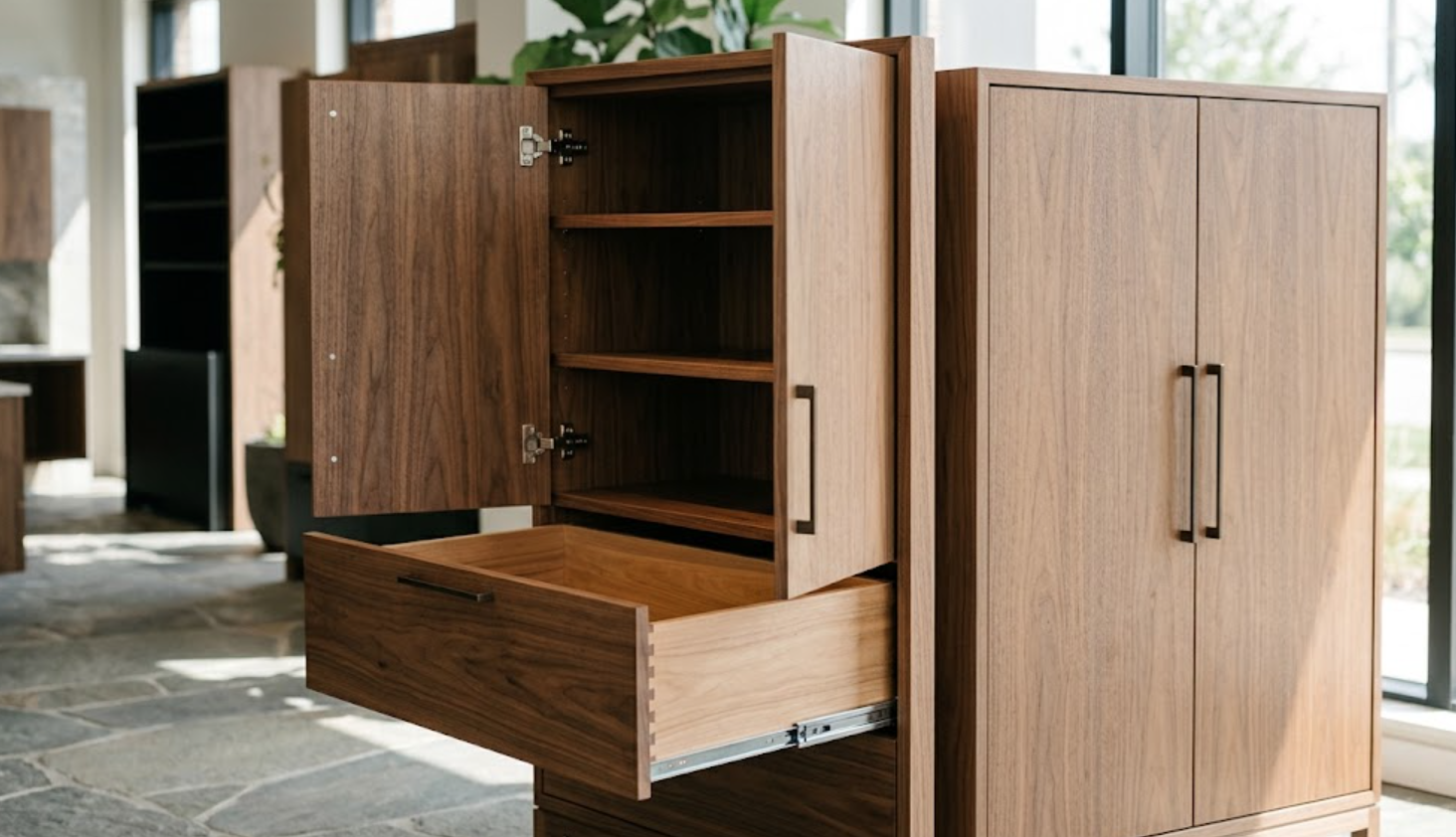
3. Can You Compare Construction Quality?
Two cabinets can look remarkably similar from across a room and feel completely different once you start using them.
The showroom is where you can investigate that difference:
Open drawers and doors.
Look at the drawer boxes.
Examine the interior.
Pay attention to hinges and runners.
Look at how shelves are supported and how precisely doors align.
Ask what is standard and what is an upgrade.
You do not need to become a cabinetmaker before choosing cabinetry, but you should leave the showroom with a better understanding of what you are paying for.
If the only conversation is about door color, you are probably not seeing the whole picture.
4. Can You Evaluate Finishes in Real Light?
Cabinet finishes rarely look exactly the same online as they do in person. This is especially important with natural woods and complex painted colors.
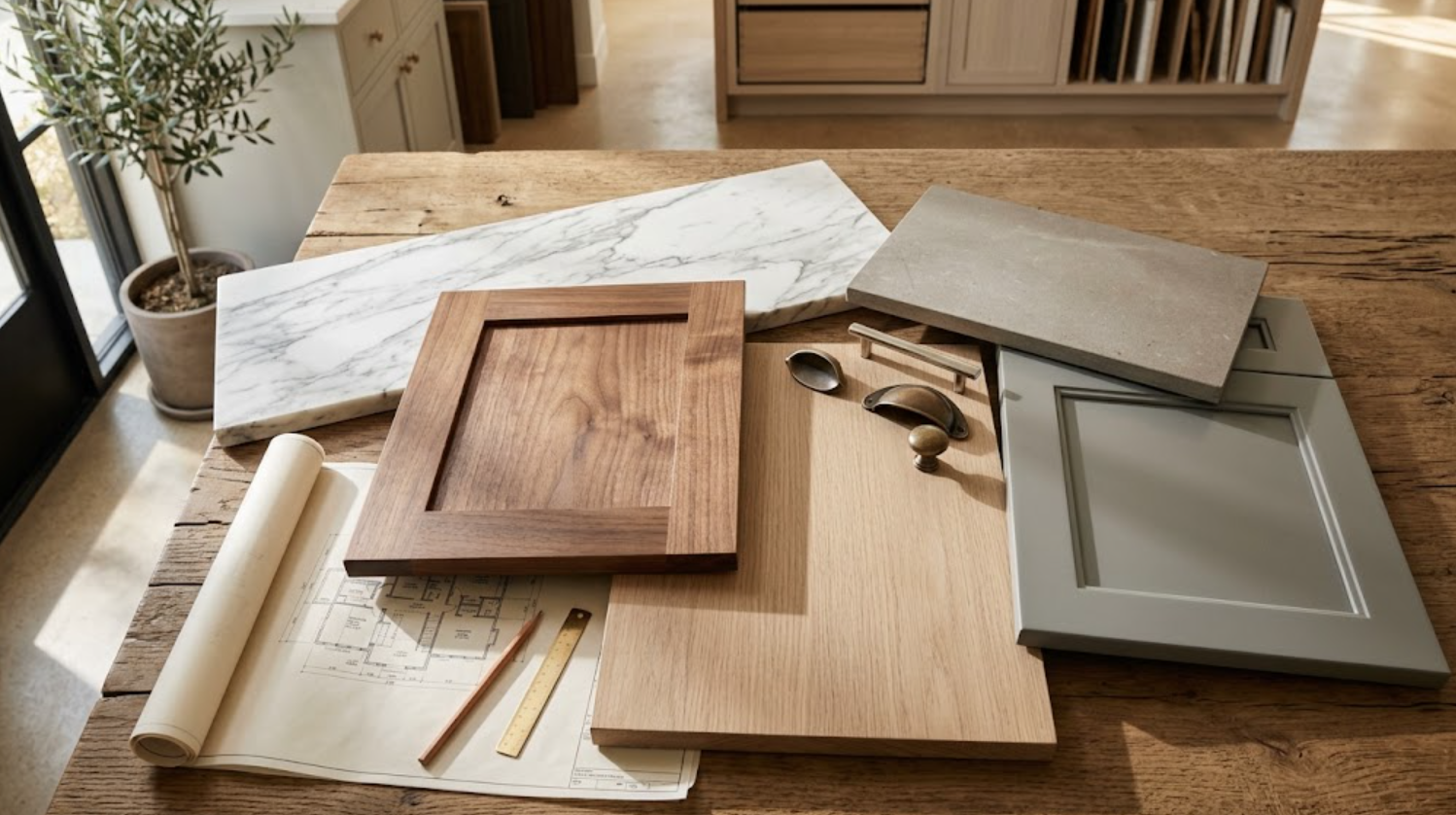
Walnut can shift dramatically depending on the individual boards and finish. White oak can move from pale and quiet to noticeably warm. Painted cabinetry may reveal green, gray, brown, or blue undertones that were difficult to see on a screen.
Sheen matters too. A finish that feels beautifully restrained in one photograph may reflect considerably more light across a full cabinet wall.
A good showroom gives you the opportunity to see finishes at a useful scale and under different lighting conditions. If possible, compare them with the stone, flooring, hardware, or other materials being considered for the room.
Cabinetry does not exist in isolation.
5. Does the Showroom Help You Understand Different Cabinetry Brands?
A luxury cabinet showroom may represent more than one manufacturer, and that can be useful.
Different cabinetry lines can offer different strengths:
One may provide extensive customization.
Another may be particularly well suited to contemporary cabinetry.
Another may offer the right balance between design flexibility, finish selection, construction, and budget for a particular project.
The goal should not be to automatically choose the most expensive line. It should be to understand which cabinetry solution fits the architecture, design intent, functional requirements, and investment level of the project.
A knowledgeable showroom should be able to explain those differences clearly.
6. Can the Cabinetry Be Customized Around the Architecture?
This becomes particularly important in Bay Area homes.
An older Palo Alto property may present very different constraints from a newly built Atherton residence. Ceiling heights vary. Walls are not always perfectly square. Existing architectural details may need to remain. Appliances can require specific clearances. A designer may want cabinetry to align precisely with windows, openings, stone, or surrounding millwork.
Ask what happens when a standard cabinet size does not work:
Can dimensions be modified?
Can finishes be customized?
Can unusual architectural conditions be accommodated?
Can appliance panels and specialty storage be incorporated cleanly?
The more specific the home, the more important these questions become.
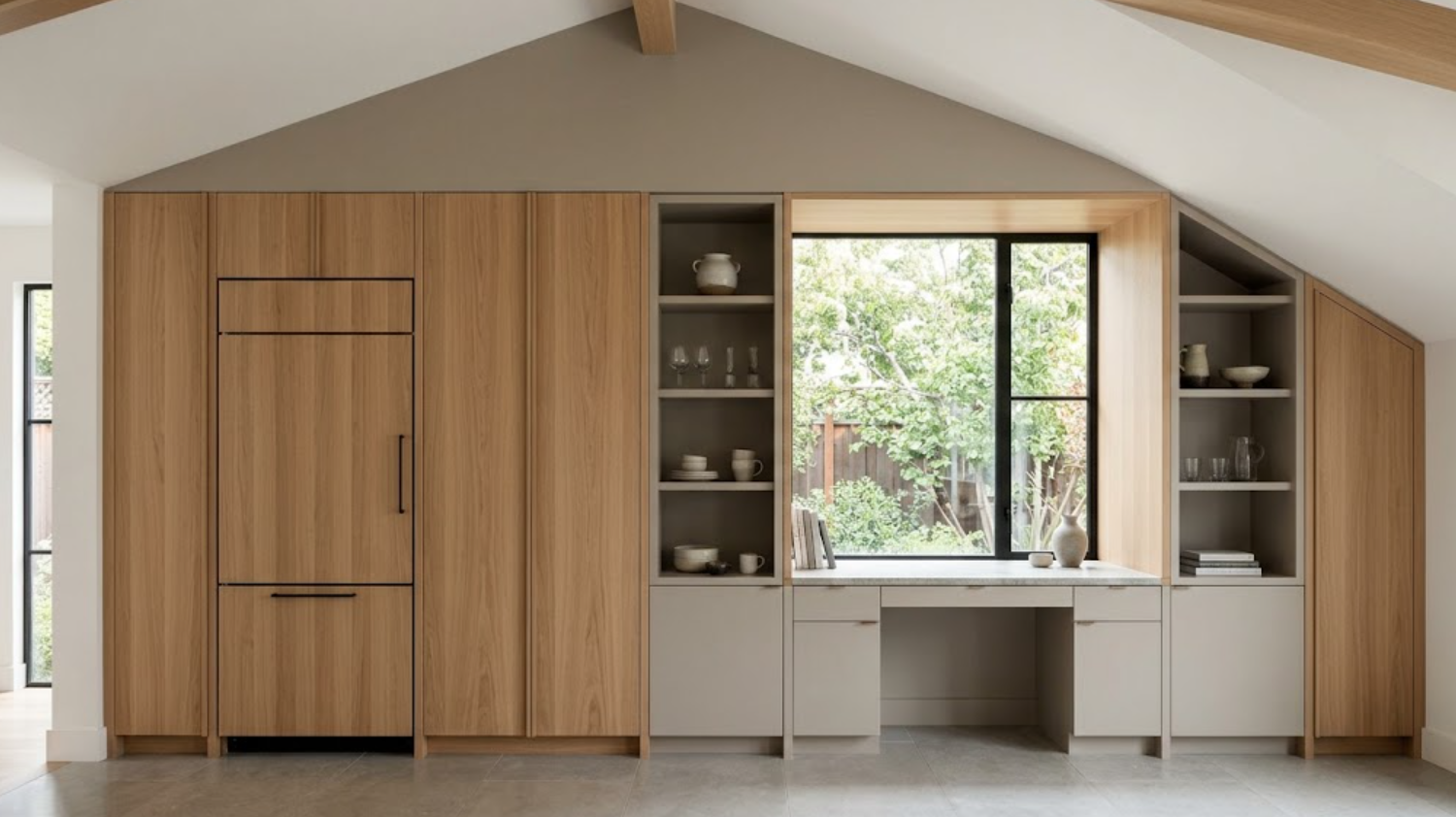
7. Can You Explore Cabinetry Beyond the Kitchen?
For many luxury homes, cabinetry planning does not stop at the kitchen:
Bathrooms
Wardrobes
Home offices
Bars
Laundry rooms
Mudrooms
Media and living spaces
When these areas are considered independently, the home can begin to feel like a collection of unrelated rooms.
A showroom that works across multiple cabinetry applications can help homeowners and design teams think more broadly about how materials, proportions, hardware, and storage should relate throughout the home.
That does not mean every room needs identical cabinetry. It means there can be a thoughtful relationship between them.
If you are planning cabinetry in several rooms, ask to see examples beyond kitchens.
8. Does the Showroom Work Well With Designers, Architects, and Builders?
Luxury residential projects are collaborative.
The cabinetry may need to coordinate with an architect’s elevations, an interior designer’s material palette, appliance specifications, electrical requirements, plumbing locations, stone fabrication, flooring, and construction schedules.
That coordination becomes much easier when the cabinetry partner understands how to work as part of a larger design and construction team.
If you already have an architect, designer, or builder, ask how the showroom typically collaborates with outside professionals. If you do not, ask what level of cabinetry design support is available.
The right relationship can prevent decisions from being made too late.
9. Are You Getting Design Guidance or Just Being Sold Cabinets?
There is a difference.
A useful cabinetry conversation should include questions about:
How you live
How the kitchen is used
What needs to be stored
Which appliances are planned
How the cabinetry relates to adjacent spaces
Which materials are already established
What architectural conditions need to be respected
What matters most to you about the finished room
If you walk into a showroom and immediately start selecting door colors without discussing the project, important decisions may be happening in the wrong order.
The cabinetry should respond to the home and the people using it. The showroom experience should help uncover that.
10. Can You Understand What You Are Investing In?
Luxury cabinetry can represent a significant portion of a renovation or custom-home budget. You should understand why.
Ask what drives the cost:
Cabinet construction?
Finish?
Customization?
Interior accessories?
Specialty hardware?
Installation?
Design and engineering?
Different projects prioritize different things. Understanding where the investment is going makes it easier to decide where customization adds meaningful value and where a simpler solution may be perfectly appropriate.
A good showroom should make those tradeoffs easier to understand, not more confusing.
What Should You Bring to a Cabinet Showroom Appointment?
You do not need a completely resolved design. But bringing a few things can make the conversation much more productive:
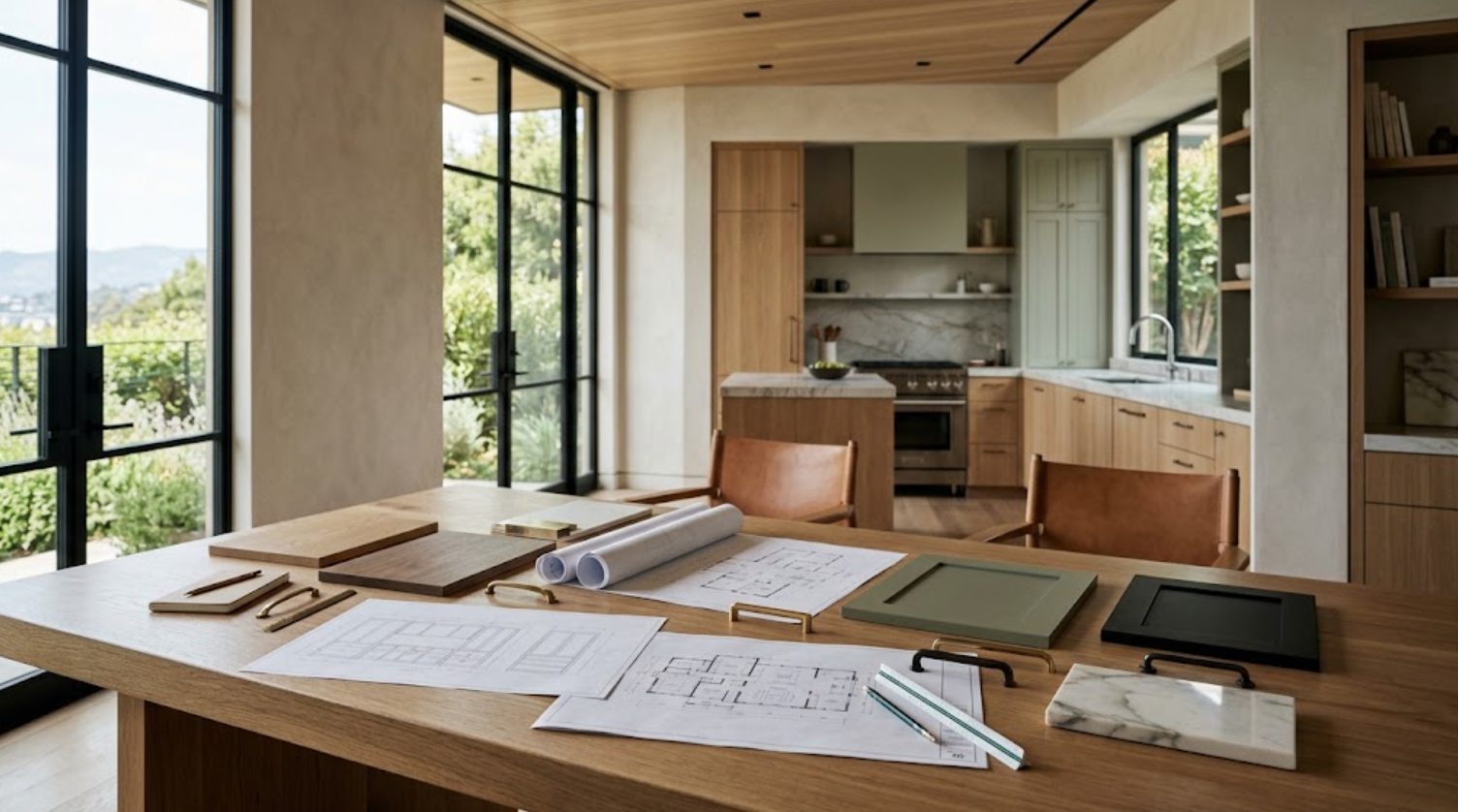
Architectural plans or preliminary floor plans, if available
Room dimensions
Appliance specifications
Photos of the existing space
Material or design references
Information about other finishes already selected
A general understanding of the project timeline
If you are working with an interior designer or architect, they may already have much of this information.
The more context the cabinetry team has, the more useful the showroom visit can become.
How Do You Choose the Right Luxury Cabinet Showroom in the Bay Area?
Look beyond the prettiest display.
A strong showroom should help you evaluate cabinetry at full scale, understand construction, compare finishes and materials, explore customization, and see how cabinetry can work throughout the home.
It should also give you access to people who can explain the difference between options without making every decision feel more complicated than it needs to be.
For a high-end residential project, the showroom is not simply where you choose a cabinet door. It is where many of the decisions that determine how the cabinetry will eventually look, feel, and function can be tested before they become permanent.
Visit a Luxury Cabinet Showroom in Menlo Park
Atelier Design Society works with homeowners, interior designers, architects, builders, and other design professionals planning premium cabinetry throughout the Bay Area.
At the Atelier Design Society showroom in Menlo Park, you can explore cabinetry at full scale, compare finishes and materials, examine construction details, and discuss how different cabinetry solutions could work within your project.
Whether you are planning a kitchen, bathroom, wardrobe, home office, bar, laundry room, or a coordinated whole-home cabinetry package, seeing the materials and construction in person can make those decisions considerably clearer.