Painted vs. Stained Kitchen Cabinets: How to Choose
Painted and stained cabinetry can create completely different kitchens even when the cabinet construction underneath is identical.
Paint creates a more uniform field of color. Stain allows the wood itself to remain part of the design.
That difference affects more than appearance. It changes how grain is experienced, how natural light moves across the cabinetry, how imperfections are perceived, how the cabinets relate to flooring and stone, and how easily the room can shift between contemporary, transitional, and more traditional design.
For homeowners and design professionals planning custom cabinetry in Menlo Park and throughout the Bay Area, the better question is not simply: “Which one looks better?”
It is: “What should the cabinetry contribute to this particular room?”
Atelier’s keyword strategy specifically identifies custom painted cabinets and custom cabinet finishes as relevant Bay Area product-intent searches, alongside natural wood options such as walnut and white oak.
What Is the Main Difference Between Painted and Stained Cabinets?
Paint primarily shows color. Stain primarily allows the natural wood grain and variation to remain visible.
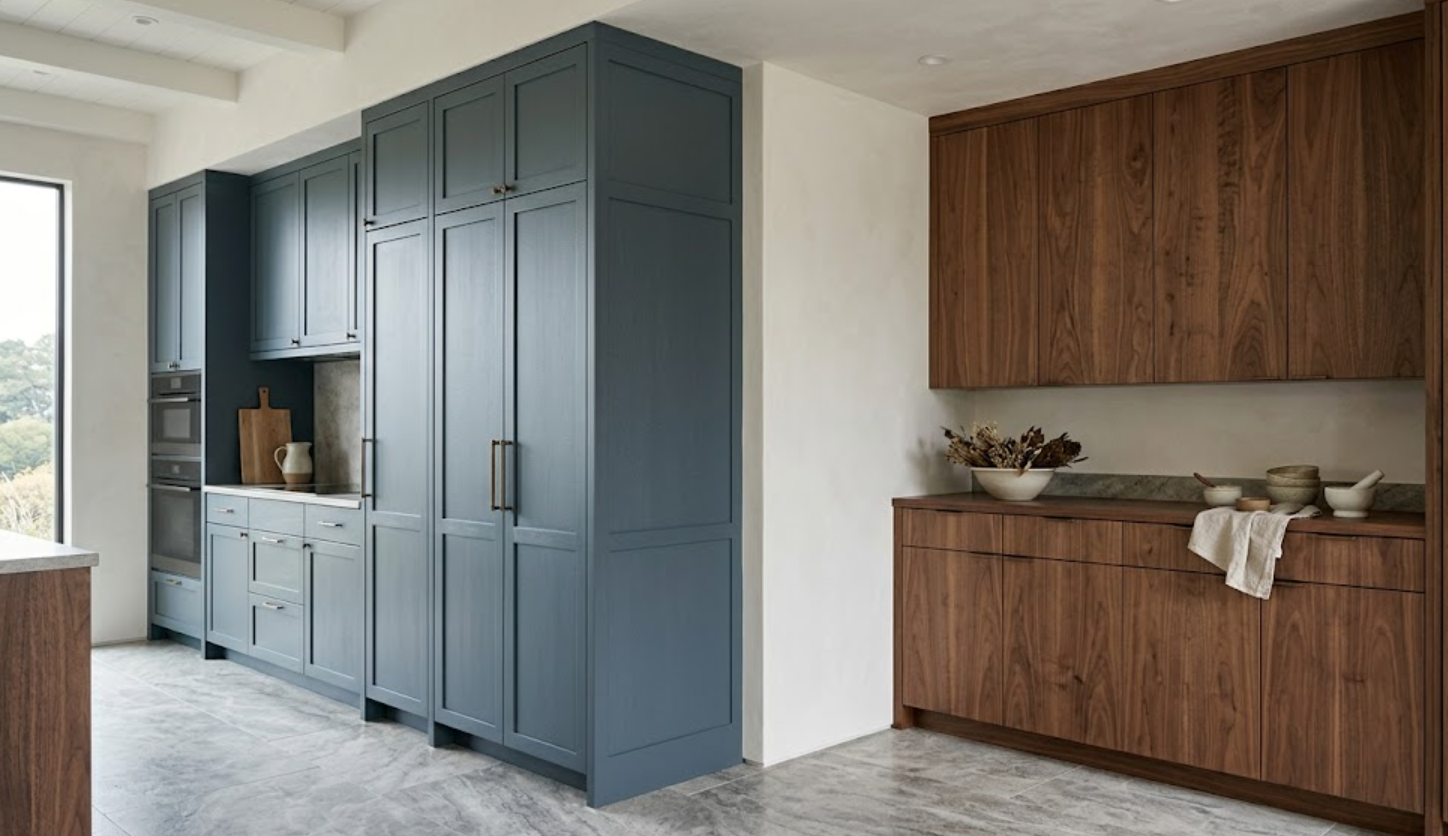
Paint creates an opaque surface. Depending on the door style and sheen, the eye tends to notice the cabinet proportions, shadows, hardware, and color before the underlying material.
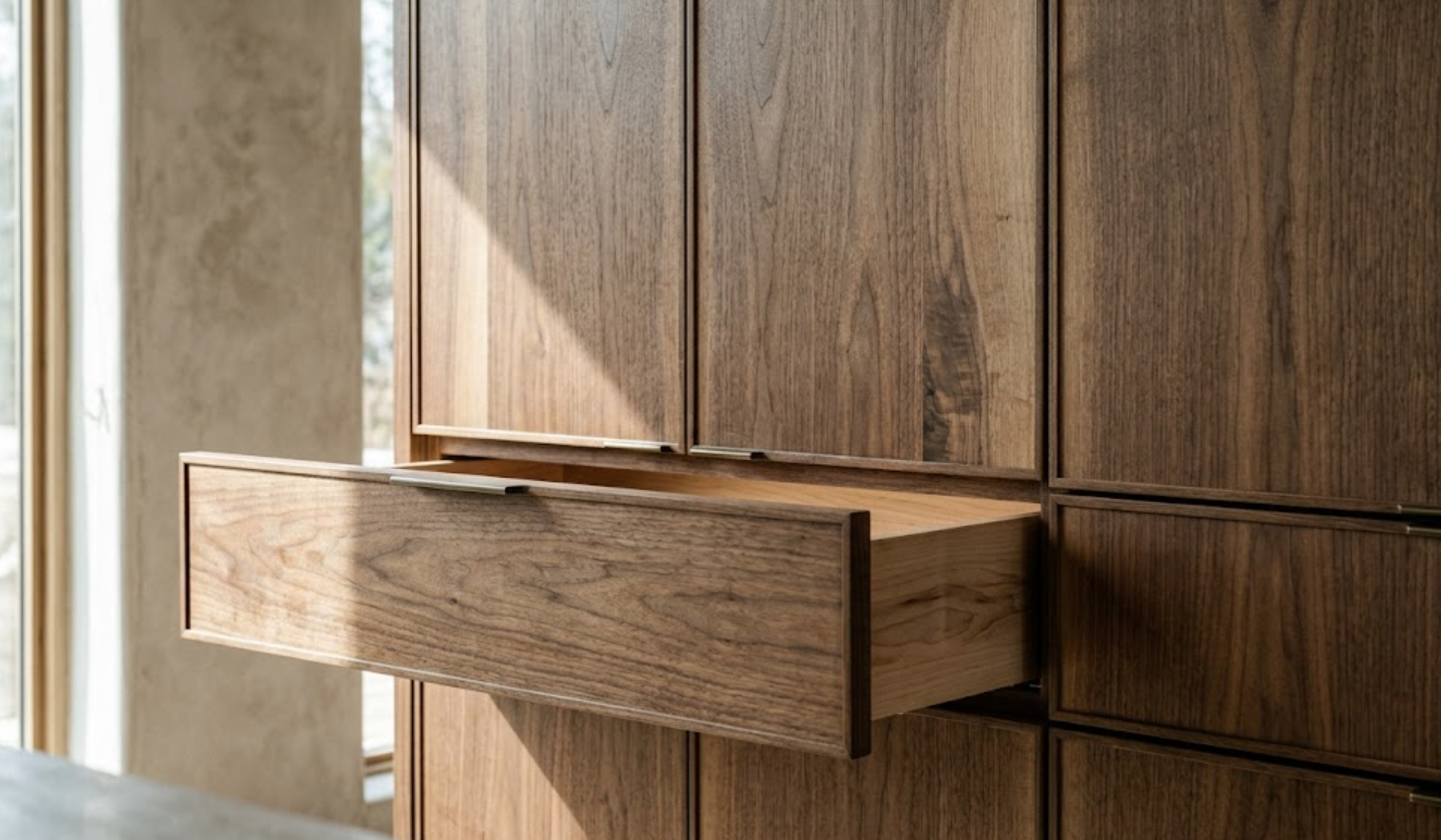
Stain works differently. The wood remains visible through the finish, so grain direction, natural variation, and tonal differences become part of the final elevation.
Neither approach is inherently more luxurious. A beautifully executed painted kitchen can feel extremely architectural. A restrained stained walnut kitchen can feel equally sophisticated.
The difference is what you want the cabinetry itself to say.
When Does Painted Cabinetry Make the Most Sense?
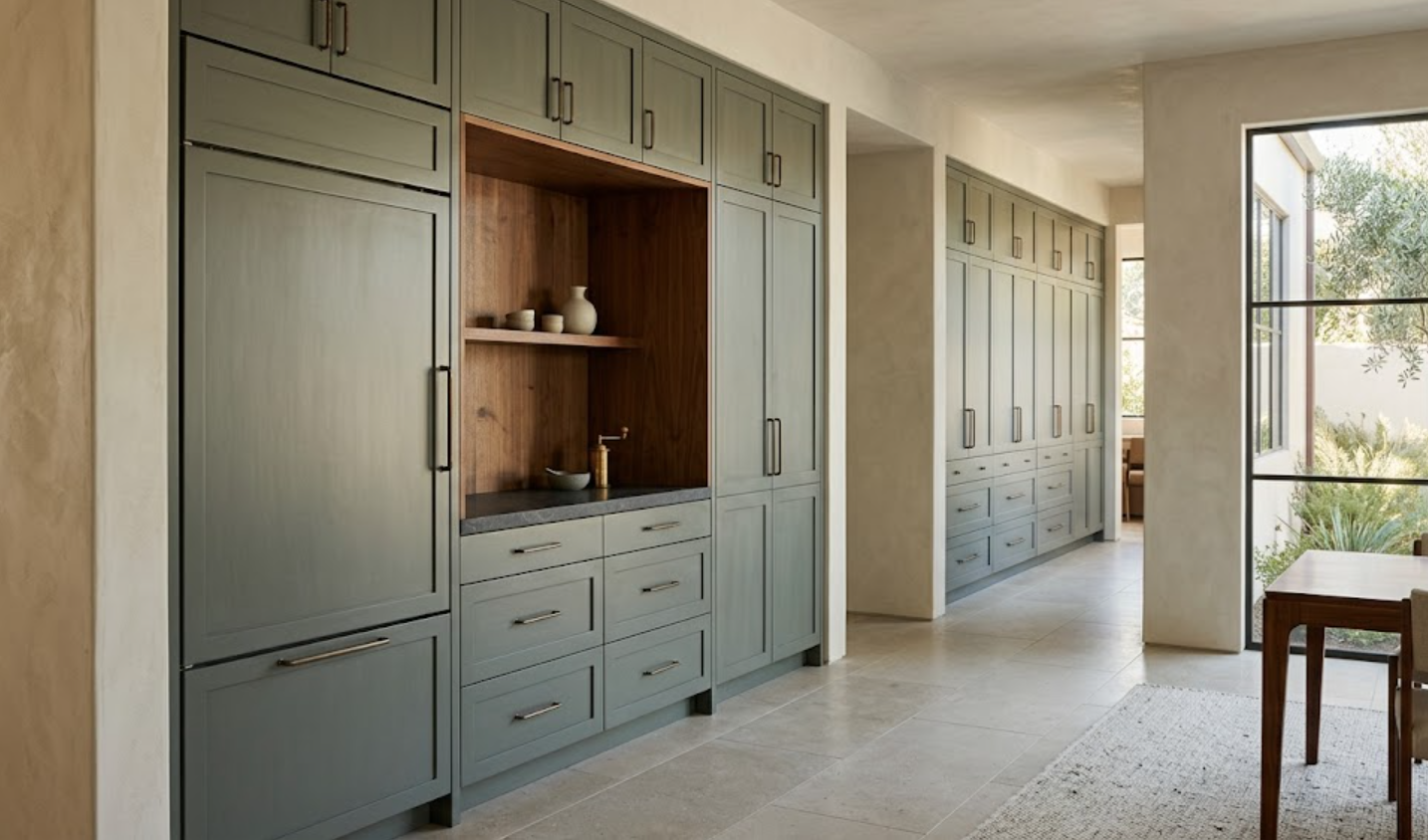
Paint can be especially effective when the design needs a controlled color field. This can help in several situations.
A kitchen with expressive stone may benefit from cabinetry that becomes quieter. A detailed door profile may feel cleaner in paint than in a visually active wood. A designer may want the cabinetry to coordinate closely with plaster, walls, trim, or another architectural color.
Paint can also allow cabinetry to participate in a more specific palette:
Muted green
Warm mushroom
Deep navy
Charcoal
Soft mineral tones
These colors can become part of the architecture rather than simply a decorative layer.
The important part is choosing a color that belongs with the room. Not choosing a color because it happens to be everywhere at the moment.
Does Painted Cabinetry Hide the Wood Grain Completely?
Usually, yes. That is part of the point.
An opaque painted finish creates a more uniform visual surface than stained wood. This can make door shape, proportions, hardware, and shadow more prominent because the natural variation of the wood is no longer competing for attention.
That does not mean painted cabinetry lacks texture. A narrow-frame door can create subtle depth. Inset cabinetry can create precise shadow lines. Different sheen levels can change how the color responds to light.
But the primary visual character comes from color and geometry, not grain.
When Does Stained Cabinetry Make More Sense?
Stain is worth considering when the wood itself should remain part of the design. That may be because of:
Grain
Color variation
Texture
The warmth that natural wood introduces into a room
Walnut is a strong example. A transparent or lightly toned stain can deepen the material without hiding the features that make walnut distinctive.
Rift-sawn white oak offers a different effect, often showing a straighter and quieter grain. The stain can also influence how those woods relate to flooring, furniture, architectural millwork, and other natural materials.
The key is restraint. If the stain is so heavy that it obscures the wood almost completely, it is worth asking whether a different material or painted finish would accomplish the design more honestly.
What Does Stain Actually Do to the Wood?
Stain modifies the color of the wood while allowing much of its grain and natural variation to remain visible.
The final result depends on several variables:
Wood species
Cut
Natural board variation
Stain color
Surface preparation
Topcoat
Sheen
The same stain can behave differently on two species. Even within one species, adjacent boards may absorb color somewhat differently.
That variation is part of working with natural material. For some homeowners, it creates richness. For others, the desire for tighter visual consistency may point toward paint or another more controlled finish.
Which Finish Gives You More Color Flexibility?
Paint generally provides more freedom when the design depends on a specific color. This can be valuable when cabinetry needs to coordinate closely with other materials.
A designer might be developing a very precise relationship between cabinetry, stone, wall finish, upholstery, and hardware. Paint can allow that color to be approached more directly.
Stain still offers considerable tonal flexibility, but the underlying wood influences the final result. A walnut stain cannot be evaluated separately from walnut. A stain on white oak will behave differently. The wood is always part of the equation.
That can be a limitation or an advantage depending on the design.
Which One Works Better With Natural Stone?
Both. The answer depends on which material should lead.
A dramatic quartzite can benefit from quieter painted cabinetry. A restrained stone can provide a calm background for expressive walnut or white oak.
If both the wood grain and stone pattern are highly active, the room may become visually busy. That can still work in the right architecture, but it needs hierarchy.
The countertop and cabinetry should not be selected as two unrelated beautiful objects. They should be considered together.
One may lead. The other may support. Sometimes they share attention more evenly.
That relationship matters more than whether the cabinets are painted or stained.
Does Painted Cabinetry Show Wear More Easily?
Not necessarily.
Wear depends on the finish system, color, sheen, household use, hardware, and maintenance.
Painted cabinetry can reveal chips or impact damage differently because the contrast between the painted surface and substrate may become visible if the finish is compromised. Darker or very matte paint may also reveal fingerprints more readily depending on the finish.
But stained cabinetry is not immune to wear. Edges, frequently touched areas, and exposed surfaces still experience daily use.
The practical question is not which finish is indestructible. Neither is.
The better question is: How does this particular finish age, and what care does it require?
That is something worth asking the cabinetry manufacturer or showroom before committing.
Which Finish Is Easier to Touch Up?
This varies significantly by the exact finish, manufacturer, and extent of the damage. There is no universal answer.
A small issue on stained wood may sometimes blend differently because natural grain and variation are already present.
Painted cabinetry can sometimes be touched up successfully, but color and sheen matching become important. A repair may become more noticeable if the surrounding surface is extremely uniform.
This is one reason finish support matters. Before purchasing cabinetry, ask whether touch-up materials are available and what the manufacturer recommends for small repairs.
It is a practical question that is easy to overlook when the cabinetry is brand new.
Does Paint or Stain Look More Luxurious?
Neither. Luxury is not a finish category.
A poorly proportioned cabinet does not become luxurious because it is walnut. An uninspired door does not become sophisticated because it has been custom painted.
Quality comes from the whole composition:
Construction
Proportion
Finish execution
Material quality
Hardware
Installation
Storage
Architectural fit
Painted cabinetry can feel highly refined when color, sheen, and door proportions are resolved carefully. Stained cabinetry can feel equally refined when grain, tone, sequencing, and construction are handled well.
The finish should support the design rather than act as shorthand for quality.
Can You Mix Painted and Stained Cabinets in the Same Kitchen?
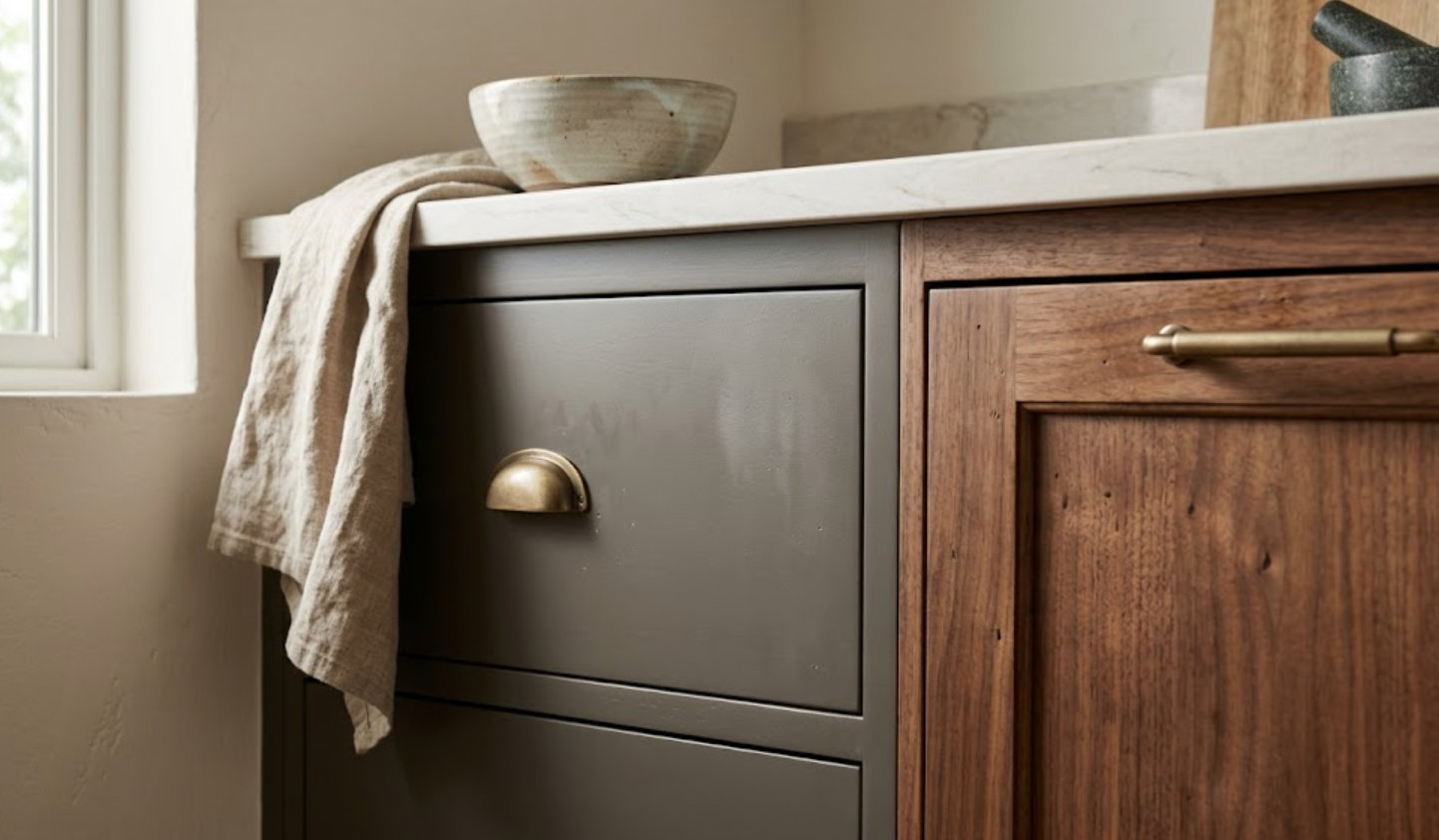
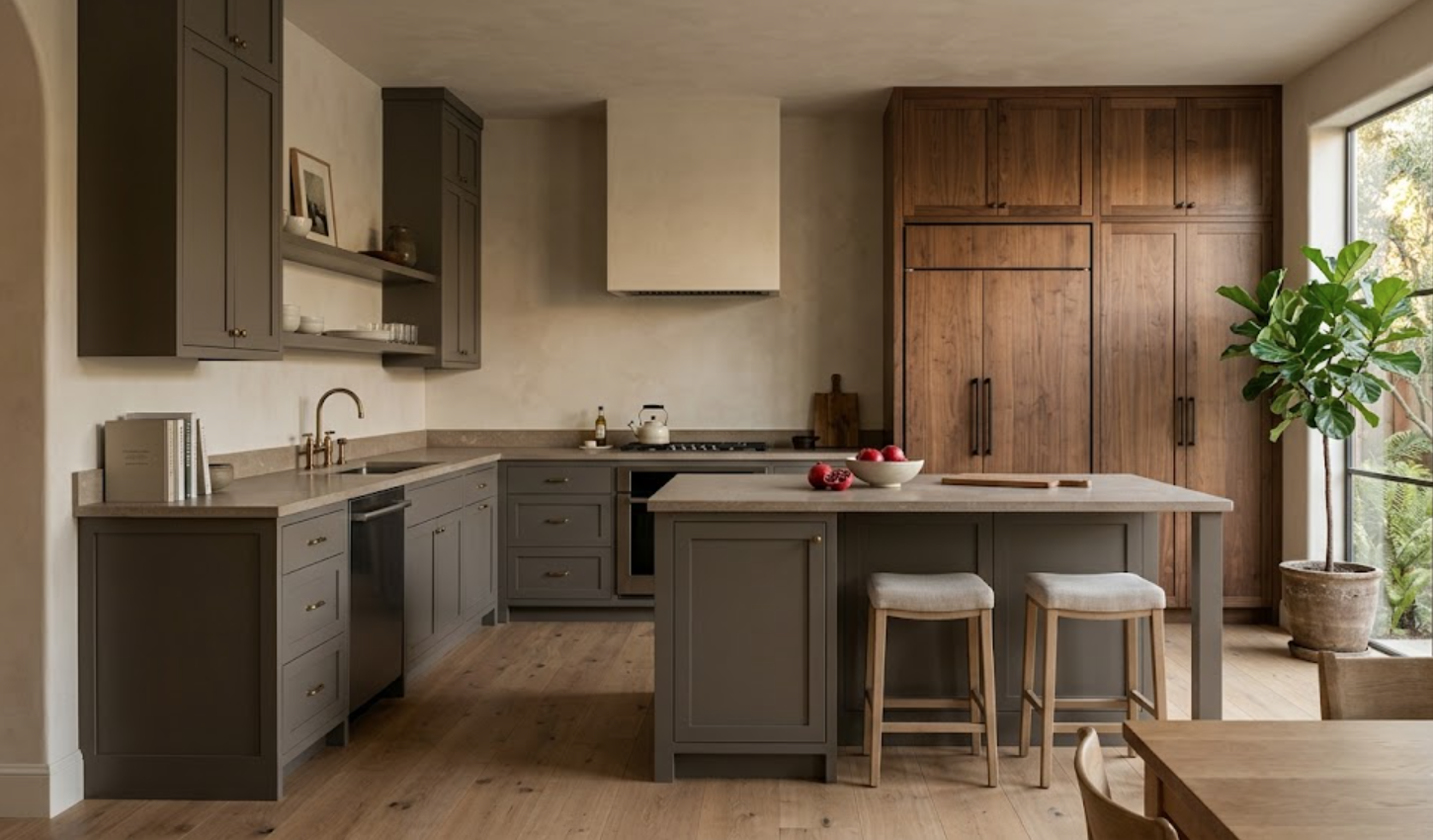
Yes, and this can be one of the most effective ways to balance natural wood with color.
A walnut island can introduce warmth while painted perimeter cabinetry keeps the room lighter. A painted kitchen may use walnut only on a tall pantry volume. Natural wood could appear inside an open niche or bar.
The important part is giving each material a role. Randomly alternating painted and stained cabinets can make an elevation feel fragmented.
A stronger approach is to organize them by architectural volume or function:
Island versus perimeter
Tall cabinet wall versus working wall
Main kitchen versus bar
This makes the change in material feel intentional.
Should Painted and Stained Cabinetry Be Used Throughout the Home?
They can. Whole-home cabinetry does not require one finish everywhere.
A painted kitchen might connect to a walnut bar. A bathroom vanity could use stained wood while painted built-ins appear elsewhere. A wardrobe might combine a painted exterior with a natural wood interior.
The relationship can come through undertones, hardware, proportions, or repeated material accents. This often creates a more interesting home than applying one finish to every cabinet simply for consistency.
The goal is a shared design language. Not identical rooms.
Which Finish Works Better for Shaker Cabinets?
Both.
Paint tends to emphasize the geometry of a Shaker door. The rails, stiles, recessed center panel, and shadows become clearer because the color is relatively uniform.
Stained Shaker cabinetry introduces another layer. The frame itself becomes part of the wood-grain composition. That can create a richer, more furniture-like effect.
The frame proportions still matter. A heavy Shaker profile in dark stained wood can become visually strong across a large kitchen. A narrower profile may feel more restrained.
Again, the answer depends on scale. Not merely the door name.
Which Finish Works Better for Slab Cabinets?
Natural wood is especially compelling on slab cabinetry because the uninterrupted panel gives grain more room to be seen.
Walnut is a good example. Large slab doors can allow color and grain to become the primary detail.
Painted slab cabinetry creates an entirely different effect. Instead of grain, the viewer sees large uninterrupted areas of color.
That can work beautifully in contemporary interiors, particularly when the cabinetry is meant to become quiet architecture.
Neither is better. One emphasizes material. The other emphasizes surface and proportion.
How Should Natural Light Affect the Decision?
A lot. Paint and stain respond differently to light.
A paint color can reveal unexpected undertones in morning versus afternoon light. A stained wood can become warmer, darker, or more expressive depending on direction and intensity.
Sheen changes this further. A highly reflective finish may show windows and lighting across the cabinet faces. A lower sheen can create a quieter surface.
For Bay Area homes with significant natural light, this deserves real attention:
Bring samples into daylight whenever possible.
Hold them vertically.
Look at them beside the stone and flooring.
Then come back later in the day.
A finish should be selected for the room it will live in. Not the lighting of the showroom.
How Do You Choose Between Painted and Stained Kitchen Cabinets?
Start with these questions:
Do you want the cabinetry to introduce color or natural material variation?
Should wood grain be one of the dominant visual elements?
Is the room already carrying expressive stone or other strong materials?
Does the architecture call for a quieter surface or more warmth?
How much natural light enters the room?
Do you want multiple cabinetry finishes or one primary material?
How do you feel about natural wood variation?
What maintenance expectations come with the exact finish being considered?
Which option feels more appropriate for the home? Not just the inspiration image.
Painted vs. Stained Cabinets for Bay Area Kitchens
There is no universal winner.
Choose painted cabinetry when a controlled color, quieter material surface, or specific palette supports the architecture. Choose stained cabinetry when natural grain, warmth, and wood variation deserve to remain visible. Or use both when each material has a clear role.
For homeowners and design professionals planning custom cabinetry in Menlo Park and throughout the Bay Area, seeing painted and stained finishes at full scale can make the difference much easier to understand than comparing photographs online.
Atelier’s keyword strategy specifically identifies both custom painted cabinets and custom cabinet finishes as relevant Bay Area searches.
The right answer is not the finish that looks the most luxurious. It is the one that makes the entire room work better.
Compare Cabinet Finishes in Menlo Park
Atelier Design Society works with homeowners, architects, interior designers, builders, and other design professionals exploring premium cabinetry for Bay Area residences.
Visit the Atelier Design Society showroom in Menlo Park to compare painted and stained cabinetry, wood species, full-size door styles, finish sheen, hardware, construction, and complementary materials in person.