Walnut Kitchen Cabinets: A Guide to This Timeless Luxury Material
Walnut has a way of making cabinetry feel substantial without making a room feel heavy.
Its color can range from warm medium brown to deeper chocolate tones. Its grain can be quiet in one board and more expressive in another. Under natural light, the material develops depth that a flat color simply cannot reproduce.
That is part of why walnut remains so compelling in luxury kitchens. But choosing walnut cabinetry is not as simple as selecting a brown wood.
The cut of the material matters. The finish matters. The amount of walnut used in the room matters. The direction and sequencing of the grain matter.
Perhaps most importantly, the surrounding stone, flooring, lighting, and architecture determine whether walnut becomes rich and sophisticated or visually overwhelming.
For homeowners and design professionals planning custom cabinetry in Menlo Park and throughout the Bay Area, walnut offers considerable design potential when it is treated as an architectural material rather than simply a cabinet finish.
Atelier’s keyword strategy also identifies Walnut kitchen cabinets Bay Area as a relevant product-intent search, alongside white oak, custom finishes, and other premium cabinetry materials.
Why Is Walnut So Popular in Luxury Kitchens?
Walnut brings natural variation, warmth, and visual depth to cabinetry without relying on decorative detailing. That makes it particularly effective in contemporary and transitional interiors.
A simple slab door in walnut can carry significant visual character because the wood itself becomes the detail. The grain changes from panel to panel. Some areas may be relatively straight. Others may introduce more movement. Color can shift naturally across the elevation.
That variation keeps a large cabinetry installation from feeling flat.
At the same time, walnut is typically darker and visually stronger than lighter woods such as white oak. That means the amount of walnut in the room should be considered carefully.
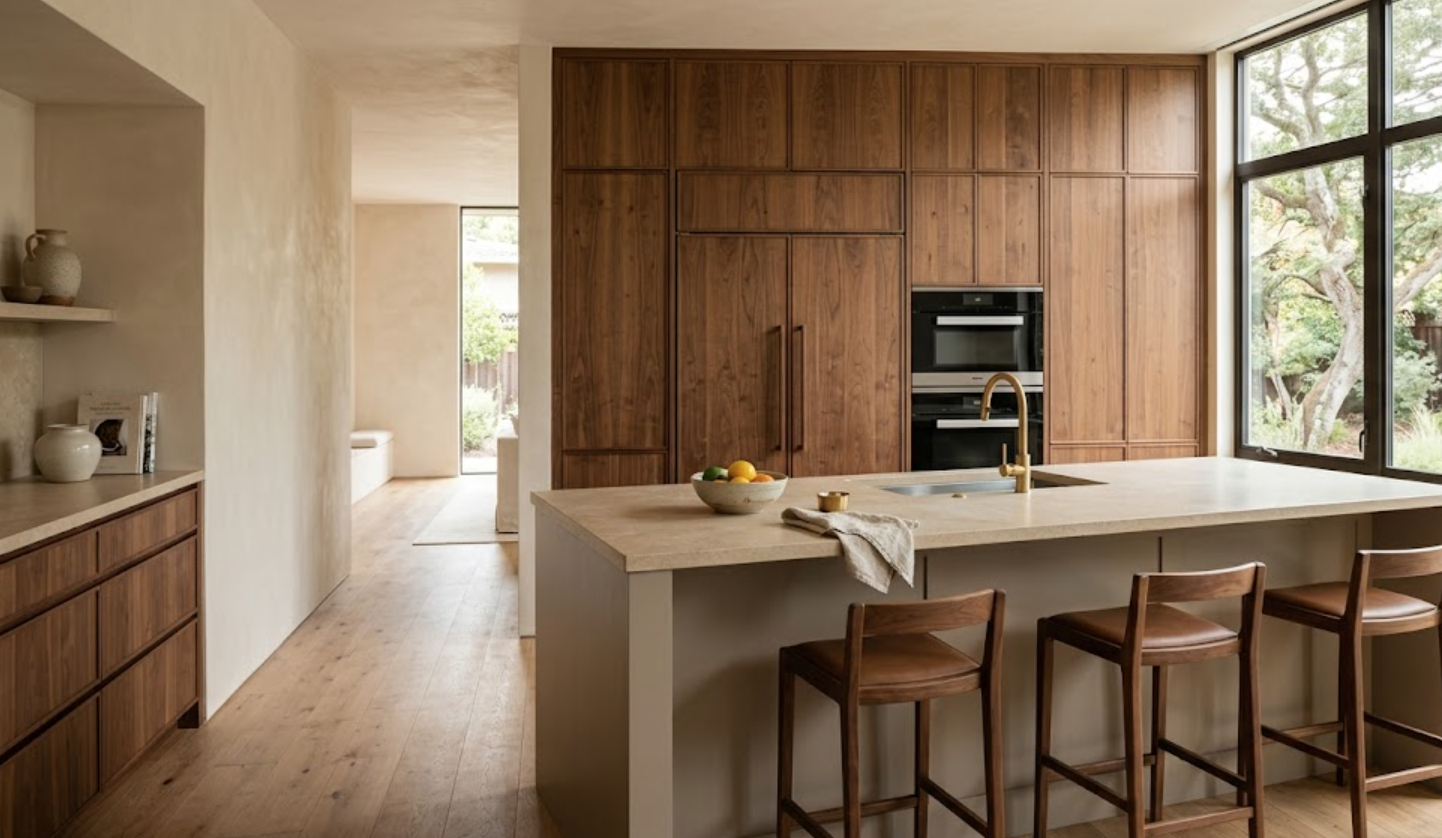
A full wall of walnut can become a dramatic architectural element. An entire kitchen wrapped in the same dark wood may feel too heavy in a room without enough light or visual relief.
The material becomes more successful when its strength is used intentionally.
What Does Natural Walnut Actually Look Like?
Walnut is not one perfectly uniform shade of brown. That is important to understand before selecting it.
Natural walnut can contain lighter and darker areas within the same board. Grain patterns may shift. Sapwood can introduce lighter coloration depending on how the material is selected and fabricated.
That means a small sample cannot fully predict how an entire wall of walnut cabinetry will look. The scale changes everything.
A sample may appear relatively quiet. Across several tall doors, the variation becomes part of the architecture.
For homeowners who want every cabinet front to look nearly identical, that natural movement may require careful discussion with the cabinetry partner. For others, the variation is exactly what gives walnut its character.
The goal is not necessarily to eliminate variation. It is to understand and control it enough that the finished composition feels deliberate.
Why Does Grain Direction Matter So Much With Walnut Cabinets?
Because on simple walnut cabinetry, grain direction becomes one of the strongest visual lines in the room.
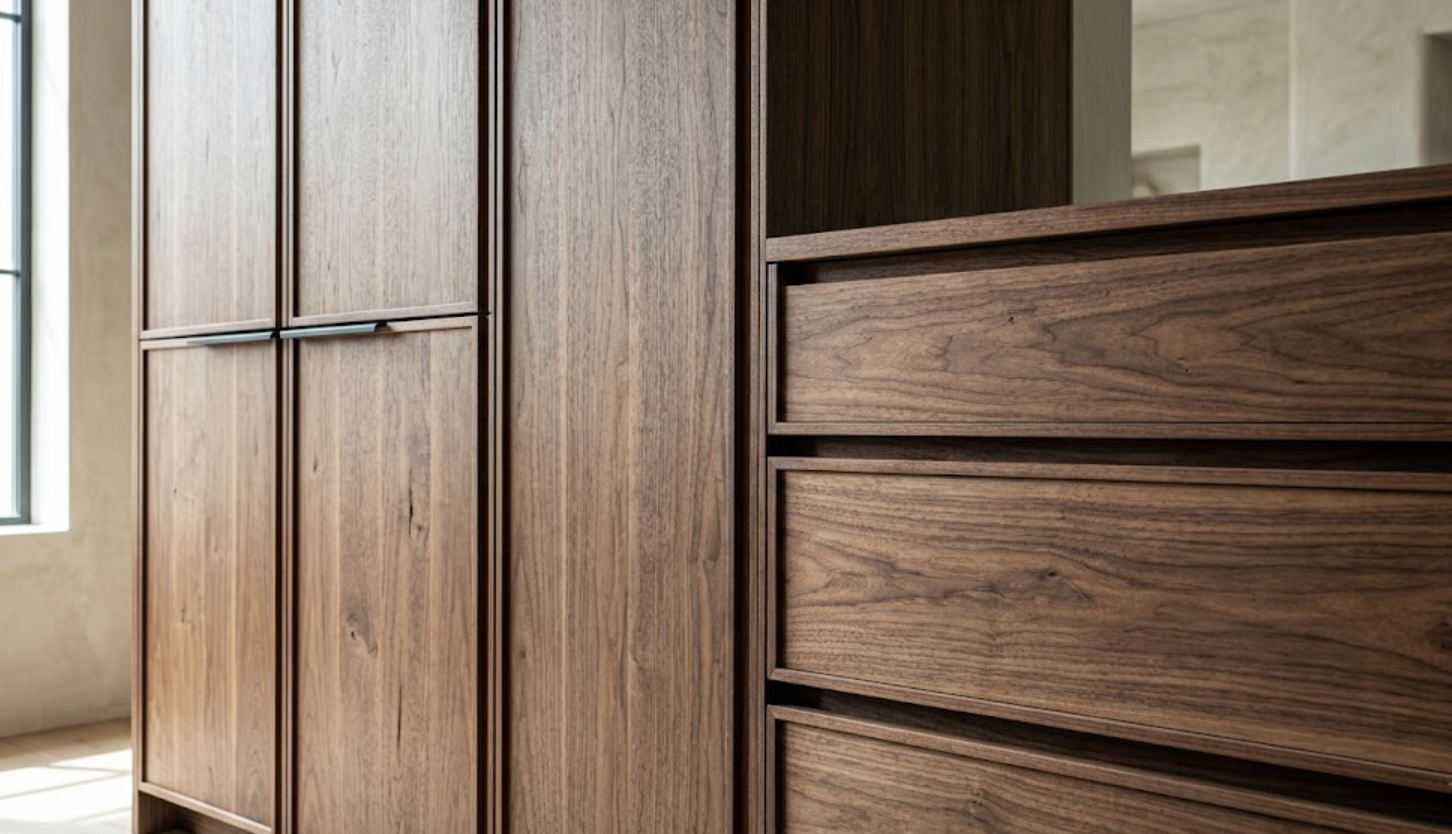
Vertical grain can emphasize height across tall pantry or refrigerator panels. Horizontal grain can visually connect adjacent drawers. Changing direction between cabinetry zones can help distinguish one architectural volume from another.
The decision becomes especially noticeable with slab doors because there is no frame or molding interrupting the wood.
Grain sequencing can also affect the overall impression. A carefully considered series of adjacent walnut panels can feel calm and continuous. Randomly oriented grain can make the same elevation feel much more active.
That does not mean every panel needs to match perfectly. Natural wood should still look natural.
The objective is thoughtful composition, not artificial repetition.
Should Walnut Kitchen Cabinets Be Stained?
Not necessarily. One of walnut’s strengths is its natural color.
A clear or lightly toned finish can preserve much of the warmth and variation that makes the wood distinctive. Stain can still be useful when the design calls for a specific tone or when the cabinetry needs to coordinate with other woodwork.
But the stain should have a reason.
Darkening walnut simply because “luxury cabinetry should be dark” can hide some of the characteristics that made walnut appealing in the first place.
The same is true of aggressively gray or cool-toned stains. They can create a particular aesthetic, but they also move the material farther away from its natural character.
For a long-term design, it can be worth asking whether the finish enhances the walnut or disguises it.
What Finish Sheen Works Best With Walnut?
There is no universal answer, but lower and moderate sheen levels often allow the grain to remain visually prominent without creating excessive reflection.
Higher sheen can intensify depth and contrast. It can also make fingerprints, reflections, and surface irregularities more noticeable.
The right sheen depends on the architectural intent. A quiet contemporary kitchen may benefit from a more subdued finish. A furniture-inspired bar or built-in may support slightly more sheen.
Natural light should also influence the decision. In a Bay Area home with large windows, a finish may behave very differently during bright afternoon light than it does in a showroom.
View the actual sample vertically.
Move it toward a window.
Look at it from the side.
The finish should be evaluated the way it will actually live in the room.
What Colors Work Best With Walnut Cabinetry?
Walnut pairs well with many palettes because its natural brown contains considerable warmth. But the surrounding materials determine whether that warmth feels balanced.
Soft mineral whites can create contrast without looking stark.
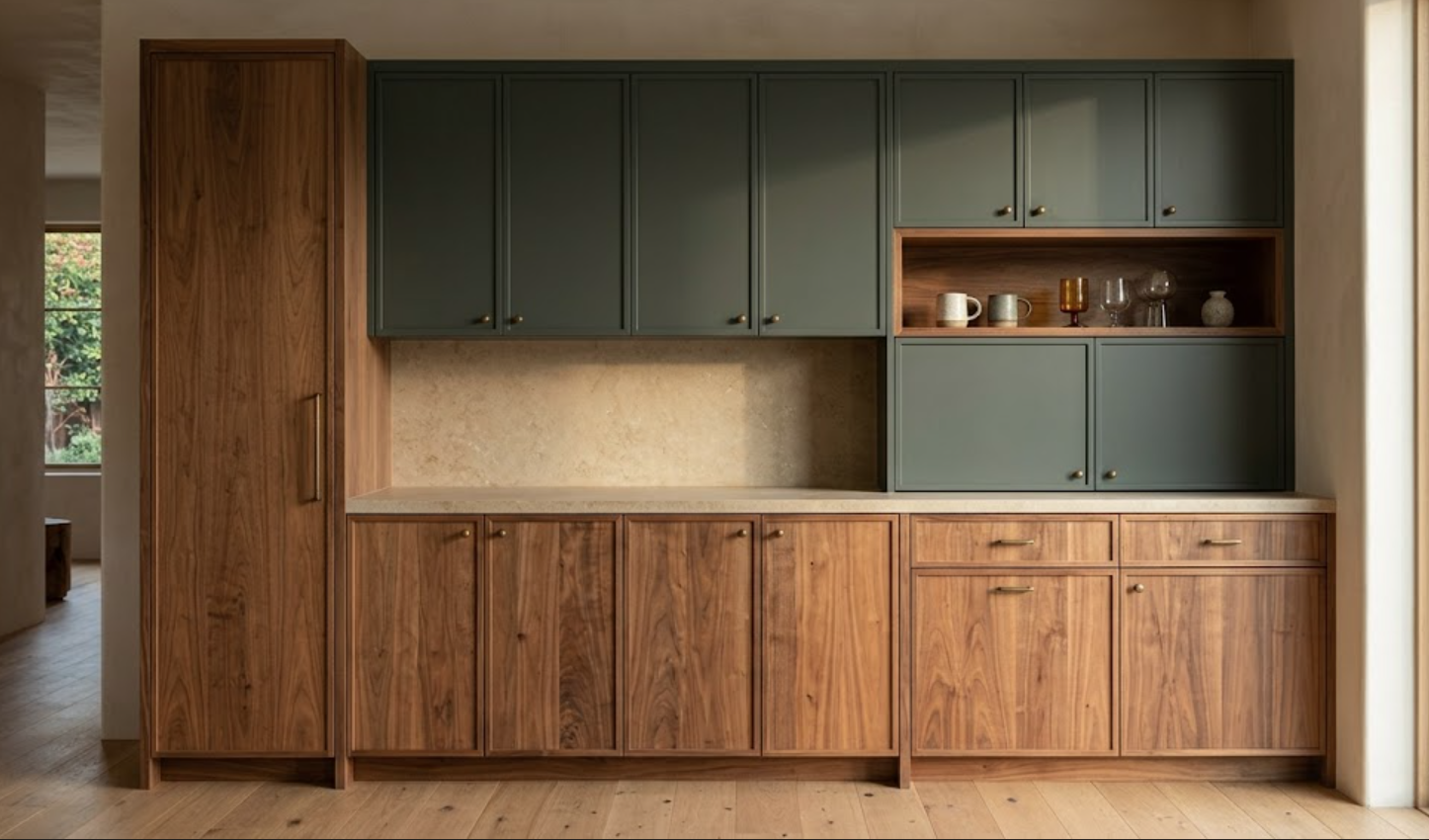
Muted greens can reinforce walnut’s relationship to natural materials.
Deep charcoal or blackened tones can make the composition moodier.
Warm plaster, limestone, and quieter natural stones can allow the wood to remain the dominant material.
Even cooler colors can work when their undertones are carefully considered.
The mistake is assuming every “neutral” automatically belongs beside walnut. A cool gray that looks harmless on its own may make the wood feel unexpectedly orange.
Material relationships need to be evaluated together.
Which Countertops Work Well With Walnut Cabinets?
The best countertop depends on whether the cabinetry or the surface should take visual priority.
Walnut already has significant grain and movement. Pairing it with a highly active stone can create a very expressive room. That can be beautiful if the architecture and scale support it. But it can also become visually crowded.
A quieter limestone, quartz, or subtly patterned natural stone can allow the wood to lead. Conversely, if walnut is used only on a smaller cabinetry volume or island, a more expressive quartzite may have enough room to become the focal point.
Contrast matters too. A lighter countertop can reveal the depth of walnut clearly. A darker stone creates a moodier, more continuous composition.
Neither approach is inherently more luxurious. The important part is establishing hierarchy.
Does Walnut Work Better in Modern or Traditional Kitchens?
Both. The way walnut is detailed determines much of its character.
On a flat slab door with integrated hardware, the material can feel strongly contemporary. On a framed door with more visible construction and traditional hardware, it can become more furniture-like.
A transitional kitchen can use walnut on an island while introducing painted perimeter cabinetry. A bar can use walnut more dramatically than the main kitchen.
The species does not belong to one style. That versatility is one reason walnut can work well in both contemporary Bay Area homes and renovations with more established architectural character.
Is Walnut Too Dark for a Small Kitchen?
Not automatically. The amount and placement of walnut matter more than the room size alone.
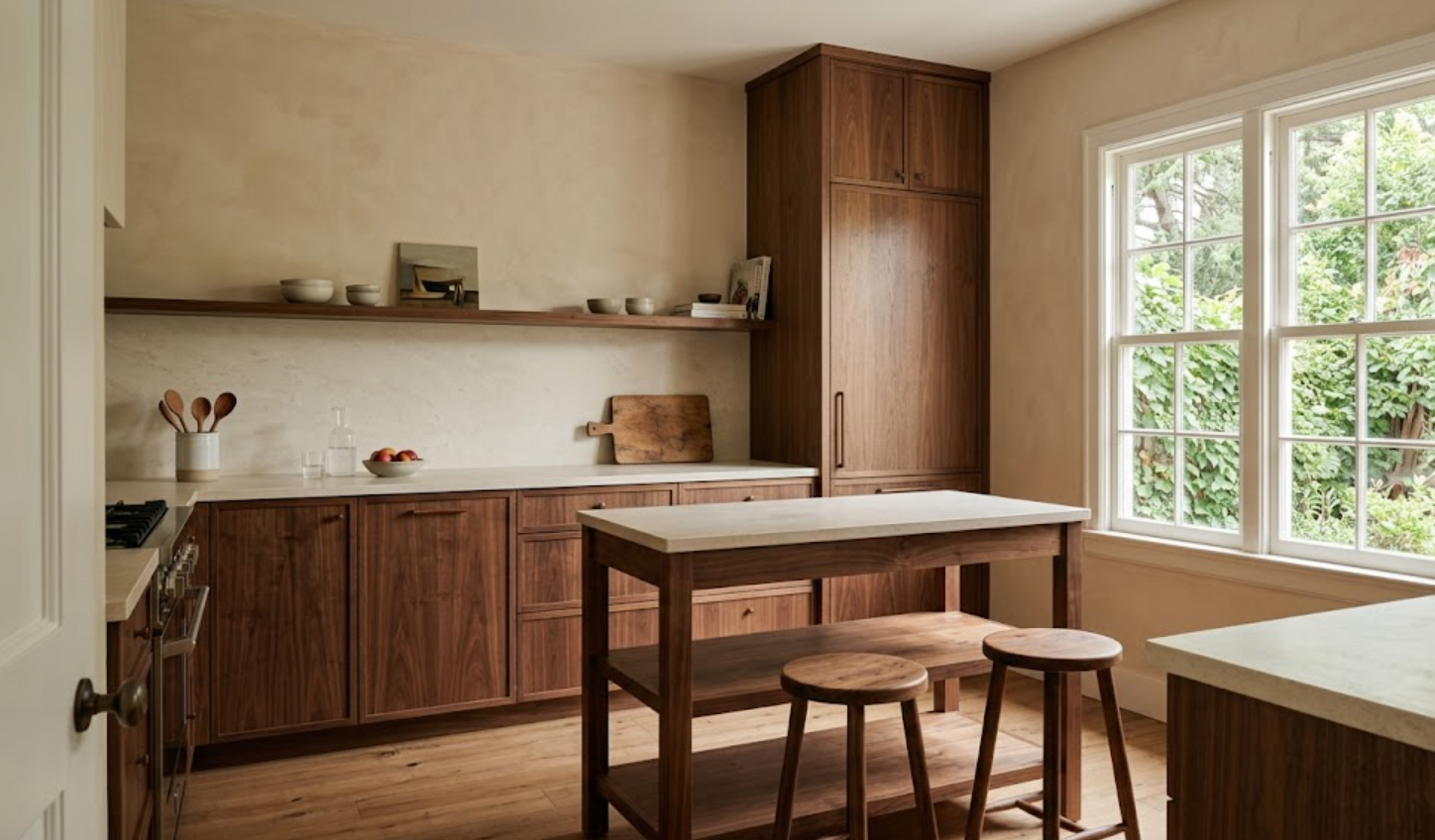
A smaller kitchen may not benefit from walnut across every wall. But using it selectively can create depth:
One walnut island
A tall pantry wall
Lower cabinetry beneath lighter walls
A walnut-lined niche
These approaches can introduce the material without visually shrinking the space.
Lighting also matters. Dark cabinetry in a naturally bright room behaves very differently from the same material in a room with limited daylight.
This is another reason cabinet samples should be considered within the actual architecture rather than evaluated only under showroom lighting.
Can You Mix Walnut With White Oak?
Yes, but the relationship needs to be intentional.
Walnut and white oak have very different visual personalities. Walnut is generally deeper and richer. White oak tends to be lighter and more linear, particularly when rift cut.
That contrast can work beautifully when the two woods have clearly different roles. For example, walnut cabinetry might anchor a kitchen while white oak appears in adjacent furniture or architectural millwork. Or a white oak kitchen could use walnut inside an open bar niche.
Using both woods randomly throughout the same cabinetry elevation can feel less resolved. The design needs hierarchy:
Which wood is primary?
Where does the secondary wood appear?
Why does it change?
Those questions matter more than whether the two species technically “match.”
Should Walnut Cabinets Have Visible Hardware?
Either approach can work.
Minimal integrated hardware lets the grain become the strongest visual element. Visible pulls can add another architectural layer and may make drawers and doors easier to use.
On slab walnut cabinetry, long pulls can reinforce panel direction. Smaller hardware can remain quiet. Bronze, blackened metal, nickel, and other finishes can all work depending on the surrounding palette.
The important part is scale. A heavily decorative pull repeated across a large walnut elevation can compete with the wood.
Hardware should either support the material or provide a deliberate contrast.
How Does Walnut Work With Integrated Appliances?
Very well when paneling is coordinated carefully.
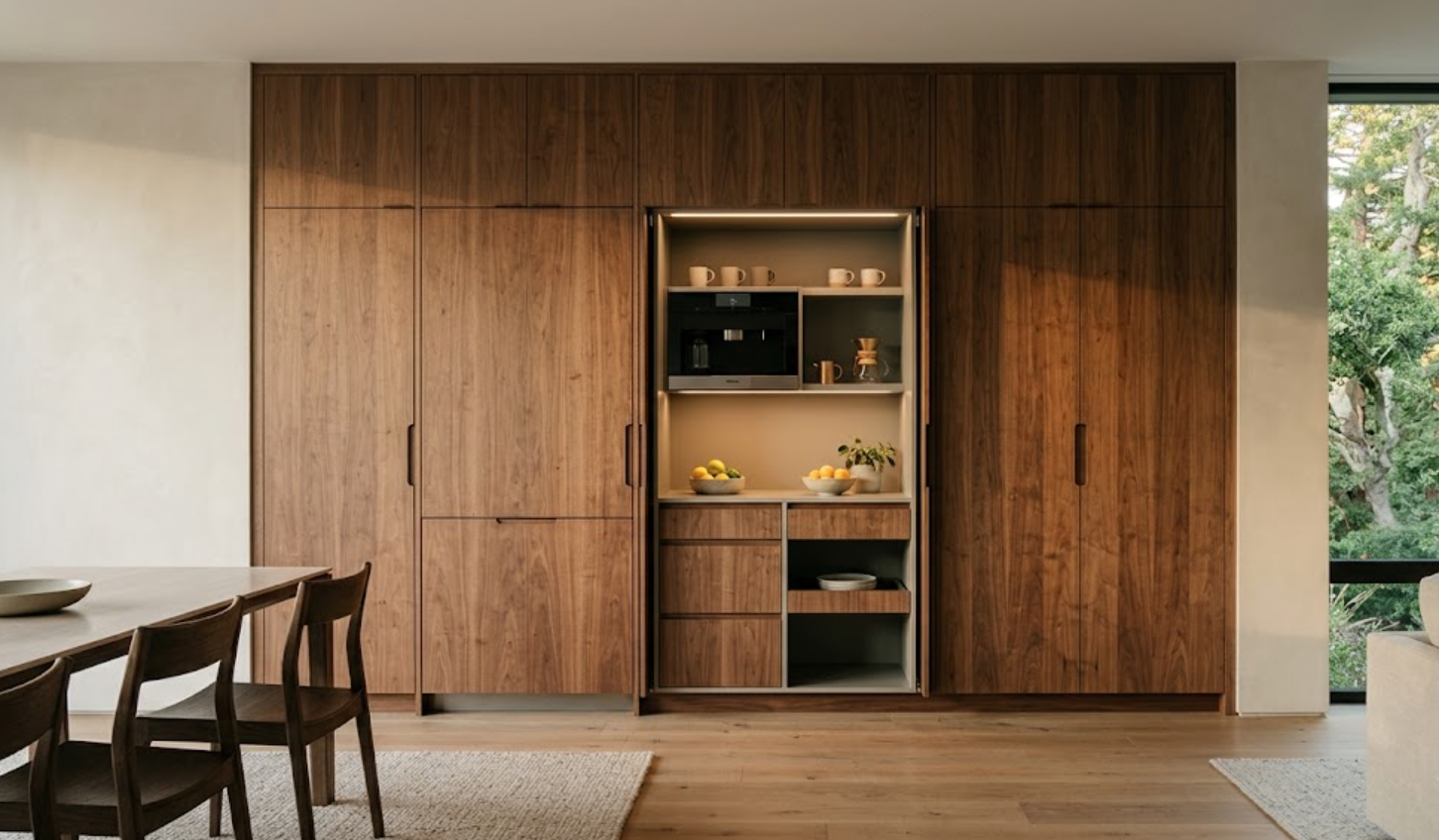
A refrigerator concealed behind walnut panels can allow the grain and cabinetry proportions to continue across a large elevation. Dishwashers can disappear beneath matching fronts. Appliance cabinets can conceal coffee machines, toasters, and other equipment when they are not in use.
This creates a quieter visual field. But appliance integration introduces technical requirements:
Panel dimensions
Ventilation
Door swing
Hinges
Clearances
Hardware
Electrical access
The cleaner the finished elevation looks, the more important that coordination becomes.
Does Walnut Cabinetry Require More Maintenance?
Walnut cabinetry should be cared for according to the finish system used by the manufacturer or fabricator. That matters because the wood itself is only one part of the finished surface.
The protective finish influences how the cabinetry responds to moisture, cleaning, oils from hands, and everyday use.
Homeowners should ask:
What cleaning products are recommended?
What should be avoided?
How should spills be handled?
Can the finish be repaired or touched up if needed?
Natural wood will also change somewhat over time. That is part of living with a genuine material.
The goal should not be to keep walnut looking untouched forever. It should be to allow the cabinetry to age gracefully while maintaining the finish properly.
Will Walnut Kitchen Cabinets Look Dated in 10 Years?
Walnut itself is not a trend. But the way it is designed can be.
An aggressively colored stain may tie it to a particular period. A highly recognizable hardware treatment can do the same. Combining it with several other trendy materials at once can make the room feel more dated than the walnut itself.
Natural walnut, thoughtful proportions, restrained detailing, and a material palette connected to the architecture generally give the wood more room to age.
This is one reason walnut is often described as timeless. Not because every walnut kitchen looks timeless. Because the material can support many different architectural expressions without needing to imitate another surface.
When Is Walnut the Right Choice for a Kitchen?
Walnut is worth considering when the kitchen needs warmth, material depth, and natural visual variation.
It can be especially effective when:
The architecture is contemporary but should not feel cold.
The room has enough light to support a deeper wood tone.
The cabinetry design is relatively restrained and lets grain provide character.
The surrounding stone or paint palette benefits from warmth.
The kitchen needs to relate to other natural wood elements in the home.
The homeowner simply genuinely loves the material.
That last reason matters. Cabinetry is a long-term decision.
A material should not be selected because someone says it is the “luxury” option. It should be selected because living with it will continue to feel right.
Walnut Kitchen Cabinets for Bay Area Homes
Walnut works best when its natural character is treated with restraint:
Let the grain be visible.
Consider how panels align.
Choose the stain, or lack of stain, intentionally.
Give the material enough natural light.
Pair it with surfaces that support rather than compete with it.
Decide how much walnut the room actually needs.
For homeowners and design professionals considering walnut kitchen cabinets in the Bay Area, these decisions matter more than simply selecting a walnut sample from a finish board. That search term is specifically part of Atelier’s premium product-intent keyword strategy.
Walnut does not need to make a kitchen look expensive. Used well, it can make the room feel richer, warmer, and more architectural without trying very hard.
Explore Walnut Cabinetry in Menlo Park
Atelier Design Society works with homeowners, interior designers, architects, builders, and other design professionals exploring premium cabinetry for kitchens and spaces throughout the home.
Visit the Atelier Design Society showroom in Menlo Park to compare walnut cabinetry, door styles, finishes, grain, construction, hardware, and complementary materials at full scale.