Inside a Luxury Cabinetry Showroom: What to Expect During Your Visit
A cabinetry showroom visit can be one of the most useful parts of planning a kitchen, bathroom, wardrobe, or whole-home cabinetry project. It is also easy to arrive without knowing exactly what you are supposed to be looking at.
You may walk in with saved inspiration photos, preliminary plans, a favorite wood tone, or simply the knowledge that the cabinetry needs to feel right for the home. Once you are surrounded by door styles, finishes, hardware, storage systems, and full-scale displays, however, the number of decisions can quickly feel much larger.
A good showroom visit should make those decisions clearer. For homeowners and design professionals visiting a luxury cabinetry showroom in the Bay Area, the experience should go beyond browsing beautiful kitchens. It is an opportunity to see cabinetry at full scale, compare materials in person, understand construction, discuss the project, and begin narrowing down which options actually belong in the home.
Here is what you can expect during a thoughtful cabinetry showroom visit and how to get more from your time there.
What Happens When You First Visit a Cabinetry Showroom?
The first part of the visit should be about the project. Before choosing a cabinet door or debating between walnut and white oak, it helps to establish some context:
What are you working on?
Is it a kitchen renovation?
A new custom home?
A primary bathroom?
A wardrobe?
Several rooms being planned together?
You may also discuss the architecture, approximate project stage, design direction, appliances, timeline, and whether an interior designer, architect, or builder is already involved.
You do not need to arrive with every answer. The purpose of the conversation is partly to determine which questions need to be answered next.
You Will See Cabinetry at Full Scale
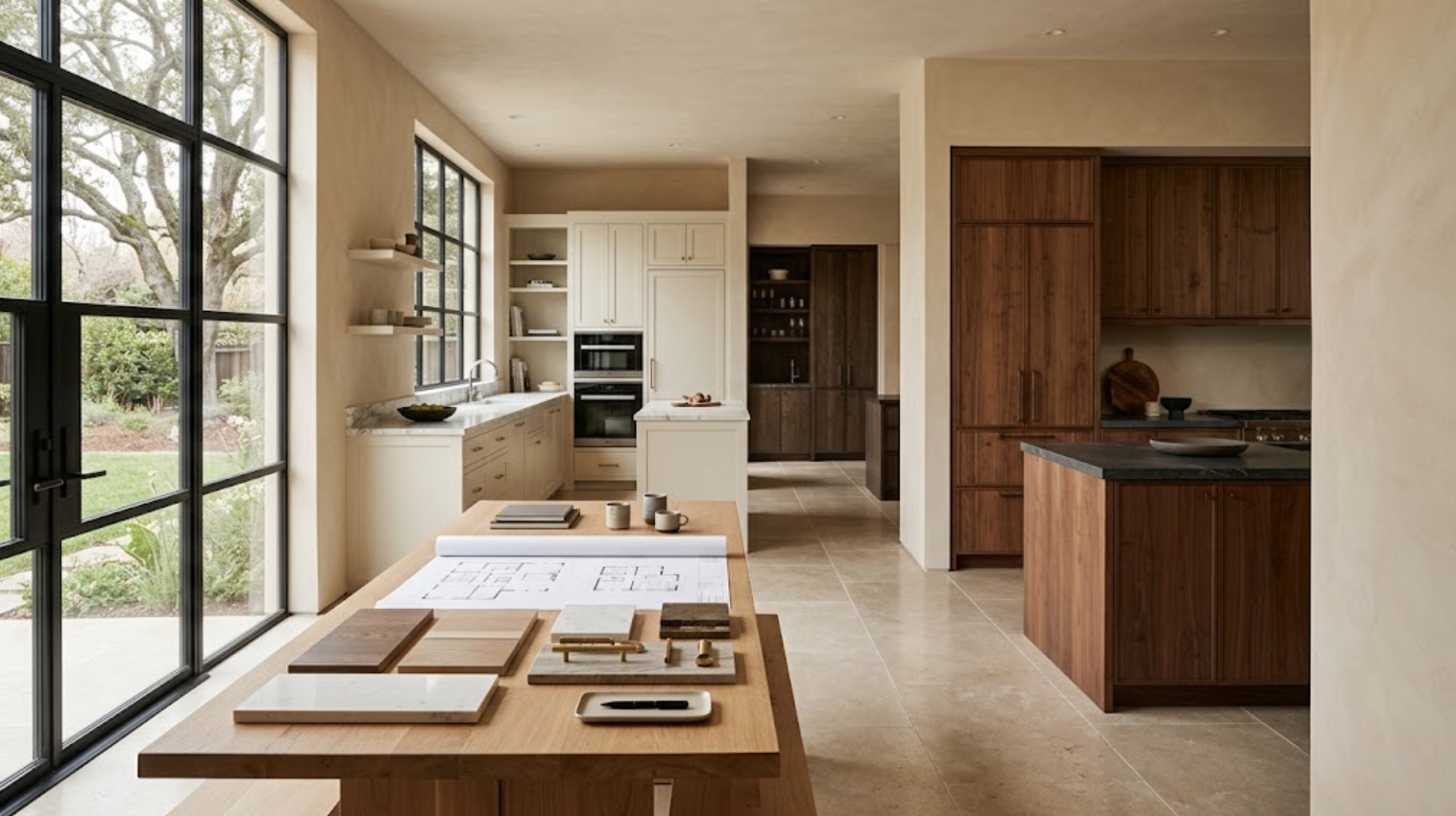
One of the biggest advantages of visiting a showroom is scale.
A small sample can show you a finish or door profile. It cannot fully show you how that same decision behaves across an entire wall.
On a full-size installation, you can see how cabinetry proportions relate to one another, how tall cabinets feel in person, how an island is organized, how appliance panels align, and how different materials interact across a larger composition.
This is especially useful when comparing design directions. A dark finish that feels heavy on a small sample may look balanced across a thoughtfully designed room. A door profile that seems subtle online may become much more noticeable when repeated twenty times. The opposite can happen too.
Seeing cabinetry at full scale gives those decisions context.
You Can Actually Touch and Use the Cabinetry
This is where a showroom becomes very different from looking at cabinetry online.
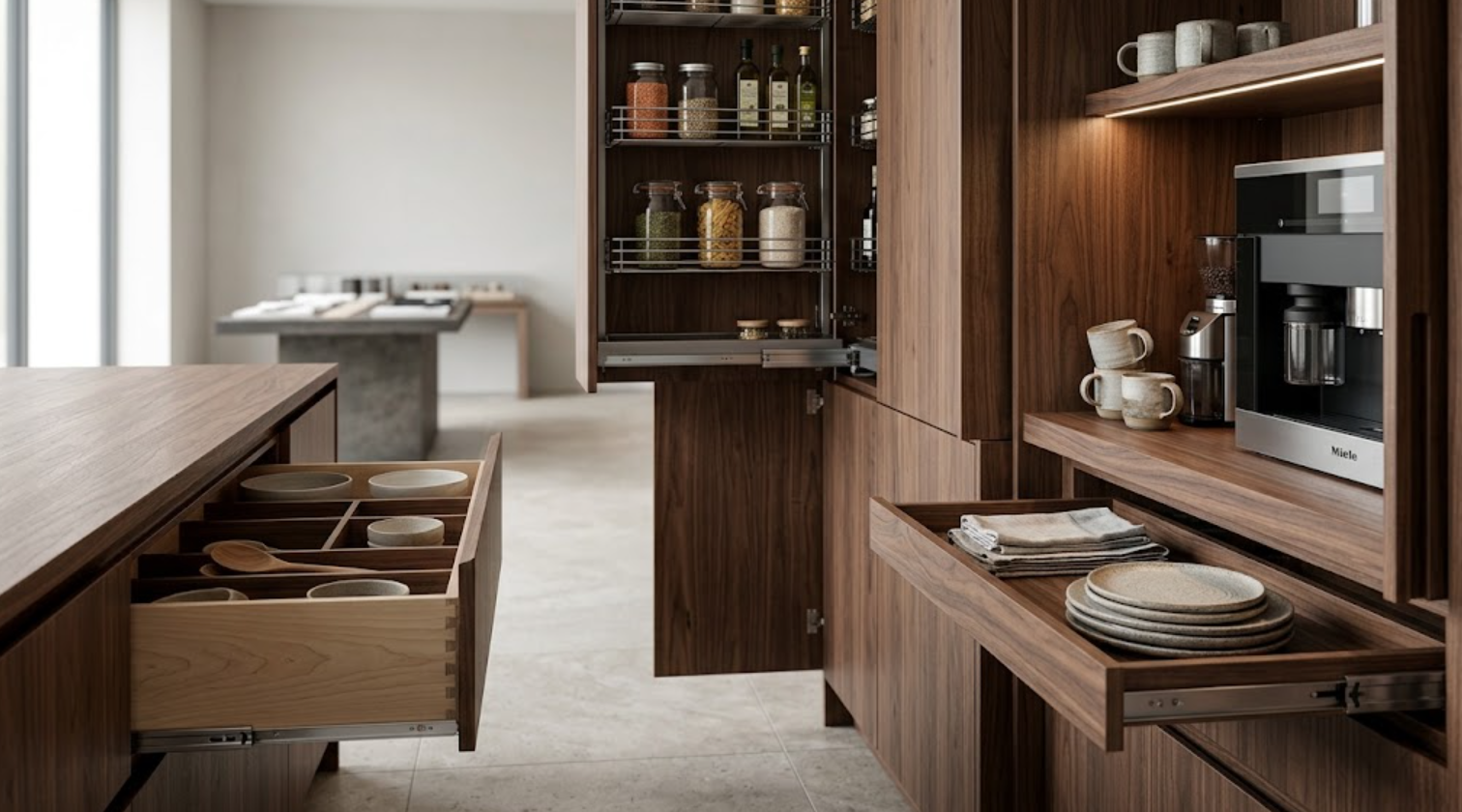
Open the drawers.
Close them.
Feel the hardware.
Look inside the cabinets.
Pull out storage accessories.
Notice the weight of a door and how it moves.
Stand in front of an island and consider its proportions.
Cabinetry is one of the most heavily used elements in a home. The way it feels matters alongside the way it photographs.
Small details become easier to understand once you interact with them:
How far does a drawer extend?
How does a pocket door operate?
What does an interior finish look like next to the exterior?
How substantial does the hardware feel?
These are difficult things to evaluate from a rendering.
You Will Compare Door Styles at More Than Sample Size
Shaker
Narrow-frame
Slab
Integrated pulls
Applied details
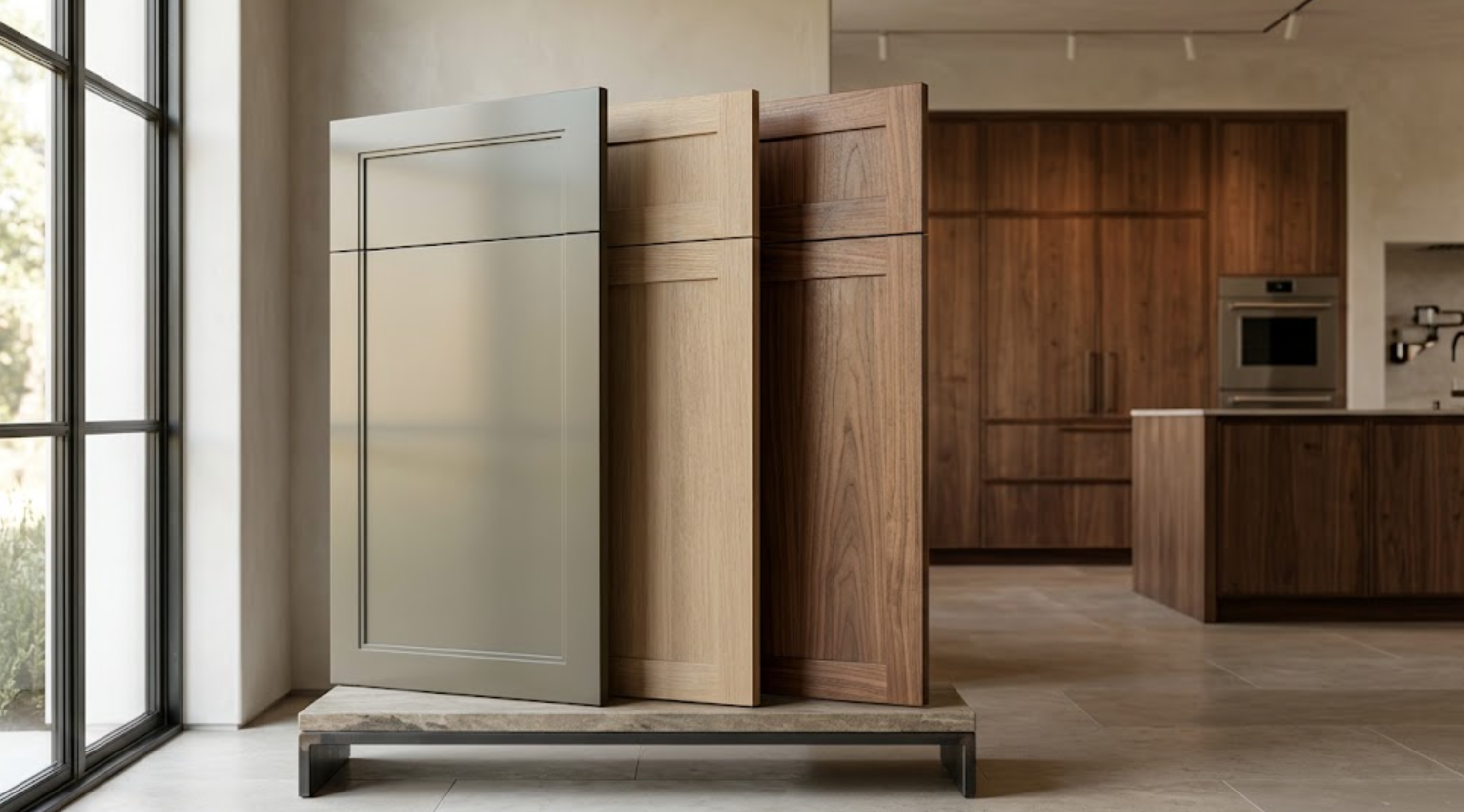
The door style influences the entire rhythm of a cabinetry elevation. That is why it helps to look beyond individual samples.
Pay attention to how the profile looks when several doors are placed together. A Shaker door with a wider frame may feel very different across a full kitchen than a narrower interpretation of the same general style.
Slab cabinetry removes much of that visual framework and places more emphasis on proportion, material, grain, and alignment.
Neither direction is automatically more contemporary or more luxurious. The architecture and materials around it matter.
You Will See Finishes That Look Different Than They Did Online
This is normal. Screens interpret color. Photography interprets light. Natural materials vary.
A showroom allows you to remove some of that uncertainty.
Look closely at painted finishes:
Do they have warm or cool undertones?
How much sheen do they have?
Then look at natural woods. Walnut is not one flat brown. White oak is not one predictable beige. Grain, board selection, cut, stain, finish, and natural variation all influence what you see.
Move around the sample. Look at it from another angle. If there is natural daylight nearby, compare how the finish looks there versus under interior lighting.
Those changes can be important in a Bay Area home with large windows and significant natural light.
You Can Compare Materials Together
Cabinetry is rarely selected alone. There is usually:
Stone
Flooring
Hardware
Wall color
Tile
Metal finishes
Sometimes existing architectural woodwork
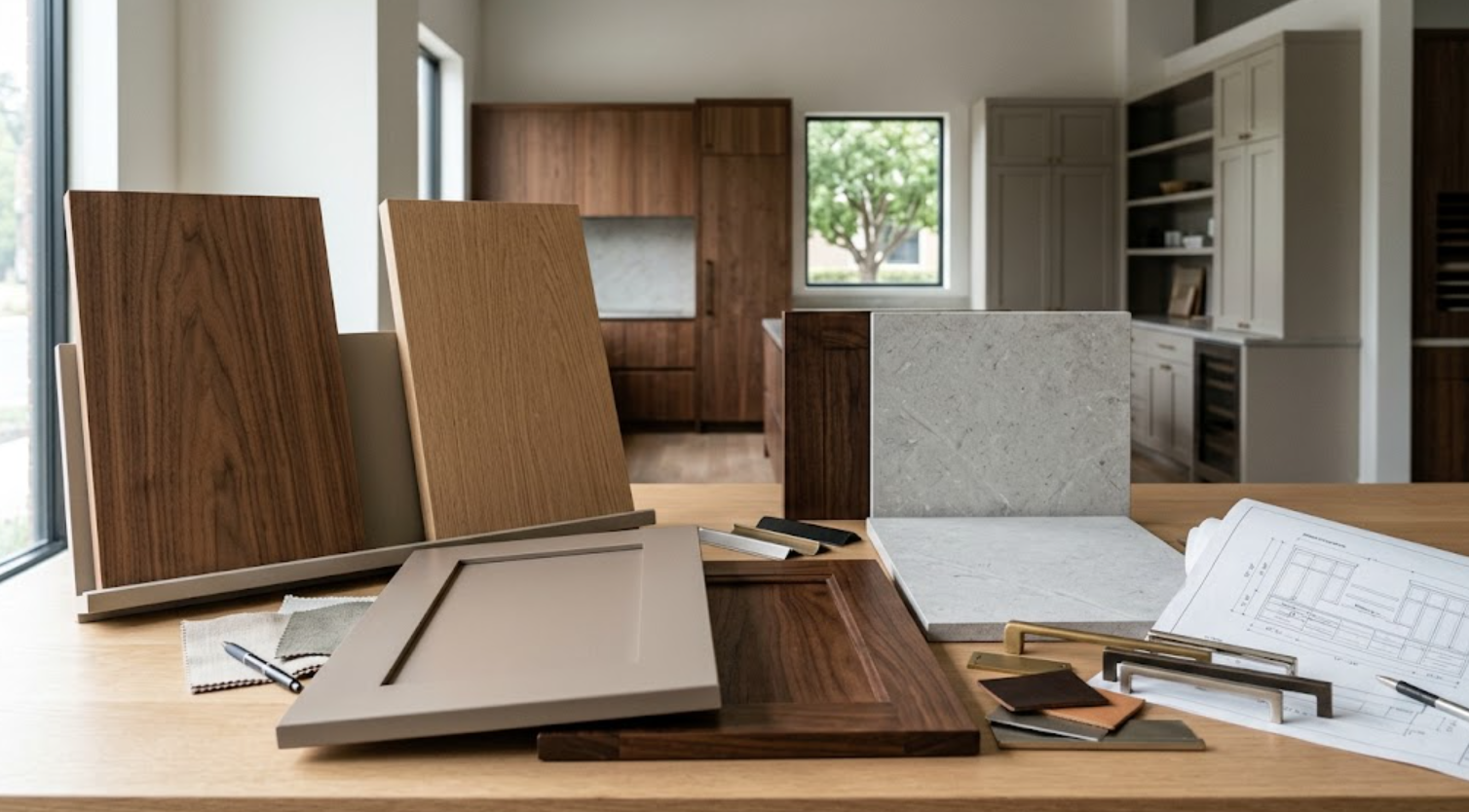
A showroom appointment gives you an opportunity to place those materials beside one another rather than making each decision independently.
This can reveal relationships that were difficult to see on a screen. A walnut cabinet may make a stone feel warmer. A paint color may suddenly reveal an undertone beside the flooring. A brass hardware finish may compete with a heavily veined countertop rather than complement it.
The goal is not to make every material match. It is to understand how they behave together.
If you already have materials selected, bring samples when practical.
You May Compare More Than One Cabinetry Line
If a showroom represents multiple cabinetry manufacturers, this part of the visit can be particularly useful.
Different brands can serve different projects:
One may offer a level of customization particularly suited to unusual architectural conditions.
Another may provide a strong collection of contemporary finishes.
Another may make sense when the project requires flexibility but not completely bespoke construction.
Atelier Design Society works with cabinetry lines including Grabill Cabinets, Columbia Cabinets, Dura Supreme, and Urban Effects, giving projects access to different approaches to design, customization, construction, and finish.
The useful question is not: “Which brand is the best?”
It is: “Which cabinetry line is best suited to this project?”
That depends on the architecture, design intent, level of customization, finish requirements, timeline, and investment.
You Will Talk About Storage
Storage conversations become much easier when you can see the options physically. Instead of trying to imagine how an accessory works from a catalog, you can open it:
Deep drawers
Tray dividers
Waste pullouts
Interior drawers
Pantry storage
Corner solutions
Appliance garages
Pocket-door systems
Wardrobe accessories
The most useful storage is not necessarily the storage with the most moving parts. It is the storage that solves an actual problem.
Think about what currently frustrates you:
Where do small appliances live?
Where do trays pile up?
What ends up permanently sitting on the counter?
What is difficult to reach?
Those observations are often more useful than arriving with a list of cabinet accessories you saw online.
You May Review Your Plans
If you already have architectural drawings, preliminary kitchen plans, or appliance specifications, bring them. This moves the showroom conversation from general inspiration into the actual home.
A cabinetry designer can begin looking at wall lengths, openings, appliance locations, ceiling conditions, circulation, and other constraints.
This is also where potential issues can begin to surface. Perhaps a window affects the desired cabinet layout. Maybe an appliance specification changes the depth of a cabinet wall. A ceiling condition could influence how tall cabinetry terminates. A beautiful inspiration image may not translate directly to the architecture.
That is useful information to discover early.
You Will Probably Be Asked More Questions Than You Expect
That is a good thing.
How do you cook?
Who uses the kitchen?
Do you entertain?
Which appliances are planned?
What do you want visible?
What should disappear?
What frustrates you about your current storage?
Are there materials already selected?
Is this cabinetry being designed only for the kitchen, or will it continue into other rooms?
Good cabinetry design starts with understanding the project rather than immediately selecting products.
The more specific those conversations become, the easier it is to separate features that genuinely improve the home from features that simply looked interesting online.
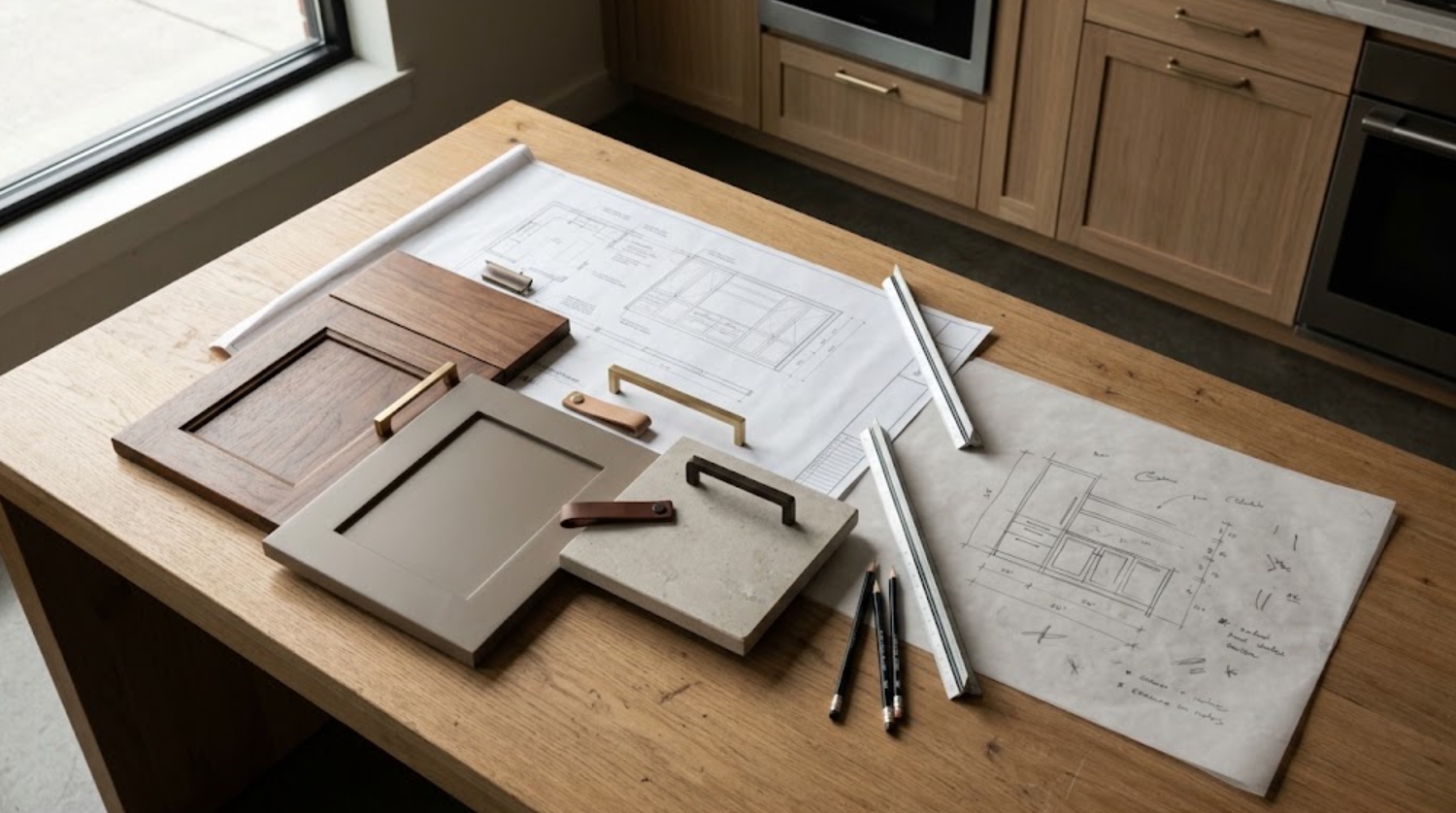
What Should You Bring to a Luxury Cabinetry Showroom?
You can visit a showroom early in the process, even if the project is not fully developed. But if you already have information, bringing it can make the appointment more productive.
Useful items include:
Floor plans or architectural drawings
Room measurements
Appliance specifications
Photos of the existing home
Inspiration images
Samples of flooring, stone, tile, or other selected materials
Notes about storage needs
A general project timeline
You do not need all of these. Even a few photos and a basic understanding of the project can give the conversation somewhere useful to begin.
Do You Need an Interior Designer or Architect Before Visiting?
Not necessarily. Homeowners can visit a cabinetry showroom while they are still exploring the project.
If you already have an interior designer, architect, or builder, however, involving them in cabinetry decisions can be valuable.
Cabinetry intersects with many other parts of a home:
Appliances
Electrical
Plumbing
Lighting
Stone
Flooring
Wall conditions
Architecture
For more complex projects, early collaboration can prevent the cabinetry from becoming a separate decision that has to be forced into an already-developed design.
How Long Should You Expect a Showroom Visit to Take?
There is no single useful length for every visit.
A first visit focused on seeing cabinetry and understanding possibilities may be relatively straightforward. A working design appointment involving architectural plans, material comparisons, cabinetry lines, appliances, and several rooms can naturally require more time.
It is better to think about the goal of the appointment than the clock:
Are you exploring?
Narrowing down a cabinetry direction?
Reviewing a specific design?
Selecting finishes?
Resolving details before ordering?
Knowing the purpose of the visit helps determine what needs to happen while you are there.
What Should You Leave a Cabinetry Showroom Knowing?
You do not necessarily need to leave with every cabinet selected. A productive visit should give you clarity.
You should have a better understanding of:
The cabinetry quality you are considering
Which materials feel right
Which door styles belong with the architecture
What level of customization the project may require
Which storage features actually matter
How the cabinetry could relate to other rooms
What decisions need to happen next
That is the real value of visiting a showroom. It turns cabinetry from something abstract on a screen into something you can evaluate at full scale.
Visit the Atelier Design Society Showroom in Menlo Park
Atelier Design Society works with homeowners, interior designers, architects, builders, and other design professionals planning premium cabinetry throughout the Bay Area.
At the Atelier Design Society showroom in Menlo Park, you can explore full-scale cabinetry displays, compare door styles and finishes, examine construction, test storage solutions, review materials, and discuss how different cabinetry options could work within your project.
Whether you are planning a kitchen, bathroom, wardrobe, home office, bar, laundry room, media space, or a larger whole-home cabinetry project, a showroom visit gives you the opportunity to see and experience those decisions before they become part of your home.