What Makes a Cabinet Drawer High Quality?
Cabinet drawers are among the most frequently used components in a kitchen. They hold substantial weight, move repeatedly throughout the day, and need to remain aligned while supporting everything from utensils to cookware.
That makes drawer construction an important detail when evaluating cabinetry quality.
A high-quality drawer is not defined by one feature alone. The drawer box, joinery, slides, load capacity, interior finish, alignment, and overall engineering should work together as a complete system.
Start With the Drawer Box
Open the drawer and look beyond the front.
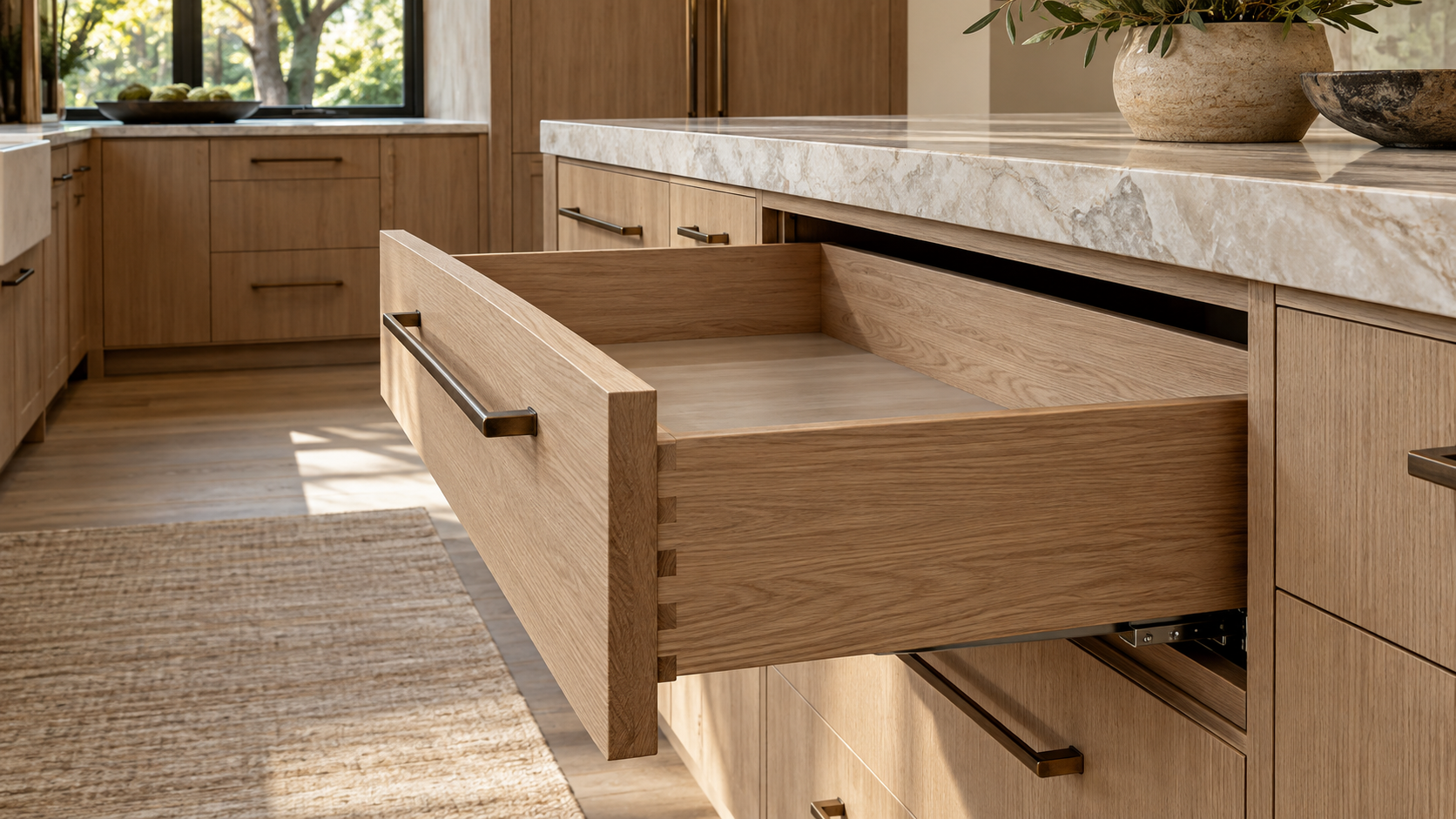
The drawer box should feel substantial and stable when fully extended. Examine the sides, bottom, corners, and interior finish. Look at how the components are joined and whether the construction feels consistent throughout the drawer.
Materials vary between cabinetry manufacturers and collections. Solid wood, plywood, and other engineered materials may all be used depending on the system.
The important question is how the drawer has been designed and constructed, not simply whether one particular material appears in the specification.
Examine the Joinery
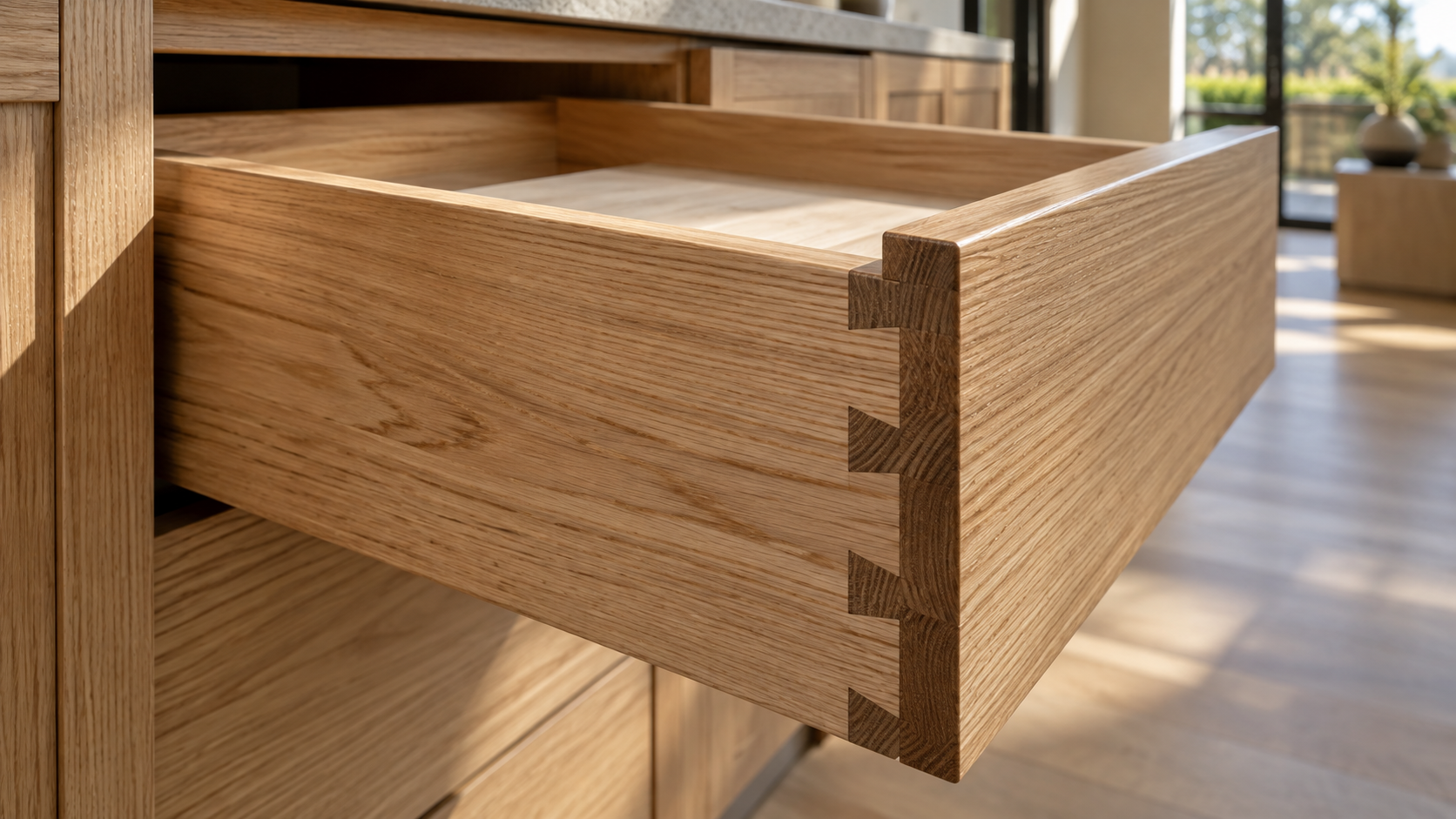
Drawer corners provide a useful opportunity to examine craftsmanship.
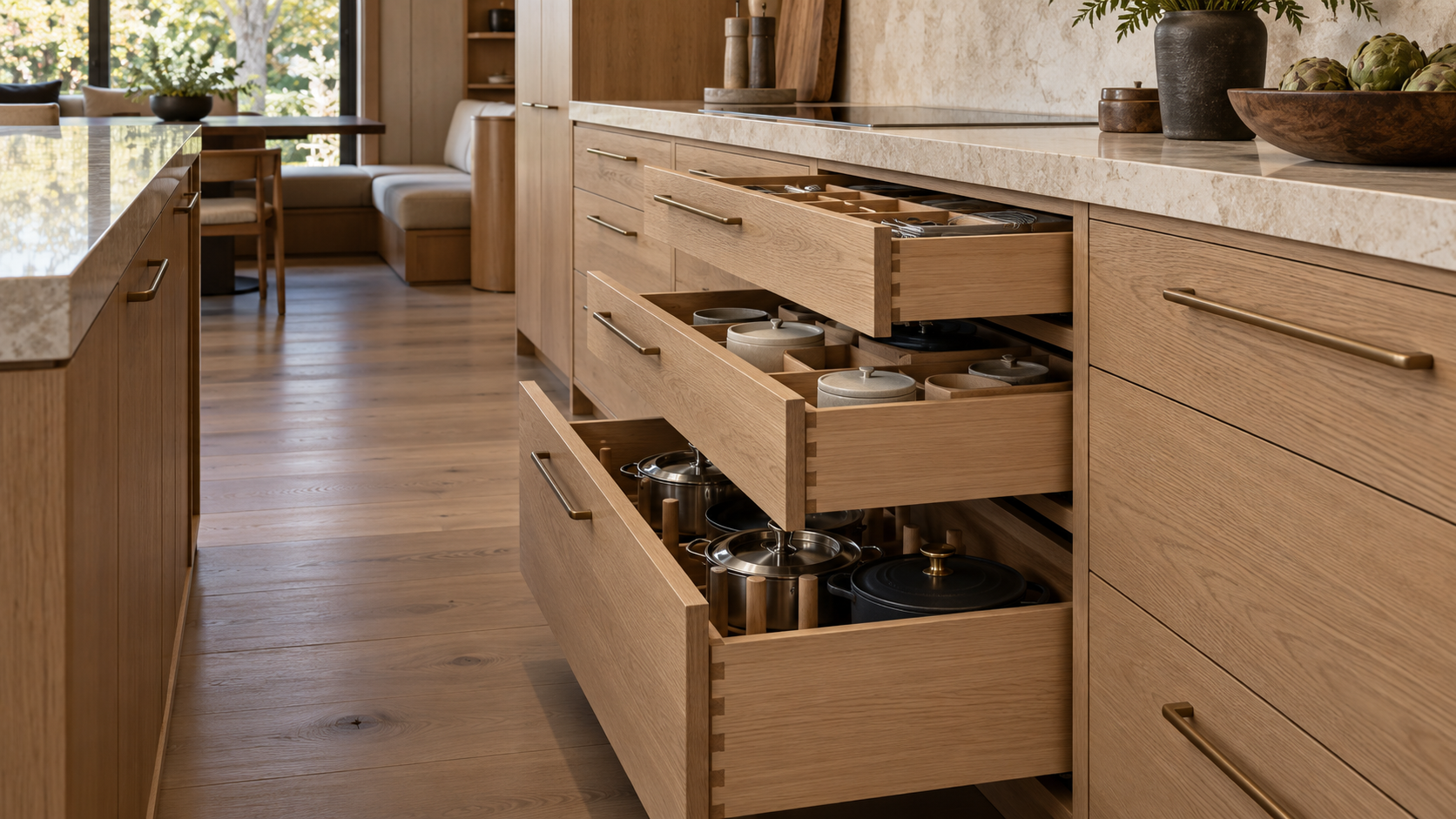
Depending on the cabinetry collection and drawer construction, you may see dovetail joinery or other engineered connection methods. The joints should appear precise and secure without rough edges, visible gaps, or inconsistent assembly.
Dovetail drawers are often associated with premium cabinetry because the interlocking joint creates a strong mechanical connection and reflects a traditional approach to drawer construction. However, dovetails alone do not determine the overall quality of a cabinet.
A drawer still needs appropriate materials, a stable bottom, quality slides, accurate installation, and proper alignment.
Pay Attention to the Drawer Slides
The drawer box is only part of the system. The slides determine how the drawer moves and how it is supported.
Open a showroom drawer slowly and extend it completely. The movement should feel stable and controlled rather than loose or uneven.
Full-extension slides can make the back of a drawer easier to access. Concealed undermount hardware can keep the mechanical components largely out of sight, preserving a cleaner interior appearance. Soft-close mechanisms can control the final movement as the drawer closes.
These features should operate consistently across multiple drawers, not just the display drawer you happen to test first.
Test the Drawer at Full Extension
A drawer may feel fine when opened halfway. The better test is what happens when it is fully extended.
Look for excessive side-to-side movement or instability. Notice whether the drawer remains level and whether the slide system feels appropriately substantial for the size of the drawer.
This becomes particularly important with wide and deep drawers intended for cookware, dishes, or other heavier kitchen items.
Load capacity depends on the specific hardware and drawer system, so ask about the specifications when planning storage for heavier items rather than assuming every drawer performs the same way.
Look at the Drawer Bottom and Interior Finish
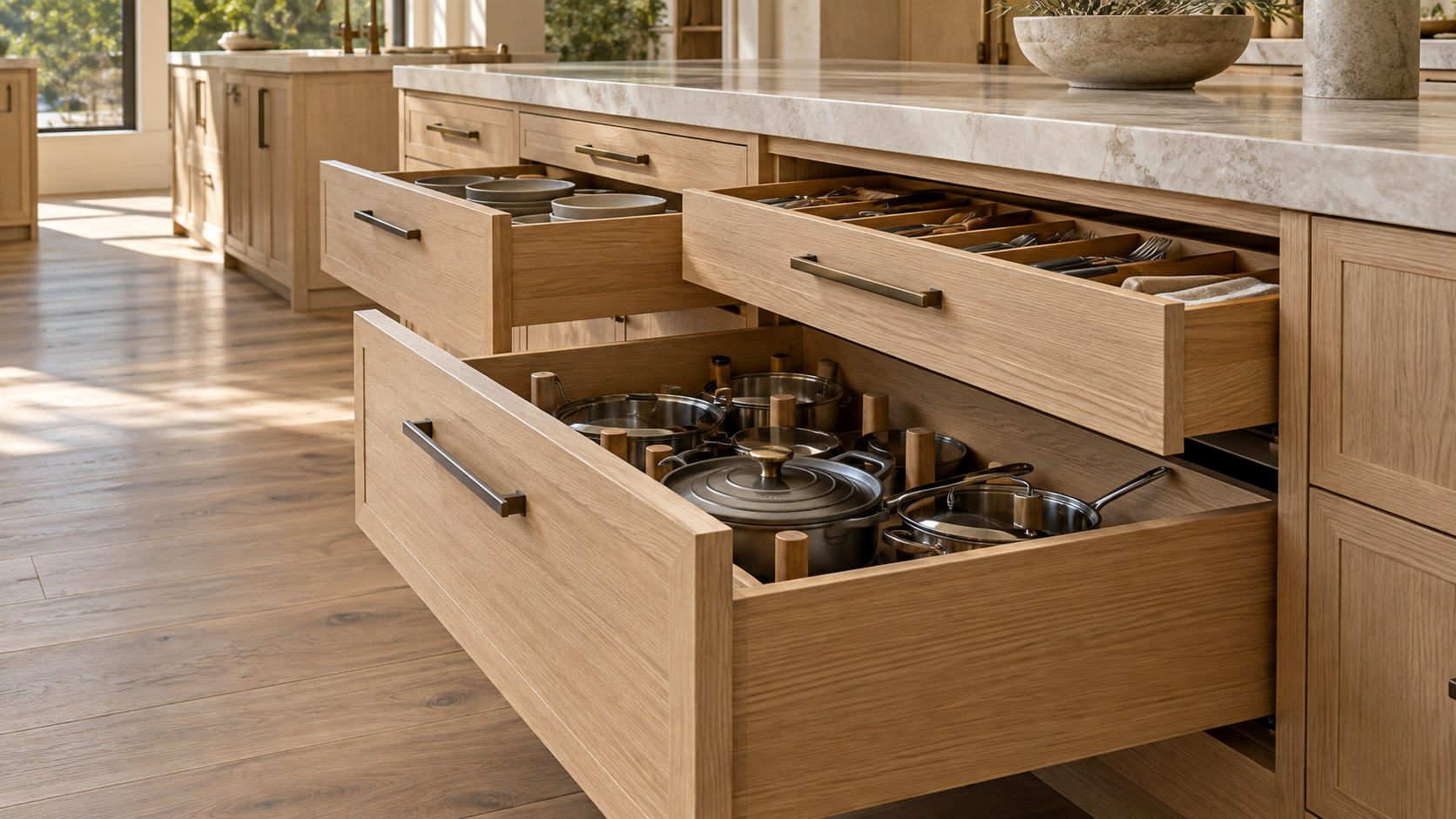
The bottom of a drawer needs to support whatever the drawer is designed to hold.
Examine how the bottom panel connects with the drawer sides and whether the entire assembly feels stable. A deep cookware drawer has different demands from a shallow drawer intended for utensils, so construction should be appropriate to its function.
Also inspect the interior finish. Surfaces should feel consistent and refined, particularly in cabinetry where the interior is intended to be part of the premium experience.
Small details such as smooth edges and clean transitions become noticeable because drawers are handled every day.
Check Alignment When the Drawers Are Closed
After examining the inside, close every drawer and step back.
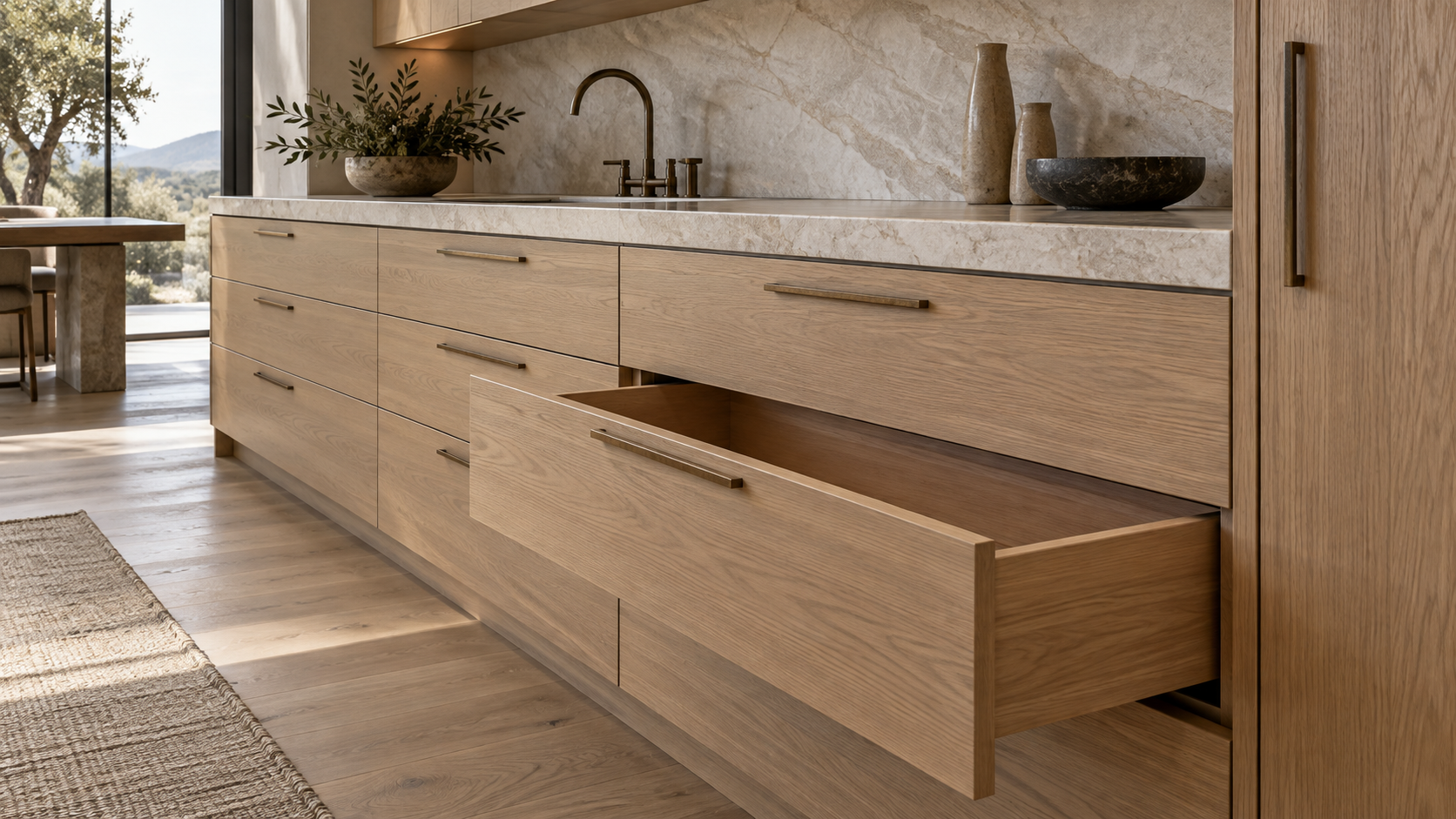
Look at the spacing between drawer fronts and neighboring cabinet doors. Horizontal lines should feel intentional, and the reveals should remain consistent across the cabinetry elevation.
This is especially important with slab cabinetry, inset construction, or kitchens with long runs of drawers. Simple designs expose small alignment differences more readily because there are fewer decorative details competing for attention.
Drawer quality therefore involves both performance and precision.
Interior Organization Should Support the Drawer
A premium drawer system can also accommodate interior organization appropriate to how the kitchen is used.
Shallow drawers may include organized utensil storage. Deeper drawers can accommodate cookware or dishes. Other configurations can support spices, serving pieces, or specialized kitchen tools.
The objective is not to add an organizer to every drawer. Interior accessories should solve actual storage needs while preserving useful capacity.
During a showroom visit, open different drawer configurations and consider which ones correspond to your daily routines.
What Should You Test in a Cabinet Showroom?
Do not be afraid to operate the cabinetry.
Open a drawer completely and close it again. Test several sizes. Examine the corners, bottom, slides, and interior finish. Compare a shallow drawer with a wide cookware drawer.
Then close everything and evaluate the alignment from across the room.
A high-quality drawer should make sense as both a piece of construction and a component of the overall cabinetry design.
What Makes a Cabinet Drawer High Quality?
Look at the complete drawer rather than one feature.
The box should feel substantial and appropriately constructed. Joinery should be precise. The bottom should be stable. Slides should operate smoothly and support the drawer properly at full extension. Interiors should be consistently finished, and drawer fronts should align accurately when closed.
Features such as dovetail construction, full-extension slides, concealed hardware, and soft-close mechanisms can all contribute to a premium drawer system, but they should be evaluated as part of the complete cabinetry.
The difference becomes much easier to understand when you can open, close, and compare drawers in person.
Examine Cabinet Construction at Atelier Design Society
Atelier Design Society works with homeowners, architects, interior designers, builders, and other design professionals evaluating premium cabinetry for Bay Area homes. At the Atelier Design Society showroom in Menlo Park, project teams can examine drawer construction, cabinetry interiors, hardware, storage solutions, natural woods, painted finishes, and full-scale installations while comparing options for their project.