
Combining painted cabinetry with natural wood is one of the most effective ways to create a kitchen that feels warm, balanced, and architecturally considered.
Painted cabinets provide a consistent color and a clean visual foundation, while natural wood introduces grain, texture, and variation. Together, these finishes can create an interior with more depth than either material might achieve on its own.
However, the success of this combination depends on more than selecting a beautiful paint color and wood species.
The key is understanding how color, wood grain, undertones, proportions, and surrounding materials work together to create one cohesive design.
Start With the Overall Material Palette
Before choosing where painted and wood cabinetry will be installed, establish the general direction of the kitchen.
Consider the flooring, countertops, backsplash, wall finishes, and architectural character of the home. These materials influence which paint colors and wood tones will feel most appropriate.
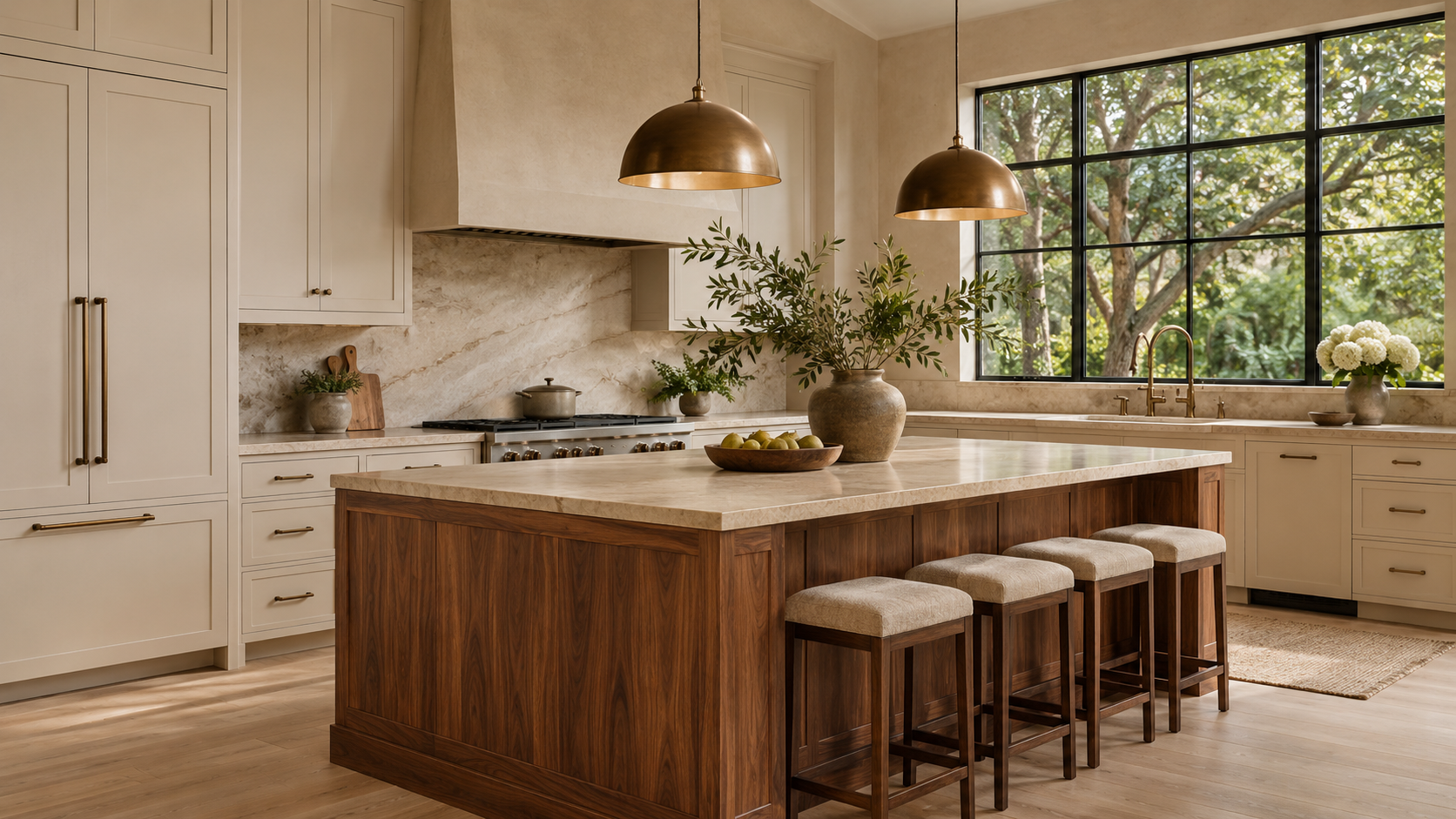
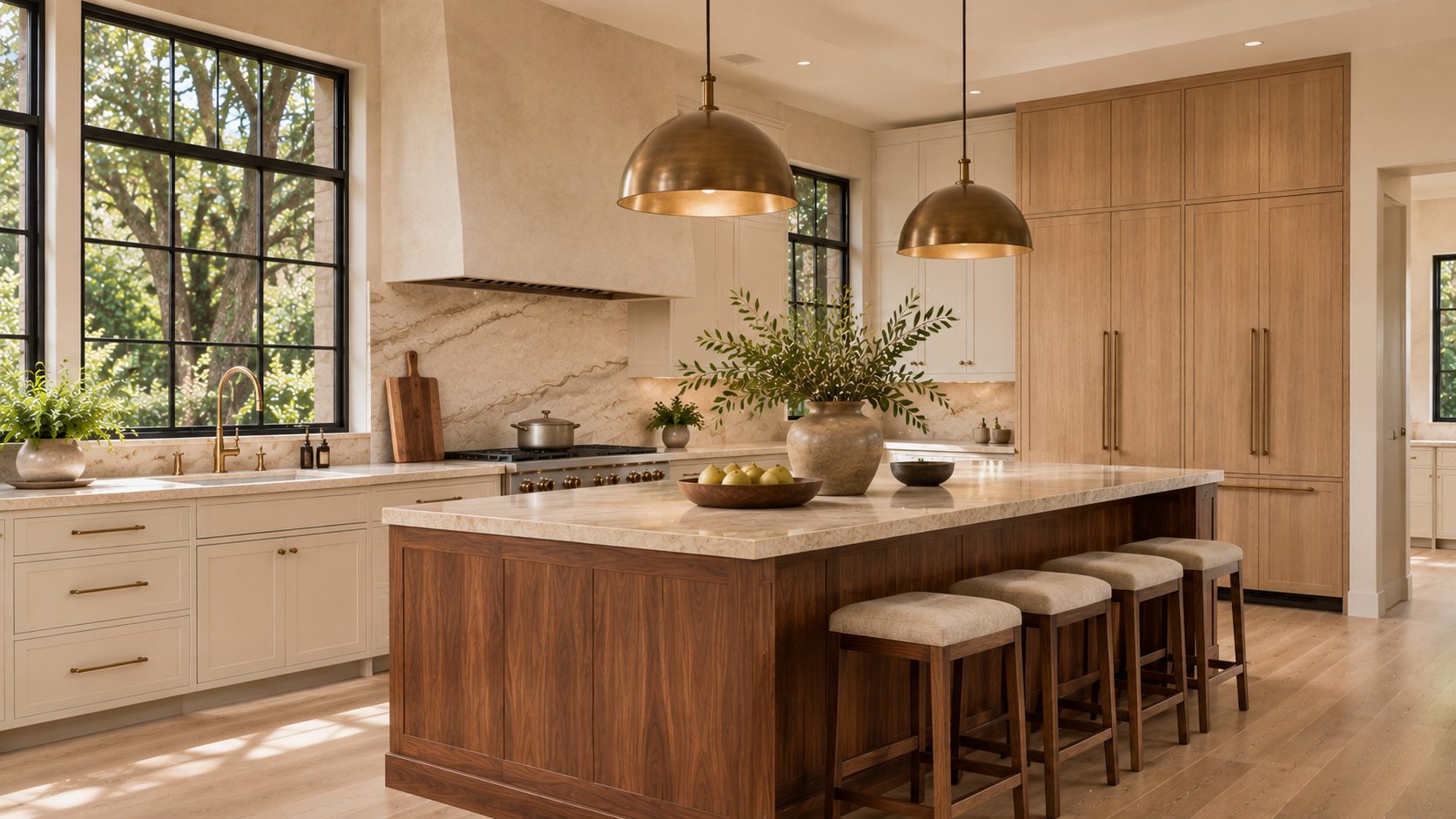
For example, a kitchen with creamy quartzite, natural oak flooring, and warm plaster walls may benefit from soft ivory cabinetry paired with walnut or white oak.
A more contemporary interior with cooler stone and minimal detailing might support muted taupe, charcoal, or neutral white cabinetry combined with a carefully selected natural wood.
The objective is to create a relationship between materials rather than choosing each finish independently.
Choose a Paint Color That Complements the Wood
Paint color has a significant influence on how natural wood appears.
Warm whites, creamy neutrals, and soft beige tones often complement walnut and white oak because they share compatible undertones.
Muted greens, deep blues, and charcoal finishes can also work with natural wood, creating stronger contrast and a more distinctive interior.
The important consideration is how the colors interact.
A very cool white may emphasize the yellow undertones in certain oak finishes, while a warm ivory can soften that contrast. Similarly, a gray paint with strong blue undertones may feel disconnected from a particularly golden wood stain.
Rather than evaluating colors separately, compare finished paint samples directly beside the actual wood finish.
The best combination is not necessarily the one with the strongest contrast, but the one where both materials enhance each other.
White Oak vs. Walnut: Which Wood Works Best?
White oak and walnut are two popular choices for combining natural wood with painted cabinetry, but they create different visual effects.
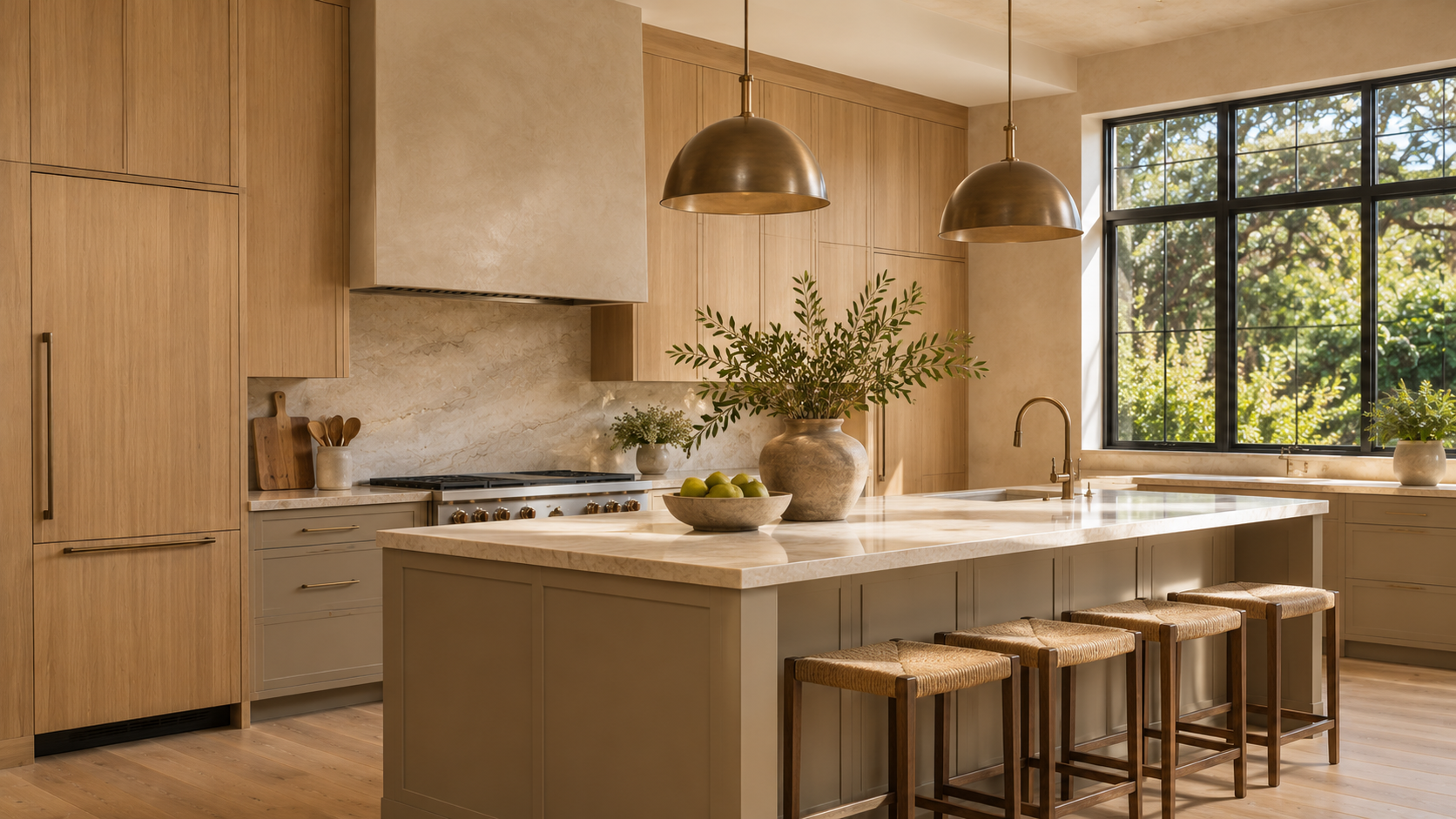
White oak generally has a lighter appearance, with beige, tan, and subtle golden undertones. Rift-cut white oak can provide relatively straight grain, making it particularly suitable for contemporary slab cabinetry.
Walnut offers deeper brown tones and more expressive natural grain. It can create a stronger focal point when paired with light painted cabinetry.
A kitchen featuring white oak and soft taupe cabinets may feel calm and understated. Walnut combined with warm white cabinetry can introduce greater contrast and richness.
Neither material is universally better. The choice depends on the desired atmosphere, available natural light, and surrounding finishes.
Decide Where Each Finish Belongs
One of the most important design decisions is determining how painted and natural wood cabinetry will be distributed throughout the kitchen.
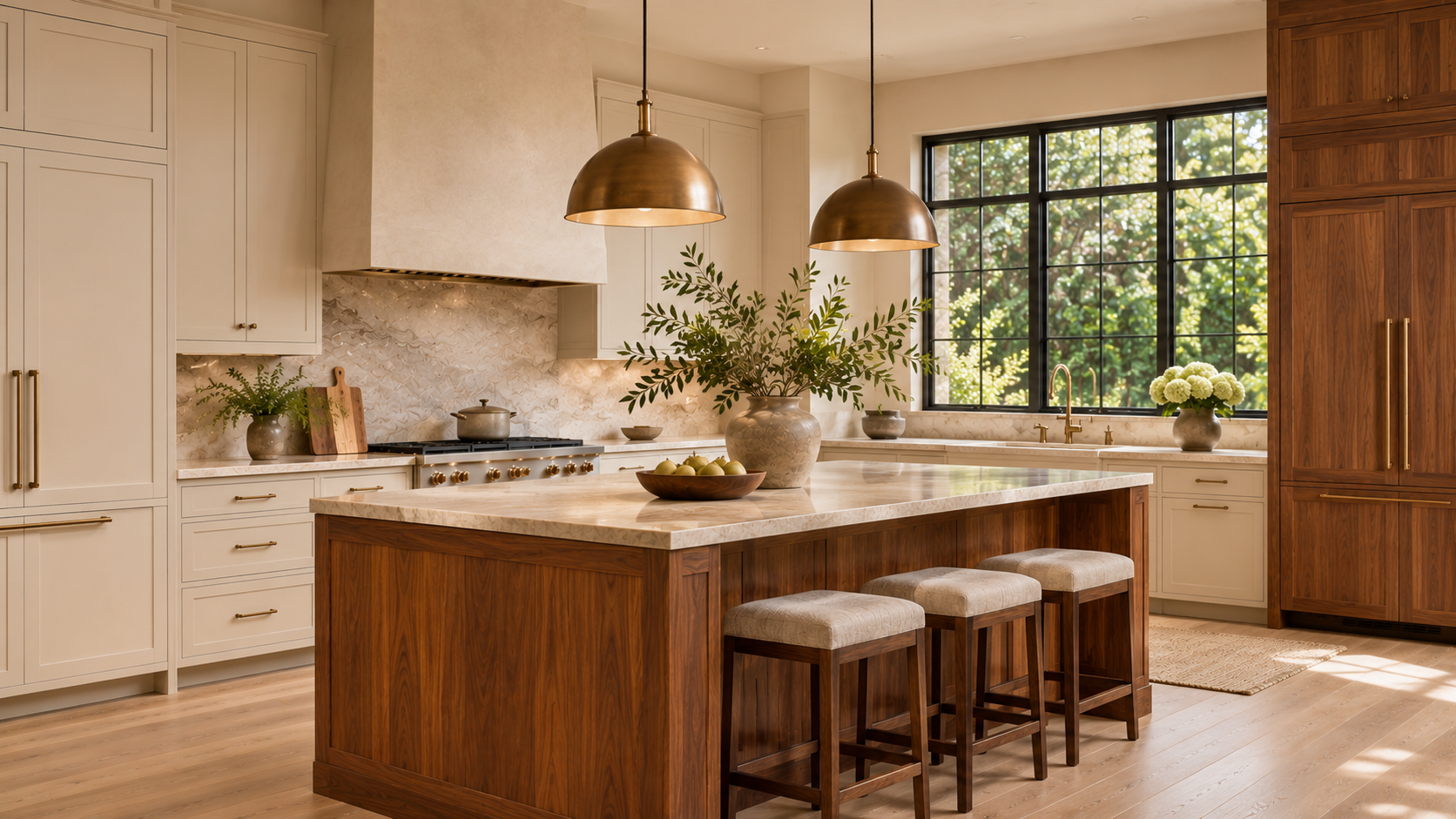
A common approach is to use painted cabinetry around the perimeter and natural wood on the island.
This creates a distinct focal point while keeping the surrounding cabinetry visually quiet.
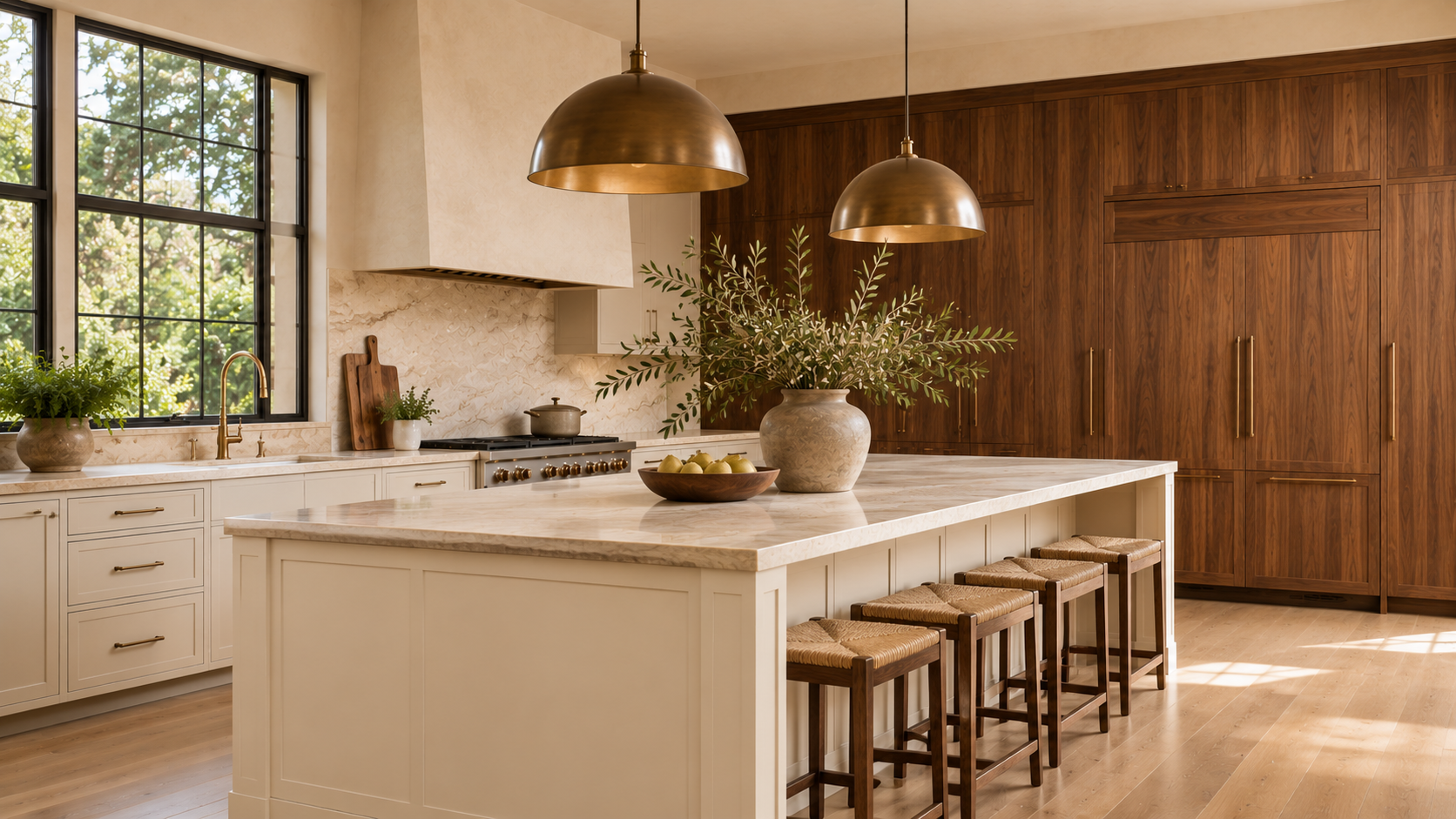
Another option is to use natural wood for a continuous wall of tall cabinets, including pantry storage and integrated appliances, while keeping lower cabinets and the island painted.
This can create a more architectural appearance, particularly in kitchens with large cabinetry elevations.
Wood can also be introduced through smaller elements such as a beverage station, open shelving, or a recessed breakfast cabinet.
The placement should respond to the layout and architecture rather than dividing finishes arbitrarily.
Use Cabinetry Proportions to Create Balance
Painted and natural wood cabinetry do not need to occupy equal amounts of space.
In fact, using one finish as the primary material and the other as an accent often creates a clearer composition.
A kitchen with extensive painted cabinetry may benefit from one substantial walnut island. Conversely, a kitchen dominated by natural white oak may use a painted island to introduce contrast.
The visual weight of each finish matters.
Dark walnut tends to attract more attention than pale oak, while deep charcoal paint can feel more prominent than a warm white finish.
Consider how the cabinetry will appear from the dining area, living room, and other important viewpoints.
Keep Cabinet Door Styles Consistent
When combining two finishes, cabinetry detailing helps establish continuity.
Using the same door profile across painted and wood cabinets can make the kitchen feel more unified.
For contemporary interiors, slab doors offer a simple architectural appearance that allows wood grain and paint color to become the primary visual elements.
In transitional kitchens, refined Shaker-style doors can work beautifully in both painted and natural wood finishes.
Different door styles can also be combined successfully, but the relationship should be deliberate.
For example, a furniture-inspired walnut island may feature more detailed construction than the surrounding painted cabinets.
Consistent reveals, aligned drawer fronts, and coordinated hardware can help connect these elements.
Coordinate the Flooring With the Wood Cabinetry
When natural wood cabinetry is combined with wood flooring, the relationship between the two becomes especially important.
The wood species do not necessarily need to match.
A walnut island can work beautifully with light white oak flooring, creating contrast between two natural materials.
However, combining several similar but slightly different oak tones may be more difficult. If their undertones conflict, the variation can appear accidental.
Instead of attempting an imperfect match, designers may choose a deliberate contrast between lighter flooring and darker cabinetry.
For kitchens with white oak cabinets and oak flooring, compare the actual finished samples together to understand differences in grain, color, and sheen.
Consider the Finish and Sheen of Both Materials
The relationship between painted and natural wood cabinetry is influenced by more than color.
Sheen and surface texture can change how the materials appear together.
A low-sheen painted finish can complement the natural texture of white oak or walnut without creating excessive reflection.
Similarly, a matte or satin wood finish can preserve the material's organic appearance while providing an appropriate protective surface.
The complete finishing system should be evaluated, including durability, maintenance, and how the finish responds to lighting.
Natural wood can also change in appearance over time due to light exposure and aging, while painted surfaces may show chips or wear in frequently used areas.
Understanding these characteristics helps homeowners make informed long-term decisions.
Extend the Material Combination Beyond the Kitchen
Painted and natural wood cabinetry can establish a material direction for the rest of the home.
A walnut kitchen island might relate to cabinetry in a nearby bar, library, or home office. Warm white painted cabinetry could continue into the pantry or laundry room.
This creates a sense of continuity without requiring identical finishes throughout every space.
In larger Bay Area residences, coordinating cabinetry selections across rooms can also help designers maintain consistent wood tones, paint colors, and detailing.
The result is a more connected interior where materials feel intentionally selected.
How Do You Make Painted and Wood Cabinets Look Cohesive?
Start with the complete material palette and determine the role each cabinetry finish should play.
Choose paint colors and wood tones with compatible undertones, then establish clear locations for each finish based on the kitchen's architecture.
Use consistent cabinetry detailing, carefully coordinate the flooring and countertops, and compare actual finished samples under appropriate lighting.
Avoid adding more materials simply for variety. A restrained combination of well-selected finishes can create greater depth than a kitchen filled with competing colors and textures.
The most successful painted and natural wood kitchens feel like one complete composition, where each material has a clear purpose.
Explore Painted and Natural Wood Cabinetry With Atelier Design Society
Atelier Design Society works with homeowners, architects, interior designers, builders, and other design professionals selecting premium cabinetry for Bay Area homes. At the Atelier Design Society showroom in Menlo Park, project teams can compare painted cabinetry, natural white oak, walnut, stains, door styles, hardware, and surfaces while developing a coordinated material palette.
