
Choosing a cabinet finish involves more than deciding between white, gray, brown, or natural wood. Two finishes that appear similar at first glance can create completely different atmospheres depending on their undertones.
Warm finishes introduce shades of cream, beige, amber, and brown, while cool finishes often contain gray, blue, or green undertones. These subtle differences influence how cabinetry interacts with countertops, flooring, hardware, and natural light.
Neither warm nor cool cabinetry is inherently better. Both can create sophisticated interiors when selected with the architecture and surrounding materials in mind.
The key is building a cohesive material palette where every finish feels connected, rather than selecting cabinetry colors independently.
What Makes a Cabinet Finish Warm or Cool?
A finish's temperature is determined by its undertones, not simply whether the overall color appears light or dark.
Warm cabinetry finishes typically contain yellow, red, orange, or warm beige undertones. Examples include creamy white paint, honey-toned oak, natural walnut, and certain medium brown stains.
Cool cabinetry finishes often contain blue, gray, or cooler green undertones. These may appear in crisp white paint, blue-gray cabinetry, charcoal finishes, and some muted wood stains.
However, color temperature is not always obvious.
A gray cabinet finish may have warm taupe undertones, while a white paint can appear noticeably blue when placed beside creamy stone.
Natural woods are equally complex. White oak may display beige, golden, or olive undertones, while walnut can range from warm chocolate brown to cooler gray-brown.
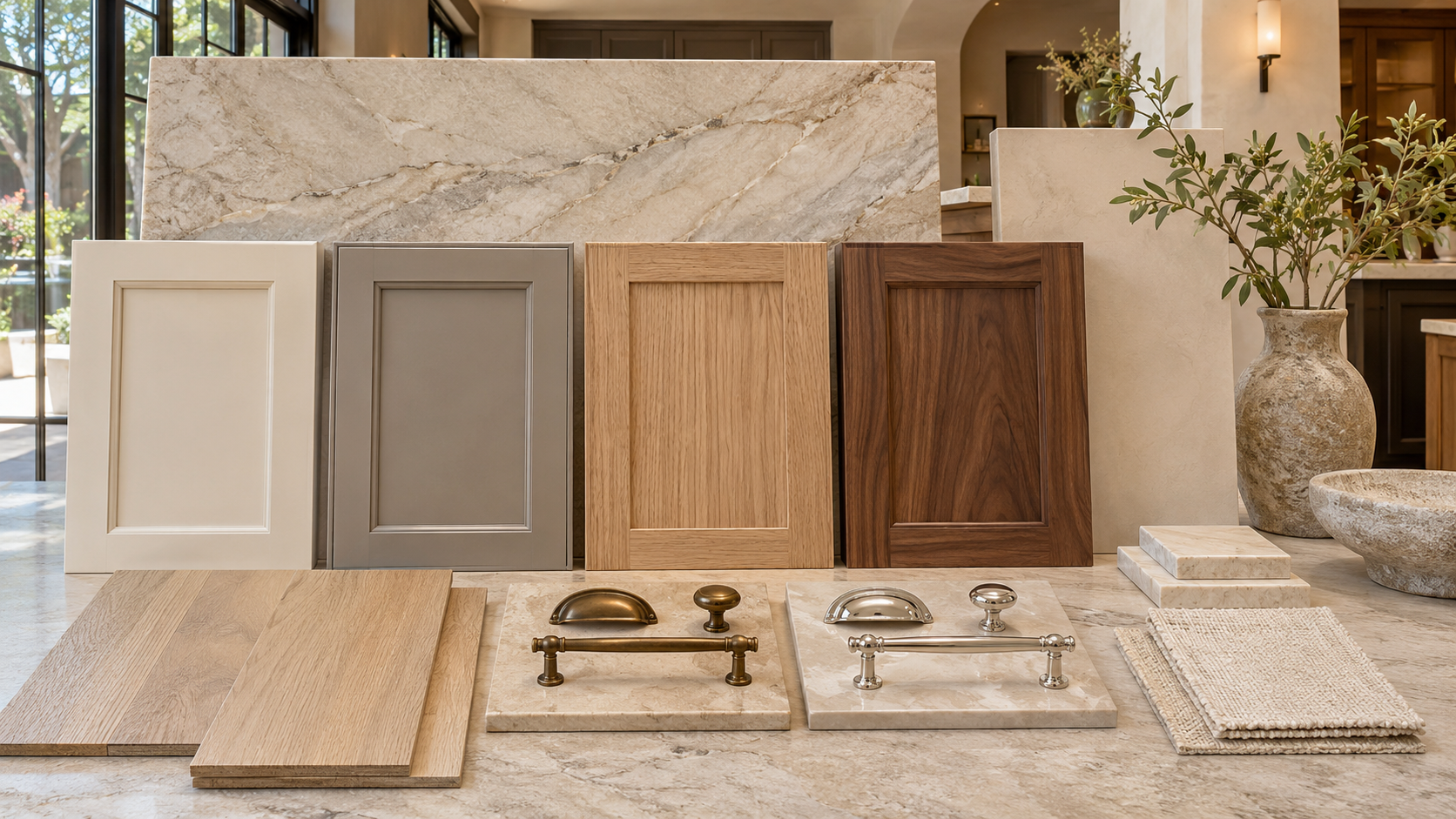
This is why finished samples are essential when evaluating cabinetry materials.
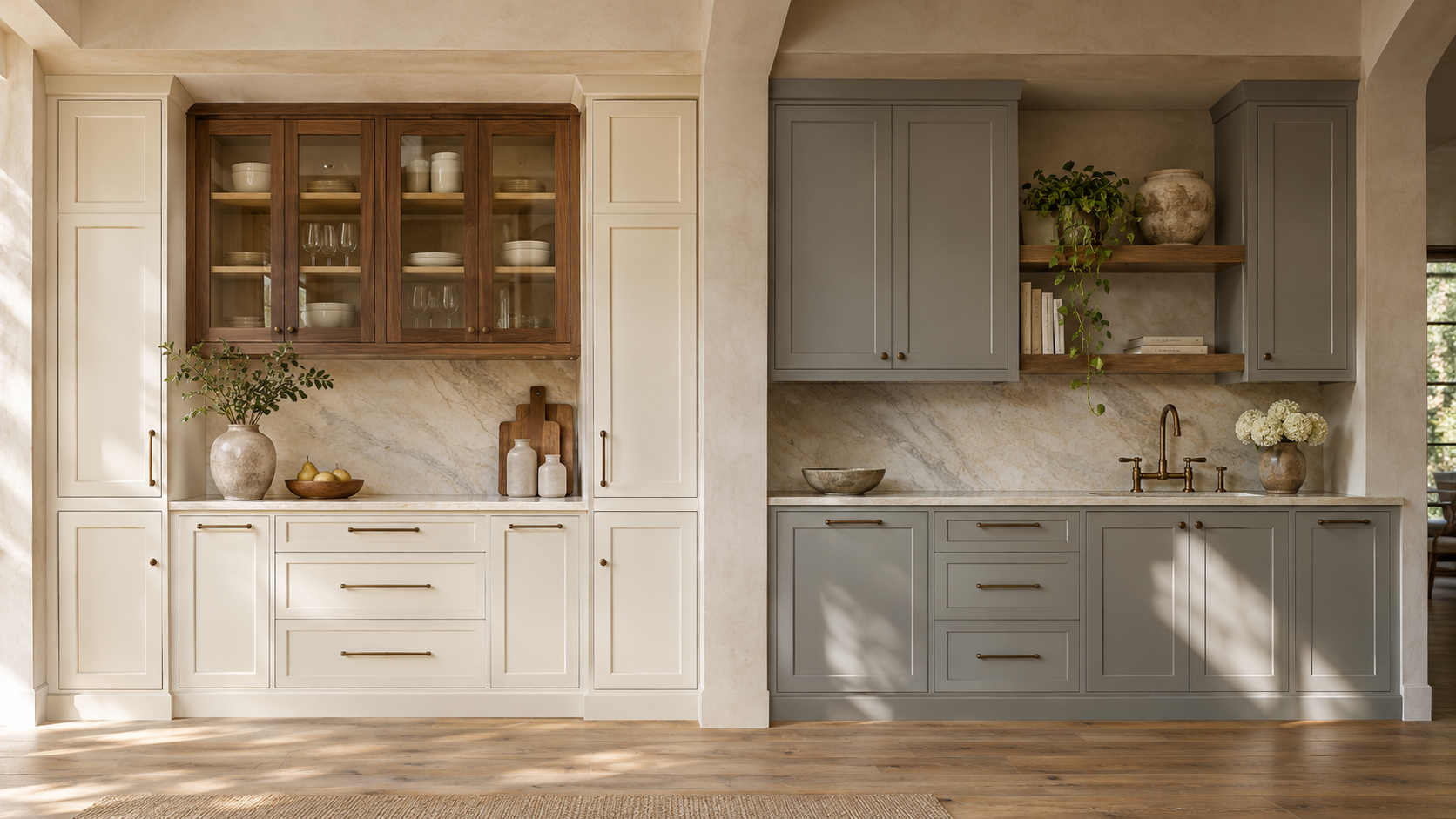
Warm Cabinet Finishes Create a Softer Atmosphere
Warm cabinetry finishes are often associated with inviting, comfortable interiors.
Creamy whites, soft taupes, natural oak, and walnut can introduce warmth without requiring bold color.
These finishes work particularly well with materials such as creamy quartzite, limestone, natural wood flooring, warm plaster, and aged bronze hardware.
A warm palette does not necessarily mean using yellow or orange tones. In contemporary luxury kitchens, warmth is often introduced through subtle beige undertones and natural material variation.
For example, warm white cabinetry paired with rift-cut white oak can create a restrained interior that still feels welcoming.
The goal is to achieve warmth through balanced undertones rather than excessive color saturation.
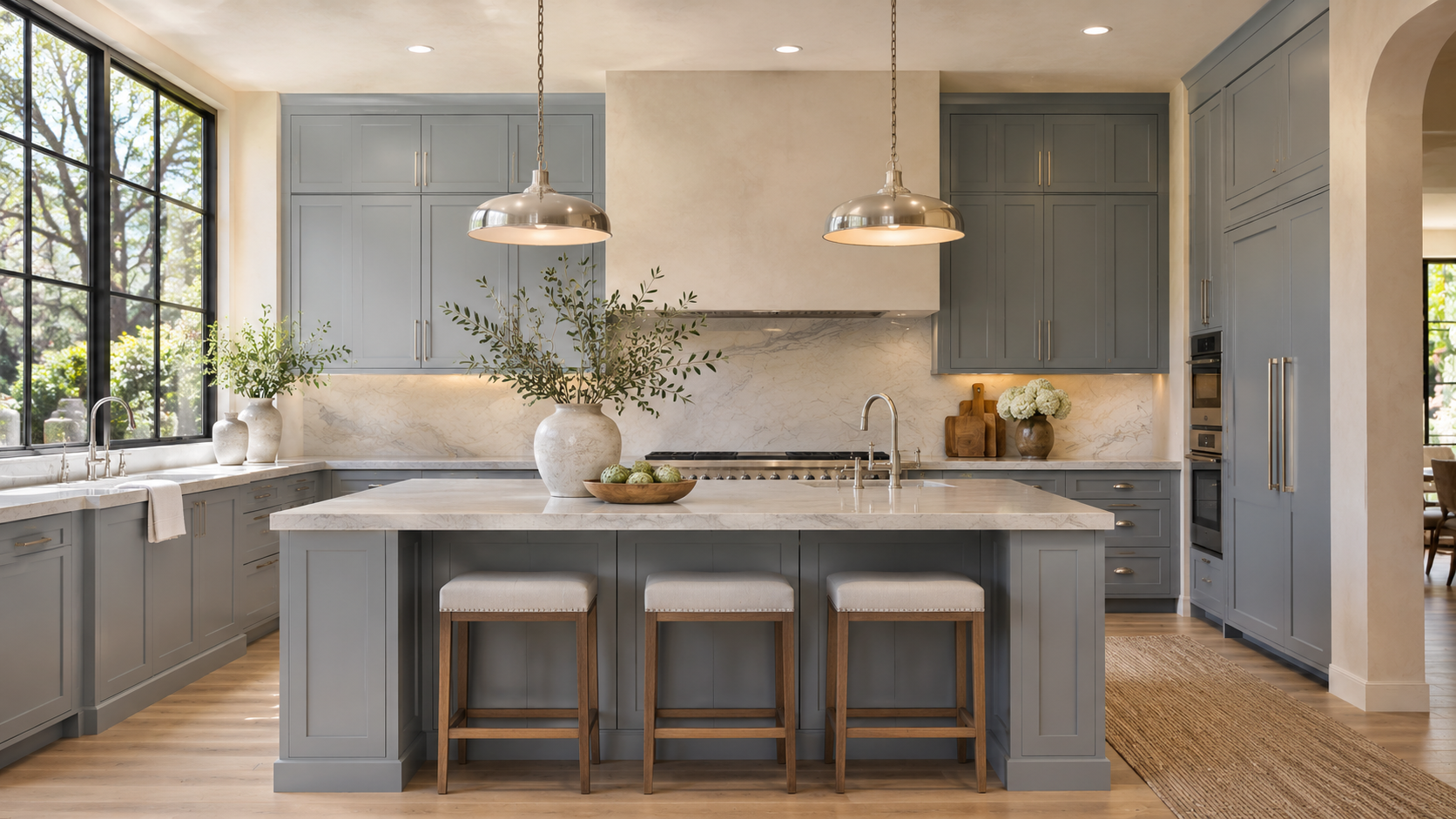
Cool Cabinet Finishes Create a More Restrained Look
Cool cabinetry finishes can create a crisp, contemporary appearance.
Soft gray, blue-gray, charcoal, and neutral white finishes are often used in kitchens with clean architectural lines and minimal detailing.
These colors may complement cooler stone surfaces, polished nickel hardware, and neutral flooring.
However, cool cabinetry does not need to make a kitchen feel cold.
Natural wood accents, warm lighting, and carefully selected stone can introduce contrast and prevent the palette from appearing overly uniform.
The most successful cool palettes often include subtle variations in texture and tone rather than relying on one flat color throughout the room.
Start With the Materials That Are Already Selected
One of the most practical ways to build a cabinetry palette is to begin with materials that are already part of the project.
In a remodel, existing flooring, architectural woodwork, or stone may establish the overall color direction.
In new construction, the cabinetry, flooring, and countertops can be selected together, allowing greater flexibility.
A kitchen with golden oak flooring and creamy natural stone may naturally support warm white, taupe, or medium brown cabinetry.
Conversely, a space featuring cool gray stone and neutral flooring may benefit from a more restrained painted finish.
This does not mean every material must share the same temperature.
Instead, identify the dominant undertones and determine where contrast will improve the design.
How to Mix Warm and Cool Cabinet Finishes
Warm and cool finishes can work together successfully when their relationship is intentional.
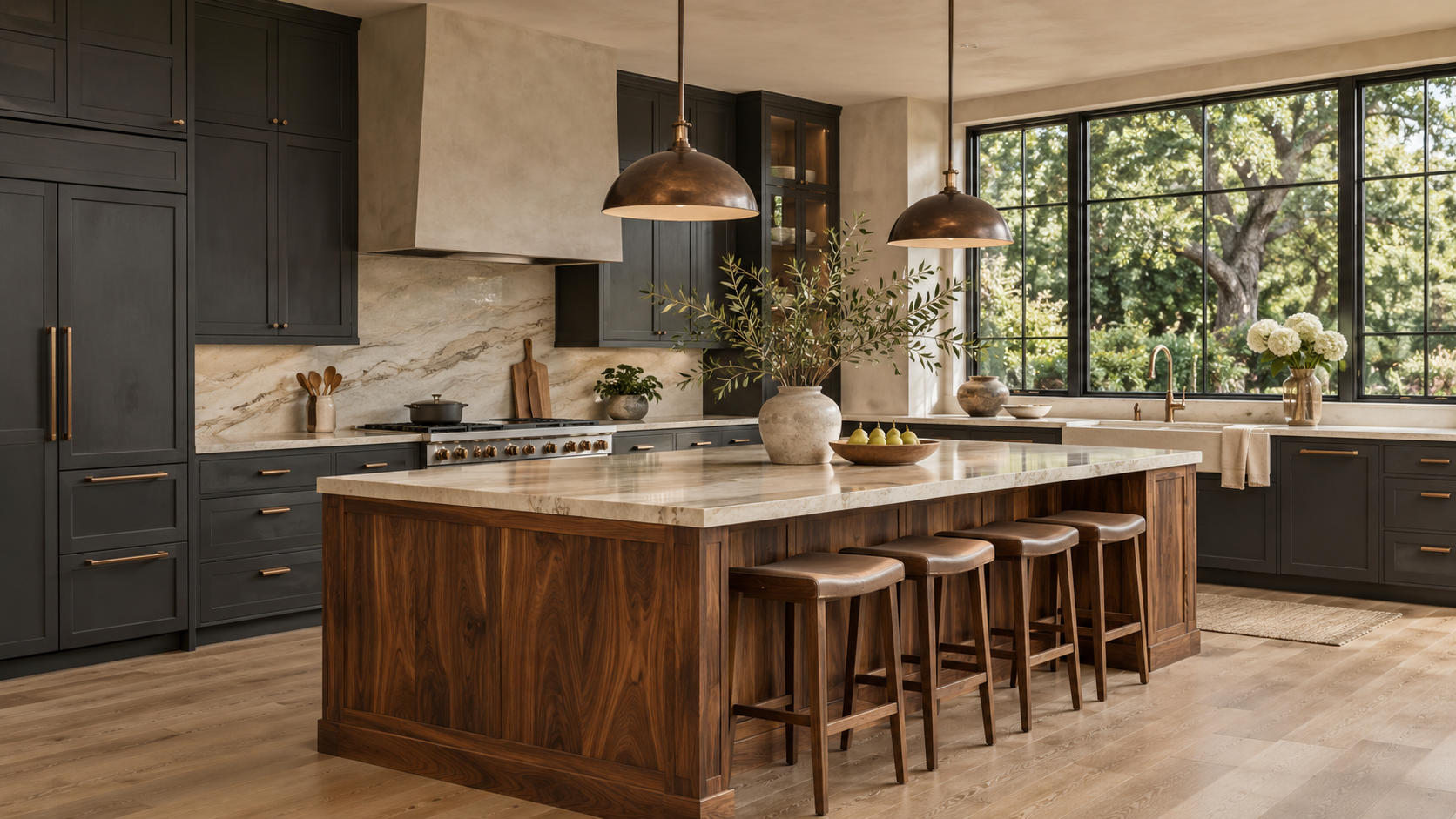
For example, cool charcoal cabinetry may pair beautifully with natural walnut when the wood introduces warmth and texture.
Similarly, warm white perimeter cabinets can complement a muted gray island when the countertops and flooring help connect the two finishes.
The key is creating a visual bridge between the materials.
A natural stone countertop containing both warm beige and cooler gray veining may help unify cabinetry finishes with different undertones.
Hardware, flooring, and wall finishes can also support the transition.
A cohesive palette does not require every finish to be warm or every finish to be cool. It requires a deliberate relationship between them.
Consider How Natural Light Changes Color Temperature
Lighting has a significant influence on how cabinetry finishes appear.
Natural daylight changes throughout the day, affecting how warm and cool undertones are perceived.
A cabinet finish that looks neutral in a showroom may appear warmer in afternoon sunlight or cooler in a room receiving predominantly indirect daylight.
Artificial lighting also matters.
Warm interior lighting can emphasize golden undertones in wood and painted finishes, while cooler lighting may make gray and blue undertones more noticeable.
For large cabinetry installations, these differences can become particularly apparent across uninterrupted walls of painted or wood cabinetry.
Review finished samples under the project's actual lighting conditions whenever possible, including both daylight and evening illumination.
Coordinate Cabinetry With Flooring and Countertops
Flooring and countertops occupy substantial visual areas, making them essential to the overall palette.
A warm cabinet finish paired with strongly cool flooring may create an unintended contrast. Similarly, a cool gray cabinet color can appear disconnected beside stone with pronounced golden undertones.
However, exact matching is not necessary.
A natural walnut island can work beautifully with pale white oak flooring because the contrast between the two woods is clear and intentional.
For painted cabinetry, compare undertones directly against the selected countertop slab rather than relying on small photographs or digital color references.
Natural stone often contains multiple undertones, making it especially useful for connecting different cabinetry finishes.
Pay Attention to Finish Sheen and Texture
Color temperature is only one part of the cabinetry's appearance.
Sheen and texture can influence how a finish interacts with light and surrounding materials.
A low-sheen painted finish often creates a softer appearance, while higher-gloss surfaces reflect more light and can make color variations more noticeable.
Natural wood introduces another layer of complexity through grain direction, species, and stain selection.
Rift-cut white oak may appear relatively uniform and linear, while walnut can introduce deeper color variation and more expressive grain.
These characteristics can help a palette feel layered even when the overall color range is restrained.
Avoid Choosing Finishes in Isolation
One of the most common challenges in cabinetry selection is evaluating each material separately.
A beautiful cabinet finish may not work as expected once installed beside the actual flooring, countertops, and wall finishes.
Similarly, two finishes that appear compatible in small samples may create a different impression across large cabinetry elevations.
Whenever possible, compare larger finished samples together.
Consider the proportions of each material, the direction of natural light, and the way the palette connects to adjacent rooms.
For luxury residential projects, selecting cabinetry finishes early can also help coordinate other major material decisions before construction progresses.
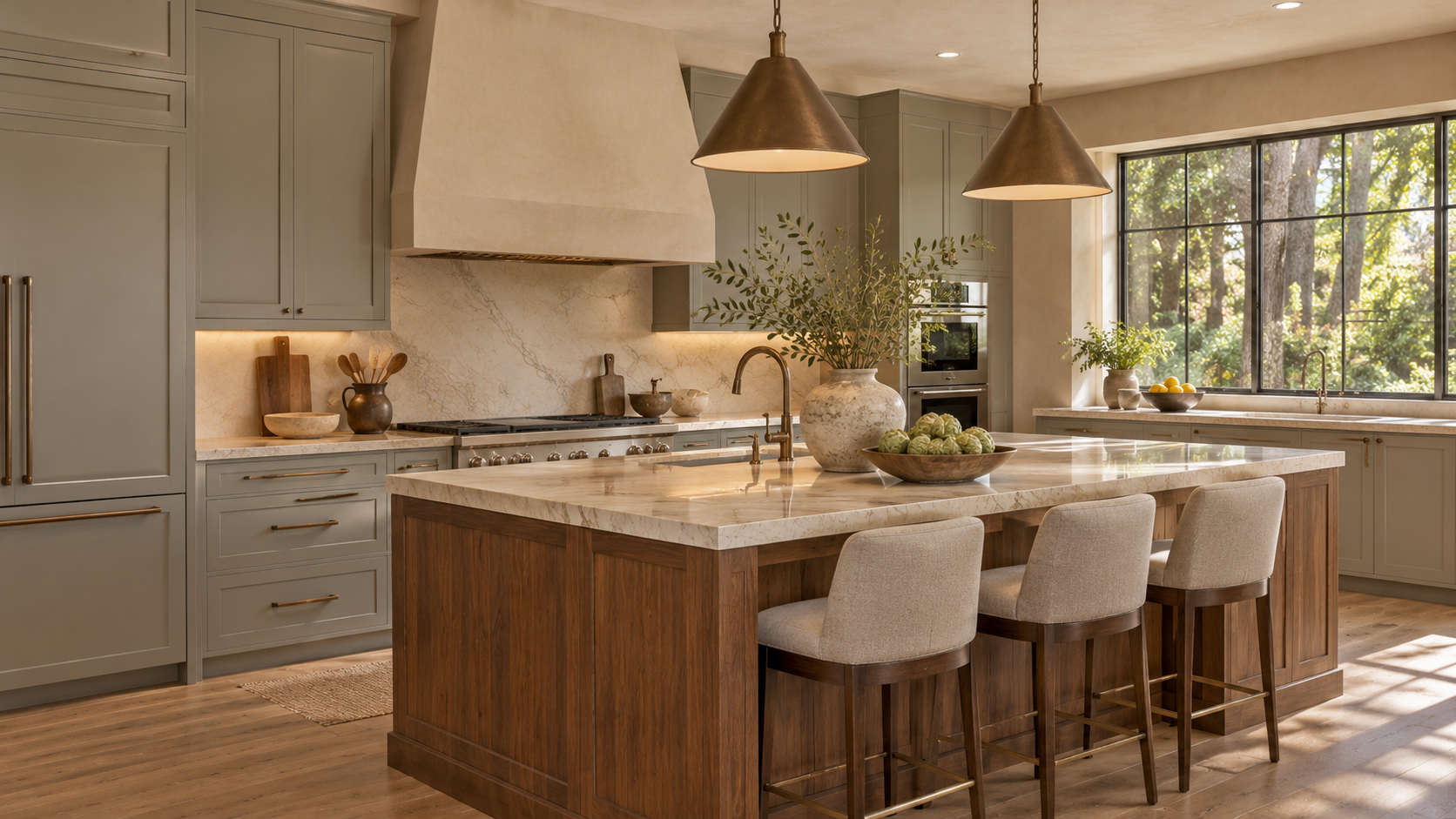
How Do You Choose Between Warm and Cool Cabinet Finishes?
Begin with the architecture and the materials that will remain in the space.
Identify the dominant undertones in the flooring, countertops, and surrounding finishes. Then determine whether the cabinetry should reinforce those tones or introduce intentional contrast.
Warm finishes can create softness and depth, while cool finishes can provide a more restrained contemporary appearance.
Both approaches can feel timeless when supported by quality materials, balanced proportions, and appropriate lighting.
The right cabinetry palette is not defined by whether it is warm or cool. It is defined by how successfully the finishes work together.
Explore Cabinetry Finishes With Atelier Design Society
Atelier Design Society works with homeowners, architects, interior designers, builders, and other design professionals selecting premium cabinetry for Bay Area homes. At the Atelier Design Society showroom in Menlo Park, project teams can compare painted finishes, natural woods, stains, hardware, and surfaces while developing a cohesive palette that supports the architecture and overall design direction.
