Kitchen Island Cabinetry: Storage Ideas You May Not Have Considered
A kitchen island can provide far more storage than a row of standard cabinets and drawers.
Because an island can be accessed from multiple sides, its cabinetry can be planned around different activities at once. The working side might hold cookware and preparation tools, while the seating side stores less frequently used pieces. The ends can accommodate narrow storage that might otherwise be wasted.
The best island storage begins with one question: What do you need within reach when you are actually using the island?
Start With Drawers Instead of Defaulting to Doors
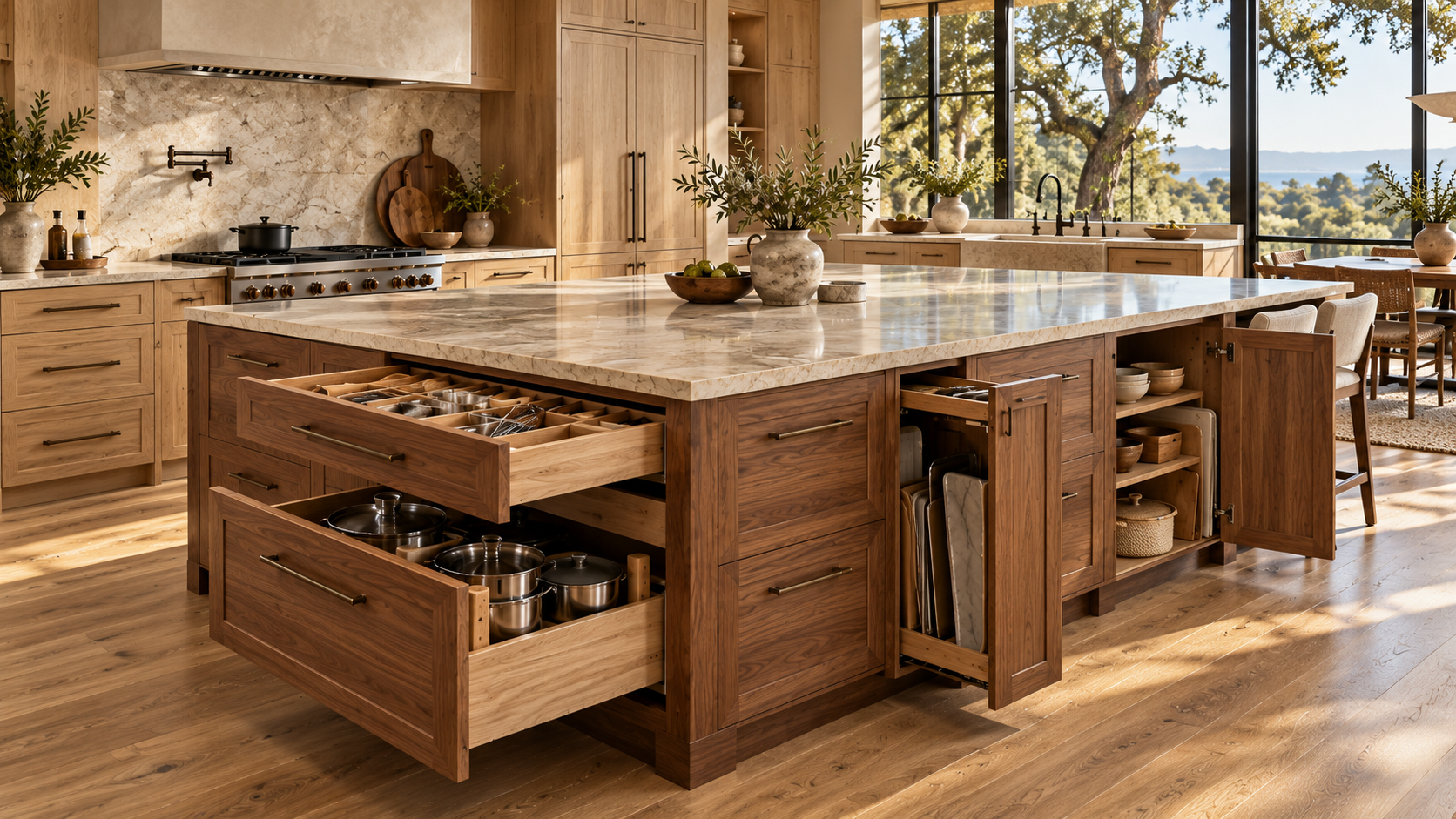
Deep drawers are one of the most practical ways to use island cabinetry.
They provide direct access to cookware, mixing bowls, food containers, dishes, and other frequently used items without requiring you to reach into the back of a deep cabinet.
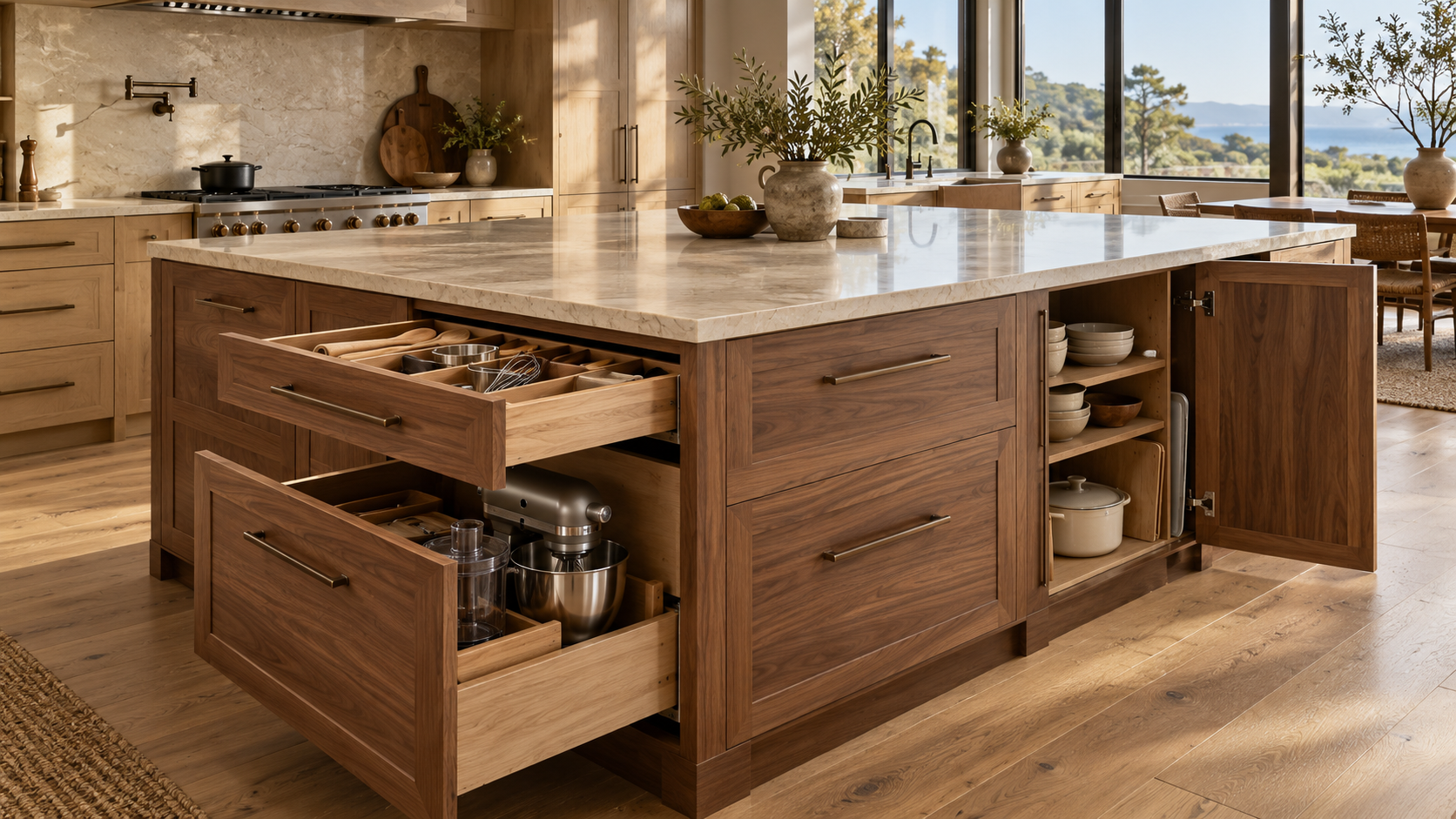
Drawer depth and location should correspond to what will be stored inside. A preparation-focused island might include shallower upper drawers for utensils with deeper drawers below for bowls, pots, or small equipment.
Instead of filling every section with identical drawers, the interior can be planned around specific categories of storage.
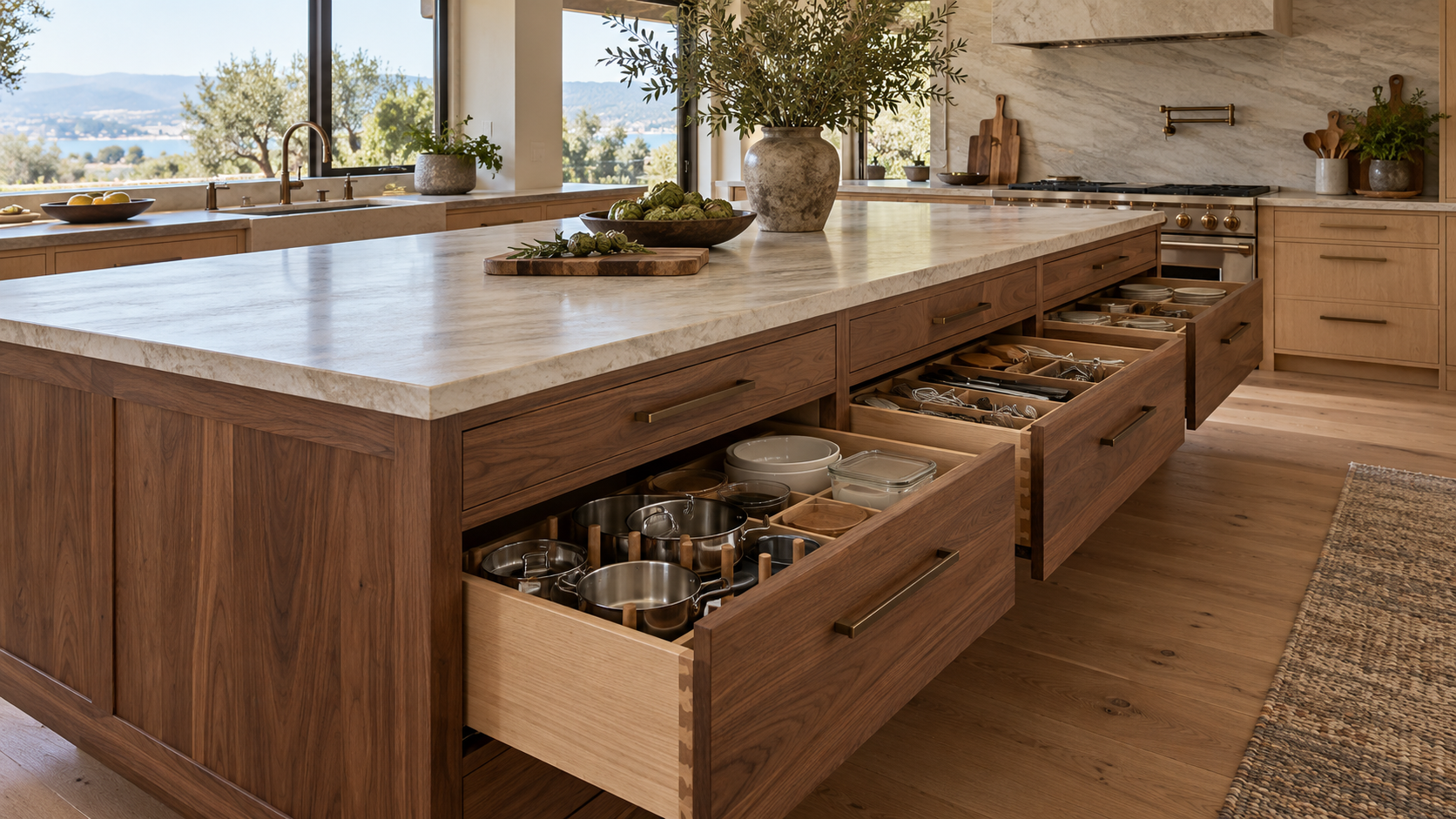
Use the Seating Side for Hidden Storage
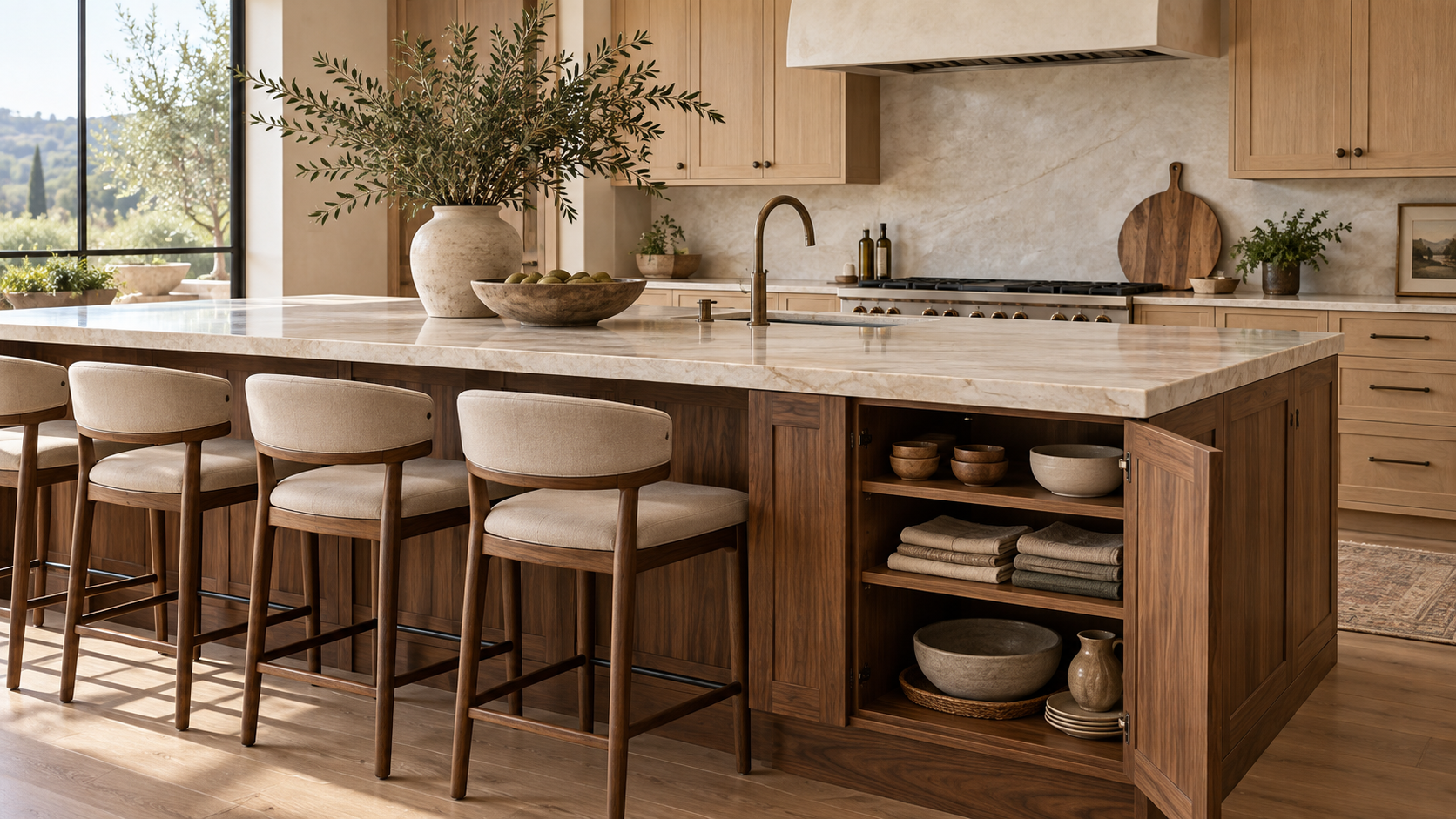
The back of an island is often treated as a decorative surface, particularly when seating is located there. Depending on the island depth, however, this area can provide valuable additional cabinetry.
Shallow cabinets beneath or behind the seating area can hold serving pieces, seasonal items, extra glassware, table linens, or equipment that does not need to be accessed every day.
Because this storage is outside the primary work zone, it is particularly useful for items that would otherwise occupy more valuable kitchen cabinets.
The doors can be designed to blend quietly into the island so the seating side still feels clean and architectural.
Don't Forget the Ends of the Island
Island ends can sometimes provide useful storage without changing the main working layout.
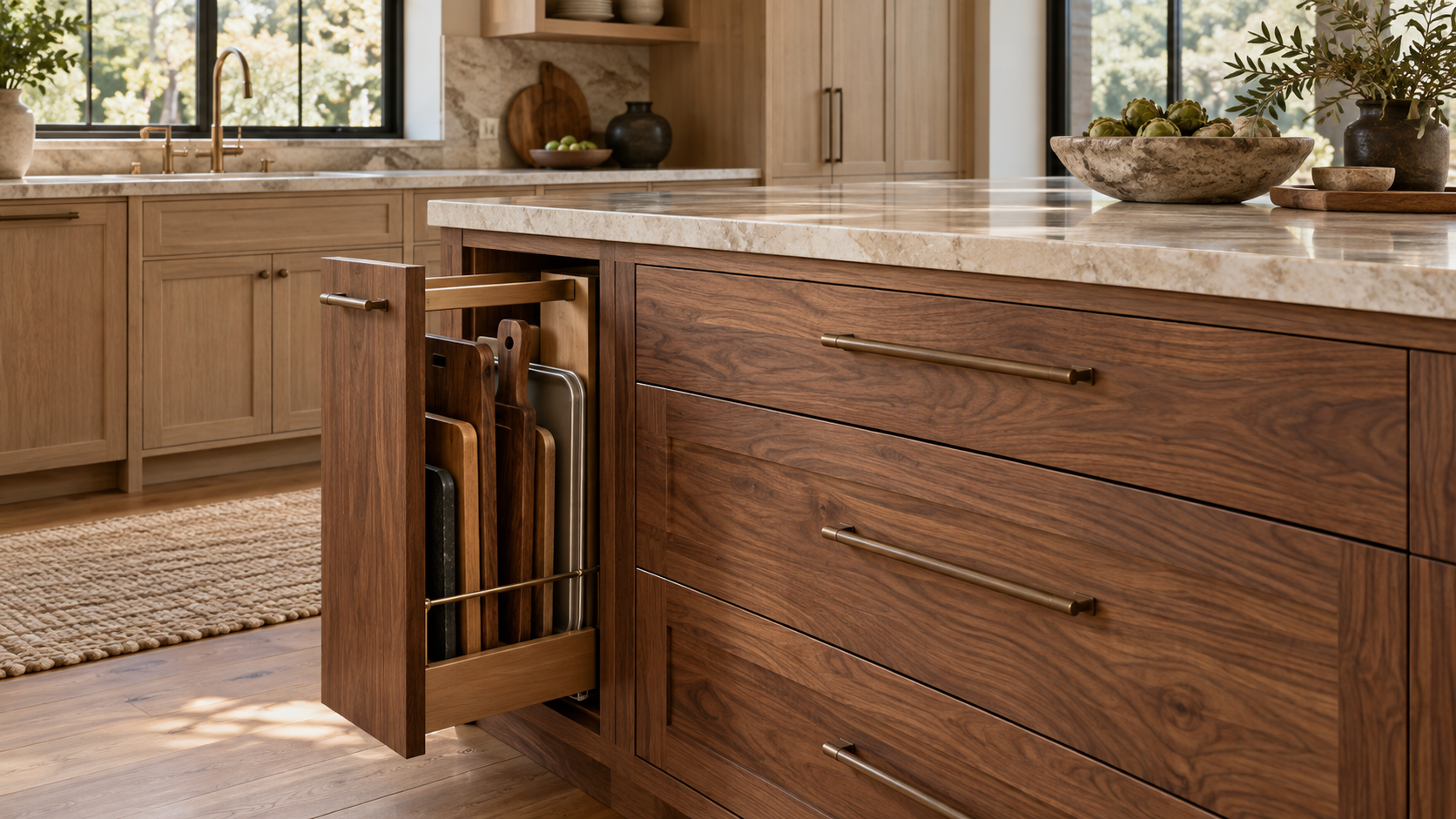
A narrow cabinet might hold trays, cutting boards, baking sheets, or serving boards vertically. Another end could incorporate shallow shelves or concealed cabinetry depending on the design.
These spaces are especially valuable when the island dimensions leave areas that are too narrow for conventional cabinets.
Not every end needs storage. In some kitchens, a clean finished panel creates a stronger architectural composition. The decision should depend on whether the added storage solves a genuine need.
Create Vertical Storage for Trays and Cutting Boards
Wide, flat items are often awkward to stack.
Vertical dividers can make baking sheets, cutting boards, trays, and serving boards easier to access while using a relatively narrow section of the island.
The location should follow the activity. Cutting boards might belong near the primary preparation surface, while baking sheets may make more sense closer to the oven.
This type of storage does not require a large cabinet. A carefully planned narrow section can be more useful than another general-purpose shelf.
Add Storage Where You Prep, Serve, or Clean
An island should not be organized as one large storage zone. Different sections can support different activities.
Near a prep sink, cabinetry might hold cutting boards, knives, bowls, or cleaning supplies. Near the primary preparation area, drawers can organize utensils and cookware. If the island is regularly used for serving, dishes or serving pieces can be positioned where they are easy to retrieve.
If the island contains the main sink or dishwasher, storage can respond to cleanup instead.
This creates a more intuitive kitchen because items are stored close to where they are actually used.
Consider a Dedicated Drawer for Charging and Everyday Items
Not everything stored in the kitchen is related to cooking.
For households where the island becomes a place for homework, working, or everyday organization, a dedicated drawer can keep frequently used personal items from collecting on the countertop.
Depending on the electrical plan and applicable requirements, charging can also be incorporated thoughtfully into the island so phones and other devices have a designated location.
The goal is not to turn the kitchen into an office. It is to recognize how the island is genuinely used and provide storage that supports those routines.
Can the Island Store Small Appliances?
Sometimes.
A deep drawer or lower cabinet may be useful for appliances that do not need to remain on the countertop, particularly if the island is where they are commonly used.
Weight and accessibility matter. Heavy equipment should not be placed somewhere that requires uncomfortable lifting or reaching.
If an appliance will operate at the island, electrical requirements and usable countertop space should be considered during design rather than added later.
Avoid Filling the Island With Features You Won't Use
Specialized storage is useful only when it corresponds to real habits.
Pull-outs, dividers, charging drawers, hidden cabinets, and custom inserts can make an island more functional, but adding every available accessory can reduce flexibility and increase complexity.
Start with what currently creates a storage problem.
If baking sheets are difficult to access, give them vertical storage. If serving pieces occupy valuable prep cabinetry, consider the seating side. If cookware is used at the island every day, prioritize strong, accessible drawers.
Custom cabinetry is most valuable when the customization has a purpose.
How Should You Plan Your Island Storage?
List what you want to store before deciding how the island cabinets should be divided.
Consider what belongs near the preparation surface, cooking zone, sink, seating area, and nearby appliances. Separate everyday items from pieces that only need occasional access.
Then use the island's different sides intentionally.
The working side can prioritize frequent-use drawers and specialized storage. The seating side can handle less frequently accessed items. Narrow areas and island ends can solve specific storage problems when the dimensions allow.
The result is an island that provides more useful storage without looking more complicated.
Explore Kitchen Island Storage at Atelier Design Society
Atelier Design Society works with homeowners, architects, interior designers, builders, and other design professionals planning premium cabinetry for Bay Area kitchens. At the Atelier Design Society showroom in Menlo Park, project teams can explore island cabinetry, drawer construction, interior organization, specialized storage, materials, hardware, and full-scale installations while developing storage around everyday use.