Quiet Luxury in Kitchen Design: What It Actually Means
Quiet luxury has become a popular phrase in interior design, but in a well-designed kitchen, the idea is much more specific than simply choosing neutral colors or expensive materials. Quiet luxury is about restraint, proportion, material quality, and details that reveal themselves gradually rather than demanding attention immediately.
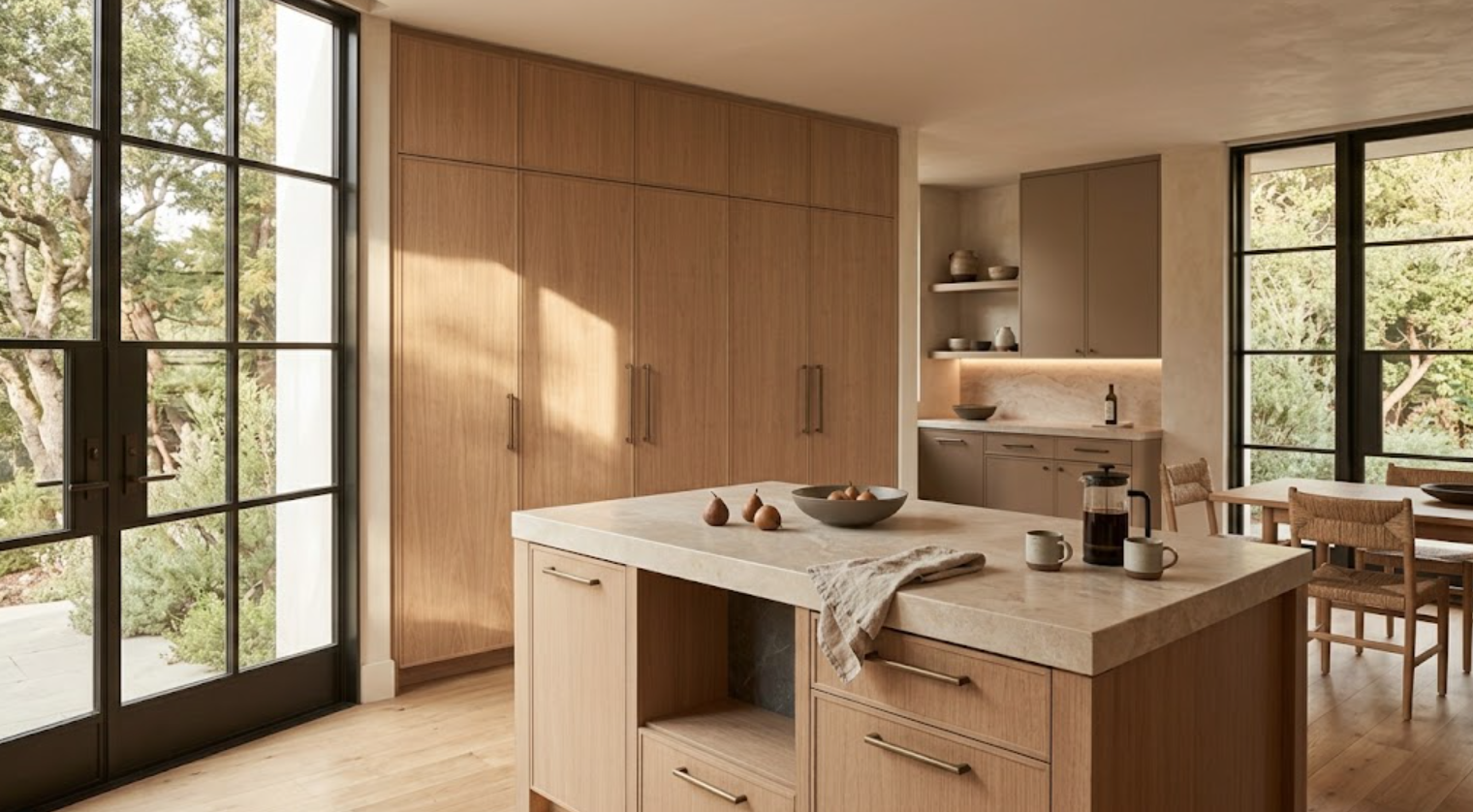
A quiet luxury kitchen might use natural white oak, honed stone, warm plaster, and understated hardware. Nothing needs to be overly decorative. What makes the room feel elevated is the quality of the materials, the precision of the cabinetry, and the way every element relates to the architecture.
The result should feel considered rather than styled.
Quiet Luxury Is About Restraint, Not Minimalism
Quiet luxury and minimalism can overlap, but they are not the same thing. Minimalism often focuses on reducing visual elements. Quiet luxury is more concerned with choosing fewer elements carefully and giving those materials enough space to matter.
A kitchen can include visible wood grain, natural stone movement, warm metals, integrated lighting, and detailed cabinetry while still feeling restrained. The key is controlling how many materials compete for attention.
Instead of adding another feature, designers often ask whether the existing materials can do more.
What Materials Create a Quiet Luxury Kitchen?
There is no required palette, but materials with natural depth tend to work particularly well because they create interest without relying on decoration.
Common directions include:
Rift-cut white oak or walnut cabinetry
Warm painted cabinetry in mushroom, cream, taupe, or muted tones
Honed natural stone with controlled movement
Warm plaster or softly textured walls
Natural wood flooring
Understated bronze, nickel, or darkened metal hardware
The important part is not using all of them. A restrained palette may need only a few materials if each one has enough character.
Why Does Cabinetry Matter So Much?
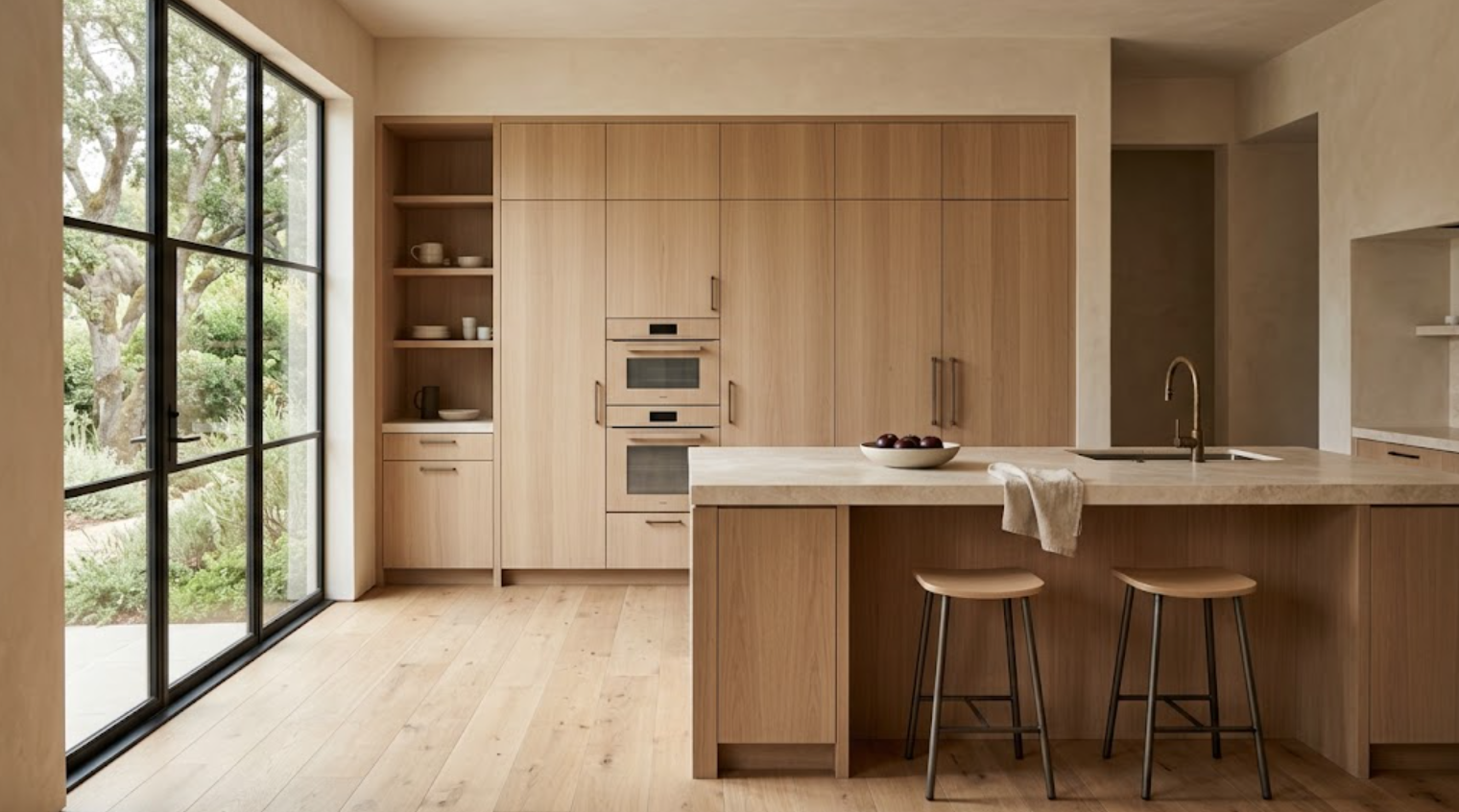
Quiet luxury depends heavily on execution. When a kitchen has fewer decorative elements, cabinetry proportions, alignment, construction, and finish become more noticeable.
Details such as consistent reveals, controlled grain direction, carefully proportioned doors, integrated appliances, and intentional cabinet terminations can make a simple elevation feel highly refined.
This is particularly important with natural wood. A large wall of rift-cut white oak does not need additional decoration when the grain, proportions, and architectural alignment are handled carefully.
Why Is Natural Wood So Effective?
Natural wood introduces warmth and variation without adding an applied pattern. White oak can create a light, architectural foundation, while walnut provides greater depth and contrast.
The grain itself becomes part of the design. Rift-cut white oak is especially useful when a quieter visual effect is desired because its straighter grain can reinforce clean cabinet lines.
The finish matters too. Wood that feels overly glossy or heavily colored can change the character of the room. More restrained finishes allow the natural material to remain visible.
Does Quiet Luxury Have to Be Beige?
No.
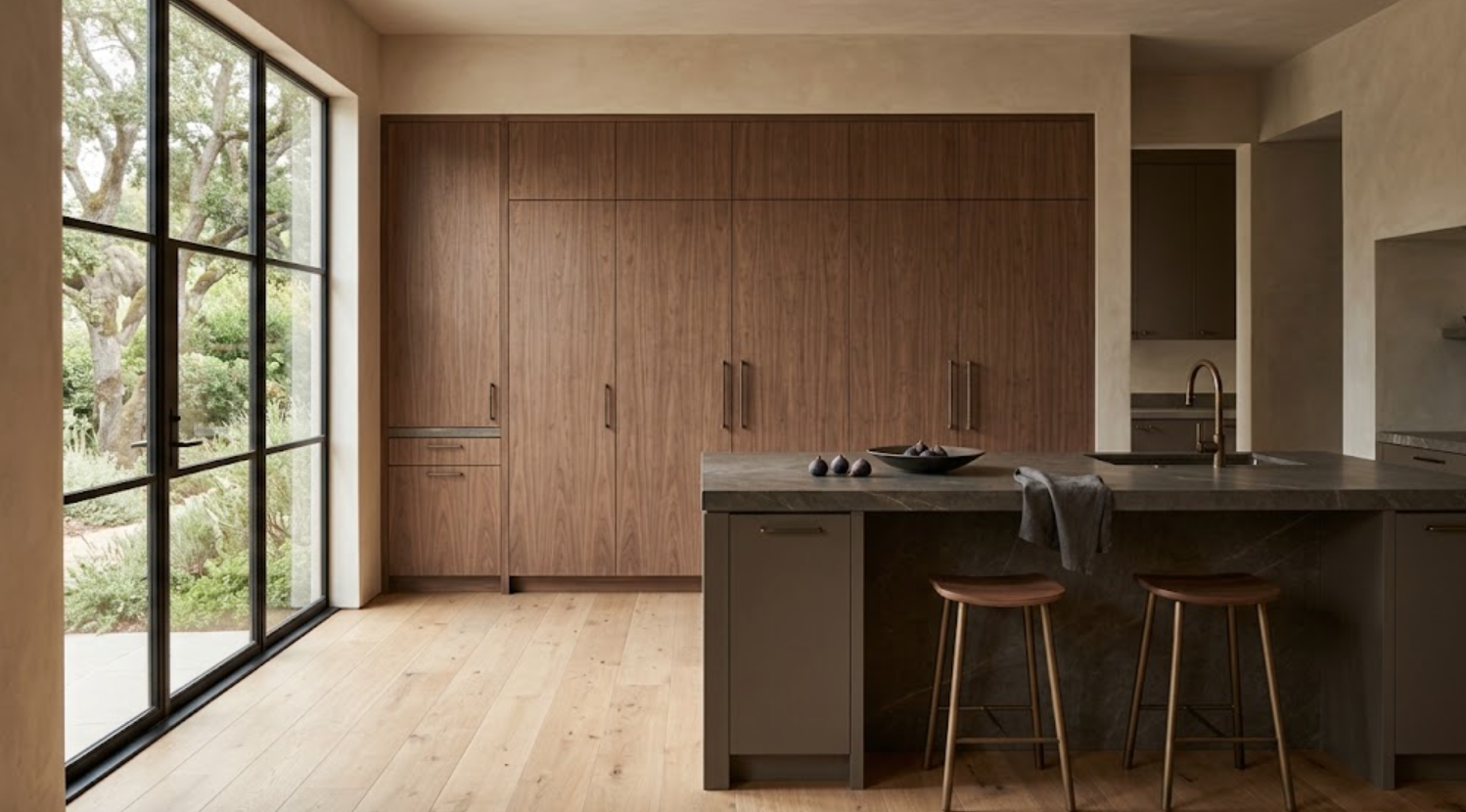
A quiet kitchen can use deep walnut, charcoal stone, muted green cabinetry, dark bronze, or other richer colors. Quiet luxury describes how materials are handled, not a specific color palette.
A deep walnut kitchen with restrained stone and minimal hardware may feel quieter than an all-beige kitchen filled with competing textures and decorative details.
Color can be present. The composition simply needs discipline.
How Should Stone Be Used?
Stone can either support the cabinetry or become the room’s primary natural feature. In a quiet luxury kitchen, designers are usually deliberate about how much movement the room needs.
If cabinetry already has strong walnut grain, a quieter stone may create balance. With restrained painted cabinetry, a more expressive quartzite might become the focal point.
The amount matters too. Covering every available surface in dramatic stone can reduce its impact. One carefully composed island or full-height backsplash may be enough.
Why Does Texture Matter More Than Decoration?
When the palette is restrained, texture creates depth.
Honed stone absorbs light differently from polished stone. Wood introduces grain. Plaster has subtle irregularity. Aged metal creates small changes in reflection. Together, these differences make a neutral or tonal room feel layered without adding unnecessary pattern.
This is one reason physical materials matter so much in quiet luxury interiors. Their character is often difficult to understand from photographs alone.
What Role Does Hardware Play?
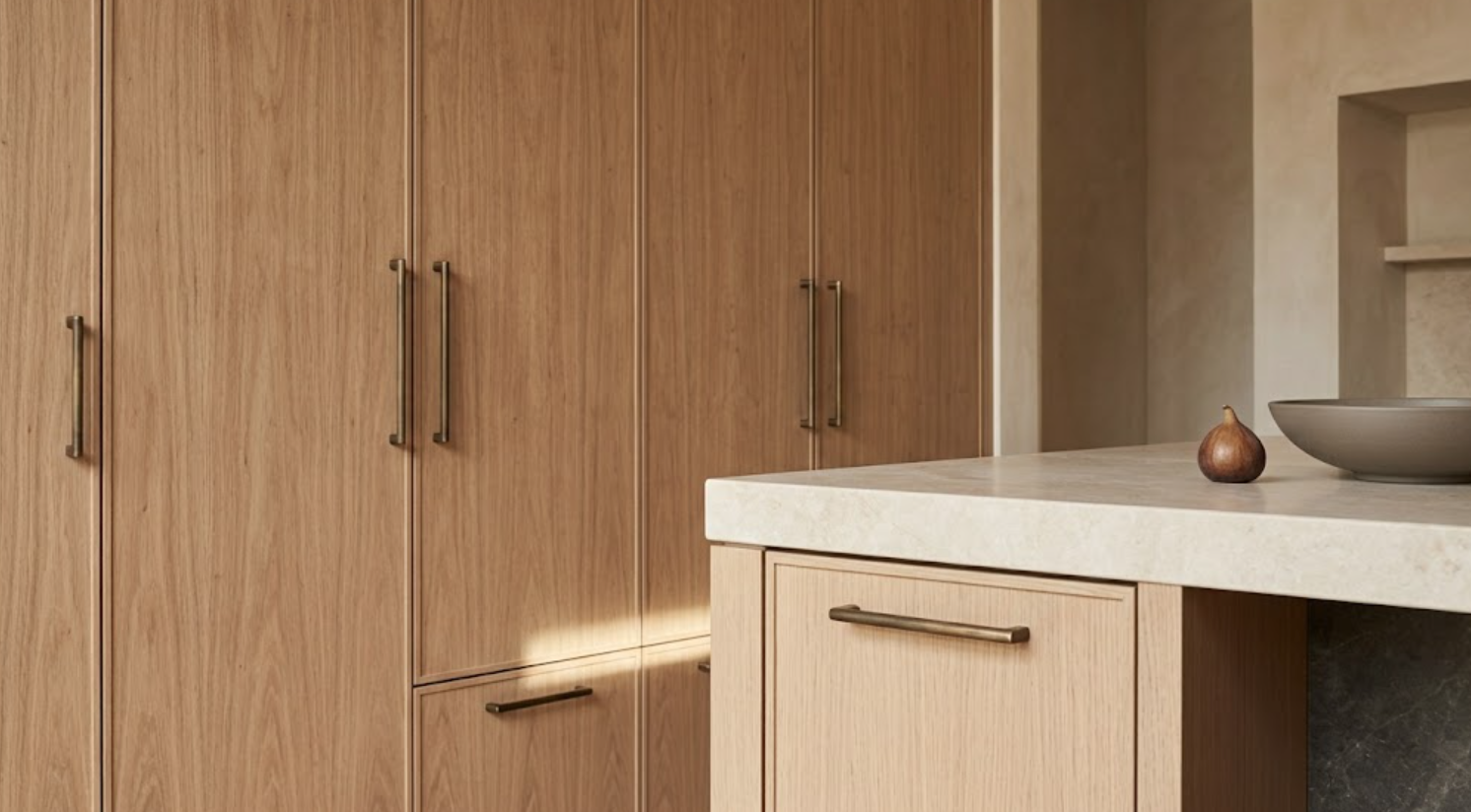
Hardware should feel proportional to the cabinetry rather than decorative for its own sake. A simple bronze pull can create definition against pale oak. Integrated or highly restrained hardware can make a cabinet wall feel more architectural.
The same principle applies to plumbing fixtures and lighting. Metals do not necessarily need to match exactly, but they should belong to a controlled strategy rather than appearing as unrelated finishes throughout the room.
Why Are Integrated Appliances Important?
Large stainless-steel appliances can become major visual elements in a kitchen. Panel-ready appliances allow cabinetry to continue across the elevation, creating a calmer architectural composition.
That does not mean every appliance needs to disappear. A range can remain intentionally visible when it contributes to the design. The important distinction is whether the appliance is part of the composition or simply interrupts it.
Quiet luxury often comes from controlling those visual interruptions.
What About Storage and Everyday Clutter?
A calm kitchen needs to work when people actually live in it. That makes storage an important part of the aesthetic.
Small appliances, charging devices, recycling, pantry items, and everyday kitchen tools need logical places to go. Appliance garages, deep drawers, pantry cabinetry, interior organizers, and concealed waste can help keep work surfaces clear without making the kitchen inconvenient.
The objective is not an empty kitchen. It is a kitchen where functional objects have been considered during the design process.
Why Is Lighting Important?
Quiet luxury depends on subtle material differences, and lighting determines whether those differences can be seen.
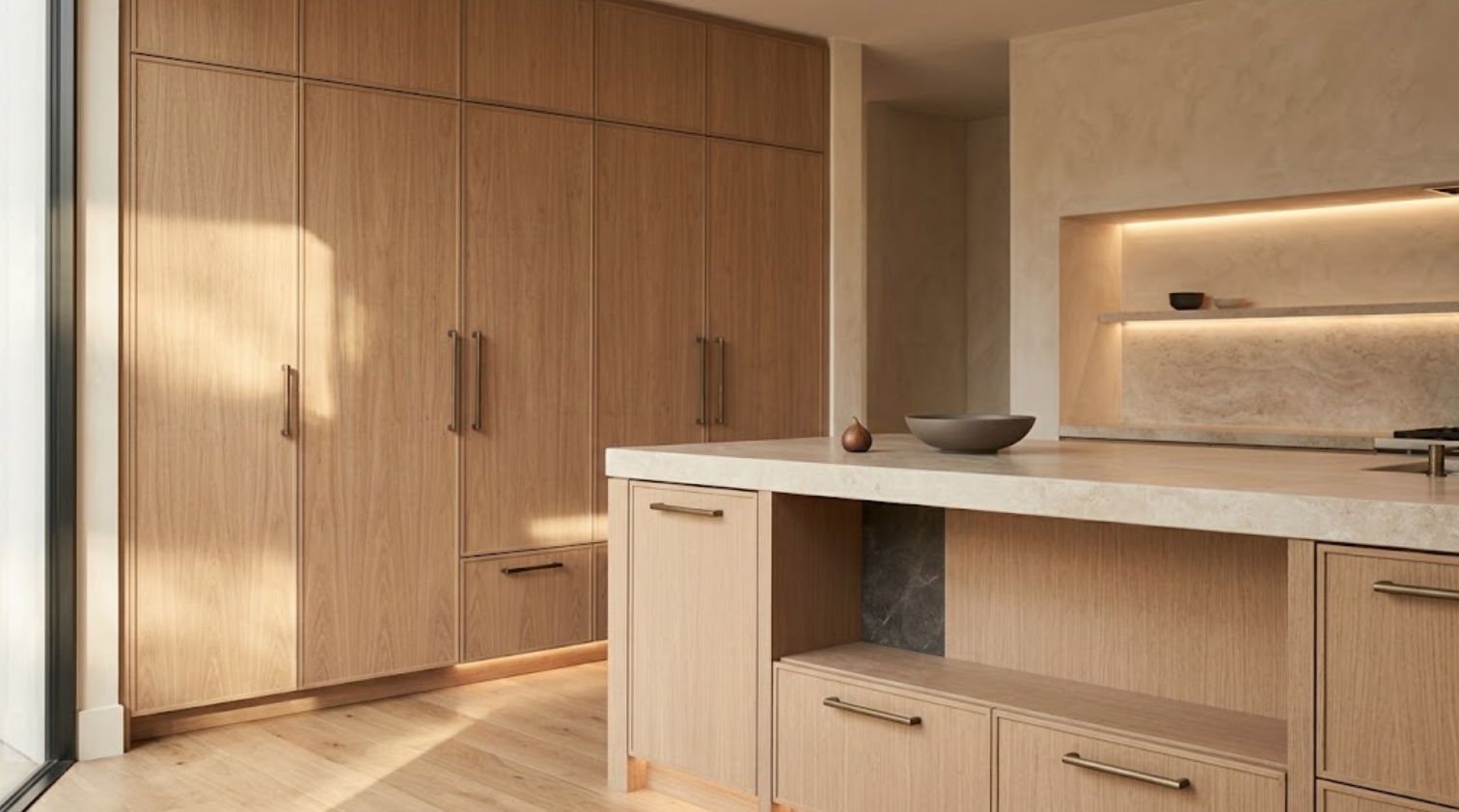
Natural daylight reveals wood grain and stone variation. Integrated cabinet lighting adds depth in the evening. Warm architectural lighting can emphasize plaster, natural wood, and honed surfaces without creating harsh contrast.
Decorative fixtures should also be considered carefully. A dramatic pendant may be appropriate, but it should have a clear role. Not every island needs a statement light if the architecture and materials already provide enough interest.
Why Does Quiet Luxury Age Well?
Kitchens built around material quality and architectural proportion are less dependent on decorative trends. Natural wood, stone, thoughtful cabinetry, and restrained metal finishes can adapt as furniture, art, and smaller accessories change around them.
This does not mean the kitchen must be completely timeless or trend-free. Every project belongs to a particular period. The difference is that permanent elements are selected for reasons deeper than their current popularity.
A cabinet proportion that fits the architecture remains relevant. Good storage continues to function. Natural materials develop character. Those qualities can give the room longevity.
What Quiet Luxury Is Not
Quiet luxury can become meaningless when it is reduced to an aesthetic formula. It is not simply:
An all-beige kitchen
Minimal hardware
Expensive natural stone
White oak on every surface
Removing all color
Making every appliance invisible
Those elements may appear in a quiet luxury kitchen, but none of them creates the result independently.
The defining quality is restraint with intention.
What Does Quiet Luxury in Kitchen Design Actually Mean?
Quiet luxury is a design approach built around quality that does not need constant visual attention. Cabinetry is carefully proportioned. Materials have genuine depth. Stone is used deliberately. Hardware supports the architecture. Storage reduces unnecessary clutter. Lighting reveals materials rather than overpowering them.
Most importantly, the kitchen has been edited. Every finish has a role, and not every element is expected to become a feature.
That restraint is what allows craftsmanship, natural materials, and architectural detail to become more noticeable over time.
Explore Quiet Luxury Cabinetry With Atelier Design Society
Atelier Design Society works with homeowners, architects, interior designers, builders, and other design professionals developing refined cabinetry and material palettes for sophisticated Bay Area residences. At the Atelier Design Society showroom in Menlo Park, project teams can compare natural woods, painted cabinetry, stone, hardware, interiors, and full-scale installations while evaluating proportion, texture, undertone, and material hierarchy.
For a quiet luxury kitchen, the objective is not to add more. It is to identify the materials and details that deserve to remain.