Why the Best Interiors Feel Curated, Not Decorated
The most memorable interiors rarely feel as though someone tried to fill every surface. They feel collected, edited, and intentional. Materials relate to one another. Cabinetry belongs to the architecture. Furniture has room around it. A few meaningful details carry more weight than dozens of decorative additions.
That is the difference between a space that feels curated and one that simply feels decorated. Decoration is an important layer of a home, but it works best when the architecture and permanent materials already provide a strong foundation. In a curated interior, cabinetry, stone, wood, flooring, lighting, and furnishings are considered as parts of the same composition.
The goal is not emptiness. It is knowing what deserves attention and what should remain quiet.
What Does a Curated Interior Actually Mean?
A curated interior has a clear point of view. Materials and objects are selected because they contribute something specific rather than because an empty area needs to be filled.
That usually requires editing. If natural stone already provides dramatic movement, the surrounding cabinetry may become quieter. If walnut cabinetry creates significant warmth and grain, the wall finish may need very little additional pattern. If an architectural light fixture establishes a strong focal point, the room may not need several competing decorative elements.
A useful question is: What is this material or object adding to the room? If the answer is unclear, the space may be stronger without it.
Why Does the Architecture Need to Come First?
A curated home begins with the permanent elements. Windows, openings, ceiling heights, flooring, cabinetry, stone, and architectural lighting establish the framework long before accessories enter the room.
Cabinetry is especially important because it can occupy entire walls. Its proportions, material, grain direction, and relationship to surrounding architecture influence how everything else is perceived.
When those foundational elements are resolved, the room needs less decoration to feel complete.
Why Is Material Hierarchy Important?
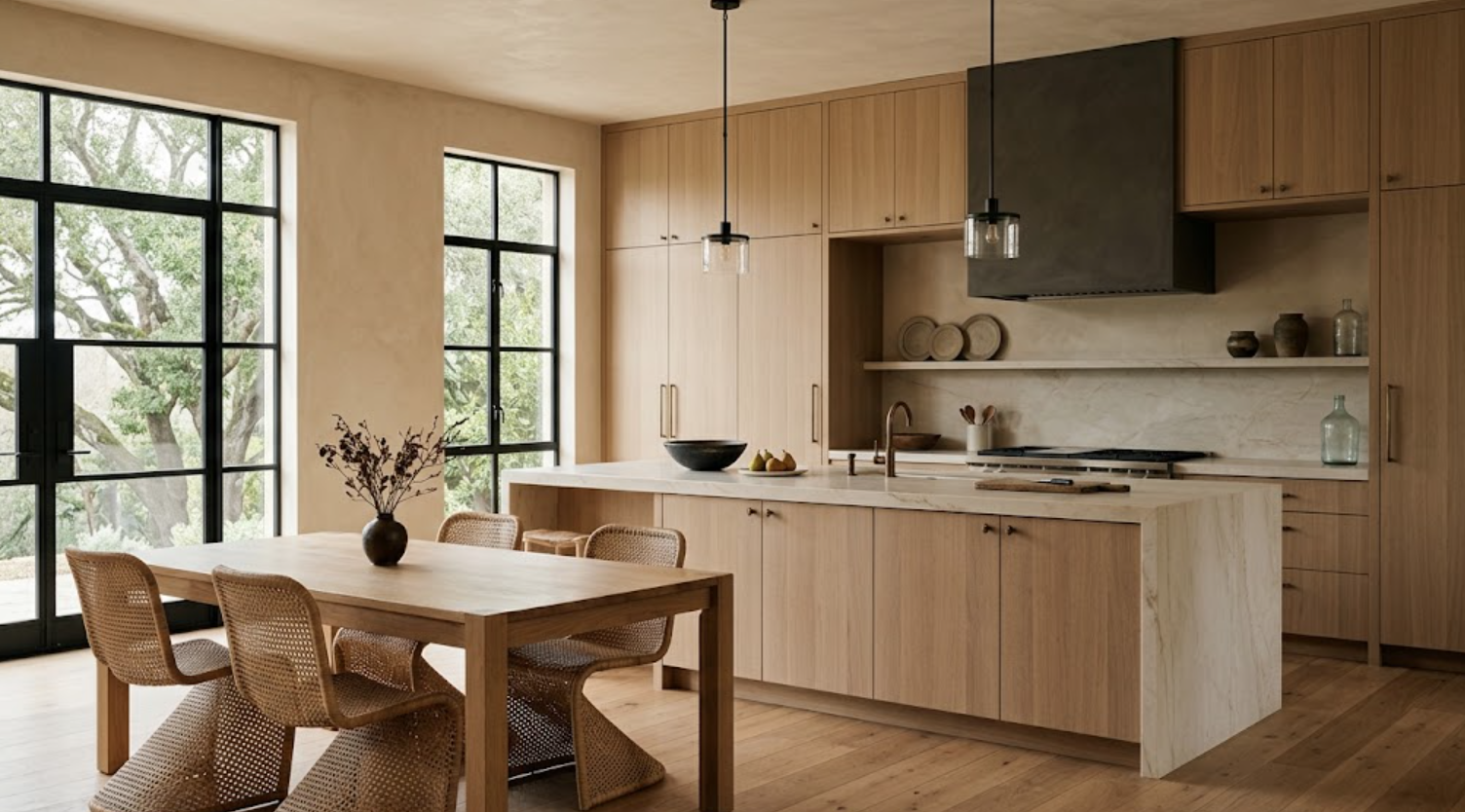
Not every material should have equal visual importance. Curated interiors usually have a hierarchy that allows the eye to move naturally through the room.
A kitchen might use expressive quartzite as the focal material, with restrained painted cabinetry and quiet flooring around it. Another might allow walnut cabinetry to dominate while the countertop remains simple. In a more tonal interior, white oak, plaster, and creamy stone may share similar colors while differences in texture create depth.
This hierarchy helps prevent a room from becoming a collection of individually beautiful materials competing with one another.
How Many Materials Does a Room Really Need?
There is no fixed number, but adding materials should solve a design need rather than simply create variety.
A sophisticated kitchen can feel complete with a relatively concise palette:
One primary cabinetry material
One secondary cabinetry finish when useful
One dominant countertop or stone direction
Flooring
A controlled metal family
A wall finish
Additional materials can certainly work, but each should have a reason to enter the composition.
Why Are Natural Materials So Effective?
Natural materials already contain variation. Wood has grain and tonal shifts. Stone contains mineral movement. Plaster changes subtly under light. Metals develop depth through finish and reflection.
That means they can create visual interest without requiring additional decoration.
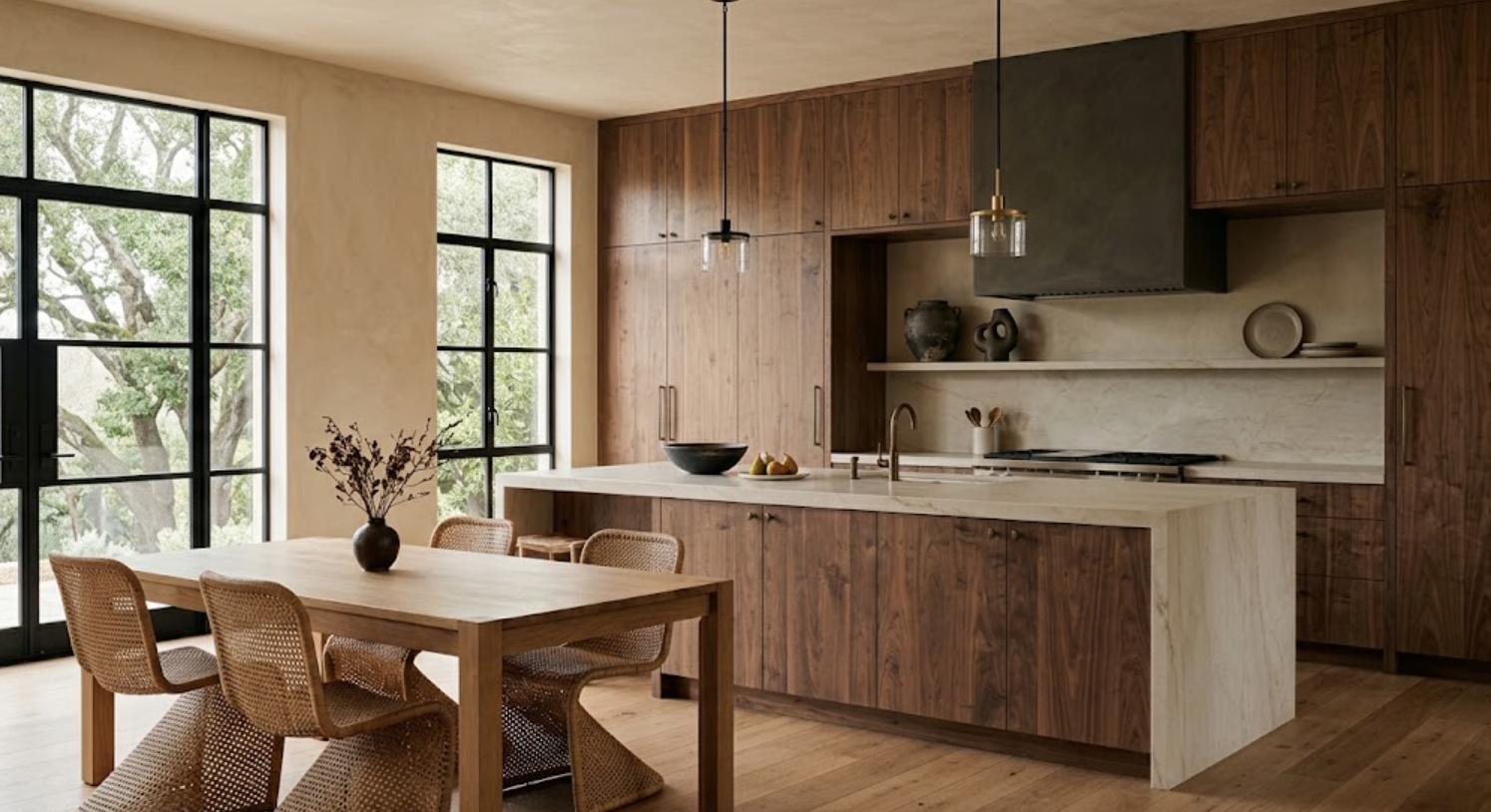
A large walnut cabinet wall may become a feature simply through grain and proportion. A carefully selected quartzite slab can provide enough movement for an entire kitchen. Honed limestone or plaster can add texture without introducing another pattern.
The material itself becomes part of the visual story.
Why Does Editing Matter?
Design is not only the process of selecting what goes into a room. It is also deciding what should stay out.
A palette may begin with several stone options, multiple wood species, different metals, tile, wallcovering, and painted finishes. As the design develops, some of those ideas should disappear.
Editing creates clarity. If the stone already provides enough movement, another patterned surface may be unnecessary. If cabinetry creates a strong architectural rhythm, decorative molding may not add anything. If the material palette is warm and tactile, several contrasting metals may only fragment it.
Removing something can be as important as adding it.
What Role Does Cabinetry Play in a Curated Home?
Custom cabinetry can replace the need for many freestanding or decorative elements because it gives function an architectural form.
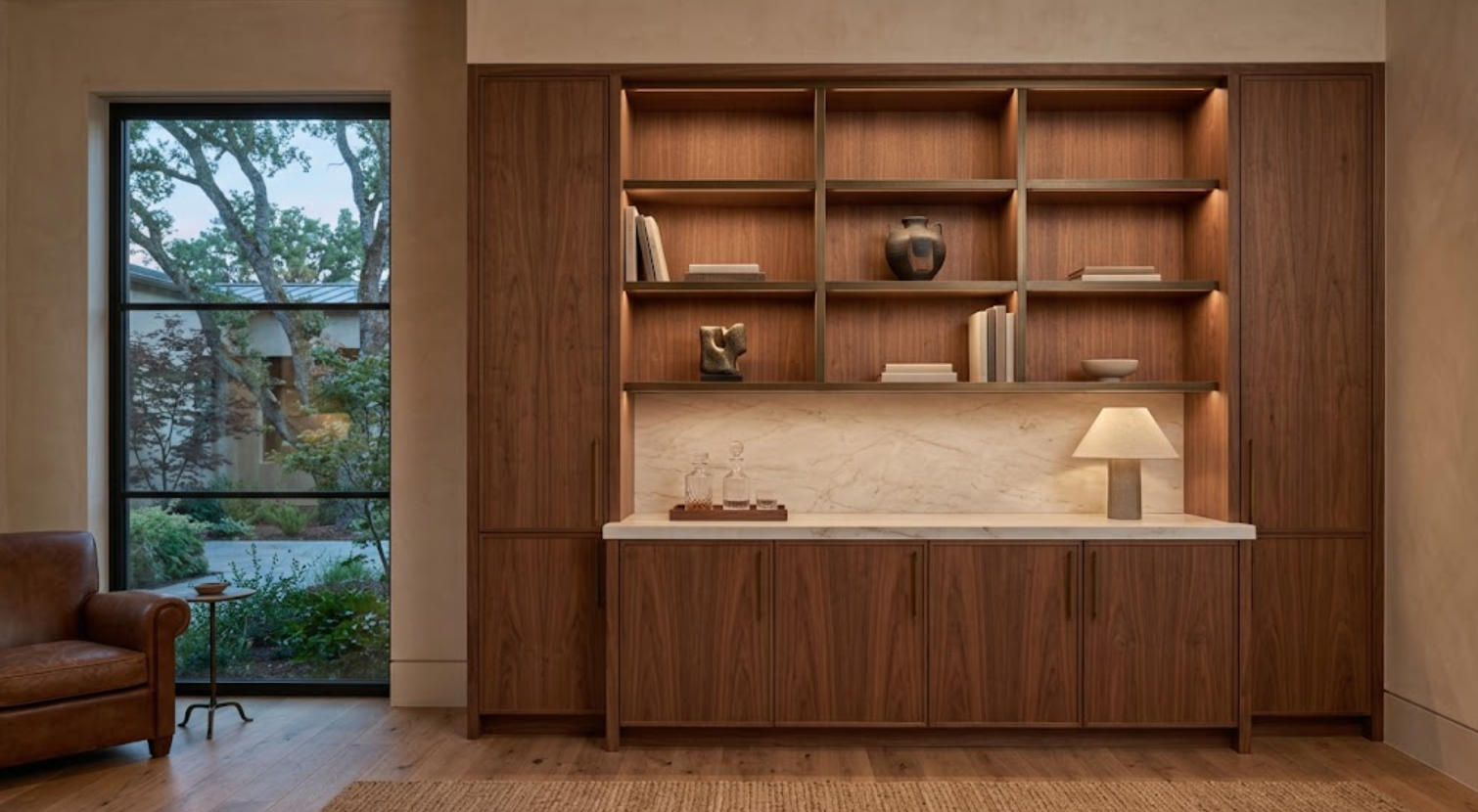
A home bar can become a walnut built-in rather than a collection of furniture and storage pieces. A library can integrate shelving into the architecture. A wardrobe can reduce the need for additional bedroom storage furniture. A media wall can conceal technology while creating a calm elevation.
This is one reason cabinetry contributes so strongly to curated interiors. It allows storage and function to become part of the architecture rather than another layer placed in front of it.
Why Should Open Shelving Be Used Carefully?
Open shelving can be effective when there is a clear reason for it. It creates opportunities to display ceramics, books, art, or objects that contribute personality.
But filling every open shelf can quickly change the character of the room.
Curated shelving relies on proportion and negative space. A few objects with different scales often have more impact than a continuous row of decorative accessories.
The shelving itself should also deserve attention. Beautiful wood, integrated lighting, or a stone backdrop can make the architecture of the display as important as the objects.
Does Curated Mean Everything Has to Match?
No. In fact, overly coordinated interiors can feel less personal.
A curated home can combine white oak, walnut, painted cabinetry, natural stone, plaster, textiles, and different metal finishes. The connection comes from relationships rather than exact repetition.
One material may repeat in another room. A metal finish may appear again in lighting. A similar stone temperature may connect the kitchen and primary bathroom. Walnut may appear in a bar while white oak remains dominant in the kitchen.
The home develops a material vocabulary without becoming a matching set.
How Can Different Rooms Have Their Own Identity?
Whole-home design works best when rooms feel related but still respond to their individual function and atmosphere.
The kitchen may be light and architectural with white oak. A nearby bar can become deeper and more intimate with walnut. A primary bathroom may use painted cabinetry and honed stone. A library might introduce darker wood and woven wallcovering.
Continuity can come from proportions, hardware, material temperature, or architectural detailing rather than repeating the same cabinetry finish everywhere.
That variation makes a residence feel developed over time rather than copied from room to room.
What About Personal Objects?
A curated interior should still feel personal. Restraint does not mean removing everything that reveals who lives there.
Books, collected ceramics, artwork, travel objects, and meaningful pieces can add character that permanent materials cannot provide. The difference is how they are placed.
Rather than filling every surface, allow important objects enough space to be noticed. A single ceramic vessel on a stone counter can have more presence than a group of unrelated accessories. A meaningful artwork may deserve an entire wall rather than becoming part of a crowded arrangement.
How Does Lighting Support a Curated Interior?
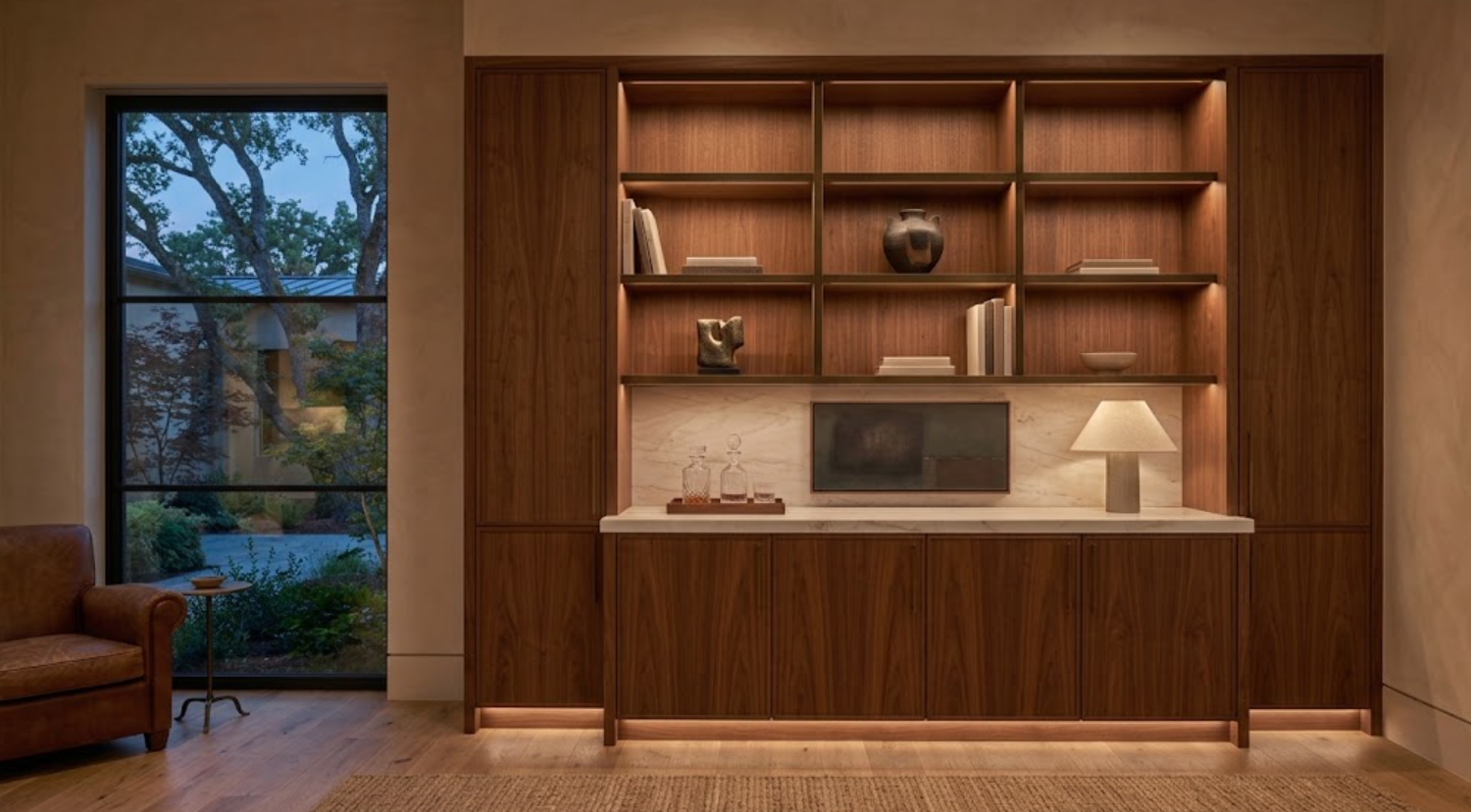
Lighting determines which materials and objects receive attention. Integrated cabinetry lighting can reveal wood grain or illuminate a small collection. Directional architectural lighting can emphasize art or stone. Softer ambient light allows plaster and natural materials to create atmosphere.
Decorative lighting can also contribute, but it does not need to become the focal point of every room.
The strongest lighting plans support the hierarchy that already exists.
Why Does Negative Space Matter?
Empty space is part of the composition.
A section of uninterrupted plaster allows cabinetry to feel more substantial. Clear countertop space gives natural stone room to be seen. An open shelf with only a few objects makes those objects more important.
Without negative space, everything competes.
This does not mean a home needs to feel sparse. It means every surface does not need to be activated.
How Do Curated Interiors Age Better?
A room built around architecture, material quality, and meaningful objects can evolve more easily than one dependent on a large amount of trend-driven decoration.
Furniture can change. Art can move. Objects can be added or removed. The permanent foundation remains strong because cabinetry, stone, flooring, and architectural details were designed to stand on their own.
Over time, the home can collect more personal layers without losing clarity.
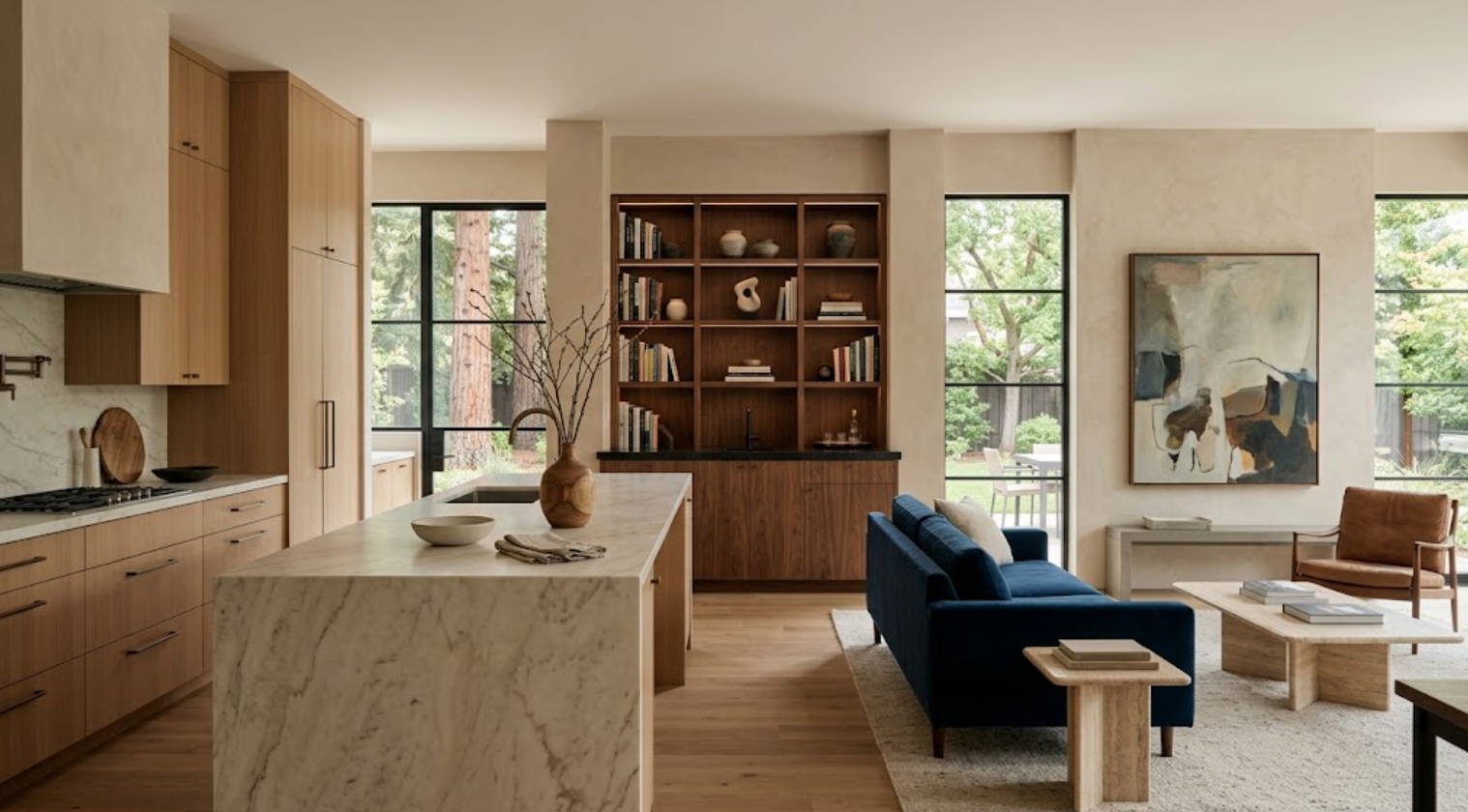
Why the Best Interiors Feel Curated, Not Decorated
The difference comes down to intention and editing. Curated interiors begin with architecture and permanent materials. Cabinetry provides structure. Stone, wood, plaster, flooring, and metal establish depth. Furniture and personal objects are then introduced selectively rather than used to compensate for an unresolved foundation.
The result does not need to look minimal. It can be layered, colorful, personal, and expressive. What matters is that every layer has enough space to contribute.
A well-curated home feels complete without feeling full.
Create a More Considered Material Foundation With Atelier Design Society
Atelier Design Society works with homeowners, architects, interior designers, builders, and other design professionals developing premium cabinetry and material palettes for sophisticated Bay Area residences. At the Atelier Design Society showroom in Menlo Park, project teams can compare cabinetry materials, natural woods, painted finishes, stone, hardware, and full-scale installations while considering how those permanent elements will support the larger interior.
When cabinetry and materials establish a strong architectural foundation, the rest of the home can be layered more selectively.