Rift-Sawn White Oak Cabinets: What Makes Them Different?
White oak cabinetry can look very different depending on how the wood is cut. That distinction matters.
Two cabinet doors can both be labeled white oak and still have noticeably different grain patterns, movement, color, and overall character. For homeowners and design professionals drawn to the quieter, more linear appearance often seen in contemporary luxury kitchens, rift-sawn white oak cabinets are frequently the material behind that look.
The appeal is not simply that the wood is lighter. It is the grain. Rift sawing produces a straighter, more consistent grain pattern than conventional plain-sawn lumber. Across a large cabinetry elevation, that difference becomes especially visible.
But rift-sawn white oak also introduces questions:
How is it different from regular white oak?
How much natural variation should you expect?
Does it need to be stained?
How should grain direction be handled?
What materials pair well with it?
And when is the additional material cost worthwhile?
Understanding those details before selecting the cabinetry can help determine whether rift-sawn white oak is actually right for the project.
What Is Rift-Sawn White Oak?
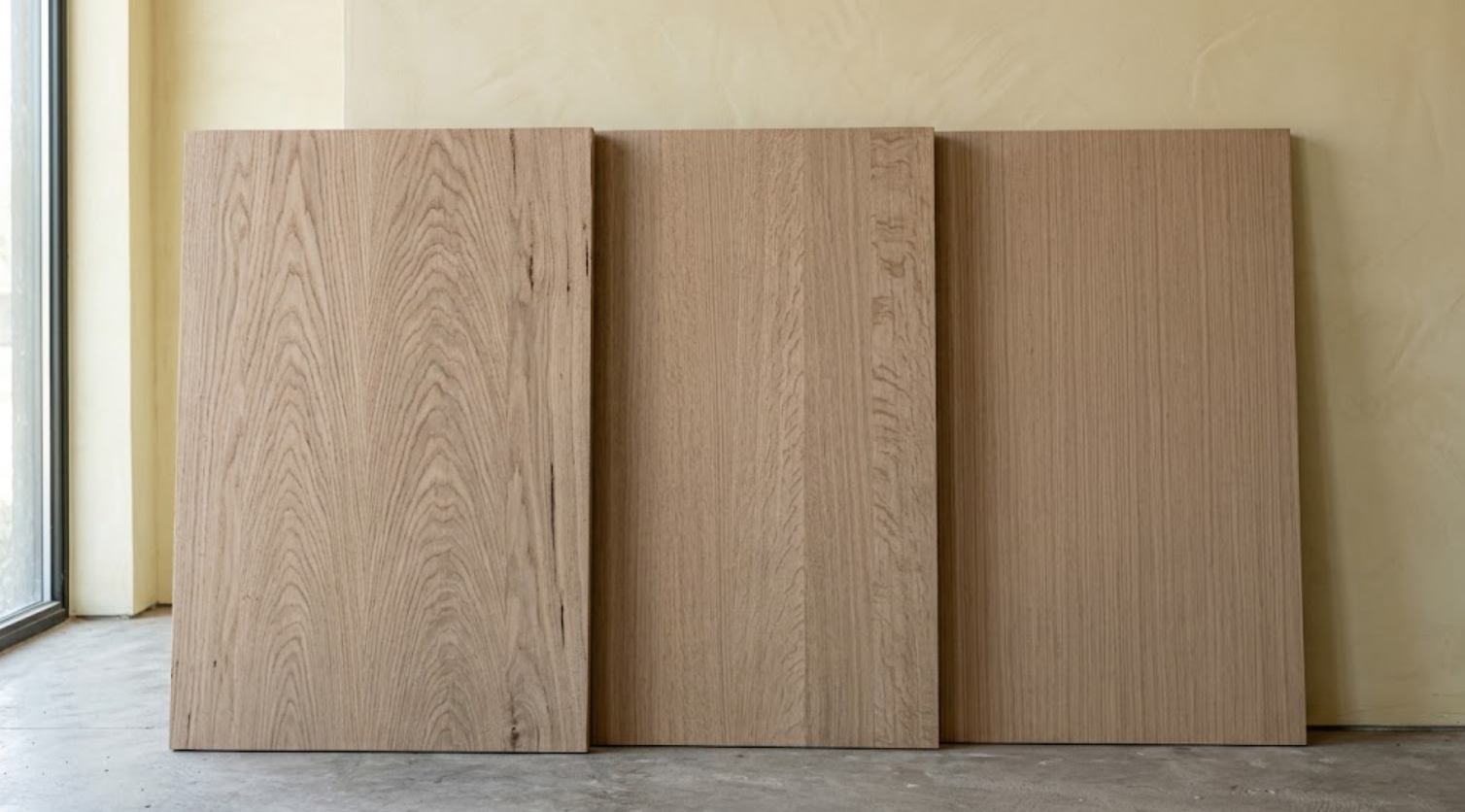
Rift-sawn describes how the log is cut, not a separate species of oak. The cutting method produces boards with grain that tends to appear straighter and more linear across the face.
That is visually different from plain-sawn oak, where the grain can contain broader cathedral-shaped patterns. Quarter-sawn oak is different again, often displaying straighter grain along with more visible medullary ray patterns.
For cabinetry, those differences matter because a single door sample becomes dozens of doors, drawers, and panels across a finished room. A subtle grain characteristic on one sample can become a major part of the kitchen once repeated at architectural scale.
Rift-sawn white oak is often selected when the design calls for natural wood without excessive visual movement.
How Is Rift-Sawn White Oak Different From Regular White Oak?
When people refer to “regular” white oak cabinetry, they are often seeing plain-sawn material. Plain sawing is a more common way of cutting lumber and produces greater variation in the visible grain.
Some boards may appear relatively straight. Others can show the familiar cathedral pattern associated with oak. Rift-sawn material creates a more consistently linear appearance. That can make an entire cabinetry elevation feel calmer.
Neither is inherently better. Plain-sawn white oak can be beautiful when more expressive grain is desirable. Rift-sawn white oak becomes particularly useful when the design depends on consistency, long vertical lines, and quieter material movement.
The choice is aesthetic as much as technical.
Why Is Rift-Sawn White Oak Popular in Luxury Cabinetry?
Because it provides texture without demanding too much attention.
A painted cabinet creates a relatively uniform surface. Walnut can introduce significant grain movement and tonal depth. Rift-sawn white oak occupies a useful position between those two experiences.
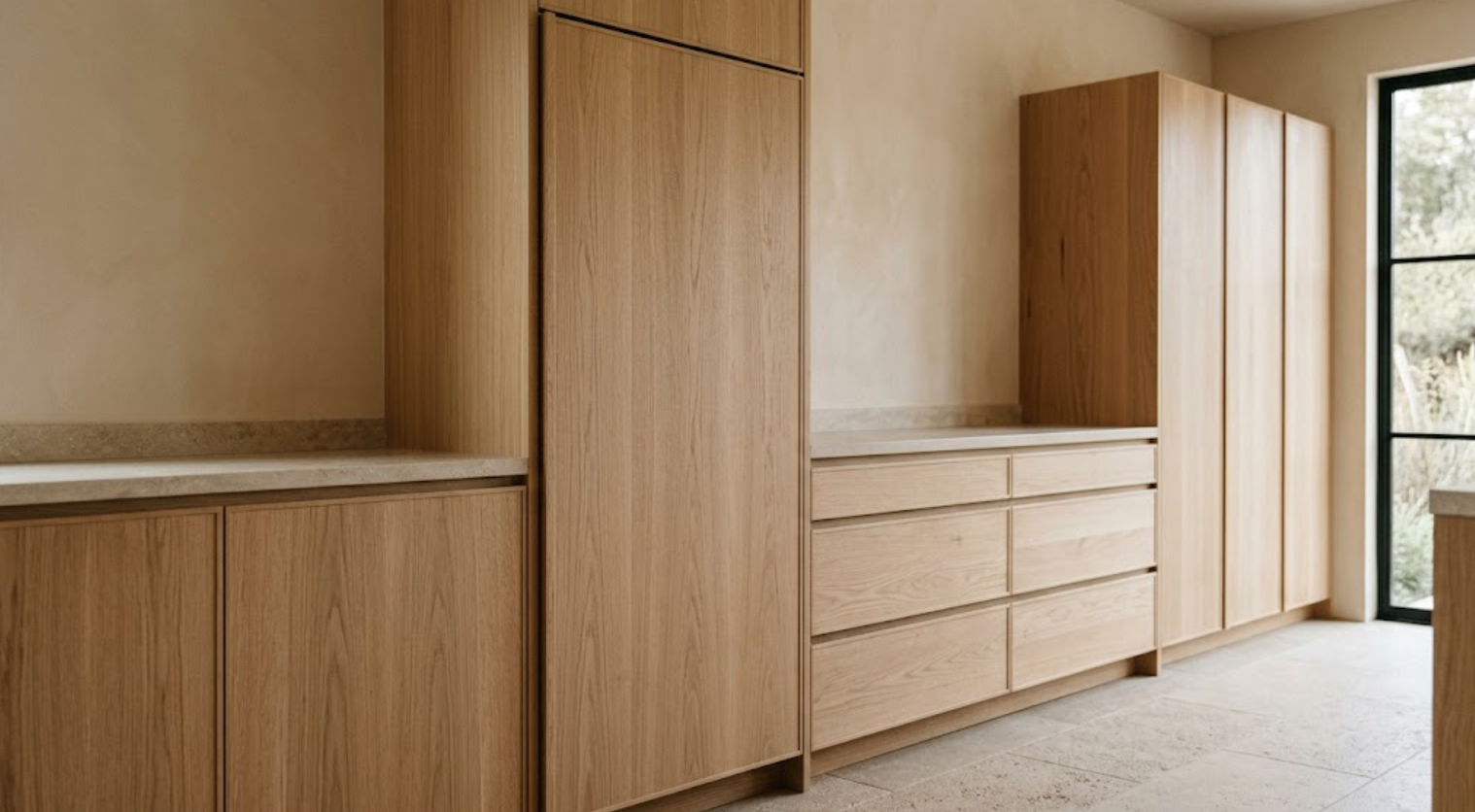
It is clearly natural wood. You can see and feel the grain. There is variation. But the overall visual effect can remain restrained.
That makes it particularly effective in kitchens where cabinetry covers a substantial amount of wall area. Instead of becoming a dominant pattern, the wood can create a quiet architectural backdrop.
Does Rift-Sawn White Oak Always Look the Same?
No. It is still natural wood. Rift sawing influences the grain pattern, but it does not remove natural variation.
Individual boards or veneers can vary in:
Color.
Grain density.
Mineral streaking.
Tone.
Texture.
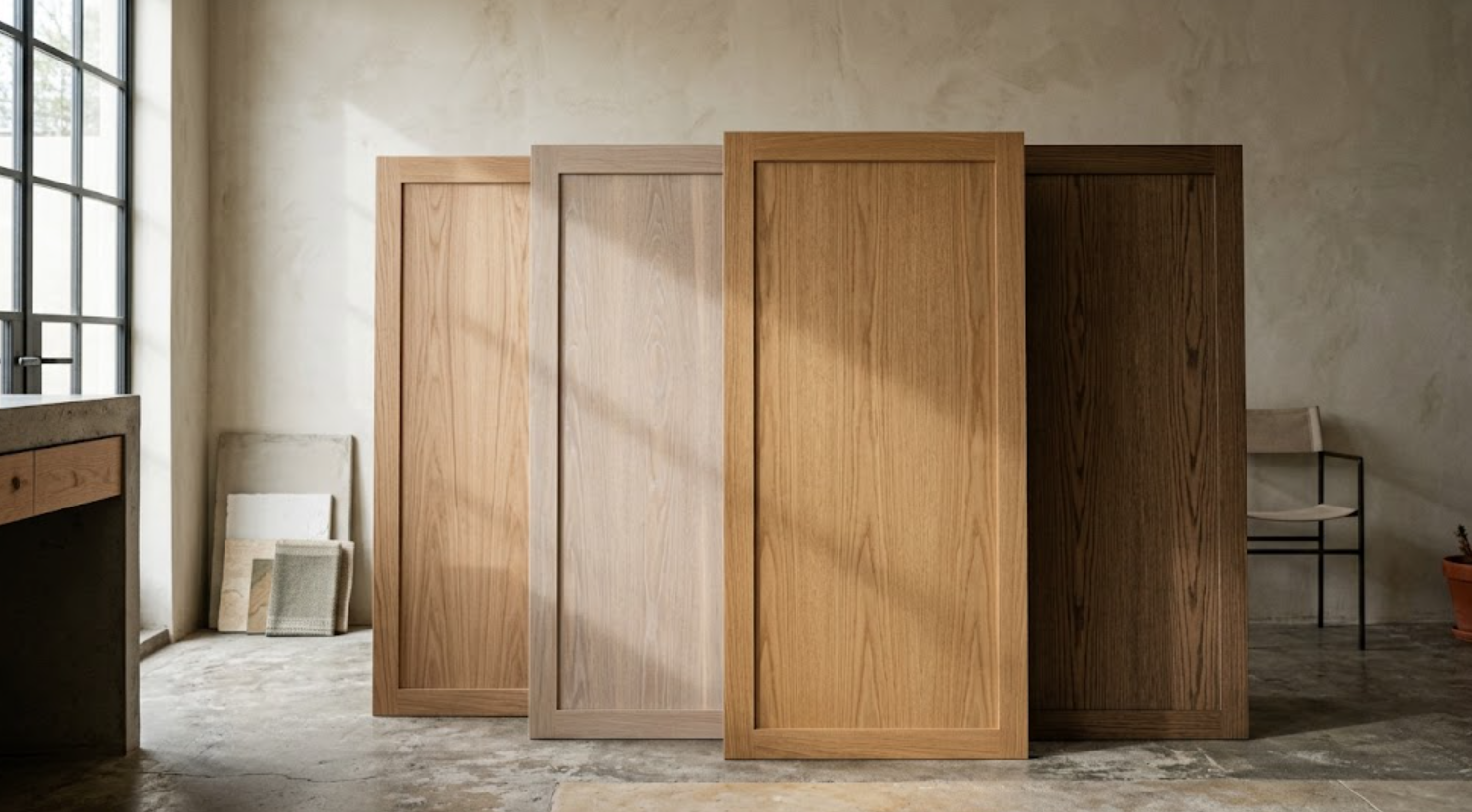
The appearance can also change substantially depending on the finish. One rift-sawn white oak sample may look pale and relatively neutral. Another can appear warmer. A stain can push the material toward beige, brown, gray, or deeper natural tones.
That is why selecting “rift-sawn white oak” is only the beginning. The specific material and finish still need to be evaluated.
What Does Natural Rift-Sawn White Oak Look Like?
Generally, it has a lighter appearance than walnut and a more linear grain pattern than plain-sawn oak. But “natural” can mean different things depending on the finish system.
A clear finish may deepen the raw wood slightly. Some finishes preserve a paler appearance. Others add warmth.
The sheen also changes how the grain reads. A low-sheen finish tends to preserve a more natural, architectural character. Higher sheen can make grain and tonal differences more visually prominent.
Always evaluate the finished sample. Raw wood is not necessarily representative of the final cabinetry.
Should Rift-Sawn White Oak Cabinets Be Stained?
They can be. But stain should have a clear purpose.
A light stain may reduce unwanted yellow or warm undertones. A slightly warmer finish may help the cabinetry relate to flooring or furniture. A deeper stain can completely change the character of the oak.
The more opaque or aggressive the stain becomes, however, the less visible some of the natural material qualities may become. If the reason for selecting rift-sawn white oak is its subtle grain, the finish should usually allow that grain to remain part of the design.
How Important Is Grain Direction?
Very. With rift-sawn white oak, the grain is one of the primary design elements.
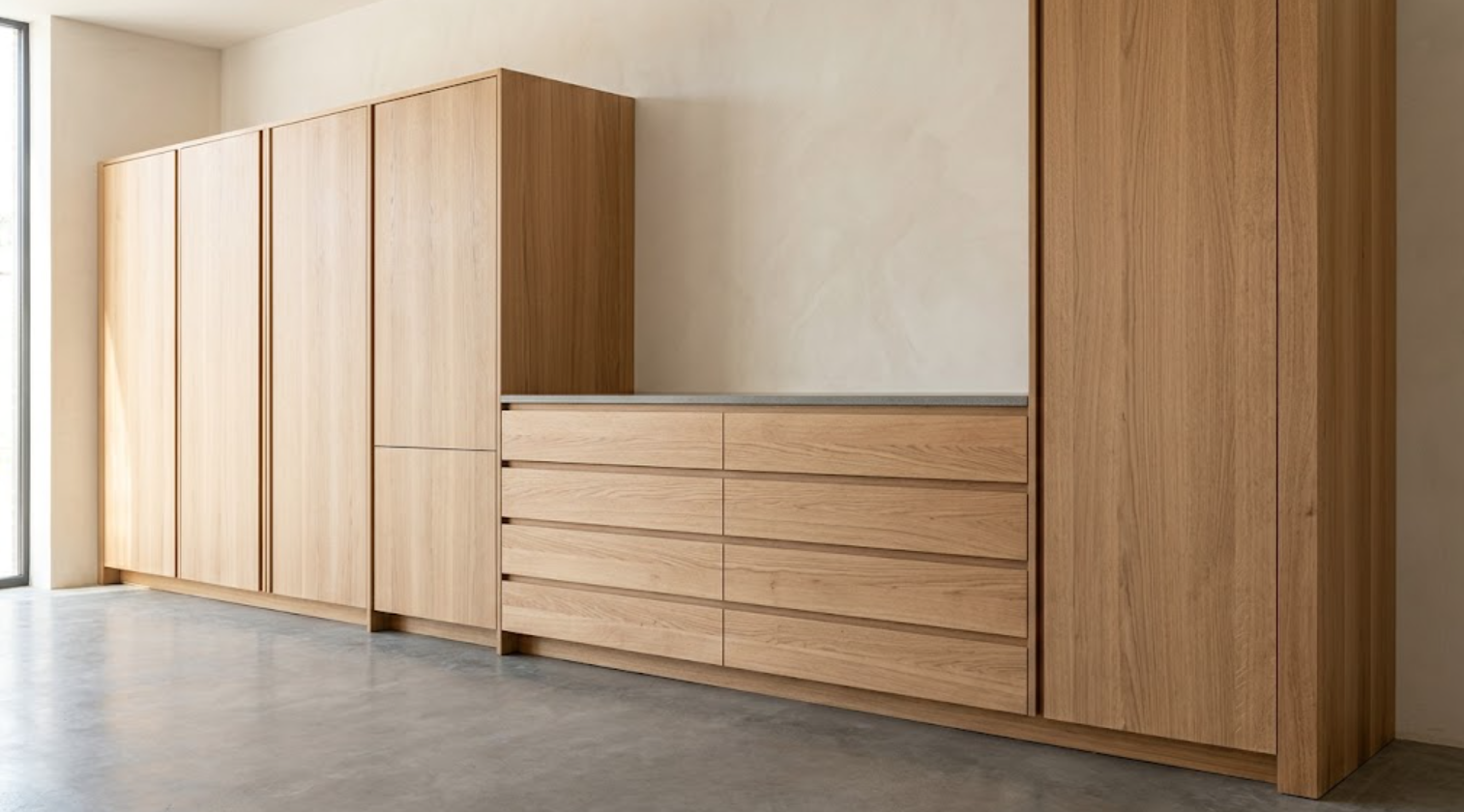
On tall cabinet doors, vertical grain can emphasize height. On wide drawers, horizontal grain can reinforce the width of the cabinetry. But changing direction without intention can make an elevation feel fragmented.
The cabinetry drawings should consider grain orientation before production.
Ask:
Will tall doors run vertically?
Will drawer fronts run horizontally?
Should grain continue across adjacent drawer fronts?
How will appliance panels be treated?
What happens at finished end panels?
These details become especially visible with a linear wood like rift-sawn oak.
Should the Grain Match Across Cabinet Doors?
It depends on the desired effect and the cabinetry construction.
Perfectly continuous grain is not necessary everywhere. In fact, forcing every surface to look identical can remove some of the natural quality that makes wood appealing.
But important elevations should feel composed. A bank of wide drawers may benefit from intentional grain continuity. Tall appliance panels should relate to surrounding doors. Adjacent panels should not feel randomly assembled.
The goal is not artificial perfection. It is controlled natural variation.
What Is Veneer Sequencing?
On certain cabinetry applications, veneer sheets can be selected and arranged so adjacent panels relate visually. This can help create a more controlled grain composition across large doors or architectural panels.
The exact approach depends on the cabinetry manufacturer, construction, veneer availability, and design intent. For large rift-sawn white oak elevations, it is worth discussing how the material will be selected and laid out.
A four-inch sample cannot tell you what twenty feet of cabinetry will look like. Material planning needs to happen at the scale of the finished installation.
Does Rift-Sawn White Oak Work With Slab Cabinets?
Very well. Slab doors allow the wood itself to become the visual surface. There is no frame profile competing with the grain. That can make rift-sawn white oak especially effective in contemporary cabinetry.
But simple does not mean easy. When the door is visually minimal, other details become more important:
Reveal consistency.
Grain direction.
Panel alignment.
Hardware.
Door thickness.
Finished ends.
Appliance panels.
The fewer decorative elements a cabinet has, the easier it becomes to notice execution.
Can Rift-Sawn White Oak Work With Shaker or Framed Doors?
Yes. White oak is not limited to slab cabinetry.
A narrow-frame door can add subtle shadow and depth while preserving much of the linear wood character. A more traditional Shaker profile can also work, particularly when the architecture supports it.
The width of the frame matters. A heavy frame combined with active wood grain can create more visual movement. A restrained frame can provide architectural detail without overwhelming the material.
The correct door style depends on the house.
What Countertops Work With Rift-Sawn White Oak?
Many. The better question is what relationship the kitchen needs.
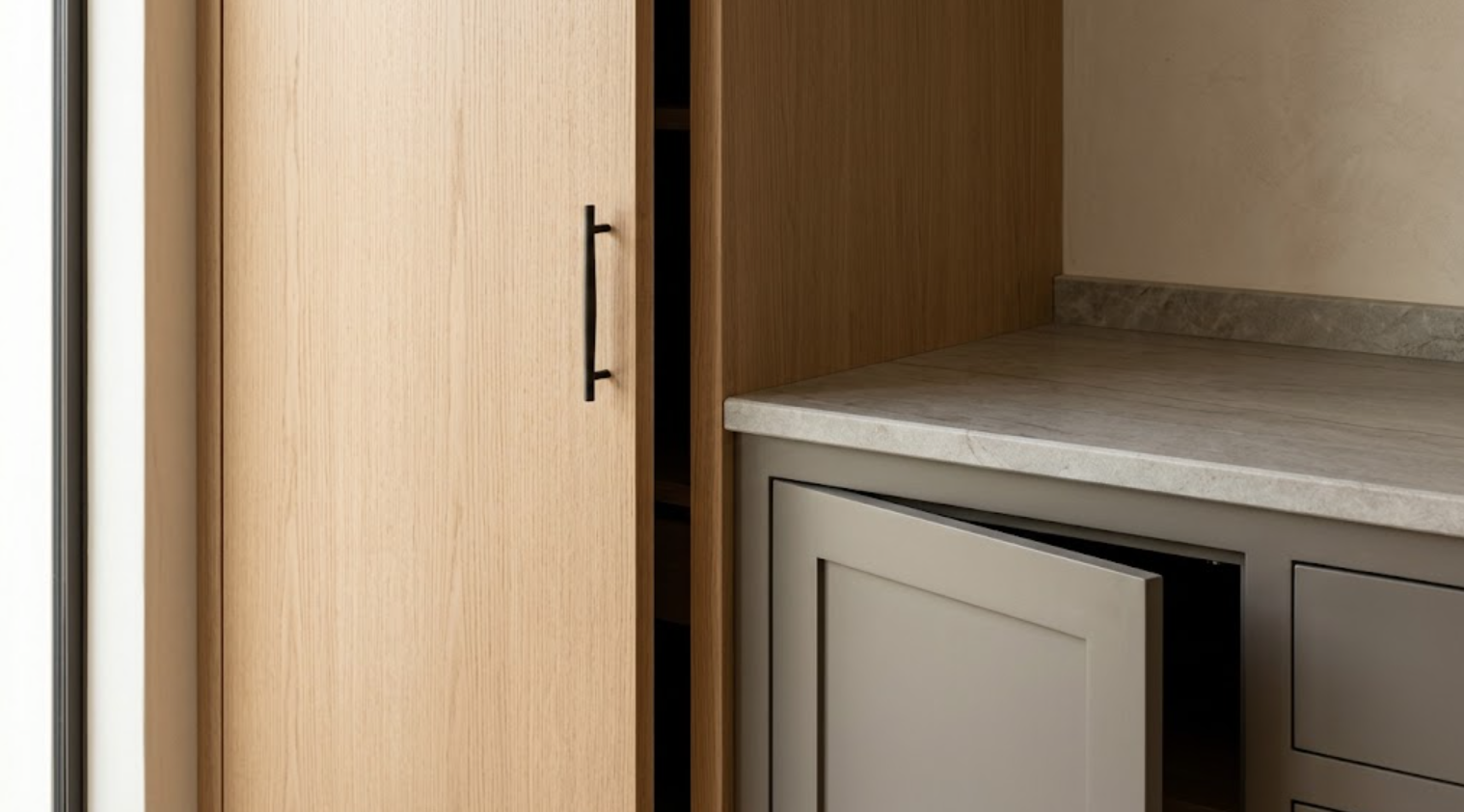
A quiet limestone or restrained quartzite can preserve the calm character of the cabinetry. A more expressive quartzite can create contrast and become the room’s focal material. Engineered quartz can provide greater visual consistency.
The undertones matter. A very cool gray surface can make warm oak appear more yellow. A warmer stone may emphasize beige or honey tones.
Evaluate the actual materials together. Do not select them from separate photographs.
What Paint Colors Pair Well With Rift-Sawn White Oak?
Again, look at undertones rather than relying on color names.
Warm gray.
Mushroom.
Taupe.
Muted mineral green.
Soft off-white.
Deep charcoal.
Any of these can potentially work depending on the oak finish and surrounding materials.
The useful approach is to compare physical samples. A paint that looks neutral alone may become noticeably green or pink beside the wood. The oak can also change the perceived temperature of the paint.
Material relationships are relative.
Does Rift-Sawn White Oak Work With Wood Flooring?
Yes, but the relationship needs attention.
If the flooring is also oak, do not assume the two materials will automatically coordinate. Flooring may use:
A different cut.
A different stain.
A different finish.
Wider variation.
More knots.
A warmer or cooler tone.
Sometimes contrast is easier than an almost-match. A slightly darker floor beneath lighter cabinetry can create separation. Painted cabinetry can also be introduced between multiple wood surfaces.
If both flooring and cabinetry are important materials, compare them at full scale before finalizing either finish.
How Does Natural Light Affect Rift-Sawn White Oak?
Significantly. Natural light changes both the color and contrast of the material.
Morning light may make the oak feel relatively neutral. Warm afternoon light can emphasize golden tones. Shadow can make the wood appear deeper and more muted. The direction of the grain can also become more visible when side light moves across the surface.
For projects with significant natural light, evaluate the sample in the actual room if possible. Look at it vertically. Move it near the window. Compare it in direct light and shadow.
A finish selected under artificial showroom lighting may behave differently in the finished home.
Does Rift-Sawn White Oak Change Color Over Time?
Like natural wood generally, white oak can change in appearance as it ages and is exposed to light. The degree of change depends on the finish, environment, and exposure.
That should not necessarily be viewed as a defect. Natural materials develop differently from manufactured surfaces.
The important thing is understanding that the cabinet installed on day one may not remain visually identical forever. If absolute color consistency is the priority, natural wood may not be the right material. If subtle variation and aging are acceptable, they can become part of its character.
Is Rift-Sawn White Oak More Expensive?
It can be. The cutting method produces less material from the log than more conventional sawing methods, which can contribute to higher material cost.
Other factors matter too:
Veneer selection.
Sequencing.
Finish.
Cabinet construction.
Door style.
Customization.
Quantity.
Manufacturer.
Installation.
The meaningful question is not whether rift-sawn white oak costs more than another material in the abstract. It is whether its particular visual characteristics matter enough to the design to justify the difference.
When Is Rift-Sawn White Oak Worth Considering?
When the grain itself supports the design.
It can be especially effective when:
The cabinetry covers large architectural surfaces.
The design calls for natural wood without heavy grain movement.
Slab cabinetry is being used.
Long vertical or horizontal lines are important.
The room already contains expressive stone or architecture and the cabinetry needs to remain quieter.
The homeowner wants warmth without the deeper visual weight of walnut.
Those are design reasons. And design reasons are generally more useful than choosing a material simply because it is currently popular.
When Might Another Material Be Better?
When the project needs something rift-sawn white oak does not naturally provide.
If rich depth and darker tonal variation are important, walnut may be more appropriate. If the design needs a very specific color, painted cabinetry may provide more control. If highly expressive grain is desirable, another cut of oak or another species may create more movement.
Material selection should begin with what the room needs. Not with the assumption that one premium material is universally better.
Should You See Rift-Sawn White Oak Cabinetry in Person?
Yes, if possible. Especially before committing to a large quantity.
A small sample is useful for understanding finish. A full-size cabinet door reveals more. Several doors together reveal even more.
Look at:
Grain variation.
Color variation.
Finish sheen.
Door construction.
Grain direction.
How adjacent panels relate.
How the material behaves beside stone.
How it looks under natural light.
Rift-sawn white oak is often selected specifically for its subtle characteristics. Those characteristics are difficult to understand from a screen.
What Should You Ask Your Cabinetry Partner?
Ask specific questions about the material.
Is the cabinetry solid wood, veneer, or a combination depending on the component?
How is veneer selected?
Can grain direction be specified?
How are large panels handled?
What level of natural color variation should be expected?
What finishes are available?
Can custom stains be developed?
How should the material be maintained?
How will appliance panels be coordinated?
The answers help turn “rift-sawn white oak” from a material preference into an actual cabinetry specification.
Rift-Sawn White Oak Cabinets: What Makes Them Different?
The difference begins with how the wood is cut. But that is only the beginning.
Rift-sawn white oak is valued for its straighter grain, quieter movement, natural texture, and ability to cover large cabinetry surfaces without becoming excessively busy.
Its success depends on more than choosing the species:
Grain direction matters.
Finish matters.
Natural variation matters.
Adjacent flooring and stone matter.
Light matters.
And the way the material is composed across an entire cabinetry elevation matters.
When those details are considered together, rift-sawn white oak can create cabinetry that feels warm without becoming heavy and minimal without feeling flat.
That balance is what makes the material so useful.
Explore Rift-Sawn White Oak Cabinetry
Atelier Design Society works with homeowners, interior designers, architects, builders, and other design professionals planning premium and custom cabinetry throughout Menlo Park and the Bay Area.
At the Atelier Design Society showroom in Menlo Park, you can compare full-size cabinetry, wood species, door styles, finishes, construction, hardware, and material combinations in person.
For a project considering rift-sawn white oak, seeing larger samples beside stone, flooring, paint, and other finishes can make the final material decision considerably more informed.